TL;DR
This paper addresses the problem of constructing height-optimal wire tangles with minimal layers, proves NP-hardness, and provides an exact algorithm with practical implementation and comparison to existing methods.
Contribution
It introduces an NP-hardness proof for the minimal-layer tangle problem and presents an exact algorithm with complexity analysis and implementation.
Findings
The problem is NP-hard.
An exact algorithm with exponential complexity is provided.
Implementation results compare favorably to existing algorithms.
Abstract
We study the following combinatorial problem. Given a set of y-monotone wires, a tangle determines the order of the wires on a number of horizontal layers such that the orders of the wires on any two consecutive layers differ only in swaps of neighboring wires. Given a multiset of swaps (that is, unordered pairs of numbers between 1 and ) and an initial order of the wires, a tangle realizes if each pair of wires changes its order exactly as many times as specified by . The aim is to find a tangle that realizes using the smallest number of layers. We show that this problem is NP-hard, and we give an algorithm that computes an optimal tangle for wires and a given list of swaps in time, where is the golden ratio. We can treat lists where every swap occurs at most once in …
Click any figure to enlarge with its caption.
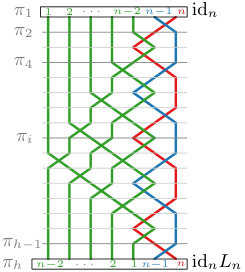 Figure 1
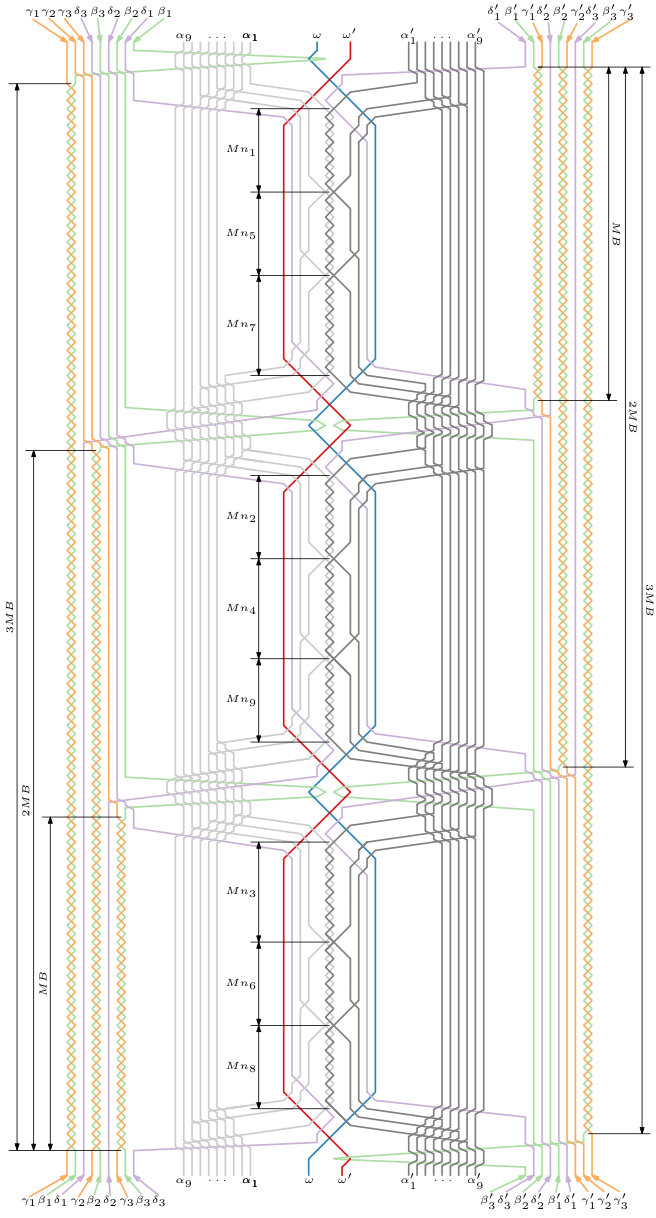 Figure 2
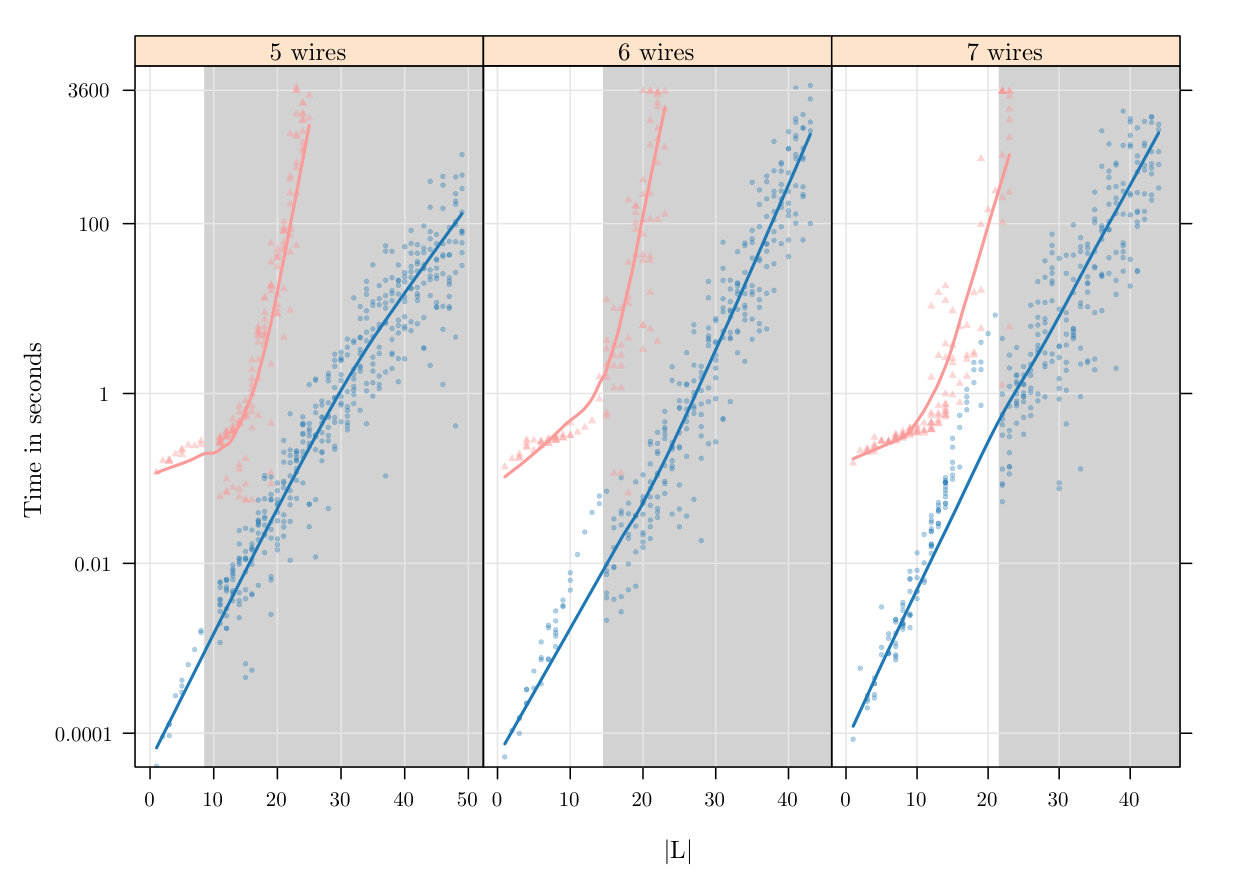 Figure 3
Peer Reviews
No public reviews on file for this paper yet. If you reviewed it on a platform where reviews are public (OpenReview, ICLR, NeurIPS, ICML), you can paste yours below so the community can read it here.
Code & Models
Videos
No videos yet. Explain this paper in a talk, walkthrough, or lecture? Add one.
