Foothill: A Quasiconvex Regularization for Edge Computing of Deep Neural Networks
Mouloud Belbahri, Eyy\"ub Sari, Sajad Darabi, Vahid Partovi Nia

TL;DR
Foothill introduces a flexible, quasiconvex regularizer for deep neural networks that improves binary neural network accuracy on edge devices by reducing the gap with full-precision models.
Contribution
The paper proposes the foothill function, a novel infinitely differentiable quasiconvex regularizer that can serve as a binary quantizer, regularizer, or loss, enhancing DNN deployment on edge devices.
Findings
Reduces accuracy gap between BNNs and full-precision models on ImageNet
Flexible regularizer deformable towards L1 and L2 penalties
Improves generalization error in deep neural networks
Abstract
Deep neural networks (DNNs) have demonstrated success for many supervised learning tasks, ranging from voice recognition, object detection, to image classification. However, their increasing complexity might yield poor generalization error that make them hard to be deployed on edge devices. Quantization is an effective approach to compress DNNs in order to meet these constraints. Using a quasiconvex base function in order to construct a binary quantizer helps training binary neural networks (BNNs) and adding noise to the input data or using a concrete regularization function helps to improve generalization error. Here we introduce foothill function, an infinitely differentiable quasiconvex function. This regularizer is flexible enough to deform towards and penalties. Foothill can be used as a binary quantizer, as a regularizer, or as a loss. In particular, we show this…
Click any figure to enlarge with its caption.
 Figure 1
 Figure 2
 Figure 3
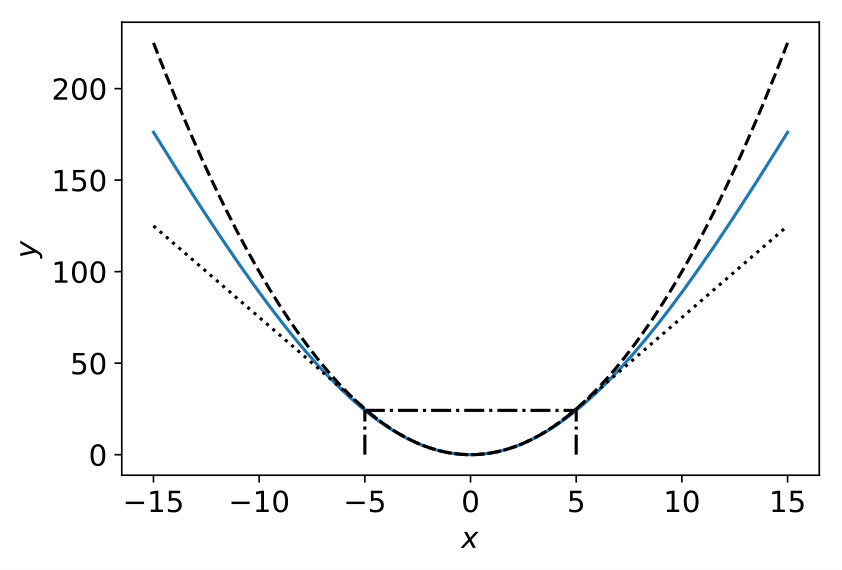 Figure 4
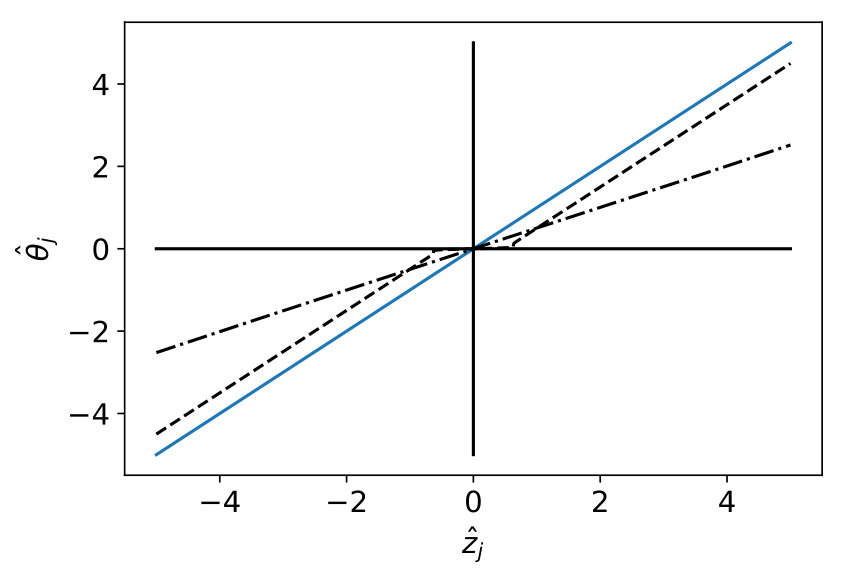 Figure 5
Peer Reviews
No public reviews on file for this paper yet. If you reviewed it on a platform where reviews are public (OpenReview, ICLR, NeurIPS, ICML), you can paste yours below so the community can read it here.
Videos
No videos yet. Explain this paper in a talk, walkthrough, or lecture? Add one.