SU(4) topological RVB spin liquid on the square lattice
Olivier Gauth\'e, Sylvain Capponi, Didier Poilblanc

TL;DR
This paper constructs and analyzes a topological SU(4) spin liquid state on a square lattice using PEPS, demonstrating its topological nature and relevance to ultracold atom experiments.
Contribution
It generalizes the SU(2) RVB state to SU(4), introduces a family of such states, and provides evidence of their topological spin liquid properties.
Findings
Longer-range bonds break gauge symmetry from U(1) to Z2.
Evidence of topological order from entanglement entropy and modular matrices.
Relevance to ultracold atom experimental systems.
Abstract
We generalize the construction of the spin-1/2 SU(2) Resonating Valence Bond (RVB) state to the case of the self-conjugate -representation of SU(4). As for the case of SU(2) [J-Y. Chen and D. Poilblanc, Phys. Rev. B , 161107(R) (2018)], we use the Projected Entangled Pair State (PEPS) formalism to derive a simple (two-dimensional) family of generalized SU(4) RVB states on the square lattice. We show that, when longer-range SU(4)-singlet bonds are included, a local gauge symmetry is broken down from U(1) to , leading to the emergence of a short-range spin liquid. Evidence for the topological nature of this spin liquid is provided by the investigation of the Renyi entanglement entropy of infinitely-long cylinders and of the modular matrices. Relevance to microscopic models and experiments of ultracold atoms is discussed.
Click any figure to enlarge with its caption.
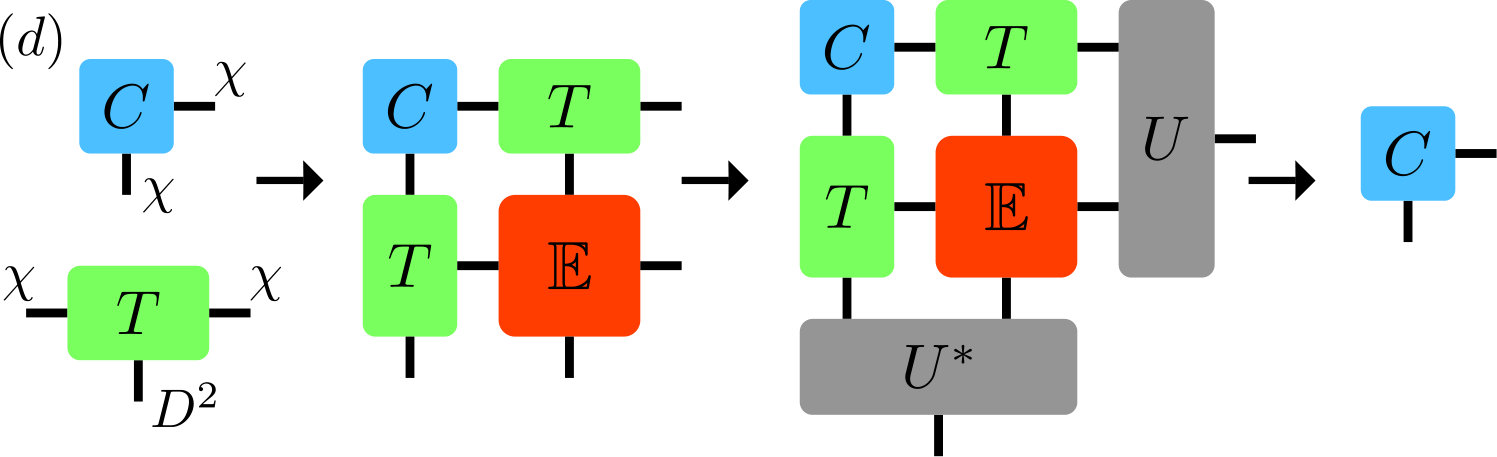 Figure 1
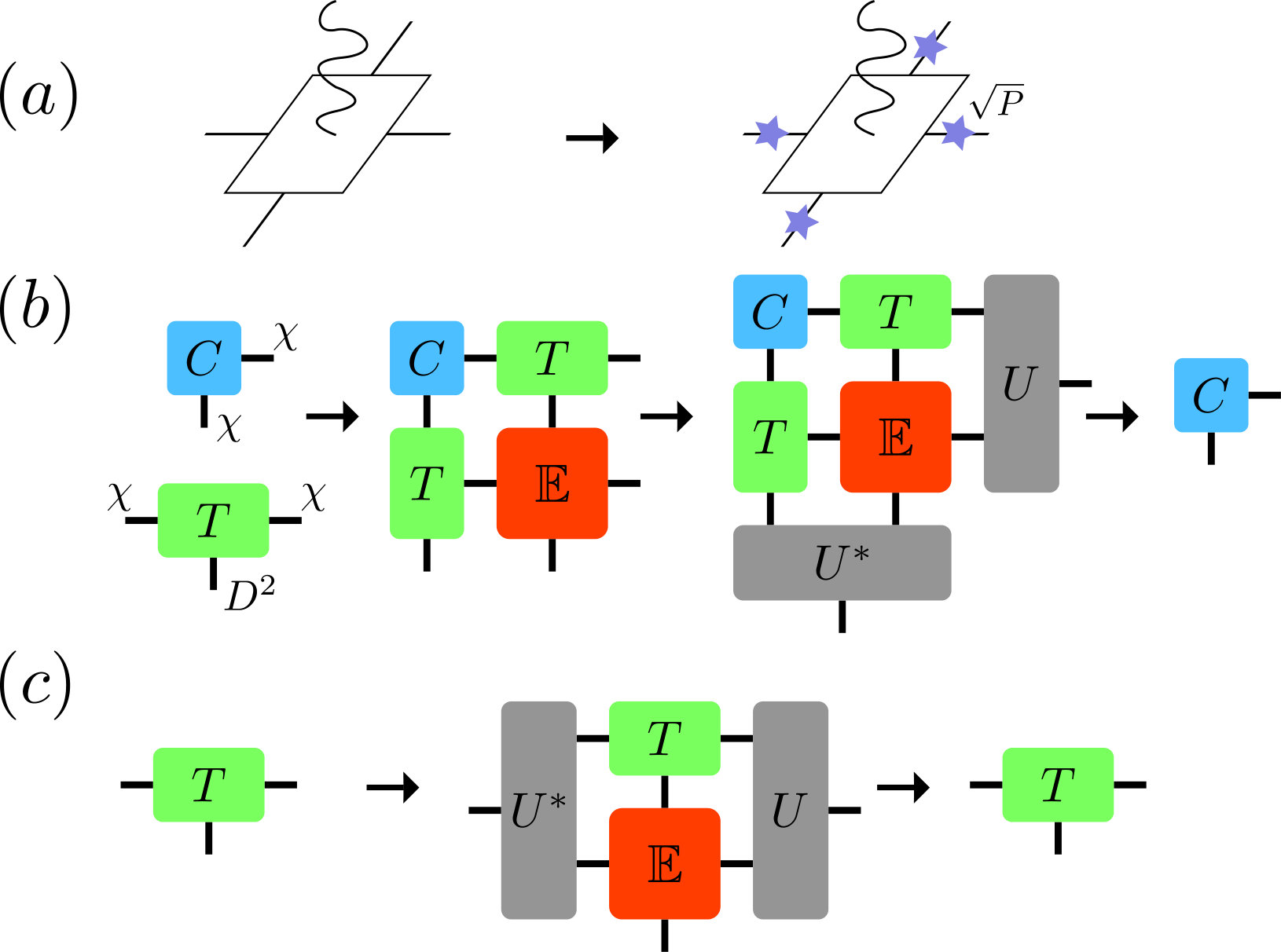 Figure 2
 Figure 3
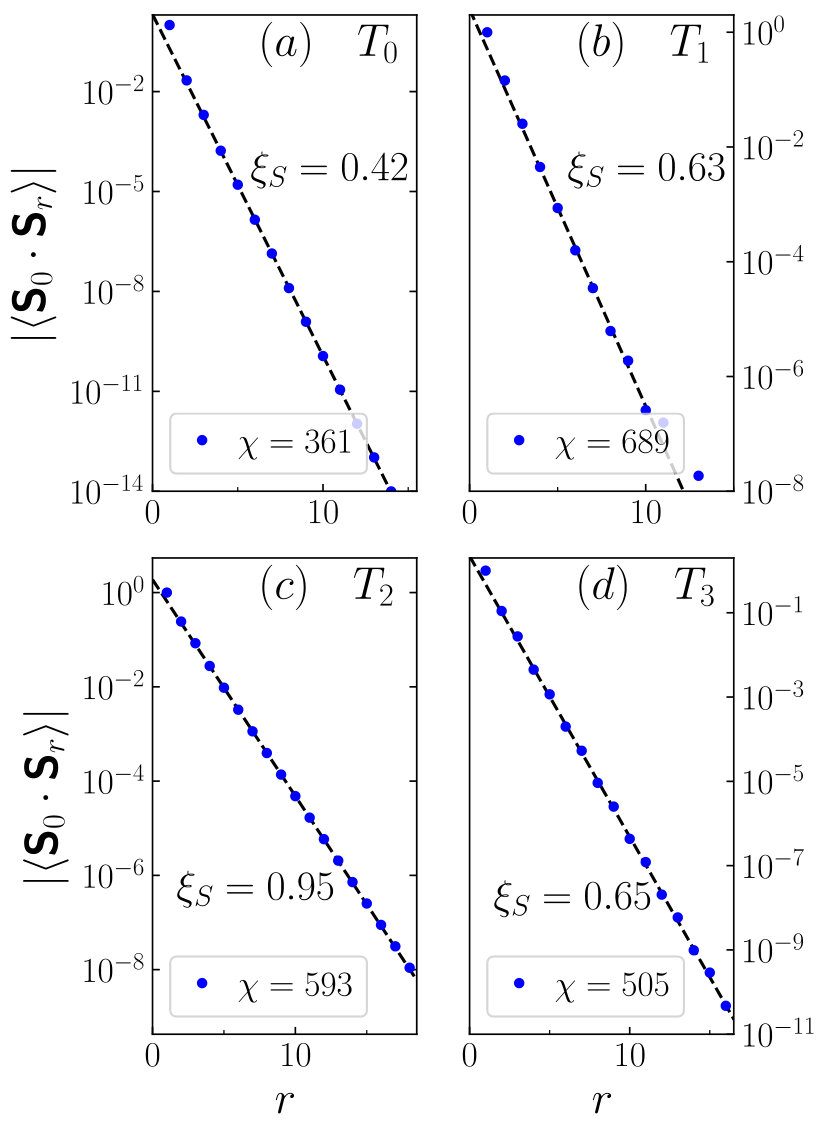 Figure 4
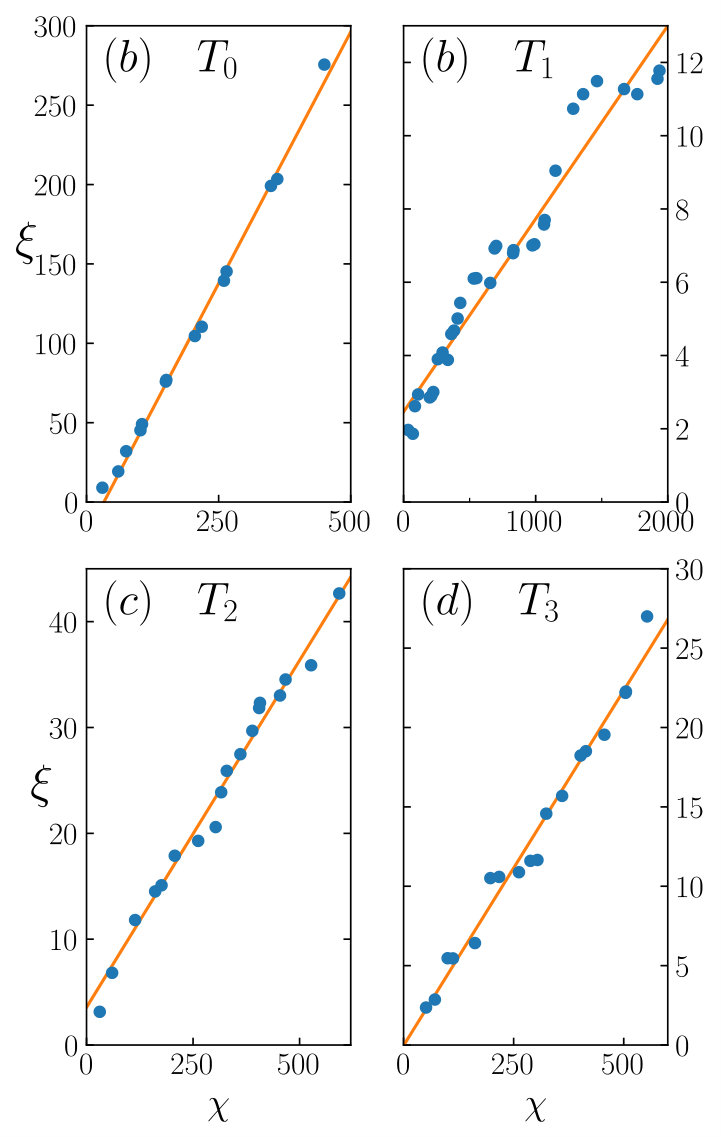 Figure 5
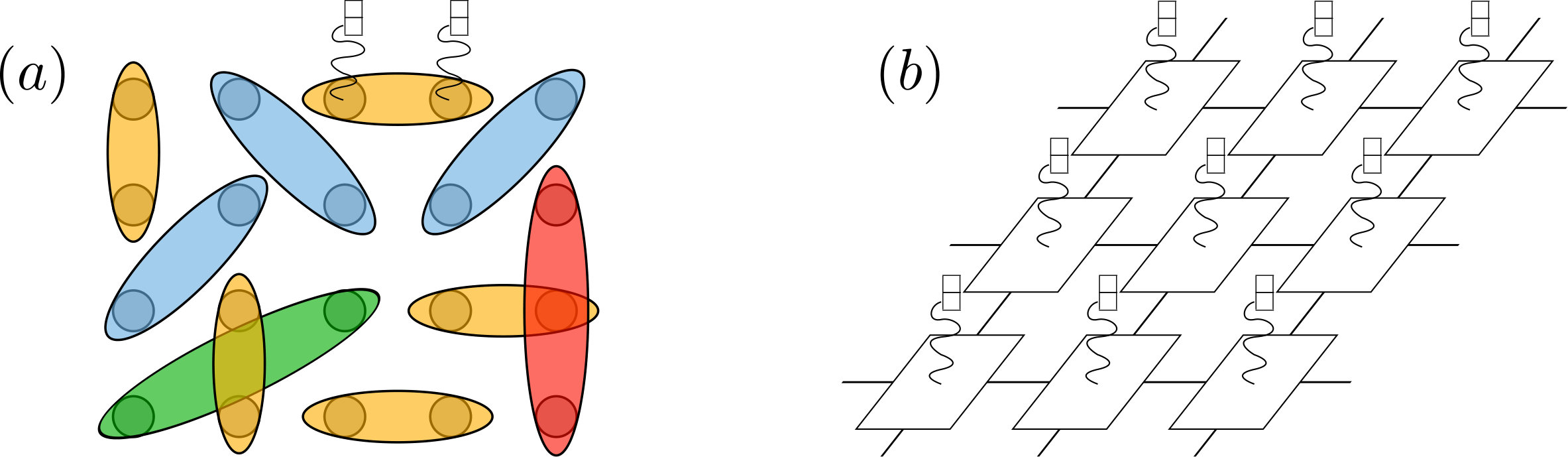 Figure 6
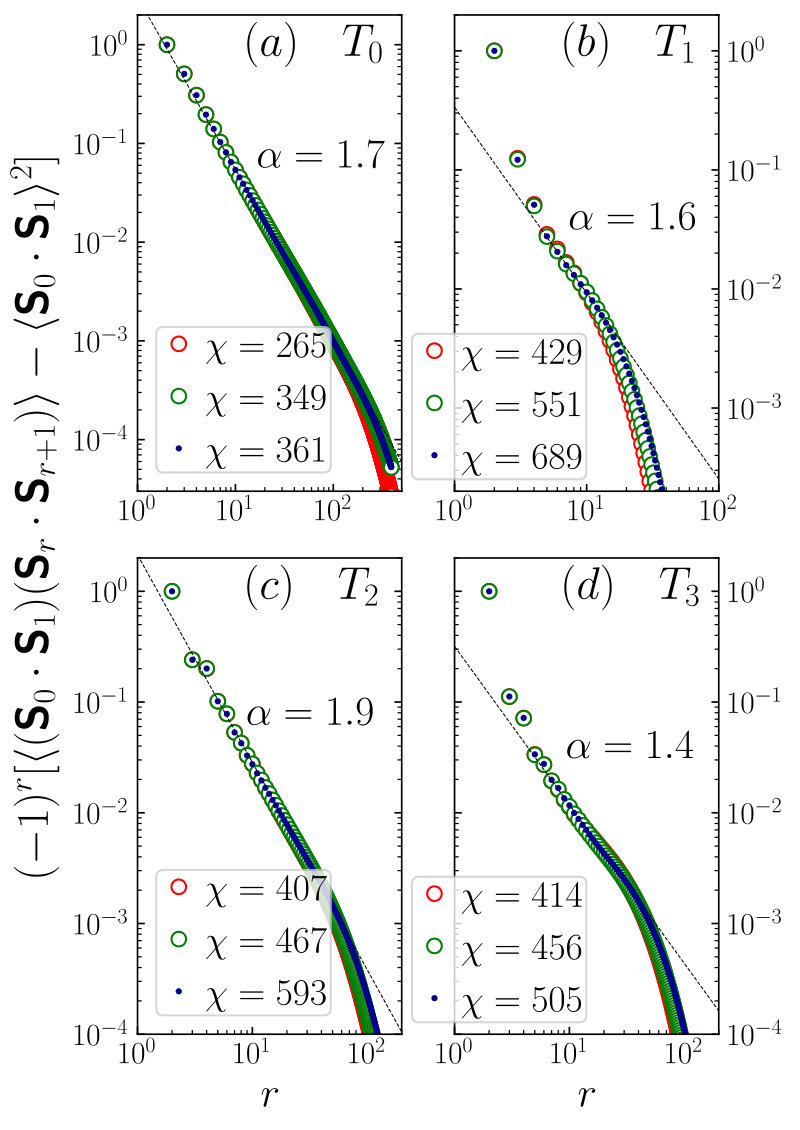 Figure 7
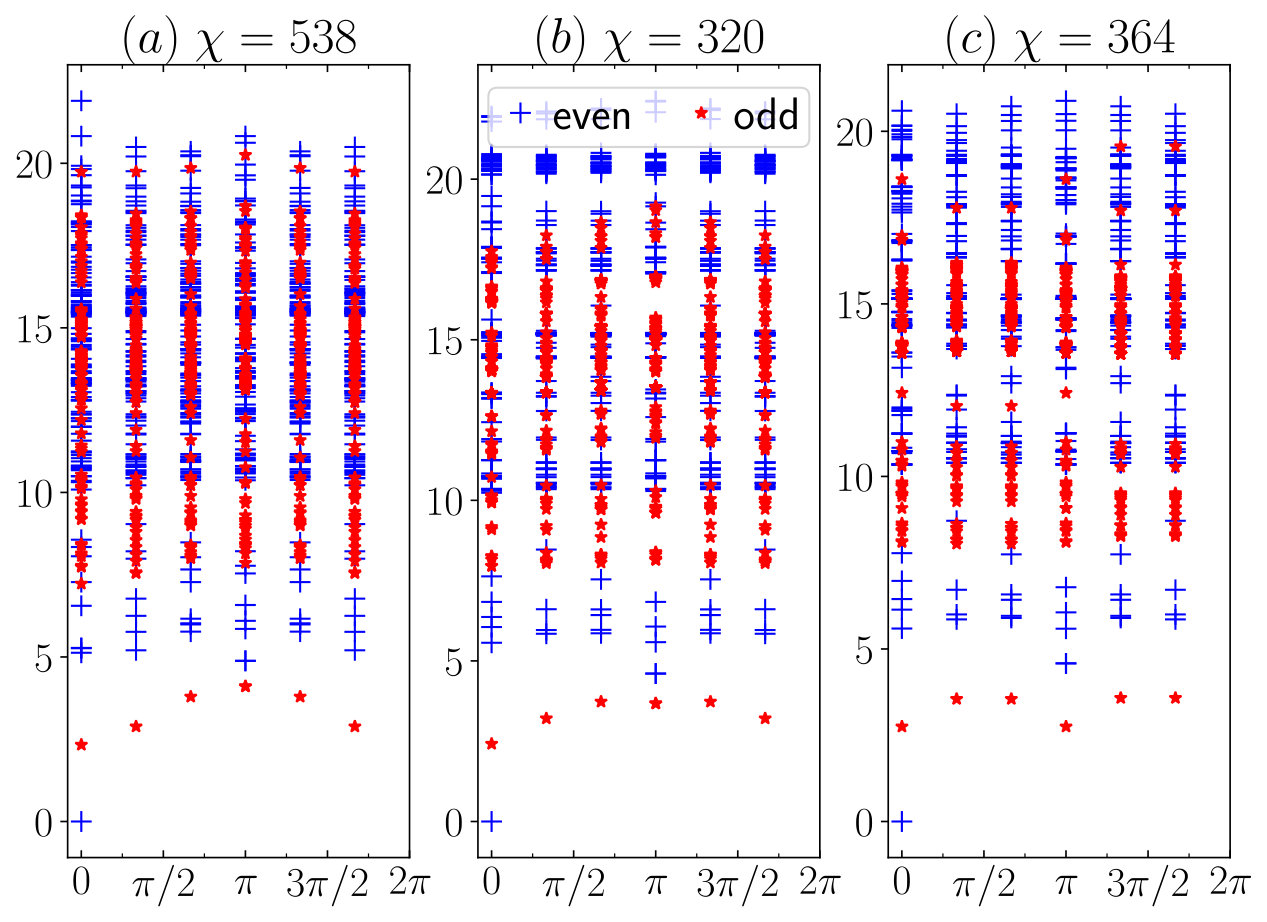 Figure 8
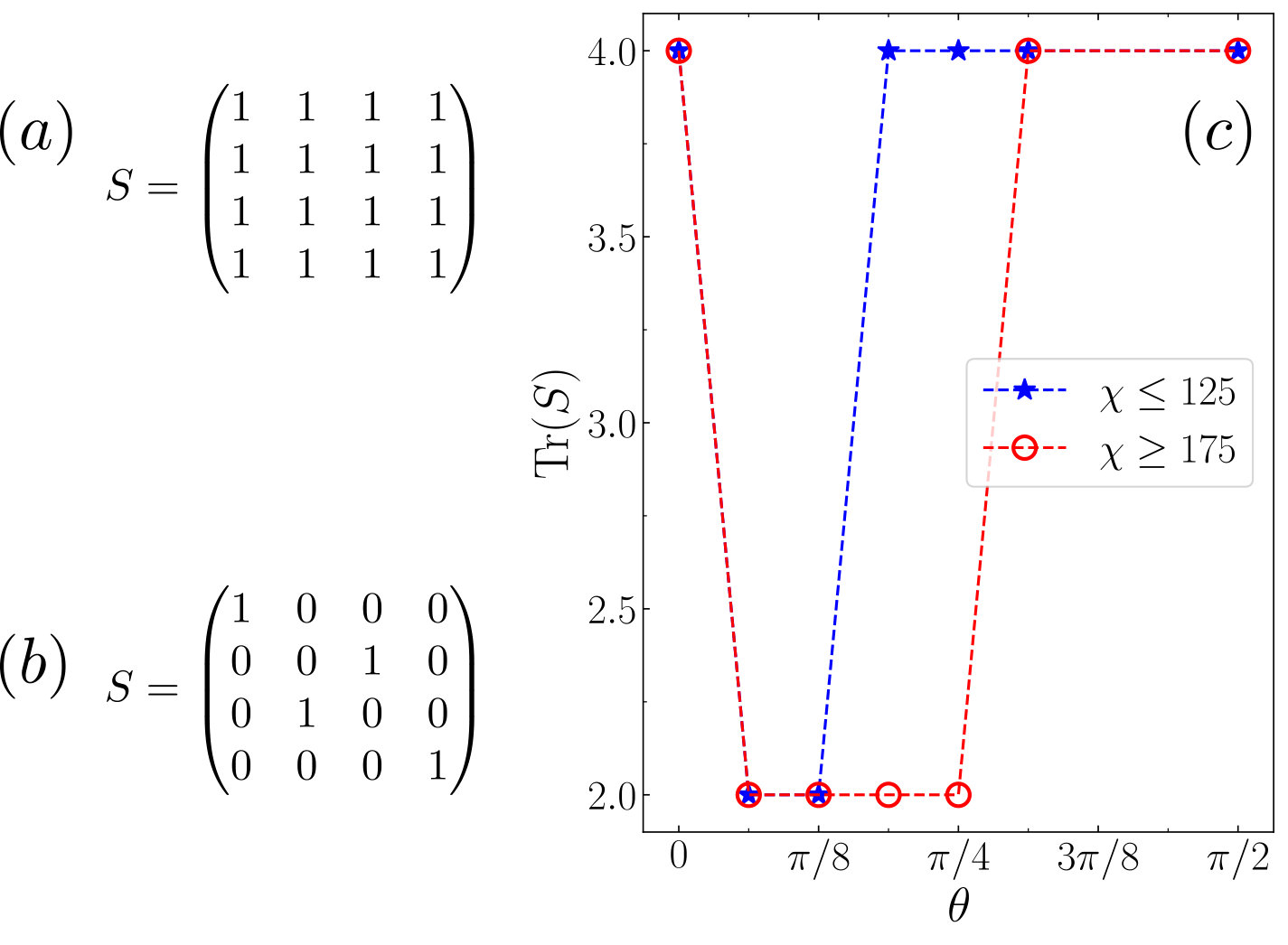 Figure 9
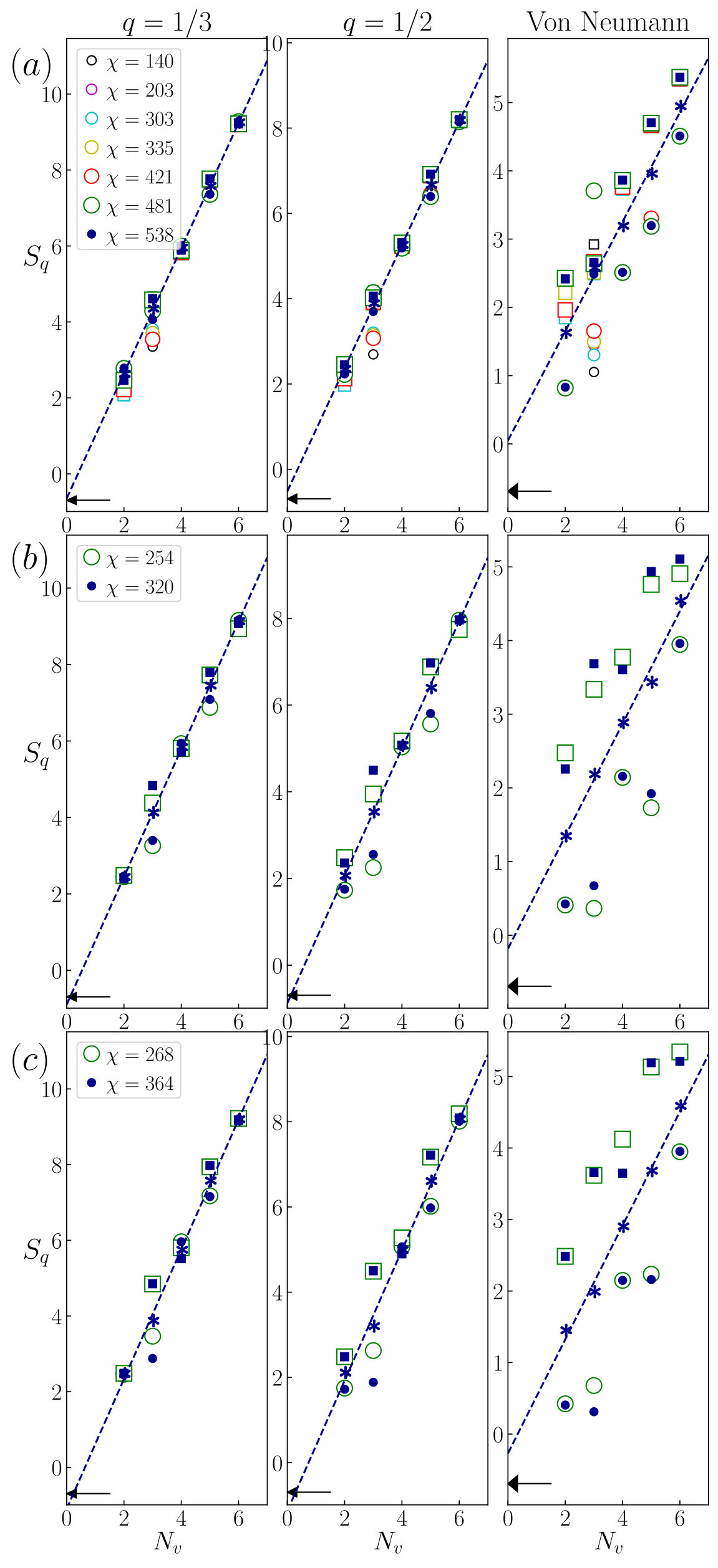 Figure 10
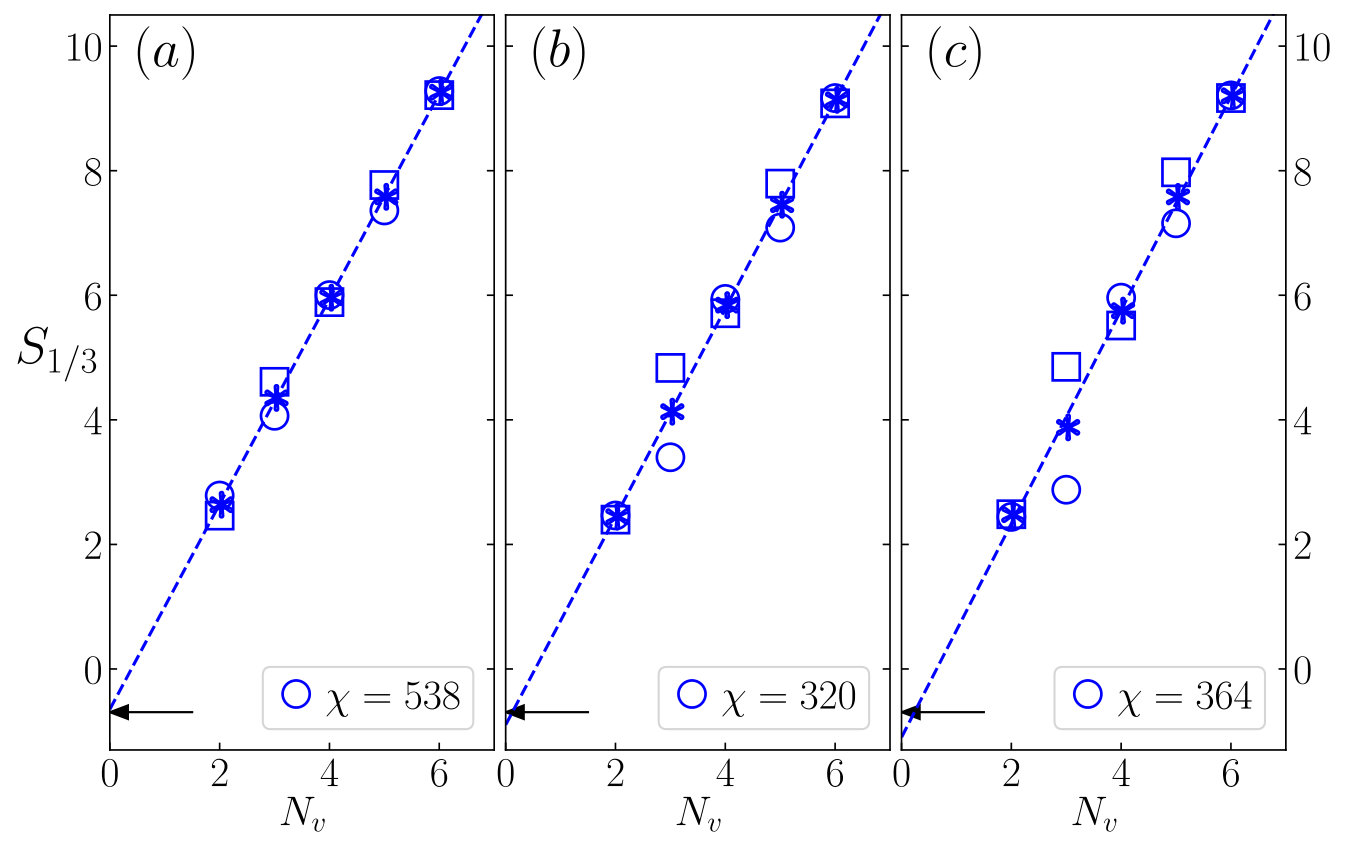 Figure 11
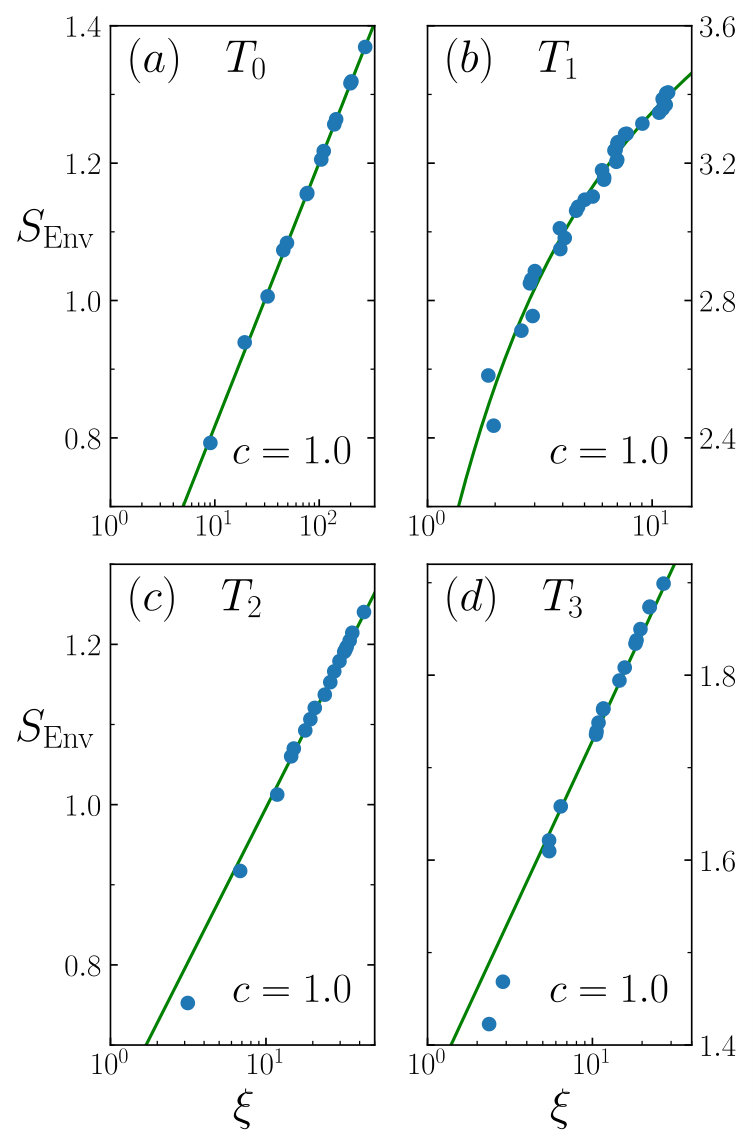 Figure 12
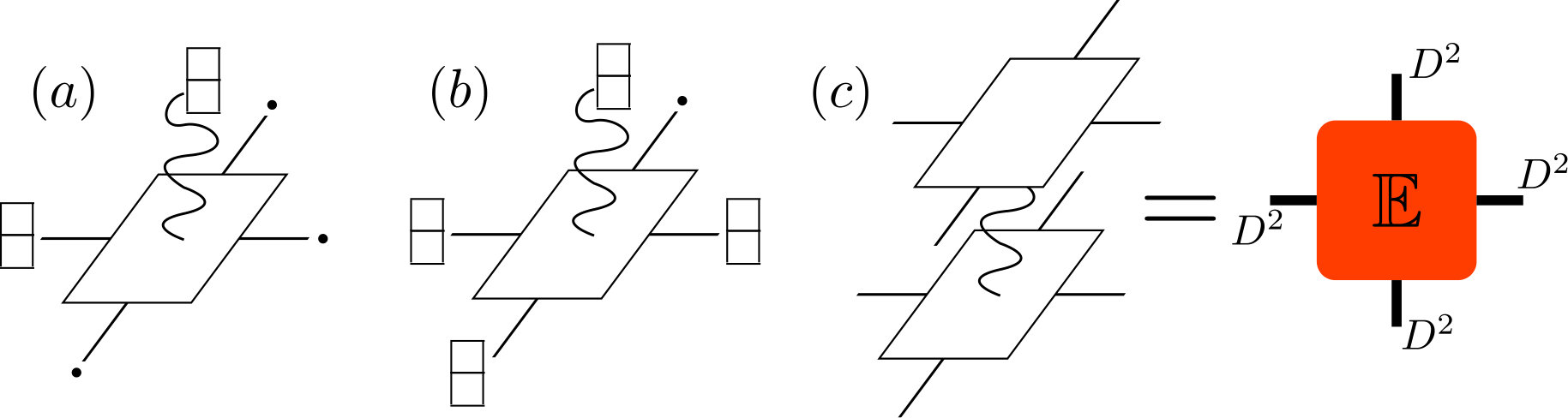 Figure 13
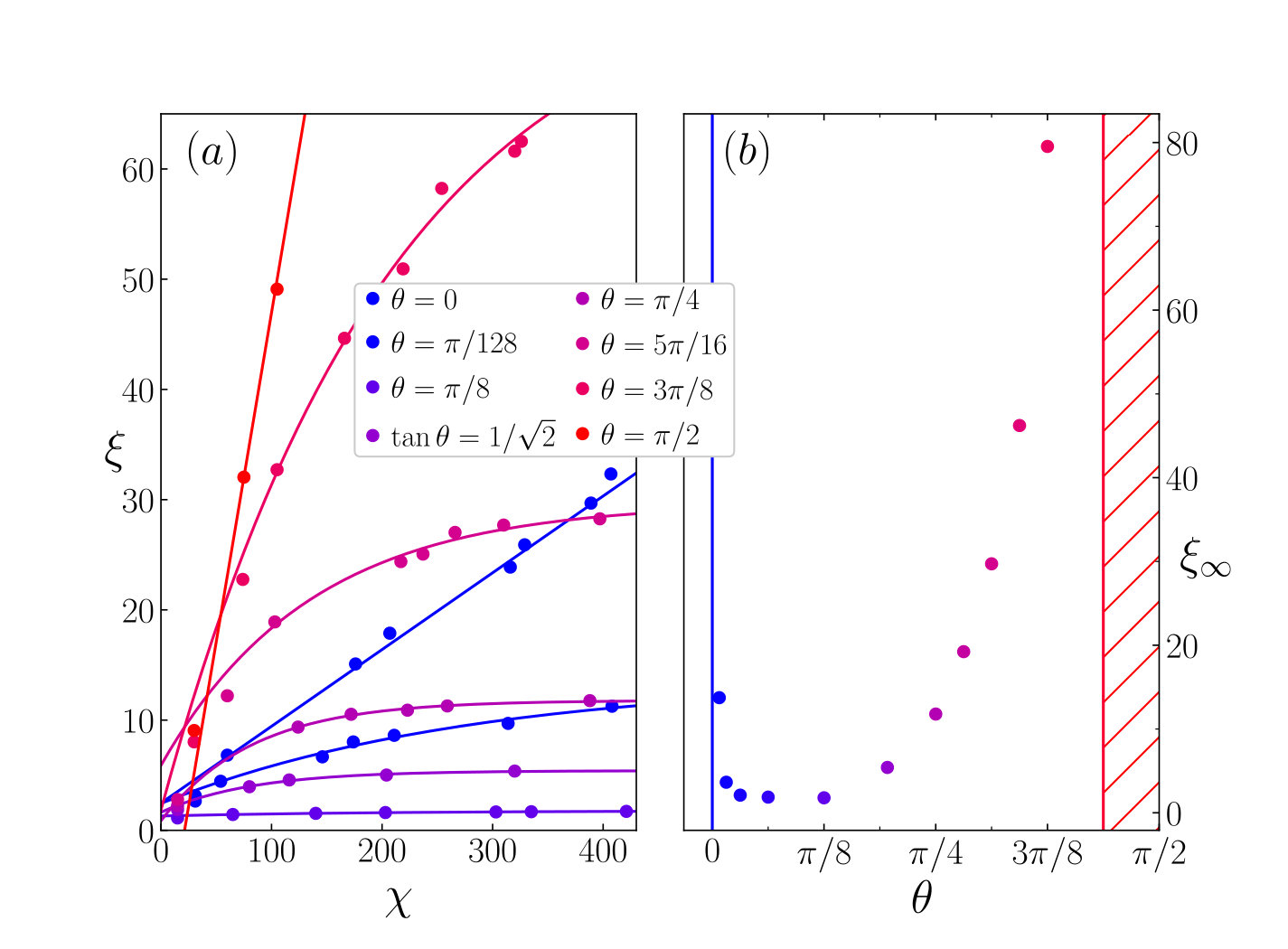 Figure 14
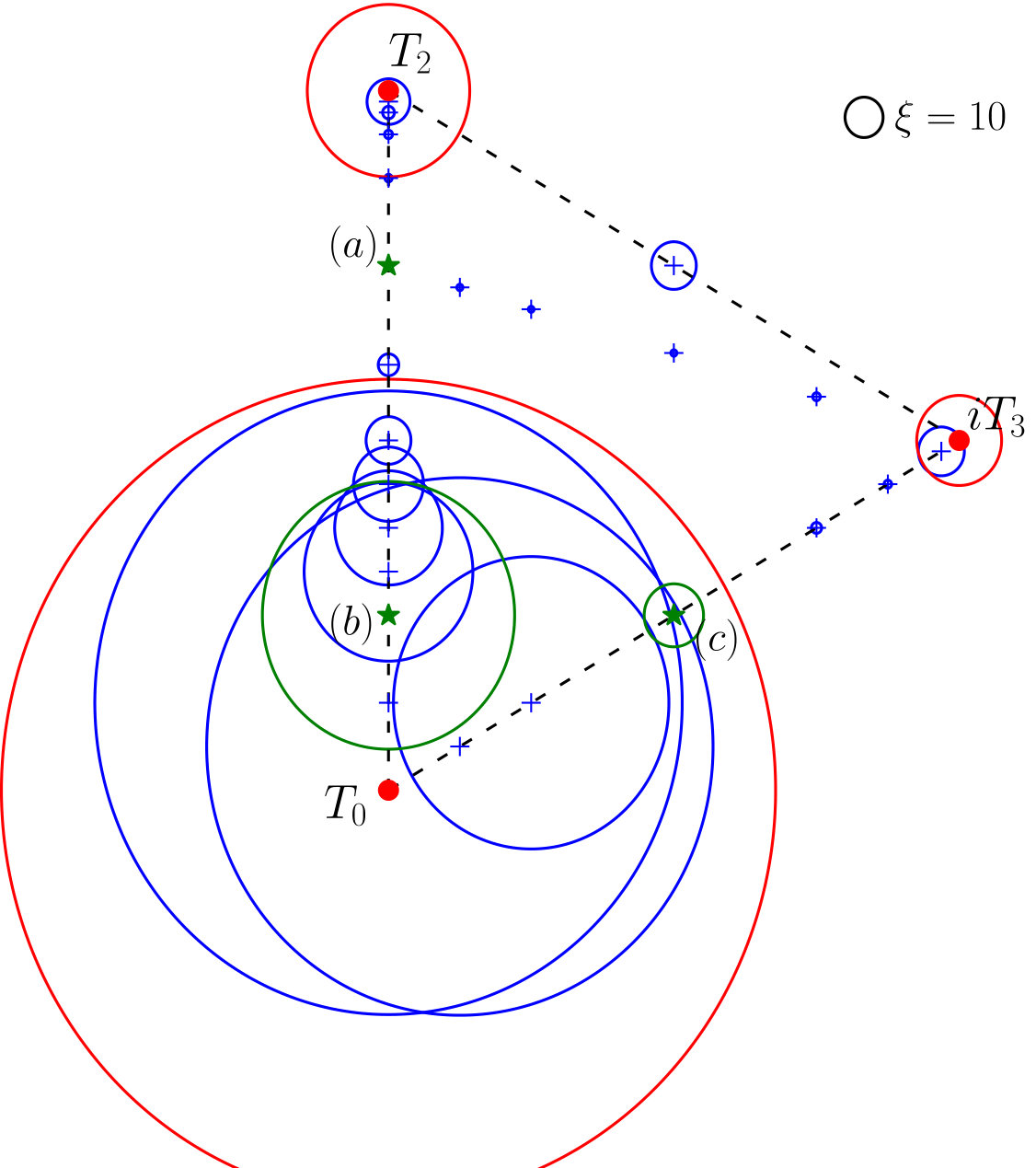 Figure 15
Peer Reviews
No public reviews on file for this paper yet. If you reviewed it on a platform where reviews are public (OpenReview, ICLR, NeurIPS, ICML), you can paste yours below so the community can read it here.
Videos
No videos yet. Explain this paper in a talk, walkthrough, or lecture? Add one.
Supplemental Materials: topological RVB spin liquid on the square lattice
Olivier Gauthé
Laboratoire de Physique Théorique, Université de Toulouse, CNRS, UPS, France
Sylvain Capponi
Laboratoire de Physique Théorique, Université de Toulouse, CNRS, UPS, France
Didier Poilblanc
Laboratoire de Physique Théorique, Université de Toulouse, CNRS, UPS, France
Institute of Theoretical Physics, École Polytechnique Fédérale de Lausanne (EPFL), CH-1015 Lausanne, Switzerland
I Bond operator
Two singlets can be made from the two representations 6 or 1 of SU(4). Thus, there exist two linearly independent projectors on a singlet state, which are matrices of dimension . We reshape them as matrices (which are no more projectors in the mathematical sense) and as explained in the article we choose an angle between the projectors and . The states of the 6-representation labelled as |0\big{>}, |1\big{>}, |2\big{>}, |3\big{>}, |4\big{>}, |5\big{>} are defined by their (Cartan) quantum numbers , , , , and , respectively. The last |6\big{>} state corresponds to the 1-singlet. With this convention of ordering the vectors of the representation, the projector we apply reads
[TABLE]
To avoid dealing explicitly with it in our tensor network algorithm, we absorb in the definition of the tensor . More precisely, we consider the square root of - which is a complex symmetric matrix - and contract it on every physical leg of the initial tensor as shown in Fig 1 . The double layer tensor is then computed after this operation is done and it turns out that it also exhibits the same +i symmetry as the original tensor.
II CTMRG algorithm
Thanks to rotation invariance, we renormalize only one corner instead of doing a full update on the four corners. While diagonalizing the new corner (see Fig. 1 ), we obtain a unitary transfer matrix . This matrix is used to renormalize the edge tensor , where we add another tensor to as shown in Fig. 1 .
III Correlation lengths and correlation functions
We have computed the (maximum) correlation length of the system using the Lanczos algorithm to diagonalize the approximate transfer matrix. is a function of the corner matrix dimension and for a gapped wavefunction, the correlation length converges exponentially to a finite value . For a critical wavefunction, grows linearly with as we can see in Fig. 2 for the wavefunctions defined by , , and . Note that, in that case, the maximum correlation length extracted from the spectrum of the transfer matrix corresponds in fact to the diverging dimer correlation length (see below). Also, for , the slope of vs is quite small so that only moderate or are accessible even for . This renders the estimation of the (2+0) central charge and dimer critical exponent more difficult for .
Letting aside the tensor , we have a 2-parameters space parametrized by
[TABLE]
We show the values of the (maximum) correlation length in this space in Fig 3 for several values of and . The cut parameter was taken around 350 but may be slightly different for the different circles. We note that gets larger when is approaching one of the , or corners of the triangular parameter space. It is however unclear on this plot whether there exists any critical region in the vicinity of the three elementary critical wavefunctions. Nevertheless, a finite- scaling analysis suggests that there is indeed such a (small) extended critical region around the corner (see main text).
From the converged and tensors one can construct the environment of any rectangular subsystem. Using an (infinitely long) strip delimited by two chains of tensors, we have computed first the expectation value of the observable for all distance in the strip direction, as plotted in Fig 4 for the four tensors . We observe a clear exponential decay with a very short ”spin” correlation length . We have also computed the dimer-dimer correlation function in Fig 5. This observable has long range correlations with algebraic decay, below a finite- induced length scale (of the order of the maximum correlation length ). As a consequence, only for large enough can one fit the algebraic behavior on a sufficiently large range of distances to obtain accurate values of the critical exponent.
IV Boundary properties
Let us consider the PEPS on an infinitely long cylinder of finite circumference partitioned into two halves. copies of the tensor are contracted to construct the edges of the two semi-infinite half-cylinders. This vector of dimension is then reshaped into a boundary matrix of shape . The operator defined on the one-dimensional virtual space of the cut is related by an isometry (which maps two-dimensions to one-dimension and conserves the spectrum) to the actual reduced density matrix Cirac et al. (2011) defined by tracing out the physical degrees of freedom of half of the infinite cylinder. The operator splits into two topological sectors and we normalize those blocks independently to have both traces equal to 1.
The Renyi entanglement entropy associated to the partition of the cylinder is defined from the boundary density matrix as , the Von Neumann entropy being the limit . The entanglement entropy satisfies the area low i.e. it scales with the length of the cut and its sub-leading correction (constant topological entropy) characterizes the topological nature of the SL. We have split the entropy into its two contributions coming from the even and odd topological sectors (note that the definitions of even and odd are exchanged when is odd) in order to observe the topological entropy expected for a SL. We have computed for three values of the parameter and , labeled in Fig 3: , , and plotted it for and in Fig 6. We note that as grows, the extrapolation on the vertical axis deviates substantially from the expected value, in agreement with Ref. Jiang et al., 2013.
The entanglement spectrum Li and Haldane (2008) is the spectrum of the entanglement Hamiltonian defined as . The entanglement spectrum is shown in Fig 7 for the three points , and . The ground state of is always an even singlet and the first excitation is an odd 6 irrep. We believe the excitation energy remains finite for i.e. the entanglement spectrum remains gapped. The points and correspond to real wavefunctions and we indeed observe a symmetry in the spectrum associated to time-reversal () and parity () symmetries. The point labels a complex wavefunction with symmetry that breaks and . We observe that the even sector of the entanglement spectrum still exhibits the symmetry, but not the odd sector, which follows a symmetry. We believe this is due to the fact that the product is still preserved. Note also that we have not observed the emergence of gapless chiral edge modes, the entanglement spectrum being probably gapped.
V Tensor expressions
For clarity, we give here the coefficients of the unnormalized tensors which are integer values. However, the parametrization of the PEPS tensor involves the tensors normalized with the Frobenius norm. These four tensors are orthogonal for the dot product defined by this norm. We recall that the first index labels the physical variable (varying from 0 to 5) and the four subsequent indices the virtual variables (varying from 0 to 6) on the links (in e.g. clockwise direction).
The reference list from the paper itself. Each links out to its DOI / PubMed record.
- 1Orús and Vidal (2009) R. Orús and G. Vidal, “Simulation of two-dimensional quantum systems on an infinite lattice revisited: Corner transfer matrix for tensor contraction,” Phys. Rev. B 80 , 094403 (2009) . · doi ↗
- 2Cirac et al. (2011) J. I. Cirac, D. Poilblanc, N. Schuch, and F. Verstraete, “Entanglement spectrum and boundary theories with projected entangled-pair states,” Phys. Rev. B 83 , 245134 (2011) . · doi ↗
- 3Jiang et al. (2013) H.-C. Jiang, R. R. P. Singh, and L. Balents, “Accuracy of topological entanglement entropy on finite cylinders,” Phys. Rev. Lett. 111 , 107205 (2013) . · doi ↗
- 4Li and Haldane (2008) H. Li and F. D. M. Haldane, “Entanglement Spectrum as a Generalization of Entanglement Entropy: Identification of Topological Order in Non-Abelian Fractional Quantum Hall Effect States,” Physical Review Letters 101 , 010504 (2008) . · doi ↗