Quantum correlation of light mediated by gravity
Haixing Miao, Denis Martynov, Huan Yang, Animesh Datta

TL;DR
This paper proposes a tabletop experiment to test the quantum nature of gravity by observing squeezing in light correlations between two optomechanical cavities, linking gravity's quantumness to measurable optical effects.
Contribution
It introduces a novel scheme to detect quantum gravity effects through light correlation squeezing in optomechanical systems, advancing experimental approaches in quantum gravity research.
Findings
Squeezing remains nonzero if gravity is quantum in the Newtonian limit.
Squeezing increases as the mechanical properties of mirrors improve.
The scheme offers a systematic way to test quantum gravity experimentally.
Abstract
We propose to explore the quantum nature of gravity using the correlation of light between two optomechanical cavities, and the quantumness of the correlation is witnessed by squeezing. As long as the gravity between the end mirrors of two cavities is quantum in the Newtonian limit, we show that the squeezing is always nonzero and monotonically increases as the mechanical property of the mirrors is improved. The proposed scheme provides a new pathway for testing the quantum nature of gravity systematically with tabletop experiments.
Click any figure to enlarge with its caption.
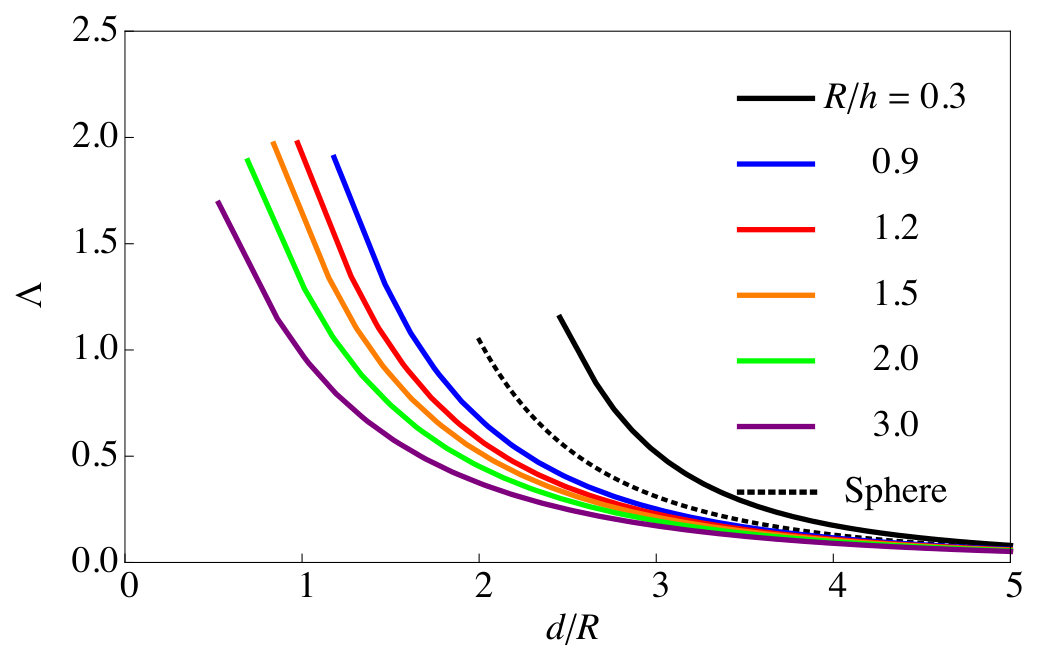 Figure 1
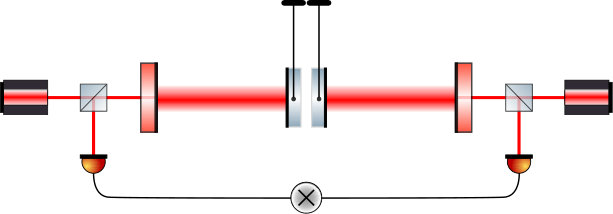 Figure 2
Peer Reviews
No public reviews on file for this paper yet. If you reviewed it on a platform where reviews are public (OpenReview, ICLR, NeurIPS, ICML), you can paste yours below so the community can read it here.
Videos
No videos yet. Explain this paper in a talk, walkthrough, or lecture? Add one.
Quantum Correlation of Light Mediated by Gravity
Haixing Miao
School of Physics and Astronomy, and Institute for Gravitational Wave Astronomy, University of Birmingham, Edgbaston, Birmingham B15 2TT, United Kingdom
Denis Martynov
School of Physics and Astronomy, and Institute for Gravitational Wave Astronomy, University of Birmingham, Edgbaston, Birmingham B15 2TT, United Kingdom
Huan Yang
Perimeter Institute for Theoretical Physics, Waterloo, ON N2L2Y5, Canada
University of Guelph, Guelph, ON N2L3G1, Canada
Animesh Datta
Department of Physics, University of Warwick, Coventry CV4 7AL, United Kingdom
Abstract
We propose to explore the quantum nature of gravity using the correlation of light between two optomechanical cavities, and the quantumness of the correlation is witnessed by squeezing. As long as the gravity between the end mirrors of two cavities is quantum in the Newtonian limit, we show that the squeezing is always nonzero and monotonically increases as the mechanical property of the mirrors is improved. The proposed scheme provides a new pathway for testing the quantum nature of gravity systematically with tabletop experiments.
*Introduction — *Constructing a consistent and verifiable quantum theory of gravity has been a longstanding challenge of modern physics Kiefer (2006); Woodard (2009); Oriti (2009), which is partially due to the difficulty in experimentally observing quantum effects of gravity. This, to certain extents, motivates some theoretical models that treat gravity as a fundamental classical entity Møller (1962); Rosenfeld (1963); Kibble (1978); Adler (2007); Carlip (2008); Yang et al. (2013); Anastopoulos and Hu (2014); Bahrami et al. (2014) or being emerged from yet unknown underlying microphysics Jacobson (1995); Verlinde (2011); Padmanabhan (2015); Hossenfelder (2017). Experimentally probing the quantum nature of gravity is therefore essential for providing hints towards constructing the correct model Howl et al. (2018); Carney et al. (2019). Recently, two experimental proposals have been made to demonstrate gravity-induced quantum entanglement between two mesoscopic test masses Bose et al. (2017); Marletto and Vedral (2017), motivated by an early suggestion of Feynman R. P. Feynman (1957). Both involve two matter-wave interferometers located close to each other such that their test masses can be entangled through the gravitational interaction. Whether gravity-mediated entanglement in the Newtonian limit establishes the quantumness of gravity or not has been debated Krisnanda et al. (2017); Anastopoulos and Hu (2018); Hall and Reginatto (2018); Belenchia et al. (2018); Reginatto and Hall (2018), because the radiative degrees of freedom—the graviton, are not directly probed in these experiments. Nonetheless, such experiments are important steps towards understanding gravity in the quantum regime Diósi (1987); Penrose (1996); Bassi et al. (2013); Helou et al. (2017); Vinante et al. (2017); Bassi et al. (2017).
The challenge of demonstrating gravity-induced entanglement is achieving a very low thermal decoherence rate, and is beyond what can be achieved with the state-of-the-art instruments, as illustrated in the Appendix A. In this paper, we propose a tabletop optomechanical experiment to explore gravity-mediated quantum correlation of light. The strength of the correlation is quantified by squeezing, which is non-classical according to the Glauber-Sudarshan distribution function Glauber (1963); Sudarshan (1963); Titulaer and Glauber (1965). The setup is shown schematically in Fig. 1. Two optomechanical cavities are placed close to each other with their end mirrors interacting through gravity. In contrast to the single-photon nonlinear regime studied by Balushi et al. Al Balushi et al. (2018), we consider the linear regime with the cavity driven by a coherent laser field. The quantum correlation is inferred by squeezing of the outgoing field of the cavity A conditional on the homodyne measurement of the outgoing field of B.
If the gravitational interaction between two mirrors is quantum in the Newtonian limit, namely,
[TABLE]
we will show such a conditional squeezing is always nonzero. Observing a sizeable squeezing however requires the optomechanical cavities to be quantum radiation pressure limited, in which case the squeezing can be approximately as
[TABLE]
It only depends on the gravitational constant , material density , mechanical frequency , and quality factor .
The statistical uncertainty of the measurement will affect the squeezing signal. Fortunately, because the system is in a steady state, the signal-to-noise ratio (SNR) increases as the measurement time . Achieving a unity SNR requires
[TABLE]
Both and scale rapidly with , and low-frequency mechanical oscillators are therefore preferable.
There are several optomechanical experiments that have achieved the quantum radiation pressure limited regime but with high-frequency mechanical oscillators Purdy et al. (2013a); Møller et al. (2017); Rossi et al. (2018); Cripe et al. (2018); Barzanjeh et al. (2018); Delić et al. (2020) and in particular, Ref. Barzanjeh et al. (2018) reported a steady-state entanglement between light mediated by a mechanical oscillator. Advancing these experimental techniques towards low frequencies, also an effort in the gravitational-wave community Punturo et al. (2010); Adhikari (2014); The LIGO Scientific Collaboration (2017); Yu et al. (2018), is the key to measure the gravity-mediated quantum correlation.
*Dynamics — *The derivation of Eq. (Quantum Correlation of Light Mediated by Gravity) follows the linear-dynamics analysis in quantum optomechanics Chen (2013); Aspelmeyer et al. (2014): Solving the linear Heisenberg equations of motion for dynamical variables, which are the mirror position and quadratures of the outgoing optical fields, and representing them in terms of external fields, which are the ingoing optical fields and the thermal bath field.
The total Hamiltonian of the system is . The individual cavity is quantified by the standard linearised optomechanical Hamiltonian, which describes the radiation-pressure coupling between the optical field and the centre of mass motion of the mirror (mechanical degree of freedom). The interaction part of for cavity A is (similarly for B):
[TABLE]
We denote as the amplitude quadrature of the cavity mode, which is conjugate to the phase quadrature : , and as the mirror position normalised with respect to its zero-point motion . The parameter describes the optomechanical coupling strength:
[TABLE]
which depends on the intra-cavity optical power , the laser frequency , the mirror mass , and the cavity length .
Up to the second-order of the mirror position, the non-trivial interaction part of in Eq. (1) is
[TABLE]
Here we have assumed two mirrors having the same mechanical frequency and mass . The characteristic gravitational interaction frequency is equal to when the two mirrors have a mean separation much larger than their size, which is the case for mesoscopic levitating masses considered in Refs. Bose et al. (2017); Marletto and Vedral (2017); Qvarfort et al. (2018); Delić et al. (2020). For macroscopic test mass mirrors of gram or kilogram scale, their separation can be made comparable to their size (yet not affected by e.g. the Casimir force), and we have
[TABLE]
which does not explicitly depend on the mirror mass. The form factor is determined by the geometry of two mirrors. It is for two spheres with the mean separation equal to twice of the radius, and we assume throughout the paper, which is a good approximation for two closely-located disks with the radius being 1.5 times its thickness (see Appendix B for details).
Solving the Heisenberg equations of motion results in the following frequency domain input-output relation for cavity A (similarly for cavity B):
[TABLE]
where we have assumed that the cavity bandwidth is much larger than the frequency of interest so that the cavity mode can be adiabatically eliminated, cf. Eq. (2.68) of Ref. Chen (2013). The position of mirror A satisfies
[TABLE]
Here is the susceptibility with the mechanical damping rate ; is the normalised thermal Langevin force according to the fluctuation-dissipation theorem Callen and Welton (1951); Kubo (1966), and its double-sided spectral density is equal to with the thermal occupation number in the high-temperature limit.
The final input-output relation involving both cavities is
[TABLE]
Here quantifies the correlation between the amplitude quadrature and the phase quadrature in the individual cavity and is responsible for the optomechanical squeezing Kimble et al. (2001); Brooks et al. (2012); Safavi-Naeini et al. (2013); Purdy et al. (2013b); Buchmann et al. (2016). The two parameters and quantify the output response to the thermal force noise. As illustrated in Fig. 2, the dimensionless parameter quantifies the mutual correlation between two cavities and is defined as . Its magnitude reaches the maximum at the mechanical frequency:
[TABLE]
The optomechanical cooperativity defined as
[TABLE]
is proportional to the number of intra-cavity photons Aspelmeyer et al. (2014). The fact that is proportional to shows that the optomechanical interaction coherently enhances the correlation by amplifying the quantum fluctuation of light.
*Quantum correlation and conditional squeezing — *Notice that the correlation reaches the maximum around the mechanical frequency within a narrow frequency bandwidth defined by . We can therefore focus on the quadratures of the outgoing fields around with a bandwidth comparable to (or the measurement time comparable to the damping time ). The corresponding normalised quadrature operators are defined as
[TABLE]
They satisfy , where we have approximated the Dirac delta function as . With such a normalisation, the uncertainty of or for the vacuum or coherent state is equal to 1.
Due to the quantum correlation, the uncertainty of the amplitude quadrature of A can be reduced after we measure the phase quadrature of B. The conditional uncertainty is obtained by minimising the residue over the filtering function :
[TABLE]
where we define the variance (similar for of ), and the covariance with being the density matrix. In obtaining the above result, we have used the fact that the ingoing optical field is in the vacuum state because the coherent amplitude is absorbed by the coupling rate Chen (2013); Aspelmeyer et al. (2014). The corresponding optimal Wiener filter is given by .
As we can see from Eq. (15), the conditional uncertainty of is always smaller than 1, which implies squeezing. To observe such a conditional squeezing experimentally, the estimation error due to a finite number of measurements needs to be smaller than the squeezing level. According to the standard estimation theory, the unbiased estimator for the conditional uncertainty for a known average is
[TABLE]
where is the conditional variance for the -th measurement sample and is the total number of samples. In our case, each sample corresponds to a measurement time of the order of the mechanical damping time . For a total measurement time of , we have
[TABLE]
Since follows the chi-squared distribution with degrees of freedom, the estimation error is equal to . It needs to be smaller than the squeezing level to achieve a unity SNR, which implies
[TABLE]
The above condition leads to a requirement on the minimum measurement time . For experimentally relevant parameters, we have and , we can approximate the denominator of Eq. (15) and Eq. (18) as . The resulting squeezing and also the minimum number of samples are shown in Fig. 3. They only depend on two characteristic dimensionless parameters: , the ratio between the optomechanical cooperativity and the thermal occupation number, and , solely determined by the gravity and the mechanical property of the mirror.
To obtain a sizeable squeezing, we learn from Fig. 3 that first needs to be large, which implies high-quality-factor, low-frequency test mass mirrors, and second the cooperativity shall be much larger than the mean thermal occupation number, namely,
[TABLE]
This corresponds to the quantum radiation pressure limited regime in optomechanics Aspelmeyer et al. (2014). In such a regime, the squeezing and minimum number of samples turn out to become independent of the optical property and only depend on the mechanical property. In particular, we have
[TABLE]
which, written in terms of dB, gives rise to Eq. (Quantum Correlation of Light Mediated by Gravity) shown in the introduction. The minimum number of samples to achieve a unity SNR can be approximated as
[TABLE]
The second approximation is satisfied for those parameter values assumed in Eq. (3) where we have shown the equivalent minimum measurement time.
*Conclusions and discussions — *To summarise, our approach for probing the quantum nature of gravity takes advantage of new advancements in quantum optomechanical experiments. It is complimentary to other approaches based upon matter-wave interferometers. In general, achieving a sizeable squeezing requires quantum radiation pressure limited systems with high-quality-factor, low-frequency mechanical test mass mirrors. Even though the squeezing signal does not explicitly depend on the size of the test mass mirror, having a low mechanical frequency usually implies macroscopic test masses. For illustration, we provide a possible set of sample parameters to reach of the order of 10 implicitly assumed in Eq. (Quantum Correlation of Light Mediated by Gravity) for and :
[TABLE]
which corresponds to a suspended high-finesse cavity with a gram-scale test mass mirror at room temperature, close to what has been achieved by the MIT group Corbitt et al. (2007). The gravity experiments with milligram test masses Schmöle et al. (2016); Matsumoto et al. (2018) can be promising if pushed to the low-frequency regime.
Let us consider the consequence of different outcomes of the measurement that we propose. If we do not detect a predicted level of squeezing after a careful calibration of the system, it will imply that the assumption on the gravity sector is invalid, cf. Eq. (1), as the quantum aspects of the optomechanical interactions have already been established experimentally. One compelling possibility then is that gravity is classical, so that it does not appear in the quantum interaction Hamiltonian. If we do observe a non-zero squeezing, we will be able to rule out classical models of gravity, in particular the Schrödinger-Newton (SN) type of classical gravity models—the gravity is sourced by the expectation value of quantum matters Møller (1962); Rosenfeld (1963); Kibble (1978); Adler (2007); Carlip (2008); Yang et al. (2013); Anastopoulos and Hu (2014); Bahrami et al. (2014), which does not lead to quantum correlation. This is because the corresponding SN two-body interaction for the optomechanical setup would be, cf. Eq. (27) of Ref. Yang et al. (2013),
[TABLE]
According to Eq. (10), the quantum part of or is zero, as the expectation value of the quantum fluctuation is zero. For future study, it would be interesting also to explore the predictions of emergent gravity models Jacobson (1995); Verlinde (2011); Padmanabhan (2015); Hossenfelder (2017) on the conditional squeezing level in this proposed optomechanical setup.
*Acknowledgements — *We would like to thank Yanbei Chen, Chris Collins, Bassam Helou, and Dominic Branford for fruitful discussions, and Joe Bentley for proofreading the manuscript. H.M. is supported by UK STFC Ernest Rutherford Fellowship (Grant No. ST/M005844/11). H.Y. is supported by the Natural Sciences and Engineering Research Council of Canada, and by Perimeter Institute for Theoretical Physics. D.M. acknowledges the support from the Institute for Gravitational-wave Astronomy at University of Birmingham. A.D. is supported, in part, by the UK EPSRC (EP/K04057X/2), and the UK National Quantum Technologies Programme (EP/M01326X/1, EP/M013243/1).
Appendix A Condition for realising gravity-mediated entanglement
Here we try to derive the general condition for achieving entanglement between the outgoing fields of two cavities. The entanglement measure can be derived from their total covariance matrix where the superscript “T” means transpose and the subscript “sym” means symmetrisation: , more explicitly,
[TABLE]
The diagonal components are
[TABLE]
The off-diagonal one, describing the cross correlation, is
[TABLE]
All the above quantities , , and are referring to their values at , in particular,
[TABLE]
Note that is complex and it leads to the complex squeezing, which is unaccessible with the standard homodyne detection Purdy et al. (2013b); Buchmann et al. (2016). That is why the noise ellipse of A illustrated in Fig. 1 shows no correlation between the amplitude quadrature and the phase quadrature of A.
The figure of merit for quantifying such a bipartite Gaussian entanglement is the so-called logarithmic negativity Simon (2000); Horodecki et al. (2009), which is defined as
[TABLE]
where . A nonzero implies the existence of entanglement. In our case, the first term is equal to
[TABLE]
Having it larger than zero requires
[TABLE]
When using the fact that and , we arrive at the following condition:
[TABLE]
As an order of magnitude, it implies
[TABLE]
This requirement is beyond what we can achieve with the state-of-the-art instruments, and needs further experimental efforts. Note that a related analysis of steady-state Gaussian entanglement in the case of two levitating nanobeads has also been presented by Qvarfort et al. Qvarfort et al. (2018).
The above requirement Eq. (31) turns out to be equally applicable to the free-mass case with the resonant frequency , as does not appear explicitly in the equation. We consider the standard thermal decoherence model. The corresponding master equation for the density matrix of the two test masses takes the following diffusive form:
[TABLE]
where is the characteristic length scale and is equal to the Standard Quantum Limit (SQL) Braginsky and Khalilli (1992) for Gaussian states and the size of the quantum superposition for non-Gaussian states. For the quantum entanglement to survive in the presence of the thermal decoherence, we require the interaction rate to be larger than the decoherence rate:
[TABLE]
where is the norm that quantifies the magnitude of the gravitational-interaction energy when A and B are at the quantum level.
In the case of much smaller than the mean separation , we have, according to Eq. (6),
[TABLE]
where we have assumed that is the same for A and B. The condition Eq. (34) leads to Eq. (31) for being the order of 1. Similarly, when is much larger than the mean separation , e.g. the non-Gaussian superposition state in the setup using the matter-wave interferometers Bose et al. (2017); Marletto and Vedral (2017), the corresponding gravitational interaction energy is simply
[TABLE]
Eq. (34) results in
[TABLE]
where in the last inequality we have used the fact that is at most of the order of the matter density . Therefore, regardless whether the two test masses (either being free mass or harmonic oscillator) are prepared in Gaussian states or non-Gaussian states, the same requirement universally applies for achieving the gravity-mediated entanglement in the presence of thermal decoherence.
Appendix B Dependence of on the test mass geometry
Depending on the geometry of the two test masses, the form factor in defining in Eq. (7) is different. The simplest case is having two identical spheres with a uniform density, and when their mean separation is equal to twice of their radius. Here we consider two test masses that have the shape of a disk which is usually the geometry for mirrors of optical cavities. Since there is no analytical expression for the Newtonian force between two disks, we perform numerical integration of the force for disks with different ratios between the radius and the thickness . We then take the derivative numerically with respect to their mean separation along the optical axis to obtain for different mean separations and the maximum is achieved when their surfaces are close to each other with approximately equal to . Fig. 4 shows the result, and we can see the maximum value of for is around 2.0, which is the one we assumed in the main text.
The reference list from the paper itself. Each links out to its DOI / PubMed record.
- 1Kiefer (2006) C. Kiefer, Annalen der Physik (Leipzig) 15 , 129 (2006) .
- 2Woodard (2009) R. P. Woodard, Reports on Progress in Physics 72 , 126002 (2009) . · doi ↗
- 3Oriti (2009) D. Oriti, ed., Approaches to Quantum Gravity: Toward a New Understanding of Space, Time and Matter (Cambridge University Press, Cambridge, 2009). · doi ↗
- 4Møller (1962) C. Møller, Colloques Internationaux CNRS 91 , 1 (1962).
- 5Rosenfeld (1963) L. Rosenfeld, Nuclear Physics 40 , 353 (1963) . · doi ↗
- 6Kibble (1978) T. W. B. Kibble, Communications in Mathematical Physics 64 , 73 (1978) . · doi ↗
- 7Adler (2007) S. L. Adler, Journal of Physics A: Mathematical and Theoretical 40 , 755 (2007) . · doi ↗
- 8Carlip (2008) S. Carlip, Class. Quant Grav. 25 , 154010 (2008) . · doi ↗