Reply to "Comment on `Past of a quantum particle revisited' "
Berthold-Georg Englert, Kelvin Horia, Jibo Dai, Yink Loong Len, Hui, Khoon Ng

TL;DR
This paper defends previous findings on the quantum particle's past, refutes objections, and highlights a retrocausation issue in Vaidman's definition, emphasizing ongoing debates in quantum interpretation.
Contribution
It provides a rebuttal to critiques of earlier work and introduces a retrocausation problem in defining a quantum particle's past.
Findings
Refutes invalid objections by Peleg and Vaidman
Identifies a retrocausation problem in Vaidman's definition
Reaffirms previous quantum particle past findings
Abstract
We stand by our findings in Phys. Rev A. 96, 022126 (2017). In addition to refuting the invalid objections raised by Peleg and Vaidman, we report a retrocausation problem inherent in Vaidman's definition of the past of a quantum particle.
Click any figure to enlarge with its caption.
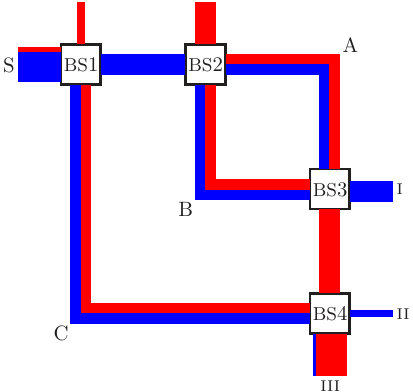 Figure 1
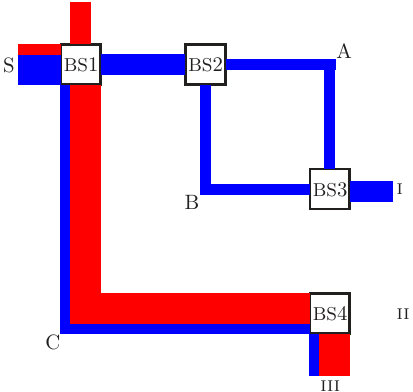 Figure 2
Peer Reviews
No public reviews on file for this paper yet. If you reviewed it on a platform where reviews are public (OpenReview, ICLR, NeurIPS, ICML), you can paste yours below so the community can read it here.
Videos
No videos yet. Explain this paper in a talk, walkthrough, or lecture? Add one.
]Posted on the arXiv on 17 January 2019
Reply to “Comment on ‘Past of a quantum particle revisited’ ”
Berthold-Georg Englert
Centre for Quantum Technologies, National University of Singapore, 3 Science Drive 2, Singapore 117543, Singapore
Department of Physics, National University of Singapore, 2 Science Drive 3, Singapore 117542, Singapore
MajuLab, CNRS-UNS-NUS-NTU International Joint Unit, UMI 3654, Singapore
Kelvin Horia
Department of Mathematics, National University of Singapore, 10 Lower Kent Ridge Road, Singapore 119076
Jibo Dai
Institute of Materials Research and Engineering, Agency for Science, Technology and Research, 2 Fusionopolis Way, #08-03 Innovis, Singapore 138634, Singapore
Yink Loong Len
Centre for Quantum Technologies, National University of Singapore, 3 Science Drive 2, Singapore 117543, Singapore
Hui Khoon Ng
Yale-NUS College, 16 College Avenue West, Singapore 138527, Singapore
Centre for Quantum Technologies, National University of Singapore, 3 Science Drive 2, Singapore 117543, Singapore
MajuLab, CNRS-UNS-NUS-NTU International Joint Unit, UMI 3654, Singapore
([)
Abstract
We stand by our findings in Phys. Rev. A 96, 022126 (2017). In addition to refuting the invalid objections raised by Peleg and Vaidman, we report a retrocausation problem inherent in Vaidman’s definition of the past of a quantum particle.
In their Comment Peleg+1:18 on Ref. Englert+4:17 , Peleg and Vaidman correctly state that there is a fundamental difference in the way Vaidman answers the question Where was the particle after entering and before leaving the interferometer? and our traditional approach. We examine the traces left by the particle — by an unambiguous path discrimination measurement or by any other suitable method — and then infer the path in accordance with the result found. This can yield definite path knowledge, or probabilistic path knowledge, or no path knowledge at all, depending on how the traces are examined and what is found. For us, then, a statement such as “this particle went through checkpoint C” has an operational meaning, which derives from interpreting measurement results by the usual applications of the tools of standard quantum mechanics.
By contrast, Vaidman defines that the particle was where it left faint traces — meaning: in all places where computed weak values are nonzero, for which the particle may have to be in several places simultaneously. Even when the traces are indiscernible and of no phenomenological consequence, Vaidman maintains that the particle has visited all places for which the computation yields a nonzero weak value. In the context of Vaidman’s three-path interferometer, these are all places where both wave functions are nonzero, namely the usual “forward” wave function that emerges from the source and the “backward” wave function that interferes constructively at the actual output port only.
The situation is depicted in Fig. 1, for a particle detected at exit iii, a variant of Fig. 2 in Englert+4:17 . The thickness of the blue lines is proportional to the squared amplitudes of the forward wave function, and likewise for the red lines and the backward wave function. This picture refers to the extreme situation of indiscernible traces ( in Englert+4:17 ), or to the conditioning on the inconclusive outcome of the unambiguous path discrimination.
We observe that the wave function branches associated with the checkpoints A and B inside the inner loop, whether blue or red, do not connect the source S to exit iii. According to standard quantum mechanics, therefore, these branches are irrelevant as they do not contribute to the probability of detecting the particle at this exit. The only link is through the checkpoint C. This is what standard quantum mechanics says about preselected ( emitted by source S) and postselected ( detected at exit iii) particles. Accordingly, Peleg and Vaidman’s assertion that “the standard formalism has no any answer” for pre- and postselected particles is incorrect.
According to Vaidman’s definition, however, each particle detected at exit iii left a faint trace at checkpoint A and at checkpoint B and also at checkpoint C on its way from the source to the detector; each particle was at all three checkpoints simultaneously. Peleg and Vaidman tell us that one must not examine the traces of a single particle (as one would usually do before making statements about the particle’s whereabouts) but that the “information about the traces is obtained either by a calculation, or by a measurement performed on the pre- and postselected ensemble.” Nevertheless, Vaidman insists that each particle individually was at the three checkpoints simultaneously — and the evidence are the faint traces that the particle left at each checkpoint but they must not be examined …
Central to Vaidman’s reasoning is that the particle interacts weakly with the stuff it encounters on its way, such as transferring a bit of momentum to the mirror at a checkpoint. In a simplified description fn1 , the particle’s passing through the interferometer results in the before-to-after transition
[TABLE]
where and symbolize sets of quantum numbers for the particle’s center-of-mass motion and, for example, stands for a trace at checkpoint A and no traces at checkpoints B and C. An individual particle leaves a trace at one of the checkpoints. Since there are “yes” terms for all three checkpoints, a measurement on a large ensemble of particles would exhibit evidence for the traces of all three kinds. In Vaidman’s reading, however, Eq. (1) states that each particle leaves traces at all checkpoints although there is no term to account for that fn2 .
Despite being told otherwise, we did examine the traces of a single particle in Ref. Englert+4:17 and found that all particles in the pre- and postselected ensemble went only through checkpoint C in the limit of ultrafaint traces (). This is exactly what standard quantum mechanics tells us (see above). It is also what common sense tells us in conjunction with basic knowledge about interferometers.
In standard quantum mechanics, there are situations in which questions such as Through which arm of the interferometer did the particle arrive? do not have an answer, and then we insist that We do not know. is the correct reply. The basic example is that of a well stabilized two-path interferometer, say of Mach–Zehnder design. Whenever standard quantum mechanics does not provide an answer, one may feel invited to define the past of the particle in a fitting way. Vaidman accepted this invitation, as advocates of Bohmian mechanics had done earlier.
Now, while providing answers where there were none before, such definitions must always give the correct answer in all situations in which there already is one without the added definition. This is a basic test of consistency. Bohmian mechanics fails this test although it took some time before an example was found that demonstrates the case Englert+3:92 ; Aharonov+1:96 . Vaidman’s definition fails the test, too, as we established by our analysis of the three-path interferometer that he himself designed.
Peleg and Vaidman disagree with this verdict. They claim that our “argument for a particular single-path story can be repeated equally well for another single path” and if that were true it would indeed imply that we contradict ourselves. But below we show it is not true.
In our analysis of the three-path interferometer of Fig. 1, with a balanced inner-loop interferometer, we observe that the probability of detecting the particle at exit iii does not change when we introduce a phase into the amplitude at checkpoint C. Since this is a relative phase between the amplitudes that meet at beam splitter BS4, and are then processed by BS4, we conclude that these phases are incoherent. Upon this observation, we then proceed with the accounting exercise in Sec. IV B of Englert+4:17 that culminates in the conclusion that all particles reach exit iii through checkpoint C when .
Peleg and Vaidman did not find an error in this argument. Instead they try to construct a contradiction — and fail. They begin by recalling that the said probability is fn3
[TABLE]
when phase factors \mathrm{e}^{\mbox{\footnotesize\mathrm{i}\alpha}}, \mathrm{e}^{\mbox{\footnotesize\mathrm{i}\beta}}, and \mathrm{e}^{\mbox{\footnotesize\mathrm{i}\gamma}} multiply the probability amplitudes at checkpoints A, B, and C, respectively. Yes, as noted above, there is no dependence on when the inner-loop interferometer is balanced ({\mathrm{e}^{\mbox{\footnotesize\mathrm{i}\alpha}}=\mathrm{e}^{\mbox{\footnotesize\mathrm{i}\beta}}}), and so we get our “argument for a particular single-path story” — via C, that is. Peleg and Vaidman then consider the situation of {\mathrm{e}^{\mbox{\footnotesize\mathrm{i}\alpha}}=\mathrm{e}^{\mbox{\footnotesize\mathrm{i}\gamma}}} and note that the dependence on disappears, and so they wrongly conclude that there is equally strong evidence for the “via B” single-path story.
Why is this conclusion wrong? Simply because our accounting exercise cannot be carried out when the balance of the inner-loop interferometer is disturbed ({\mathrm{e}^{\mbox{\footnotesize\mathrm{i}\alpha}}\neq\mathrm{e}^{\mbox{\footnotesize\mathrm{i}\beta}}}); there are now coherences between the amplitudes arriving at BS4.
This becomes obvious if we replace BS4 with a beam splitter with more general properties, one that reflects with probability and transmits with probability . Then Eq. (2) is replaced by
[TABLE]
and we get
[TABLE]
when the inner-loop interferometer is balanced. Figure 1 applies for all intermediate values () with adjusted line thicknesses, not only for . While there is no dependence in Eq. (4), confirming that incoherent amplitudes meet at BS4, there is a dependence on , the relative phase of the inner-loop interferometer, in
[TABLE]
and this dependence disappears only when , the very particular case of Eq. (2) (or when , see below).
It follows that the accounting exercise is justified for , when it leads to the “all via C” conclusion, but it is not justified for . The reasoning put forward by Peleg and Vaidman, who wrongly conclude that “all via B” is as valid as “all via C,” is of no consequence.
Other objections raised by Peleg and Vaidman are equally invalid. It is not necessary that we address them all. Instead, we point out that Vaidman’s definition has yet another implication that speaks against adopting it.
As noted above, Fig. 1 applies when the inner-loop interferometer is balanced and with the necessary adjustments of the line thickness. For all intermediate values, then, we have Vaidman’s narrative that a particle detected at exit iii has earlier left traces at checkpoint A and at checkpoint B and also at checkpoint C. For , we have Fig. 2 with vanishing weak values at checkpoints A and B. In this situation, Vaidman’s narrative is that a particle detected at exit iii has earlier left a trace at checkpoint C, but did not leave traces at checkpoints A and B. Accordingly, a last-moment choice between and is a choice between these two different pasts of the quantum particle, at a time when the trace-leaving (or not) has already happened earlier. While retrocausation of this kind is disquieting for Vaidman’s definition of the particle’s past, it has no bearing on the story told by standard quantum mechanics: Both in Fig. 1 and in Fig. 2, the particle passes through checkpoint C only on its way from the source S to the exit iii.
The reference list from the paper itself. Each links out to its DOI / PubMed record.
- 1(1) U. Peleg and L. Vaidman, Comment on “Past of a quantum particle revisited” , e-print ar Xiv:1805.12171 v 1 (to appear in Phys. Rev. A).
- 2(2) B.-G. Englert, K. Horia, J. Dai, Y. L. Len, and H. K. Ng, Past of a quantum particle revisited , Phys. Rev. A 96 , 022126 (2017); ar Xiv version: Past of a quantum particle: Common sense prevails , e-print ar Xiv:1704.03722 v 3 .
- 3(3) B.-G. Englert, M. O. Scully, G. Süssmann, and H. Walther, Surrealistic Bohm Trajectories , Z. Naturforsch. 47a , 1175 (1992).
- 4(4) Y. Aharonov and L. Vaidman, About Position Measurements Which Do Not Show the Bohmian Particle Position , in Bohmian mechanics and quantum theory: An appraisal , edited by T. Cushing, A. Fine, and S. Goldstein, Boston Studies in the Philosophy of Science, Vol. 184 (Kluwer, 1996), pp. 141–154.
- 5(5) A detailed treatment can be found in Sec. IV of Englert+4:17 .
- 6(6) The suggestion in Peleg+1:18 that a particle is “everywhere where the wave function is non vanishing” is equally at odds with standard quantum mechanics.
- 7(7) Since there is, in fact, no such equation in Peleg+1:18 , we provide it here.