Transition radiation in photonic topological crystals: quasi-resonant excitation of robust edge states by a moving charge
Yang Yu, Kueifu Lai, Jiahang Shao, John Power, Manoel Conde, Wanming, Liu, Scott Doran, Chunguang Jing, Eric Wisniewski, Gennady Shvets

TL;DR
This paper explores how a moving charge can excite topologically protected edge states in photonic crystals through transition edge-wave radiation, with theoretical and experimental validation, opening new avenues for particle acceleration and detection.
Contribution
It introduces the concept of transition edge-wave radiation in photonic topological insulators and demonstrates its ability to generate valley- and spin-polarized edge states.
Findings
Experimental evidence of edge wave excitation by a moving charge.
TER enables polarization control of topological edge states.
Theoretical model matches experimental observations.
Abstract
We demonstrate, theoretically and experimentally, that a traveling electric charge passing from one photonic crystal into another generates edge waves -- electromagnetic modes with frequencies inside the common photonic bandgap localized at the interface -- via a process of transition edge-wave radiation (TER). A simple and intuitive expression for the TER spectral density is derived and then applied to a specific structure: two interfacing photonic topological insulators with opposite spin-Chern indices. We show that TER breaks the time-reversal symmetry and enables valley- and spin-polarized generation of topologically protected edge waves propagating in one or both directions along the interface. Experimental measurements at the Argonne Wakefield Accelerator Facility are consistent with the excitation and localization of the edge waves. The concept of TER paves the way for novel…
Click any figure to enlarge with its caption.
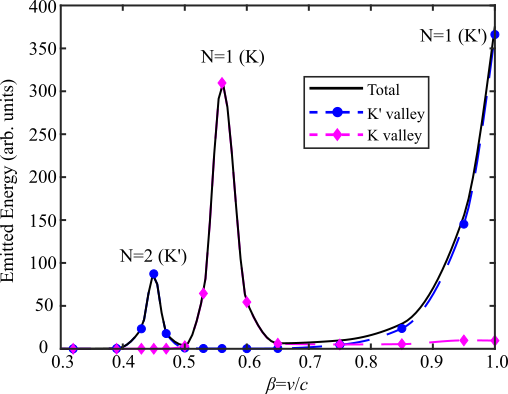 Figure 1
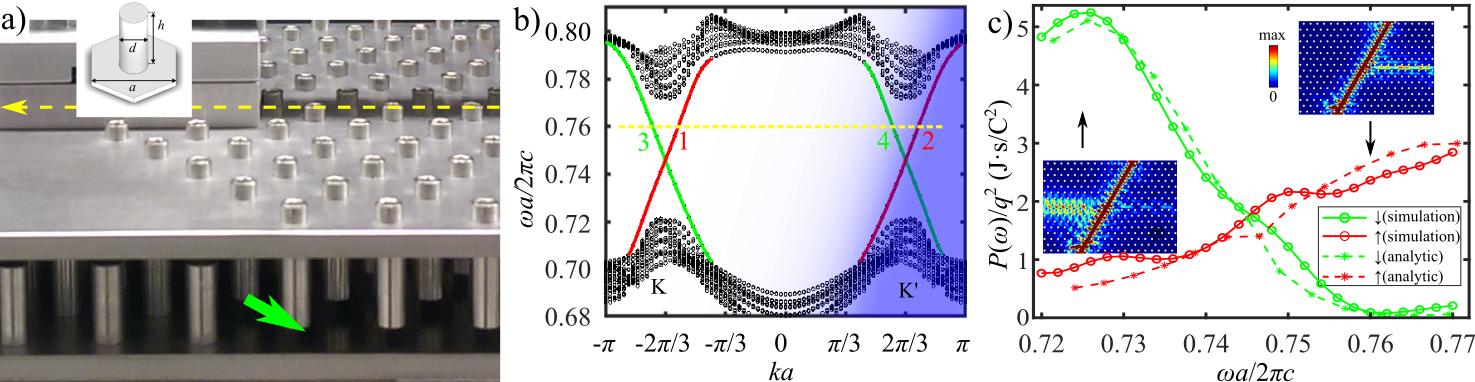 Figure 2
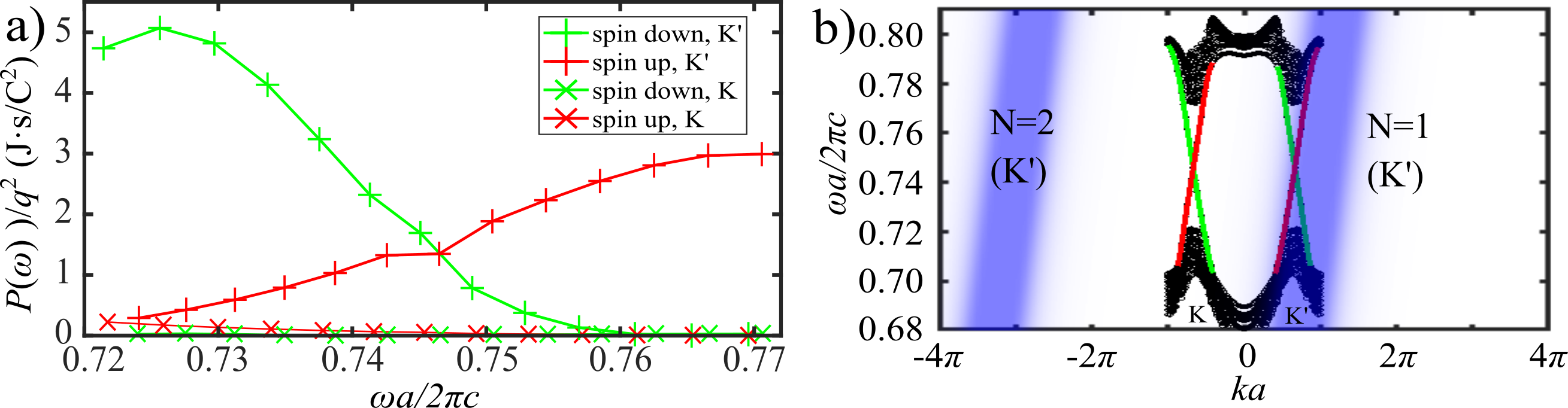 Figure 3
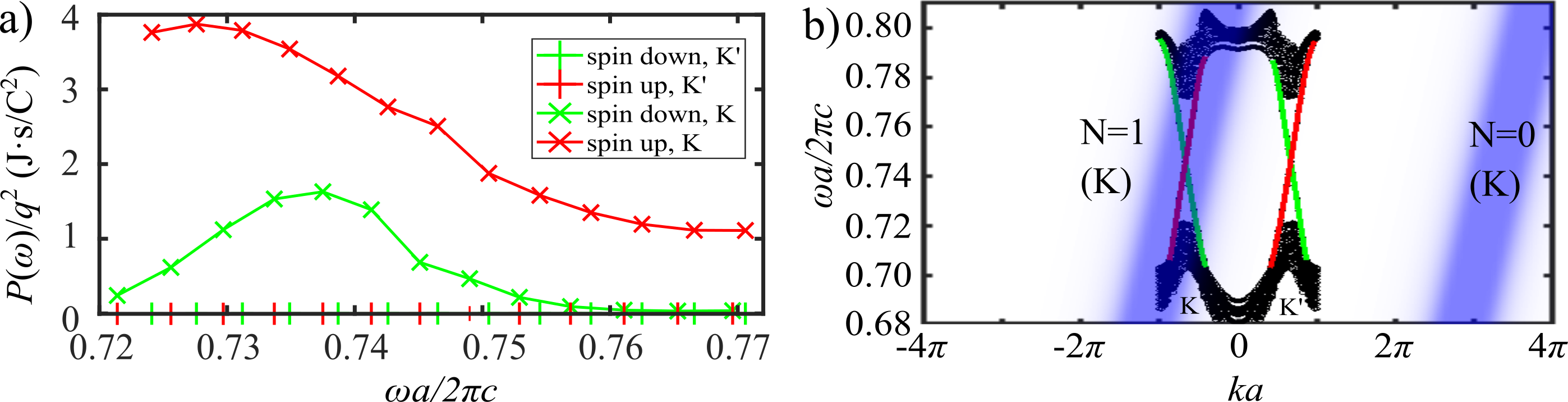 Figure 4
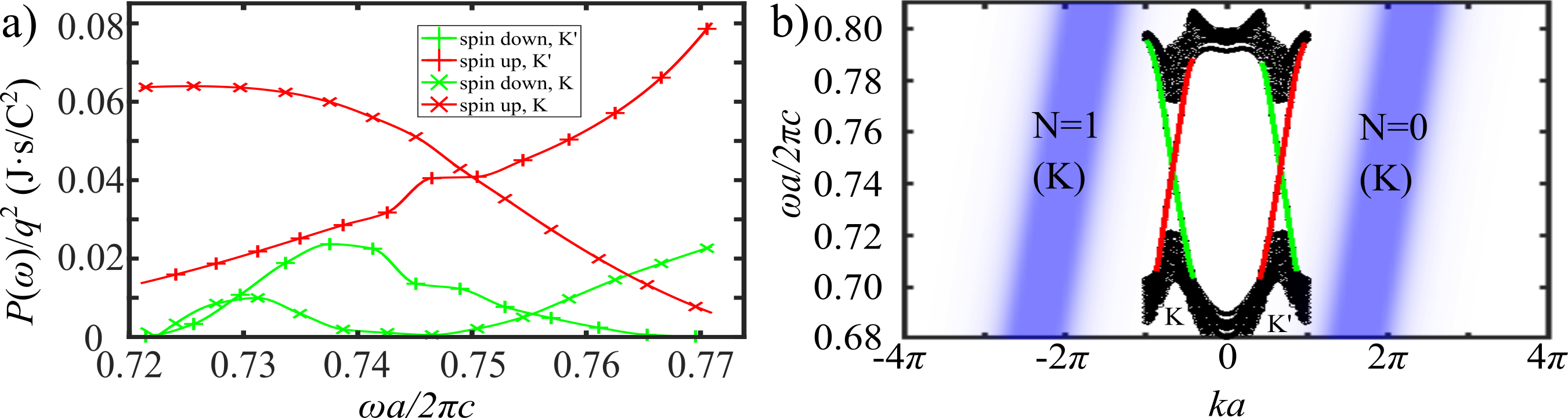 Figure 5
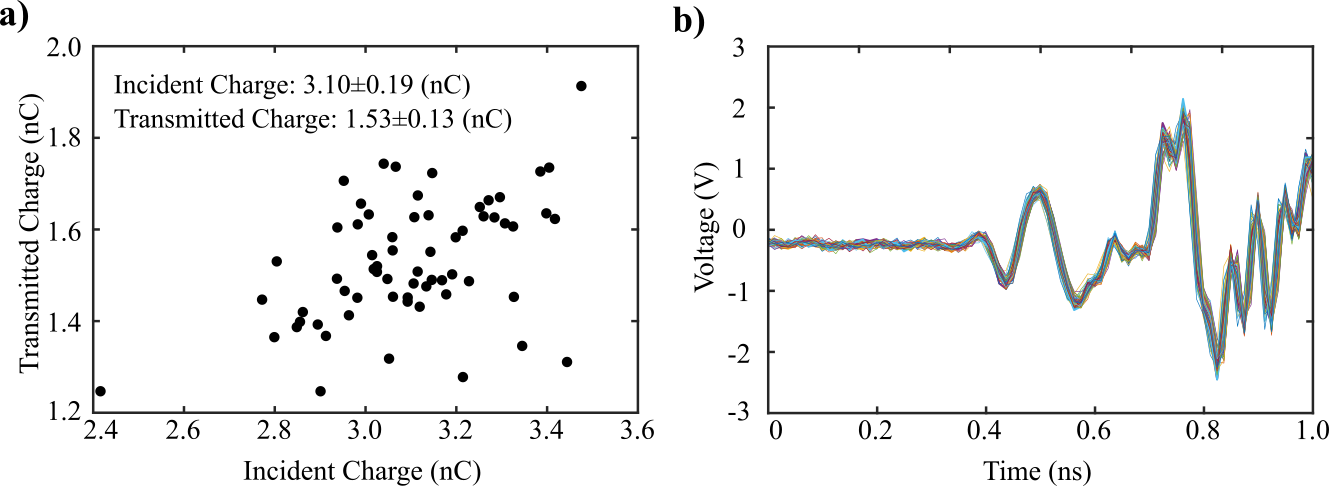 Figure 6
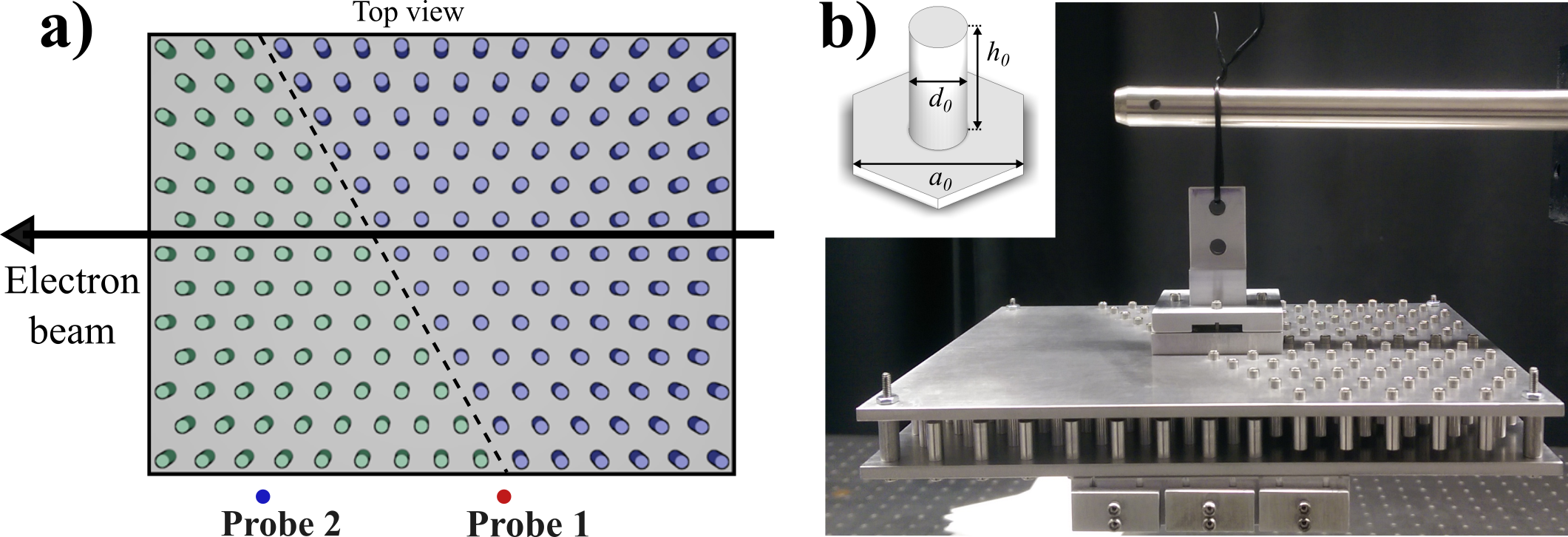 Figure 7
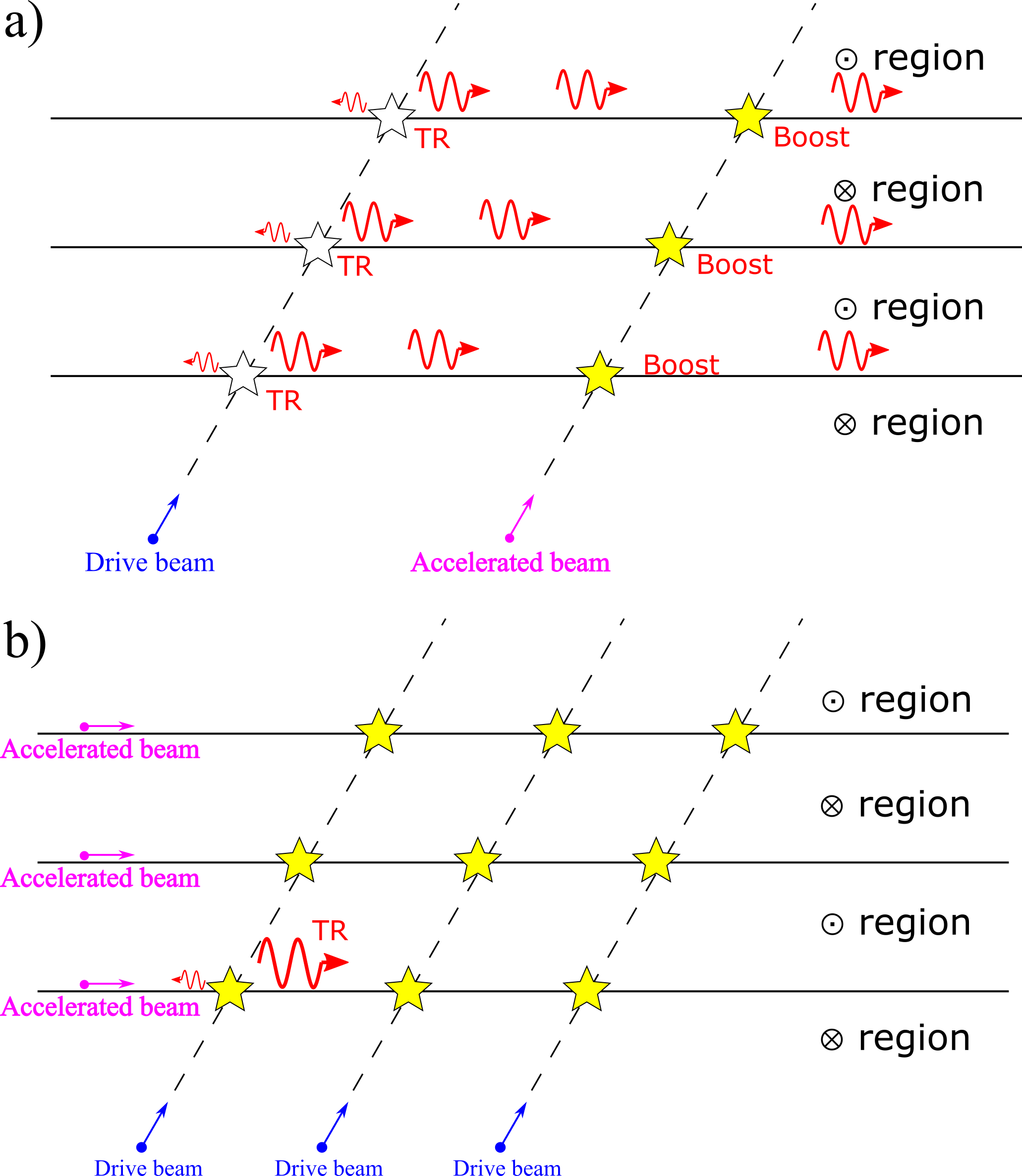 Figure 8
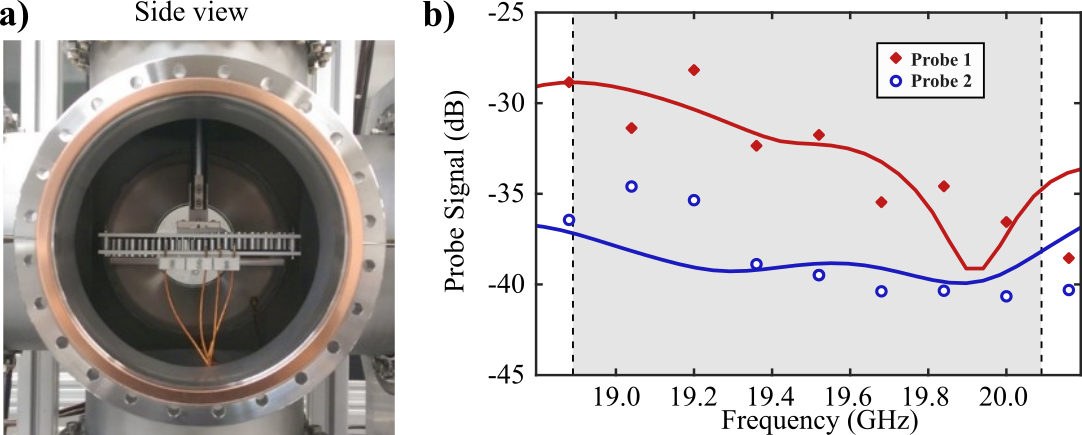 Figure 9
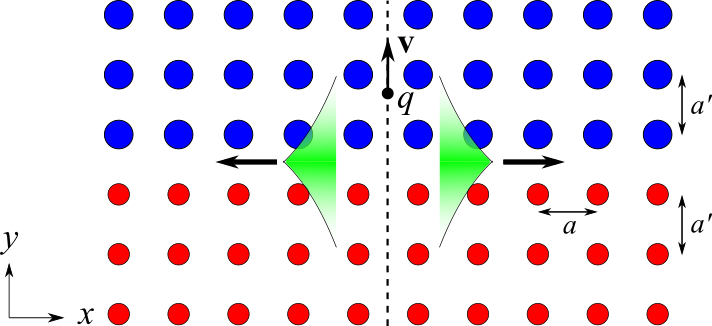 Figure 10
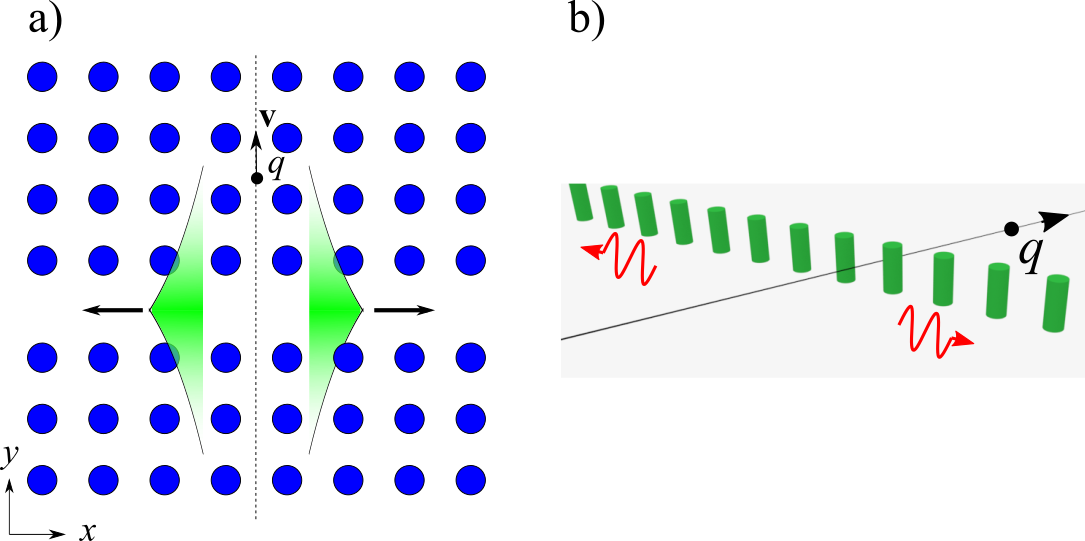 Figure 11
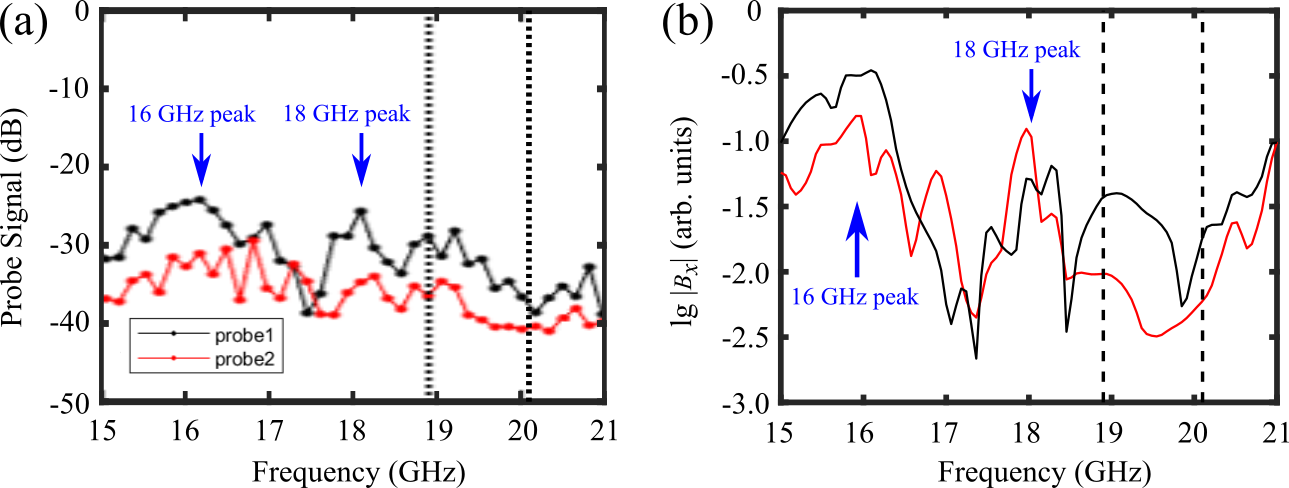 Figure 12
Peer Reviews
No public reviews on file for this paper yet. If you reviewed it on a platform where reviews are public (OpenReview, ICLR, NeurIPS, ICML), you can paste yours below so the community can read it here.
Videos
No videos yet. Explain this paper in a talk, walkthrough, or lecture? Add one.
Transition radiation in photonic topological crystals: quasi-resonant excitation of robust edge states by a moving charge
Yang Yu
School of Applied and Engineering Physics, Cornell University, Ithaca, NY 14853, USA
Kueifu Lai
Department of Physics, University of Texas at Austin, Austin, TX 78712, USA.
School of Applied and Engineering Physics, Cornell University, Ithaca, NY 14853, USA
Jiahang Shao
John Power
Manoel Conde
Wanming Liu
Scott Doran
Chunguang Jing
Eric Wisniewski
Argonne National Laboratory, Lemont, Illinois 60439, USA
Gennady Shvets
School of Applied and Engineering Physics, Cornell University, Ithaca, NY 14853, USA
Abstract
We demonstrate, theoretically and experimentally, that a traveling electric charge passing from one photonic crystal into another generates edge waves – electromagnetic modes with frequencies inside the common photonic bandgap localized at the interface – via a process of transition edge-wave radiation (TER). A simple and intuitive expression for the TER spectral density is derived and then applied to a specific structure: two interfacing photonic topological insulators with opposite spin-Chern indices. We show that TER breaks the time-reversal symmetry and enables valley- and spin-polarized generation of topologically protected edge waves propagating in one or both directions along the interface. Experimental measurements at the Argonne Wakefield Accelerator Facility are consistent with the excitation and localization of the edge waves. The concept of TER paves the way for novel particle accelerators and detectors.
Generation of electromagnetic (EM) waves by moving electric charges is one of the most fundamental phenomena in physics. While a charge must be accelerated to produce EM radiation in free space, this requirement no longer exists in optically-dense media. Even in a homogeneous isotropic medium, the Cherenkov radiation (CR) Cherenkov (1934) by a charge travelling with a constant velocity can be produced when the phase velocity of EM waves is smaller than . In an inhomogeneous medium, transition radiation (TR) Frank and Ginzburg (1945) – usually studied in the context of a charge crossing an interface between two media with different permittivities and/or permeabilities – can also be produced by a constant-velocity motion Ter-Mikaielian (1972); Frank (1970); Garibian (1970); Ginzburg and Tsytovich (1990); Happek et al. (1991); Cherry et al. (1974); Wartski et al. (1975); Adamo et al. (2012) regardless of the magnitude of . TR has already found numerous applications in particle detectors and beam diagnostics Wartski et al. (1975); Artru et al. (1975). More recently, there has been considerable interest in expanding the TR concept to more complex geometries and structures, including the resonant transition radiation Pardo and André (1989); Piestrup and Finman (1983); Bekefi et al. (1986); Lin et al. (2018) in multi-interfacial materials that form a one-dimensional (1D) photonic crystal. TR has also been used to excite surface plasmon polaritons (SPPs) Ginzburg and Tsytovich (1990); Kuttge et al. (2009) and guided modes in thin films Chen and Silcox (1975); Yurtsever et al. (2008), which are hard to be directly excited by far-field (e.g., laser) radiation.
The key limitation of all these approaches to producing TR is that fast charged particles must be sent through a solid medium, resulting in rapid energy loss by the electrons, as well as the inevitable incoherent emission De Abajo (2010). For example, a MeV electron loses all of its energy after propagating through just under mm of silicon. Charging of multi-layer dielectric structures bombarded by high-charge bunches also limits their longevity Wilson et al. (2013). Therefore, one is led to consider an intriguing yet unexplored possibility of producing TR in a photonic crystal (PhC) designed to have an empty region that provides an unobstructed path for the moving charge (see Fig. 1). However, the physics of TR excitation in two- and three-dimensional periodic media has not been studied either theoretically or experimentally, with a few exception of 1D multilayer films Pardo and André (1989); Bekefi et al. (1986); Lin et al. (2018). Even in those studies, the emphasis was on the excitation of the modified Cherenkov (i.e. bulk) radiation, and the feasibility of sending electrons through solid medium was assumed. In this Letter, we extend the concept of TR to the case of a charge crossing the interface between two PhCs and emitting guided waves that are localized to the interface. In particular, we consider the previously unexplored concept of TR into topologically protected edge waves (TPEWs) that exist at the domain wall between two topologically-distinct photonic topological insulators (PTIs) Hafezi et al. (2011); Khanikaev et al. (2013); Hafezi et al. (2013); Lai et al. (2016). We demonstrate that the moving charge breaks the time-reversal symmetry of TPEWs and enables spin- and valley-polarized emission of TPEWs that are routed into spin-locked ports. In condensed matter physics it has been shown that circularly polarized light can excite spin-locked currents on the surface of topological insulators Soifer et al. (2017). Among practical attractions of TPEWs are their one-dimensional (i.e. localized in the other two dimensions) nature, and the ability for reflection-free propagation around sharp corners Ma et al. (2015). Similarly to SPPs, TPEWs cannot directly couple to bulk EM waves. However, SPPs can be also excited by moving charges via the CR mechanism De Abajo (2010) because their dispersion curves are below the light line () due to their polaritonic nature, while TPEWs frequently cannot be because the phase velocities of the guided EM waves typically satisfy .
We start by developing a general formalism of guided waves’ excitation by a TR mechanism as illustrated in Fig. 1, where a point electrical charge is shown moving uniformly with velocity , crossing the boundary at between two different PhCs sharing the same crystal lattice, and exciting two counter-propagating edge states. Alternative configurations are described in Supplemental Material, including the excitation of guided modes of a linear defect inside a PhC. For simplicity, we focus on two-dimensional (2D) PhCs that do not rely on a photonic bandgap (PBG) for their confinement in the dimension, but most of the results can be generalized to 3D. We further assume that the PhCs are non-magnetic and lossless.
Because the structure is still periodic in the (albeit not in the ) direction, we choose an expanded ”supercell” of the photonic structure comprised of one unit cell (of either PhC) in and infinitely many in direction. The supercell is used to compute the 1D Bloch states , where the supercell’s normalized -periodic eigenmodes are characterized by their band number , wavenumber along the interface, and eigenfrequency . The eigenmodes can be sub-divided into two classes: (i) projected Joannopoulos et al. (2008) bulk (extended) modes that have oscillatory behavior in , and (ii) edge modes that exponentially decay as away from the domain wall at , where is the localization distance. The focus of our calculation is on the edge modes that occupy all, or part, of the common bandgap of the two PhCs: , where are the lower (upper) bandgap edges.
The radiated electric field is calculated by solving the wave equation in the frequency domain: , where represents the inhomogeneous dielectric permittivity of the entire structure, and is the current density produced by the charge moving with the constant speed in the direction of , , and are the two remaining spatial dimensions.
In the case of a continuous medium on both sides of the boundary, the TR problem has been solved Ginzburg and Tsytovich (1990); De Abajo (2010) by stitching the analytically known solutions at the boundary. This approach is not workable in the case of PhCs because analytic solutions for the propagating waves cannot be obtained. However, the problem is simplified in the case of edge wave excitation due to the remaining periodicity in the direction. Briefly, using the Bloch eigenmodes of the supercell as the expansion basis Sakoda (2005), the driven electric field can be expressed as an integral over the 1st Brillouin zone
[TABLE]
where the expansion coefficients are given by an integral along the beam’s path defined as :
[TABLE]
where is the angle between the directions of the beam’s velocity and of the interface between the two PhCs. The summation over includes all modes (edge and bulk), and an infinitesimal is introduced to ensure causality.
Only a discrete set of edge modes contributes to far-field radiation at frequencies inside the common bulk bandgap, thus enabling the following asymptotic limit of Eq. (1) (see Supplemental Material) at :
[TABLE]
where is the discrete index for all forward-propagating edge modes, with their corresponding wave numbers {} determined from the edge mode’s dispersion relation and satisfying the causality condition . The frequency-dependent spectral amplitudes of the transition edge radiation (TER) are obtained by substituting the implicitly frequency-dependent Bloch eigenfunctions of the edge modes into Eq.(2): . The expression for the electric field propagating in the direction is identical to Eq.(3), except that the contributing modes (labeled with index) satisfy .
The power spectrum of the forward/backward TER, which is finite for all frequencies where edge modes exist, can now be calculated (see Supplemental Material):
[TABLE]
This intuitive expression for the spectral power of edge waves, which is applicable to both continuous (see Supplemental Material for the application of this formalism to SPP generation Ginzburg and Tsytovich (1990); De Abajo (2010)) and photonic media, constitutes the main general result of this work.
Next, we consider a specific example of kink states’ excitation at the domain wall between two topologically-different PTIs shown in Fig. 2(a). The structure, based on Ref. Ma et al. (2015), consists of two quantum spin-Hall (QSH) PTIs with opposite spin Chern numbers . The QSH-PTIs are comprised of two parallel metal plates providing confinement in the direction, patterned by a hexagonal lattice (of period ) arrangement of metal rods attached to either the top (right side of Fig. 2(a)) or the bottom (left side) metal plate. Its 1D-photonic band structure (PBS) and Bloch states are obtained using comsol eigenfrequency study. Fig. 2(b) shows the PBS, where black dots denote bulk modes, and colored solid lines inside the bandgap represent TPEWs.
The domain wall between two QSH-PTIs supports four TPEWs inside the bandgap: two forward and two backward TPEWs (two at each valley). The group velocities of the TPEWs are locked to their photonic spin Ma et al. (2015): spin-up (, red lines) modes propagate forward, while spin-down (, green lines) modes propagate backwards. For our specific design, the TPEWs span the shared topological bandgap bracketed by and from below and above, respectively. The TER-producing point charge is assumed to be moving along one of the high-symmetry axes of the hexagonal lattice, drawn through the mid-plane between the two metal plates and half-way between two adjacent rows of rods for optimal clearance. Therefore, the charge is crossing the domain wall between the two QSH-PTIs at the angle (see Fig. 2(a)), and is experiencing a periodic environment on both sides of the interface.
The choice of this specific photonic platform is dictated by its several unique properties. First, the supported TPEWs can be guided along sharply curved trajectories Ma et al. (2015); Lai et al. (2016); Khanikaev et al. (2013); Chen et al. (2014) after their excitation. Second, the specific geometry of QSH-PTIs is conducive to its interaction with high-power electromagnetic radiation. That is because the transverse confinement of the kink states does not require any side walls, and because the attachment of the rods to just one metal plate enables their easy monolithic fabrication. Third, the sparsity of the QSH-PTI structure and the existence of clear passages for the charged beam along multiple unobstructed directions prevent a direct impact of electrons on the structure. We note that it has been recently shown in theory that unidirectional edge states can be predominantly excited by Cherenkov emission using magnetized plasmas or Weyl semi-metals Prudêncio and Silveirinha (2018).
The expression for the power spectrum involves TPEWs that are graphically shown as the crossing points between the yellow dashed (constant frequency) line and the dispersion relations (solid lines) of the TPEWs in Fig. 2(b). These crossings are labeled as follows: crossings belong to (spin-up TPEWs in the projected valleys), while correspond to their spin-down counterparts. The group velocities of all TPEWs are approximately equal and constant across the bandgap: . The predicted spectra are plotted in Fig. 2(c) for the right/left-propagating TPEWs (dashed red/green lines), and are found in good agreement with ab initio driven simulation (solid lines), where is implemented as the current source.
The TER spectra exhibit several notable features. First, we find that TER can be highly directional and spin-polarized: see the insets in Fig. 2(c) corresponding to (predominantly backward spin-down radiation), and to (forward spin-up radiation). On the other hand, for other frequencies at the center of the bandgap both forward and backward TPEWs of similar intensities are launched. Second, excitation of valley TPEWs () is negligible compared with excitation of their valley () counterparts (see Fig. S2 in Supplemental Material for the spectra of all TPEWs). Therefore, transition radiation mechanism provides a new way of valley-polarized excitation of TPEWs, and provides an opportunity to introduce the concept of quasi-phase matching (QPM) between charges and radiation.
The essence of QPM is that under the envelope function approximation Bastard (1988), TPEWs are constructed from bulk modes of the 2D-periodic PhC with imaginary (for the QSH-PTI we used, the edge mode with 1D wavevector is constructed from bulk modes with purely imaginary and real for and valley, respectively, due to band folding Ma and Shvets (2016)), and for weakly confined-TPEWs, the projection of the real part of the 2D wavevector onto the charge trajectory must approximately match the wavenumber of the line current (or differ by a reciprocal vector) in order to get large overlap integral Eq. (2). Quantitatively, strong excitation of an edge mode is possible when its and satisfies
[TABLE]
for some integer , where is the period along the beam’s path. Note that in the limit of , we recover the so-called generalized Cherenkov condition Kremers et al. (2009). We refer to the region defined by Eq. (5) as ”strong excitation belt”, and it is graphically represented in Fig. 2(b) as the blue shaded area ( for valley and ). It’s clear that only TPEWs at valley fall into this belt, and this explains why they are predominantly excited. One can also see the reason why the backward-moving TPEW is excited much stronger at the lower edge of the bandgap than at the upper edge: its dispersion line lies deep inside the belt at lower frequencies but outside at higher frequencies. Additional examples corresponding to a sub-relativistic beam with (strong excitation belt covering valley modes) and (no excitation), as well as detailed derivation of Eq. (5) are presented in Supplemental Material. The total emitted energy in the topological bandgap versus is also plotted, where multiple sharp peaks correspond to significantly enhanced TER when the QPM condition is satisfied. QPM is important when (i) the edge mode can be well described by decaying bulk modes and (ii) the wave decay constant satisfies . Note that, formally, the QPM condition resembles the relationship between the emission angle and the frequency of the Smith-Purcell radiation produced by a charge moving along a periodic structure Yamamoto et al. (2015); Kaminer et al. (2017). The key differences in the case of TER considered by us are as follows: (i) radiation is coupled into a discrete set of edge states, not into a bulk continuum, (ii) the emission angle is fixed by the relative orientations of the charge trajectory and the interface, and (iii) due to the transient nature of TER, the QPM condition is an inequality rather than a strict equation.
The experimental validation of the TER concept was carried out at the Argonne Wakefield Accelerator Facility (AWA-ANL) using a high-charge relativistic point-like electron beam ( nC, Mev, and ps) and a photonic structure that was modeled above. As sketched in Fig. 2(a), the bunch (yellow dashed line) traverses the interface between the two QSH-PTI domains near the center of the structure and excites TPEWs around the frequency of GHz. The fully-assembled structure is pictured in Fig. 3(a) inside a vacuum chamber. The objectives were to experimentally demonstrate the following: (a) unobstructed charged bunch propagation over many periods of the PhC along one of its principal directions under full vacuum; (b) the capability of the TR mechanism to exciting TPEWs inside the bulk bandgap, and (c) spatial localization of TPEWs close to the domain wall. The PhC was comprised of unit cells, and its dimensions listed in the caption of Fig. 2 ensure a topological PBG in the GHz range (where ).
For diagnosing the TER produced by the bunch, two probes were positioned along the outer edge of the structure to detect spin-down waves: one very close (Probe ), the other (Probe ) 6 periods away from the interface (see Supplemental Material for their exact positions). The comparison between the signals from the two probes (see Fig. 3(b)) is used to demonstrate spatial localization of the EM energy at the interface. Indeed, the measured signal from Probe 1 (red diamonds) is much stronger that that from Probe 2 (blue circles) for every frequency inside the PBG (shadowed area). This contrast, which approaches dB for some of the frequencies, implies that the beam excites edge waves. Topological protection of such modes has been demonstrated earlier Lai et al. (2016) using antenna excitation. To our knowledge, this is the first time that TPEWs were shown to be excited via the TR mechanism. Due to limitation of the present experimental setup, we were only able to reliably measure signals at one end of the interface. Nonetheless, the measured result captures the most salient features predicted by our theory. For example, we see a clear trend of the TER decreasing in power as the frequency increases from the lower to the upper edge of the PBG. This is a consequence of the breakdown of the QPM near the upper edge of the PBG, as predicted by numerical simulation (solid red curve) and discussed above. Although the CR produced by the beam outside of the bandgap is beyond the scope of this Letter, we note that the frequency positions (at 16GHz and 18 GHz) of its two measured spectral peaks are also in good agreement with simulations results. Additional experimental and data processing details can be found in Supplemental Material. Future improvement of the experiment includes measuring spin-down waves and using a long train of electron bunches.
The TER concept can be used for beam diagnostics in the same way as TR of bulk waves because strongly depends on the beam’s energy, duration, and the location of its trajectory. Novel beam-driven accelerators, such as matrix Whittum and Tantawi (2001) and two-beam accelerators (TBAs) Kazakov et al. (2010), and accelerators with a photonic-band-gap structure Smirnova et al. (2005) can also benefit from TER. For example, possible geometries of a TER-based non-collinear (but parallel) TBA and a matrix accelerator are shown in Supplemental Material.
Acknowledgements.
This work was supported by the Army Research Office (ARO) under Grant No. W911NF-16-1-0319, and by the U.S. Department of Energy (DOE) Office of Science under Grant No. DE-SC0007889.
The reference list from the paper itself. Each links out to its DOI / PubMed record.
- 1Cherenkov (1934) P. A. Cherenkov, Dokl. Akad. Nauk SSSR 2 , 457 (1934).
- 2Frank and Ginzburg (1945) I. M. Frank and V. L. Ginzburg, J. Phys. (Moscow) 9 , 353 (1945).
- 3Ter-Mikaielian (1972) M. L. Ter-Mikaielian, High Energy Electromagnetic Processes in Condensed Media (Wiley, New York, 1972).
- 4Frank (1970) J. M. Frank, Acta Phys. Pol. A 38 , 655 (1970).
- 5Garibian (1970) G. M. Garibian, in Proc. Conf. High Energy Physics Instrumentation , Vol. 2 (Dubna, 1970) p. 509.
- 6Ginzburg and Tsytovich (1990) V. Ginzburg and V. Tsytovich, Transition radiation and transition scattering (Adam Hilger, Bristol and New York, 1990).
- 7Happek et al. (1991) U. Happek, A. J. Sievers, and E. B. Blum, Phys. Rev. Lett. 67 , 2962 (1991) . · doi ↗
- 8Cherry et al. (1974) M. L. Cherry, G. Hartmann, D. Müller, and T. A. Prince, Phys. Rev. D 10 , 3594 (1974) . · doi ↗