Structural and magnetic properties of a new cubic spinel LiRhMnO$_{4}$
S. Kundu, T. Dey, M. Prinz-Zwick, N. B\"uttgen, A. V. Mahajan

TL;DR
This study characterizes a new cubic spinel LiRhMnO4, revealing its antiferromagnetic correlations, spin-glass transition at 4.45 K, and absence of long-range magnetic order, using multiple experimental techniques.
Contribution
It provides the first detailed structural and magnetic analysis of LiRhMnO4, highlighting its spin-glass behavior and magnetic properties.
Findings
Displays antiferromagnetic correlations with a negative Curie-Weiss temperature.
Exhibits spin-glass transition at 4.45 K confirmed by susceptibility and NMR.
Shows no evidence of long-range magnetic order down to 2 K.
Abstract
We report the structural and magnetic properties of a new system LiRhMnO (LRMO) through x-ray diffraction, bulk magnetization, heat capacity and Li nuclear magnetic resonance (NMR) measurements. LRMO crystallizes in the cubic space group . From the DC susceptibility data, we obtained the Curie-Weiss temperature = -26 K and Curie constant = 1.79 Kcm/mol suggesting antiferromagnetic correlations among the magnetic Mn ions with an effective spin = . At = 50 Oe, the field cooled and zero-field cooled magnetizations bifurcate at a freezing temperature, = 4.45 K, which yields the frustration parameter 5. AC susceptibility, shows a cusp-like peak at around , with the peak position shifting as…
Click any figure to enlarge with its caption.
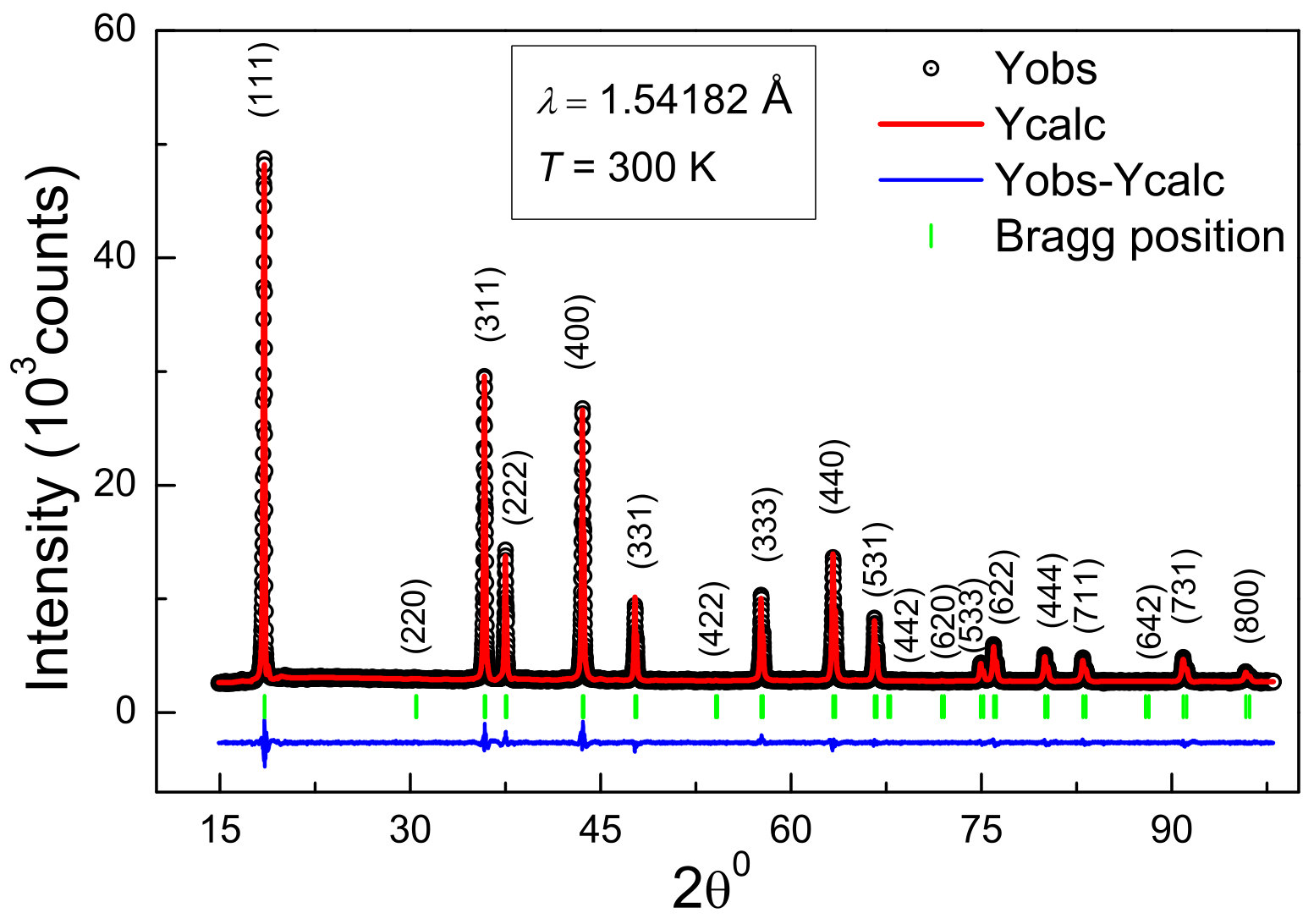 Figure 1
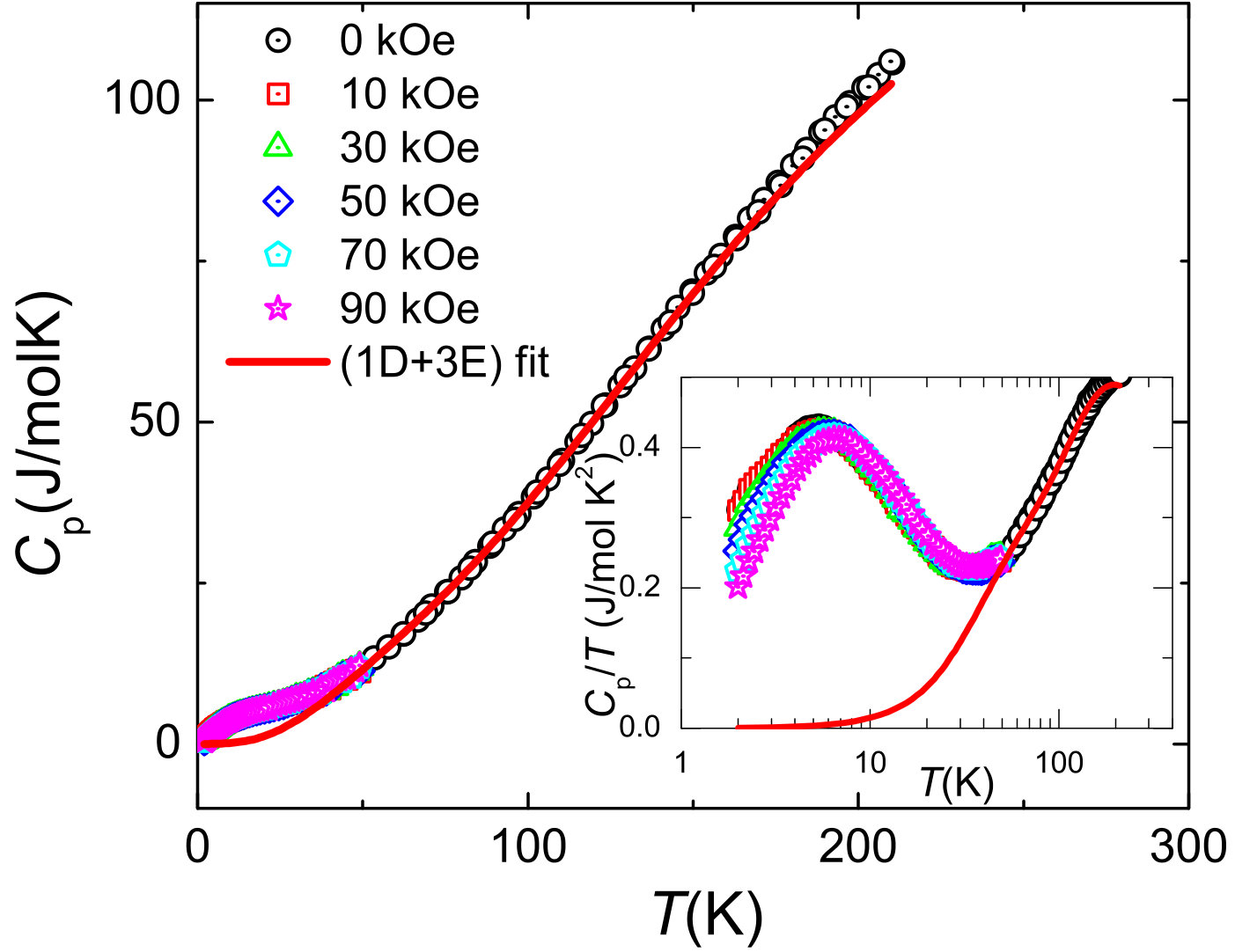 Figure 10
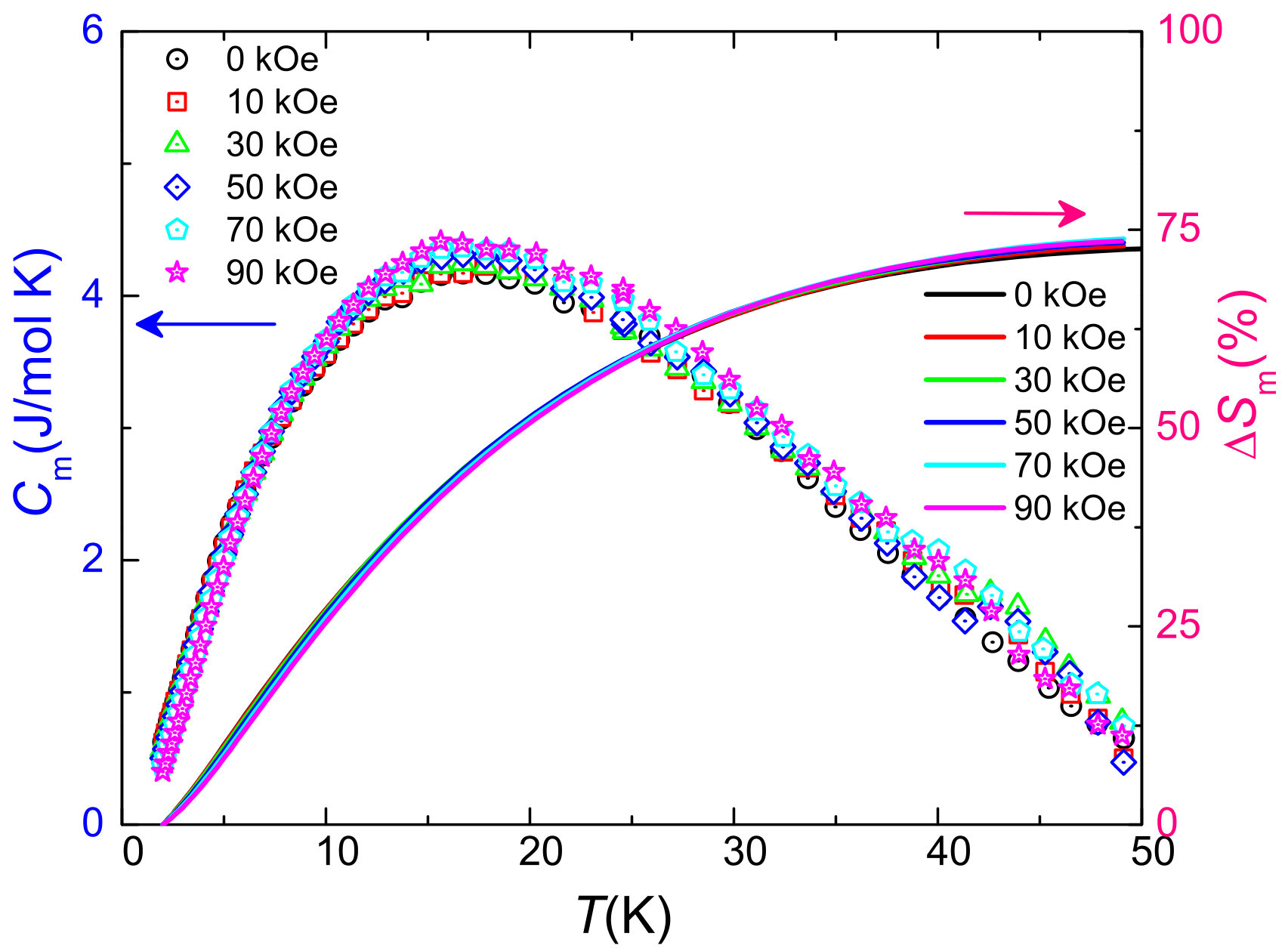 Figure 11
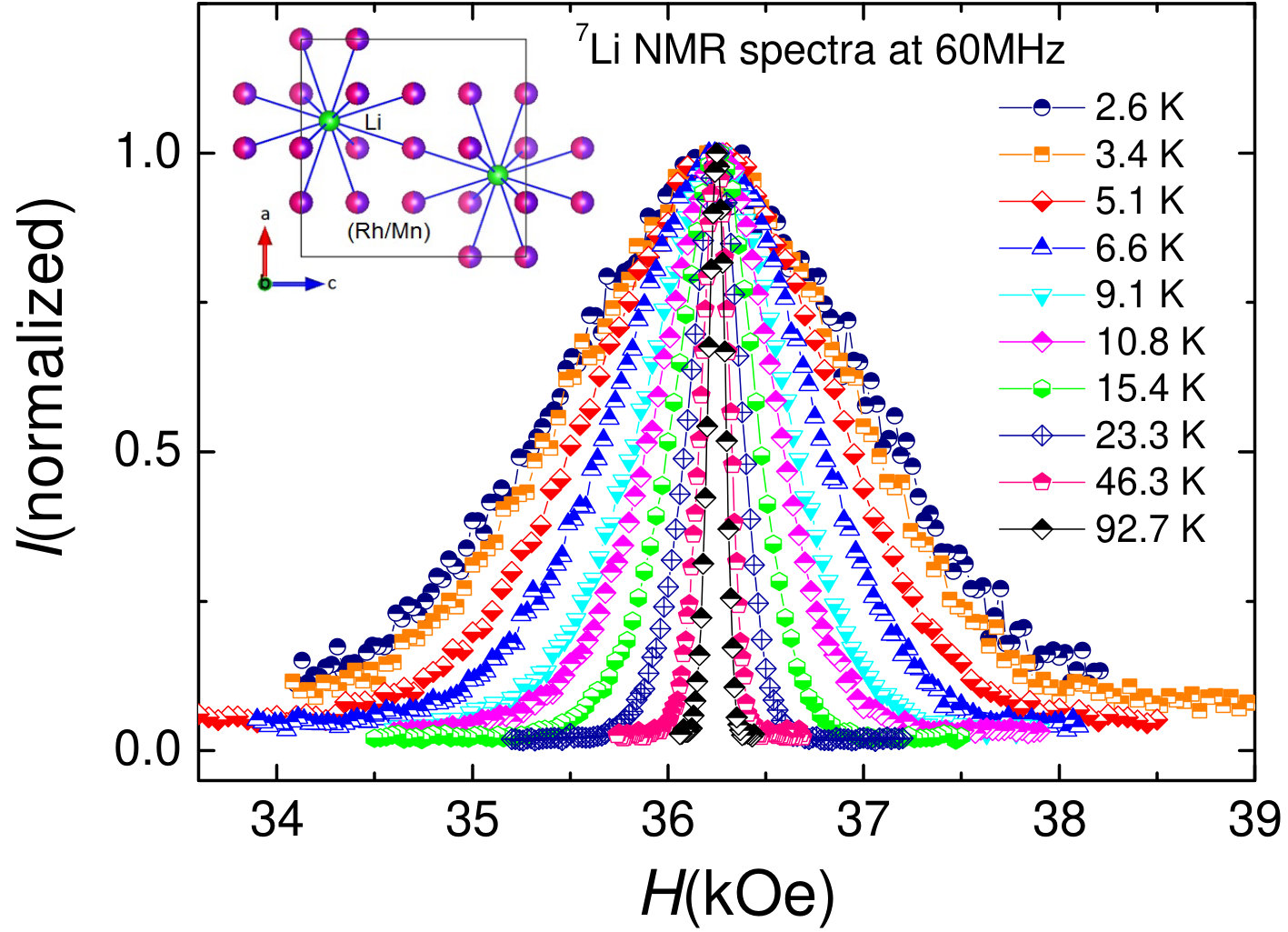 Figure 12
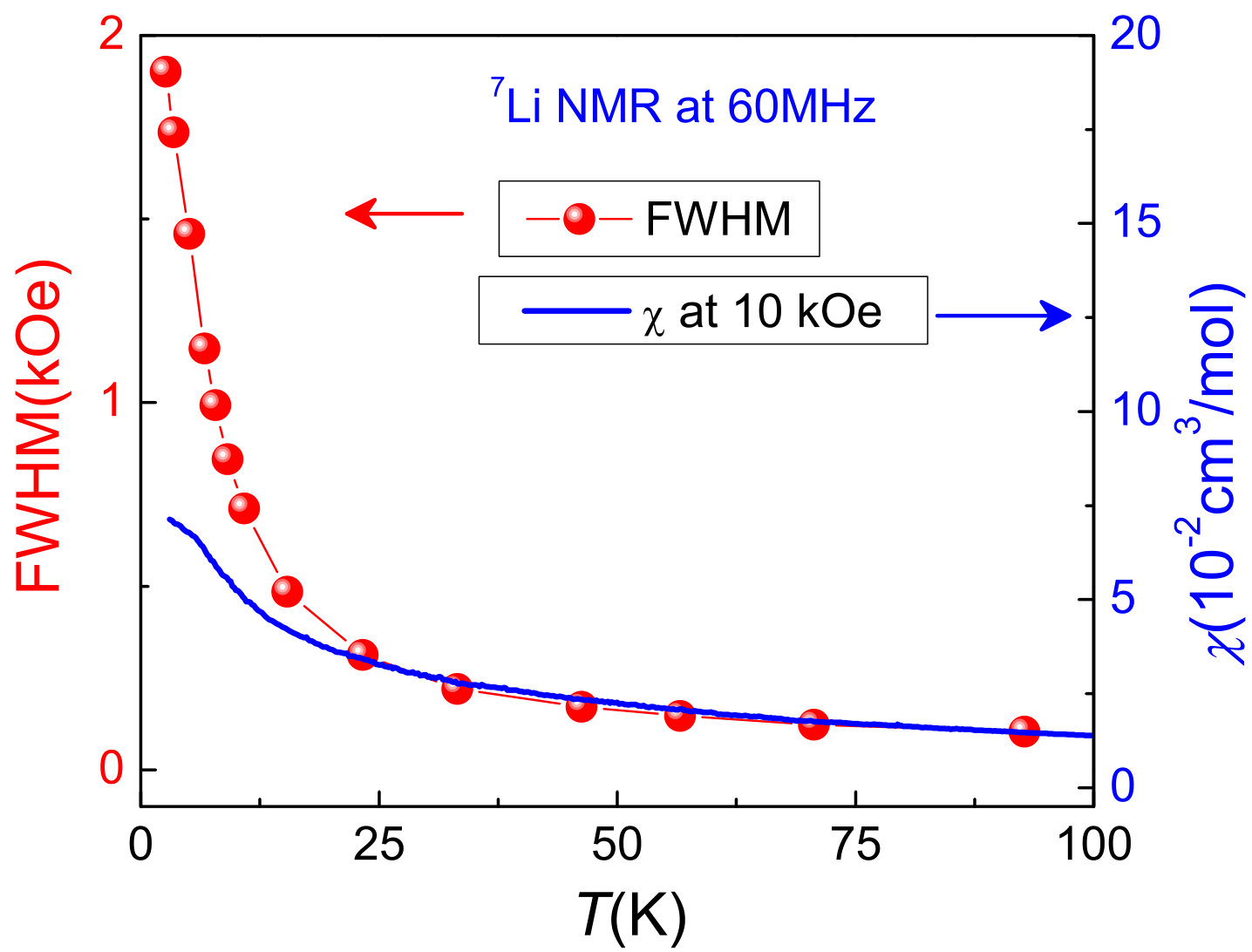 Figure 13
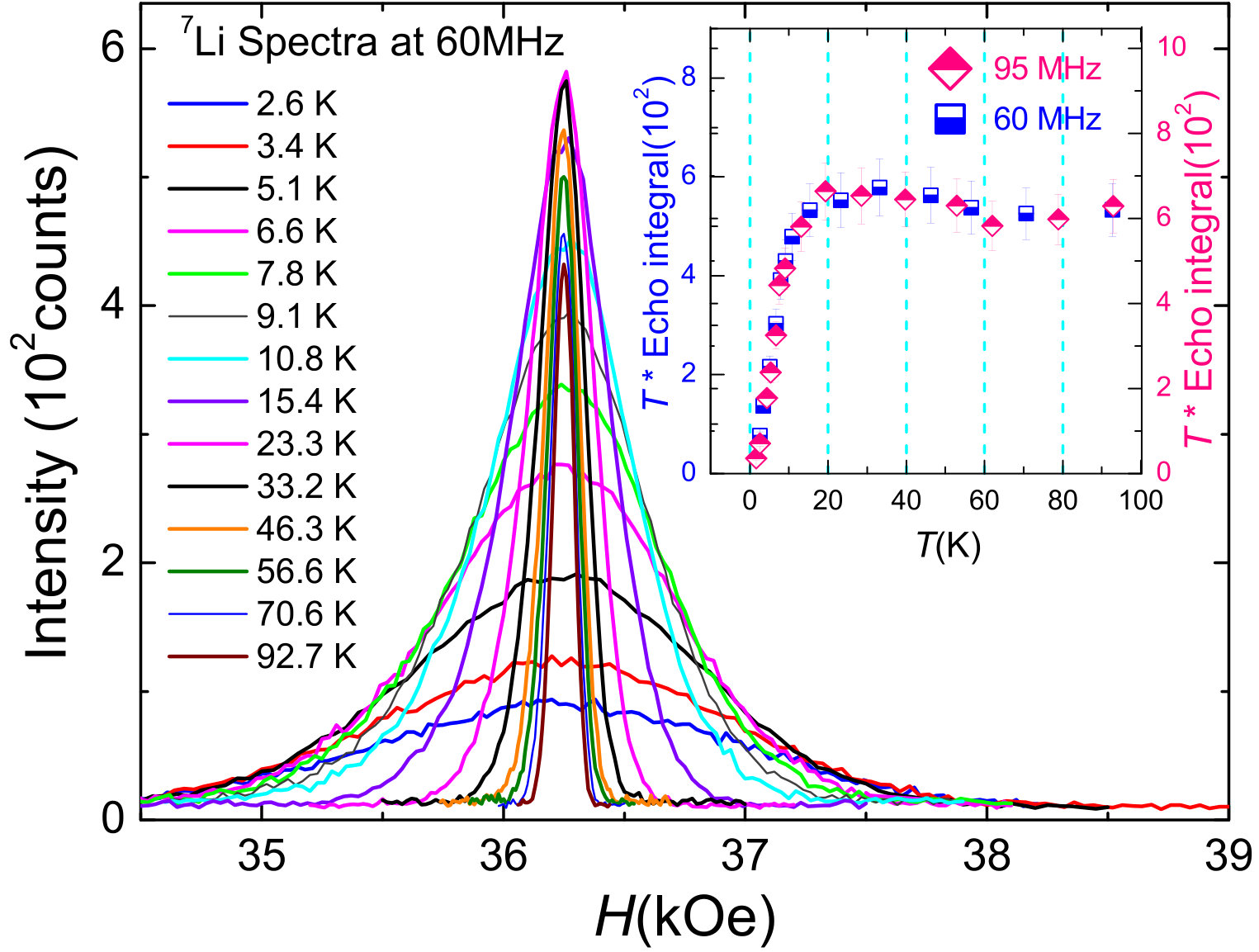 Figure 14
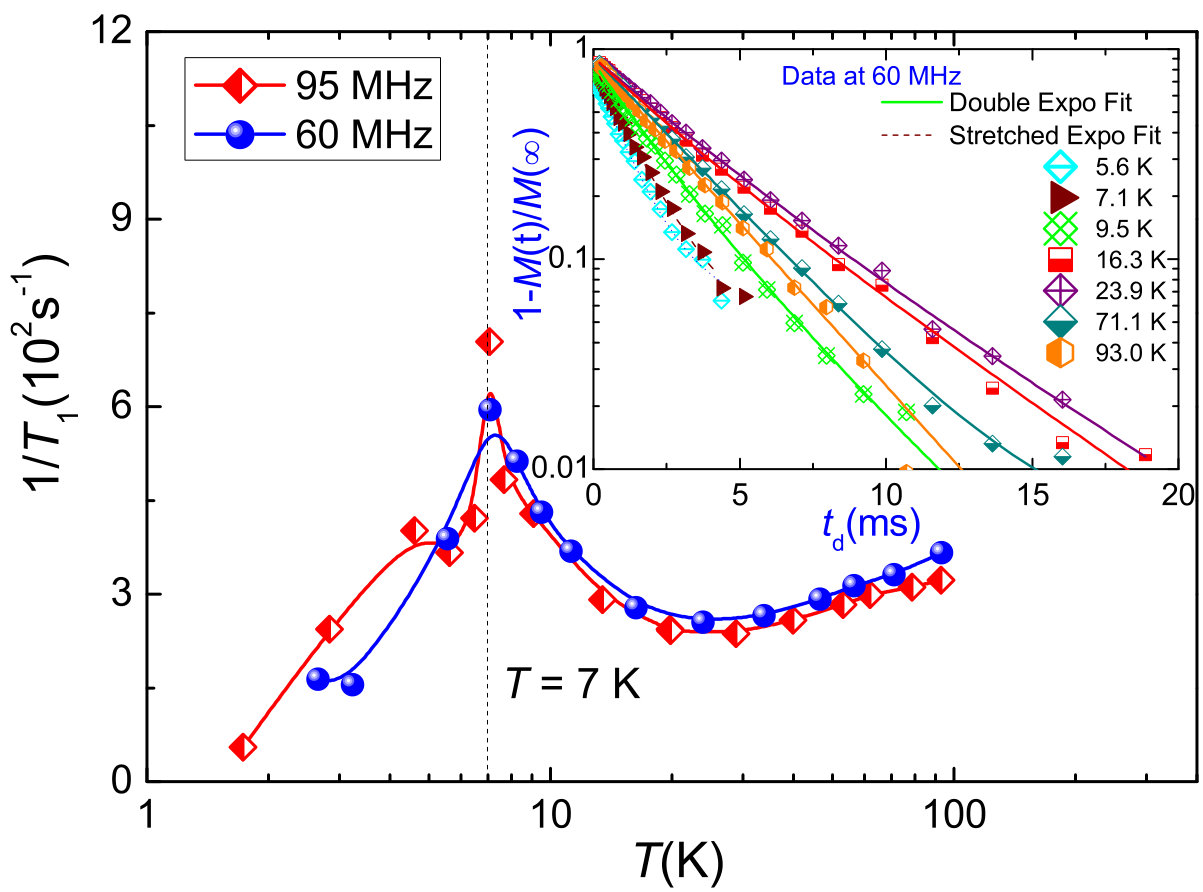 Figure 15
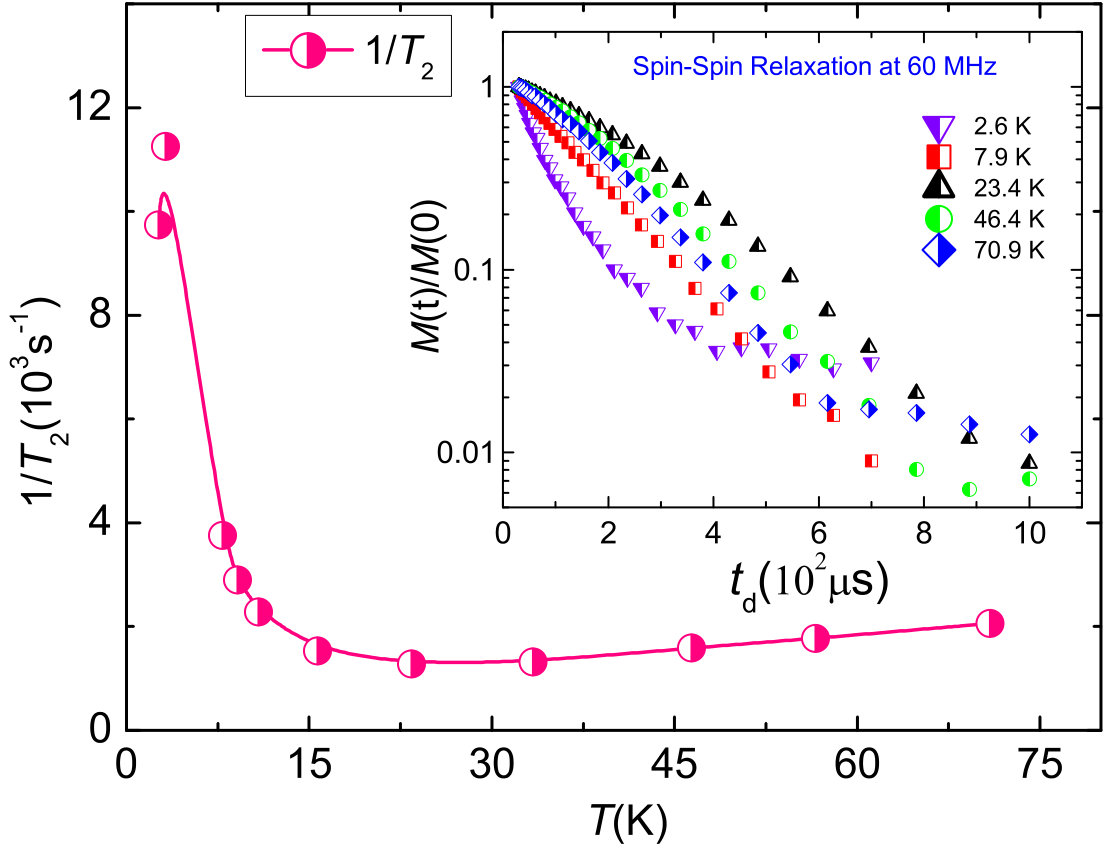 Figure 16
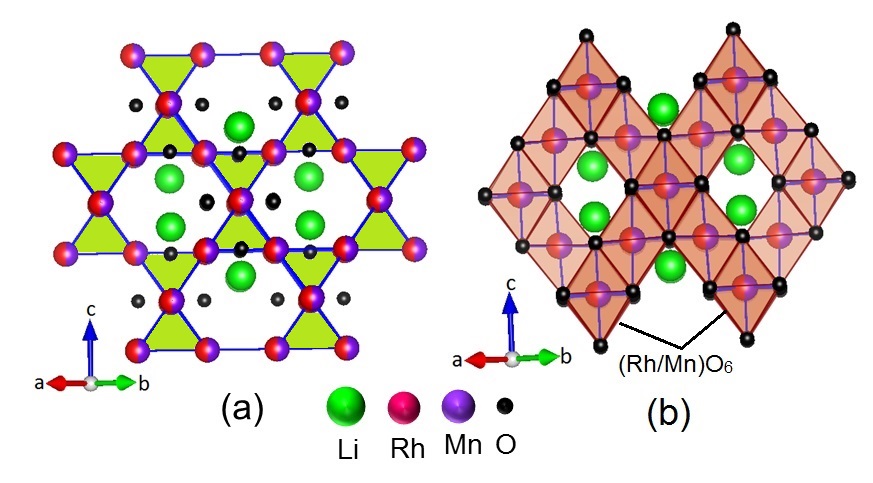 Figure 2
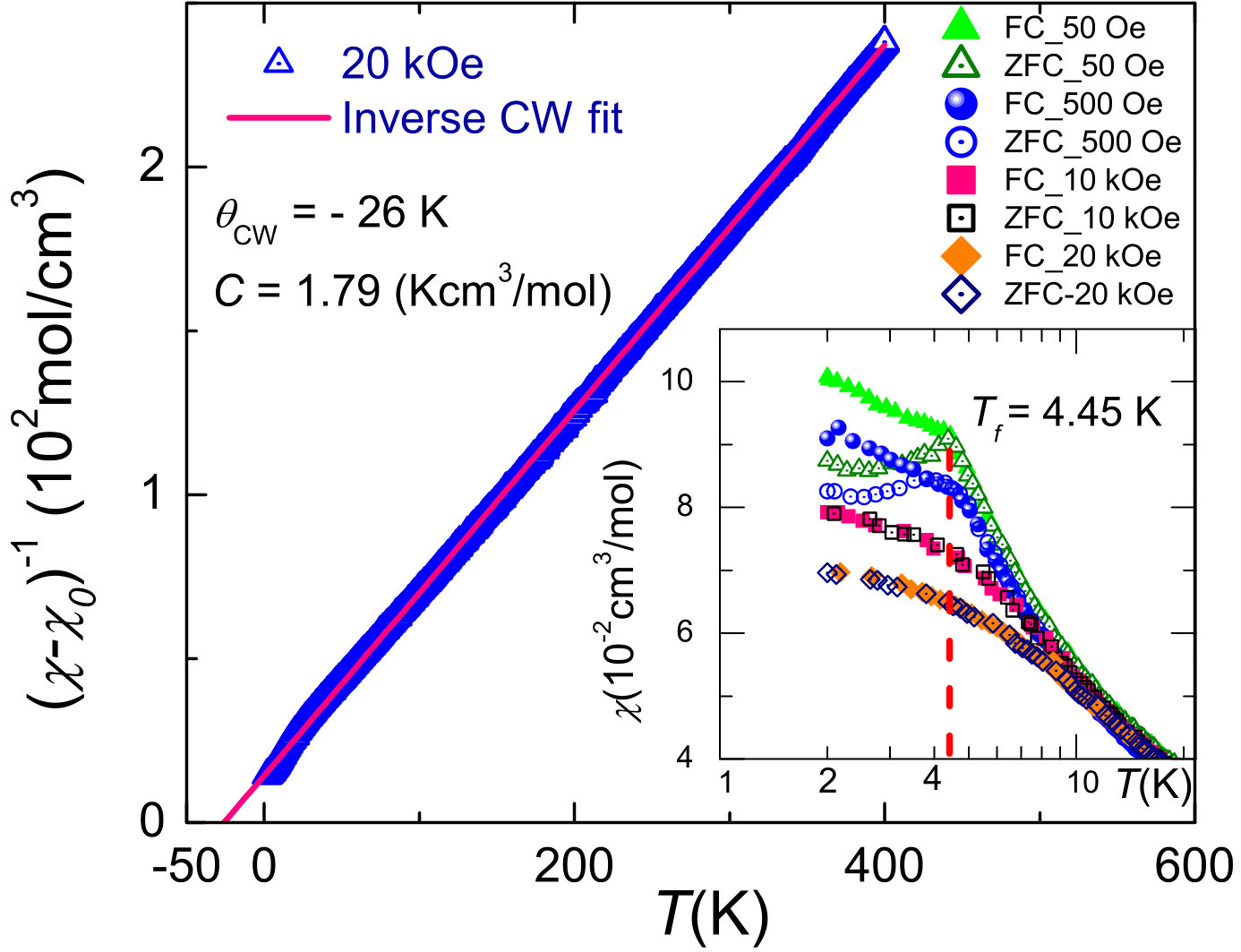 Figure 3
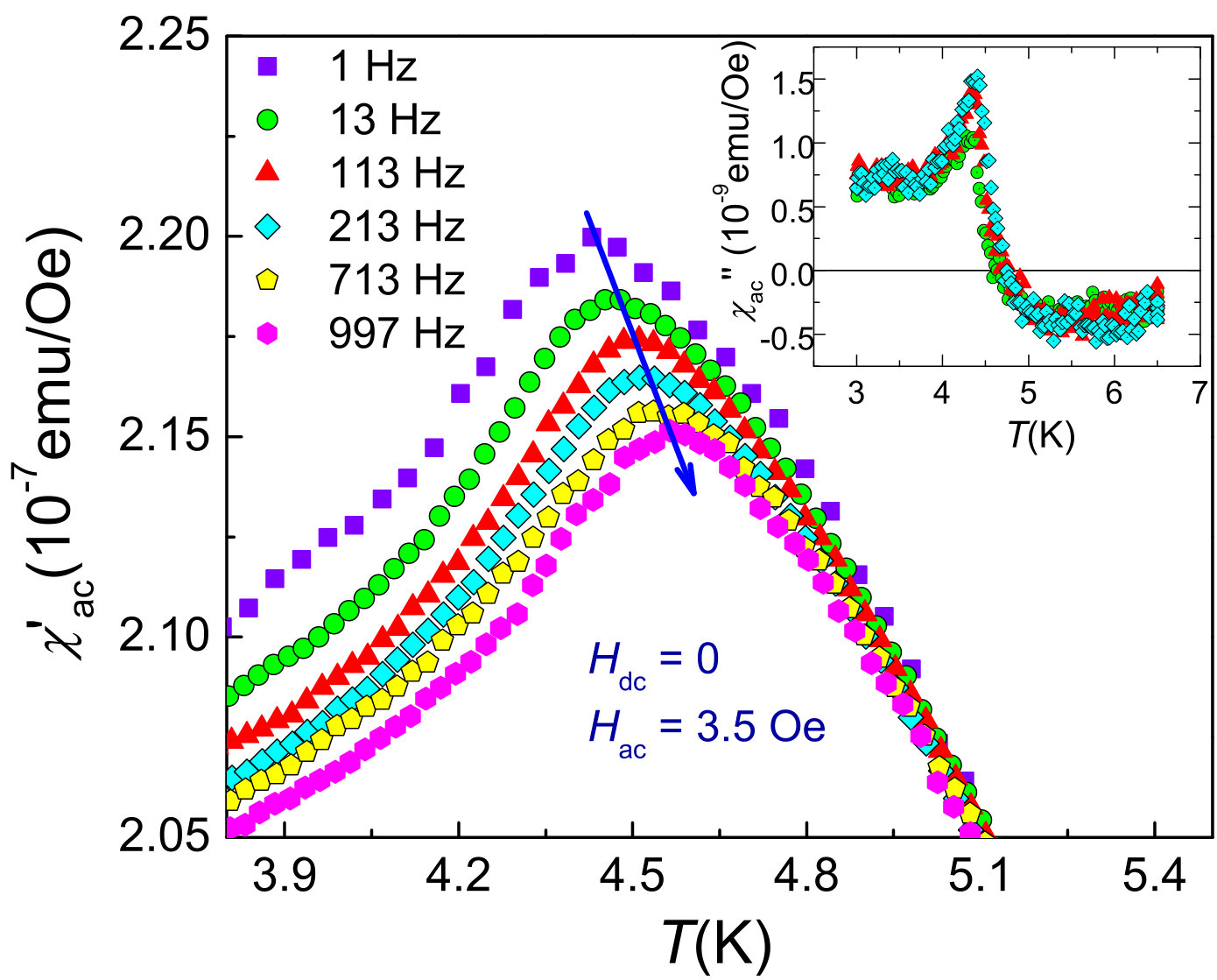 Figure 4
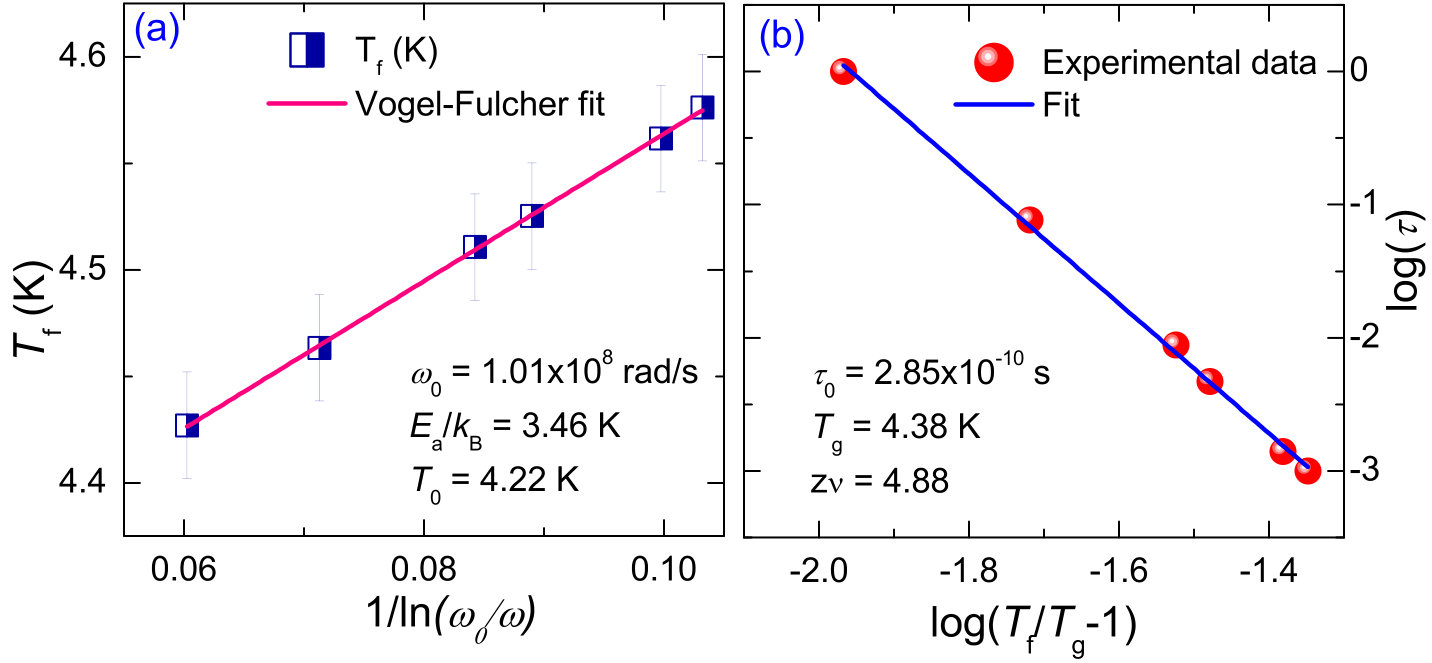 Figure 5
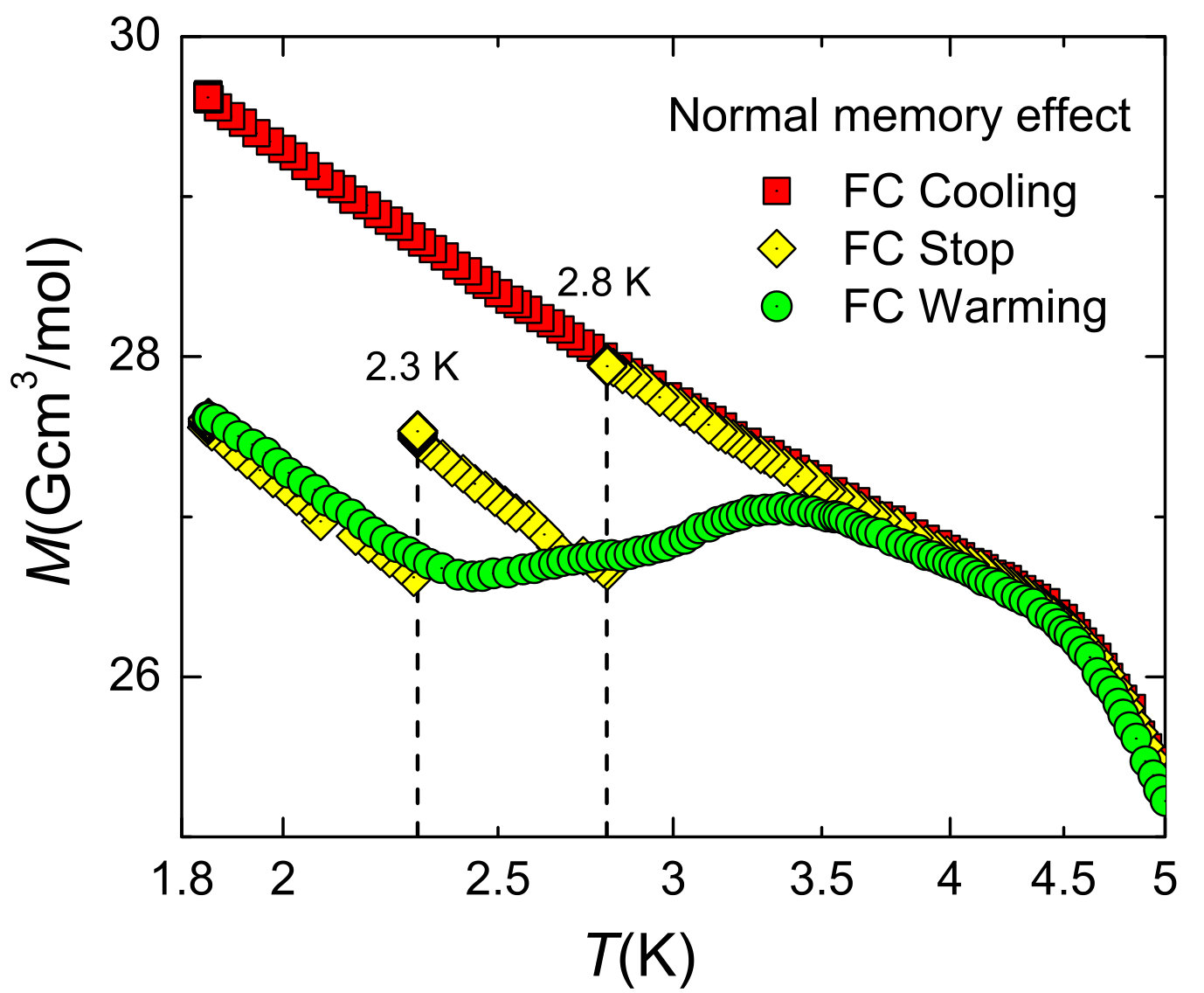 Figure 6
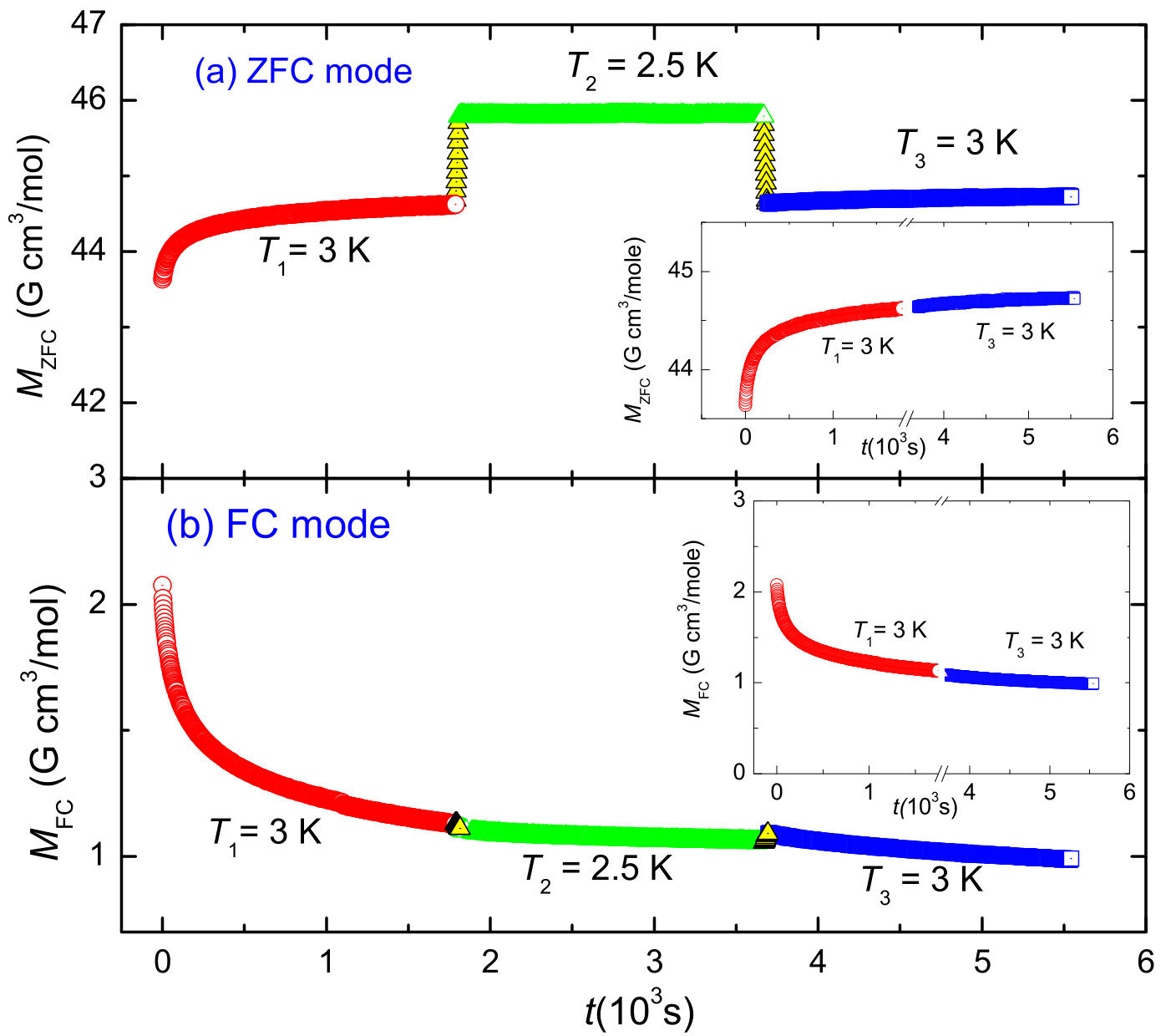 Figure 7
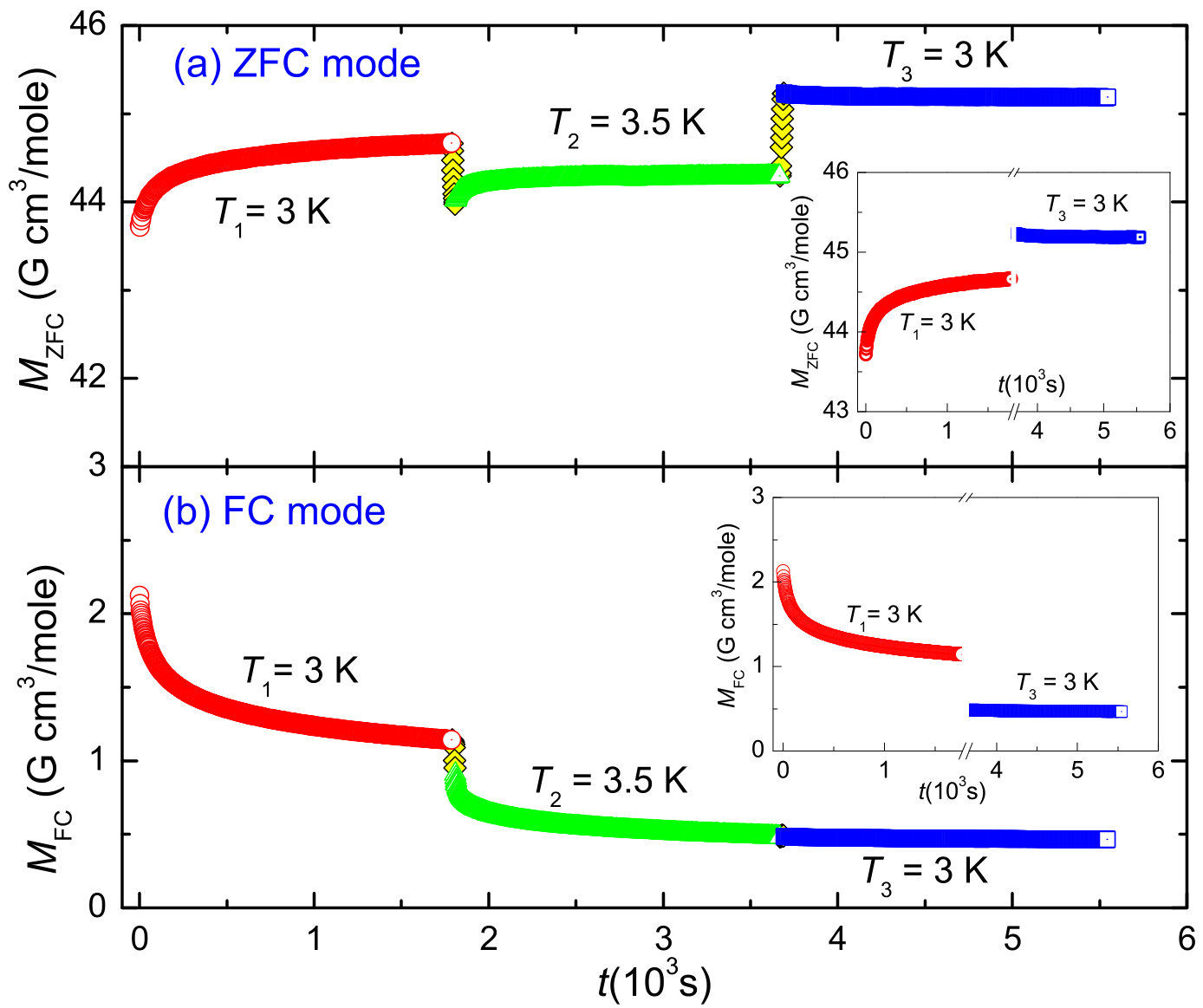 Figure 8
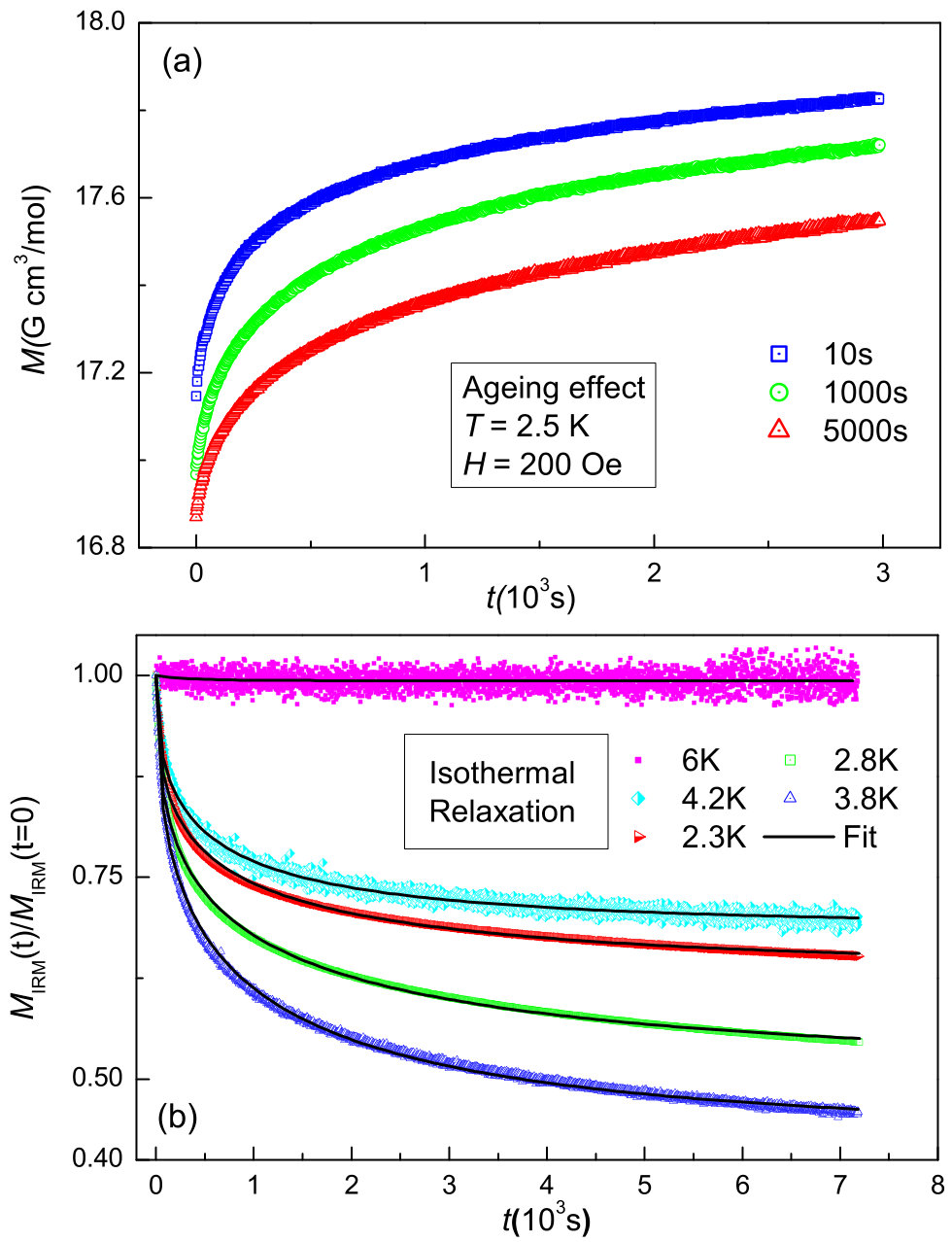 Figure 9
| Atom | Wyckoff position | x | y | z | Occupancy |
|---|---|---|---|---|---|
| Li | 8a | 0.125 | 0.125 | 0.125 | 1.00 |
| Rh | 16d | 0.500 | 0.500 | 0.500 | 0.50 |
| Mn | 16d | 0.500 | 0.500 | 0.500 | 0.50 |
| O | 32e | 0.747 | 0.747 | 0.747 | 1.00 |
| (K) | Stretching exponent | Relaxation time | |
|---|---|---|---|
| 2.3 | 0.42 | 0.63 | 638 |
| 2.8 | 0.42 | 0.51 | 877 |
| 3.8 | 0.45 | 0.43 | 770 |
| 4.2 | 0.47 | 0.69 | 526 |
Peer Reviews
No public reviews on file for this paper yet. If you reviewed it on a platform where reviews are public (OpenReview, ICLR, NeurIPS, ICML), you can paste yours below so the community can read it here.
Videos
No videos yet. Explain this paper in a talk, walkthrough, or lecture? Add one.
Structural and magnetic properties of a new cubic spinel LiRhMn
S. Kundu
Department of Physics, Indian Institute of Technology Bombay, Powai, Mumbai 400076, India
T. Dey
Experimental Physics VI, Center for Electronic Correlations and Magnetism, University of Augsburg, 86159 Augsburg, Germany
M. Prinz-Zwick
Experimental Physics V, Center for Electronic Correlations and Magnetism, University of Augsburg, 86159 Augsburg, Germany
N.
Experimental Physics V, Center for Electronic Correlations and Magnetism, University of Augsburg, 86159 Augsburg, Germany
A. V. Mahajan
Department of Physics, Indian Institute of Technology Bombay, Powai, Mumbai 400076, India
(March 15, 2024)
Abstract
We report the structural and magnetic properties of a new system LiRhMnO4 (LRMO) through x-ray diffraction, bulk magnetization, heat capacity and 7Li nuclear magnetic resonance (NMR) measurements. LRMO crystallizes in the cubic space group \mathit{Fd}$$\bar{3}$$\mathit{m}. From the DC susceptibility data, we obtained the Curie-Weiss temperature = -26 K and Curie constant = 1.79 suggesting antiferromagnetic correlations among the magnetic Mn4+ ions with an effective spin = . At = 50 Oe, the field cooled and zero-field cooled magnetizations bifurcate at a freezing temperature, = 4.45 K, which yields the frustration parameter . AC susceptibility, shows a cusp-like peak at around , with the peak position shifting as a function of the driving frequency, confirming a spin-glass-like transition in LRMO. LRMO also shows typical spin-glass characteristics such as memory effect, aging effect and relaxation. In the heat capacity, there is no sharp anomaly down to 2 K indicative of long-range ordering. The field sweep 7Li NMR spectra show broadening with decreasing temperature without any spectral line shift. The 7Li NMR spin-lattice and spin-spin relaxation rates also show anomalies due to spin freezing near .
Geometric frustration, Spinel, Spin-glass, Memory effect, Aging effect, NMR.
pacs:
75.50.Lk, 75.40.Cx, 76.60.-k
I introduction
In the last few decades, most of the scientific work in condensed matter physics has chiefly been devoted to study the strongly correlated electron systems (SCES) Dagotto (2005); Dagotto and Tokura (2008). Materials with strong electronic correlations are the materials, in which the movement of one electron depends on the positions and movements of all other electrons due to the long-range Coulomb interaction (U). In this regard, the transition metal oxide (TMO) compounds Tokura and Nagaosa (2000) have become the centre stage of attraction to physicists, since the TMO have outermost electrons in d-orbitals which are strongly localized. Hence, the electron density is no longer homogeneous and the striking properties of the system are in fact dependent on the presence of strong electron-electron interactions. Also, the frustration in TMO, either imposed by the geometry of the spin system or by the competing interactions, leads to exotic behavior Ramirez (1994); Greedan (2001); Moessner and Ramirez (2006); Balents (2010). The rich physics of magnetically frustrated systems, continues to attract interest in the condensed matter research community. The resurgence of interest began with the discovery of high- superconductivity (observed in layered cuprates Bednorz and Müller (1986) in the late 80’s and pnictides Kamihara et al. (2008) more recently), and novel phenomenon such as metal-insulator transition (MIT) MOTT (1968), colossal magneto-resistance (CMR) Tokura (2000), charge ordering and quantum magnetism. It was soon realized that the strong interplay of spin, charge, lattice and orbital degrees of freedom in these correlated systems resulted in such diverse properties. In recent years, the interest in solids containing lithium ions has increased profoundly due to the potential applications in long-lasting rechargeable batteries. In this regard, the spinel oxide LiMn2O4 has attracted wide attention as a cathode material of batteries due to its low cost and non-toxicity Eftekhari (2003); Arillo et al. (2005). At room temperature LiMn2O4 Thackeray et al. (1983) crystallizes in the cubic space group \mathit{Fd}$$\bar{3}$$\mathit{m}, with the following cation distribution (Li*+)A[Mn3+Mn4+]BO4*; here the subscripts A and B denote the tetrahedral and octahedral sites, respectively. Likewise, Takagi et al. found the metal-insulator transition (MIT) property in Okamoto et al. (2008); Arita et al. (2008); Knox et al. (2013), which behaves like a paramagnetic metal at high temperature; whereas below about 170 K it becomes a valence bond insulator and the ground state of mixed-valent is charge frustrated. How will the ground state of this system vary if one replaces the = ion with higher spin ions, say = ? With this motivation, we decided to explore (LRMO) which is structurally identical to but magnetically different. Magnetic properties of LRMO have so far not been reported. Only the structure of LRMO was first reported long back in 1963 by G. Blasse Blasse (1963). It is a mixed metal oxide with spinel structure Onoda et al. (1997) where 50% of the B-sites are occupied by non-magnetic ( = 0) and the other 50% by magnetic ( = ) ions. Usually, the B-site spinel has a corner-shared tetrahedral network like the pyrochlore lattice which is geometrically frustrated. But due to the B-site disorder, the frustration may be relieved and result in a spin-glass state Mydosh (1993) at a low .
We have synthesized polycrystalline LRMO and studied its bulk and local magnetic properties through various characterization techniques such as x-ray diffraction, DC and AC magnetization, heat capacity and field sweep 7Li nuclear magnetic resonance (NMR). We found that LRMO has antiferromagnetic (AFM) correlations among Mn4+ ions and conventional spin-glass ground state with the spin-freezing temperature = 4.45 K.
II experimental details
Polycrystalline was prepared by solid-state reaction. Pre-heated starting materials (Li2CO3, Rh metal powder and MnO were mixed in stoichiometry and ground thoroughly for hours. Finally a hard pellet was made and calcined at , , and for 24 hours each time. As there is a chance of lithium evaporation above 900oC, 15% excess Li2CO3 was mixed to get the pure LRMO. The processes of grinding and firing were done until we obtained the single phase sample. The single phase of LRMO is confirmed from the powder x-ray diffraction (XRD) measurements at room temperature with Cu radiation () on a PANalytical X’Pert PRO diffractometer. DC and AC magnetization data were measured as a function of temperature K) with the applied field kOe) and the frequency (11000 Hz) using a commercial superconducting quantum interference device (SQUID) magnetometer. Low-field magnetization measurements were performed utilizing the reset magnet option of the SQUID. Heat capacity measurements were performed in the temperature K) and in the field kOe) using a Quantum Design PPMS. As the 7Li NMR spectra are very broad especially at low- and it is difficult to obtain the full line-shape only by the Fourier transform of the time echo signal in our fixed field NMR setup, we have performed field sweep 7Li NMR measurements at 60 MHz and 95 MHz. The spin-lattice relaxation rate () is measured by the saturation recovery method and the spin-spin relaxation rate () is obtained by measuring the decay of the echo integral with variable delay time.
III Results and Discussion
A. Crystal structure
The powder XRD data has been recorded with Cu- radiation over the angular range in step size and treated by profile analysis using the Rietveld refinement Rietveld (1969) by Fullprof suite Rodriguez-Carvajal (1993) program. From the XRD pattern analysis, we found that the prepared is crystallized in single phase and there is no sign of any unreacted ingredients or impurity phases. The Rietveld refinement of XRD pattern is shown in Fig. 1. From refinement, we obtained the cell parameters of , = = = 8.319 Å (which is close to the earlier reported value 8.30 Å Blasse (1963)), == \gamma=$$\mathrm{90^{o}} and the atomic coordinates of LRMO is given in Table 1. The reliability of the x-ray refinement of LRMO is given by the following parameters : 4.63; : 2.98%; : 5.68%; : 2.63%.
The structure of LRMO has been drawn and analyzed by using Vesta software Momma and Izumi (2011). We have obtained the atomic coordinates from Rietveld refinement done on XRD pattern of LRMO which crystallizes in the non-centrosymmetric cubic spinel structure \mathit{Fd}$$\bar{3}$$\mathit{m} (space group 227). The Rh or Mn atoms are connected to each other via a tetrahedral network as shown in Fig. 2(a). These tetrahedral are corner-shared and form a geometrically frustrated magnetic system. In the structure, form perfect octahedra with (Rh/Mn)-O bond distance 2.055 Å (shown in Fig. 2(b)). The presence of non-magnetic ( = 0) at the B-site of the spinel, in a tetrahedral unit, distorts the corner-shared arrangement of ( = ) ions. This makes the B-sites diluted.
B. Bulk magnetization
1. DC susceptibility
The temperature dependence of the bulk dc magnetic susceptibility is measured on LRMO under different applied magnetic fields in the temperature range of (2-400) K. The main features of our observations from the dc susceptibility measurement are discussed here. With increasing fields, the reduces in the low temperature region (see inset of Fig. 3). Below 5 K, there is splitting between the zero-field cooled (ZFC) and field cooled (FC) data at = 50 Oe and 500 Oe as shown in the inset of Fig. 3. Also, the below 500 Oe shows some anomaly around 5 K. This may be due to regular antiferromagnetic (AFM) ordering which is very sensitive to the applied field as splitting between ZFC-FC is suppressed with fields higher than 5 kOe. The existence of ZFC-FC splitting below 500 Oe suggests the presence of a glassy state below 5 K. This is a signature of conventional spin-glass Binder and Young (1986). Fig. 3 shows the paramagnetic behavior of the dc susceptibility at 20 kOe. The Curie-Weiss fitting in the high temperature region (200-400 K) gives a Curie constant = 1.79 and a Curie-Weiss temperature . The negative value of the Curie-Weiss temperature suggests AFM interaction among the magnetic ions. The effective moment of ions [using = 1.79 ] is which is close to the expected value 3.87 for the ion.
2. AC susceptibility
The ac susceptibility is measured by keeping the dc applied field to be zero and with an ac field of 3.5 Oe amplitude. The frequency dependence of the in-phase component is shown in Fig. 4. The freezing temperature () shifts towards higher temperatures as the frequency increases which are typical features in glassy systems Mulder et al. (1981). Also, the out of phase component of the ac susceptibility , shown in the inset of Fig. 4, has a frequency dependence with an anomaly around . Below and above , the value of is non-zero positive and negative respectively. These observations confirm a spin-glass ground state of LRMO. Usually, the frequency dependence of spin-freezing temperature () is estimated in terms of the relative shift ( ) of the , defined as = Mahendiran et al. (2003), which is found to be 0.022 for LRMO. It is interesting to note that the value of which determines the sensitivity to the frequency, falls in between the value of conventional spin-glasses and superparamagnets. The present value of is close to 0.037 which is observed for metallic glasses Luo et al. (2008).
The Vogel-Fulcher fit by equation of the variations of the freezing temperature () with frequency suggests short-range Ising spin-glass behavior Fisher and Huse (1986) (shown in Fig. 5). From the fit, we obtained the activation energy / 3.46 K, the characteristic angular frequency rad/s and the Vogel–Fulcher temperature . For a conventional spin-glass system, is of the order of rad/s. So the obtained value is small compared to that of a usual spin-glass system. This large deviation may not be the true scenario as the error involved in determining the freezing temperature is large and the measured frequency range is limited to only two decades.
The variation of the freezing temperature with frequency obey with the critical slowing down dynamics (see Fig. 5) which is expressed by the equation: = ( / - 1)-zv. Here is the relaxation time and is the dynamic exponent Dho et al. (2002). We found the best fit with = 4.38 K, 2.85 10*-10* s and 4.88. The value of is 10*-10* to 10*-13* s and lies in between of 4 - 13 for the conventional spin-glass systems Luo et al. (2008). The present values of and imply that the ground state of LRMO is a conventional spin-glass.
3. Memory effect
Fig. 6 shows a memory effect in LRMO. We have measured the field cooled (FC) magnetization using the protocol described by Sun Sun et al. (2003); Chakrabarty et al. (2014). We have recorded the magnetization by cooling the LRMO sample down to 1.85 K with a cooling rate of 1 K/min and an applied field of 300 Oe. We have interrupted the cooling process below i.e. at 2.8 K and 2.3 K for a waiting time of 2 hours. We switched off the field during , allowed the system to relax and resumed the measurement after each stop and wait period. Fig. 6 shows step-like features which are the evidence of stops at 2.8 K and 2.3 K in the FC stop curve. Then we have recorded the magnetization of the sample while heating continuously at the same field of 300 Oe. We also have measured a reference curve named as “FC cooling” by simply cooling the sample continuously at = 300 Oe. We have noticed a change of slope at 2.8 K and a prominent minimum at 2.3 K in the FC warming curve. So it appears that the history of the sample magnetization is recorded as a memory in the sample. Such imprinting of memory has also been found in intermetallic systems GdCu Bhattacharyya et al. (2011), Nd5Ge3Maji et al. (2011)) and in super spin-glass nanoparticle system Sasaki et al. (2005); Sun et al. (2003). This memory effect constitutes a standard observation in spin-glasses.
To know further features of the memory effect, we have measured the magnetic relaxation in ZFC and FC mode with a negative and a positive temperature cycling as shown in Fig. 7 and Fig. 8 respectively. We have recorded each relaxation curve for hour. In the ZFC mode, we have cooled the sample in the absence of field but measured the data with an applied field of = 500 Oe. In contrast to that, in the FC mode, the field ( = 500 Oe) is continuously on during cooling of the sample and switched off just before the measurement starts. In the negative heat cycle, we have quenched the system to a lower temperature and resumed the relaxation process. The initial and final relaxation data are at T1 = T3 = 3 K whereas the quenched one is at T2 = 2.5 K. Fig. 7 (a) and (b) shows the relaxation data in ZFC and FC mode in the negative heat cycle process. If we ignore the middle one, the initial and the final relaxation are just a continuation of each other as shown in the inset of Fig. 7 (a) and (b). So in the negative heat cycle or the temporary quenching, the system remembers the earlier states where it was, irrespective of the measurement processes i.e. either ZFC or FC mode. This is the memory effect in negative heating cycle.
We also have measured magnetization in a temporary heating cycle for comparing the response with the negative heating cycle. In the positive heat cycle, we have increased the temperature of the middle step to T2 = 3.5 K whereas the initial and final steps are at T1 = T3 = 3 K. Fig. 8 (a) and (b) show the relaxation data in ZFC and FC mode respectively. From the inset of Fig. 8, it is very clear that the relaxations at T1 and T3 are discontinuous and the response of the system is asymmetric. So the positive heat cycle erases the memory in both ZFC and FC processes. This supports the hierarchical model as proposed for the spin-glasses.
4. Aging effect and relaxation
The Fig. 9 shows the aging effect in the dc magnetization data. Below the freezing temperature, that is at 2.5 K, the growth of the magnetization is recorded as a function of time in the ZFC mode with an applied field of = 200 Oe after a different waiting time (t). We have waited for three different times like 10 s, 1000 s and 5000 s. From our plot, it is obvious that the magnetization growth is faster for small waiting time and slower for large waiting time. These point towards the formation of metastability of the glassy state.
We also measured the isothermal remanent magnetization () i.e. the relaxation of LRMO to probe the metastability further below the spin-glass transition temperature. For this, a field of 300 Oe was applied for 300 s after we cooled the LRMO sample in the zero field mode and reached a particular temperature and then the applied field was switched off and let the system to relax for 2 hours at that temperature. During relaxation, the magnetization data was then recorded as a function of time. Fig. 9 shows the decay curves normalized to the magnetization before making the field zero, These isothermal remanent magnetization were well fitted with stretched exponential and from the fitting, we obtained the characteristic relaxation time at different temperatures (shown in Fig. 9). Here is the stretching exponent (0 and are the magnetization at when 0 and respectively. The best fit parameters obtained for each isotherm is listed in Table 2. We do expect that the decay of is faster for temperature closer to . This signifies that the system forms a metastable and irreversible state below . As expected, above i.e. at 6 K, is independent of time.
C. Heat capacity
The heat capacity of magnetic LRMO was measured at different fields (0 - 90 kOe) in the temperature range 1.8- 300 K. There is no anomaly in the vs. data as might usually be expected for short-range order (SRO) or long-range order (LRO). In the inset of Fig. 10, vs. , there is no significant influence of the applied magnetic field on the heat capacity. Also, no Schottky type anomaly was found in this system at the low temperature.
The total heat capacity of LRMO has the contribution from lattice () and magnetic () both. As there was no suitable non-magnetic analogue available we have fitted the data with Debye term and several Einstein terms in the -range (55-130) K and then extrapolated to low- to determine the . Out of them, one Debye term plus two Einstein terms (1D+2E) fit is the best one where the coefficients and accounts for the relative weight of the acoustic and optical modes of vibrations respectively. After fitting we obtained :: = 1:1:5. The deviation of the from the Debye-Einstein fit below 50 K indicates the presence of a significant magnetic contribution to the heat capacity. The magnetic heat capacity is obtained by subtracting the lattice contribution from total heat capacity and shown in Fig. 11 on the left -axis. The magnetic heat capacity is almost independent of the strength of the applied field. It shows a hump around 18 K which indicates onsets of short-range interactions among the magnetic atoms. Also the magnetic entropy change is calculated using relation and shown in the right -axis of Fig. 11. Its value is 8.55 (J/mol K) which is 75% of the expected 11.52 (J/mol K) for = spin. Considering the uncertainty involved in determining the lattice specific heat, the value of obtained is not far from the expected value.
D. NMR Result
nuclei has a high natural abundance (92.6%) and it has nuclear spin = with the value of gyromagnetic ratio = 16.54607 (MHz/T). We have measured the field sweep NMR at 60 MHz and 95 MHz. We also measured spin-lattice relaxation rate (1/) and the spin-spin relaxation rate (1/) at 60 MHz (\mathit{H}$$\sim36 kOe). These measurements throw light on the nature of the intrinsic interactions of magnetic atoms.
1. NMR Spectra
For the spectra, we use the optimal pulse sequence () = 5 -100 -10 at 60 MHz. The 100 refers to the time duration between the starting of the two pulses. The spectra at different temperatures (from 92.7 K to 2.6 K) are shown in Fig. 12. There is no significant shift in the spectra. The lithium surroundings in one unit cell are shown in the inset of Fig. 12. From the spectra, we have obtained the full width at half maxima (FWHM) at different temperatures which track the dc susceptibility well as shown in Fig. 13.
The spectra at different temperatures are plotted without normalization of the spin-echo intensity as a function of sweep field (see Fig. 14). On lowering the temperature the total spectral intensity is constant down to about 20 K and then begins to decrease below 20 K. In the inset of Fig. 14, the echo integral (which is obtained by integrating the line-shape as a function of field the area under the spectrum at a particular temperature) times the temperature is plotted as a function of temperature. It shows a drop below 20 K. This suggests a loss of signal most probably due to development of frozen magnetic regions in the sample below 20 K.
2. Spin-lattice relaxation rate, 1/
The spin-lattice relaxation rate ) of was measured by using a saturation recovery of the longitudinal magnetization using saturation pulse () of 10 at various temperatures from 93 K to 2.65 K. The saturation recovery curves are shown in the inset of Fig. 15. The curve above 7 K are best fitted with the single exponential function and below about 7 K are best fitted with a stretched exponential function []. Here denotes the saturation level of the signal and is the stretching exponent. In general, the spin-glass systems possess a distribution of the spin-lattice relaxation times () due to the existence of different relaxation channels. That’s why here, determines the width of the distribution window. This stretched exponential characteristics of the saturation recovery data below about 7 K confirms the presence of discrete and local magnetic domains. The Fig. 15 shows the spin-lattice relaxation rate as a function of temperature. Below 20 K it starts to increase and at around 7 K it shows a peak. It appears that the onset of freezing of the magnetic regions starts around 20 K and at 7 K they lock into a spin-glass state. This supports the dc magnetic susceptibility as well as the magnetic heat capacity data which shows a hump just below 20 K.
3. Spin-spin relaxation rate, 1/
The inset of Fig. 16 shows the decay of the transverse nuclear magnetization data at 60 MHz with different temperatures. The data above 7 K are well fitted to a Gaussian modified exponential function [] and the data below 7 K are fitted with a stretched exponential function []. From fitting, we obtained the values and plotted the spin-spin relaxation rate (1/) as a function of temperature in Fig. 16. It shows that the spin-spin correlation begins to increase around 15 K with a peak at 3.2 K.
IV conclusions
With respect to the crystallography of polycrystalline LRMO we confirmed a single-phase nature from our XRD investigation. In (), ZFC-FC bifurcation was found below 4.45 K which is very much field sensitive. This ZFC-FC splitting suggests the presence of a glassy state. The frequency dependent , where the freezing temperature () shifts towards higher values as the frequency increases is a signature of glassy systems and thus it confirms the presence of the spin-glass ground state. Also, the out of phase component of the ac susceptibility has a frequency dependence with an anomaly around . The is non-zero positive below and is negative above . This observation ruled out any bond disordered antiferromagnetic state. The characteristic frequency rad/s obtained from the Vogel –Fulcher fit is less than that of conventional spin-glass systems ) rad/s, but the characteristic time 2.85 10*-10* s and critical exponent 4.88 values are close to a conventional spin-glass Luo et al. (2008). This implies that the ground state of LRMO is more likely to be a conventional spin-glass. From heat capacity measurement, there occurs significant contribution of magnetic heat capacity and no sharp anomaly presents down to 2 K. The calculated magnetic entropy change is 75% of the theoretical value ln(4) for this system. These numbers are not far from the usual LRO transition. However the change of entropy starts to decrease below 30 K, which is close to the CW temperature also. From NMR, there is no significant shift of the spectrum and the FWHM of spectra at high temperatures follows the Curie-Weiss behavior like dc susceptibility. The echo integral intensity times the vs. shows a drop below 20 K. This suggests a loss of signal probably due to development of frozen magnetic domains within the sample. In order to shed more light on the spin dynamics of ions, we have measured spin-lattice relaxation rate () and spin-spin relaxation rate (1/) for nuclei. Both show anomalies below 7 K like in the dc susceptibility indicating the spin-glass ground state of .
V acknowledgement
SK acknowledges the discussion with Dr. Aga Shahee and R. K. Sharma and the financial support from IRCC, IIT Bombay. AVM would like to thank the Alexander von Humboldt foundation for financial support during his stay at Augsburg Germany. We kindly acknowledge support from the German Research Society (DFG) via TRR80 (Augsburg, Munich).
The reference list from the paper itself. Each links out to its DOI / PubMed record.
- 1Dagotto (2005) E. Dagotto, Science 309 , 257 (2005) . · doi ↗
- 2Dagotto and Tokura (2008) E. Dagotto and Y. Tokura, MRS Bulletin 33 , 1037 (2008) . · doi ↗
- 3Tokura and Nagaosa (2000) Y. Tokura and N. Nagaosa, Science 288 , 462 (2000) . · doi ↗
- 4Ramirez (1994) A. P. Ramirez, Annual Review of Materials Science 24 , 453 (1994) . · doi ↗
- 5Greedan (2001) J. E. Greedan, J. Mater. Chem. 11 , 37 (2001) . · doi ↗
- 6Moessner and Ramirez (2006) R. Moessner and A. P. Ramirez, Physics Today 59 , 24 (2006) . · doi ↗
- 7Balents (2010) L. Balents, Nature 464 , 199 (2010) . · doi ↗
- 8Bednorz and Müller (1986) J. G. Bednorz and K. A. Müller, Zeitschrift für Physik B Condensed Matter 64 , 189 (1986) . · doi ↗