Einstein-non-linear Maxwell-Yukawa black hole
S. Habib Mazharimousavi, M. Halilsoy

TL;DR
This paper presents an exact solution for a Yukawa-modified Reissner-Nordström black hole within nonlinear electromagnetism, exploring its thermodynamics and potential to model short-range charged interactions.
Contribution
It introduces a novel exact black hole solution with Yukawa extension in nonlinear electromagnetism, expanding understanding of charged black holes with short-range interactions.
Findings
Modified characteristics of Reissner-Nordström black hole
Thermodynamical properties analyzed
Potential application in modeling short-range interactions
Abstract
Within the context of nonlinear electromagnetism we consider the Yukawa extension of a Reissner-Nordstr\"{o}m black hole. Exact solution is given which modifies certain characteristics of the latter. Some thermodynamical aspects are given for comparison. The model may be considered as a useful agent to describe a short-ranged, charged, massive interaction.
Click any figure to enlarge with its caption.
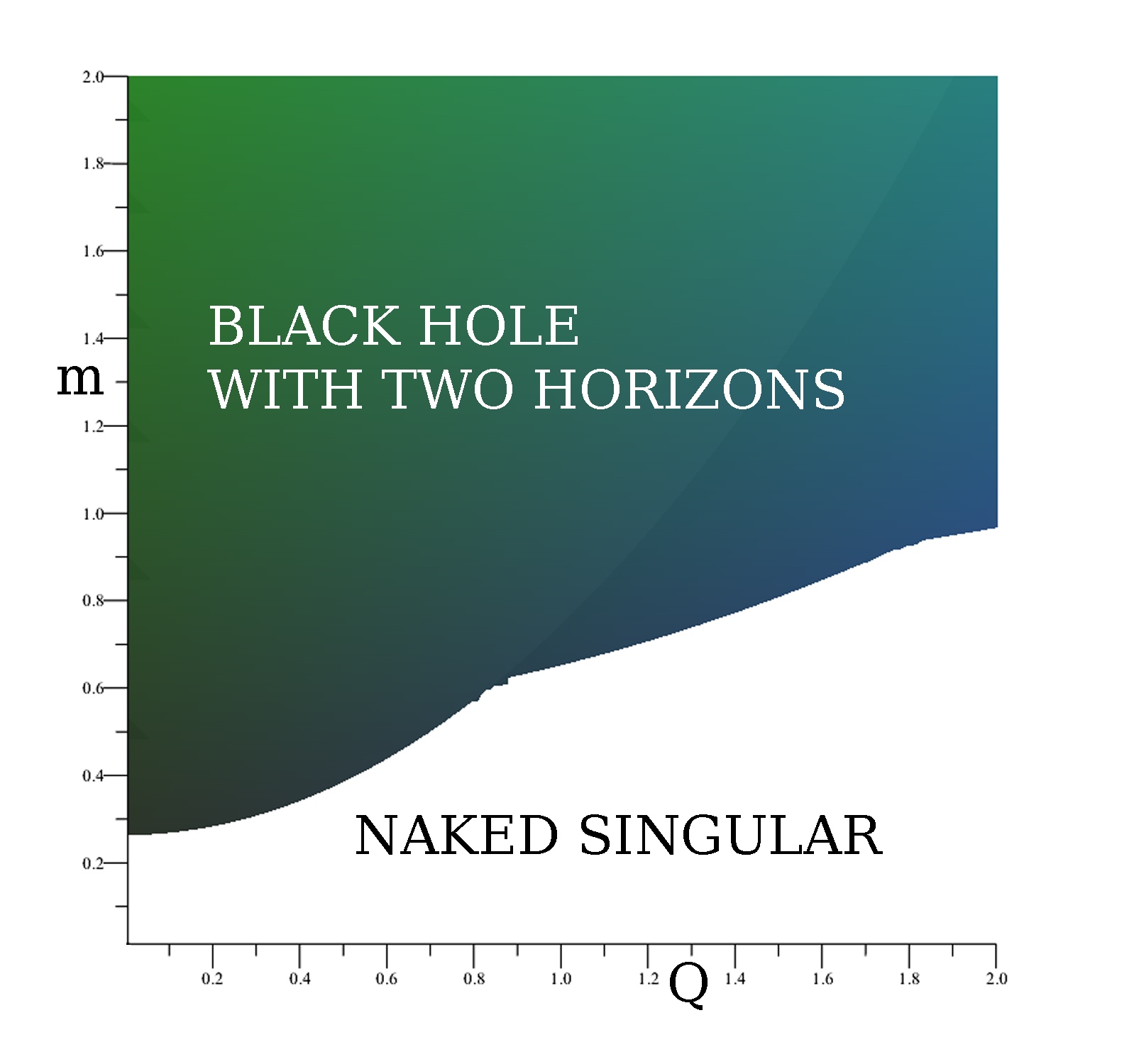 Figure 1
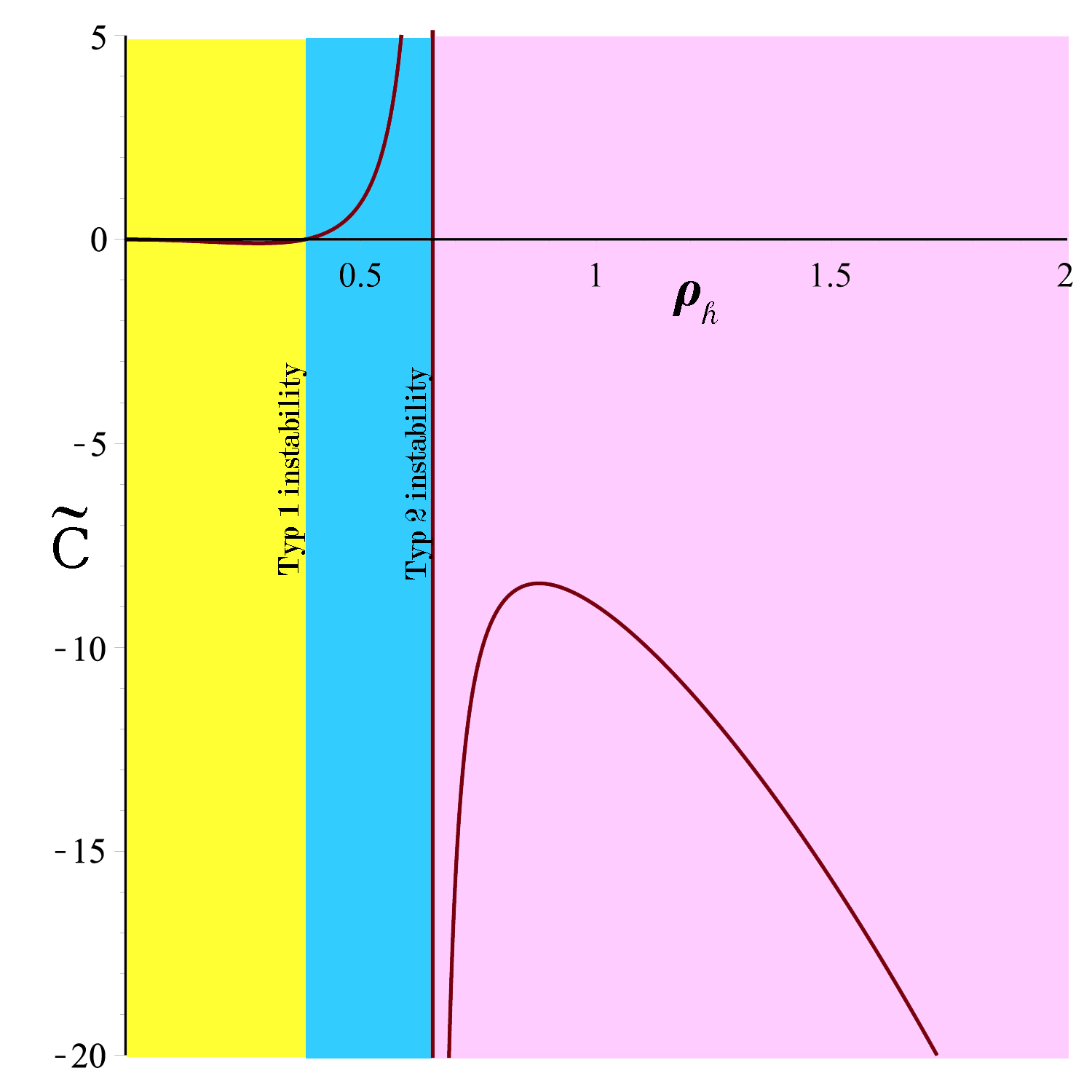 Figure 2
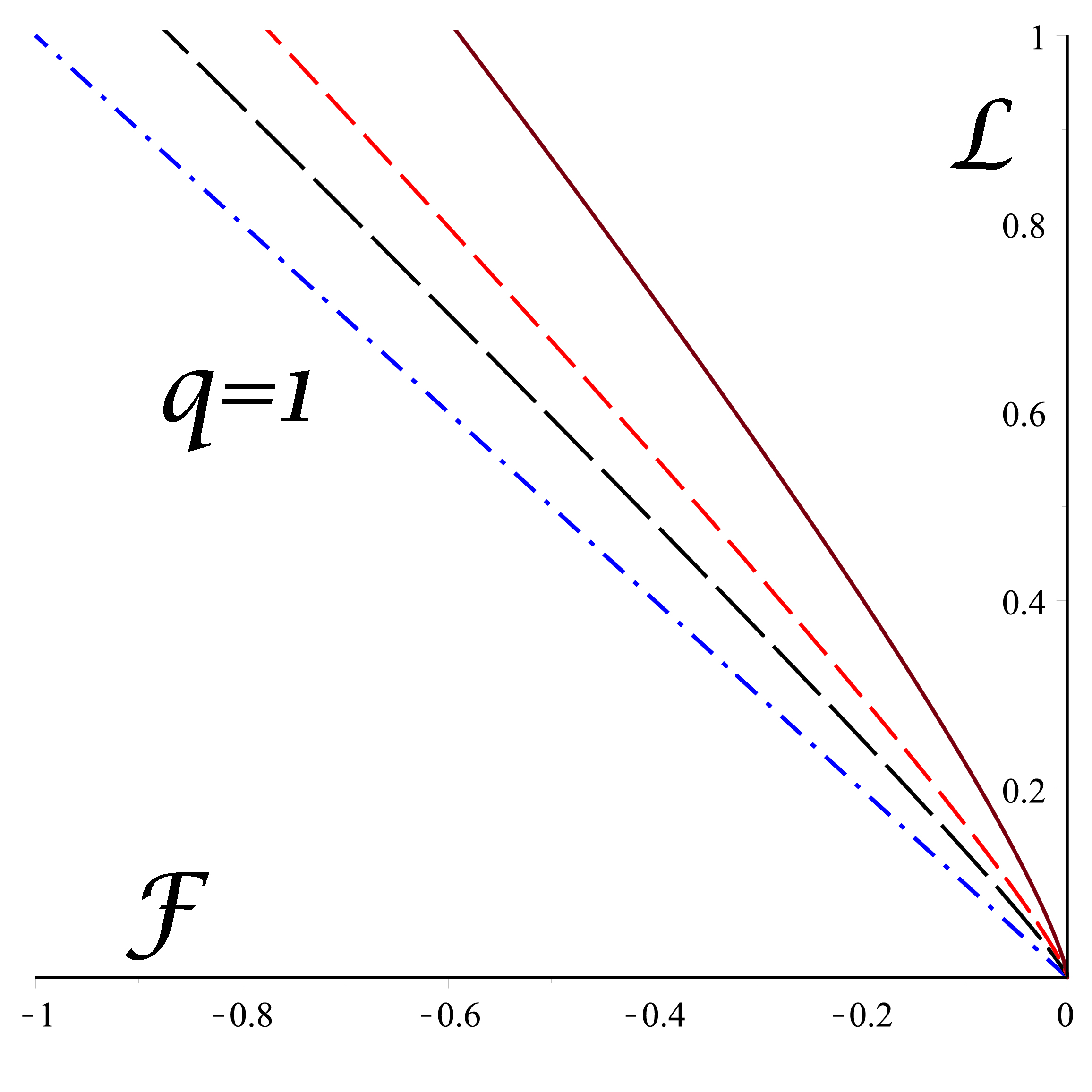 Figure 3
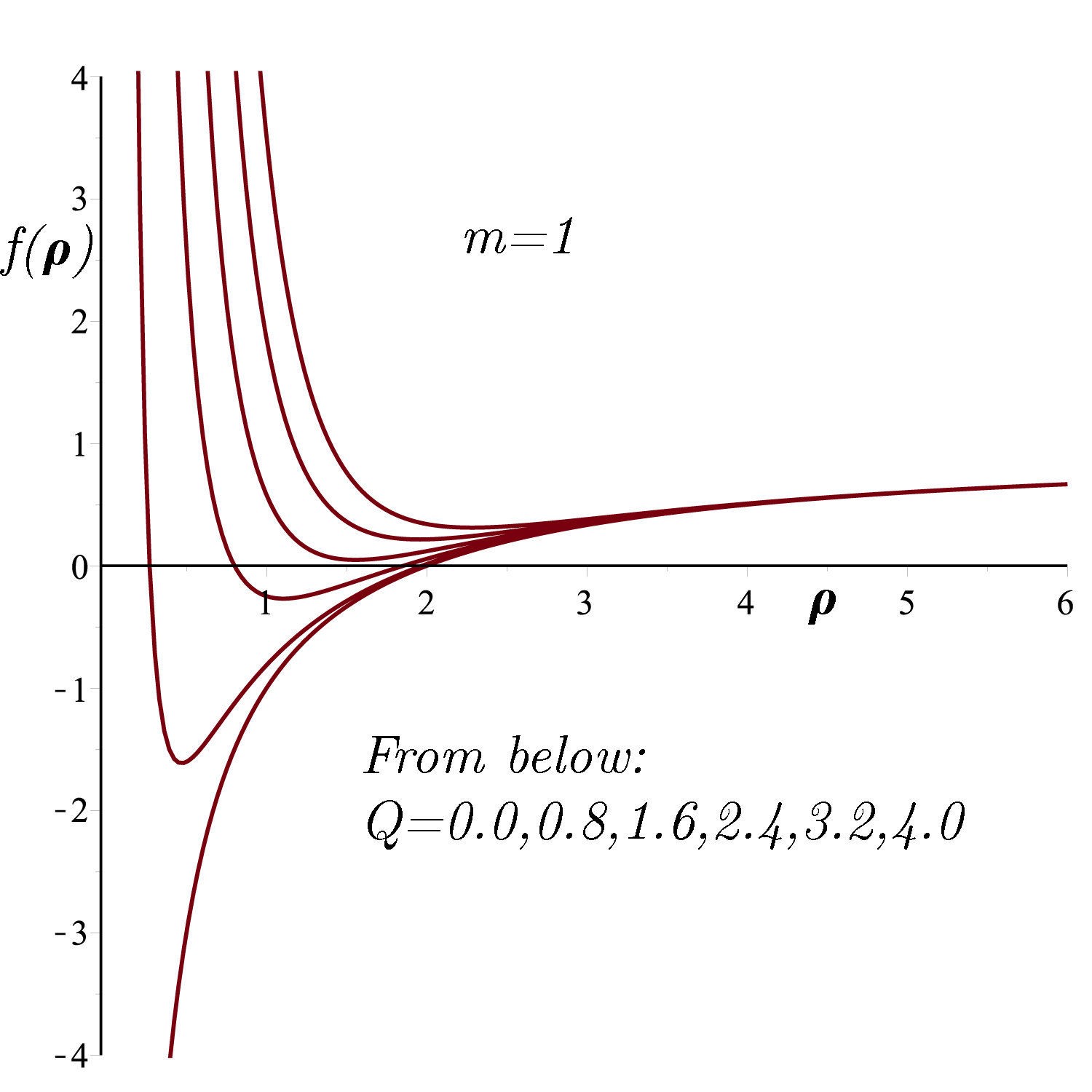 Figure 4
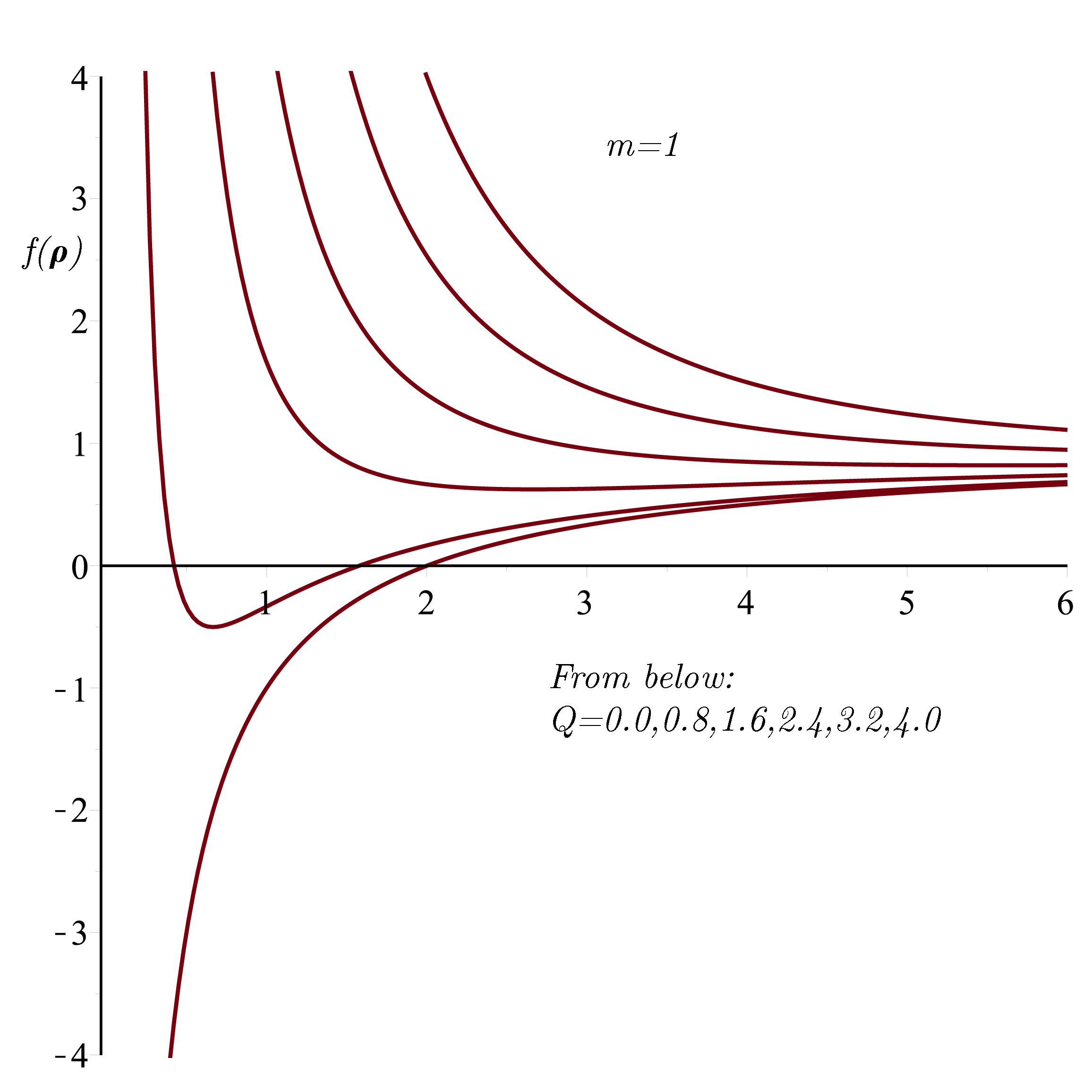 Figure 5
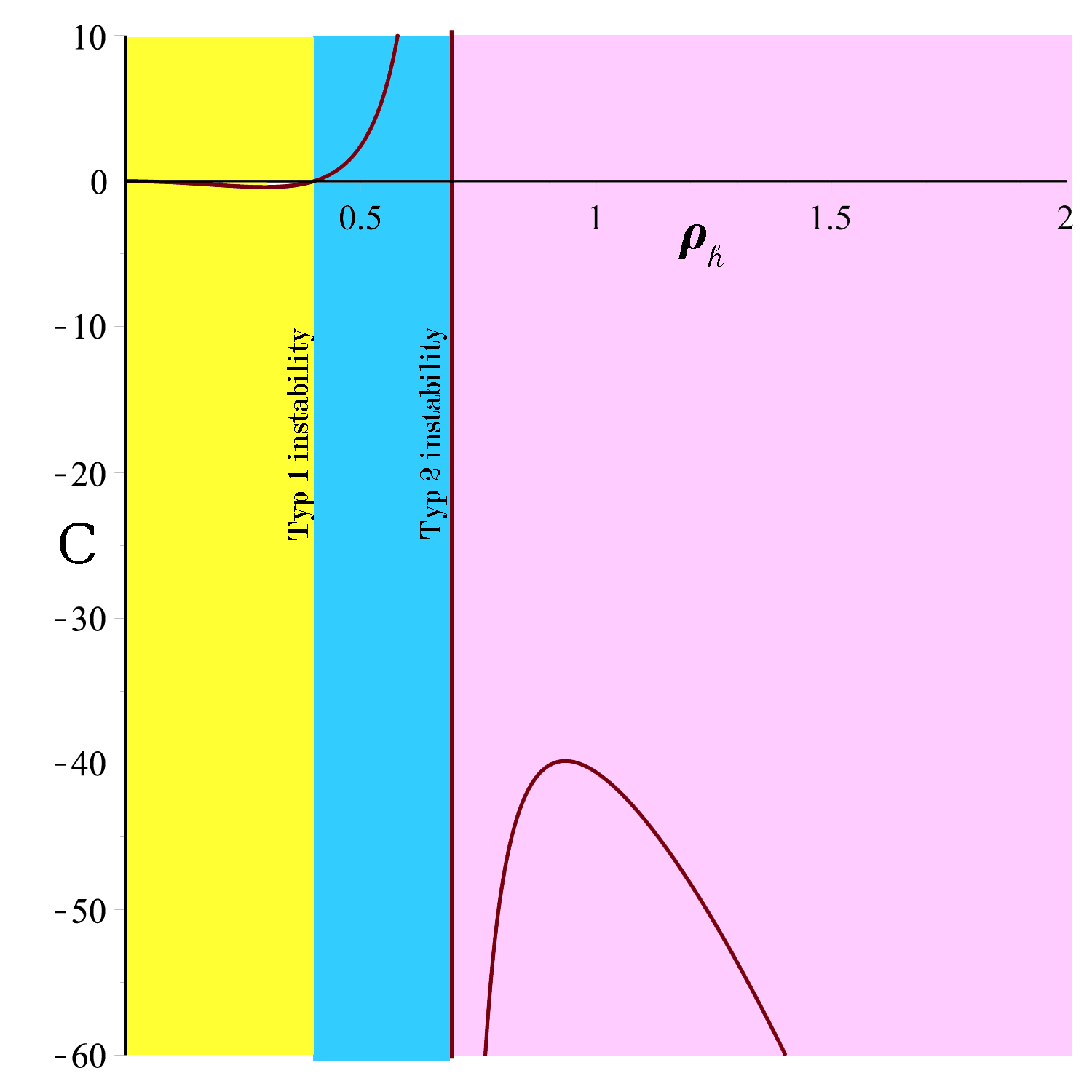 Figure 6
Peer Reviews
No public reviews on file for this paper yet. If you reviewed it on a platform where reviews are public (OpenReview, ICLR, NeurIPS, ICML), you can paste yours below so the community can read it here.
Videos
No videos yet. Explain this paper in a talk, walkthrough, or lecture? Add one.
Einstein-non-linear Maxwell-Yukawa black hole
S. Habib Mazharimousavi
M. Halilsoy
Department of Physics, Faculty of Arts and Sciences, Eastern Mediterranean University, Famagusta, North Cyprus via Mersin 10, Turkey
Abstract
Within the context of nonlinear electromagnetism we consider the Yukawa extension of a Reissner-Nordström black hole. Exact solution is given which modifies certain characteristics of the latter. Some thermodynamical aspects are given for comparison. The model may be considered as a useful agent to describe a short-ranged, charged, massive interaction.
Yukawa potential; Einstein-Maxwell; Exact solution; Nonlinear electrodynamics;
I Introduction
In dimensional static, spherically symmetric spacetimes the solution for Einstein-Maxwell equations is known to be uniquely the Reissner-Nordström (RN) metric. Depending on the relative magnitude of mass and charge the RN spacetime can be a black hole or a time-like naked singular geometry. Extension of linear Maxwell to the nonlinear electrodynamics advocated first by Born and Infeld 1 ; 2 ; 3 ; 4 ; 5 ; 6 has been considered extensively during the recent decades. It is well-known that the original idea of Born-Infeld was to eliminate Coulomb divergences for the point charges. Elimination of the spacetime divergence becomes the next step of expectation whenever gravity is coupled to such a nonlinear electrodynamics. In this study we consider a Yukawa extension of the Coulomb potential described by the scalar potential, , where is the electric charge and is a positive constant. By this ansatz the theory involves two parameters, the charge and the Yukawa charge The original idea of Yukawa 7 ; 8 ; 9 which was introduced in connection with nuclear interaction, irrespective of the electric charge, was to provide rooms for massive mesons, satisfying a Proca type equation The operator is to be defined on a flat spacetime which admits plane wave solutions representing massive bosons / mesons. With the advent of notions such as massive gravity and astrophysical objects dominated by nuclear material it is natural to seek intermediating massive particles to exchange the underlying interactions. Our aim in the present study will be restricted by static and spherically symmetric metrics in which a Yukawa term is coupled with the standard Coulomb potential within the context of nonlinear electrodynamics. The combination of two nonlinearities, as expected, makes the theory highly nonlinear for an analytic treatment. For instance, the nonlinear electromagnetic Lagrangian happens to be expressible in terms of the radial coordinate explicitly which, however, is transcendental in terms of the field tensor. As a result the model, its basic features, roots of the metric function can only be analyzed numerically. In spite of all such technical problems we are able to identify black hole solutions in such a theory. Not to mention, the origin is a singular point of both the Maxwell field as well as the spacetime. There are cases that admit double / single roots or no roots at all to define black holes and naked singularities, respectively. Asymptotic behaviors at near () and far () distances can be found easily. The role of the Yukawa term, i.e. the parameter can be described without much effort and it serves to confine the electromagnetic force to a shorter range. It is observed that by a scaling of the radial coordinate the Yukawa parameter can be washed out so that the general behavior of the solution is universal, irrespective of the
Let us add that, the Yukawa gravitational potential has already been considered in literature. For instance, in the framework of modified theory of gravity I. De Martino et al very recently have studied the Yukawa gravitational potential 10 ; 11 . Yukawa-type potential in cosmological model also was considered by M. O. Ribas et al in 12 ; 13 . Also a Yukawa-like potential in elliptical galaxies within the gravity is considered earlier in 14 by N. R. Napolitano et al. The effect of such kind of potential on the perihelion precession of bodies in the solar system has been studied in 15 . There are other works which consider the Yukawa correction to the standard gravity which can be seen in 16 ; 17 ; 18 ; 19 . But to the best of our knowledge there has not been any study on the gravity coupled with a Yukawa-like electric potential. We note that although the original idea in BI theory was to eliminate the singularity of the electric field the recent nonlinear electrodynamic theories do not necessarily obey this criterion 20 ; 21 ; 22 ; 23 ; 24 ; 25 ; 26 ; 27 ; 28 ; 29 . Furthermore, gravity coupled with nonlinear electrodynamics has attracted intensive attentions in the literature 30 ; 31 ; 32 ; 33 ; 34 ; 35 ; 36 ; 37 ; 38 ; 39 ; 40 ; 41 ; 42 ; 43 ; 44 ; 45 ; 46 ; 47 ; 48 ; 49 ; 50 ; 51 ; 52 ; 53 ; 54 ; 55 . Adding all papers in this list is not possible and what we referred here are part of the works which obviously shows how important is the subject. To complete our literature review, we would like to mention some works in this field which have almost become an icon (perhaps in view of the authors of the current work). The first paper is one of the earliest model of the nonlinear electrodynamics proposed in 1936 by Heisenberg and Euler 56 ; 57 .The other two papers in this list are about existence / nonexistence of the regular black hole in gravity coupled with nonlinear electrodynamics by E. Ayón-Beato and A. García, 58 and K. A. Bronnikov 59 ; 60 . The next paper which should be in our list may be considered one of the first papers in popularizing the BI theory 61 . Finally we would like to mention of two papers which applied the BI theory in more physical manners 62 ; 63 .
Organization of the paper is as follows. In Section II we introduce the Einstein-Nonlinear Maxwell-Yukawa (ENLMY) metric, derive field equations and solve them. In Section III we study the physical properties of the solution obtained in Section II. The paper is completed with our Conclusion in section IV.
II The Einstein-Nonlinear Maxwell-Yukawa metric
Yukawa potential in spherical coordinate system is given by
[TABLE]
in which is the electric charge located at the origin and is a positive constant. In differential geometry formalism we consider the electric potential one-form to be given by
[TABLE]
The Maxwell’s field two form is obtained to be
[TABLE]
in which, stands for the wedge product and
[TABLE]
Considering the static and spherically symmetric line element in the form
[TABLE]
we find the Maxwell invariant determined as
[TABLE]
We consider now a general nonlinear electrodynamic Lagrangian of the form for the Maxwell-Yukawa potential and write the Einstein-Nonlinear-Maxwell-Yukawa (ENLMY) action to be of the form
[TABLE]
in which is the Ricci scalar. The variation of the action with respect to yields the Maxwell-Yukawa equation given by
[TABLE]
where is the dual-Maxwell field given by the two-form
[TABLE]
This equation implies within spherically symmetry that
[TABLE]
in which is an integration constant. Next, we vary the action with respect to to find the ENLMY equations given by ()
[TABLE]
in which
[TABLE]
Explicitly, we find
[TABLE]
while
[TABLE]
To have the ENLMY equation solved we need to find the closed form of . To find this we use the relation
[TABLE]
which yields a first order differential equation given by
[TABLE]
The latter admits a solution of the form
[TABLE]
in which is an integration constant and the Exponential Integral is defined to be 64
[TABLE]
Let us note at this point that inversion of in terms of is a transcendental expression, for this reason we shall make use of the Lagrangian only implicitly as a function of . Nonzero may be considered as a cosmological constant which we prefer not to take into account it in the present study. Hence, we set it to zero, i.e.,
In Fig. 3 we plot versus for some different values of and The deviation from the linear Maxwell’s theory increases with increasing Having found and in terms of we are ready to express the solution for the ENLMY equations. We obtain from (11) the metric function exactly to be
[TABLE]
Herein, is an integration constant to be interpreted as mass. To identify we expand the metric function for small which yields
[TABLE]
In the limit it should reproduce the Reissner-Nordström black hole solution which in turn yields The final form of the ENLMY black hole solution can be expressed exactly as
[TABLE]
For this admits the expression
[TABLE]
Note that introducing , and the metric function becomes
[TABLE]
which shows that acts as a scale factor so that it can be chosen as . Hence, irrespective of the value of one can study the global properties of the resulting solution. In Fig. 2 we plot versus with and for various ’s. For comparison we plot also the for the RN metric in Fig. 3. By scrutinizing Fig.s 2 and 3 we see that the black hole regions in two cases do not overlap.
III Physical properties of the ENLMY black hole
The scaled metric function (23) is asymptotically flat and for small behaves as
[TABLE]
which implies Therefore the solution may be a naked singular solution, an extremal black hole or a black hole with event and Cauchy horizons. This can be seen from the positive sign of where . In this respect it behaves similar to the RN solution. In Fig. 3 in terms of and we plot the regions where the metric function admits no horizon (naked singular), double-horizon (extremal) and two distinct horizons. Let’s note that unlike the RN case, here there is no definite relation between and to identify the three cases.
For the ENLMY black hole with an event horizon located at () one finds the Hawking temperature
[TABLE]
After we introduce the scaled parameters and variables the scaled Hawking temperature is found to be
[TABLE]
Furthermore, from the scaled entropy one finds the scaled heat capacity of the black hole given by
[TABLE]
The latter implies that the roots of the numerator imply the Type 1 instability where the heat capacity of the black hole vanishes. In addition to the Type 1 instability, the roots of the denominator causes the Type 2 instability where the heat capacity diverges. Such points is(are) the phase change(s) of the black hole which is(are) counted as thermodynamical instability point(s). In Fig. 5 we plot versus for The Type 1 and Type 2 instabilities are shown clearly. To have a comparison between the two black holes i.e., the RN and the ENLMY, we plot the heat capacity of the RN black hole with the same charge in Fig. 6 as well. The different between two heat capacities are very obvious keeping in mind that Fig. 5 is scaled with
IV Conclusion
In this study we modified the Coulomb potential for a point charge, i.e., into which can be considered as a Yukawa correction. In classical electromagnetism this amounts to a cloud of field screening the point charge. From the field theoretic point of view such a potential corresponds to a massive particle exchanging the interaction. In the wake of massive gravity theories and stars highly concentrated by nucleons such a formalism may be interesting. What modifications this brings to a RN black hole? Our principal aim was to answer this question. The Yukawa factor acts as a damping term to confine the electromagnetic effect. We have chosen the nonlinear electromagnetic theory introduced first in 1930s by Born and Infeld. The Yukawa factor considered here doesn’t regularize the Coulomb or the central singularity. We investigated the resulting modifications it brings to the RN black hole. Being a static charge there is no magnetic field in the model. The theory admits a variety of black holes as well as naked singularities, as depicted by Fig. 4. The Lagrangian of the model can’t be expressed in terms of the electric field. Although this may be considered a handicap the Lagrangian can be expressed in terms of the radial variable exactly and by employing such a representation we can extract all necessary information without much effort. Let us remark finally that further extensions, such as (with constant) can be considered also within the context of nonlinear electromagnetism.
The reference list from the paper itself. Each links out to its DOI / PubMed record.
- 1(1) M. Born and L. Infeld, Foundations of the New Field Theory. Proc. Roy. Soc, A 144 , 425 (1934).
- 2(2) E. S. Fradkin and A. A. Tseytlin, Phys. Lett. B 163 , 123 (1985).
- 3(3) A. Abouelsaood, C. Callan, C. Nappi, and S. Yost, Nucl. Phys. B 280 , 599 (1987).
- 4(4) R. G. Leigh, Mod. Phys. Lett. A 4 , 2767 (1989).
- 5(5) R. R. Metsaev, M. A. Rahmanov, and A. A. Tseytlin, Phys. Lett. B 193 , 207 (1987).
- 6(6) A. A. Tseytlin, Nucl. Phys. B 501 , 41 (1997).
- 7(7) H. Yukawa, On the interaction of elementary participles, Proc. Phys. Math. Soc. Jap 17 , 48 (1935).
- 8(8) L. H. Ryder, Quantum Field Theory (Cambridge University Press, Cambridge, 1996).