Compact objects in conformal nonlinear electrodynamics
I.P. Denisova, B.D. Garmaev, V.A.Sokolov

TL;DR
This paper investigates the properties of astrophysical compact objects within a special class of conformal nonlinear electrodynamics that lacks a dimensional non-linearity parameter and satisfies simple energy conditions.
Contribution
It introduces a specific conformal nonlinear electrodynamics model and analyzes its implications for the structure of astrophysical compact objects.
Findings
The model has no dimensional parameter for non-linearity.
The dominant energy condition is straightforward to verify.
Constraints on model parameters are derived from energy condition analysis.
Abstract
In this paper we consider a special case of vacuum non-linear electrodynamics with a stress-energy tensor conformal to the Maxwell theory. Distinctive features of this model are: the absence of dimensional parameter for non-linearity description and a very simple form of the dominant energy condition, which can be easily verified in an arbitrary pseudo-riemannian space-time with the consequent constrains on the model parameters. In this paper we analyse some properties of astrophysical compact objects coupled to conformal vacuum non-linear electrodynamics.
Click any figure to enlarge with its caption.
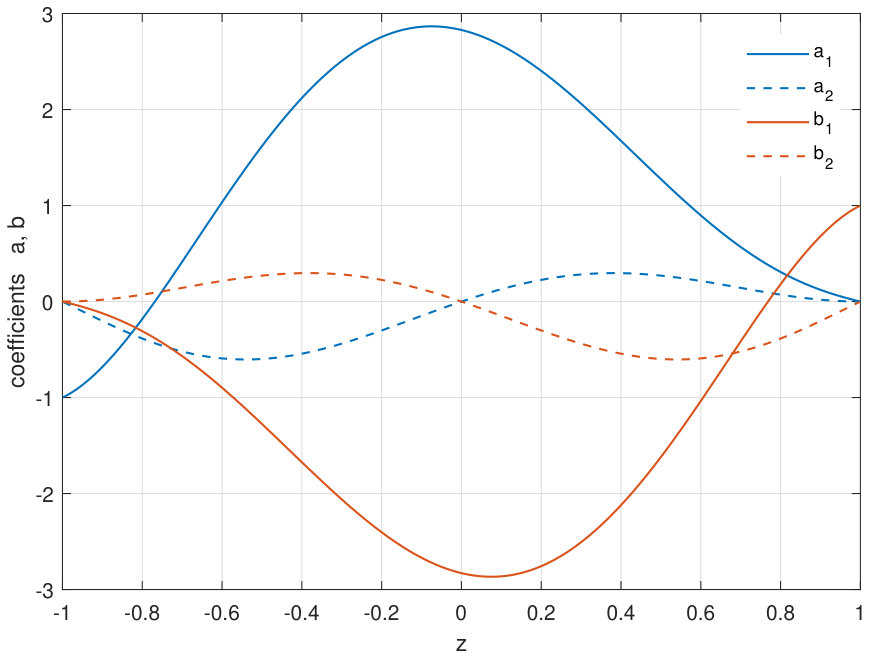 Figure 1
| , | ||
| , , , | ||
| , , , | ||
| , , , |
Peer Reviews
No public reviews on file for this paper yet. If you reviewed it on a platform where reviews are public (OpenReview, ICLR, NeurIPS, ICML), you can paste yours below so the community can read it here.
Videos
No videos yet. Explain this paper in a talk, walkthrough, or lecture? Add one.
Taxonomy
TopicsCosmology and Gravitation Theories · Black Holes and Theoretical Physics · Ionosphere and magnetosphere dynamics
Compact objects in conformal nonlinear electrodynamics
I.P. Denisova,
B.D. Garmaev
V.A.Sokolov 11footnotetext: Corresponding author.
Abstract
In this paper we consider a special case of vacuum non-linear electrodynamics with a stress-energy tensor conformal to the Maxwell theory. Distinctive features of this model are: the absence of dimensional parameter for non-linearity description and a very simple form of the dominant energy condition, which can be easily verified in an arbitrary pseudo-riemannian space-time with the consequent constrains on the model parameters. In this paper we analyse some properties of astrophysical compact objects coupled to conformal vacuum non-linear electrodynamics.
1 Introduction
Electromagnetic field theory suggesting the possibility of non-linear processes in vacuum due to complicated dependence of Lagrangian on both electromagnetic field invariants is usually called vacuum non-linear electrodynamics. Despite of the extremely encouraging results in observing of vacuum birefringence in the pulsar strong magnetic field [1] predicted by some non-linear models, experimental status of vacuum electrodynamics remains to be unrevealed. The advances in physics of intense electromagnetic field and observational X-ray astronomy give a hope for new experimental results in several projects such as extremely intensive laser facilities like ELI [2], XFEL [3], Apollon [4], XCELL [5] and orbital X-ray polarimeters like XIPE [6] and IXPE [7].
Early theoretical assumptions for vacuum electrodynamics non-linearity were proposed in Born-Infeld [8] and Heisenberg-Euler [9] theories. Born-Infeld electrodynamics is a phenomenological model based on the assertion of finiteness of the electromagnetic field energy for charged point-like particle. While time later it was shown that this model arise in the string theory as an effective action for abelian vector field coupled to virtual open Bose string [10]. As well as in Maxwell electrodynamics, Born-Infeld theory induces a dual invariance [11] and displays no birefringence in vacuum [12]. Undoubted advantage of this theory is strict and relatively simple form of the Lagrangian, which opens a possibilities to find an exact solutions. Nevertheless there are some disadvantages. The first one was noted by the authors immediately after establishing of the theory. The value of the electric field in the center of the point-like charge depends on the direction of approach to it. Resolving this problem leads to the modified Lagrangian [13]. The principle used for Born-Infeld Lagrangian constructing turned out to be extremely productive and found application in other theoretical areas, for instance, it was implemented in several modifications of Born-Infeld gravity [14] and after supplementation by AdS/CFT correspondence it was used for a holographic superconductors description [15, 16].
Heisenberg-Euler theory [9] originates from quantum electrodynamics (QED) based on Maxwell theory and consider the radiative corrections to vacuum polarization in the external electromagnetic field, which leads to vacuum behaviour as a continuous media with a non-linear features. This theory, is seems to be, the most profound and justified, especially since some of it’s predictions have found experimental confirmation in a subcritical or perturbative regime. First of all, this refers to the electron anomalous magnetic moment correction, which still remains an example of unprecedented correspondence between the theory and the experiment [17]. Some other QED predictions such as Delbrück scattering [18], photon splitting [19], Lamb shift [20], nonlinear Compton scattering [21] are also well-established. There is no any exact expression for Heisenberg-Euler Lagrangian, and only representation in the form of the series of the loop corrections is available. This significantly complicates the analysis and often makes it impossible to obtain an exact solutions. Moreover, due to the correspondence between the Maxwell theory and non-linear electrodynamics models, all of these models should lead to the Maxwell theory in the weak non-linearity regime. In this case application of the quantization procedure and subsequent calculation of the loop corrections to any Lagrangian should lead for all of the models to the Heisenberg-Euler theory in the leading terms of Lagrangian expansion. Distinctive features of various non-linear electrodynamics models after application of the quantization procedure will appear as a modification to the Heisenberg-Euler Lagrangian in terms of high order of smallness. The effects coupled with such a terms became valuable only in a sufficiently non-linear regime, with strong electromagnetic field comparable to Sauter-Schwinger limit. This regime of QED is poorly understood [22] and provides a new window for experimental and theoretical researches. So confirmations of the Heisenberg-Euler theory predictions does not cancel the question about the choice of the theoretical model for non-linear electrodynamics in the classical field theory.
For this reason a set of new empirical models for non-linear electrodynamics has been proposed. Among them, the special place is given to the models inspired by astrophysics and cosmology [23, 24, 25], the development of which opened up an unusual theoretical view on the Universe acceleration due to non-linear electromagnetic processes [26, 27]. Moreover, charged regular black holes as a new class of compact astrophysical objects were predicted in [28, 29]. As a rule, the choice of the Lagrangian for the model is heuristic and primarily based, on possibility to find an exact analytical solution for the case under consideration. At the same time, of great interest is the study of the models grounded on the more profound principles, one of which may be postulated as the maximal retention of the Maxwell’s theory properties and simultaneously prediction of the vacuum non-linear response. In this paper we consider a general class of vacuum non-linear electrodynamics with the zero trace of the stress-energy tensor. This condition is sufficient for the model to retain all group symmetries of the Maxwell theory i.e. invariance under Poincaré group, coordinate scaling and the conformal group [30]. Another distinctive feature of such a models is the lack of a dimensional parameter describing the non-linearity. For instance, in Born-Infeld model, such parameter is the value of the field strength in the center of the point-like charge, and in the Heisenberg-Euler theory – this is the characteristic quantum induction. However, for the models under consideration in the paper, this parameter should be dimensionless, and probably, it can be expressed as the combination of the fundamental constants. It should be noted, that there are descriptions for particular models of non-linear electrodynamics with the zero trace of the stress-energy tensor. The most vivid of them are [31] and [32] are devoted to the charged black holes and their thermodynamics.
In this paper, we consider the most general form of the traceless non-linear electrodynamics and describe some properties of the exact solutions for the compact astrophysical objects in such a model. This continues the series of papers, started by [33] in which the vacuum birefringence for a general case of the traceless models was described.
The paper is organized as follows: In section 2, we obtain general form of the traceless non-linear electrodynamics Lagrangian and discuss some of it’s features. In section 3 we set fundamental restrictions on the Lagrangian. In section 4 we obtain analogue of the Reissner-Nordström solution of the black hole with the dyon charge. Section 5 is devoted to the analogue of the Vaidya-Bonnor solution and it’s features. In section 6 we describe Kerr-Newmann black hole in conformal non-linear electrodynamics, and in the last section we summarize our results. For more convenience we will use geometerized units () and the metric signature .
2 Conformal vacuum nonlinear electrodynamics
Let us consider a general form of the action for Lorentz-invariant vacuum non-linear electrodynamics in the space-time with the metric tensor :
[TABLE]
where Lagrangian is an arbitrary function of the electromagnetic field tensor invariants and , and is the determinant of the metric tensor. Varying the action by the metric it’s easy to derive a symmetric stress-energy tensor for the action (2.1):
[TABLE]
which trace is
[TABLE]
and for brevity we introduce the notation for the second power of the electromagnetic field tensor . It is well known that the Maxwell theory, which corresponds to the particular choice , leads to the traceless stress-energy tensor. To retain this feature for vacuum non-linear electrodynamics let us consider the models with the action (2.1), which stress-energy tensor is conformal to the Maxwell electrodynamics:
[TABLE]
where is an arbitrary function of electromagnetic invariants. It is easy to see, that this requirement is fully similar to the traceless condition:
[TABLE]
The model with the Lagrangian satisfying the equation (2.5) we will call traceless or conformal non-linear electrodynamics (CNED). Such a model name is justified, because the Lagrangians which satisfying (2.5) are turned to be invariant under the group of conformal-metric transformations , where is an arbitrary, scalar multiplier. The similar group symmetry is also inherent to the Maxwell theory.
The CNED Lagrgangians have an another one distinctive feature: the combination of CNED Lagrangians, under the certain condition, can be also a CNED Lagrangian. To obtain this condition let us consider the function of the Lagrangians and , which are a solutions of the traceless equation. After the substitution of to (2.5)
[TABLE]
and taking into account that and are also CNED Lagrangians, one get the equation, any solution of which will retain conformal features:
[TABLE]
The property noted above does not limit the possibilities of CNED Lagrangians constructing. For instance, to provide correspondence to the Maxwell theory we choose the Lagrangian . Another one Lagrangian can be chosen in the form , which does not satisfy (2.5), and consequently it is not conformally invariant, where is an arbitrary function. Nevertheless, the production of these Lagrangians will satisfy equation (2.5), and it is easy to verify, that it will represent the most general form of CNED Lagrangian:
[TABLE]
where the invariants ration varies from for the pure magnetic field, to the , for the pure electric field. Also it should be noted, that is dimensionless, so there is no any dimensional parameter to scale the model nonlinerity. And finally, to obtain the Maxwell electrodynamics limit, one should take .
Despite on the fact that for the Lagrangian (2.8) the traceless condition will be met with an arbitrary function , there are some valuable restrictions on this function, coming from fundamental principals.
3 Fundamental restrictions
The choice of the function for each particular CNED model must fulfil fundamental principles, the primary from which are unitarity and causality conditions. The causality principle guarantee that the group velocity for the elementary electromagnetic excitations do not exceed the speed of light in the vacuum. While the unitarity criteria provides the positive definiteness of the norm of every elementary excitation of the vacuum. The general constrains on the Lagrangian which are necessary for causality and unitariry are complicated and extremely difficult to analyse. So as the same as in [34] we will consider more particular case when the electric and magnetic fields meet an additional requirement in the certain Lorentz frame. This corresponds to . For described field configuration in paper [34] it was obtained a set of inequalities for the Lagrangian, which guarantee fulfilment of causality and unitarity criteria:
[TABLE]
[TABLE]
[TABLE]
By taking into account that in general CNED Lagrangian have a form (2.8), one can significantly simplify these inequalities which, finally leads to only two non-trivial constraints:
[TABLE]
where the prime denotes the derivative with the respect to .
This restriction is not only because the Lagrangian must be agreed with the energy conditions. The class of conformal electrodynamics is special, because it have very simple restrictions following from the dominant energy condition [35]. This condition claims that every time-like observer will find field energy density to be non-negative, and energy flux to be a causal vector (time-like or null). These requirements ensures dominance of the energy density over the other components in the stress-energy tensor. The dominant energy condition leads to the inequalities:
[TABLE]
where is any arbitrary time-like vector pointing to the future. In general, after implementation to an arbitrary Lorentz-invariant non-linear electrodynamics (2.1) the inequalities takes a slightly cumbersome form:
[TABLE]
[TABLE]
[TABLE]
however they become much simpler in the context of CNED with the Lagrangian (2.8):
[TABLE]
[TABLE]
The last inequality is always satisfied due to and , while the last multiplier in (3.8) represents the energy condition for Maxwell theory and it is not negative. So the dominant energy condition for CNED will take place when:
[TABLE]
This inequality corresponds to the first one in (3.4) for pure electric or magnetic field, when . The restrictions obtained in the form of inequalities (3.4) and (3.10) allows to find some constrains on the model parameters and they will be employed in the following sections for the analysis of consistency with the fundamental principles.
After discussion the general properties and the model restrictions we proceed to description of an exact solutions for the compact objects in CNED.
4 Reissner-Nordström black hole
Primarily we describe solution for the stationary black hole, with electric and magnetic charges in Einstein gravity with non-zero cosmological constant .The action functional in this case can be represented in the form:
[TABLE]
where is the scalar curvature, and is the Lagrangian density (2.8). By varying the action, it is easy to derive electromagnetic field and Einstein equations:
[TABLE]
where is CNED stress-energy tensor (2.4), is dual conjugated electromagnetic field tensor, and are current density vectors for electric and magnetic charges, and auxiliary tensor can be expressed in the form:
[TABLE]
where the prime denotes the derivative of with the respect of it’s argument and is the third power of the field strength tensor. We consider the line element of the static spherically symmetric space-time:
[TABLE]
and we also suppose the most general form for the field strength tensor for static point-like charge:
[TABLE]
where and are radial electric and magnetic fields. Under the chosen symmetries the invariants of the electromagnetic field and the dimensionless parameter take a form:
[TABLE]
As the point-like source is located at the coordinate center, non zero components of the current densities are:
[TABLE]
where is the electric charge and is the topological charge of magnetic monopole. To obtain solutions for the electromagnetic field equations we consider the ansatz:
[TABLE]
where is an integration constant coupled with the electric and magnetic charge of the black hole. As the field strength components have similar dependence on coordinates, the argument takes a constant value and it can vary from for the pure electric field, to for the pure magnetic field. By using the auxiliary expressions (4.7) and (4.4), it is easy to find that (4.9) is the solution of the electromagnetic field equations under the condition that the integration constant and the charges and are coupled by the relation:
[TABLE]
Similar relation for the charges was obtained earlier in [32] for a particular choice of the electromagnetic field Lagrangian. Also it was obtained by the authors, that for the chosen model when . The appearance of two constants with a charge dimension in the description of the point source field can be collate with the possible difference between the inertial and gravitational masses for a point-like particle. As the constant is contained in the expression of the electric field strength, it can be called "force-charge" and in contra to the constant which is the multiplier in the source density, so it can be called "source-charge" or Coulomb charge. At the same time, it is interesting to find condition under which the source-charge and the force-charge coincide in presence of topological charge . The claim is satisfied when the expression in the curly brackets in (4.10) is equal to unity, which can be done by choosing
[TABLE]
where is an arbitrary dimensionless constant. It is easy to verify that the restrictions from the causality and unitarity (3.4) now can be expressed in the form , so the constant should be positive. At the same time, the dominant energy condition (3.10) leads to the inequality:
[TABLE]
the second term in which is finite, take minimal value at and increases monotonically up to the zero at . So the dominant energy condition for described CNED model will be satisfied when . From experimental data for the vacuum non-linear electrodynamics effects it seems that nonlinerity is a small correction to the Maxwell electrodynamics, so and implementation of inequality (4.12) is reliably ensured.
The another distinctive case of CNED take place when and , which means that the topological charge will be the source both for the electric and magnetic fields. In this case the Lagrangian should be expressed with . However, from the previous consideration, it is obvious that this model contradicts causality and unitarity conditions (3.4) and unlikely to be related to the real world.
We proceed to solution of Einstein equations (4.2), which for static space-time with the line-element (4.5) have only two non-trivial and independent equations:
[TABLE]
where non-zero components of the stress-energy tensor for the chosen electromagnetic field configuration are:
[TABLE]
and the prime denotes the derivative with the respect to the correspondent argument. Subtracting the second equation (4.13) from the first one, we obtain the condition , where arbitrary function can be taken equal to zero after the choice of the time scale, so the solution for both equations can be written in the following form:
[TABLE]
where the integration constants were chosen to obtain asymptotic limit to the solution in Einstein-Maxwell theory, so is the black hole mass and for brevity, as in [32], we use the notation:
[TABLE]
Obtained solution corresponds to the Reissiner-Nordström black hole in CNED and differs from the similar one obtained in [32] by more general form of the parameter coupled to an arbitrary CNED Lagrangian, so the analysis of the black hole thermodynamics performed in [32] can be completely applied to (4.15). In this paper the authors distinguish thee different classes of the black hole. The first one corresponds to the case when and was called fast black holes. Phase transitions are absent for this black hole configuration. For the second class, called slow black holes, and there are two phase transitions. These two types of black holes have their analogues in Einstein-Maxwell theory. The third class inverse black holes corresponds to and posses solely one phase transition. This type of black hole is typical for conformal-invariant electrodynamics, and in the more special case for inverse electrodynamics model proposed in [32]. However, it should be noted that the authors did not consider fundamental restrictions on the model parameters. In particular, the existence of the inverse black holes class contradicts to the dominant energy condition (3.10), the consequence of which is the restriction . A global violation of this condition makes possibility of such black holes very uncertain.
Let us turn to the other exact solution for the compact astrophysical object in conformal non-linear electrodynamics.
5 Vaidya-Bonnor radiating solution
Let us consider solution of the Einstein-CNED equations describing the emission of charged null fluid form the spherically symmetric star with the electric and magnetic charges. This solution will be an extension of Vaidya-Bonnor [36] metric to an arbitrary type of conformal non-linear electrodynamics. To obtain the solution, as traditionally, we suppose the line-element in Eddington-Finkelstain coordinates in the form:
[TABLE]
where is the metric function and is the retarded time. This form of the line-element can be coupled to (4.5) buy the local time transformation , with additional conditions and . It is easy to write non-zero covariant and contravariant metric components:
[TABLE]
[TABLE]
from which follows that . As it was earlier in Sec. 4, we represent electromagnetic field tensor in the form (4.6) and assume the electromagnetic field strength as: , . However, unlike the Reissiner-Nordström solution the topological charge , the source-charge , the force-charge and the star mass are any arbitrary functions of the retarded time. It is easy to verify that the electromagnetic field satisfies equations (4.3) with the same form of the tensor (4.4) and the the following form of the current densities for electric and magnetic charges:
[TABLE]
where the dot denotes the derivative with the respect of the retarded time, is the Kronecker symbol and the the source-charge is coupled to the force-charge by the same relation as earlier in (4.10). To find modified Vaidya-Bonnor metric it is necessary to include the stress-energy tensor of the null-fluid in the Einstein equations:
[TABLE]
where is the null fluid current vector, for which . And finally, for more completeness we also assume the Lambda-term to be a function varying with the retarded time . Einstein’s equations in this case take a form:
[TABLE]
where the electromagnetic field stress-energy tensor components can be expressed from (4.14). As in original paper by Vaidya and Bonnor [36] we assume the null fluid current density to be radial and represent it with the scalar in the form: , so the solution of (5.5) reads as:
[TABLE]
where the expression for coincides with (4.16) and it’s derivative is:
[TABLE]
[TABLE]
with the auxiliary notations for the coefficients, introduced for brevity:
[TABLE]
[TABLE]
The dependence of the coefficients and on is represented on the figure 1. It should be noted that , for a pure magnetic and electric field when . These coefficients are also equal to zero, when at . For the listed cases only the values of and , which are restricted by the causality and unitarity conditions (3.4), will handle the expressions for which in these particular cases can be found in the table 1.
To ensure that is not negative for an arbitrary distance to the star center, it is necessary to demand that the star mass decrease with the retarded time , the Lambda-term should vary with , following by the cosmological dynamics, while the should increase due to ionization processes in the star and radiation of the charged fluid. By the fact, the condition should be verified for each particular instance of the model function , however as it follows from (5.7) it will be certainly fulfilled when
[TABLE]
Moreover, as the coefficients and are finite, the fulfilment of this condition also should be expected in the case when the derivatives and are bounded and proportional to a small parameter which describes the model nonlinearity.
In general, the form of the obtained solution for the radiating star (5.6) coincides with the original Vaidya-Bonnor metric and differs from it by redefinition of the charge term: . This fact allows to apply the features of Vaidya-Bonnor solution to it’s CNED extension (5.6). For instance, to describe thermodynamics of the star one can fully use the results obtained in [37, 38], so the Hawking temperature on the event or on the cosmic horizon reads as:
[TABLE]
where is Boltzmann constant and the horizon radius can be expressed from the null surface equation:
[TABLE]
Using the noted correspondence between the known classical solutions of Einstein-Maxwell’s equations and their CNED extensions, in the next section we will briefly describe one more solution for a compact object in the context of a rotating charged black hole.
6 Kerr-Newmann black hole
Finally we consider CNED extension for the rotating black hole with the mass , angular momentum per mass unit , charged with the electric and magnetic charges and . In the absence of rotation, the space-time of such a black hole is described by the analogue of Reissner-Nordström metric (4.15) with the zero cosmological constant . To derive the solution in the rotational case it is convenient to apply Newman-Janis algorithm [39] which converts the static spherically symmetric space-time in to the rotational one.
The algorithm assumes several steps, and at the first one we need to rewrite the line element of the static solution with the Eddington-Filkestein coordinates as it was done in (5.1), where now corresponds to Reissner-Nordström metric obtained earlier in the section 4, and the expression for is given by (4.16). At the same step it is also necessary to introduce four isotropic vectors of the Newman-Penrose tetrade , , , and represent the space-time contravariant metric tensor as dyad production of these vectors:
[TABLE]
where the bar here and below means the complex conjugation. It easy to verify, that for the Reissner-Nordström space-time the components of the tetrade vectors should be taken in form:
[TABLE]
The second step implies the coordinate mapping to the complex plane , with subsequent transformation to the new real coordinates set :
[TABLE]
This coordinate transformation is chosen to retain , to be real and , to be complex conjugated to each other, even after the transformation. So in the new coordinates, the components of the tetrade vectors will take a form:
[TABLE]
[TABLE]
At the same time, to retain the metric function to be real the mapping rule for it should be taken in the form
[TABLE]
where, as it usual for the Kerr metric, it is convenient to use the notation .
The next step in the Janis-Newman algorithm assumes construction of the metric tensor according to the expression (6.1), but with use of the transformed vectors (6.4) instead of (6.2). After the tetrade components substitution we will obtain the contravariant metric tensor correspondent to the Kerr-Newman space-time:
[TABLE]
At the last step of the algorithm one should perform transformation to the Boyer-Lindquist coordinates , , where
[TABLE]
This transformation finally leads to the line element in the form:
[TABLE]
[TABLE]
In the following, the tilde should be omitted from the notations, as well as should be taken that . A more detailed description and justification of the Janis-Newman algorithm can be found in the original paper [39] and in the papers devoted to applications and generalization of the method [40, 41, 42].
Substitution of the metric function (6.5) with account of (4.16) gives explicit form for the line element of rotating charged black hole in an arbitrary CNED model:
[TABLE]
[TABLE]
[TABLE]
[TABLE]
where is given in (4.10) and depends on the electric and magnetic charges ratio. Despite on cumbersome structure of the expression (6.9) it differs from the line element of Kerr-Newman space-time mostly by replacing the term to and is given here only for completeness of description. The proximity between the descriptions of the Kerr-Newman space-time in the Maxwell theory and in CNED allows to use the results obtained in [43, 44, 45, 46] for the black-hole electromagnetic field, for which it is convenient to use the representation it terms of Faraday two-form:
[TABLE]
[TABLE]
[TABLE]
In the asymptotically flat case when , it is becomes possible to interpret the expression (6.10) in terms of the multipole expansion:
[TABLE]
where the components of the electric and magnetic field are superposition of the monopole therms and dipole therms with the electric moment produced by rotation of the magnetic charge, and the magnetic moment coupled to the electric charge:
[TABLE]
[TABLE]
As the black hole possess the magnetic dipole moment it will be interesting to obtain the gyromagnetic ratio , the definition of which in CNED case becomes not entirely unambiguous. The most commonly is defined as the multiplier in the expression for the magnetic dipole moment:
[TABLE]
where is a black hole angular momentum, and are the electric charge and the mass respectively. Using by the expression for obtained earlier, it is easy to derive that , however this raises the question of what type of the electric charge should be used in (6.13). When the gyromagnetic ratio is exactly equal to , as it was obtained in [45] even in presence of the Lambda-term. However, if , then in accordance to (4.10), the ratio will depend on the choice of CNED model:
[TABLE]
The exception is only a special case of CNED with the model function from (4.11), for which . The example above indicates the possibility of an alternative in definition of the gyromagnetic ratio for CNED, which may be noted in experimental data processing.
7 Conclussion
In this paper we have considered the main properties of the exact classical solutions describing compact astrophysical objects in Einstein’s general relativity and conformal vacuum non-linear electrodynamics with the most common form of the Lagrangian (2.8). This type of electrodynamics have a set of distinctive features, such as traceless of the stress-energy tensor, correspondence to all group symmetries of Maxwell theory and the lack of dimensional parameter coupled to nonlinearity. To distinguish physically consistent models the restrictions on the Lagrangian in form of unitarity and causality criteria as well as dominant energy condition were imposed. It was shown that an arbitrary CNED model admit a solution in the form of Reissner-Nordström metric in presence of electric and magnetic topological charges, which generalize the results obtained earlier by the other authors [32]. To write the Reissner-Nordström solution, we require two constants with the dimension of the electric charge, which can be expressed through each other by the relation dependent on choice of the CNED Lagrangian. One of these constants is a factor in the expression of the electric field strength, so it can be called the "force-charge", while the other one is a multiplier in the charge density, so it was called the "source-charge". In the general case, these two charges are different, however they will be identical in the particular case of CNED with the model Lagrangian (4.11), which is correspondent to Maxwell theory when the nonlinearity scale parameter is small.
The another one generalization to an arbitrary CNED model was obtained for Vaidya-Bonnor solution which describes emission of charged null fluid from the point-like center. In the obtained solution, the null fluid current density coupled to the central charge variation by the more complicated relation, involving the Lagrangian model function of CNED and it’s first two derivatives. Wherein, there is no any restrictions on the second derivative of the model function following from the fundamental principles, so the physical self-consistency of the solution should be verified in each particular choice of the model Lagrangian.
Finally, by using Janis-Newman algorithm, CNED generalization for a Kerr-Newman black hole was obtained. The analysis of the gyromagnetic ratio for such a black hole pointed on a possible ambiguity in the g-factor definition, which results from the alternative in the choice of the electric charge constant in the conformal non-linear electrodynamics.
The reference list from the paper itself. Each links out to its DOI / PubMed record.
- 1[1] Mignani R.P., Testa V., et al., Evidence for vacuum birefringence from the first optical-polarimetry measurement of the isolated neutron star RX J 1856.5-3754 , MNRAS , 465 (2017),492.
- 2[2] "The Extreme Light Infrastructure project", http://www.eli-beams.eu
- 3[3] "European XFEL", http://xfel.eu
- 4[4] "Apollon multi-PW laser Users Facility", http://www.polytechnique.edu
- 5[5] "XCELS (Exawatt Center for Extreme Light Studies)", http://www.xcels.iapras.ru
- 6[6] Soffitta P., XIPE: the X-ray imaging polarimetry explorer , Experimental Astronomy , A 144 (2013),425.
- 7[7] Weisskopf, Martin C. and Ramsey, Brian et.al, The Imaging X-ray Polarimetry Explorer (IXPE) , Results in Physics , 6 (2016),1179.
- 8[8] M.Born and L.Infeld, Foundations of the New Field Theory , Proc. Roy. Soc. , A 144 (1934),425.