Rare B, D and K decays, radiative and electroweak penguin decays, including constraints on $V_{td}/V_{ts}$ and $\epsilon'/\epsilon$: Summary of CKM 2018 working group 3
Michel De Cian, S\'ebastien Descotes-Genon, Karim Massri

TL;DR
This paper reviews rare decays of B, D, and K mesons as probes for testing the Standard Model and constraining New Physics, emphasizing experimental challenges and the importance of precise QCD understanding.
Contribution
It summarizes the status and potential of rare meson decays in testing the Standard Model and constraining New Physics, including recent experimental and theoretical developments.
Findings
Rare decays are sensitive probes of New Physics.
Precise QCD knowledge is crucial for interpreting decay measurements.
Correlated deviations in different decays can indicate New Physics.
Abstract
Rare , and decays provide interesting probes of the Standard Model (SM), with a potential sensitivity to New Physics (NP) higher than other, more common, decays. Their experimental measurement is challenging, and their theoretical interpretation requires a precise knowledge of QCD at low energies, in the non-perturbative (hadronic) regime. The various , , decays provide different types of tests of the Standard Model, which can be performed in different experimental settings and which may exhibit correlated deviations in models of New Physics.
Click any figure to enlarge with its caption.
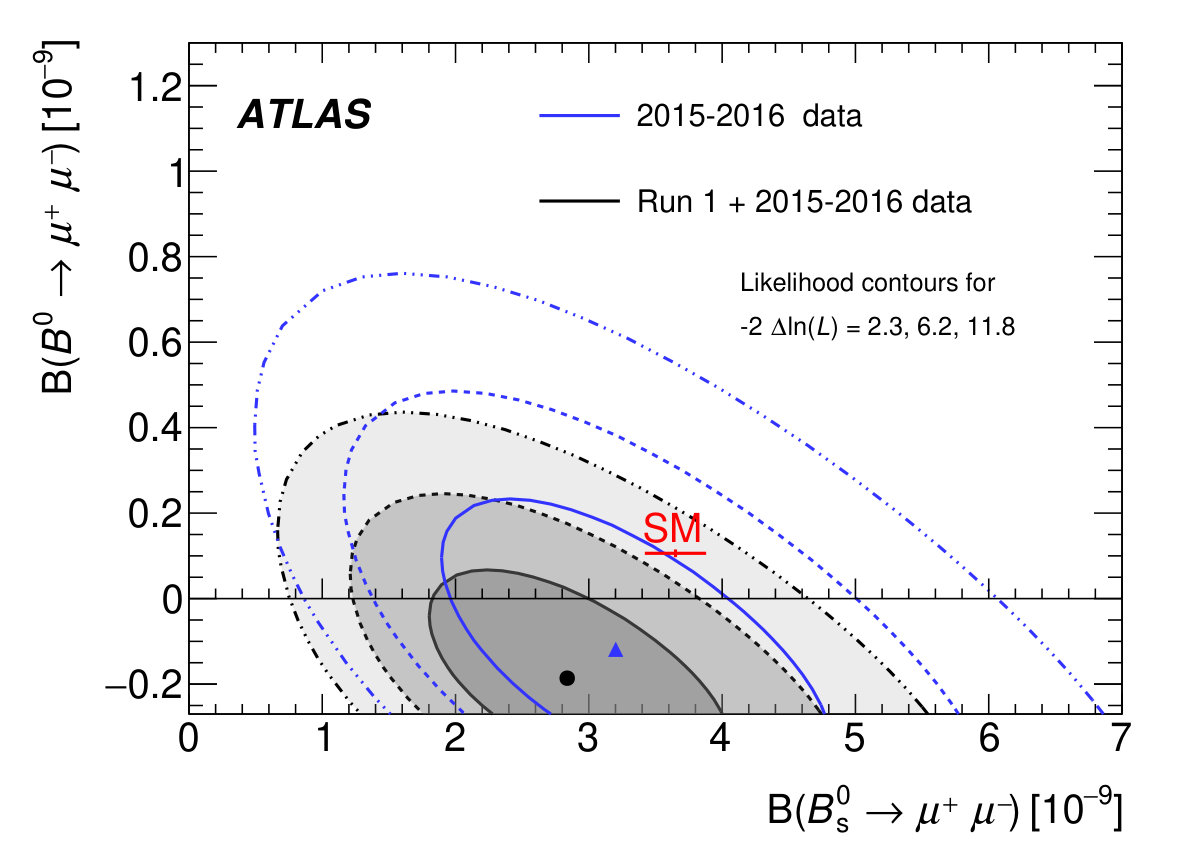 Figure 1
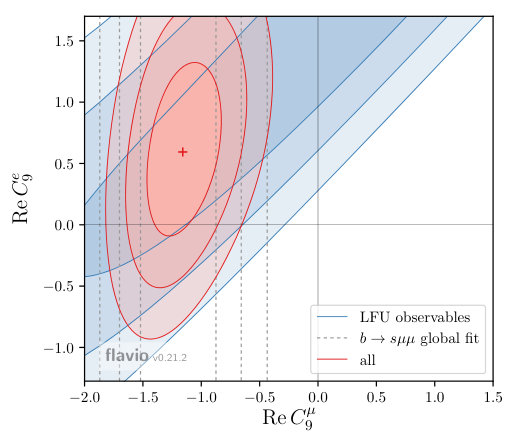 Figure 2
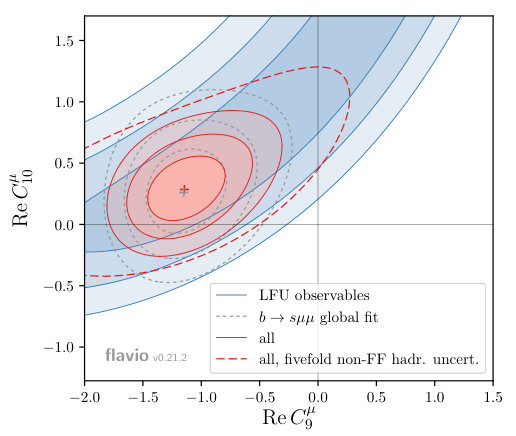 Figure 3
Peer Reviews
No public reviews on file for this paper yet. If you reviewed it on a platform where reviews are public (OpenReview, ICLR, NeurIPS, ICML), you can paste yours below so the community can read it here.
Videos
No videos yet. Explain this paper in a talk, walkthrough, or lecture? Add one.
Taxonomy
TopicsParticle physics theoretical and experimental studies · Computational Physics and Python Applications · Quantum Chromodynamics and Particle Interactions
**Proceedings of the Working group 3
“Rare B, D and K decays”
for CKM 2018 (Heidelberg)**
Michel De Ciana, Sébastien Descotes-Genonb, Karim Massric
a Laboratoire de Physique des Hautes Énergies, EPFL, 1015 Lausanne, Switzerland
*b Laboratoire de Physique Théorique (UMR 8627),
CNRS, Univ. Paris-Sud, Université Paris-Saclay, 91405 Orsay, France*
c CERN, European Organization for Nuclear Research, 1211 Geneva, Switzerland
We provide an overview of the results presented during the sessions of Working Group 3 “Rare B, D and K decays, radiative and electroweak penguin decays, including constraints on and ”, presented at the 10th International Workshop on the CKM Unitarity Triangle (CKM 2018) at Heidelberg University (September 17-21, 2018).
Rare , and decays provide interesting probes of the Standard Model (SM), with a potential sensitivity to New Physics (NP) higher than other, more common, decays. Their experimental measurement is challenging, and their theoretical interpretation requires a precise knowledge of QCD at low energies, in the non-perturbative (hadronic) regime. The various , , decays provide different types of tests of the Standard Model, which can be performed in different experimental settings and which may exhibit correlated deviations in models of New Physics.
1 decays
1.1 Exclusive transitions
transitions are an excellent probe for physics beyond the SM, as they are forbidden on tree level. Several deviations from SM predictions have been observed in the differential branching ratios, the angular distributions and the ratio of the branching ratios of decays with muon and electron final states.
1.1.1 Differential branching ratios
The differential branching ratios of the decays [1], {{B}^{+}}\!\rightarrow{{K}^{*+}}$$\mu^{+}\mu^{-}, , [2], [3] and [4] have been measured by the LHCb experiment. All measurements show smaller values than predicted in the region of low dilepton invariant mass, , albeit large uncertainties in the theoretical predictions are present and limit the precision of these measurements.
1.1.2 Angular distributions
In the decays [5, 6, 7, 8], [9] and [10] the angular distributions have been measured in the full region (, ) and in the interval 15– 20 ().
In the decay for the first time all 34 angular observables were measured using a moments analysis. All results are in agreement with their SM predictions. The decay has only two angular observables, the forward-backward asymmetry and , sensitive to (pseudo-)scalar and tensor contributions. Both observables were measured to be compatible with SM predictions.
In the decay , measurements of all angular parameters were performed, with the observable showing a deviation from the SM by 3.4 standard deviations in the LHCb measurement. A deviation of could be due to a value of the Wilson coefficient describing the strength of the vector coupling, different from its SM prediction. Or the discrepancy could be due to an underestimation of charm-loop effects. A possible strategy to distinguish both contributions is to fit the differential branching fraction of , modelling the contributing tree and penguin amplitudes using Breit-Wigner line shapes, to determine the relative contribution of long-distance (i.e. charm loop) and short-distance contributions. This measurement was already performed for the decay [11]. An alternative approach is to fit the continuous distribution of as described in Refs. [12] and [13].
1.1.3 Lepton Flavour Universality violation
The ratios and have been measured at the LHCb [14, 15], BaBar [16] and Belle [17] experiments. While the precision of the results from BaBar and Belle are limited by the statistical precision, the LHCb results show a deviation from the SM. is measured to be , in the interval 1– 6 , corresponding to a deviation of 2.6 from the SM. is measured to be in the interval 0.045– 1.1 and in the interval 1.1– 6.0. This corresponds to a deviation of 2.2 and 2.4 standard deviations from the SM. The predictions for both measurements have a negligible theoretical uncertainty, as hadronic effects cancel when forming the ratio.
1.1.4 leptons in the final state
So far, only transitions have been measured where is a muon or an electron. Given the low branching ratio of and the experimental challenge to reconstruct leptons, processes are experimentally only weakly constrained. A deviation of the ratios, with from the SM predictions, which is suggested by measurements of LHCb [18, 19, 20], BaBar [21, 22] and Belle [23, 24, 25, 26], would lead to an enhancement of the branching ratio of transitions, most significantly to the purely leptonic decay . Given the possible reach with LHCb and Belle II, a discovery of a processes would imply physics beyond the SM.
1.1.5 The purely leptonic decays and
The decays and are strongly suppressed in the SM due to being flavour-changing neutral currents and helicity suppression. They are sensitive to the Wilson coefficient and the non-SM Wilson coefficients and . The branching ratio of has been measured by the LHCb [27], ATLAS [28] and CMS [29] experiments, with the latest result from the ATLAS collaboration, being . In the SM, only the heavy eigenstate decays into the dimuon final state, a measurement of the lifetime could therefore reveal a deviation from the SM. The lifetime has been measured by the LHCb experiment to be and is compatible with the expectation. The precision is limited by the small number of observed events. The decay is currently unobserved and upper limits are computed, with the most stringent one by the ATLAS collaboration, yielding at 95% CL[28]. A plot with the ATLAS results is shown in Fig. 1.
1.2 Inclusive decays
(and ) decays provide strong constraints on the short-distance Wilson coefficients (and ), with interesting experimental prospects at Belle II. The computation relies on quark-hadron duality: the same computation can be performed using a hadronic or a quark language, the latter avoiding the complications due to hadronisation, provided that the observable is inclusive enough, i.e., summed over a large set of kinematic configurations. Experimentally, one has however to perform cuts on or that are difficult to tackle, introducing (hadronic) shape functions to be modelled theoretically/fitted experimentally. The charm resonances are signalled by charm loops inducing an dependence, which is a significant source of uncertainty for , as well as higher orders in perturbation theory [30, 31]. A general analytic computation for all values of is difficult, but it is currently under investigation, recently in the case of . Recent improvements in NNLO computations have led to SM predictions for with of 6.9% (to be compared to 4.5% for the experimental average) [32, 33]. Another improvement in the accuracy of the prediction for decays has been the recent inclusion of final states with a large number of particles, which can have a sizable contribution to inclusive transitions [34].
1.3 Global fits
The measured branching ratios of the decays , , , the inclusive decay rate and the angular observables of and are combined in a global fit[35, 36]. The best fit point in the plane of the Wilson coefficients and shows a deviation from the SM by 5 standard deviations. When also allowing for different operators for electron or muon final states, the overall picture is unchanged, where a deviation from the SM is only seen in the muon final states, see Fig. 2.
1.4 Radiative decays
1.4.1 Photon polarization in decays
The photon polarization in transitions is a sensitive probe for new physics. While it has been established that the photon is polarized in the decay [37], a precise determination of the polarization requires an amplitude analysis to understand the resonant structure of the system, and an angular analysis. Such a measurement can be expected in the near future from Belle II and LHCb. An alternative approach to measure the polarization is to determine the time-dependent decay rate of decays and the parameters and . These measurements have been performed by Belle and BaBar in the decays , and [38], where all results are compatible with the SM predictions. A novel approach is to measure the decay [39], as the Dalitz structure of allows to determine the real and imaginary part of the Wilson coefficients and , which is not possible when integrating over the Dalitz space. While extracting the full information about the photon polarization from the time-dependent decay rate requires the knowledge of the flavour of the meson, the parameter , related to the polarization, can be extracted without this knowledge. This measurement was performed by LHCb in the decay , yielding a value of [40]. This result is compatible with the SM at 2.
1.4.2 Isospin and asymmetries in decays
Belle has measured the isospin asymmetry and in decays[41], where the was reconstructed in the , , and final states, with event yields between about 350 to 2300 signal candidates. The asymmetry was measured for the first time and yields . The isospin asymmetry was measured to be . While the asymmetry is compatible with the SM prediction, the isospin asymmetry deviates by 3.1 from the SM prediction.
A similar measurement was performed for the inclusive final state[42], with the results being and . Both results are compatible with the SM predictions and the results from BaBar.
1.5 Lepton Flavour Violation and other rare decays
1.5.1 Lepton Flavour Violation searches
The lepton-flavour violating decays and have been searched for, setting the most stringent upper limit on the branching ratio of at 90% CL for [43], depending on the charge combination of the leptons, and at 90% CL for .
Limits by the LHCb collaboration include [44], [44] and [45] for an SM Higgs, all at 95% CL.
1.5.2 Other rare decays
Limits were set on at 90% CL by the BaBar experiment, at 95% CL[46], which is a pure annihilation decay, and at 90% CL[47] for a non-resonant dimuon, both by the LHCb experiment. The last decay is dominated by decays over an or resonance. A first observation of the decay was achieved, when requiring the dimuon to originate from an meson, yielding a branching ratio of [47].
The decay is a transition, strongly suppressed in the SM and therefore potentially sensitive to effects beyond the SM. An excess over background was seen for the first time by the LHCb experiment. The integrated branching fraction was measured to be [48], which corresponds to a significance of 3.4.
The branching fraction of the transition is dominated by long-distance effects, additionally the result from the HyperCP experiment saw an excess at the lower edge of the kinematically allowed region[49]. The branching ratio was measured to be [50] by the LHCb experiment, which corresponds to a significance of 4.1. No significant structure in was observed.
2 decays
2.1 Potential for NP discovery
Radiative charm decays provide interesting tests of New Physics, both in the up sector (directly) and as a cross check of the sector (through CKM if NP couples to weak doublets of quarks). They can be analysed in the model-independent framework of the effective Hamiltonian with three main operators contributing, , similarly to the physics case [51, 30], and allowing for predictions for (with ) [52] and (branching ratio, forward-backward asymmetry, lepton-flavour universality) [53, 54]. The latter are affected by very large long-distance contributions which are difficult to estimate. They can also be used to test trendy NP models to explain anomalies, such as leptoquarks [55, 54, 56], with important constraints coming from , , .
2.2 Description of
The decay (with being pions and/or kaons) can provide interesting information on the neutral current, but it requires analysing long-distance contributions [57]. The latter can be described using a resonance saturation model, writing the decay as with a subsequent decay . The vector can be described assuming the dominance of the lowest vector/axial resonances and factorisation on the resulting weak matrix element. Predictions can be made for various modes, separating bremsstrahlung and direct emissions, with a good overall agreement with BaBar and Belle results for these modes [58, 59, 60], and with other theoretical descriptions for the long-distance contributions to these modes [61]. Additional topologies involving axial (rather than vector) intermediate resonances could turn out to be important (a third of the vector contribution). The analysis could allow one to understand better the cleanliness of angular asymmetries for these modes.
2.3 Recent experimental results
The BESIII experiment has presented various results on rare charm meson decays. Concerning charged currents, they reported the observation of [62] and searches for [63] and [64] both constrained below at 90% CL. For neutral currents, a comprehensive list of modes and (with and light strange and/or non strange mesons) has been studied, with upper limits between and improving significantly compared to previous experimental bounds [65]. Further searches are ongoing (lepton number violation through , ).
The LHCb experiment has studied forward-backward, triple-product and asymmetries in and . These modes contain both short-distance (neutral current) and long-distance (resonance) contributions. All asymmetries could be interesting probes of NP, but they show a good compatibility with zero in agreement with the Standard Model [66].
LHCb has also presented new results for the branching fractions of , and , requiring a careful study of the background and an anlysis of the efficencies varying across the Dalitz plane. They improved significantly ratios of branching ratios between these decays, providing the world’s best measurements [67].
3 decays
3.1 in and beyond the SM
The direct violation in decays, described by the ratio , plays a very important role in the tests of the SM and more recently in the tests of its possible extensions. A master formula for the ratio is obtained with a model-independent approach in the context of the effective theory with operators invariant under QCD and QED and in the context of the Standard Model Effective Field Theory (SMEFT) with the operators invariant under the full SM gauge group. Such a formula, which allows to calculate automatically once the Wilson coefficients of all contributing operators are known at the electroweak scale , reads as [68]
[TABLE]
where
[TABLE]
The present master formula for can be applied to any theory beyond the Standard Model (BSM) in which the Wilson coefficients of all contributing operators have been calculated at the electroweak scale.
3.2 Experimental results on decays
The decays are flavour changing neutral current processes, highly suppressed due to quadratic GIM mechanism and to CKM suppression. The dominant contribution comes from the short-distance physics of the top quark loop, with negligible long-distance corrections. This makes them very clean theoretically and sensitive to physics beyond the SM, probing the highest mass scales among the rare meson decays. The NA62 experiment at CERN SPS is designed to measure the branching ratio of the decay using a novel kaon decay-in-flight technique, while the KOTO experiment at JPARC aims to study the decay. Both experiments produced new results in 2018. The NA62 experiment observed one candidate event, which translates into an upper limit on the branching ratio [69] at 95% CL, compatible with the Standard Model prediction. The KOTO experiment improved the existing upper limits on the branching ratio of the neutral kaon decay by an order of magnitude [70]: at 90% CL.
3.3 Lattice results on and decays
The rare and decays proceed via a flavour changing neutral current and therefore may only be induced beyond tree level in the SM. This natural suppression makes these decays sensitive to the effects of potential new physics. The -conserving decay channels however are dominated by a single-photon exchange; this involves a sizeable long-distance hadronic contribution which represents the current major source of theoretical uncertainty. In preparation towards the computation of the long-distance contributions to these rare decay amplitudes using lattice QCD, an exploratory study using unphysical and masses have been performed. In particular, the form factor () was evaluated for the first time, obtaining[71] for the three values of respectively.
3.4 Connecting and rare decays
Lepton Flavor Universality (LFU) in the SM is ensured by the identical couplings of the electroweak gauge bosons to all three lepton flavours. This prediction has been probed at the permille level by stringent LFU tests performed in semileptonic and decays, in purely leptonic decays, and in electroweak precision observables. Recent hints of LFU violations in semileptonic decays, for both charged-current and neutral-current mediated processes, might point to BSM contributions coupled mainly to the third generation of quarks and leptons, with some small (but non-negligible) mixing with the light generations. In order to satisfy this assumption, an Effective Field Theory (EFT) based on the flavour symmetry is considered [72, 73]. Such a study shows that deviations from the SM are expected in the decays, which are the only decays involving third-generation leptons in the final state. Moreover, the correlations between and both and can be exploited to distinguish between different NP scenarios.
4 Acknowledgements
We thank all the participants for the quality of the presentations and the discussions during the sessions of the Working group. We also thank the organisers of the CKM18 workshop for the perfect organisation, as well as the warm and lively atmosphere of the conference.
The reference list from the paper itself. Each links out to its DOI / PubMed record.
- 1[1] LH Cb, R. Aaij et al. , Measurements of the S-wave fraction in B 0 → K + π − μ + μ − → superscript 𝐵 0 superscript 𝐾 superscript 𝜋 superscript 𝜇 superscript 𝜇 B^{0}\rightarrow K^{+}\pi^{-}\mu^{+}\mu^{-} decays and the B 0 → K ∗ ( 892 ) 0 μ + μ − → superscript 𝐵 0 superscript 𝐾 ∗ superscript 892 0 superscript 𝜇 superscript 𝜇 B^{0}\rightarrow K^{\ast}(892)^{0}\mu^{+}\mu^{-} differential branching fraction , JHEP 11 (2016) 047, ar Xiv:1606.04731 , [Erratum: JHEP 04,142(2017
- 2[2] LH Cb, R. Aaij et al. , Differential branching fractions and isospin asymmetries of B → K ( ∗ ) μ + μ − → 𝐵 superscript 𝐾 superscript 𝜇 superscript 𝜇 B\rightarrow K^{(*)}\mu^{+}\mu^{-} decays , JHEP 06 (2014) 133, ar Xiv:1403.8044
- 3[3] LH Cb, R. Aaij et al. , Angular analysis and differential branching fraction of the decay B s 0 → ϕ μ + μ − → subscript superscript 𝐵 0 𝑠 italic-ϕ superscript 𝜇 superscript 𝜇 B^{0}_{s}\rightarrow\phi\mu^{+}\mu^{-} , JHEP 09 (2015) 179, ar Xiv:1506.08777
- 4[4] LH Cb, R. Aaij et al. , Differential branching fraction and angular analysis of Λ b 0 → Λ μ + μ − → subscript superscript Λ 0 𝑏 Λ superscript 𝜇 superscript 𝜇 \Lambda^{0}_{b}\rightarrow\Lambda\mu^{+}\mu^{-} decays , JHEP 06 (2015) 115, ar Xiv:1503.07138 , [Erratum: JHEP 09,145(2018)]
- 5[5] LH Cb, R. Aaij et al. , Angular analysis of the B 0 → K ∗ 0 μ + μ − → superscript 𝐵 0 superscript 𝐾 absent 0 superscript 𝜇 superscript 𝜇 B^{0}\rightarrow K^{*0}\mu^{+}\mu^{-} decay using 3 fb -1 of integrated luminosity , JHEP 02 (2016) 104, ar Xiv:1512.04442
- 6[6] CMS, A. M. Sirunyan et al. , Measurement of angular parameters from the decay B 0 → K ∗ 0 μ + μ − → superscript B 0 superscript K absent 0 superscript 𝜇 superscript 𝜇 \mathrm{B}^{0}\rightarrow\mathrm{K}^{*0}\mu^{+}\mu^{-} in proton-proton collisions at s = 𝑠 absent \sqrt{s}= 8 Te V , Phys. Lett. B 781 (2018) 517, ar Xiv:1710.02846
- 7[7] CMS, V. Khachatryan et al. , Angular analysis of the decay B 0 → K ∗ 0 μ + μ − → superscript 𝐵 0 superscript 𝐾 absent 0 superscript 𝜇 superscript 𝜇 B^{0}\rightarrow K^{*0}\mu^{+}\mu^{-} from pp collisions at s = 8 𝑠 8 \sqrt{s}=8 Te V , Phys. Lett. B 753 (2016) 424, ar Xiv:1507.08126
- 8[8] ATLAS, M. Aaboud et al. , Angular analysis of B d 0 → K ∗ μ + μ − → subscript superscript 𝐵 0 𝑑 superscript 𝐾 superscript 𝜇 superscript 𝜇 B^{0}_{d}\rightarrow K^{*}\mu^{+}\mu^{-} decays in p p 𝑝 𝑝 pp collisions at s = 8 𝑠 8 \sqrt{s}=8 Te V with the ATLAS detector , JHEP 10 (2018) 047, ar Xiv:1805.04000