Relaxation to the equilibrium in the hard disk dynamics
Liliia Ziganurova, Lev N. Shchur

TL;DR
This paper investigates the relaxation process to equilibrium in hard disk dynamics, focusing on the exponential distribution of displacements in Event-Chain Monte Carlo simulations.
Contribution
It provides insights into the relaxation criteria and confirms the exponential displacement distribution in the context of hard disk dynamics.
Findings
Displacement distributions follow an exponential law.
Relaxation criteria for hard disk systems are examined.
Event-Chain Monte Carlo effectively models relaxation behavior.
Abstract
We examine the question of the criteria of the relaxation to the equilibrium in the hard disk dynamics. In the Event-Chain Monte Carlo, we check the displacement distributions which follows to the exponential law.
Click any figure to enlarge with its caption.
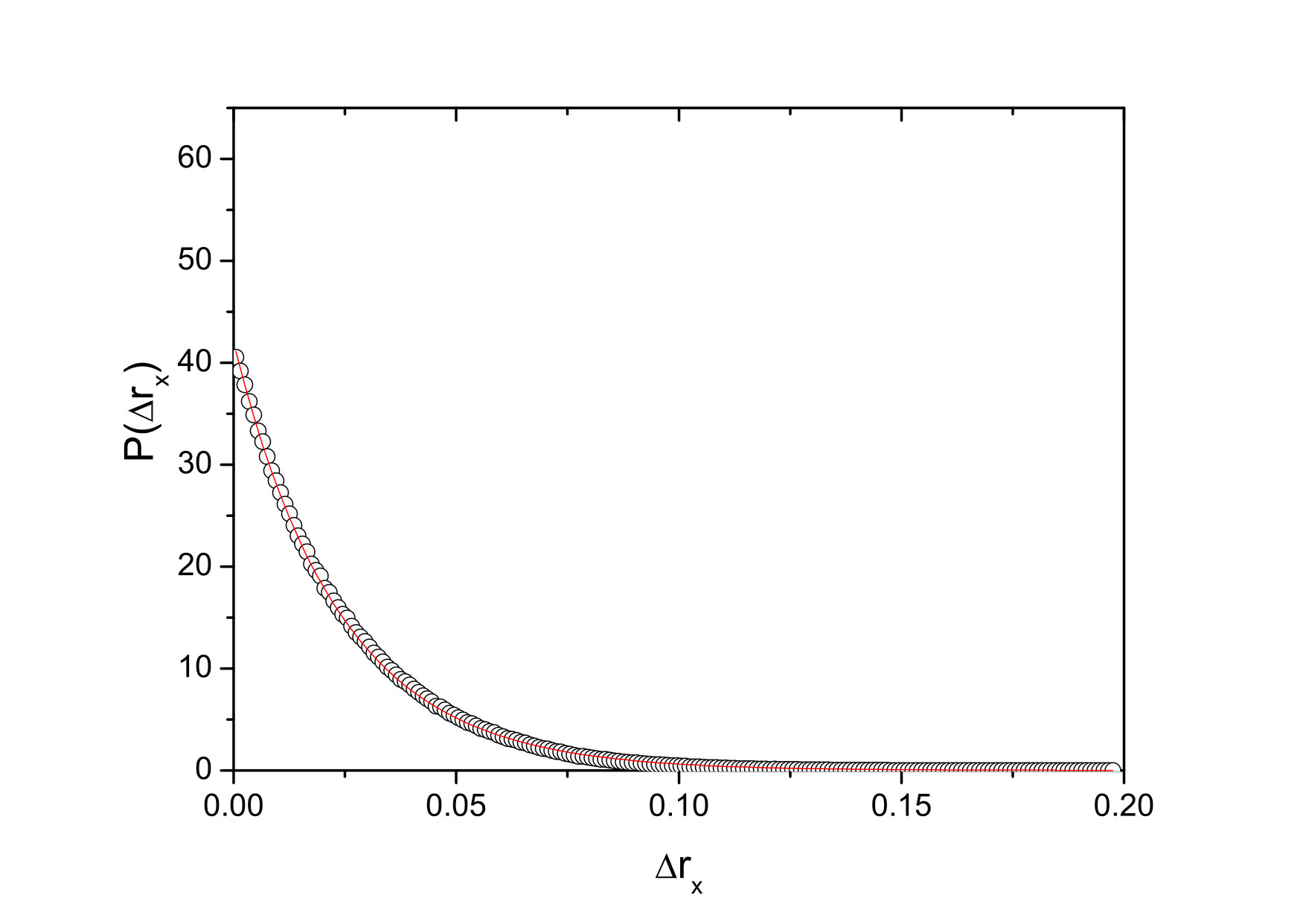 Figure 1
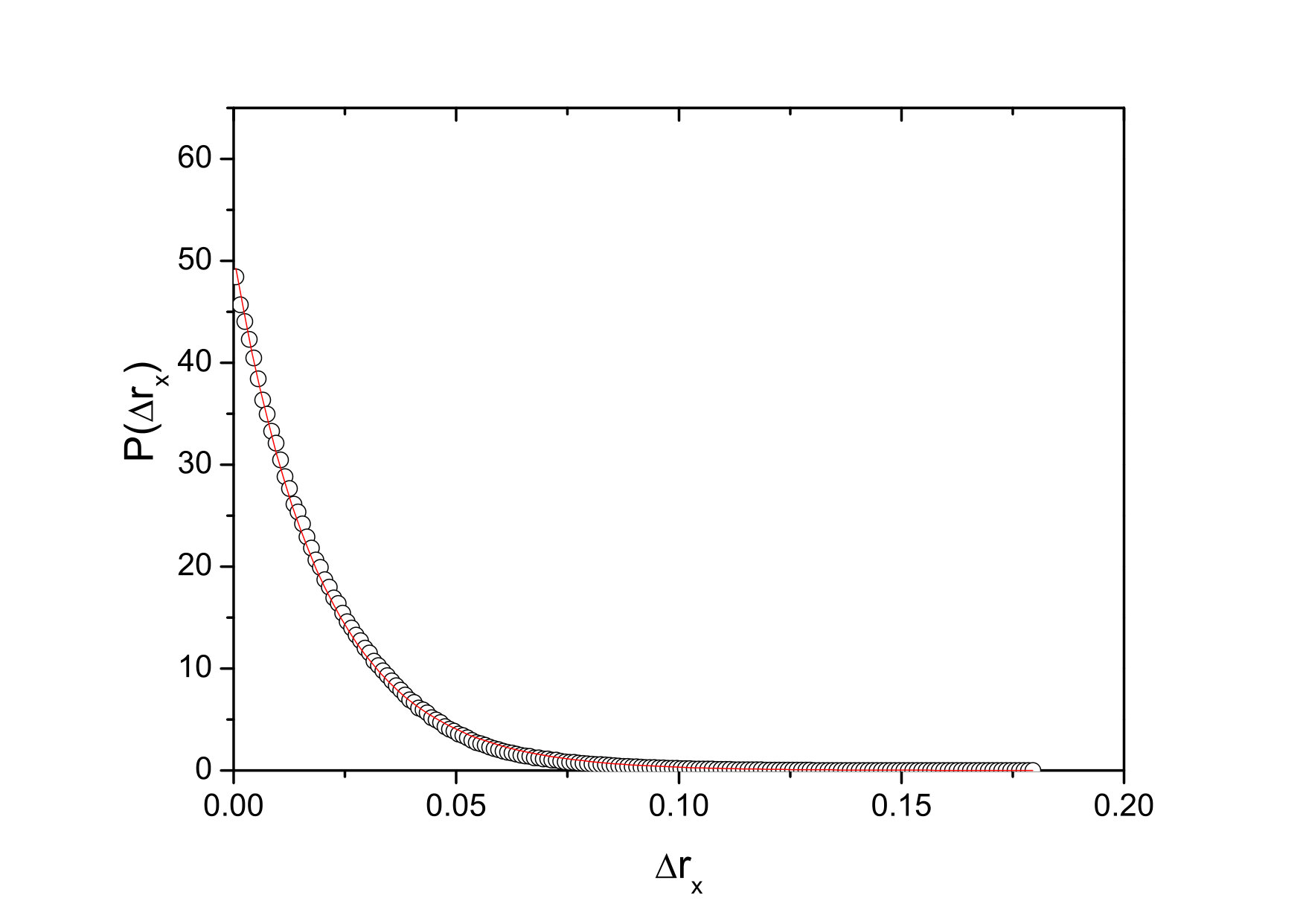 Figure 2
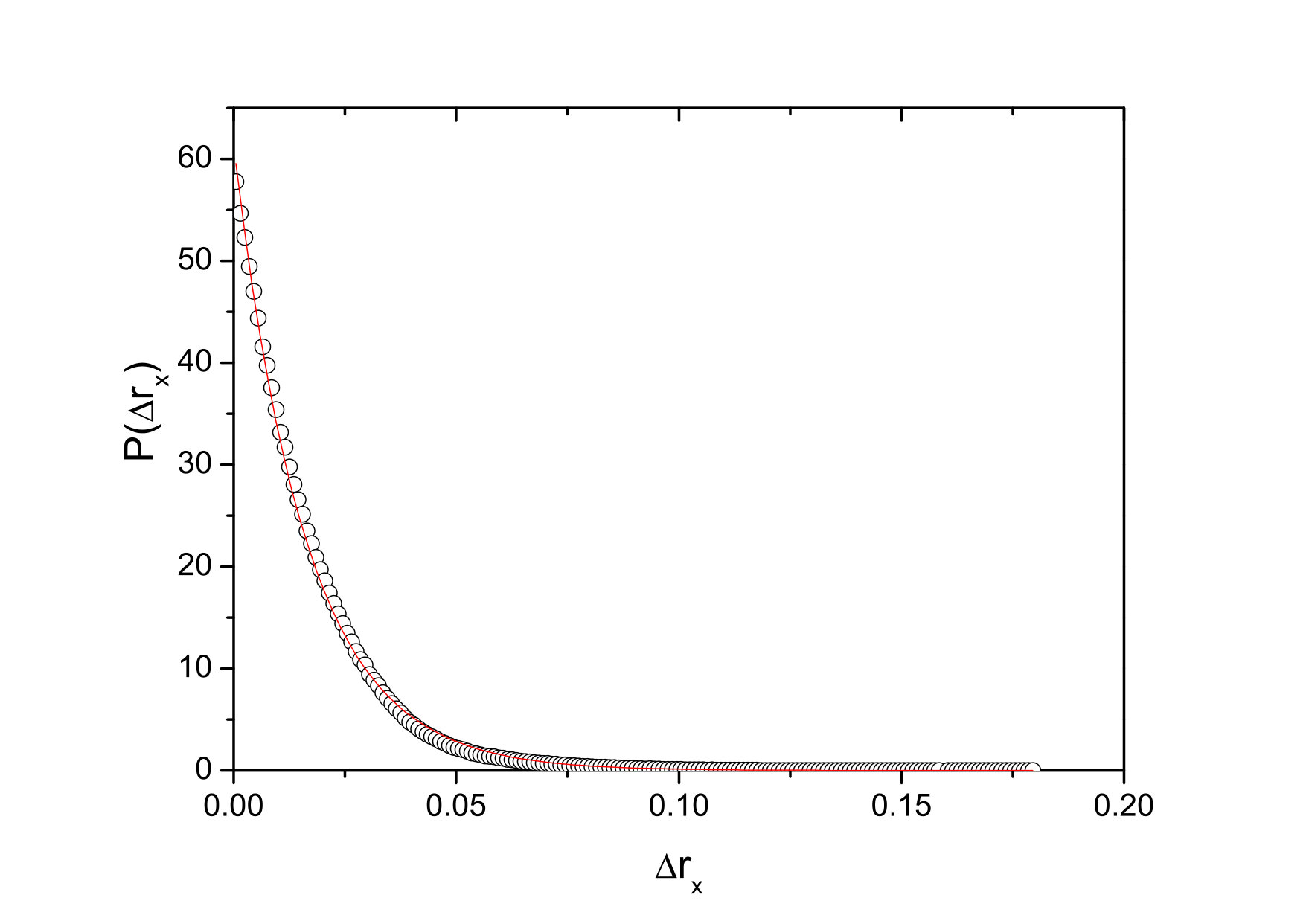 Figure 3
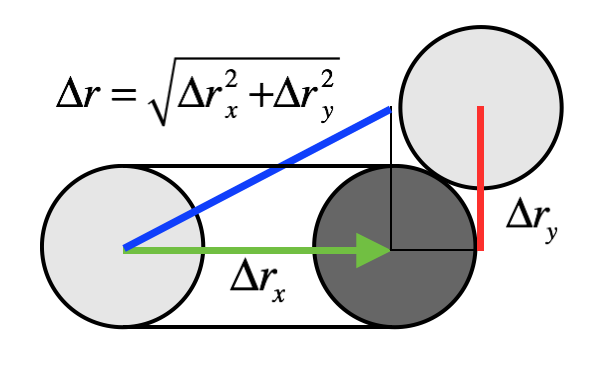 Figure 4
| 0.68 | 0.116311 | 0.02474 | 0.02382(4) | 0.037 |
| 0.71 | 0.118849 | 0.02220 | 0.01980(7) | 0.138 |
| 0.73 | 0.120511 | 0.02056 | 0.01628(6) | 0.226 |
Peer Reviews
No public reviews on file for this paper yet. If you reviewed it on a platform where reviews are public (OpenReview, ICLR, NeurIPS, ICML), you can paste yours below so the community can read it here.
Videos
No videos yet. Explain this paper in a talk, walkthrough, or lecture? Add one.
Taxonomy
TopicsPhase Equilibria and Thermodynamics · Theoretical and Computational Physics · Material Dynamics and Properties
Relaxation to the equilibrium in the hard disk dynamics
Liliia Ziganurova 1,2
Lev N. Shchur 1,2
1 Science Center in Chernogolovka, 142432 Chernogolovka, Russia
2 National Research University Higher School of Economics, 101000 Moscow, Russia
Abstract
We examine the question of the criteria of the relaxation to the equilibrium in the hard disk dynamics. In the Event-Chain Monte Carlo, we check the displacement distributions which follows to the exponential law.
††preprint: APS/123-QED
We restrict our current analysis to the case of the hard disks. In molecular dynamics simulations, it is important to know the relaxation time from the initial state to equilibrium. Which quantities of the equilibrium can give information that system reach equilibrium? In conventional Event Driven Molecular Dynamics it is the relaxation time to the Maxwell distribution which can be used as the estimate. In the case of the Event-Chain Monte Carlo EC09 the velocities are not defined. Instead, we can use distribution of the displacements. It is known from the computer simulations Alder65 that displacements follow to the exponential law in the equilibrium
[TABLE]
and theoretical arguments based on the kinetic theory support the findings Turnbull70 .
We report the preliminary results for the system of a small number of disks in the box of the linear size .
Definition of displacements is given in the Figure 1. The real shifts are performed along the -axes, and the formal shifts are defined in the perpendicular direction, as the difference of the projections of the centrum of colliding disks on the -axes. We also define the total displacement as shown in the Figure 1.
We plot distribution of the displacements in the direction of the moves for the ECMC in the Figure 2 for three values of densities, . The corresponding values of the mean free path are given in the Table 1. Value of is defined with the density as , the free volume for the particle. Estimation of the value from the fit is close to the free-path value for the low density, as can be expected from the definition of , and diverges for the large densities .
In the ECMC, the direction of the moves alternates from -axes to the -axes, therefore all real shifts of the disks follows to the expected distribution (1) and provides the equilibrium state of the system. In a way, this is an additional argument for the validity of the Event-Chain Monte Carlo approach for simulation of hard disks (and spheres).
The work is supported by the grant 17-07-01537 from Russian Foundation for Basic Research.
The reference list from the paper itself. Each links out to its DOI / PubMed record.
- 1(1) D.J. Alder, T. Einwohner, Free-Path Distribution for Hard Spheres , J. Chem. Phys. 43 (1965) 3399-3400.
- 2(2) D. Turnbull, M.H. Cohen, On the free-volume model of the liquid-glass transition , J. Chem. Phys, 52 (1970) 3038-3041.
- 3(3) E.P. Bernard, W. Krauth, and D.B. Wilson, Event-chain Monte Carlo algorithms for hard-sphere systems , Phys. Rev. E, 80 (2009) 056704