Orbigraphs: a graph theoretic analog to Riemannian orbifolds
Kathleen Daly, Colin Gavin, Gabriel Montes de Oca, Diana Ochoa,, Elizabeth Stanhope, Sam Stewart

TL;DR
This paper introduces orbigraphs, a graph-theoretic analogue of Riemannian orbifolds, exploring their spectral properties and establishing bounds on singular vertices based on spectral data.
Contribution
It defines orbigraphs as a new concept linking spectral graph theory with geometric orbifold ideas, and analyzes their spectral characteristics and singularities.
Findings
Number of singular vertices is spectrally bounded.
Orbigraphs with singular points are not cospectral with regular graphs.
Provides a lower bound on the Cheeger constant of orbigraphs.
Abstract
A Riemannian orbifold is a mildly singular generalization of a Riemannian manifold that is locally modeled on modulo the action of a finite group. Orbifolds have proven interesting in a variety of settings. Spectral geometers have examined the link between the Laplace spectrum of an orbifold and the singularities of the orbifold. One open question in this field is whether or not a singular orbifold and a manifold can be Laplace isospectral. Motivated by the connection between spectral geometry and spectral graph theory, we define a graph theoretic analogue of an orbifold called an orbigraph. We obtain results about the relationship between an orbigraph and the spectrum of its adjacency matrix. We prove that the number of singular vertices present in an orbigraph is bounded above and below by spectrally determined quantities, and show that an orbigraph with a singular point and a…
Click any figure to enlarge with its caption.
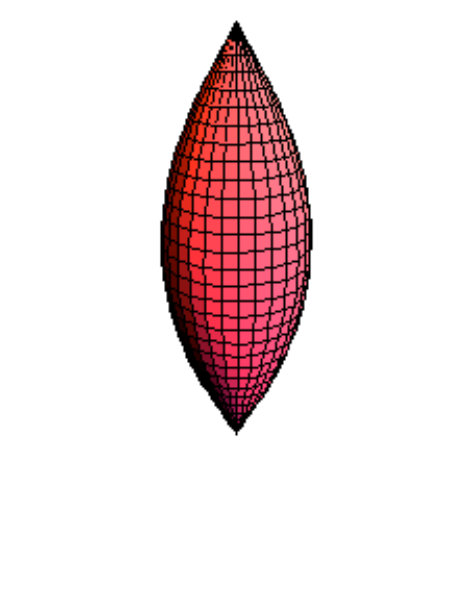 Figure 1
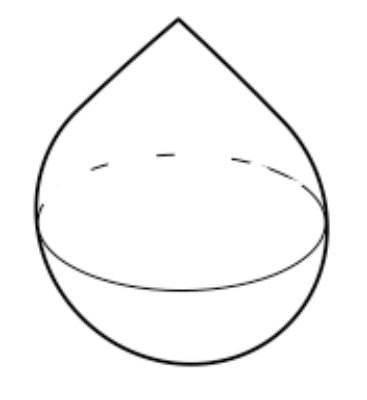 Figure 2
Peer Reviews
No public reviews on file for this paper yet. If you reviewed it on a platform where reviews are public (OpenReview, ICLR, NeurIPS, ICML), you can paste yours below so the community can read it here.
Videos
No videos yet. Explain this paper in a talk, walkthrough, or lecture? Add one.