Superconductivity in an organometallic compound
Ren-Shu Wang, Liu-Cheng Chen, Hui Yang, Ming-An Fu, Jia Cheng,, Xiao-Lin Wu, Yun Gao, Zhong-Bing Huang, and Xiao-Jia Chen

TL;DR
This paper reports the discovery of superconductivity at 3.6 K in a potassium-doped organometallic compound, demonstrating its potential for new organic superconductors and expanding the understanding of quantum phenomena in such materials.
Contribution
It provides the first experimental evidence of superconductivity in an organometallic compound, specifically tri-o-tolylbismuthine, and identifies the benzene ring as the essential superconducting unit.
Findings
Superconductivity observed at 3.6 K in potassium-doped tri-o-tolylbismuthine.
Evidence of Meissner effect and zero-resistivity confirming superconductivity.
The compound is classified as a type-II superconductor.
Abstract
Organometallic compounds constitute a very large group of substances that contain at least one metal-to-carbon bond in which the carbon is part of an organic group. They have played a major role in the development of the science of chemistry. These compounds are used to a large extent as catalysts (substances that increase the rate of reactions without themselves being consumed) and as intermediates in the laboratory and in industry. Recently, novel quantum phenormena such as topological insulators and superconductors were also suggested in these materials. However, there has been no report on the experimental exploration for the topological state. Evidence for superconductivity from the zero-resistivity state in any organometallic compound has not been achieved yet, though much efforts have been devoted. Here we report the experimental realization of superconductivity with the critical…
Click any figure to enlarge with its caption.
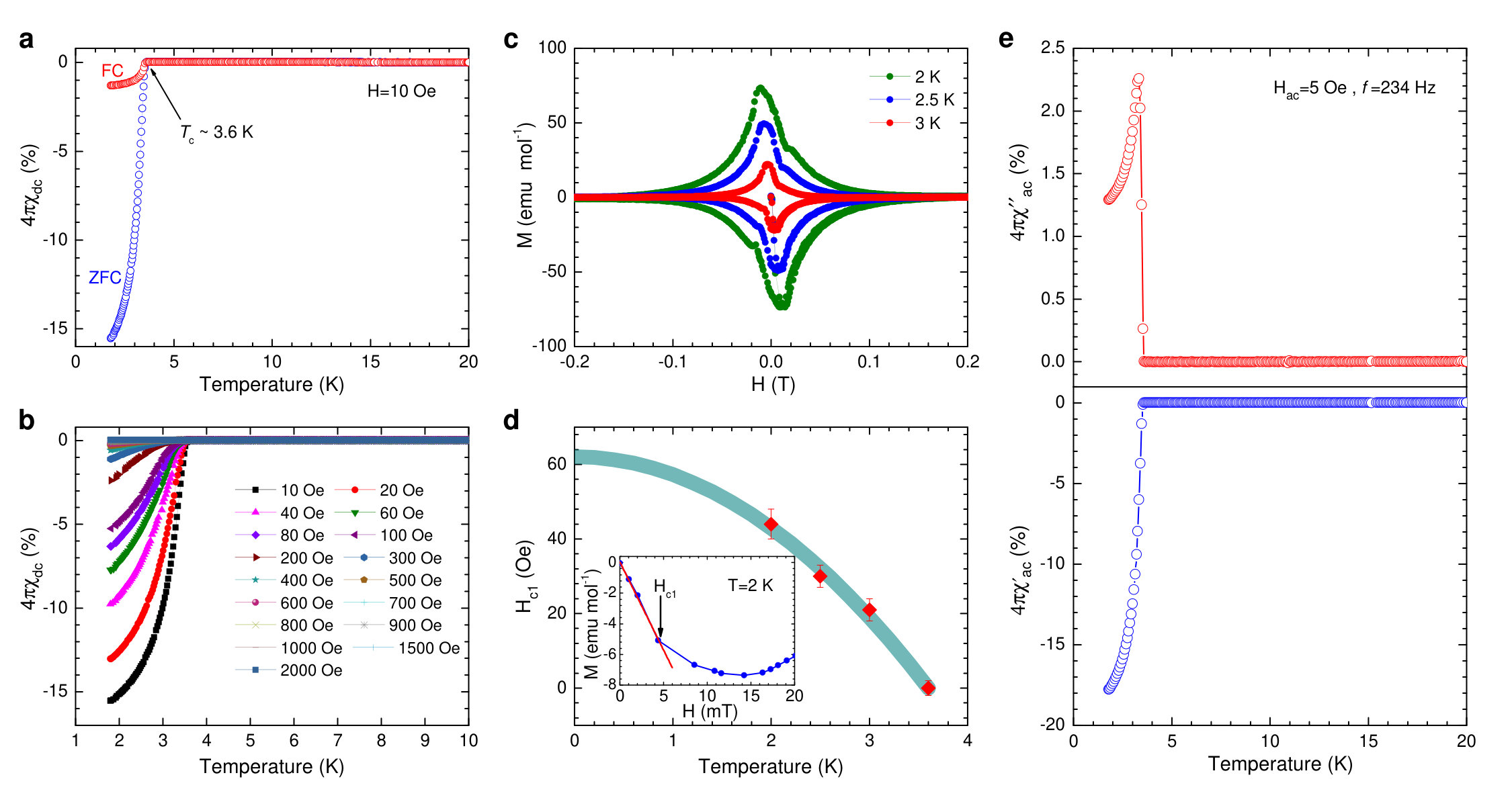 Figure 1
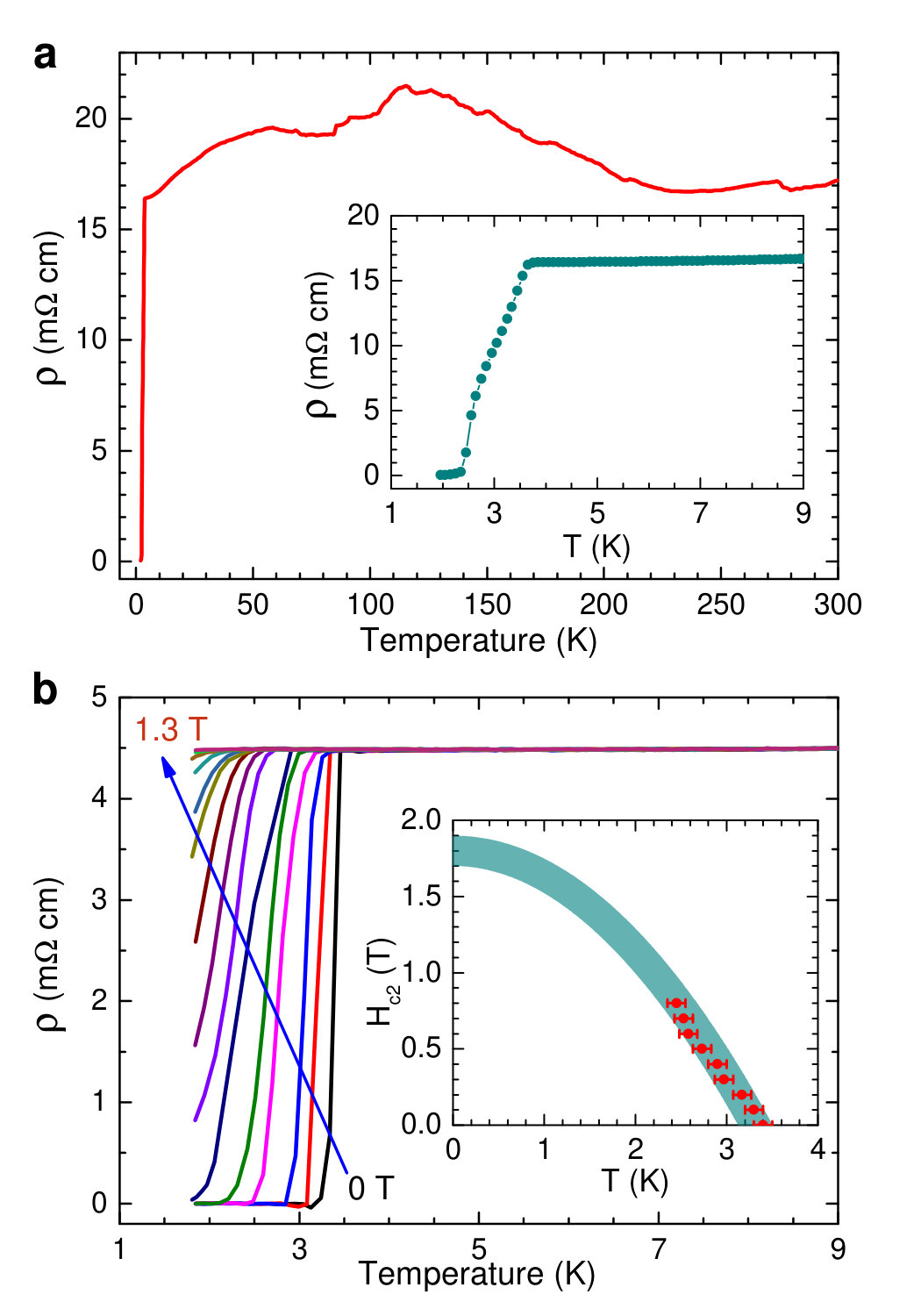 Figure 2
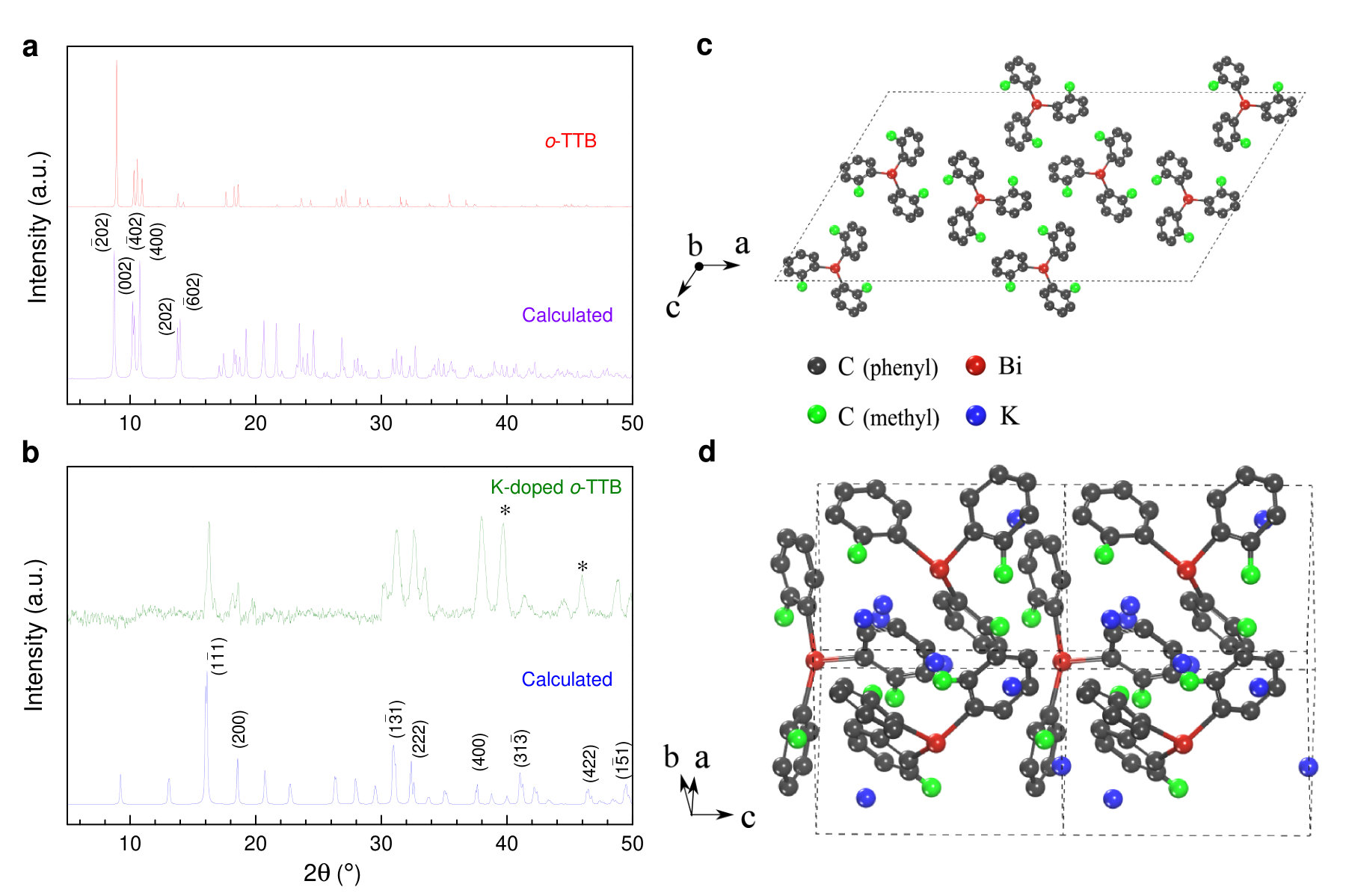 Figure 3
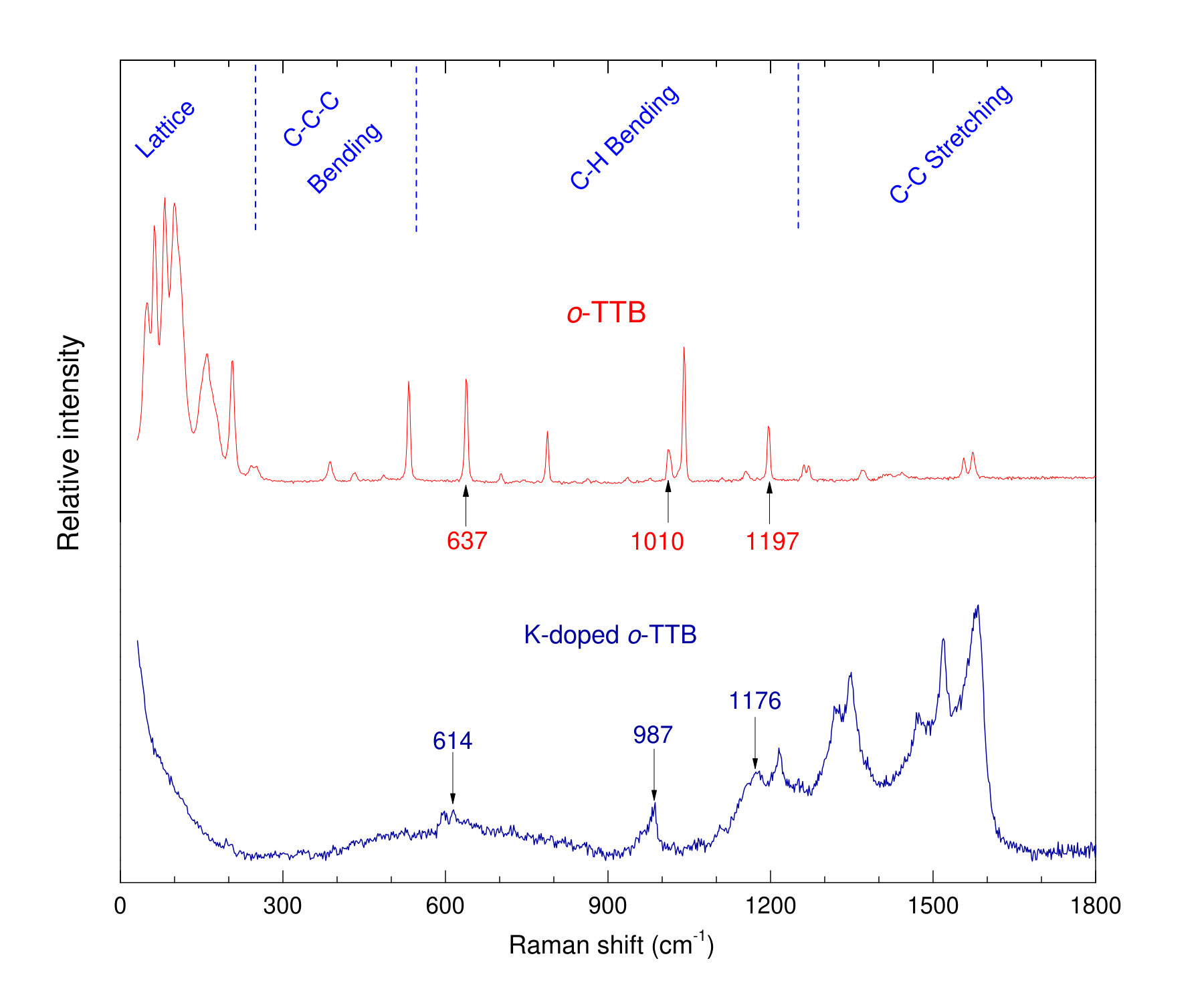 Figure 4
Peer Reviews
No public reviews on file for this paper yet. If you reviewed it on a platform where reviews are public (OpenReview, ICLR, NeurIPS, ICML), you can paste yours below so the community can read it here.
Videos
No videos yet. Explain this paper in a talk, walkthrough, or lecture? Add one.
Superconductivity in an organometallic compound.
Ren-Shu Wang1,2
Liu-Cheng Chen1
Hui Yang2
Ming-An Fu2
Jia Cheng2
Xiao-Lin Wu2
Yun Gao2
Zhong-Bing Huang2 & Xiao-Jia Chen1
Abstract
Organometallic compounds constitute a very large group of substances that contain at least one metal-to-carbon bond in which the carbon is part of an organic group. They have played a major role in the development of the science of chemistry. These compounds are used to a large extent as catalysts (substances that increase the rate of reactions without themselves being consumed) and as intermediates in the laboratory and in industry. Recently, novel quantum phenormena such as topological insulators and superconductors were also suggested in these materials. However, there has been no report on the experimental exploration for the topological state. Evidence for superconductivity from the zero-resistivity state in any organometallic compound has not been achieved yet, though much efforts have been devoted. Here we report the experimental realization of superconductivity with the critical temperature of 3.6 K in a potassium-doped organometallic compound, i.e. tri-o-tolylbismuthine with the evidence of both the Meissner effect and the zero-resistivity state through the and magnetic susceptibility and resistivity measurements. The obtained superconducting parameters classify this compound as a type-II superconductor. The benzene ring is identified to be the essential superconducting unit in such a phenyl organometallic compound. The superconducting phase and its composition are determined by the combined studies of the X-ray diffraction and theoretical calculations as well as the Raman spectroscopy measurements. These findings enrich the applications of organometallic compounds in superconductivity and add a new electron-acceptor family for organic superconductors. This work also points to a large pool for finding superconductors from organometallic compounds.
{affiliations}
Center for High Pressure Science and Technology Advanced Research, Shanghai 201203, China
Faculty of Materials Science and Engineering, Faculty of Physics and Electronic Technology, Hubei University, Wuhan 430062, China
The organometallic compounds first discovered by Zeise of Denmark in 1827, have been an active frontier in organic, inorganic, coordination, and biological chemistry[1]. These compounds usually contain at least one chemical bond connecting a carbon (C) atom of an organic molecule and a metal element (M). Their extensive prospects have been found in the applications for catalyzer[2, 3] (most famously, ZieglerNatta catalyst), organic synthesis reagents[4, 5] (most commonly, Grignard reagent), anticancer drugs ( metallocene dihalides[6]), and other special reagents[7] (such as antiseptic, sterilizer, and insecticide). However, the applications of their physical properties have not widely been addressed as expected. Recently, these compounds were suggested theoretically as candidates of topological insulators[8] due to their lattice symmetry and strong spin-orbit coupling. In general, many topological insulators can become superconductors by chemical doping[9] or the application of external pressure[10]. It is interesting to examine whether such organometallic compounds could eventually exhibit superconducting properties through some external modifications.
As a typical organometallic compound, tri-o-tolylbismuthine (o-TTB) with the structure of three methyl connected to triphenylbismuth (TPB) in the ortho-position of the C-Bi bond is one of the inexpensive and nontoxic organobismuth reagents. These reagents are widely used in the chemical synthesis such as in the preparation of transition metal complexes or as catalysts for polymerization reaction in medicinal chemistry[11]. Very recently, Meissner effect was reported in potassium (K)-doped TPB[12], though the evidence for superconductivity from electrical transport measurements is still absent. Differing with TPB, one surrounding hydrogen in each phenyl is replaced by methylphenyl in o-TTB. Although both compounds still share similar physicochemical properties, adding CH3 in o-TTB affects the molecular geometry due to the different steric hindrance. This in turn induces additional C-H intermolecular interactions. Previous studies[13] have shown that the Bi-Bi distance increases from 5.11 to 5.71 Å from TPB to o-TTB. This may facilitate metal-doping in o-TTB molecules from spatial arrangement perspective. On the other hand, the addition of methyl generally reduces the symmetry because of the introduction of the lattice distortion. As a result, the symmetry space group changes from C2/c for monoclinic TPB to P1 for triclinic o-TTB. This degradation in structural symmetry as well as intercalation of metal atoms can lead to the increase of carrier concentration which helps to enhance the electrical conductivity. Therefore, o-TTB is expected to exhibit better electrical transport properties by a simple addition of the functional groups. Here we choose an o-TTB molecule to examine possible superconductivity by doping alkali metal.
Meissner effect and zero-resistance are two essential characters for superconductivity. The Meissner effect in K-doped o-TTB is comfirmed by both the and magnetic susceptibility () measurements. Figure 1a shows the temperature dependence of the magnetic susceptibility () with the zero-field cooling (ZFC) and field cooling (FC) runs at the magnetic field of 10 Oe. One can see a sudden drop in around 3.6 K in both the ZFC and FC runs. This sudden drop of , originating from the well-defined Meissner effect, manifests the occurrence of superconductivity in the studied organometallic compound. The is defined as the temperature where the sharp drop takes place. The shielding fraction extracted from the at temperature of 1.8 K is about 17%. This is around five times higher than the reported one (3.74%) in K-doped TPB[12]. This significant improvement could benefit from the contributions from the functional group CH3. Figure 1c shows the magnetic hysteresis (M-H) loop with the scanning magnetic field up to 2 kOe at the temperature range of 2-3 K. The clear diamond-like hysteresis loop shrinks with increasing temperature. This behavior coincides with the feature of a typical type-II superconductor. The M decreases linearly with increasing H in the initial stage until the applied field H exceeding the lower critical field (). The temperature-dependent is shown in Fig. 1d. The inset of Fig. 1d shows the method for determining the value of at 2 K, namely the field deviated from the linear behavior. The value of 62 2 Oe is thus obtained from the extrapolation to zero temperature based on the empirical law . In Fig. 1b, the diamagnetic signal in the Meissner state is gradually suppressed until completely being faded by the applied magnetic field up to 2 kOe. This is an intrinsic property of a type-II superconductor.
The magnetic susceptibility measurements provide the further evidence for the occurrence of the Meissner effect, as shown in Fig. 1e. As a common technology for the identification of the existence of superconductivity, the real component of the susceptibility reveals the magnetic shielding, and the imaginary part is a measure of the magnetic irreversibility[14]. Both components of exhibit exquisite changes at around 3.6 K. This temperature is exactly the same as that detected from the temperature dependence of . Since the absence of the magnetic flux in the normal state, the values of both parts are close to zero. Below , the diamagnetic signal in drops fast with lowering temperature due to the exclusion of magnetic flux. In imaginary part, the flux penetrating sample falls behind the applied flux to form a positive peak signal. Such a peak signal in implies the tendency to form the zero-resistivity in the superconducting state at a qualitative level.
Now we check the existence of the zero-resistivity in K-doped o-TTB. Figure 2a displays the resistivity measurements on this compound at ambient pressure. It can be seen that the change of the resistivity with temperature is not regular. There seemingly exists a hump at around 120 K. Above that, the resistivity shows non-metallic feature. It changes to metallic-like behavior at low temperatures. This phenomenon is probably due to the weak linkage inside the sample or the poor contact between the sample and electrode. However, as temperature is decreased, the resistivity suddenly shows a sharp drop and then gets to zero at a certain temperature. This observation serves the solid evidence for supporting the existence of superconductivity in this organometallic compound. The onset temperature, below which a sudden drop of the resistivity is observed, is just the critical temperature for this new superconductor. Its value is exactly the same as that detected from the magnetic susceptibility measurements (Fig. 1). The inset of Fig. 2a shows the enlarged view of the low temperature resistivity. The zero-resistivity behavior with 3.6 K can be clearly observed. Therefore, K-doped o-TTB is identified as a new organic superconductor from both the Meissner effect and zero-resistivity state. In comparison with TPB[12], adding CH3 group in o-TTB does not make much difference for rather than yielding a huge uptake for superconducting shield fraction. This indicates that the phenyl is the essential unit for holding superconductivity in phenyl organometallic compounds. The enhancement of the superconducting shield fraction is a key factor for the realization of the zero-resistivity state in K-doped o-TTB. Therefore, inducing the functional groups offers a simple but effective means to improve superconducting properties in organometallic compounds.
The superconducting parameters can be drawn from the field dependences of both the magnetic susceptibility and resistivity. Figure 2b shows the temperature dependence of the resistivity at pressure of 5 kbar and at various magnetic fields up to 1.3 Tesla. The suppression of superconductivity can be found by the application of magnetic fields. The temperature-dependent resistivity curve systematically shifts toward lower temperatures with increasing magnetic fields. Meanwhile, the temperature span of superconducting transition broadens significantly as the magnetic field is increased. Superconductivity is completely destroyed at the magnetic field of 1.3 Tesla in the studied temperature range. The temperature-dependent resistivity curves at various magnetic fields allow the determination of an important superconducting parameter the upper critical field (). is defined by using the onset criteria, which is determined by the first dropped point deviated from the linear resistivity curve. The inset of Fig. 2b summarizes the temperature dependence of . Based on the Werthamer-Helfand-Hohenberg equation[15]: , one can obtain the value of for the compound at pressure of 5 kbar. The calculated is about 1.78 0.10 Tesla at 0 K. The colorful area is extrapolated by using the formula of . Since the values at the ambient pressure and at pressure of 5 kbar are almost the same, we can assume the same value for the ambient condition. By using the equations for the critical fields[16] and with being the flux quantum, one obtains the zero-temperature superconducting coherence length of 136 3 Å and the London penetration depth of 2840 4 Å. The Ginzburg-Landau parameter = 20.9 0.4 is thus obtained based on the expression , supporting the feature of a type-II superconductor[16]. The obtained superconducting parameters in K-doped o-TTB are reasonably comparable to those for the low-dimensional organic salts[17] and metal-doped fullerides[18].
One may wonder what the superconducting phase of K-doped o-TTB could be. The crystal structures of pristine and K-doped o-TTB are showed in Fig. 3. The powder X-ray diffraction (XRD) patterns of pure o-TTB (Fig. 3a) can be indexed well as a triclinic class with the space group of P1(1). There are eight molecules of C21H21Bi in a unit cell with the lattice parameters = 38.3100 Å, = 5.2500 Å, and = 20.2200 Å together with angles = 90.00∘, = 121.00∘, and = 90.00∘, as shown in Fig. 3c. The crystal structure of this organometallic compound changes dramatically after doping alkali metal (Fig. 3b), implying the formation of a distinct structure after potassium joining in. The crystal structure of K-doped o-TTB is obtained on the basis of K-doped TPB[12]. Both compounds show very similar XRD patterns (Fig. 3b). While replacing TPB with o-TTB in the unit cell of K-doped TPB, we performed the full relaxation of the atomic positions for the mole ratio of K and o-TTB in 4:1 and 3:1. The optimized results showed that the XRD patterns in the ratio of 3:1 fairly match with the measurements. For such a structure, three molecules of C21H21Bi and nine K atoms distribute in a nearly cubic unit cell with the dimensions = 9.5450 Å, = 9.5810 Å, and = 9.5530 Å together with angles = 89.62∘, = 90.39∘, and = 89.85∘, as shown in Fig. 3d. Here K atoms represented by blue balls are intercalated in the interstitial space of bismuth and methylphenyl rings. In addition, the metal Bi trace is also observed in XRD patterns of doped sample (marked by the symbol ), indicating partial decomposition of o-TTB into Bi atoms and methylbenzene (colorless liquid, removed). Similar situation has been discussed in K-doped TPB[12]. Therefore, the K3o-TTB is the most possible superconducting phase from the comparison of the experimental observation and theoretical calculations. The atomic positions of C and Bi in o-TTB and those of C, H, Bi, and K in K3**o-TTB are given in the Supplementary Information.
Raman spectroscopy measurements were performed to understand the formation of the superconducting phase. Figure 4 shows Raman spectra of pristine and doped o-TTB in the frequency range of 0-1800 cm-1. Pure o-TTB (red curve) displays four regions of the vibrational modes for the lattice and Bi-phenyl, C-C-C bending, C-H bending, and C-C stretching, from low to high frequencies[19]. By intercalating K into o-TTB, the lattice and C-C-C bending regions vanish abruptly. In addition, the other zones (C-H bending and C-C stretching) change dramatically. In C-H bending region, three Raman peaks (637, 1010 and 1197 cm-1) for o-TTB exhibit distinct red shift upon dopant. This indicates a phonon-mode softening effect, arising from charge-transfer between alkali metal and organobismuth molecule. This downshift effect has been generally observed in C-bearing superconductors such as alkali-metal doped hydrocarbons[20, 21, 22]. This has been widely accepted as an approach to determine actual doping concentration in these superconductors. For K-doped o-TTB, there are 21-23 cm-1 redshift in frequencies for the mentioned three phonon modes. The downshift with 6 or 7 cm-1 in the Raman spectra usually corresponds to one electron transfer. The redshift in our K-doped o-TTB gives the amount of the transferred electrons of about 3. This is in good agreement with the result determined from the analysis of the XRD data (Fig. 3). On the other hand, the frequencies in the C-C stretching region increase with K doping. This behavior results from the phenyl polarization when benzene ring is connected to metal[23]. Therefore, the complicated behavior of the Raman spectra of this superconductor is the product of the competition between the charge-transfer effect and benzene polarization.
The discovery of superconductivity in K-doped o-TTB enriches the physical properties and adds the potential technological applications of organometallic compounds as superconductors. The introduction of methyl in pristine organometallic molecules leads to a nearly five-fold increase of superconducting shield fraction compared to K-doped TPB[12] due to the possible delocalization effect and/or the increase of the carrier concentration. This offers an effective method to tune (super)conductivity by the simple addition of the functional groups. Our findings add a new electron-acceptor family for organic superconductors distinguished from M(dmit)2 (M= Ni or Pd) system[24], polyaromatic hydrocarbons[20, 21], and p-oligophenyls[25, 26, 27, 28, 29, 30]. This work also points to a new pool for producing superconductors from organometallic compounds.
0.1 Computational details.
Our theoretical calculations were performed by using the plane-wave pseudopotential method as implemented in the Vienna ab initio simulation package (VASP) program[39, 40]. The generalized gradient approximation with Perdew-Burke-Ernzerhof formula[41] for the exchange-correlation potentials and the projector-augmented wave method[42] for ionic potential were used to model the electron-electron and electron-ion interactions. Plane wave basis sets with an energy cutoff of 450 eV and Monkhorst-Pack k-points mesh were adopted for geometry optimization. A finer k-point sampling scheme was used for calculating the density of states. The convergence criteria for the energy and max force are set to 10-4 eV and 0.015 eV/Å, respectively.
Supplementary References
[39] Kresse, G. & Hafner, J. Ab initio molecular dynamics for liquid metals. Phys. Rev. B 47, 558-561 (1993).
[40] Kresse, G. & Furthm ller, J. Efficient iterative schemes for ab initio total-energy calculations using a plane-wave basis set. Phys. Rev. B 54, 11169-11186 (1996).
[41] Perdew, J. P., Burke, K. & Ernzerhof, M. Generalized Gradient Approximation Made Simple. Phys. Rev. Lett. 77, 3865-3868 (1996).
[42] Blöchl, P. E. Projector augmented-wave method. Phys. Rev. B 50, 17953-17979 (1994).
Supplementary Note 1: The atomic positions of C and Bi in o-TTB:
Table 1: The atomic positions of C and Bi in o-TTB.
atom Wyck. x/a y/b z/c U (Å2)
C1 1a 0.32481 0.22148 0.9646 0.0127
C2 1a 0.67519 0.77852 0.0354 0.0127
C3 1a 0.67519 0.22148 0.5354 0.0127
C4 1a 0.32481 0.77852 0.4646 0.0127
C5 1a 0.82481 0.72148 0.9646 0.0127
C6 1a 0.17519 0.27852 0.0354 0.0127
C7 1a 0.17519 0.72148 0.5354 0.0127
C8 1a 0.82481 0.27852 0.4646 0.0127
C9 1a 0.47611 0.88163 0.14048 0.0127
C10 1a 0.52389 0.11837 0.85952 0.0127
C11 1a 0.52389 0.88163 0.35951 0.0127
C12 1a 0.47611 0.11837 0.64048 0.0127
C13 1a 0.97611 0.38163 0.14048 0.0127
C14 1a 0.02389 0.61837 0.85952 0.0127
C15 1a 0.02389 0.38163 0.35951 0.0127
C16 1a 0.97611 0.61837 0.64048 0.0127
C17 1a 0.49575 0.95862 0.102 0.0127
C18 1a 0.50425 0.04138 0.898 0.0127
C19 1a 0.50425 0.95862 0.398 0.0127
C20 1a 0.49575 0.04138 0.602 0.0127
C21 1a 0.99575 0.45862 0.102 0.0127
C22 1a 0.00425 0.54138 0.898 0.0127
C23 1a 0.00425 0.45862 0.398 0.0127
C24 1a 0.99575 0.54138 0.602 0.0127
C25 1a 0.47959 0.15589 0.04809 0.0127
C26 1a 0.52041 0.84411 0.95191 0.0127
C27 1a 0.52041 0.15589 0.45191 0.0127
C28 1a 0.47959 0.84411 0.54809 0.0127
C29 1a 0.97959 0.65589 0.04809 0.0127
C30 1a 0.02041 0.34411 0.95191 0.0127
C31 1a 0.02041 0.65589 0.45191 0.0127
C32 1a 0.97959 0.34411 0.54809 0.0127
C33 1a 0.44453 0.28982 0.03326 0.0127
C34 1a 0.55547 0.71018 0.96674 0.0127
C35 1a 0.55547 0.28982 0.46674 0.0127
C36 1a 0.44453 0.71018 0.53326 0.0127
C37 1a 0.94453 0.78982 0.03326 0.0127
C38 1a 0.05547 0.21018 0.96674 0.0127
C39 1a 0.05547 0.78982 0.46674 0.0127
C40 1a 0.94453 0.21018 0.53326 0.0127
C41 1a 0.4267 0.48608 0.9698 0.0127
C42 1a 0.5733 0.51392 0.0302 0.0127
C43 1a 0.5733 0.48608 0.5302 0.0127
C44 1a 0.4267 0.51392 0.4698 0.0127
C45 1a 0.9267 0.98608 0.9698 0.0127
C46 1a 0.0733 0.01392 0.0302 0.0127
C47 1a 0.0733 0.98608 0.5302 0.0127
C48 1a 0.9267 0.01392 0.4698 0.0127
C49 1a 0.37112 0.20502 0.15653 0.0127
C50 1a 0.62888 0.79498 0.84346 0.0127
C51 1a 0.62888 0.20502 0.34346 0.0127
C52 1a 0.37112 0.79498 0.65653 0.0127
C53 1a 0.87112 0.70502 0.15653 0.0127
C54 1a 0.12888 0.29498 0.84346 0.0127
C55 1a 0.12888 0.70502 0.34346 0.0127
C56 1a 0.87112 0.29498 0.65653 0.0127
C57 1a 0.39707 0.25083 0.23658 0.0127
C58 1a 0.60293 0.74917 0.76342 0.0127
C59 1a 0.60293 0.25083 0.26342 0.0127
C60 1a 0.39707 0.74917 0.73658 0.0127
C61 1a 0.89707 0.75083 0.23658 0.0127
C62 1a 0.10293 0.24917 0.76342 0.0127
C63 1a 0.10293 0.75083 0.26342 0.0127
C64 1a 0.89707 0.24917 0.73658 0.0127
C65 1a 0.39319 0.08887 0.28814 0.0127
C66 1a 0.60681 0.91113 0.71186 0.0127
C67 1a 0.60681 0.08887 0.21186 0.0127
C68 1a 0.39319 0.91113 0.78814 0.0127
C69 1a 0.89319 0.58887 0.28814 0.0127
C70 1a 0.10681 0.41113 0.71186 0.0127
C71 1a 0.10681 0.58887 0.21186 0.0127
C72 1a 0.89319 0.41113 0.78814 0.0127
C73 1a 0.36426 0.89379 0.26193 0.0127
C74 1a 0.63574 0.10621 0.73806 0.0127
C75 1a 0.63574 0.89379 0.23806 0.0127
C76 1a 0.36426 0.10621 0.76193 0.0127
C77 1a 0.86426 0.39379 0.26193 0.0127
C78 1a 0.13574 0.60621 0.73806 0.0127
C79 1a 0.13574 0.39379 0.23806 0.0127
C80 1a 0.86426 0.60621 0.76193 0.0127
C81 1a 0.34005 0.84373 0.18318 0.0127
C82 1a 0.65995 0.15627 0.81682 0.0127
C83 1a 0.65995 0.84373 0.31682 0.0127
C84 1a 0.34005 0.15627 0.68318 0.0127
C85 1a 0.84005 0.34373 0.18318 0.0127
C86 1a 0.15995 0.65627 0.81682 0.0127
C87 1a 0.15995 0.34373 0.31682 0.0127
C88 1a 0.84005 0.65627 0.68318 0.0127
C89 1a 0.28359 0.29754 0.92975 0.0127
C90 1a 0.71641 0.70246 0.07025 0.0127
C91 1a 0.71641 0.29754 0.57025 0.0127
C92 1a 0.28359 0.70246 0.42975 0.0127
C93 1a 0.78359 0.79754 0.92975 0.0127
C94 1a 0.21641 0.20246 0.07025 0.0127
C95 1a 0.21641 0.79754 0.57025 0.0127
C96 1a 0.78359 0.20246 0.42975 0.0127
C97 1a 0.34408 0.00052 0.13132 0.0127
C98 1a 0.65592 -0.00052 0.86868 0.0127
C99 1a 0.65592 0.00052 0.36868 0.0127
C100 1a 0.34408 -0.00052 0.63132 0.0127
C101 1a 0.84408 0.50052 0.13132 0.0127
C102 1a 0.15592 0.49948 0.86868 0.0127
C103 1a 0.15592 0.50052 0.36868 0.0127
C104 1a 0.84408 0.49948 0.63132 0.0127
C105 1a 0.43018 0.44808 0.26849 0.0127
C106 1a 0.56982 0.55192 0.73151 0.0127
C107 1a 0.56982 0.44808 0.23151 0.0127
C108 1a 0.43018 0.55192 0.76849 0.0127
C109 1a 0.93018 0.94808 0.26849 0.0127
C110 1a 0.06982 0.05192 0.73151 0.0127
C111 1a 0.06982 0.94808 0.23151 0.0127
C112 1a 0.93018 0.05192 0.76849 0.0127
C113 1a 0.25442 0.16023 0.86452 0.0127
C114 1a 0.74558 0.83977 0.13548 0.0127
C115 1a 0.74558 0.16023 0.63548 0.0127
C116 1a 0.25442 0.83977 0.36452 0.0127
C117 1a 0.75442 0.66023 0.86452 0.0127
C118 1a 0.24558 0.33977 0.13548 0.0127
C119 1a 0.24558 0.66023 0.63548 0.0127
C120 1a 0.75442 0.33977 0.36452 0.0127
C121 1a 0.2656 0.95797 0.83446 0.0127
C122 1a 0.7344 0.04203 0.16553 0.0127
C123 1a 0.7344 0.95797 0.66553 0.0127
C124 1a 0.2656 0.04203 0.33447 0.0127
C125 1a 0.7656 0.45797 0.83446 0.0127
C126 1a 0.2344 0.54203 0.16553 0.0127
C127 1a 0.2344 0.45797 0.66553 0.0127
C128 1a 0.7656 0.54203 0.33446 0.0127
C129 1a 0.30627 0.88213 0.87022 0.0127
C130 1a 0.69373 0.11787 0.12978 0.0127
C131 1a 0.69373 0.88213 0.62978 0.0127
C132 1a 0.30627 0.11787 0.37022 0.0127
C133 1a 0.80627 0.38213 0.87022 0.0127
C134 1a 0.19373 0.61787 0.12978 0.0127
C135 1a 0.19373 0.38213 0.62978 0.0127
C136 1a 0.80627 0.61787 0.37022 0.0127
C137 1a 0.33565 0.0149 0.93554 0.0127
C138 1a 0.66435 -0.01491 0.06446 0.0127
C139 1a 0.66435 0.0149 0.56446 0.0127
C140 1a 0.33566 -0.01491 0.43554 0.0127
C141 1a 0.83565 0.5149 0.93554 0.0127
C142 1a 0.16434 0.4851 0.06446 0.0127
C143 1a 0.16434 0.5149 0.56446 0.0127
C144 1a 0.83565 0.4851 0.43554 0.0127
C145 1a 0.27009 0.49959 0.9646 0.0127
C146 1a 0.72991 0.50041 0.0354 0.0127
C147 1a 0.72991 0.49959 0.5354 0.0127
C148 1a 0.27009 0.50041 0.4646 0.0127
C149 1a 0.77009 0.99959 0.9646 0.0127
C150 1a 0.22991 0.00041 0.0354 0.0127
C151 1a 0.22991 0.99959 0.5354 0.0127
C152 1a 0.77009 0.00041 0.4646 0.0127
C153 1a 0.42583 0.21763 0.07528 0.0127
C154 1a 0.57417 0.78237 0.92472 0.0127
C155 1a 0.57417 0.21763 0.42472 0.0127
C156 1a 0.42583 0.78237 0.57528 0.0127
C157 1a 0.92583 0.71763 0.07528 0.0127
C158 1a 0.07417 0.28238 0.92472 0.0127
C159 1a 0.07417 0.71763 0.42472 0.0127
C160 1a 0.92583 0.28238 0.57528 0.0127
C161 1a 0.44119 0.01362 0.12673 0.0127
C162 1a 0.55881 -0.01362 0.87327 0.0127
C163 1a 0.55881 0.01362 0.37327 0.0127
C164 1a 0.44119 -0.01362 0.62673 0.0127
C165 1a 0.9412 0.51362 0.12673 0.0127
C166 1a 0.0588 0.48638 0.87327 0.0127
C167 1a 0.0588 0.51362 0.37327 0.0127
C168 1a 0.9412 0.48638 0.62673 0.0127
Bi1 1a 0.37348 0.45428 0.06605 0.0127
Bi2 1a 0.62652 0.54572 0.93395 0.0127
Bi3 1a 0.62652 0.45428 0.43395 0.0127
Bi4 1a 0.37348 0.54572 0.56605 0.0127
Bi5 1a 0.87348 0.95428 0.06605 0.0127
Bi6 1a 0.12652 0.04572 0.93395 0.0127
Bi7 1a 0.12652 0.95428 0.43395 0.0127
Bi8 1a 0.87348 0.04572 0.56605 0.0127
Supplementary Note 2: The atomic positions of C, H, Bi, and K in K*3o*-TTB:**
Table 2: The optimized atomic coordinates of C, H, Bi, and K for K3**o-TTB.
atom Wyck. x/a y/b z/c U (Å2)
Bi1 1a 0.49625 0.49307 0.99311 0.0127
Bi2 1a 0.49625 0.99161 0.50268 0.0127
Bi3 1a 0 0.49437 0.4925 0.0127
K4 1a 0.00001 0.19529 0.20402 0.0127
K5 1a 0.00001 0.79655 0.80298 0.0127
K7 1a 0.197 0.19573 0.99165 0.0127
K8 1a 0.197 0.99241 0.20165 0.0127
K9 1a 0.80052 0.9908 0.80878 0.0127
K10 1a 0.74814 0.24646 0.50177 0.0127
K12 1a 0.5559 0.74378 0.26953 0.0127
K13 1a 0.2278 0.74461 0.50491 0.0127
K14 1a 0.74814 0.49489 0.25095 0.0127
C16 1a 0.20306 0.37803 0.89211 0.0127
C17 1a 0.3403 0.34292 0.94219 0.0127
C18 1a 0.38378 0.20916 0.96676 0.0127
C19 1a 0.29495 0.1037 0.94208 0.0127
C20 1a 0.15267 0.12066 0.88642 0.0127
C21 1a 0.11245 0.26251 0.86412 0.0127
C22 1a 0.18385 0.7906 0.86277 0.0127
C23 1a 0.18252 0.64137 0.86672 0.0127
C24 1a 0.12802 0.5615 0.76202 0.0127
C25 1a 0.07347 0.62448 0.64812 0.0127
C26 1a 0.0706 0.77558 0.62496 0.0127
C27 1a 0.12755 0.85372 0.73821 0.0127
C28 1a 0.48936 0.15424 0.7637 0.0127
C29 1a 0.55108 0.2423 0.86736 0.0127
C30 1a 0.68148 0.29885 0.85523 0.0127
C31 1a 0.75677 0.27258 0.7402 0.0127
C32 1a 0.70783 0.1887 0.62219 0.0127
C33 1a 0.57165 0.13119 0.64123 0.0127
C34 1a 0.64006 0.65887 0.95866 0.0127
C35 1a 0.75908 0.60382 0.88733 0.0127
C36 1a 0.87 0.68337 0.84636 0.0127
C37 1a 0.86973 0.82039 0.87465 0.0127
C38 1a 0.75884 0.89268 0.95071 0.0127
C39 1a 0.64511 0.80476 0.98966 0.0127
C40 1a 0.09497 0.31777 0.3756 0.0127
C41 1a 0.17219 0.18964 0.37569 0.0127
C42 1a 0.26335 0.15358 0.2726 0.0127
C43 1a 0.28384 0.24219 0.16535 0.0127
C44 1a 0.21718 0.37933 0.15127 0.0127
C45 1a 0.12206 0.41081 0.2611 0.0127
C46 1a 0.65077 0.04323 0.32801 0.0127
C47 1a 0.79981 0.0423 0.34464 0.0127
C48 1a 0.89025 0.07037 0.23818 0.0127
C49 1a 0.83851 0.10191 0.11086 0.0127
C50 1a 0.68911 0.1121 0.07678 0.0127
C51 1a 0.59966 0.08034 0.19148 0.0127
C52 1a 0.67009 0.5544 0.55355 0.0127
C53 1a 0.58751 0.50331 0.66715 0.0127
C54 1a 0.48879 0.58169 0.73327 0.0127
C55 1a 0.46573 0.71335 0.6901 0.0127
C56 1a 0.53737 0.78045 0.57267 0.0127
C57 1a 0.64022 0.69425 0.50852 0.0127
C58 1a 0.83433 0.71856 0.3244 0.0127
C59 1a 0.96444 0.64415 0.32549 0.0127
C60 1a 0.0717 0.66184 0.2268 0.0127
C61 1a 0.04882 0.75256 0.12142 0.0127
C62 1a 0.91633 0.83871 0.10508 0.0127
C63 1a 0.81521 0.81655 0.21205 0.0127
C64 1a 0.3591 0.79776 0.32917 0.0127
C65 1a 0.33175 0.70813 0.44608 0.0127
C66 1a 0.34372 0.56634 0.44112 0.0127
C67 1a 0.3843 0.50613 0.32161 0.0127
C68 1a 0.42087 0.58231 0.19376 0.0127
C69 1a 0.40509 0.72984 0.20454 0.0127
H70 1a 0.17202 0.49213 0.87691 0.0127
C71 1a 0.49435 0.18816 0.0147 0.0127
H72 1a 0.32875 0.9845 0.9647 0.0127
H73 1a 0.08534 0.02494 0.86504 0.0127
H74 1a 0.00206 0.28175 0.82184 0.0127
C75 1a 1.01798 0.81858 0.52157 0.0127
C76 1a 0.38613 0.06689 0.76494 0.0127
C77 1a 0.76454 0.48783 0.86196 0.0127
H78 1a 0.96134 0.63331 0.78887 0.0127
H79 1a 0.96032 0.88881 0.83868 0.0127
H80 1a 0.76873 0.01594 0.97349 0.0127
H81 1a 0.55521 0.85605 0.05528 0.0127
H82 1a 0.35755 0.21239 0.07697 0.0127
C83 1a 0.48206 0.08561 0.17037 0.0127
C84 1a 0.38559 0.78107 0.74606 0.0127
C85 1a 0.17452 0.60125 0.233 0.0127
C86 1a 0.39213 0.38762 0.31497 0.0127
H87 1a 0.84865 0.01718 0.45112 0.0127
H88 1a 0.01563 0.06687 0.25626 0.0127
H89 1a 0.9127 0.12294 0.02017 0.0127
H90 1a 0.65416 0.14314 0.95954 0.0127
H91 1a 0.56891 0.18053 0.98122 0.0127
H92 1a 0.72518 0.36744 0.94217 0.0127
H93 1a 0.86699 0.31681 0.72973 0.0127
H94 1a 0.77729 0.17461 0.52669 0.0127
H95 1a 0.22792 0.85142 0.95521 0.0127
H96 1a 0.22862 0.58317 0.96084 0.0127
H97 1a 0.12921 0.44287 0.77197 0.0127
H98 1a 0.12683 0.97217 0.72609 0.0127
C99 1a 0.15908 0.11151 0.46513 0.0127
H100 1a 0.32097 0.0493 0.27825 0.0127
H101 1a 0.24337 0.44973 0.05845 0.0127
H102 1a 0.0663 0.51605 0.25468 0.0127
H103 1a 0.34389 0.91532 0.33906 0.0127
H104 1a 0.29804 0.75453 0.55017 0.0127
H105 1a 0.31936 0.50056 0.53777 0.0127
H106 1a 0.43115 0.79426 0.10745 0.0127
H107 1a 0.75335 0.48472 0.50493 0.0127
H108 1a 0.60257 0.39176 0.70683 0.0127
H109 1a 0.40856 0.54972 0.78719 0.0127
H110 1a 0.72001 0.77418 0.5052 0.0127
H111 1a 0.75381 0.69797 0.40962 0.0127
H112 1a 0.13101 0.76694 0.03655 0.0127
H113 1a 0.89451 0.91747 0.0176 0.0127
H114 1a 0.71517 0.88156 0.20507 0.0127
H115 1a 0.573 0.2088 -0.07224 0
H116 1a 0.50322 0.07475 0.05062 0
H117 1a 0.5174 0.25992 0.10669 0
H118 1a 0.98215 0.7279 0.45359 0
H119 1a 1.10249 0.88009 0.46449 0
H120 1a 0.92504 0.88994 0.54355 0
H121 1a 0.71295 0.46862 0.75587 0
H122 1a 0.71119 0.45884 0.94438 0
H123 1a 0.8788 0.45316 0.85855 0
H124 1a 0.4335 -0.02098 0.19156 0
H125 1a 0.46254 0.11668 0.05648 0
H126 1a 0.43253 0.16638 0.24195 0
H127 1a 0.31302 0.71178 0.81028 0
H128 1a 0.32137 0.8424 0.66545 0
H129 1a 0.44222 0.85676 0.81842 0
H130 1a 0.39722 0.32325 0.22804 0
H131 1a 0.33303 0.33835 0.40599 0
H132 1a 0.50691 0.35473 0.32042 0
H133 1a 0.21068 0.00834 0.43608 0
H134 1a 0.04278 0.09389 0.48484 0
H135 1a 0.21066 0.15415 0.56391 0
H136 1a 0.25042 0.64478 0.14591 0
H137 1a 0.13644 0.53301 0.18773 0
H138 1a 0.24892 0.65506 0.30918 0
H139 1a 0.42361 -0.03752 0.80943 0
H140 1a 0.31765 0.03673 0.66812 0
H141 1a 0.29142 0.02718 0.82772 0
The reference list from the paper itself. Each links out to its DOI / PubMed record.
- 1[1] Stone, F. G. A. & West, R. C. Advances in organometallic chemistry. (Academic Press, 1971).
- 2[2] Sinn, H. & Walter, K. Ziegler-Natta catalysis. Advances in Organometallic Chemistry. Vol. 18. 99-149 (Academic Press, 1980).
- 3[3] Johansson Seechurn, C. C., Kitching, M. O., Colacot, T. J. & Snieckus, V. Palladium-catalyzed cross-coupling: A historical contextual perspective to the 2010 Nobel Prize. Angew. Chem. Int. Edit. 51 , 5062-5085 (2012).
- 4[4] Grignard, V. Sur quelques nouvelles combinaisons organometalliques du magnésium et leur application à des synthèses d´alcools et d´hydrocarbures. Compt. Rend 130 , 1322-1325 (1900).
- 5[5] Kealy, T. J. & Pauson, P. L. A new type of organo-iron compound. Nature 168 , 1039-1040 (1951).
- 6[6] Köpf, H. & Köpf-Maier, P. Titanocene dichloride − - the first metallocene with cancerostatic activity. Angew. Chem., Int. Ed. Engl. 18 , 477-478 (1979).
- 7[7] Yan, Y., Zhang, J., Ren, L., & Tang, C. Metal-containing and related polymers for biomedical applications. Chem. Soc. Rev. 45 , 5232-5263 (2016).
- 8[8] Wang, Z. F., Liu, Z. & Liu, F. Organic topological insulators in organometallic lattices. Nat. Commun. 4 , 1471 (2013).