Tunable magnetic textures in spin valves: From spintronics to Majorana bound states
Tong Zhou, Narayan Mohanta, Jong E. Han, Alex Matos-Abiague, and Igor, Zutic

TL;DR
This paper explores how spin-valve structures can generate controllable fringing magnetic fields to realize and manipulate Majorana bound states, bridging spintronics and topological quantum computing.
Contribution
It introduces a method combining micromagnetic simulations with Bogoliubov de Gennes calculations to support the existence and control of Majorana bound states in spin valves.
Findings
Fringing fields in spin valves can induce topologically nontrivial states.
Micromagnetic simulations accurately predict magnetic configurations affecting MBS.
A generalized condition for quantum phase transition guides MBS control.
Abstract
Spin-valve structures in which a change of magnetic configuration is responsible for magnetoresistance have enabled impressive advances in spintronics, focusing on magnetically storing and sensing information. However, this mature technology also offers versatile control of the underlying fringing fields and entirely different applications by realizing topologically-nontrivial states. Together with proximity-induced superconductivity in a two-dimensional electron gas, these fringing fields realized in commercially-available spin valves could control Majorana bound states (MBS). Detailed support for the existence and control of MBS is obtained by combining accurate micromagnetic simulation of fringing fields used as an input in Bogoliubov de Gennes equation to calculate low-energy spectrum, wavefunction localization, and local charge neutrality. A generalized condition for quantum phase…
Click any figure to enlarge with its caption.
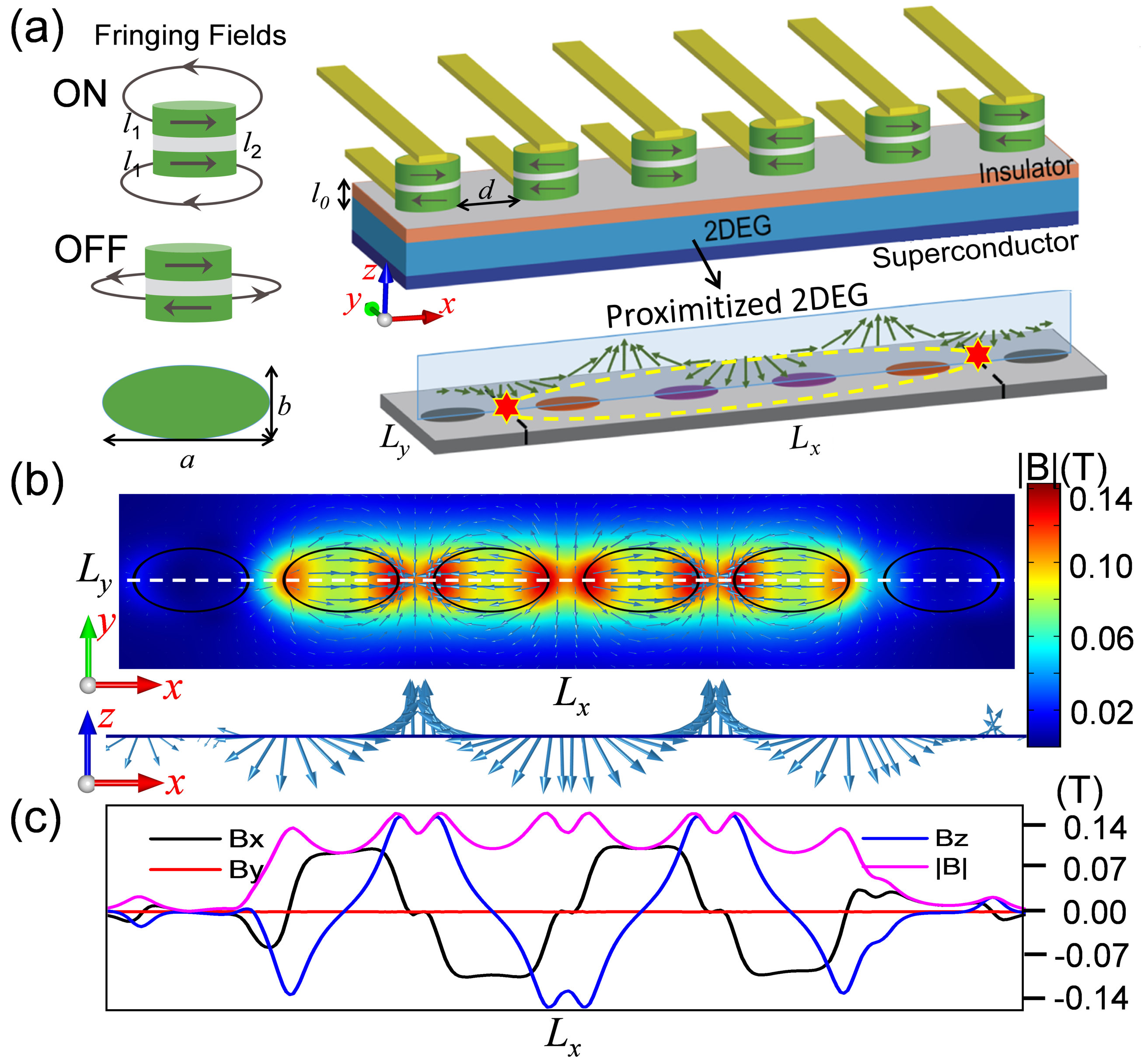 Figure 1
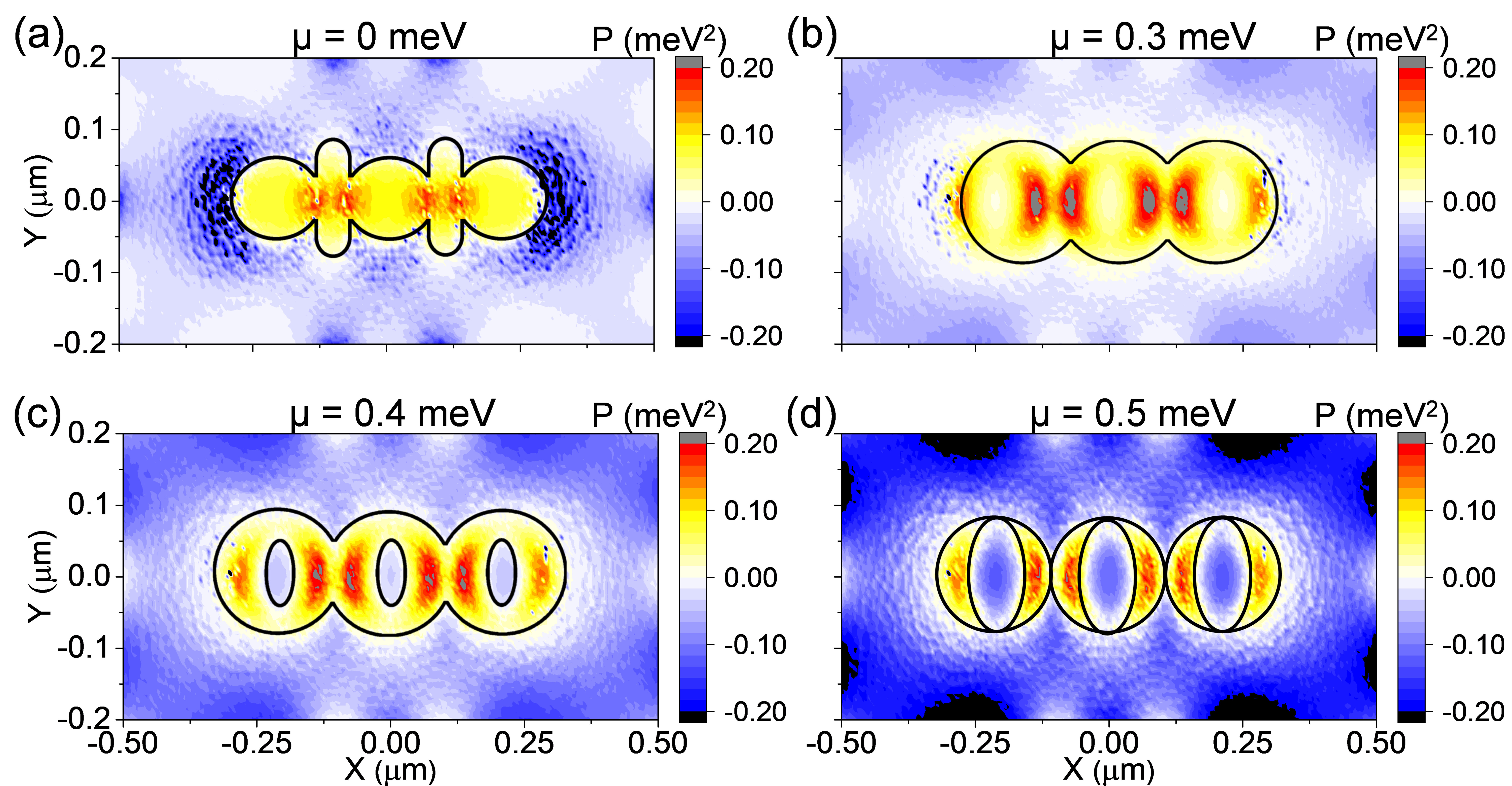 Figure 2
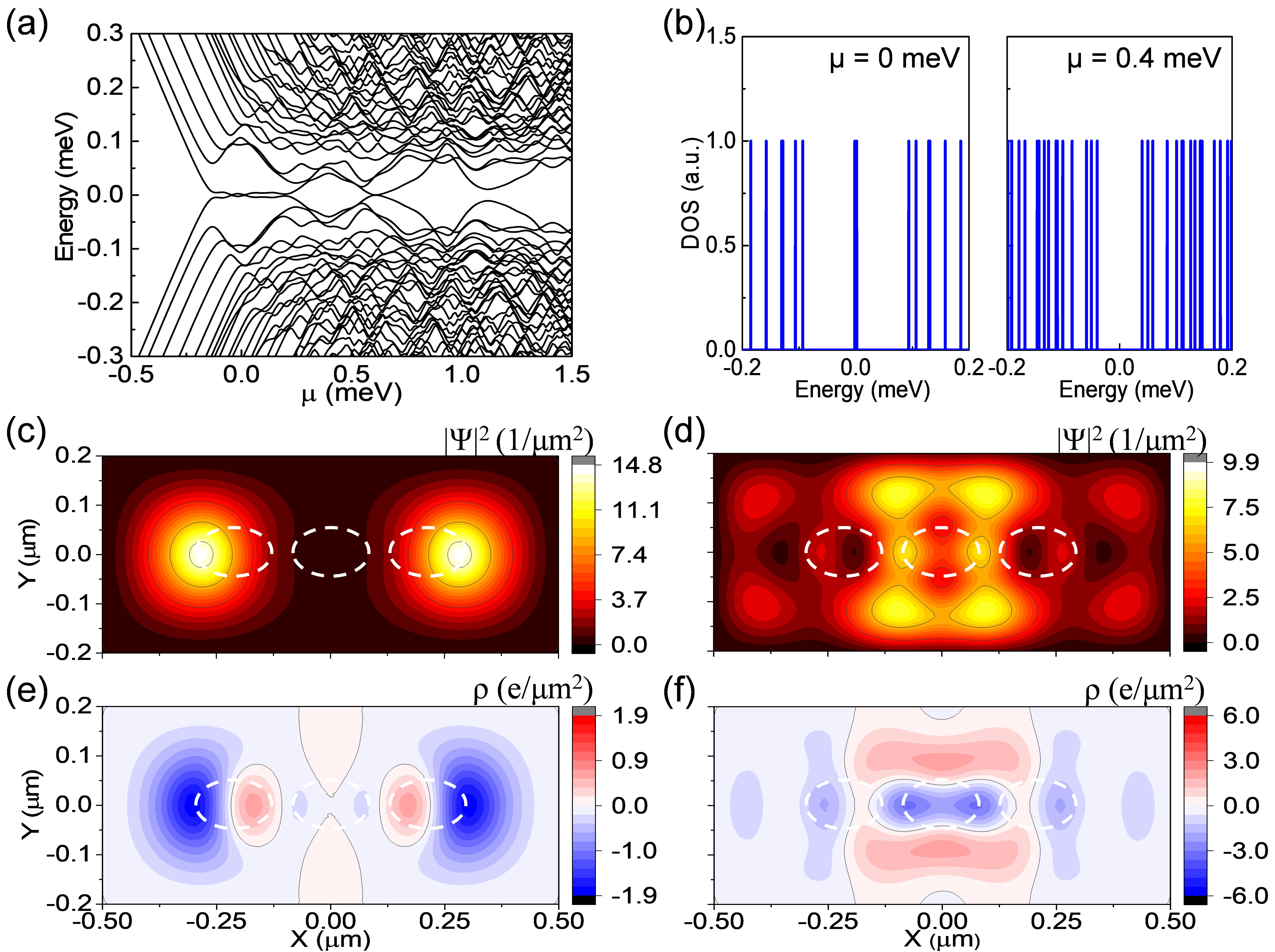 Figure 3
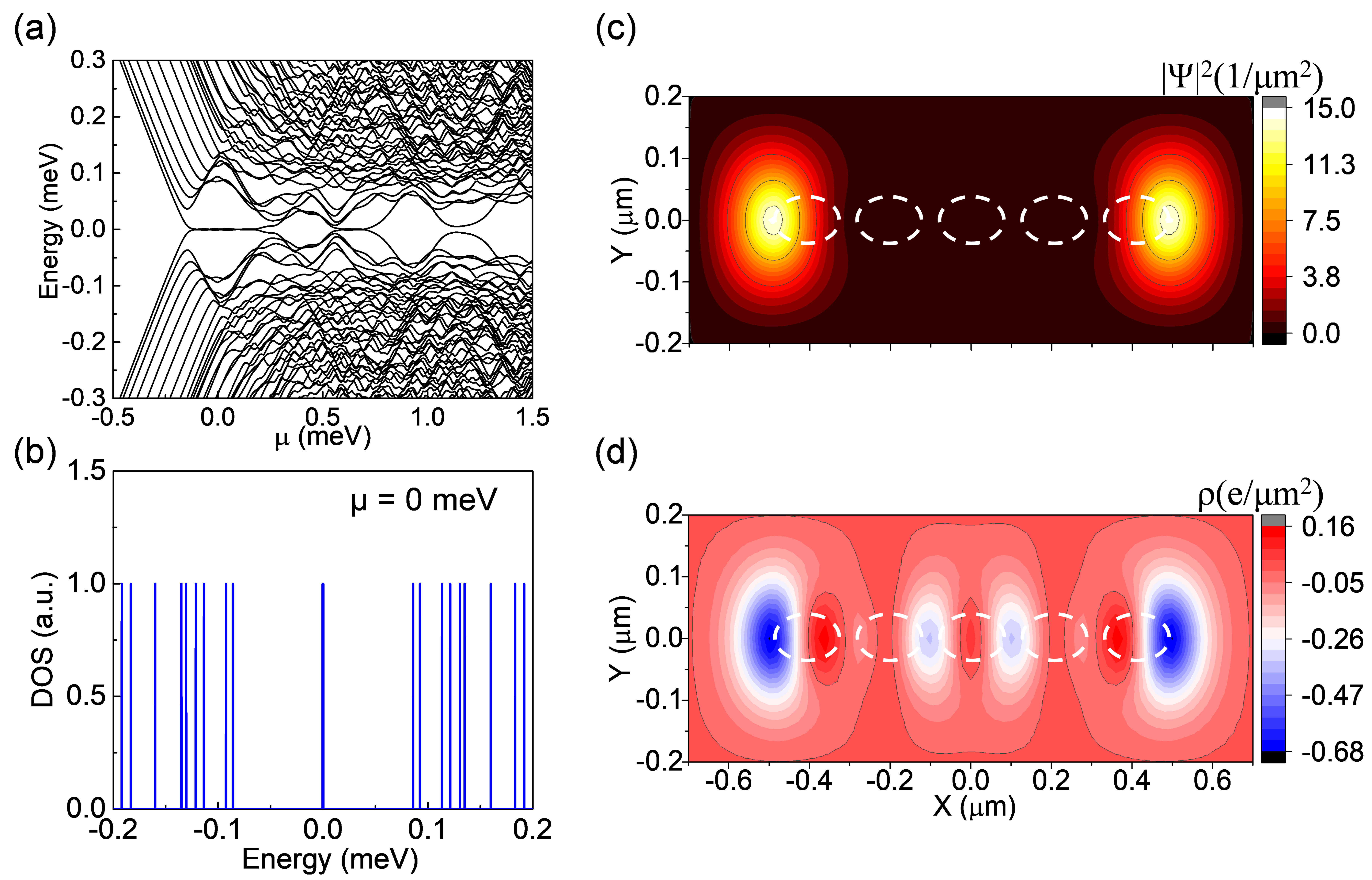 Figure 4
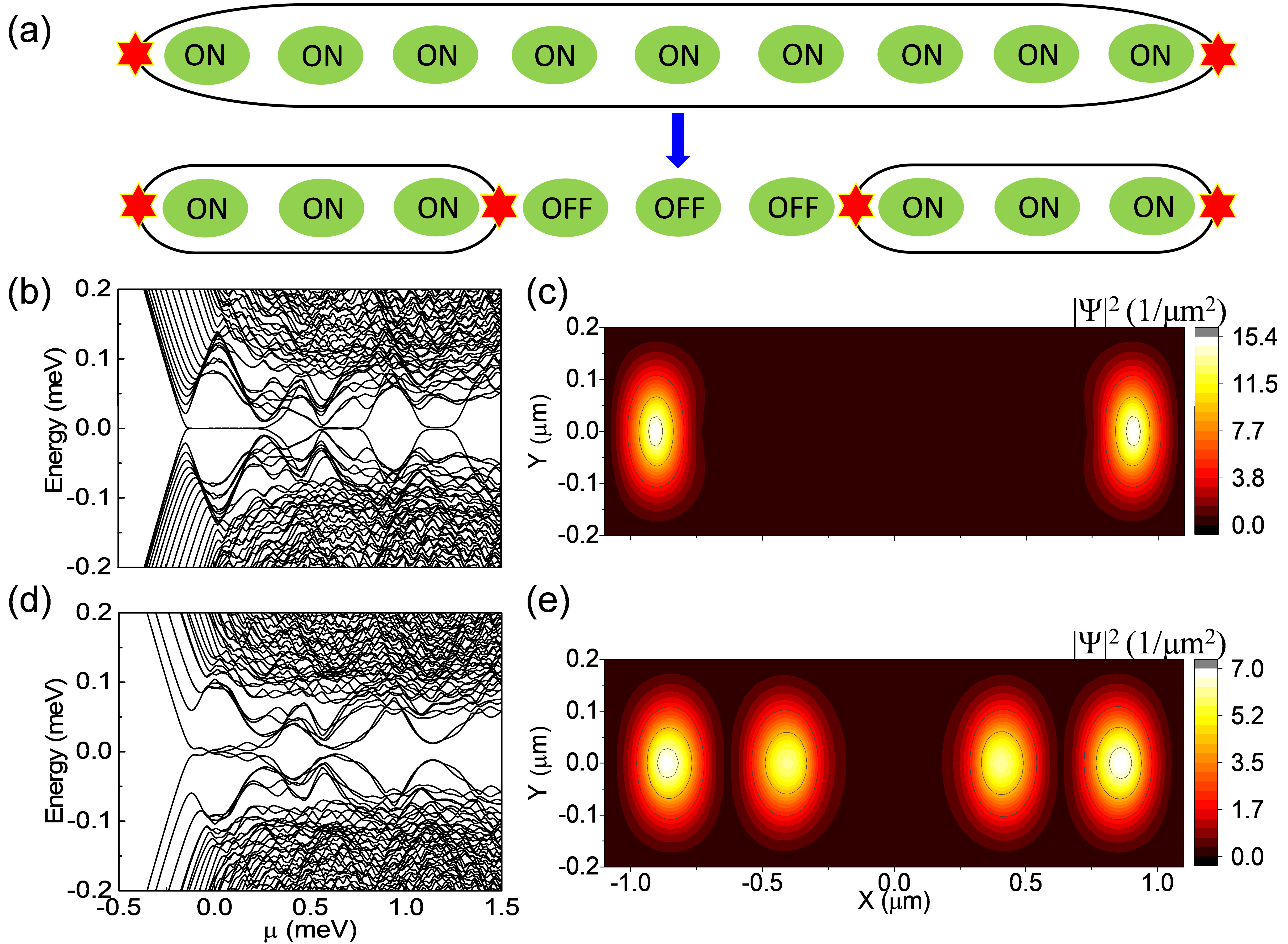 Figure 5
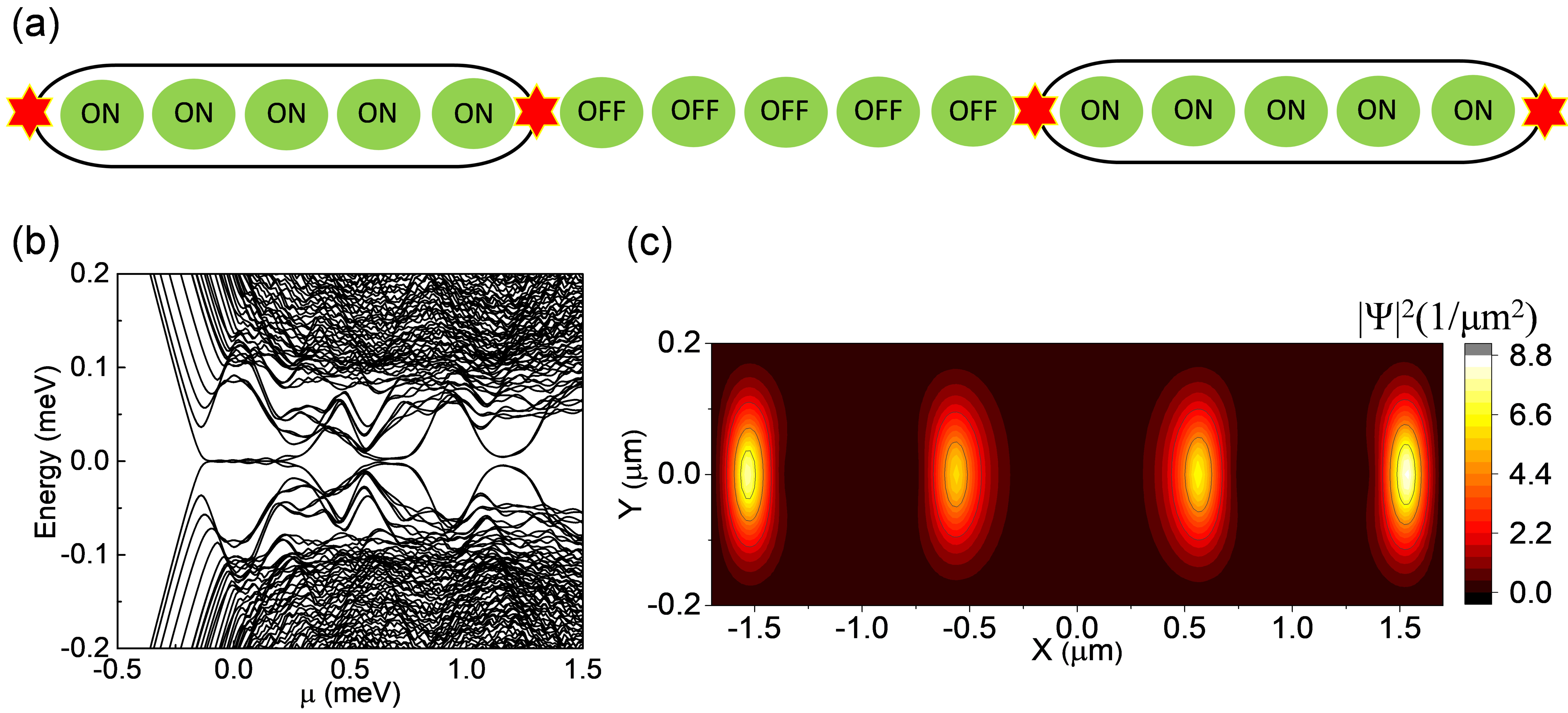 Figure 6
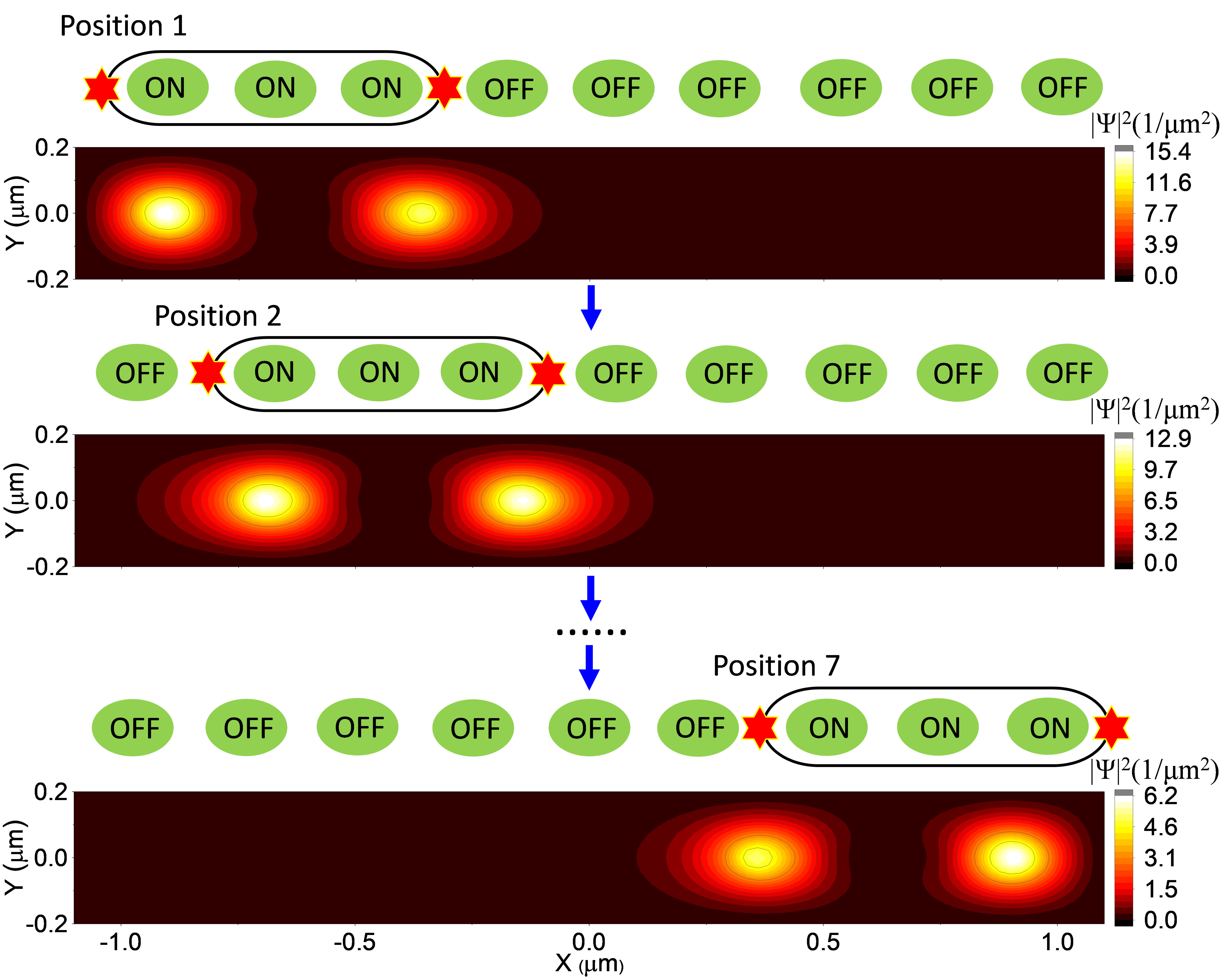 Figure 7
Peer Reviews
No public reviews on file for this paper yet. If you reviewed it on a platform where reviews are public (OpenReview, ICLR, NeurIPS, ICML), you can paste yours below so the community can read it here.
Videos
No videos yet. Explain this paper in a talk, walkthrough, or lecture? Add one.
Tunable magnetic textures in spin valves: From spintronics to Majorana bound states
Tong Zhou1
Narayan Mohanta2
Jong E. Han1
Alex Matos-Abiague2
Igor Žutić1
1Department of Physics, University at Buffalo, State University of New York, Buffalo, New York 14260, USA
2Department of Physics and Astronomy, Wayne State University, Detroit, MI 48201, USA
Abstract
Spin-valve structures in which a change of magnetic configuration is responsible for magnetoresistance led to impressive advances in spintronics, focusing on magnetically storing and sensing information. However, this mature technology also offers versatile control of magnetic textures with usually neglected underlying fringing fields to enable entirely different applications by realizing topologically-nontrivial states. Together with proximity-induced superconductivity in a two-dimensional electron gas with a large -factor, these fringing fields realized in commercially-available spin valves provide Zeeman splitting, synthetic spin-orbit coupling, and confinement, needed for Majorana bound states (MBS). Detailed support for the existence and control of MBS is obtained by combining accurate micromagnetic simulation of fringing fields used as an input in Bogoliubov de Gennes equation to calculate low-energy spectrum, wavefunction localization, and local charge neutrality. A generalized condition for a quantum phase transition in these structures provides valuable guidance for the MBS evolution and implementing reconfigurable effective topological wires.
With non-Abelian statistics and nonlocal degrees of freedom, Majorana bound states (MBS) provide intriguing opportunities to implement topological quantum computing Kitaev (2001); Nayak et al. (2008); Aasen et al. (2016); Elliot and Franz (2015). While there are impressive experimental advances in realizing MBS Zhang et al. (2018); Albrecht et al. (2016); Deng et al. (2016); Mourik et al. (2012); Deng et al. (2012); Rokhinson et al. (2012) they rely on signatures, such as the quantized zero bias conductance peak Sengupta et al. (2001); Law et al. (2009); Liu et al. (2017), which do not verify the non-Abelian character. Some of the common obstacles in directly probing non-Abelian statistics through braiding or fusing MBS are inherent to one-dimensional (1D) geometries and thus it would be desirable to seek alternative platforms. One of them employs the interplay between the superconducting and magnetic proximity effects to generate topological states in a two-dimensional electron gas (2DEG) Fatin et al. (2016); Matos-Abiague et al. (2017). It is further stimulated by the demonstrated robust proximity-induced superconductivity in all-epitaxial 2D structures and a versatile control of spin valves Shabani et al. (2016); Mayer et al. (2018); Wickramasinghe et al. (2018); Sestoft et al. (2017); Ren et al. (2018); Fornieri et al. (2018); Kent and Worledge (2015); Nowak et al. (2016).
However, despite the decades-long use of spin valves in spintronics for magnetically storing and sensing information Žutić et al. (2004), as well as advances in superconducting spin valves Buzdin (2005); Linder and Robinson (2015); Eschrig (2015); Esc ; Ali , there are no prior studies to accurately model how the resulting magnetic textures and fringing fields in realistic structures would create and control MBS. Here we establish such micromagnetic modeling to examine not just the feasibility of MBS in proximity-modified 2DEG, but also to suggest alternative methods to realize braiding in other platforms, including those relying on MBS formed in vortices Ivanov (2001); Fu and Kane (2008). The need for such modeling is further motivated by various realizations of nanoscale magnetic textures in the MBS studies: atomic chains Nadj-Perge et al. (2014); Pawlak et al. (2016); Nakosai et al. (2013); Kim et al. (2018), nanomagnets Klinovaja et al. (2012); Kjaergaard et al. (2012); Virtanen et al. (2018), domain walls Kim et al. (2015); Marra and Cuoco (2017), skyrmions Yang et al. (2016); Güngördü et al. (2018), or magnetic tips Sun et al. (2016); Xu et al. (2015).
We focus on an array of spin valves in a magnetic nanopillar (MNP) geometry with the underlying magnetic textures controlled by spin-transfer torque (STT), also implemented in commercial magnetic random access memories Kent and Worledge (2015); Tsymbal and Žutić (2012). By passing a current through each MNP, as shown in Fig. 1(a), the relative orientation of the two magnetic regions can be changed from parallel (ON) to antiparallel (OFF) and thus controlling the resulting fringing fields. While the resulting fringing fields, inherent to magnetic arrays, are often ignored, they play a crucial role in forming effective topological wires in the neighboring 2DEG (dashed lines) with MBS at their ends. In addition to generating Zeeman splitting and particle confinement, overcoming the need for a complex network of physical wires, these fringing fields result in synthetic spin-orbit coupling (SOC) in the 2DEG Fatin et al. (2016); Matos-Abiague et al. (2017). Within this scheme, the MBS manipulation relies on STT-controlled magnetic textures, without the need for additional contacts and their corresponding risk of quasiparticle poisoning Aasen et al. (2016).
We consider CoFe, commonly used in STT and magnetic tunnel junctions Tsymbal and Žutić (2012), as the magnetic layers in MNPs, with a large saturation magnetization, A/m, to support strong and controllable magnetic textures. CoFe layers, shaped as nm nm nm elliptical cylinders, are separated by a nm-thick nonmagnetic layer, while each MNPs in an array are spaced nm apart. The resulting fringing fields in a 2DEG, at nm below MNPs, are simulated using the finite-element method in COMSOL COM , and given in Fig. 1(b). Remarkably, these fringing fields obtained from common ferromagnets have a helical-like structure [Fig. 1(b), lower panel] similar to that expected to support MBS in 1D systems Lutchyn et al. (2010); Oreg et al. (2010), even in the absence of a native SOC (relevant in some 2DEGs and superconductors Žutić et al. (2004); Schnyder et al. (2013)). The detailed spatial dependence of the fringing fields is shown in Fig. 1(c). Unlike common superconducting spin valves Buzdin (2005); Linder and Robinson (2015); Eschrig (2015); Esc ; Ali , our MNPs contain no superconducting element. MNPs are located on the top of the structure, separated by -thick (25 nm) insulator from the proximitized 2DEG. Therefore, except from the fringing fields, our MNP spin valves do not influence the 2DEG, nor the superconductor below.
Proximity-induced superconductivity in the 2DEG, which is modified by magnetic textures of an MNP array, is described by the Bogoliubov-de Gennes (BdG) Hamiltonian,
[TABLE]
where () are the Nambu (Pauli) matrices in particle-hole (spin) space, and and are, the momentum and effective mass of the carriers, respectively. The chemical potential, che , and the proximity induced superconducting gap, , are assumed to be constant. The last term corresponds to the Zeeman interaction = /2, where is the effective -factor, the Bohr magneton, and denotes the inhomogeneous magnetic fields generated by the MNP array, obtained from micromagnetic modeling of fringing fields. To realize MBS with effective spinless pairing, in proximity-induced superconductivity from an -wave superconductor SOC, is required. By performing local spin rotations aligning the spin quantization axis to the local direction, Zeeman interaction from Eq. (1) is diagonalized and accompanied by a non-Abelian field that yields synthetic SOC Korenman et al. (1977); Tatara and Fukuyama (1997); Braunecker et al. (2010); Pientka et al. (2013); Klinovaja et al. (2013).
Tunable magnetic textures in Eq. (1) generalize the common MBS implementation in 1D semiconductor nanowires with a homogeneous -field and the resulting condition for a topological phase transition, Lutchyn et al. (2010); Oreg et al. (2010). In our case, the formation of topological regions is approximately determined by Fatin et al. (2016); Matos-Abiague et al. (2017),
[TABLE]
where represents an effective shift in the chemical potential due to local changes of the magnetic texture. For a homogeneous -field, 0, this generalized topological condition reduces to the previous one determining the topological transition in quantum wires and rings Lutchyn et al. (2010); Oreg et al. (2010); Scharf and Žutić (2015); Alicea (2012). If we rewrite Eq. (2) as , the set of positions P=0, where the topological condition is fulfilled, forms a contour that separates topological (P ) and trivial (P ) domains, as shown in Fig. 2 and discussed below. According to the bulk-boundary correspondence, localized states emerge at the border between the topological and trivial domains. Depending on the specific geometry of the closed contour, the edge states can eventually collapse into MBS localized at the ends of the topological contour when it approaches the quasi 1D limit.
For the MBS formation and manipulation, our MNP/2DEG/ superconductor platform must be carefully designed. A suitable choice is given by InAs/Al-based 2DEG/superconductor systems. Recent experiments show a robust proximity-induced 2D superconductivity in InAs that forms transparent contacts with Al and yields a very large critical current in Josephson junctions Shabani et al. (2016); Mayer et al. (2018). With all-epitaxial growth, proximity-induced superconducting gap, , attains nearly the bulk value of Al ( meV) Mayer et al. (2018). To strengthen the influence of tunable magnetic textures on 2DEG superconductivity and allow for a larger MNP-2DEG separation (, see Fig. 1), -factor in InAs can be enhanced by doping (as well as due to the orbital effects Winkler et al. (2017). In -doped (In,Mn)As, was realized Žutić et al. (2004); Zudov et al. (2002), while InAs1-xSbx family, with interesting topological properties Winkler et al. (2017), attains for Svensson et al. (2012). To describe our 2DEG, in BdG Hamiltonian we choose = 120, = 0.026 ( is the bare electron mass), and meV. Even a much larger was demonstrated in (Cd,Mn)Te 2DEG, supporting a strong influence of the fringing fields Betthausen et al. (2012), but transparent superconducting junctions and robust proximity-induced superconductivity have not yet been demonstrated, thus making the InAs-based 2DEG systems more promising for MBS.
To obtain MBS in the MNP/2DEG/Al platform, the structure parameters (, , , , , ) of the MNP array need to be tuned to generate the appropriate magnetic texture and drive the system into the topological regime. Given a large parameter space, this is a difficult task from the rigorous analysis in which the micromagnetic modeling of the fringing fields is used as an input for of Eq. (1). However, this procedure is considerably simplified without solving the BdG equation and instead examining the generalized topological condition in Eq. (2). Furthermore, we can reduce the system size to first optimize these structure parameters based on 3 ON-MNPs.
After some tests, we find that fringing fields with = 160 nm, = 120 nm, = 50 nm, = 25 nm, = 6 nm, and = 2 nm can induce effective topological wires for a large range of . Figure 2 shows the resulting evolution of the topological contours with a chemical potential. The black P=0 contours indicate the boundary between the trivial (outside) and nontrivial (inside) regions, giving the effective wires. With from 0.0 meV to 0.3 meV, there is a single continuous effective wire where at its two ends MBS are expected to emerge. When is increased to 0.4 meV, small topologically trivial regions appear inside the outer contour, whose geometry then becomes unfavorable for the formation of MBS. When is up to 0.5 meV, there are no long continuous topological contours, indicating the absence of MBS.
Recognizing that topological contours can provide a computationally-efficient guidance for MBS, but do not necessarily give the exact parameters for their existence, we turn to the solution of the BdG equations for the MNP/2DEG/Al system. The complexity of the simulated magnetic texture only permits a numerical determination of MBS existence. We solve an eigenvalue problem for the BdG Hamiltonian from Eq. (1) using a fourth order finite-difference method Fatin et al. (2016). The resulting low-energy spectrum corresponding to for the 3-ON MNP/2DEG/Al system is shown in Fig. 3(a), where indicates the bottom of the conduction band of the 2DEG by itself (without any proximity effects).
Nearly zero energy states (ZES) are not necessarily MBS. For example, Andreev bounds states can also occur at zero energy Liu et al. (2017); Eschrig (2015); Esc ; Ali ; Crepin et al. (2014); Kashiwaya and Tanaka (2000); Hu (1994); Chen et al. (2001); Žutić and Valls (2000); Alidoust et al. (2015). Here ZES denote any states with (nearly) zero energy, being MBS or not and are related to the well-known zero bias conductance peak Sengupta et al. (2001); Law et al. (2009). ZES emerge in the superconducting gap for within the interval from to meV. This is in good agreement with the range of chemical potentials in which the shape and dimensions of the topologically nontrivial zones surrounded by the computed topological contours favor the formation of MBS. According to Eq. (2) [see also Fig. 2], such a region extends up to meV, a value slightly higher than the value meV observed in the spectrum. This corroborates the usefulness of Eq. (2) for determining the region of system parameters supporting the formation of MBS.
A closer look at the low-energy BdG spectrum in Fig. 3(a) reveals oscillations in the splitting of the approximate ZES as a function . A similar behavior is well-known for MBS in semiconductor nanowires Lim et al. (2012); Prada et al. (2012); Das Sarma et al. (2012); Rainis et al. (2013). For a finite wire, the wavefunctions of the two MBS localized near its ends overlap and hybridize leading to the finite energy that decays exponentially with the increasing length of the nanowire and oscillates with the changes in chemical potential. This is further shown in Supplemental Material (see Ref. SM (1)).
In addition to ZES, the existence of MBS can also be supported by the spatially localized probability density, = + , and a neutral charge density, = - , where and are particle and hole components of its wavefunction, respectively Scharf and Žutić (2015); Alicea (2012); Ben-Shach et al. (2015). For comparison, we calculate and of both topological ( = 0) and trivial states ( = 0.4 meV). While ZES are clearly present for = 0, no such states exist in the gap at = 0.4 meV in Fig. 3(b). Among the lowest energy states in Figs. 3(c) and (d), there is also an obvious difference between their spatial distribution in the topological regime (), where the is localized at the two ends of the effective wires, and in the trivial regime ( meV), where the is effectively spread over the whole system. The MBS charge density (at = 0) in Fig. 3(e) is much smaller over the entire structure than for the trivial states ( = 0.4 meV) in Fig. 3(f).
In our case, the length of the effective wire for 3 MNPs is about 540 nm, which is too short to separate well the two MBS. However, as in the semiconductor nanowires, we show in Ref. SM (1)) that the oscillations of the ZES splitting are strongly suppressed in longer effective topological wires with the increased number (5, 6, 7, 9) of MNPs. As expected, with the increase in the system size, the MBS become more localized at the two ends of the effective wire Alicea (2012). This can already bee seen in Fig. 4 for 5-ON MNPs, showing also that in the topological regime the MBS charge density is reduced as the system size is increased, approaching the limit, as expected for MBS in an infinitely long wire. Based on the above results for the ZES, localized probability density, and charge neutrality, there is comprehensive support for the MBS formation in MNP/2DEG/Al systems.
Through magnetic textures and the emergent synthetic SOC all the ingredients required for MBS are realized. However, native SOC is also inherent to InAs-based 2DEG and may influence the MBS formation. To assess such SOC effect, we consider a typical value for the Dresselhaus SOC Žutić et al. (2004); Fabian et al. (2007) with strength of meVÅ Fatin et al. (2016), but the MBS formation remains largely unchanged, as shown in Ref. SM (1).
Another interesting phenomenon in MNP/2DEG/Al systems is the reentrant topological regime with an increase in . In Fig. 3(a) this appears near meV. The calculated probability and the charge densities confirm that ZES at meV are indeed MBS SM (1). The origin of these MBS is related to the presence of multiple subbands and, therefore, cannot be explained by the approximate topological condition in Eq. (2), derived within the single-subband approximation.
To examine this presence of the reentrant topological regime, we consider longer effective wires than from previous 3-ON MNP arrays. This can be clearly seen in Figs. 5(a)-(c) for 9-ON MNPs and m long effective wires. With a smaller overlap of the two MBS, the ZES range is enhanced and now even shows the third reentrant regime for meV, while the oscillations in the ZES splitting are visibly reduced.
However, the tunability of magnetic textures to reconfigure these longer effective wires provides more than just an opportunity for improved MBS signatures. Instead, as schematically shown in Fig. 5(a), these wires could be used to test the non-Abelian statistics through fusion rules of MBS Aasen et al. (2016). By STT switching the middle 3 MNPs from ON to OFF states, the effective wire breaks into two shorter and disjoint ones, as indicated by the effective topological contours. With this transformation, two energy states exist in the band gap [Fig. 5(d)], and one MBS pair emerges at the ends of each effective wire, a signature as shown in Fig. 5(e). Because these two effective wires are short and close together, the overlap between MBSs is large, resulting in visible oscillations in ZES splitting in Fig. 5(d).
For even longer wires with 15 MNPs we expect improved MBS signatures. Indeed, our results from Fig. 6 confirm that these oscillations are strongly suppressed and the MBS pairs at the end of the two longer effective wires are better localized. With the reversible control of MNP arrays, another STT switching of the middle 3 MNPs from OFF to ON states in the 9-MNP configuration from Fig. 5 returns to the lower scheme in Fig. 5(a) to its initial configuration, causing the fusion of the additional MBS pair while recovering the initial 9-ON MNP effective wire with two end MBS. For wires with 15 MNPs from Fig. 6, an analogous fusion of the MBS pair would require switching the middle 5 MNPs from OFF to ON states.
By MNP switching one can move and manipulate both the position and overlap of the different MBS and, therefore, enable the implementation of fusion and, eventually, braiding. While the full potential of this approach benefits from the scalability of the 2D MNP arrays, a transfer of MBS across an effective topological wire can be already realized in a simple 1D array as illustrated in Fig. 7, suggesting the feasibility of future generalization for braiding and fusion of MBS as a test of their non-Abelian statistics.
Our proposal for realizing reconfigurable topological wires closely relies on the recent advances in spintronics to control magnetic textures. Since 2D arrays of similar MNPs, individually addressed by STT to change between their ON and OFF states are already commercially available Tsymbal and Žutić (2012), it is also possible to envision how our platform would enable MBS braiding Fatin et al. (2016); Matos-Abiague et al. (2017) compatible with available materials and device processing. Our framework, which combines accurate modeling of the magnetic textures as an input for the solution of the BdG equations, is also flexible enough to investigate other MBS platforms with magnetic elements or even consider manipulating MBS confined in vortices. Rather than using STT, it may also be possible to control magnetic proximity effects in arrays of magnets by gating Lazić et al. (2016); Žutić et al. (2019).
With the experimental progress aimed at confirming our predictions, an important question to address pertains to various forms of the disorder and their effect on the robustness of the MBS formation and control. Some general intuition and encouraging trends are already available by contrasting the role of disorder in the topological regime with the better studied trivial regime, since the disorder may even promote the MBS formation Adagideli et al. (2014); Habibi et al. (2018). Our preliminary studies corroborate that by showing that the disorder in the orientation of the magnetization in the two regions of a spin valve Fatin et al. (2016), or in the size of MNPs has only a relatively weak effect on MBS. Considering superconducting systems and proximitized 2DEGs or topological insulators Schüffelgen et al. (2017), where the fringing fields can play an important role, provides an interesting opportunity to revisit the self-consistent description Valls et al. (2010); Halterman and Alidoust (2018); Zyuzin et al. (2016); Banerjee et al. (2018) and include changes to the Meissner regime due to finite and nonuniform magnetic regions Žutić and Valls (1997); Halterman et al. (2001). While our focus was on systems with large effective -factors, this is not the fundamental limitation. With a different design of magnetic arrays and their closer distance to the region with a proximity-induced superconductivity the resulting fringing fields can exceed 1 tesla and also support MBS manipulation in materials with much smaller -factors.
We thank J. Shabani and A. K. Kent for valuable discussion about their related experimental efforts. We also thank W. C. Yu for his valuable discussion about the micromagnetic simulations. This work is supported by DARPA Grant No. DP18AP900007 (T. Z., N. M., J. E. H., A. M.-A., and I. Ž.), US ONR Grant No. N000141712793 (A. M.-A and I. Ž.), and the UB Center for Computational Research. I. Ž. acknowledges the hospitality of the Institute for Theoretical Physics, University of Regensburg.
The reference list from the paper itself. Each links out to its DOI / PubMed record.
- 1Kitaev (2001) A. Yu Kitaev, “Unpaired Majorana fermions in quantum wires,” Phys.-Usp. 44 , 131 (2001).
- 2Nayak et al. (2008) C. Nayak, S. H. Simon, A. Stern, M. Freedman, and S. Das Sarma, “Non-Abelian anyons and topological quantum computation,” Rev. Mod. Phys. 80 , 1083 (2008) . · doi ↗
- 3Aasen et al. (2016) D. Aasen, M. Hell, R. V. Mishmash, A. Higginbotham, J. Danon, M. Leijnse, T. S. Jespersen, J. A. Folk, C. M. Marcus, K. Flensberg, and J. Alicea, “Milestones toward Majorana-based quantum computing,” Phys. Rev. X 6 , 031016 (2016) . · doi ↗
- 4Elliot and Franz (2015) S. R. Elliot and M. Franz, “Majorana fermions in nuclear, particle, and solid-state physics,” Rev. Mod. Phys. 87 , 137 (2015) . · doi ↗
- 5Zhang et al. (2018) H. Zhang, C.-X. Liu, S. Gazibegovic, Di Xu, J. A. Logan, G. Wang, N. van Loo, J. D. S. Bommer, M. W. A. de Moor, D. Car, R. L. M. Op het Veld, P. J. van Veldhoven, S. Koelling, M. A. Verheijen, M. Pendharkar, D. J. Pennachio, B. Shojaei, J. S. Lee, C. J. Palmstrøm, E. P. A. M. Bakkers, S. Das Sarma, and L. P. Kouwenhoven, “Quantized Majorana conductance,” Nature 556 , 74 (2018).
- 6Albrecht et al. (2016) S. M. Albrecht, A. P. Higginbotham, M. Madsen, F. Kuemmeth, T. S. Jespersen, J. Nygard, P. Krogstrup, and C. M. Marcus, “Exponential protection of zero modes in Majorana islands,” Nature 531 , 206 (2016).
- 7Deng et al. (2016) M. T. Deng, S. Vaitiekenas, E. B. Hansen, J. Danon, M. Leijnse, K. Flensberg, J. Nygård, P. Krogstrup, and C. M. Marcus, “Majorana bound state in a coupled quantum-dot hybrid-nanowire system,” Science 354 , 1557 (2016) . · doi ↗
- 8Mourik et al. (2012) V. Mourik, K. Zuo, S. M. Frolov, S. R. Plissard, E. P. A. M. Bakkers, and L. P. Kouwenhoven, “Signatures of Majorana fermions in hybrid superconductor-semiconductor nanowire devices,” Science 336 , 1003 (2012).