Quantum enhanced estimation of diffusion
Dominic Branford, Christos N. Gagatsos, Jai Grover, Alexander J., Hickey, Animesh Datta

TL;DR
This paper demonstrates that quantum squeezing significantly enhances the precision of estimating momentum diffusion in macroscopic quantum systems, with implications for testing collapse theories and improving optomechanical sensing.
Contribution
It shows that quantum squeezing improves diffusion measurement accuracy, reducing experimental times and enabling tests of collapse models.
Findings
10dB of squeezing reduces required free-fall time by a factor of ten
Momentum measurement outperforms other quadratures by a factor of three
Implications for ruling out certain spontaneous collapse theories and enhancing sensing
Abstract
Momentum diffusion is a possible mechanism for driving macroscopic quantum systems towards classical behaviour. Experimental tests of this hypothesis rely on a precise estimation of the strength of this diffusion. We show that quantum-mechanical squeezing offers significant improvements, including when measuring position. For instance, with 10dB of mechanical squeezing, experiments would require a tenth of proposed free-fall times. Momentum measurement is better by an additional factor of three, while another quadrature is close to optimal. These have particular implications for the space-based MAQRO proposal -- where it could rule out the spontaneous collapse theory due to Ghirardi, Rimini, and Weber -- as well as terrestrial optomechanical sensing.
Click any figure to enlarge with its caption.
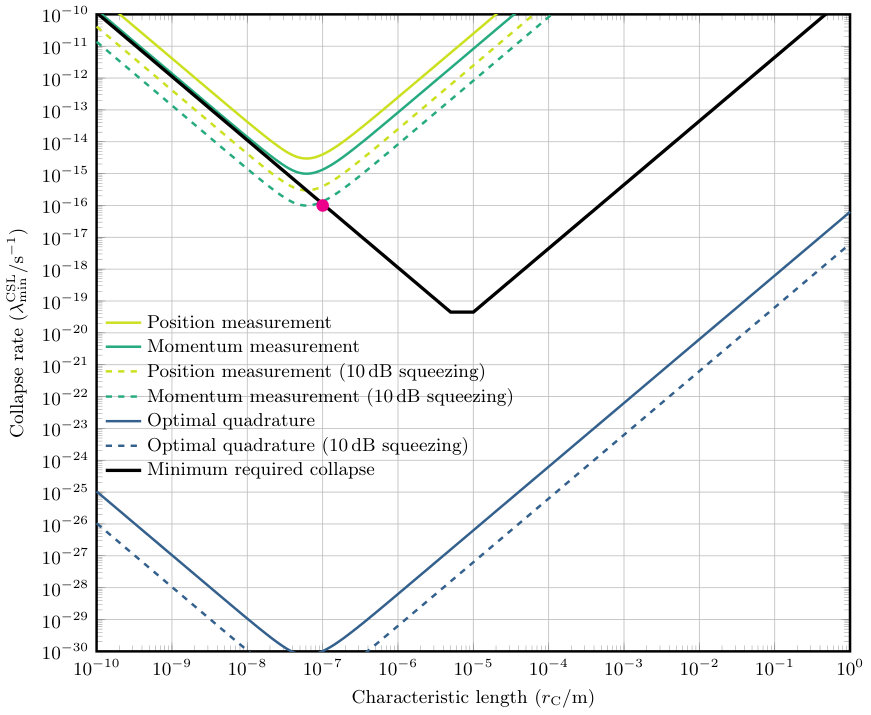 Figure 1
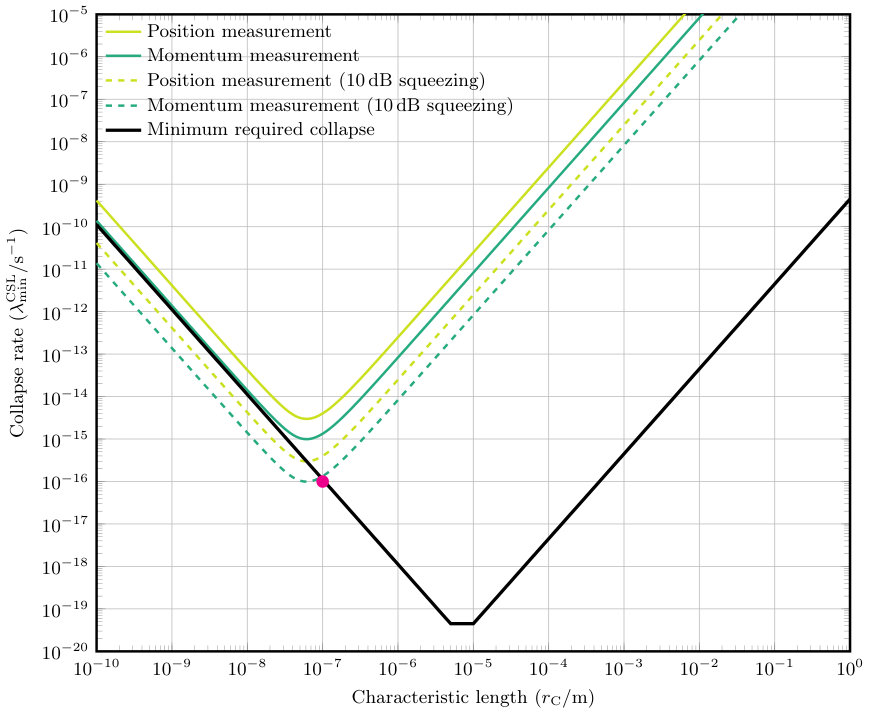 Figure 2
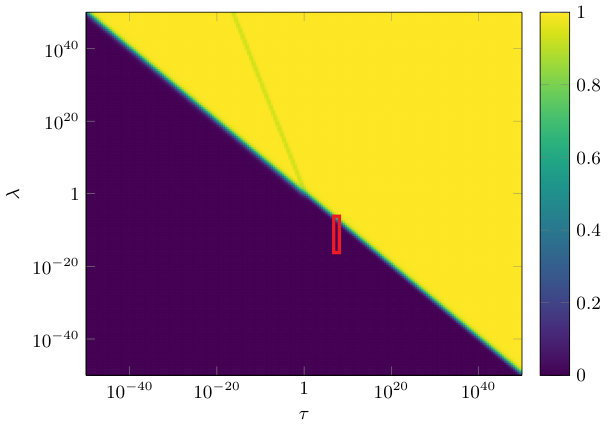 Figure 3
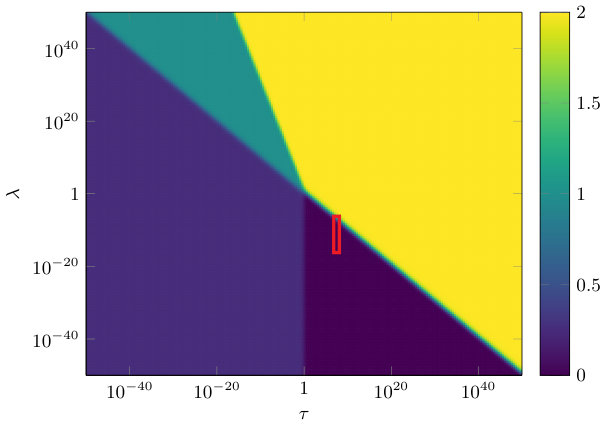 Figure 4
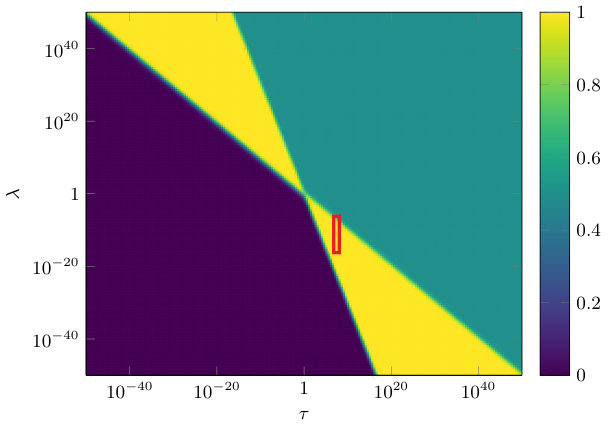 Figure 5
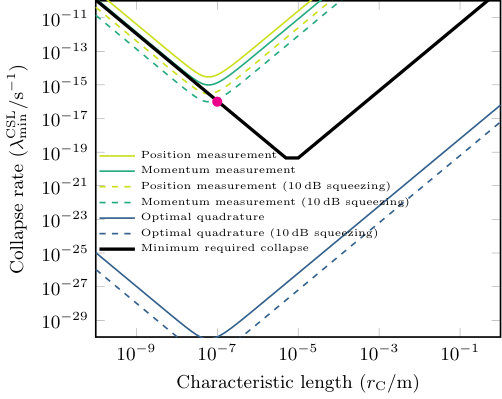 Figure 6
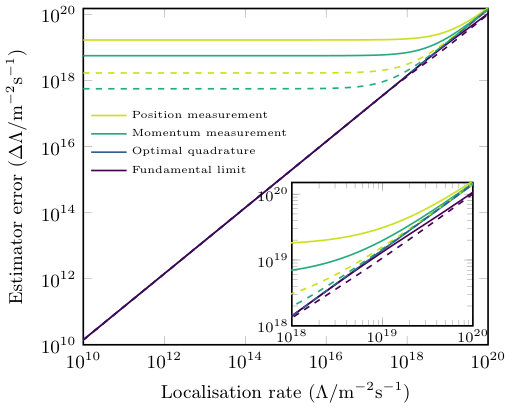 Figure 7
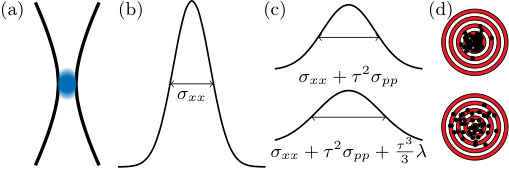 Figure 8
| Localisation rate | |
|---|---|
| Free-fall time | |
| Mechanical frequency | |
| Mass | |
| Thermal occupation number | |
| Thermal variance () | |
| Limiting localisation111Using () | |
| Experiment timescale () |
Peer Reviews
No public reviews on file for this paper yet. If you reviewed it on a platform where reviews are public (OpenReview, ICLR, NeurIPS, ICML), you can paste yours below so the community can read it here.
Videos
No videos yet. Explain this paper in a talk, walkthrough, or lecture? Add one.
\DeclareAcronym
CFI short = CFI, long = classical Fisher information,
\DeclareAcronymQFI short = QFI, long = quantum Fisher information,
\DeclareAcronymCRB short = CRB, long = Cramér-Rao bound,
\DeclareAcronymQCRB short = QCRB, long = quantum Cramér-Rao bound,
\DeclareAcronymCSL short = CSL, long = continuous spontaneous localisation,
\DeclareAcronymPOVM short = POVM, long = positive-operator valued measure,
\DeclareAcronymSLD short = SLD, long = symmetric logarithmic derivative,
\NewDocumentCommand\Tracem Tr ( #1 )
Quantum enhanced estimation of diffusion
Dominic Branford
Department of Physics, University of Warwick, Coventry, CV4 7AL, United Kingdom
Christos N. Gagatsos
College of Optical Sciences, University of Arizona, 1630 E. University Blvd., Tucson, Arizona 85719, United States of America
Department of Physics, University of Warwick, Coventry, CV4 7AL, United Kingdom
Jai Grover
Alexander J. Hickey
ESA—Advanced Concepts Team, European Space Research Technology Centre (ESTEC), Keplerlaan 1, Postbus 299, NL-2200AG Noordwijk, The Netherlands
Animesh Datta
Department of Physics, University of Warwick, Coventry, CV4 7AL, United Kingdom
(2 September 2019)
Abstract
Momentum diffusion is a possible mechanism for driving macroscopic quantum systems towards classical behaviour. Experimental tests of this hypothesis rely on a precise estimation of the strength of this diffusion. We show that quantum-mechanical squeezing offers significant improvements, including when measuring position. For instance, with of mechanical squeezing, experiments would require a tenth of proposed free-fall times. Momentum measurement is better by an additional factor of three, while another quadrature is close to optimal. These have particular implications for the space-based MAQRO proposal—where it could rule out the spontaneous collapse theory due to Ghirardi, Rimini, and Weber—as well as terrestrial optomechanical sensing.
I Introduction
Finding a unified description of microscopic and macroscopic systems remains an enduring quest of fundamental physics. One class of proposed solutions are collapse models Bassi and Ghirardi (2003); Bassi et al. (2013a, b, 2017) which span \acCSL Pearle (1989); Ghirardi et al. (1990); Toroš et al. (2017), Karolyhazy Karolyhazy (1966), Diósi-Penrose Diósi (1987, 1989); Penrose (1996); Bahrami et al. (2014), and quantum gravity Ellis et al. (1989); as well as collisional decoherence Gallis and Fleming (1990). In the non-relativistic regime, they posit spatial decoherence due to diffusion in momentum. The outcome is a description of the evolution in terms of a phase-space density distribution obeying a Fokker-Planck diffusion equation Ghirardi et al. (1986). Experimental advances have now made the testing of this proposition a realistic prospect.
Mechanical systems have been used to bound the strength of such diffusive effects. Examples include gravitational-wave detectors Carlesso et al. (2016), the LISA pathfinder experiment Carlesso et al. (2016); Helou et al. (2017); Carlesso et al. (2018), ultracold cantilevers Vinante et al. (2017), and trapped ions Li et al. (2017). Proposals for future experiments which could probe collapse models and further study macroscopic quantum states include the generation of macroscopic superpositions Romero-Isart et al. (2011); Romero-Isart (2011); Scala et al. (2013); Wan et al. (2016); Bose et al. (2017); Weaver et al. (2018) and the space-based MAQRO mission Kaltenbaek et al. (2012, 2016) which formed a key focus of a recent ESA feasibility study European Space Agency (2018).
One simple experiment—which forms a part of the MAQRO mission Kaltenbaek et al. (2012, 2016)—to test collapse models is to let free particles evolve and measure the expanding width of the wavepacket. Once all classical noise sources have been ruled out, any excess wavepacket width must be attributed to momentum diffusion associated with collapse models. MAQRO aims to utilise ultracold nanoparticles and exploit the nano-gravity of space to observe free-fall over —enabling more precise sensing of momentum diffusion—as represented in Fig. 1.
Quantum techniques such as squeezing allow for more precise estimation Tóth and Apellaniz (2014); Demkowicz-Dobrzański et al. (2015). Optical squeezing has been identified as valuable to fundamental physics, with squeezing-enhanced interferometry Caves (1981) set to enhance laser-interferometric gravitational-wave detectors The LIGO Scientific Collaboration (2011); Grote et al. (2013); The LIGO Scientific Collaboration (2013) and squeezing of optical vacuum reported Vahlbruch et al. (2016). It has also found application in photonic-force microscopy Taylor et al. (2013, 2014), while microwave squeezing is being used in the search for axion dark matter Malnou et al. (2019).
In this article, we show that quantum squeezing of the mechanical degree of freedom enables a more precise estimation of the strength of momentum diffusion. This enhancement is attainable with the currently proposed scheme of measuring the position of a particle. Quantum squeezing of mechanical degrees of freedom is beginning to be explored in thermal states Pontin et al. (2014); Rashid et al. (2016). We conclude that squeezing can be used to achieve the same precision with reduced free-fall time or centre of mass cooling. This reduction could be ten-fold for a squeezing of . Thus, squeezing can compensate for reduced free-fall times, identified as one of the challenges for MAQRO Kaltenbaek et al. (2012, 2016) in a recent ESA CDF study European Space Agency (2018). We further show that a momentum measurement is thrice as precise as that of position, while measurement of a more general quadrature is close to optimal. We briefly discuss the potential of the heterodyne and phonon counting measurements.
While our results will be presented in the context of collapse models, observing similar momentum diffusion processes could aid detection of certain dark-matter candidates Riedel (2013, 2015); Riedel and Yavin (2017). Since excess heating of wavepackets is also a consequence of momentum diffusion Collett and Pearle (2003); Diósi (2015); Li et al. (2017), our results imply a quantum enhanced estimation of heating. Finally, the ubiquitous phenomena of Brownian motion is also caused by diffusion. Our results can thus be applied in this very general scenario, as well as in particle tracking used to study biological systems Ghislain and Webb (1993); Pralle et al. (1998).
Before presenting our results, we note some recent works that have theoretically considered continuously monitoring a thermal state Genoni et al. (2016) or squeezing a specific optomechanical coupling McMillen et al. (2017), with the latter providing no attainable advantage from squeezing when measuring the optical subsystem. Previous works in quantum metrology have analysed quantum-limited estimation of related noise parameters including loss Monras and Paris (2007); Adesso et al. (2009), diffusion in phase shifts Knysh and Durkin (2013); Vidrighin et al. (2014) and displacements Tsang (2019), and classical stochastic processes Ng et al. (2016).
II Background
A particle of mass in a harmonic potential has Hamiltonian Dimensionless position and momentum operators are and whose commutators are given by the matrix where
[TABLE]
Quantum states of such a particle have a phase-space representation in terms of the Wigner function of an operator defined as (Ferraro et al., 2005, Chap. 1)
[TABLE]
where and . Gaussian states are those whose Wigner function is Gaussian and so determined by the averages—displacement vector —and covariances—covariance matrix —of the position and momentum operators. Examples include thermal, coherent, and squeezed states. A thermal state has covariance matrix , with corresponding to the ground state.
We focus on the simplest setup to study momentum diffusion, that of a free particle as in Fig. 1. Initially the particle is trapped in a harmonic potential with frequency and cooled. Cooling of nano-particles has been reported to the order of phonons Windey et al. (2019); Delić et al. (2019) with theory anticipating cooling much closer to the ground state Romero-Isart et al. (2012); Gonzalez-Ballestero et al. (2019). After cooling the trapping potential is turned off. The particle then evolves freely under the Hamiltonian with Lindblad term , whose strength is our parameter of interest. The master equation for momentum diffusion for this system—in terms of the dimensionless position and momentum operators—is
[TABLE]
where and are dimensionless parameters, and . Being quadratic the master equation Eq. (3) evolves Gaussian states to Gaussian states Carmichael (1999); Nicacio et al. (2010); Serafini (2017).
Eq. (3) can then be transformed to a Fokker-Planck equation Barnett and Radmore (2002); Nicacio et al. (2010), in this case yielding
[TABLE]
which for Gaussian can be mapped to the equations of motion of form Carmichael (1999); Serafini (2017)
[TABLE]
where and are the Gaussian’s moments. For an initial Gaussian state with moments and the evolved moments under Eq. (4) become
[TABLE]
Our results apply to estimation of diffusion in any scenario governed by Eq. (3) for all values of and . To estimate the strength of the momentum diffusion , we begin with a single-mode Gaussian state. Such a state can be described as a thermal state with a squeezing of the quadrature giving an initial covariance matrix
[TABLE]
with arbitrary displacements. The displacements do not begin with any parameter-dependence and do not gain any through the evolution given by Eq. (6) and so their derivative with respect to the parameter satisfies . We will consider tuning to maximise the precision for given thermal variance and squeezing magnitudes, with and corresponding to momentum and position squeezing respectively.
We will highlight special cases for and , which is the regime for MAQRO Kaltenbaek et al. (2012, 2016) as in Table 1; and which is around the MAQRO regime.
An estimator is required to estimate an unknown parameter from observed data. If limited to statistical noise the precision of the value produced by the estimator can be taken from the variance of that estimator. The \acCRB lower bounds the variance of an unbiased estimator as Kay (1998); Helstrom (1976); Holevo (2011); Paris (2009)
[TABLE]
where is the number of repetitions of an experiment, is an estimator of the parameter , and and are respectively the \acCFI and \acQFI. The \acCFI is a function of the probability distribution Kay (1998)
[TABLE]
where the probabilities are derived from applying the \acPOVM to the state . The \acQFI is a function of the state alone Paris (2009); Tóth and Apellaniz (2014); Demkowicz-Dobrzański et al. (2015)
[TABLE]
where is the \acSLD defined by .
These \acCFI and \acQFI provide the \acCRB and \acQCRB, the first and second inequalities of Eq. (9) respectively. The equalities in Eq. (9) are obtained by an optimal measurement, where it exists, and an efficient estimator; we identify such a measurement and the maximum likelihood estimator is asymptotically efficient Kay (1998).
For a Gaussian state (where ) the \acQFI can be evaluated explicitly as Monras (2013); Šafránek et al. (2015)
[TABLE]
where the inner product is .
III Results
Using Eqns. (7) and (8), the \acQCRB can be calculated through Eq. (12) to be
[TABLE]
where The bound in Eq. (13) behaves as to leading order in .
The \acQCRB in Eq. (13) is minimised by squeezing or anti-squeezing (squeezing the orthogonal quadrature) with squeezing angle (See App. A)
[TABLE]
which tends to [math] for , corresponding to squeezing of position or momentum. When squeezing at this angle in the regime of , with , the \acQCRB simplifies to
[TABLE]
with the squeezing not necessarily positive as anti-squeezing may be preferrable (see App. A).
Measurement of the particle’s position is a special case of homodyne detection which involves measuring a linear combination of the position and momentum quadratures Adesso et al. (2014); Serafini (2017). Heterodyne allows for the simultaneous measurement of position and momentum, but with added noise Shapiro and Wagner (1984); Leonhardt and Paul (1995). The \acQCRB can be reached through projection onto eigenstates of the \acSLD Braunstein and Caves (1994) which, for a Gaussian system, entails performing some squeezing and displacement followed by measurement of Fock states Monras and Paris (2007); Monras (2013); Serafini (2017). This additional squeezing is a resource applied to the system after the evolution as part of the measurement and does not improve the precision as an initial squeezing can. Further, in a mechanical system this involves measuring the number of phonons which remains experimentally demanding Cohen et al. (2015); Hong et al. (2017). In the following, we calculate the performance of all these measurements for estimating .
Homodyne detection at an angle measures the quadrature . When performed on a Gaussian state the homodyne statistics are Gaussian Adesso et al. (2014) and the moments are the appropriate marginal of the Wigner function. For a homodyne angle the variance of the marginal is
[TABLE]
as the Wigner function’s mean is parameter-independent so is the marginal’s. The choices and correspond to measurement of position and momentum respectively. We will consider the optimisation of , which more generally requires measuring a linear combination of the position and momentum operators.
For a Gaussian probability distribution with a parameter-independent mean, the \acCFI is (Kay, 1998, Chap. 3)
[TABLE]
where is the variance of the Gaussian distribution. Using Eqns. (15) and (16), the \acCRB for homodyne along an angle is
[TABLE]
To leading order in this is which occurs when the first term in the square dominates, whereas when that can be neglected the bound is a -independent constant. The bound on estimating the diffusion from position () measurement is
[TABLE]
which behaves as
[TABLE]
for . Instead for measuring the momentum () the bound on estimating the diffusion is
[TABLE]
which (neglecting squeezing) matches the large limit of position measurements when and is a factor of 9 better when .
The optimal input squeezing angle can in general be found by minimising the coefficient of in Eq. (17) which gives
[TABLE]
For momentum measurements () this squeezing angle is (squeezing of momentum). While for position measurements () this is tending to for , and for .
In general the squeezing angle in Eq. (21) produces a precision
[TABLE]
from which the unsqueezed case () can also be extracted, where
[TABLE]
One effect of squeezing is equivalent to an effective reduction of by , unlike reducing the centre-of-mass motion which reaches at absolute zero this squeezing allows an unlimited reduction in the second term. For (as ) the same squeezing could instead be considered as an effective increase in by a factor of to obtain the same precision from a much shorter free-fall time.
When the quadrature given by Eq. (21) is squeezed the homodyne angle which minimises the bound in Eq. (22) is
[TABLE]
which tends to for . Measuring the quadrature given by Eq. (24) with squeezing as Eq. (21) gives a precision
[TABLE]
Measuring the quadrature of Eq. (24) does not in general attain the \acQCRB. When dominates, the \acQCRB behaves as while any homodyne terms tend to . In the regime, one could improve on the precision by no more than a factor of 2 using heterodyne detection (see App. B). Fig. 6 suggests that heterodyne otherwise shows little promise.
Phonon counting—in combination with displacement and squeezing operations—can in principle attain the \acQCRB for all and as the \acSLD is a quadratic operator in the quadrature operators Monras (2013); Serafini (2017) and so has eigenstates which are squeezed-displaced Fock states. The additional squeezing required to attain the \acQCRB is derived in full generality in Appendix C. For MAQRO, this squeezing seems nugatory, with required to attain the \acQCRB for 1\text{\times}{10}^{20}\text{,}\mathrm{m}^{-2}\mathrm{s}^{-1} which would only improve precision by a factor of $\sqrt{2}$, to $158\text{\,}\mathrm{dB}$ for $\Lambda=$1\text{\times}{10}^{10}\text{\,}\mathrm{m}^{-2}\mathrm{s}^{-1}, where the improvement on position measurements would be more pronounced. In other scenarios, however, this could be worthwhile. For and the squeezing needed is only , while for and this goes to .
IV Discussion
Fig. 2 shows the potential improvement in precision for estimating diffusion via momentum or homodyne measurements, or through squeezing, for MAQRO parameters as given in Tab. 1. For reference, position measurement is the present proposal. We propose squeezing of the momentum quadrature which offers a substantial improvement across much of the pertinent range for both measurement of position and momentum, with enabling an order of magnitude higher resolution of . Measuring the quadrature described by Eq. (24) allows further improvement keeping within a factor of two of the \acQCRB across the whole regime.
Our bounds can be mapped to the wealth of diffusive processes whose parameters enter into the observed diffusion rate . In the case of (mass-proportional) \acCSL the two parameters of interest are and —the time and length scales in the model. The observed diffusion rate for a free sphere of mass and radius is—as a function of and —given by Collett and Pearle (2003); Kaltenbaek et al. (2016)
[TABLE]
where is a reference (nucleon) mass and From this bounds on as a function of can be calculated using
[TABLE]
To describe the minimal discernable for measurement of a mechanical quadrature we take the limit of the single-shot \acCRB . Allowing for independent repetitions the uncertainty can be reduced to at . To ensure any deviation can be recognised with statistical significance we take the minimum detectable collapse rate to be . Thus, for a quadrature measurement the minimum resolvable we take to be given by in Eq. (17).
For MAQRO such bounds can be seen in Fig. 3 for the position, momentum, and optimal quadratures. For position or momentum measurements with up to squeezing the bounds are competive across , below X-ray emission data begins to provide a tighter bound Piscicchia et al. (2017) while above LISA Pathfinder data is tighter Carlesso et al. (2016, 2018). Additional squeezing can of course further reduce the undertainty, with of squeezing sufficient to match the theoretical minimum collapse rate to above . This would include testing the original parameters suggested by Ghirardi et al. (1986).
The optimal quadrature identified in Eq. (24) meanwhile could yield a conclusive test of the conventional \acCSL model at a precision of six orders of magnitude more than the theoretical lower bound on \acCSL Toroš et al. (2017). Attaining the \acQCRB can offer further improvements, however this would be of little value to MAQRO if the optimal homodyne sensitivity can be reached.
In conclusion, we have shown that squeezing could be used to compensate for reduced free-fall times, an aspect which a recent ESA CDF study European Space Agency (2018) has identified as one of the more demanding of the original proposals Kaltenbaek et al. (2012, 2016). As—for both Eq. (19) and Eq. (20)—the precision is constant for being constant, longer effective free-fall times can be generated through mechanical squeezing. We have also shown the efficacy of momentum and general quadrature measurements over the proposed position measurement.
Acknowledgements.
We thank Rainer Kaltenbaek, Hendrik Ulbricht, Matteo Carlesso, and Francesco Albarelli for illuminating discussions. This study has been supported by the European Space Agency’s Ariadna scheme (Study Ref. 17-1201a), the UK EPSRC (EP/K04057X/2), and the UK National Quantum Technologies Programme (EP/M01326X/1, EP/M013243/1). D.B. has received support for travel and attendance at workshops from QTSpace (COST Action CA15220).
Appendix
Appendix A calculates the necessary squeezing angle to maximise precision for the fundamental limit and quadrature measurements. Appendix B calculates the \acCRB of heterodyne measurements. Appendix C derives the necessary squeezing required to then project onto the eigenstates of the \acSLD by phonon counting. Appendix D compares performance of the fundamental limit, optimal quadrature, and heterodyne measurements. Appendix E translates the bounds on the observed diffusion rate to the parameters of \acCSL.
Appendix A Optimal squeezing
A.1 Fundamental limit
The \acQCRB is
[TABLE]
where
[TABLE]
Minima with respect to the squeezing angle of the bound in Eq. (28) are either solutions of or as
[TABLE]
and the second derivative
[TABLE]
distinguishes minima and maxima. The stationary points of are
[TABLE]
where the negative root is not possible with and for the positive root means that the minimum of is found for . The stationary points of are
[TABLE]
where we have
[TABLE]
as . Hence we recognise that squeezing the quadrature is equivalent to anti-squeezing of the orthogonal quadrature . This follows as and and and are equivalent parameterisations of the same squeezings—squeezing a quadrature is equivalent to anti-squeezing the quadrature .
As is a maximum and is outside the range of at least one of is a minimum of . We therefore find the global minimum of by finding the smaller of and . For
[TABLE]
where we note that exchanging is equivalent to .
For these squeezing angles () the bound (Eq. (28)) is
[TABLE]
which can be written as
[TABLE]
where
[TABLE]
where we have , , , and all positive as well as and . The squeezing angle therefore offers a better precision for
[TABLE]
which in this case is
[TABLE]
A.2 Homodyne detection
The \acCRB for homodyne measurement of the quadrature is
[TABLE]
A.2.1 Optimal squeezing
The bound is minimised with respect to the squeezing angle by minimising the coefficient of
[TABLE]
which has minima
[TABLE]
for which squeezing angle the \acCRB becomes
[TABLE]
The optimal homodyne detection can then be recognised as the angle
[TABLE]
when this homodyne angle is used the optimal squeezing angle is
[TABLE]
A.2.2 Position and Momentum squeezing
Squeezing of position and momentum can be evaluated with , with corresponding to squeezing of momentum while is a squeezing of position. For the \acCRB (Eq. (44)) becomes
[TABLE]
The optimal homodyne quadrature is then
[TABLE]
which gives a precision
[TABLE]
where squeezing of position () is beneficial for while squeezing of momentum (anti-squeezing of position, ) is beneficial for .
Appendix B Heterodyne detection
Heterodyne detection is the projection onto the overcomplete basis of Gaussian states which amounts to sampling from the Husimi Q-function Shapiro and Wagner (1984); Leonhardt and Paul (1995). The Q-function can be extracted from the Wigner function as Ferraro et al. (2005)
[TABLE]
which is a convolution and so for a Gaussian Wigner function with moments and the Q function will be Gaussian with moments and (Serafini, 2017, Chap. 5).
The mean of the distribution again contains no parameter dependence and so Eq. (16) can also be applied here. The covariances from heterodyne detection are
[TABLE]
giving a \acCRB of
[TABLE]
where is the determinant, and , , and are the initial variances and covariance of the position and momentum operators. Without mechanical squeezing () this is
[TABLE]
Appendix C Optimal measurement
For a Gaussian system the \acSLD is a hermitian operator, quadratic in the quadrature operators Monras (2013); Serafini (2017). Any such hermitian operator, quadratic in the quadrature operators, can be transformed through some squeezing and displacement to an operator diagonal in the Fock basis Monras (2013); Serafini (2017).
The \acSLD is primarily defined through identification of which is given by Monras (2013); Serafini (2017)
[TABLE]
which for a state with constant zero displacements then gives the \acSLD Monras (2013); Serafini (2017)
[TABLE]
The covariance matrix which we wish to solve for Eq. (57) is Eq. (7), which gives as
[TABLE]
where
[TABLE]
Then has eigenvalues
[TABLE]
with
[TABLE]
In order for phonon-number resolving detection to become optimal we then seek the symplectic transformation which gives the Williamson normal form of . For a single-mode system this can be recognised by first diagonalising with a phase shift , followed by a squeezing . The phase shift diagonalises , which has eigenvalues and . The symplectic eigenvalue of is then and so the squeezing required to bring into its normal form is .
Thus the required squeezing is
[TABLE]
Appendix D Optimality of detection schemes
Our bounds cover a range of settings with pre-factoring the bounds and their ratios being a function of only , , , and squeezing (with parameters such as homodyne angle representing different measurement choices rather than properties of the system). This allows comparison of our bounds in terms of these parameters alone, perhaps the simplest case being where we assume trapping allows us to take and that no external squeezing is applied
D.1 Homodyne
For and we can easily compare the \acQCRB with the optimal homodyne \acCRB numerically across the and variables in Fig. 4.
The analytic form of the ratio is
[TABLE]
D.2 Heterodyne
For and we can easily compare the \acQCRB with the heterodyne \acCRB numerically across the and variables in Fig. 5.
The analytic form of the ratio is
[TABLE]
D.3 Homodyne and Heterodyne
In the same and case we can compare the optimal homodyne \acCRB against the heterodyne \acCRB numerically across the and variables in Fig. 6.
This demonstrates no more than a factor of two advantage for heterodyne in the and , while in the regime homodyne has a near unbounded advantage.
The analytic form of the ratio (which can be seen from Eqs. (66) and (67)) is
[TABLE]
Appendix E Tests of Continuous Spontaneous Localisation
For MAQRO the minimum resolvable for position and momentum can be seen in Fig. 7, plotted for a 100\text{,}\mathrm{nm}$$ sphere of mass with values otherwise as Tab. 1 in the main text, where the black line is based on the minimum required \acCSL strenght proposed in Toroš et al. (2017).
This plot shows the potential improvments, with MAQRO already competitive in , squeezing allows a test down to the lower bound for 1\text{\times}{10}^{-7}\text{,}\mathrm{m} and significant improvement on reported results up to $r_{\mathrm{C}}=$1\text{\times}{10}^{-5}\text{\,}\mathrm{m}.
This is plotted in Fig. 8, plotted again for a 100\text{,}\mathrm{nm}$$ sphere of mass with values otherwise as Tab. 1 in the main text.
As might be guessed from the significant gap in Fig. 2 of the main text the optimal quadrature allows for a categorical test of \acCSL. This bound can be reduced through squeezing and the fundamental limit given by the \acQCRB will further allow a superior precision through a saturating measurement. Such improvements however offer little significance, as the \acQCRB will give a lower bound no less than that of the optimal quadrature.
The reference list from the paper itself. Each links out to its DOI / PubMed record.
- 1Bassi and Ghirardi (2003) A. Bassi and G. Ghirardi, Physics Reports 379 , 257 (2003) . · doi ↗
- 2Bassi et al. (2013 a) A. Bassi, K. Lochan, S. Satin, T. P. Singh, and H. Ulbricht, Reviews of Modern Physics 85 , 471 (2013 a) . · doi ↗
- 3Bassi et al. (2013 b) A. Bassi, D. Dürr, and G. Hinrichs, Physical Review Letters 111 , 210401 (2013 b) . · doi ↗
- 4Bassi et al. (2017) A. Bassi, A. Großardt, and H. Ulbricht, Classical and Quantum Gravity 34 , 193002 (2017) . · doi ↗
- 5Pearle (1989) P. Pearle, Physical Review A 39 , 2277 (1989) . · doi ↗
- 6Ghirardi et al. (1990) G. C. Ghirardi, P. Pearle, and A. Rimini, Physical Review A 42 , 78 (1990) . · doi ↗
- 7Toroš et al. (2017) M. Toroš, G. Gasbarri, and A. Bassi, Physics Letters A 381 , 3921 (2017) . · doi ↗
- 8Karolyhazy (1966) F. Karolyhazy, Il Nuovo Cimento A (1965-1970) 42 , 390 (1966) . · doi ↗