Two-Tone Optomechanical Instability and Its Fundamental Implications for Backaction-Evading Measurements
Itay Shomroni, Amir Youssefi, Nick Sauerwein, Liu Qiu, Paul Seidler,, Daniel Malz, Andreas Nunnenkamp, Tobias J. Kippenberg

TL;DR
This paper reports the discovery and analysis of a new exponential optomechanical instability in two-tone backaction-evading measurements, revealing fundamental limits and new nonlinear dynamics in quantum measurement systems.
Contribution
It introduces a novel type of exponential parametric instability in two-tone optomechanics, supported by experimental observations and theoretical analysis, highlighting fundamental measurement limitations.
Findings
Identified exponential instability caused by small detuning errors.
Demonstrated the effect in both optical and microwave domains.
Established quantitative agreement with theoretical models.
Abstract
While quantum mechanics imposes a fundamental limit on the precision of interferometric measurements of mechanical motion due to measurement backaction, the nonlinear nature of the coupling also leads to parametric instabilities that place practical limits on the sensitivity by limiting the power in the interferometer. Such instabilities have been extensively studied in the context of gravitational wave detectors, and their presence has recently been reported in Advanced LIGO. Here, we observe experimentally and describe theoretically a new type of optomechanical instability that arises in two-tone backaction-evading (BAE) measurements, designed to overcome the standard quantum limit, and demonstrate the effect in the optical domain with a photonic crystal nanobeam, and in the microwave domain with a micromechanical oscillator coupled to a microwave resonator. In contrast to the…
Click any figure to enlarge with its caption.
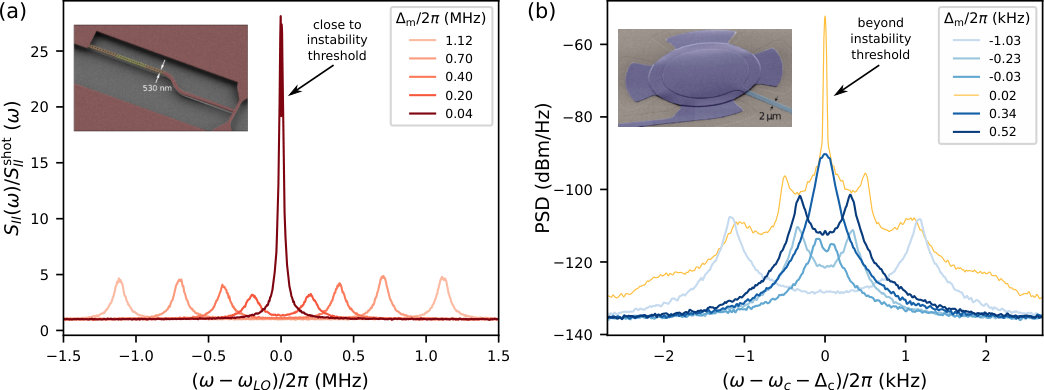 Figure 2
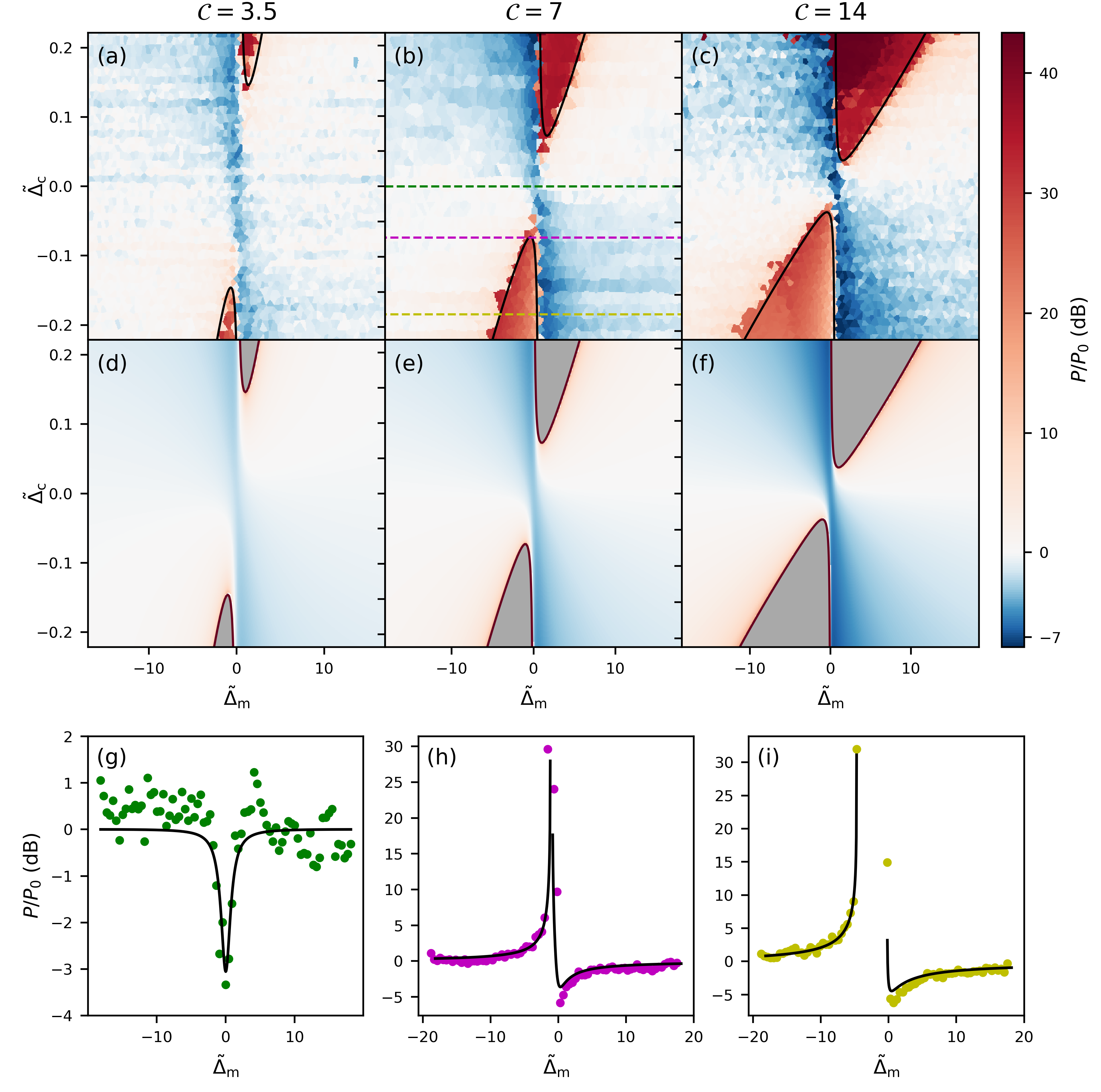 Figure 2
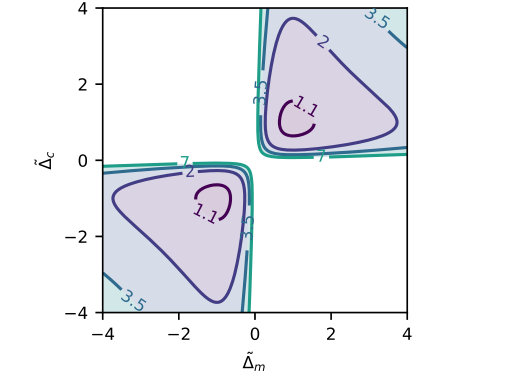 Figure 3
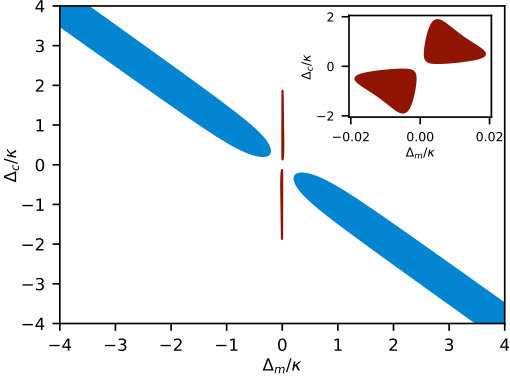 Figure 4
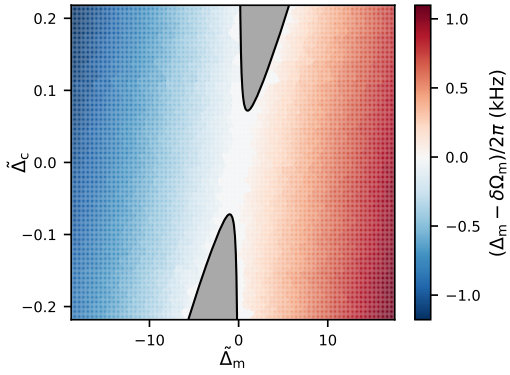 Figure 5
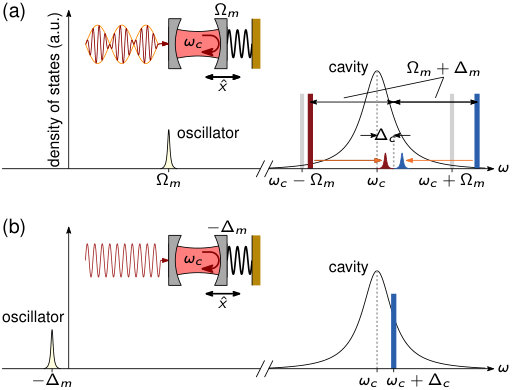 Figure 6
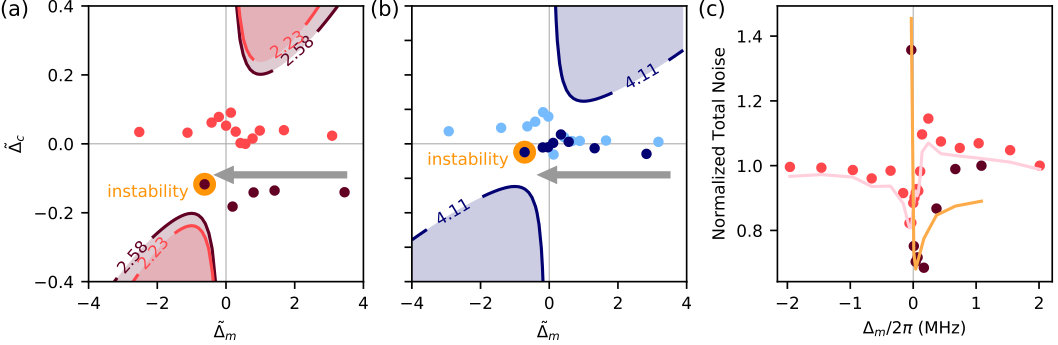 Figure 7
Peer Reviews
No public reviews on file for this paper yet. If you reviewed it on a platform where reviews are public (OpenReview, ICLR, NeurIPS, ICML), you can paste yours below so the community can read it here.
Videos
No videos yet. Explain this paper in a talk, walkthrough, or lecture? Add one.
††thanks: These authors contributed equally.††thanks: These authors contributed equally.††thanks: These authors contributed equally.††thanks: These authors contributed equally.
Two-tone Optomechanical Instability and Its Fundamental Implications for Backaction-Evading Measurements
Itay Shomroni
Amir Youssefi
Nick Sauerwein
Liu Qiu
Institute of Physics, École Polytechnique Fédérale de Lausanne, CH-1015 Lausanne, Switzerland
Paul Seidler
IBM Research–Zurich, Säumerstrasse 4, CH-8803 Rüschlikon, Switzerland
Daniel Malz
Max-Planck-Institut für Quantenoptik, Hans-Kopfermann-Straße 1, 85741 Garching, Germany
Andreas Nunnenkamp
Cavendish Laboratory, University of Cambridge, Cambridge CB3 0HE, United Kingdom
Tobias J. Kippenberg
Institute of Physics, École Polytechnique Fédérale de Lausanne, CH-1015 Lausanne, Switzerland
(January 16th, 2019)
Abstract
While quantum mechanics imposes a fundamental limit on the precision of interferometric measurements of mechanical motion due to measurement backaction, the nonlinear nature of the coupling also leads to parametric instabilities that place practical limits on the sensitivity by limiting the power in the interferometer. Such instabilities have been extensively studied in the context of gravitational wave detectors, and their presence has recently been reported in Advanced LIGO. Here, we observe experimentally and describe theoretically a new type of optomechanical instability that arises in two-tone backaction-evading (BAE) measurements, a protocol designed to overcome the standard quantum limit. We demonstrate the effect in the optical domain with a photonic crystal nanobeam cavity and in the microwave domain with a micromechanical oscillator coupled to a microwave resonator. In contrast to the well-known parametric oscillatory instability that occurs in single-tone, blue-detuned pumping, and results from a two-mode squeezing interaction between the optical and mechanical modes,the parametric instability in balanced two-tone optomechanics results from single-mode squeezing of the mechanical mode in the presence of small detuning errors in the two pump frequencies. Counterintuitively, the instability occurs even in the presence of perfectly balanced intracavity fields and can occur for both signs of detuning errors. We find excellent quantitative agreement with our theoretical predictions. Since the constraints on tuning accuracy become stricter with increasing probe power, the instability imposes a fundamental limitation on BAE measurements as well as other two-tone schemes, such as dissipative squeezing of optical and microwave fields or of mechanical motion. In addition to identifying a new limitation in two-tone BAE measurements, the results also introduce a new type of nonlinear dynamics in cavity optomechanics.
pacs:
Valid PACS appear here
I Introduction
Interferometric position measurement of mechanical oscillators is the underlying principle of the Laser Interferometer Gravitational Observatory (LIGO) LIGO Scientific Collaboration and Virgo Collaboration (2016) and constitutes one of the most sensitive techniques for determining absolute distance available to date. In a similar vein, cavity optomechanical systems Aspelmeyer et al. (2014), which exploit radiation-pressure coupling of light and mechanical motion in micromechanical and nanomechanical systems, have achieved some of the most sensitive measurements of mechanical motion relative to the zero-point motion Wilson et al. (2015); Rossi et al. (2018). They can operate in a regime where measurement quantum backaction is relevant Purdy et al. (2013); Teufel et al. (2016) and where cooling Schliesser et al. (2008); Chan et al. (2011); Teufel et al. (2011) and amplification Braginsky et al. (2001); Kippenberg et al. (2005); Marquardt et al. (2006) via radiation-pressure backaction is accessible. In both settings, the quantum fluctuations of radiation pressure place a fundamental limitation on the displacement sensitivity Caves (1980); Pace et al. (1993). Still, there can be other constraints. Radiation-pressure nonlinearities can equally well pose a limit to sensitivity. Indeed, the parametric oscillatory instability Braginsky and Manukin (1967, 1977); Aguirregabiria and Bel (1987); Bel et al. (1988); Braginsky et al. (2001); Kippenberg et al. (2005); Marquardt et al. (2006); Ludwig et al. (2008) is one of the most fundamental optomechanical effects predicted to limit the performance of the LIGO detector by constraining the optical power below the self-induced oscillation threshold Pai et al. (2000); Braginsky et al. (2001, 2002); Schediwy et al. (2004); Ju et al. (2006a, b, c); Gurkovsky et al. (2007). It arises from the fact that radiation-pressure coupling is intrinsically nonlinear, giving rise—in addition to static optical bistability Dorsel et al. (1983)—to rich nonlinear dynamics, leading to an intricate landscape of multiple stable attractors (dynamical multistability) Marquardt et al. (2006); Ludwig et al. (2008); Krause et al. (2015) and classical chaos Bakemeier et al. (2015). Radiation-pressure-induced parametric oscillatory instability has been observed in cavity optomechanical systems Kippenberg et al. (2005) and, a decade later, in the Advanced LIGO detector itself Evans et al. (2015). Special measures must be taken for its suppression Miller et al. (2011). Understanding such dynamical instabilities in optomechanical systems is important for the realization of ultrasensitive displacement measurements that operate with high cooperativity. In addition, nonlinear phenomena in optomechanical systems have been the subject of experimental studies by themselves Krause et al. (2015); Monifi et al. (2016); Navarro-Urrios et al. (2017).
Here, we report a new type of instability caused by radiation pressure that is distinct from the parametric oscillatory instability. The instability occurs in optomechanical systems driven with two tones. One particular example is a class of quantum nondemolition measurements—two-tone backaction-evading (BAE) measurements as first proposed by Braginsky, Thorne, et al. Thorne et al. (1978); Braginsky et al. (1980); Caves et al. (1980)—that aim to surpass the standard quantum limit (SQL) of measurement of mechanical motion Caves et al. (1980). These BAE measurements proceed by pumping an optomechanical system (that resides in the resolved sideband limit Schliesser et al. (2008)) simultaneously on the upper and lower motional sidebands of the cavity, and allow in principle arbitrary measurement sensitivity; by increasing the probing power, measurement imprecision is decreased, without incurring additional measurement noise due to quantum backaction. Although theoretically proposed several decades ago, only recently have advances in cavity optomechanics made it possible to operate under conditions dominated by quantum backaction and carry out BAE measurements with both microwave Suh et al. (2014); Lecocq et al. (2015); Lei et al. (2016); Ockeloen-Korppi et al. (2016) and optical Shomroni et al. (2019) systems. The two-tone instability reported here arises from deviations from the ideal BAE configuration where there is a finite-frequency detuning error with respect to both optical and mechanical resonance frequencies. In contrast to the well-known parametric oscillatory instability that occurs in single-tone pumping on the upper motional sideband (or blue detuned in the bad-cavity limit), which results from a two-mode squeezing interaction (nondegenerate parametric down-conversion) between the optical and mechanical modes, and is associated with antidamping, the instability in balanced two-tone optomechanics results from single-mode squeezing (degenerate parametric down-conversion) of the mechanical mode, and is associated with the optical spring effect. While the parametric oscillatory instability is dynamically classified as an unstable spiral, the two-tone instability is classified as a saddle point Strogatz (2015). We gain further insight by showing that the balanced two-tone scheme in the good-cavity (i.e. resolved-sideband) limit can be mapped to single-tone optomechanics in the bad-cavity limit.
The threshold for the onset of the instability depends on the magnitude of the tuning errors, and is also inversely proportional to the optical pump power. For any given experimental inaccuracy in the pump frequency, a finite instability threshold exists in two-tone experiments, which ultimately limits the maximum probe power and thus the achievable sensitivity. As we show, these limitations can be prohibitive for strong pumping powers aiming to surpass the SQL. We emphasize that the two-tone instability is intrinsic to the optomechanical interaction and does not arise from extraneous effects. It depends exclusively on tuning errors and power. Thus it stands in contrast to previously reported instabilities in BAE measurements associated with parametric driving Hertzberg et al. (2010); Steinke et al. (2013), where the underlying cause has been attributed to the dependence of the mechanical frequency on temperature Suh et al. (2012) or the presence of two-level systems Suh et al. (2013). In this sense, the two-tone instability poses fundamental constraints, and one may need to resort to active feedback techniques, as in the case of the parametric oscillatory instability Miller et al. (2011); Harris et al. (2012).
While our focus is on BAE measurements, it is important to note that the phenomenon reported here can affect other two-tone optomechanical protocols, such as dissipative optomechanical squeezing of optical and microwave fields Kronwald et al. (2014); Ockeloen-Korppi et al. (2017) or of mechanical motion Kronwald et al. (2013); Wollman et al. (2015); Lecocq et al. (2015); Pirkkalainen et al. (2015); Lei et al. (2016). For example, in recent work on noiseless single-quadrature amplification of mechanical motion Delaney et al. (2019), the squeezing effect we report here produces significant deviations from the expected system behavior.
II Observation of instability in two-tone pumping
In a BAE measurement the cavity, with resonance frequency , is probed with two pump tones of equal power, each tuned to the upper and lower motional sideband of the cavity, i.e., at . It can also be understood as a single pump tuned at with full amplitude modulation at the mechanical frequency . In Fig. 1(a) we illustrate the scheme, and introduce a small detuning error of the symmetrically spaced tones with respect to the cavity resonance, as well as an error in modulation frequency. As a result, the two tones are detuned by from the cavity resonance. The motion of the oscillator, due to thermal noise from the environment and quantum backaction by the pump fields, is imprinted as fluctuations on the fields reflected from the optomechanical system. The corresponding output noise spectrum of the two probes exhibits two Lorentzians separated by , also shown in Fig. 1(a). When , an ideal BAE measurement is performed. The mechanical sidebands are superimposed on each other, but while thermal motion adds in quadrature, the quantum backaction noise is canceled from the measurement record Clerk et al. (2008); Suh et al. (2014); Shomroni et al. (2019). A hallmark of BAE measurements is witnessing, as is varied from a finite value to zero, a total mechanical noise that is lower than the sum total of the two individual mechanical noise spectra. The total evaded backaction, expressed in units of mechanical quanta, is equal to the optomechanical cooperativity , proportional to the probing power.
Such BAE measurements have been carried out in the microwave domain in several experiments using mechanically compliant capacitors Suh et al. (2014); Lecocq et al. (2015); Lei et al. (2016); Ockeloen-Korppi et al. (2016), and have recently been extended to the optical domain Shomroni et al. (2019). We carried out BAE experiments using an optomechanical photonic crystal nanobeam cavity operating at GHz frequencies mounted in a 3He buffer-gas cryostat, as detailed in prior work Qiu et al. (2018); Shomroni et al. (2019). The parameters of the devices are shown in Appendix C, and details of the measurement setup, which uses a quantum-limited heterodyne detection method, are contained in Ref. Shomroni et al., 2019. Figure 2(a) shows our BAE measurement in the optical domain. In this experiment the cooperativity was set to and scanned from a positive value toward zero. However, instead of the expected decrease in total noise, indicating BAE, an exponential increase in the total noise is observed near . Upon a further decrease in , the system leaves the linear regime as the optical cavity undergoes self-oscillations, i.e., we observe an instability.
To independently confirm the existence and universality of this phenomenon, we performed the measurement in an entirely different optomechanical system: an electromechanical system based on a mechanically-compliant vacuum-gap capacitor coupled to a superconducting microwave resonator placed in a dilution refrigerator Tóth et al. (2017); Bernier et al. (2017). Figure 2(b) shows this experiment, with a cooperativity of (here, measurement backaction includes classical noise, which should also be canceled). In this second measurement as well, we observe an exponential increase in the total noise as the detuning is decreased. As is decreased further, the noise saturates the HEMT amplifier in the detection chain, leading to an increased noise floor [Fig. 2(b), yellow curve]. In both experiments, BAE is not observed under the given experimental conditions.
The origin of this instability is not a spurious effect in the experiments, as is evident from the observation that the same behavior occurs in two very different optomechanical systems measured with very different equipment. Instead, as shown below, the instability is a direct consequence of the optomechanical interaction in the presence of the small tuning errors and and depends only on these two parameters and the cooperativity. We next develop the theory behind this new instability in Sec. III, and perform a systematic experimental study in Sec. IV that fully confirms the theoretical predictions.
III Theory
It is well known that the anti-damping induced by pumping the cavity on the upper motional sideband (or blue detuning in the bad-cavity limit) can induce a parametric oscillatory instability. In principle, there exists another type of dynamical instability in this system, one associated with the optical spring effect, i.e., a change in the restoring force induced by light. This cannot occur in the resolved-sideband regime, in the relevant case of weak coupling between the mechanical mode and the cavity field. Indeed, optomechanical systems typically employ high-quality-factor oscillators, where the shift in mechanical frequency due to dynamical backaction can be neglected. However, as we show below, this instability may arise when pumping with two tones close to the upper and lower mechanical sidebands [Fig. 1(a)], as in BAE measurements, for example. In fact, as we show, the situation when pumping with two tones and that for single-tone driving on the upper motional sideband are described by the same linearized equations.
We model the system by the standard optomechanical Hamiltonian comprising one cavity mode with frequency , one mechanical mode with frequency , and a nonlinear interaction , where denote the optical (mechanical) annihilation operator. The cavity is driven by one or two coherent tones that produce a coherent intracavity field with amplitude . We move to the interaction picture with respect to the Hamiltonian and linearize the operators, and , where is the coherent oscillation of the cavity field and the static displacement of the mechanical oscillator. This yields the linearized Hamiltonian
[TABLE]
where denotes the field-enhanced coupling. We consider two distinct situations: single tone driving on the upper motional sideband and balanced two-tone driving on the upper and lower motional sidebands. In single-tone driving, we have and , whereas the two-tone driving is described through and . Applying the rotating-wave approximation (RWA) in two-tone driving but not in single-tone driving, both situations can be described by the same Hamiltonian
[TABLE]
where in single-tone driving, , whereas in two-tone driving, . This equivalence is illustrated in Fig. 1(b).
We describe the optomechanical system in terms of quantum Langevin equations Gardiner and Zoller (2004); Aspelmeyer et al. (2014), which take into account decay into the cavity and mechanical bath. Eliminating the optical modes in frequency space, we arrive at an effective description for the mechanical mode only
[TABLE]
where the self-energy (effective coupling) is given through
[TABLE]
In Eq. (3) we have subsumed all noise contribution into a single generic noise input operator , which does not play a role in the instability mechanism. So far we have not made any approximations (beyond the RWA in two-tone driving), and indeed Eq. (3) contains all the effects we wish to consider here. The self-energy plays two roles. First, it couples to , thus acting like the coupling in a degenerate parametric oscillator. Second, as a self-energy, its real part renormalizes the frequency of the mechanical resonator and its imaginary part modifies the effective damping.
*Parametric oscillatory instability.—*In single-tone driving on the upper motional sideband, a parametric oscillatory instability occurs if the optical antidamping overcomes the intrinsic damping. In this regime, the mechanical frequency is very large, so the right-hand side of Eq. (3) has hardly any effect and can be neglected in a RWA. The instability occurs because the mechanical damping is modified by the imaginary part of the susceptibility, Eq. (4), , where the cooperativity is . This yields the effective mechanical damping , thus recovering the standard instability threshold .
*Two-tone instability.—*In backaction-evading measurements, however, is small, as it represents a tuning error. This makes the right-hand side of Eq. (3) near resonant, such that it cannot be neglected. The instability arises in a way similar to a degenerate parametric oscillator Walls and Milburn (2008). Since is now a large parameter, we can neglect the frequency dependence of . Note that now the self-energy coincides with the optical spring effect due to a single drive detuned by from cavity resonance. This allows us to recast Eq. (3) again as an equation of motion
[TABLE]
This equation is the same quantum Langevin equation as one would write down for a damped degenerate parametric oscillator. It can intuitively be viewed as arising from an optical spring effect modulated at . The dynamical matrix corresponding to Eq. (5) has eigenvalues . For , the eigenvalues have a negative real part (damping ) and a finite imaginary part (effective frequency ). As increases, first the effective frequency vanishes, at which point the damping of the modes starts to be modified. The vanishing of the effective mechanical frequency corresponds to the mechanical oscillation phase locking to the modulated optical field. The threshold for instability occurs when
[TABLE]
The instability threshold can also be written in terms of normalized detunings and , yielding . This equation can only be fulfilled for , and we plot its contours in Fig. 3. Note that Eq. (6) also predicts that the instability can occur for both negative and positive values of the two detuning errors (provided they have the same sign), in contrast to the parametric oscillatory instability. In Appendix A we derive instability regimes of both the parametric oscillatory and two-tone instabilities using the full Hamiltonian, Eq. (2).
Apart from using locking techniques to reduce , it may be possible to hold off the onset of the two-tone instability by using active feedback. Feedback techniques to counter the parametric oscillatory instability have been considered Miller et al. (2011); Harris et al. (2012). In the case of the two-tone instability, the feedback force would naturally be applied on the measured quadrature (and as such is not of the viscous damping type).
IV Experiment
To validate Eq. (6), the threshold for the two-tone instability in terms of and , we perform a two-dimensional scan in the clean and well-controlled setting of circuit electromechanics using the system comprising a mechanically compliant vacuum-gap capacitor coupled to a superconducting resonant circuit placed in a dilution refrigerator Tóth et al. (2017); Bernier et al. (2017). Here, pump frequency fluctuations and cavity frequency fluctuations are significantly smaller than in the optical domain, and the detuning can be accurately controlled. Full details on the system and experiment are given in Appendix B. We present measurements in the optical domain in Appendix C.
Figures 4(a)–(c) show the total noise in the mechanical sidebands as a function of and for three different cooperativities . Each horizontal cut in Figs. 4(a)–(c) corresponds to a measurement of the type shown in Fig. 2(a). The domains of instability are clearly evident as areas of increased noise (in red), in excellent agreement with Eq. (6) (black contours). In particular, instability only arises when , as predicted from Eq. (6), and can arise both for red- () and blue-detuned () mean probe frequency. Figures 4(d)–(f) show the theoretical plots corresponding to Fig. 4(a)–(c), again in excellent agreement. Figures 4(g)–(i) show the horizontal cuts indicated in Fig. 4(b). The point corresponds to a “perfect” BAE measurement, as can be seen in Fig. 4(g), where a decrease in the total mechanical noise relative to due to cancellation of measurement backaction is evident.
In Appendix B we show experimentally that, at the onset of instability, the effective mechanical frequency (due to the optical spring effect) equals the pump modulation frequency (i.e., the effective mechanical frequency vanishes in the rotating frame). In other words, while the instability occurs for , in the experiment the sidebands coincide at the onset of instability.
The predicted decrease in size of the stable region with increasing pumping power is clearly evident in the experimental data depicted in Fig. 4, with required to avoid instability [e.g., for in Fig. 4(c)]. Overall, excellent agreement is obtained between theory and experiment, confirming our theoretical analysis and description of the effect. Thus, optomechanics imposes strict tuning accuracy for a given measurement sensitivity in two-tone BAE measurements. In this case, measurement backaction is due to both quantum and classical noise in the two microwave tones. It is important to emphasize that for BAE measurements that allow measurements beyond the SQL, cooperativities of are required, thus highlighting the stringent nature of the condition imposed by .
V Conclusion
We report experimentally and explain theoretically a new type of dynamical instability that was previously unreported in cavity optomechanics. This instability is qualitatively different than the parametric oscillatory instability Aguirregabiria and Bel (1987); Bel et al. (1988); Fabre et al. (1994); Pai et al. (2000); Braginsky et al. (2001); Marquardt et al. (2006); Ludwig et al. (2008), and originates from degenerate parametric amplification of the mechanical mode. In the past, parametric oscillatory instability has limited certain single-tone experiments. Our work now demonstrates that the performance of emerging optomechanical experiments, such as backaction-evading measurements aimed at surpassing the standard quantum limit Suh et al. (2014); Shomroni et al. (2019), generation of quantum squeezing Kronwald et al. (2013, 2014); Woolley and Clerk (2013, 2014), and noiseless single-quadrature amplification Delaney et al. (2019), will be intrinsically constrained by another instability determined by tuning accuracy and coupling strength. Even below the instability threshold, these new dynamics need to be taken into account.
Data Availability. The code and data used to produce the plots within this paper are available at https://doi.org/10.5281/zenodo.3419929. All other data used in this study are available from the corresponding authors upon reason5able request.
Acknowledgements.
This work was supported by funding from the Swiss National Science Foundation under Grant Agreement No. NCCR-QSIT: 51NF40-160591. The samples were fabricated in the Center of MicroNanoTechnology (CMi) at EPFL. The photonic sample was partially fabricated at the Binnig and Rohrer Nanotechnology Center (BRNC) at IBM Research–Zurich. DM acknowledges support by the ERC Advanced Grant QUENOCOBA under the EU Horizon 2020 program (Grant Agreement No. 742102). A.N. acknowledges a University Research Fellowship from the Royal Society and support from the Winton Programme for the Physics of Sustainability. This work was supported by the European Union’s Horizon 2020 research and innovation programme under Grant Agreement No. 732894 (FET Proactive HOT).
Appendix A Eigenvalues of the dynamical matrix
Further understanding of the two-tone instability, and its distinction from the parametric oscillatory instability, can be achieved by examining the eigenvalues of the dynamical matrix, similar to the analysis performed in Ref. Malz and Nunnenkamp (2016). The Hamiltonian Eq. (2) leads to the quantum Langevin equations
[TABLE]
Ignoring the input noise operators and , which are irrelevant in the present analysis, the Langevin equations (7) can be written as a matrix equation , with
[TABLE]
and
[TABLE]
We recall that this dynamical equation describes both single-tone pumping, with the equivalence , and two-tone pumping in the well-resolved sideband regime (Fig. 1). An eigenvalue of the matrix Eq. (8) with a positive real part leads to an exponentially increasing solution, and thus signals an instability.
Figure 5 shows the domains of instability in the parameter space spanned by and . These domains separate into two classes, corresponding to the parametric and two-tone instabilities. In one class, which corresponds to the conventional parametric oscillatory instability, the imaginary part of the offending eigenvalue is nonzero, corresponding to spiral dynamics Strogatz (2015). The onset of the parametric oscillatory instability coincides with the transition from a stable to an unstable spiral. This class lies in the vicinity of the diagonal , as expected (note that the regime , although mathematically possible, is unphysical in this case). The second class lies close to the origin, in particular , and corresponds to the two-tone instability. In this regime the eigenvalues are well approximated by the eigenvalues of Eq. (5) due to the slow dynamics of the optical field, and the instablity domains are given by the simple condition (6). The eigenvalues are real and of opposite sign, corresponding to a saddle point, as expected from a degenerate parametric amplifier. In this picture, as the power () is increased, the dynamics change from a stable spiral to a stable node and finally to a saddle point Strogatz (2015). Figure 3 shows the domains of two-tone instablity for different powers. It is noteworthy to mention that Eq. (5) describes a harmonic oscillator with fixed damping and power-dependent natural frequency, i.e., . This system becomes unstable due to vanishing of the frequency (or restoring force).
Appendix B Microwave experiment details
For the microwave-domain part of this work, we used a system similar to the one described in Ref. Bernier et al., 2017. Specifically, an overcoupled (, ) Al superconducting microwave resonator with a resonance frequency of that was coupled (vacuum coupling rate ) to a mechanically compliant vacuum-gap capacitor ( and ). The chip was cooled to about in a dilution refrigerator.
In the experiment, we used three microwave sources with a common frequency reference to pump the optomechanical system: two BAE pumps with frequencies and an additional cooling pump tuned to , where . The purpose of the cooling pump was to reduce the thermal occupation of the mechanical oscillator, thereby reducing the fluctuations in power of the mechanical sidebands that originate from fluctuations of the base temperature and vibrations of the dilution refrigerator, since the oscillator is dominantly coupled to the microwave bath. The cooling tone also increased the mechanical damping rate to , allowing us to observe the narrowing of the mechanical sidebands when approaching the instability with better resolution.
To take the data in Fig. 4, we first measured the cavity resonance frequency by applying the cooling tone alone and acquiring the microwave response Bernier (2018). We then placed the BAE pumps symmetrically around the resonance, , and measured the mechanical resonance frequency using the distance between the peaks of the mechanical sidebands. The data of Fig. 4 were taken along horizontal scans, by first setting the required and varying , acquiring noise spectra as in Fig. 2(b). Prior to taking each horizontal line, we followed a procedure to ensure that no additional mechanical loss or amplification was introduced by the BAE pumps that might lead to parametric oscillatory instability: First, only the red BAE pump was applied and its power optimized such that the width of the mechanical sideband corresponds to the desired single-tone cooperativity (computed from the additional damping introduced). Second, the blue BAE pump was added, and its power adjusted such that the width of the mechanical sideband narrows back to . This procedure was also followed prior to measurement of .
To account for cavity frequency fluctuations, the microwave frequency was also measured after each single point . This results in a slight vertical scatter along the horizontal scan. We used nearest-neighbor (Voronoi) partitioning to present the full two-dimensional image. In addition, we disconnected all pumps for between data points to let the mechanical oscillator thermalize and cancel any hysteresis effects due to the instability.
In Fig. 6 we plot the difference between and the change in effective mechanical frequency of the oscillator (due to the optical spring effect), for the same data as in Fig. 4(b). Near the onset of the two-tone instability, the two sidebands coincide, and this difference approaches zero; i.e., the effective mechanical frequency becomes equal to the modulation frequency of the pump, . This corresponds to vanishing of the effective mechanical frequency in the frame rotating with the modulation frequency, as predicted theoretically in Sec. III.
Appendix C Observation of two-tone instability in the optical domain
As shown in Fig. 2(a), we also observed the two-tone instability in an optomechanical system operating in the optical domain. The system is an optomechanical photonic crystal nanobeam cavity Eichenfield et al. (2009); Chan et al. (2011) with a mechanical frequency , optical resonance frequency (wavelength ), and cavity linewidth (optical factor ). The vacuum optomechanical coupling rate is . The sample is measured in a 3He buffer-gas cryostat (Oxford Instruments HelioxTL), as reported previously Qiu et al. (2018); Shomroni et al. (2019). The buffer gas facilitates the thermalization of the sample, preventing deleterious optical absorption heating and allows strong pumping. The controlled pressure of the buffer gas affects the damping rate of the oscillator. The various measurements reported here were done at temperatures in the range –, and pressures –, resulting in a damping rate of –.
Figure 7 shows examples of the BAE measurements introduced in Sec. II, with scanned from positive to negative values, while holding approximately constant. Two measurements of similar cooperativities – are shown in Fig. 7(a). In the lower measurement is farther from 0, bringing it in the vicinity of the domain of instability (see Fig. 3), which is triggered on the next data point (not shown). This is the same measurement as Fig. 2(a). The separation between the data and the domain of instability is , well within the uncertainty in our measurement of . Figure 7(b) shows similar data for higher cooperativity , where uncertainty in measurement of precludes discerning between the stable and unstable behavior. Figure 7(c) shows the total mechanical noise in the data of Fig. 7(a), with the theoretical fit obtained from the Langevin equations (7). The data shown in light red, not encountering the instability, show imperfect, asymmetric BAE behavior (due to ). The dark red data show the amplified noise prior to the onset of instability.
The reference list from the paper itself. Each links out to its DOI / PubMed record.
- 1LIGO Scientific Collaboration and Virgo Collaboration (2016) LIGO Scientific Collaboration and Virgo Collaboration, Observation of Gravitational Waves from a Binary Black Hole Merger, Physical Review Letters 116 , 061102 (2016) . · doi ↗
- 2Aspelmeyer et al. (2014) M. Aspelmeyer, T. J. Kippenberg, and F. Marquardt, Cavity optomechanics, Reviews of Modern Physics 86 , 1391 (2014) . · doi ↗
- 3Wilson et al. (2015) D. J. Wilson, V. Sudhir, N. Piro, R. Schilling, A. Ghadimi, and T. J. Kippenberg, Measurement-based control of a mechanical oscillator at its thermal decoherence rate, Nature 524 , 325 (2015) . · doi ↗
- 4Rossi et al. (2018) M. Rossi, D. Mason, J. Chen, Y. Tsaturyan, and A. Schliesser, Measurement-based quantum control of mechanical motion, Nature 563 , 53 (2018) . · doi ↗
- 5Purdy et al. (2013) T. P. Purdy, R. W. Peterson, and C. A. Regal, Observation of Radiation Pressure Shot Noise on a Macroscopic Object, Science 339 , 801 (2013) . · doi ↗
- 6Teufel et al. (2016) J. Teufel, F. Lecocq, and R. Simmonds, Overwhelming Thermomechanical Motion with Microwave Radiation Pressure Shot Noise, Physical Review Letters 116 , 013602 (2016) . · doi ↗
- 7Schliesser et al. (2008) A. Schliesser, R. Rivière, G. Anetsberger, O. Arcizet, and T. J. Kippenberg, Resolved-sideband cooling of a micromechanical oscillator, Nature Physics 4 , 415 (2008) . · doi ↗
- 8Chan et al. (2011) J. Chan, T. P. M. Alegre, A. H. Safavi-Naeini, J. T. Hill, A. Krause, S. Gröblacher, M. Aspelmeyer, and O. Painter, Laser cooling of a nanomechanical oscillator into its quantum ground state, Nature 478 , 89 (2011) . · doi ↗