Do we have the time for IRM?: Service denial attacks and SDN-based defences
Ryan Shah, Shishir Nagaraja

TL;DR
This paper investigates the vulnerability of IRM systems in IoT sensor networks to time synchronization attacks, demonstrating their fragility and proposing SDN-based defenses to mitigate such service denial attacks.
Contribution
It uncovers a critical weakness in IRM architectures related to time dependence and introduces SDN-based filtering methods to defend against amplified denial-of-service attacks.
Findings
Time synchronization attacks can disable IRM data access.
IRM systems are vulnerable to amplified denial-of-service attacks.
SDN-based filters can detect and isolate attack traffic.
Abstract
Distributed sensor networks such as IoT deployments generate large quantities of measurement data. Often, the analytics that runs on this data is available as a web service which can be purchased for a fee. A major concern in the analytics ecosystem is ensuring the security of the data. Often, companies offer Information Rights Management (IRM) as a solution to the problem of managing usage and access rights of the data that transits administrative boundaries. IRM enables individuals and corporations to create restricted IoT data, which can have its flow from organisation to individual control -- disabling copying, forwarding, and allowing timed expiry. We describe our investigations into this functionality and uncover a weak-spot in the architecture -- its dependence upon the accurate global availability of \emph{time}. We present an amplified denial-of-service attack which attacks…
Click any figure to enlarge with its caption.
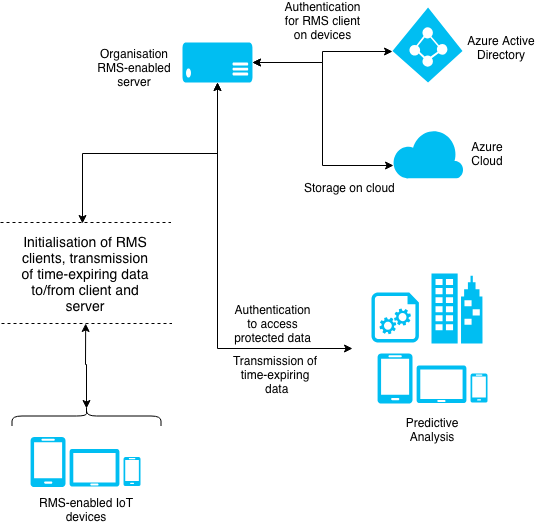 Figure 1
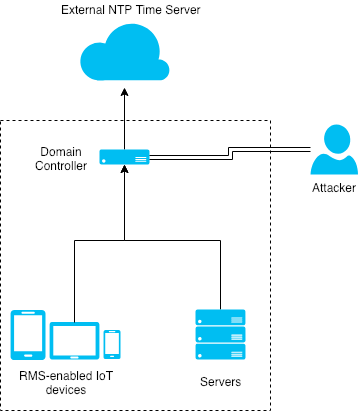 Figure 2
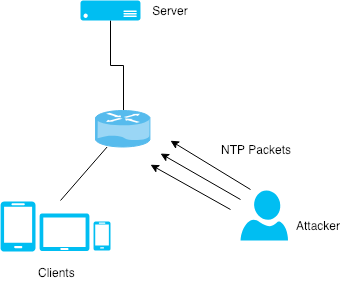 Figure 3
Peer Reviews
No public reviews on file for this paper yet. If you reviewed it on a platform where reviews are public (OpenReview, ICLR, NeurIPS, ICML), you can paste yours below so the community can read it here.
Videos
No videos yet. Explain this paper in a talk, walkthrough, or lecture? Add one.
Taxonomy
TopicsDigital Rights Management and Security · Advanced Malware Detection Techniques · Digital and Cyber Forensics
Do we have the time for IRM?:
Service denial attacks and SDN-based defences
Ryan Shah and Shishir Nagaraja
University of Strathclyde
{ryan.shah,shishir.nagaraja}@strath.ac.uk
Abstract
Distributed sensor networks such as IoT deployments generate large quantities of measurement data. Often, the analytics that runs on this data is available as a web service which can be purchased for a fee. A major concern in the analytics ecosystem is ensuring the security of the data. Often, companies offer Information Rights Management (IRM) as a solution to the problem of managing usage and access rights of the data that transits administrative boundaries. IRM enables individuals and corporations to create restricted IoT data, which can have its flow from organisation to individual control – disabling copying, forwarding, and allowing timed expiry. We describe our investigations into this functionality and uncover a weak-spot in the architecture – its dependence upon the accurate global availability of time. We present an amplified denial-of-service attack which attacks time synchronisation and could prevent all the users in an organisation from reading any sort of restricted data until their software has been re-installed and re-configured. We argue that IRM systems built on current technology will be too fragile for businesses to risk widespread use. We also present defences that leverage the capabilities of Software-Defined Networks to apply a simple filter-based approach to detect and isolate attack traffic.
1 Introduction
Led by the intense desire to sense ubiquitously, measure universally, and apply data analytics to sensed information in the hope of adding value, governments, industry, society, and the individual are hastily adopting the vision of the Internet-of-everything. In the majority of cases the primary aim is to collect data, apply analytics and sell the intelligence gathered further on within the ecosystem. In the case of industrial IoT systems, organisations hope to adopt a data-driven approach towards managing, assessing and verifying their business workflows. Manufacturing industries are keen to understand how coarse to very-fine grained measurements about their processes can add value to their bottom line; service industries are similarly interested in obtaining fine-grained measurements with the view of moving from a periodic maintenance cycle to a predictive maintenance cycle – i.e by using automated and sensed data-driven approaches, firms believe they can predict when components within a system are showing signs of failure. For instance, a conventional lift requires periodic inspection and replacement of parts which are most worthy of operation but that must be replaced in order to achieve a working lift with high probability until the next maintenance cycle (i.e. high availability). However, such conventional models of periodic maintenance schedules, tend to overestimate component failures resulting in excess maintenance expenditure and missing failures between maintenance cycles. On the other hand, a data-driven approach where the lift is equipped with speed, weight, cable tension, and shaft sensors, engenders predictive failure models that promise better results — machine learning techniques applied to the data streams promise to detect problems as they unfold and prior to catastrophic component failure. Thus maintenance cycles can be sparser thus saving money for the maintenance company.
Nice as these ideas are in theory there are some fundamental challenges with data management that arise in IoT environments. To generate usable intelligence from hyperconnected networks of sensors, the defender (network operator) must collect the information at a centralised location in order to run machine learning algorithms over their data. A cloud storage option is a natural choice for such a storage location. However, it isn’t always possible to run all analytics in a single datacentre. In order to take advantage of specialist analytics services, typical workflows require IoT data to be sent across administrative boundaries. So how does an organisation secure data that is stored beyond the customer’s datacentre.
Microsoft provides a solution to the problem of managing information rights over data that transfers across administrative boundaries such as data centres, cloud providers, and managed analytics services. Microsoft proposes to accomplish this using Azure Rights Management (RMS) technology [7]. RMS can be used to manage IoT data from any network or IoT hub as long as the data is stored on an Azure cloud.
RMS hopes to make data behave like physical objects. RMS ensures that the access control metadata placed on IoT data is enforced on remote files, i.e. even if the data is moved from its location on the cloud on to a specialist workstation, a different cloud or data centre, or copied to a data storage that’s not under the control of an IT organisation. RMS also promises audit and monitoring support to stored data, for instance, the IoT network operator is notified when a remotely located datafile is accessed, processed, or moved to another location where this information can be accessed by someone else.
While much attention within IoT security has been devoted to the analysis of security and privacy protocols for inter-device and device-hub communication [9], much less attention has been paid to Rights Management services used by organisations to manage the huge amounts of data that IoT deployments are expected to generate. Naturally, the security of these rights management services is of crucial importance. If the rights management can be compromised, then at best the IoT network operator will lose control of their data. Worse still, an attacker might deny access to the IoT network operator itself, resulting in service-denial attacks on the IoT infrastructure. This can have serious consequences beyond the mere loss of data.
IoT based telemetry and monitoring drive modern safety regimes where predictive analytics drives (reduced) maintenance frequency and replace traditional maintenance cycles. Without measurement data, the safety of the appliance or system is at risk. Therefore, a denial of service attack on IoT data can directly lead to a safety compromise. In other words, a security attack translates into a safety problem. In safety-critical applications, such as elevators, medical device operation, or drug manufacturing, the absence of maintenance information might require the appliance to be shut down for safety reasons, with the possibility of cascading failures further down the dependency chain.
With RMS, an attacker won’t need to find individual device vulnerabilities to exploit. Instead, if the network operators rights to their data can somehow be revoked or suspended, then service denial attacks again RMS can be generalised across IoT networks without attackers being required to know, understand or exploit the devices and their vulnerabilities within a target network. In this paper, we propose service denial attacks on an IoT deployment using the Azure Rights Management Service.
2 Information Rights Management
We introduce Digital Rights Management (DRM) as a precursor to Information Rights Management, which is derived from DRM, and discuss the successes and limitations of both types of rights management.
DRM is a collection of technologies developed for restricting the use of hardware and copyrighted work. This includes the control of access, modification and distribution of content, and the systems that enforce these policies [15]. It has allowed for the prevention of unauthorised distribution of copyrighted digital media, and DRM technologies have been used in a variety of technologies including, but not limited to: documents, film and music. DRM has also been used in conjunction with other technologies, such as using steganography to provide DRM control information over insecure communication channels [16]. DRM can be generalised into four components - digital rights to manage, encryption, license management and a DRM-enabled client [12]. A packaging server is used to distribute license data, domain certificates and packaged content to other servers which manage the different aspects of a DRM system. License data is sent to a license server which is used to request and issue licenses to DRM-enabled clients. Domain certificates are registered with and issued by a domain controller to the clients, and finally a distribution server (or multiple) request and deliver the protected content to the clients.
Typically, DRM uses encryption which is applied to the content to be protected, such that it can only be “unlocked” with the correct key. Key exchange is a critical part of DRM and requires a root of trust [13]. This involves the distributor only providing the keys to software, services or devices it trusts. The distribution of the keys can vary on many factors including the device, the content and security levels required. It can range from merely providing keys to devices which share a correct token, to secret keys embedded in the device used for pairing with advanced levels of encryption. The primary advantage of DRM is that its existence provides a level of assurance to the owner when allowing the electronic distribution of their content.
IRM is derived from DRM and involves technologies that protect sensitive information from unauthorised access. It started as a feature that allowed users to control the flow of email and office documents such as word-processed files or spreadsheets and was expanded to include many other types of data after 2010. While DRM is primarily used to protect intellectual property from patent infringement and piracy, IRM focuses on protecting sensitive data — especially data that is exchanged with external entities outside of its originating organisation. The main difference between IRM and DRM is that a true IRM system separates the information from its control such that either can be accessed, manipulated and distributed separately [3].
IRM encrypts data and applies IRM rules which enforce access policies to allow or deny specific activities, such as the data being read-only or blocking any data from being copied from a document. A client who is entitled to access the sensitive data must first be registered with the IRM server. After the user is authenticated, the server will download some code to the client device. Every time the user requests a new document from the server or accesses the existing document(s) on their device, the code on the device must reauthenticate on the IRM server. This allows for a key to be downloaded which in turn, decrypts the document and determines the access policies the client is entitled to. Some IRM services allow for time-limited offline access privileges, for example to those who want to peruse documents in places with limited access to the Internet. The benefit to IRM is that these enforced policies persist even when data is sent externally, such that IRM sealed documents can remain secure no matter where they are accessed. With this said, IRM solutions require a client user to have specialised IRM software installed on their device in order to access data with IRM protection. For this reason, many organisations limit the use of IRM protection to data that requires it.
Rights management and IoT:
Bauer et al. stress the importance of data provenance throughout the life-cycles of IoT devices to create a trusted and secure IoT environment [4]. They suggest the use of DRM technologies to control and validate sensitive meta information such as provenance data. Matthieu and Ramleth propose an alternate the use of IRM for managing security and access rights within an IoT context [14]. They propose a cross-domain messaging architecture for IoT devices, where a remote analytics service performs computations over data supplied by IoT deployments spanning administrative and organisation boundaries, whilst restricting the use of the supplied data for the stated purpose. Huckle et al. [10] identify how IoT and blockchain technologies can use digital rights management to enable applications that enforce usage rights in the physical world, such as managing access rights to resources among tenants in a shared home or within a holiday home.
2.1 Limitations
A disadvantage of DRM is that it does not guarantee enforcement in any fundamental way – once an approve device has access to the data, a large number of side-channel attacks can be mounted. Further, the restrictions can result in a significant insult rate as the rights management system tries to distinguish between legitimate and illegitimate users [13]. While consumers may feel insulted at treated as a potential pirate user, in a majority of cases, DRM does not prevent data exfiltration and in turn, demonstrates a lot of inconvenience to the consumers while attempting to provide a theoretical level of protection to content distributors. As well as this, the extra costs of the development and maintenance of DRM systems has sometimes meant that paying customers had to spend more money to ultimately receive a worse functioning product than a copy of the same product that doesn’t use DRM. Although DRM covers the protection of proprietary data; it does not effectively protect the needs of an industrial (or enterprise) IoT deployment. Therefore, an IoT deployment would need more appropriate technology when it comes to protecting and sharing its sensitive data. IRM concentrates on these needs and uses end-to-end encryption to manage individual permissions and usage rights. To this end, Furlong and Cookson proposed methods for managing rights access in a transparent manner [6], with a balance between the fraud rate and the insult rate.
Like its predecessor, IRM also has limitations. It was designed to not only manage access rights to data but also control the interactions of the consumers of the data to enforce some of these rights. However, IRM cannot prevent side-channel attacks. For instance, anyone capturing a photograph of the data once it has been accessed and displayed on a device. IRM also disallows the use of built-in snapshot features to prevent digital capture from the same device, but with the constant advance in technology, however, it is practically impossible for IRM systems to prevent third-party software from capturing snapshots. Further, IRM does not prevent data-exfiltration attacks by malware. If an attacker has stolen the credentials of someone who has legitimate access to IRM-protected data, an IRM system has no ability to prevent the data being accessed by the attacker. Aside from attackers, IRM cannot prevent domain administrators from accessing the data - which suggests that on an internal level within an organisation using IRM protection for its data, there must be a higher level of assurance with technical staff.
2.2 Availability Attacks on DRM Systems
Previous work has noted the need for scalability and resilience of online DRM service components. Federrath [5] and Arnab et al. [2] note that DRM systems require authentication with an online rights management server and highlight the need for scalable server-side DRM components [11, 8]. If this server suffers from an outage then legitimate consumers of the DRM system will be unable to access the data protected by the DRM system. Much more recently, Zhang conducted a survey[17] report that the use of DRM in particular Ubisoft applications resulted in legitimate users being denied access due to a severe outage to the Ubisoft DRM. All these works point to the need for a scalable or global-scale architectures for DRM deployment that can withstand the challenges of servicing DRM clients. With the advent of IoT, the challenge becomes even more start — Can digital rights management technology offer the super-scaled architectures required by upcoming IoT deployments?
3 Architecture
Azure Rights Management (RMS) is a cloud-based service which can be used to control the flow of data from devices to the cloud, such that authorised IoT devices and related services can send, receive and manipulate the data, while others are denied access. Before data is sent to the cloud, it is encrypted on the device at the application level, with a policy which defines authorised use of the data. Some IoT devices may already have several policies pre-packaged with the device, dependant on the nature of its use. The policy is typically used to restrict the readability of the data, and restrict copying and editing only to other devices, organisations and services stated in the policy. When the protected data is accessed by a legitimate user, organisation or an authorised service, the data is decrypted, and the policy attached to the data enforce the rights for that authorised entity.
3.1 Protecting Data on an IoT Device
An RMS client on the IoT device will initially connect to the Azure RMS service which authenticates the device using an Azure Active Directory account. When connected, the authentication is automatic, and the device is not prompted for credentials. After authentication, the connection is then redirected to the organisation’s Azure Information Protection tenant. This issues certificates to let the device authenticate to the RMS service, allowing it to protect content offline. The certificates are valid for 31 days provided that the device account is still enabled in the Azure Active Directory.
When protecting data, the RMS client on the device creates a random content key and encrypts the data using the key with AES encryption. The encryption is used for generic protection and native protection when the file is a protected pdf, text or image file (.ppdf, .ptxt and .pjpg respectively). The client then creates a certificate which includes a policy which defines the rights and restrictions of the data, such as an expiration date. The RMS client on the device uses the organisation’s key, which was obtained during the initialisation period for the device, to encrypt the policy and the content key. During this time, the RMS client also signs the policy with the certificate already on the device from initialisation. Finally, the client embeds the policy within the encrypted data, allowing the data to be stored and shared anywhere through any means of storage and transmission.
3.2 Accessing RMS-Protected Data
When an authorised entity, such as those performing predictive analysis, wants to access the time-expiring data, the RMS client attached to the service sends the encrypted policy and certificates to the Azure Rights Management Service. The service decrypts and evaluates the policy such that a list of rights is obtained specific to the service. The content key is extracted from the decrypted policy and is then encrypted with the RMS client’s public RSA key obtained with the request. The content key is then embedded into a use license with the user rights and is returned to the RMS client. Finally, the RMS client attached to the predictive analysis service receives the encrypted use license and decrypts it using its private key, which also, in turn, decrypts the rights list which is enforced when the data is accessed. The predictive analysis service can use the data in many ways, such as running machine and deep learning on the data to learn and make relevant intelligent decisions.
4 Denial-of-Service Attacks
During initial experiments with Azure’s IRM system (i.e. RMS) it was discovered that changing the clock on the RMS client resulted in it experiencing stability problems. In particular, when the time on the client was moved forward by 2 hours the RMS client system crashed and no applications could view or create IRM protected documents. The only workable way to recover was to re-install the RMS system on the client and reboot. We hypothesise that the reason the RMS crashed was related to the behaviour of such protection measures, and some form of time-shifting protection would continue to be necessary in future versions of the Azure RMS client software. To confirm the hypothesis, we repeated the exercise 25 times. The client crashed on all 25 repetitions giving us confidence that the RMS client crash has a causal link to the time shift. To confirm with 100% confidence we would ideally require access to the client source code, however it is closed source at the time of writing this paper.
This observation caused us to investigate the reliance of the RMS client system on synchronized, stable and secure time. It is reasonable to expect that future versions of client could stop changes in system time resulting in client becoming unusable. However, since RMS permits time-limited data, it was clear that there may be more fundamental dependencies on system time.
The (Azure) RMS client does not need to be connected to the RMS server in order to read RMS protected data, since the client caches keys locally and uses these when the server cannot be contacted. If, once granted, the right to read a document cannot be revoked then this local caching would not be a problem, however in the case of time-limited documents the client must be responsible for correctly expiring keys and re-requesting them from the server. An obvious way of bypassing the RMS time-limitation restrictions is for a client to initially open a document within the time period that they are permitted to have access, so as to obtain a key. Then by manipulating the local clock, we prevented this key from expiring and so continuing to have access of the document, even after the time their access should have been revoked.
In general, these kind of abuses are well known in relation to time-limited demos of software, and there are a number of ways of making attacks more difficult. Since a computing device has no inherent way of maintaining secure time outside of periodic insecure updates from an external NTP service, these techniques primarily rely on software watching for unexpected behaviour of the system clock. If this is detected then access to the protected content is prevented, although it may be regained if the correct time can then be confirmed remotely.
Software to detect time-shifting within the OS is typically protected by code obfuscation and related techniques that apply a graceful return to a correct clock. While these may be theoretically bypassed, good techniques exist which would make this task difficult. Our focus was not so much the myriad ways of continuing to read content after the associated RMS policy denies this access. Instead we considered denial-of-service attacks which use the RMS protection which would prevent users from getting access to protected content, even if the RMS system should allow them.
These attacks centered on the fact that the computing devices on which Azure runs uses SNTP (Simple Network Time Protocol) to synchronise clients to the master clock. Windows used this to synchronize systems to their domain controller, since secure synchronised time over a network was required for the use of Kerberos within Active Directory as an authentication protocol. Windows 8 and Windows 10 extended this to all machines, by setting systems to synchronize with time.windows.com if no domain controller is set.
We observed network traffic between a RMS client and the time synchronisation server. We found that the optional digital signature of time update packets from the server was not used. This decision is understandable since the current standard for authenticated NTP uses symmetric cryptography and so would allow any machine able to authenticate time updates to also spoof them. This situation would be acceptable where all clients trust every other client and the server, but not the network, however this is not the case with all Windows devices.
As expected, by spoofing DNS and directing requests for time.windows.com to a machine with a SNTP server under our control allowed us to change the clock on the client machine. However since the RMS client checks time on a weekly basis it would be necessary to take control of the DNS server for a long period of time to change the clock on a significant number of machines. This would be a difficult task to do on a large scale since eventually any attempt to manipulate clocks would be noticed, particularly if it resulting in IRM stopping working.
In order to amplify this attack we investigated ways for this attack to be performed either on a shorter scale by forcing clients to update, or without requiring DNS to be taken over. Our initial attempt was to flood the network with broadcast NTP packets.
This did not succeed in changing the time on the clients, we believe for two reasons. Firstly it seems that a RMS machine only listens for time updates for a short period after it sends out an update request. This only occurs every 7 days by default, so machines are only accepting updates for a tiny proportion of the time. Secondly while there is no nonce in NTP packets, the request and reply both include the current time of the client to millisecond precision. The Windows implementation of the NTP client only seems to accept NTP replies with the same client time as it included in the request and since the lower order bits of this are sufficiently unpredictable, a flood approach unlikely to succeed.
The case of where a RMS machine is part of a domain is slightly different. According to the Windows Time Service documentation a MAC key will be negotiated between the domain controller and the client, and this will be used to sign NTP update packets. In our tests, we saw NTP packets sent without MACs however it is not clear whether this is due to a peculiarity of our domain controller. Additionally we noted that when the RMS client could not contact the domain controller for NTP updates, it contacted the DNS server. Both these observations point to the fact that the RMS client implementation is not based on the design principle of secure-by-default.
Since in the domain case, time requests are sent to a machine which then gets updates from time.windows.com, one opportunity for amplification is to put all resources into causing the domain controller to have the incorrect time.
We found that this propagates to clients, and so causes the problems with IRM already mentioned. Furthermore, the Windows Time service documentation states that if a client detects it is out of sync with the domain controller then it will update automatically. We found that by changing the domain controller time, the time on all clients will be changed in a short time period by the next update cycle. To automate this part of the attack, we generated spoofed packets in response to NTP packets sent out by the domain controller purporting to come from the Windows Time Service (the destination IP being copied from the UDP request packet). Each spoofed packet carried an offset of four minutes which was accepted by controller. The default pollrate set on the domain controller is 4096 seconds, thus requiring just over a day to induce significant drift.
Defences
The above DoS attacks depend on the attacker being able to send spoofed SNTP packets to the RMS client. Software-Defined Networks (SDN) can help mitigate the attack by implementing a simple threshold-based approach – reject any NTP response packets reporting a time offset approaching the Kerberos ticket expiration time. Unlike conventional switches, an SDN switches can be programmed using an SDN controller that manages the control plane while the switch focuses on fast packet-forwarding. The controller runs on a server or a desktop computing device. SDN developers can write programs that secure and automate routing logic at the core of the network instead of pushing this work to firewalls installed at the edge of the network. We experimented with a programmable PICA8 3290 hardware switch that acted as the gateway to an RMS client (version 2.1) installed on a desktop device running Windows 10. We programmed the switch using a Ryu controller to buffer all NTP packets and redirect them to a switch NTP proxy-server process listening on port 2100. PICA 3290 is a Linux-based switch hence it is capable of running Linux binaries, hence exhibiting intelligence as opposed to a conventional SDN model where all the intelligence resides on the controller. We wrote socket code on the switch to drop any NTP packets where the combined values of NTP offset and NTP delay is more than four minutes. Five minutes is the threshold beyond which Kerberos rejects client authentication requests as the tickets expire.
To test the proposed defense, we generated spoofed NTP packets using the SCAPY tool, purporting to come from the Windows Time Service. We tested with a range of server offsets between 30 and 600 seconds. The defense-enabled SDN switch was able to blackhole NTP packets whose combined offset and delay values were over four minutes with zero false-positives. Our experiments demonstrate that it is possible to mitigate attacks using SDN approaches. However, an attacker can successfully counter our defense by lowering the threshold of change — by slowly increasing the NTP offset say at the rate of 30 seconds at each polling interval. Better statistical approaches might address this weakness. This will be the subject of future work.
5 Conclusions
In this work, we have highlighted the importance of maintaining secure control of IoT data as it transcends administrative boundaries. We have examined a popular approach for achieving this, namely via a cloud-based rights management service from a prominent software company. We detail several successful service denial attacks via tampering the time service on which the digital rights management depends. We report that the attacks are successful on every attempt without exception. It is particularly noteworthy that even if IRM system deployed by RMS is made fully scalable, Denial-of-Service attacks can be mounted by local adversaries with very little resources. This is a result that has important implications — when system safety is a function of availability, then a DoS attack on data availability, can escalate into a safety failure, forcing the operator to engage in an emergency shutdown procedure.
6 Acknowledgements
The authors gratefully acknowledge funding from EPSRC, UK.
The reference list from the paper itself. Each links out to its DOI / PubMed record.
- 1[1] Microsoft Azure RMS documentation. https://docs.microsoft.com/en-us/azure/information-protection/what-is-azure-rms . Accessed: 24/11/2018.
- 2[2] A. Arnab and A. Hutchison. Security considerations for an idealised drm framework. In Proceedings of the South African Telecomunication Networks and Applications (SATNAC) Conference , volume 2004, 2004.
- 3[3] W. S. Bartlett, N. Z. Stahl, and R. S. Brooks. Information rights management, Dec. 24 2009. US Patent App. 12/487,353.
- 4[4] S. Bauer and D. Schreckling. Data provenance in the internet of things. In EU Project COMPOSE, Conference Seminar , 2013.
- 5[5] H. Federrath. Scientific evaluation of drm systems. 2002.
- 6[6] J. Furlong and R. Cookson. Digital rights management for media streaming systems, Oct. 19 2006. US Patent App. 11/107,957.
- 7[7] M. Grothe, C. Mainka, P. Rösler, and J. Schwenk. How to break microsoft rights management services. In WOOT , 2016.
- 8[8] T. Hauser and C. Wenz. Drm under attack: weaknesses in existing systems. In Digital Rights Management , pages 206–223. Springer, 2003.