TL;DR
This paper develops a game-theoretic framework for evasive path planning under surveillance uncertainty, addressing both worst-case and average-case scenarios with strategies computed via convex optimization and dynamic programming.
Contribution
It introduces a novel approach combining game theory and optimal control to solve evasive path planning with uncertain surveillance plans, including a method for approximating Nash equilibria.
Findings
Efficient algorithms for worst-case and average-case evasive strategies.
Numerical examples demonstrating the approach's effectiveness.
Discussion of computational complexity for multiple evaders.
Abstract
The classical setting of optimal control theory assumes full knowledge of the process dynamics and the costs associated with every control strategy. The problem becomes much harder if the controller only knows a finite set of possible running cost functions, but has no way of checking which of these running costs is actually in place. In this paper we address this challenge for a class of evasive path planning problems on a continuous domain, in which an Evader needs to reach a target while minimizing his exposure to an enemy Observer, who is in turn selecting from a finite set of known surveillance plans. Our key assumption is that both the evader and the observer need to commit to their (possibly probabilistic) strategies in advance and cannot immediately change their actions based on any newly discovered information about the opponent's current position. We consider two types of…
Click any figure to enlarge with its caption.
 Figure 1
 Figure 2
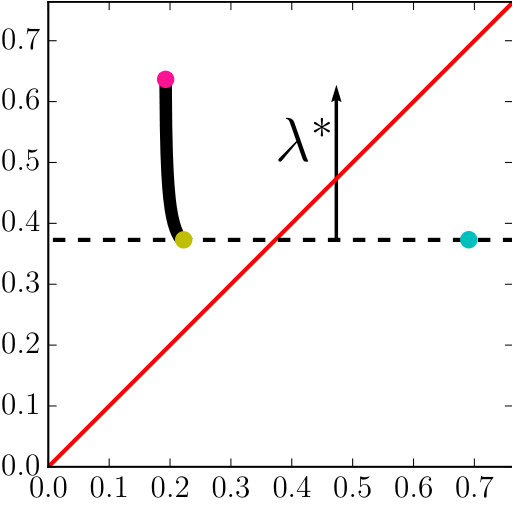 Figure 3
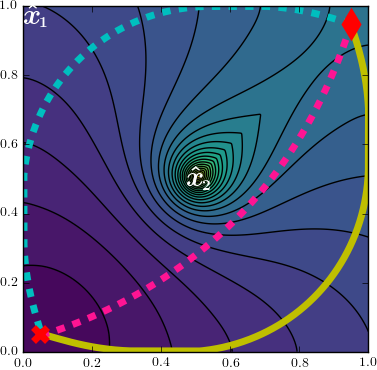 Figure 4
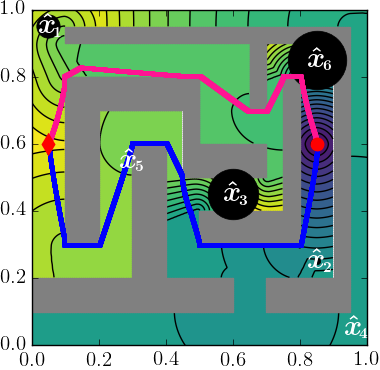 Figure 5
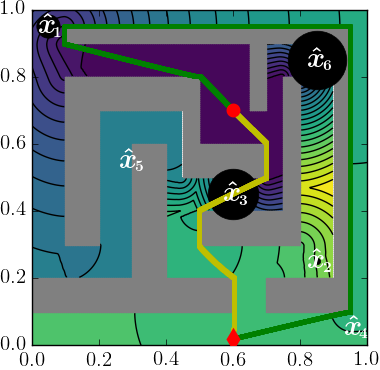 Figure 6
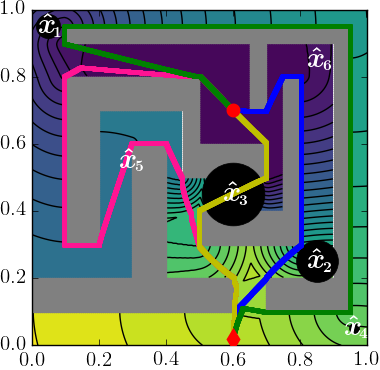 Figure 7
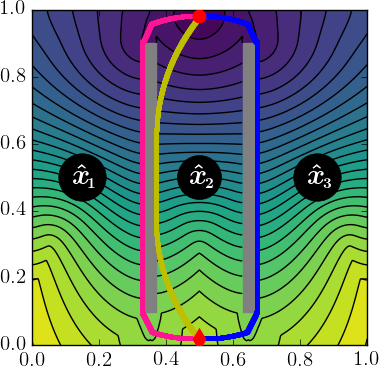 Figure 8
 Figure 9
 Figure 10
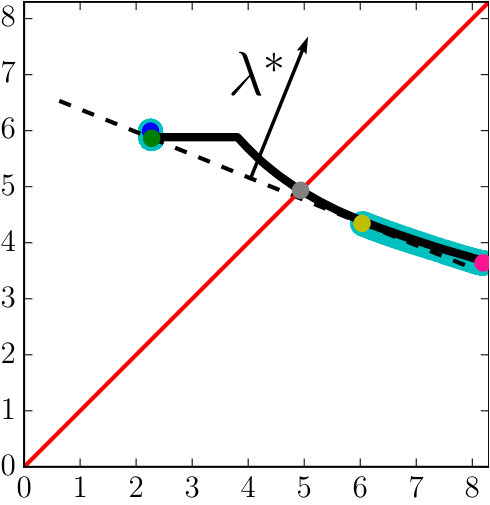 Figure 11
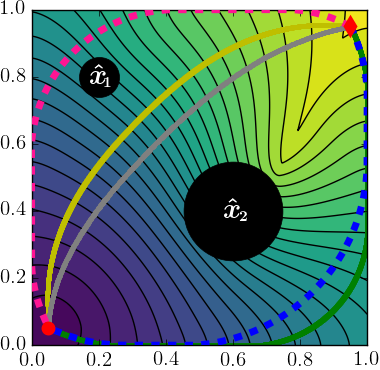 Figure 12
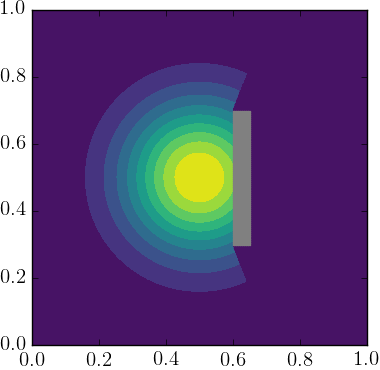 Figure 13
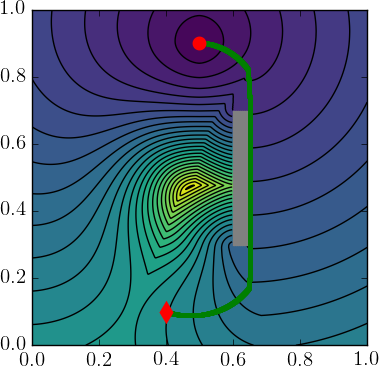 Figure 14
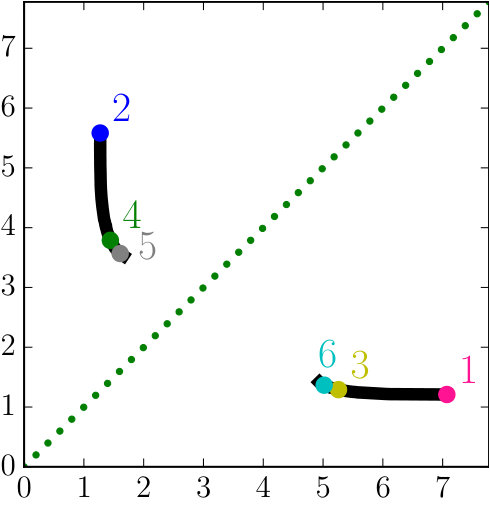 Figure 15
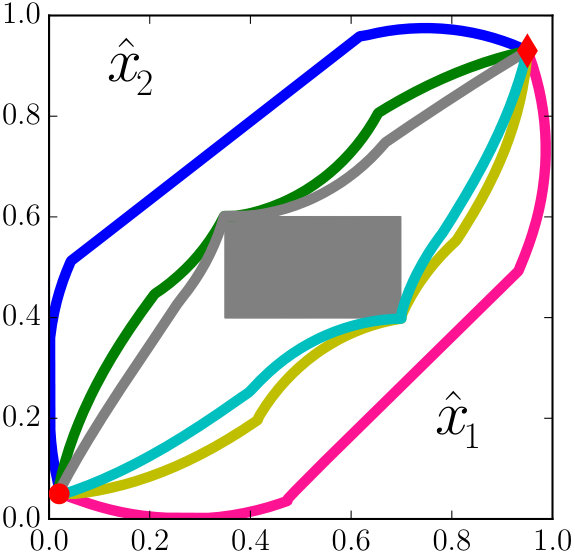 Figure 16
 Figure 17
 Figure 18
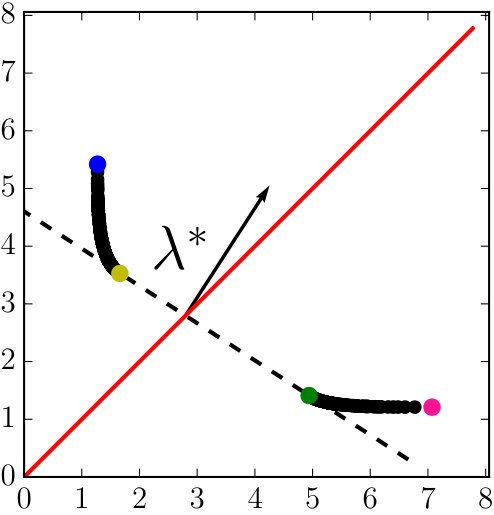 Figure 19
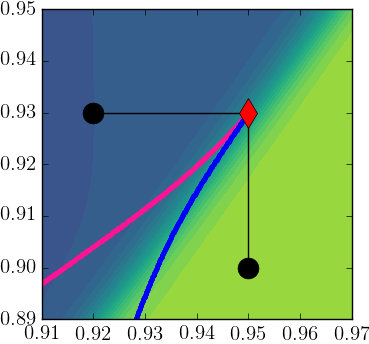 Figure 20
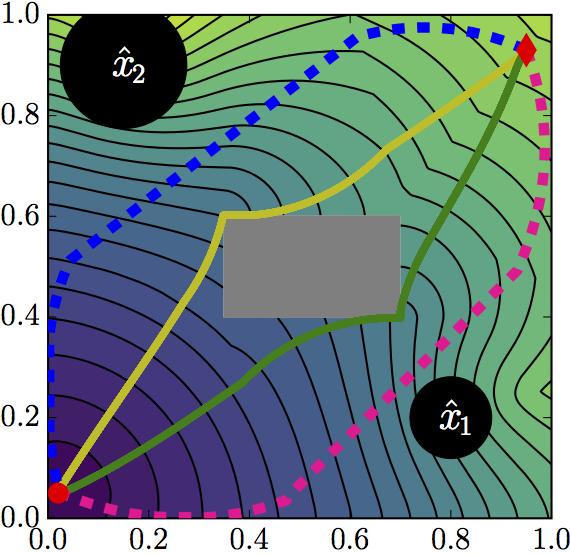 Figure 21
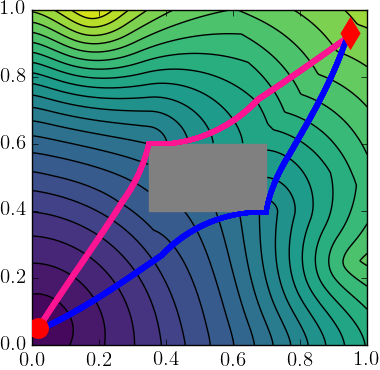 Figure 22
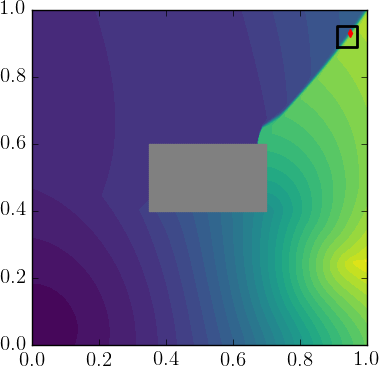 Figure 23
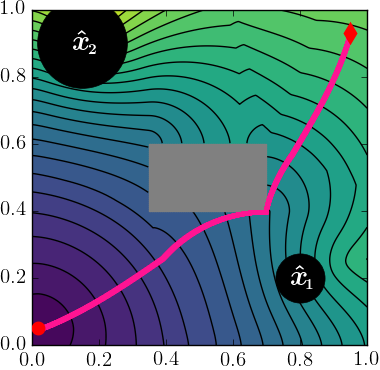 Figure 24
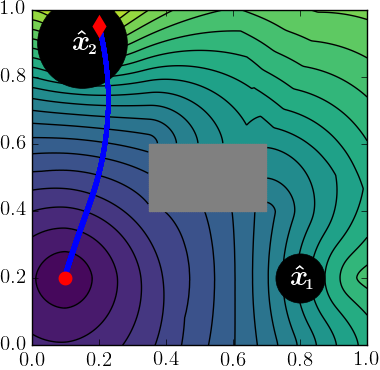 Figure 25
 Figure 26
 Figure 27
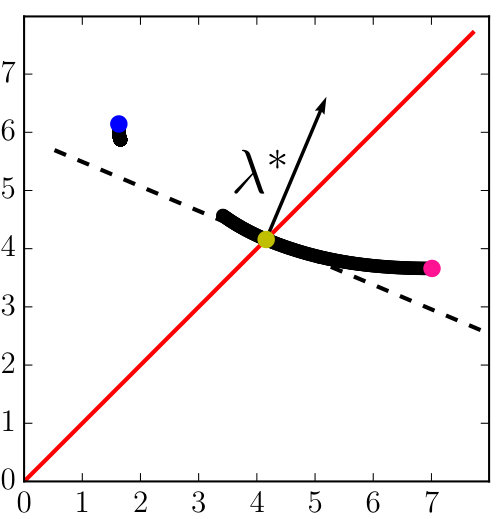 Figure 28
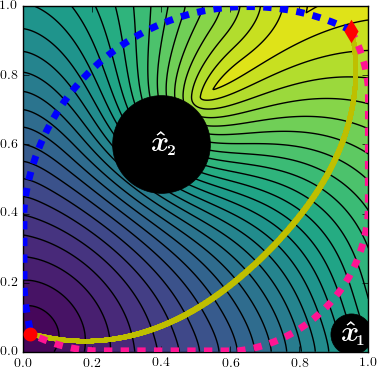 Figure 29
Peer Reviews
No public reviews on file for this paper yet. If you reviewed it on a platform where reviews are public (OpenReview, ICLR, NeurIPS, ICML), you can paste yours below so the community can read it here.
Code & Models
Videos
No videos yet. Explain this paper in a talk, walkthrough, or lecture? Add one.
