Adding a Suite of Chemical Abundances to the MACER Code for the Evolution of Massive Elliptical Galaxies
Zhaoming Gan, Ena Choi, Jeremiah P. Ostriker, Luca Ciotti, Silvia, Pellegrini

TL;DR
This paper enhances the MACER code by incorporating detailed chemical abundances and processes, enabling high-resolution simulations of metal enrichment, transport, and observational features in massive elliptical galaxies.
Contribution
It introduces a suite of 12 chemical abundances and models metal dynamics with high resolution, including star formation, AGN feedback, and observational predictions.
Findings
BAL wind metallicity up to ~8 Z_sun, matching SDSS data
Hot ISM metallicity around 2.3 Z_sun, consistent with observations
Circumnuclear cold gas disk significantly influences metal enrichment
Abstract
We add a suite of chemical abundances to the MACER (Massive AGN Controlled Ellipticals Resolved) 2D code, by solving 12 additional continuity equations for H, He, C, N, O, Ne, Mg, Si, S, Ca, Fe and Ni respectively with sources from AGB stars and supernovae of type Ia and II with metal yields based on standard stellar physics. New stars, formed in Toomre unstable circumnuclear disks (of a size parsec), are assumed to have a top-heavy initial mass function with a power index of 1.65. The metal dilution effects due to cosmic accretion are also included. With the high resolution of few parsecs in central regions, resolved black hole accretion and AGN feedback, we can track the metal enrichment, transportation and dilution throughout the modeled massive elliptical galaxy of velocity dispersion km/s. We retrieve the chemical composition of the BAL winds launched by the…
Click any figure to enlarge with its caption.
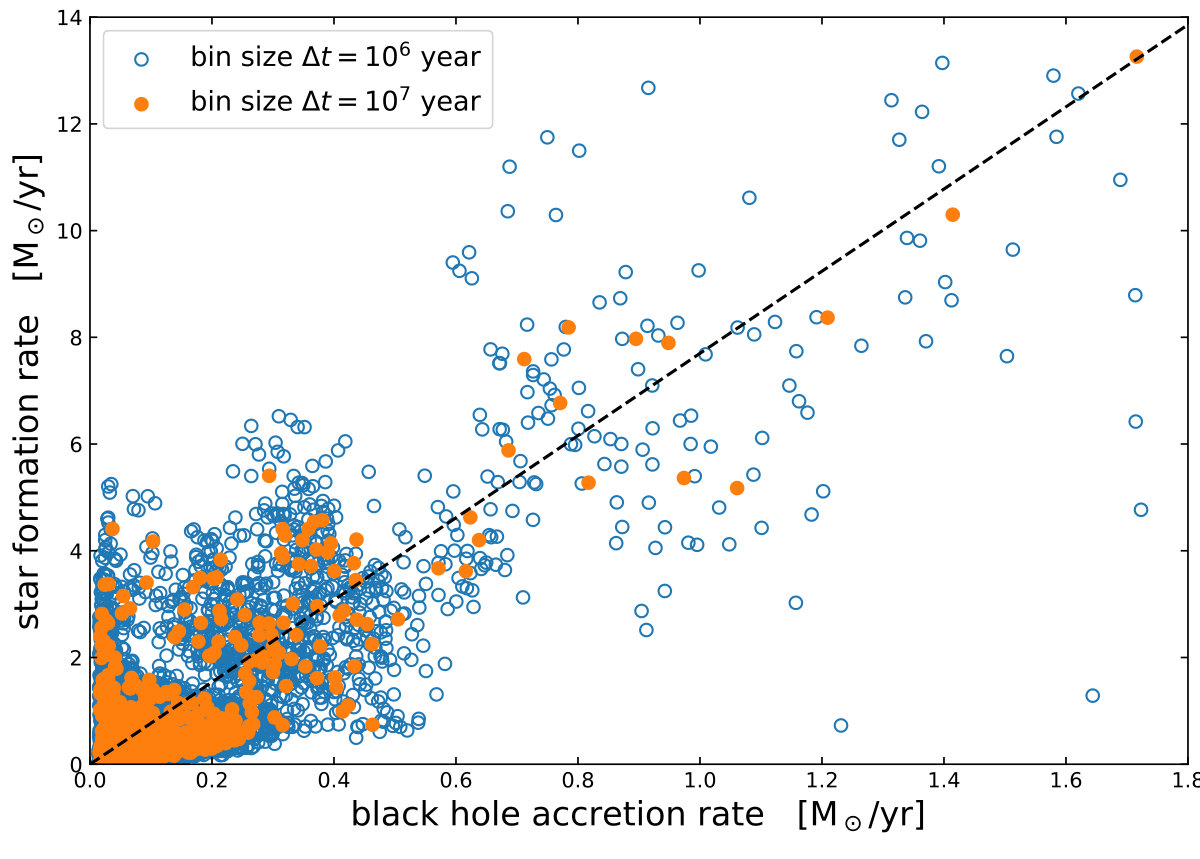 Figure 1
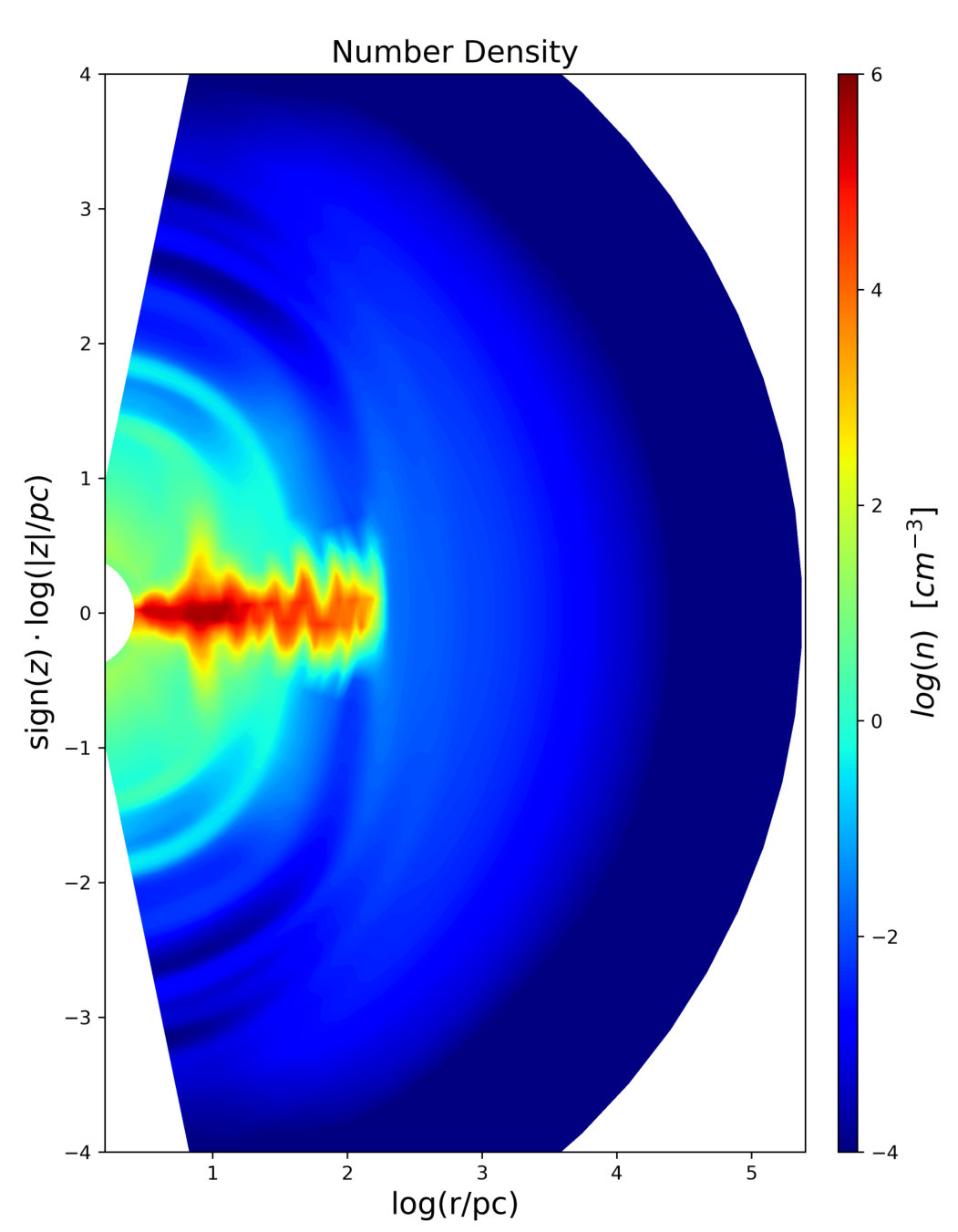 Figure 2
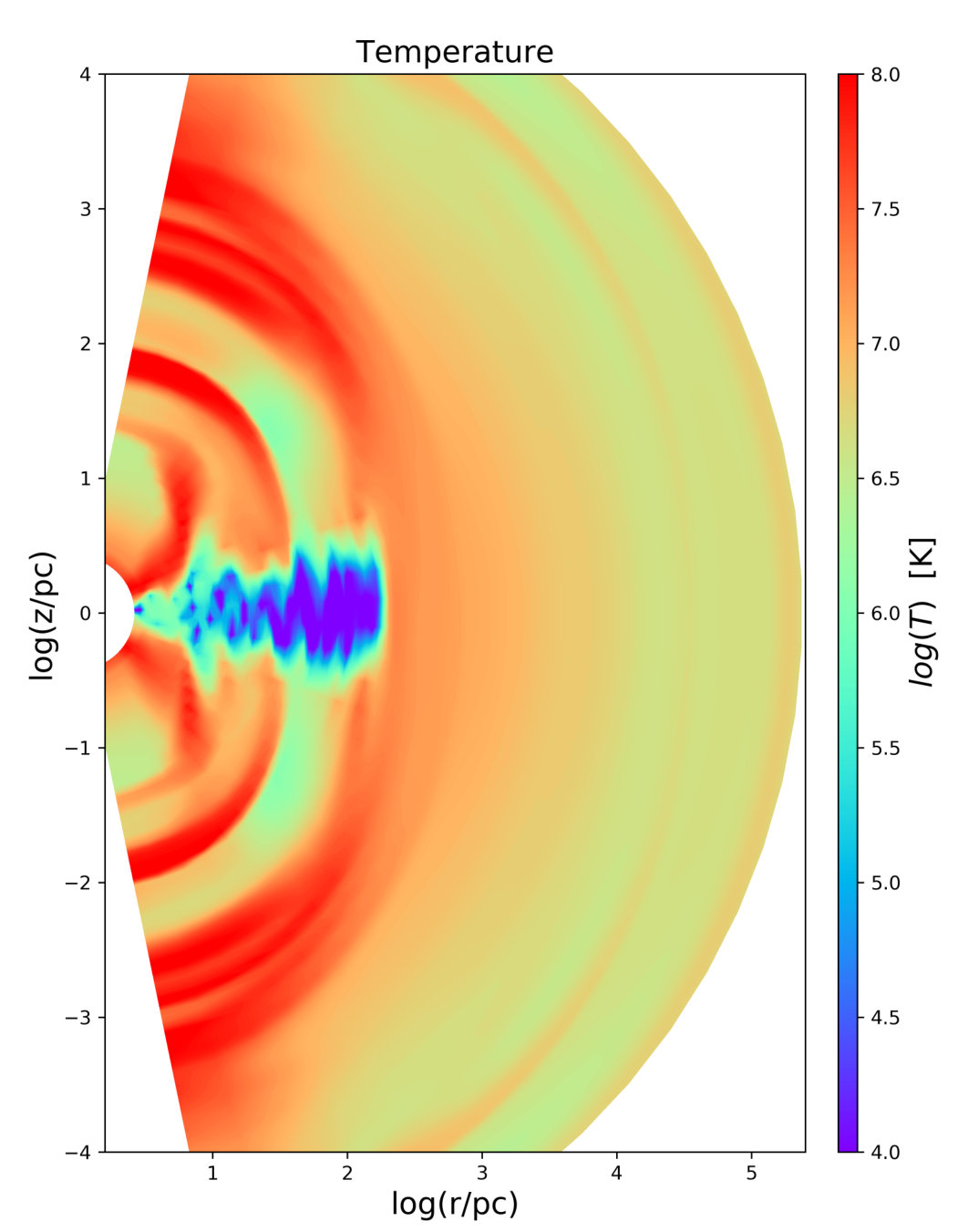 Figure 3
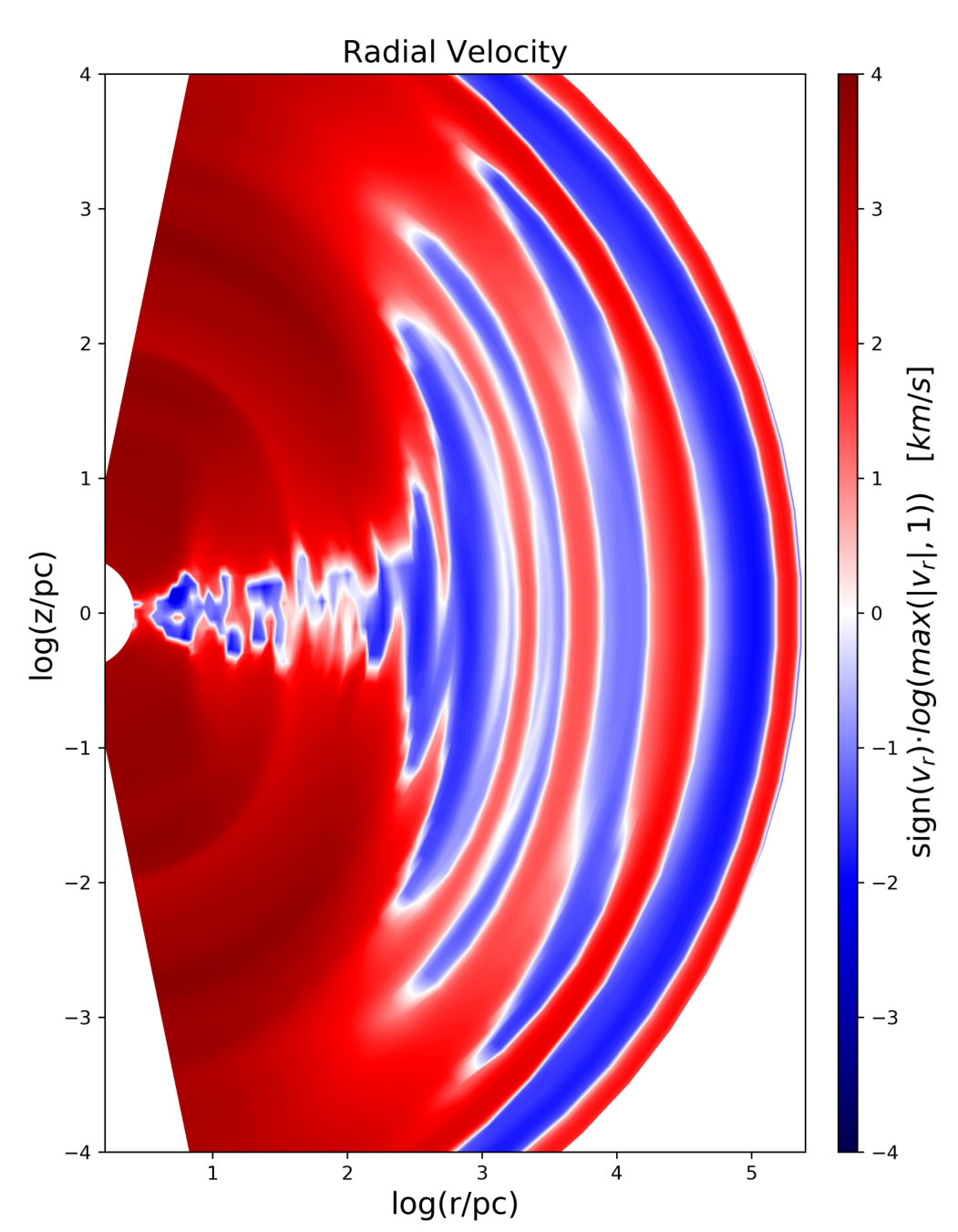 Figure 4
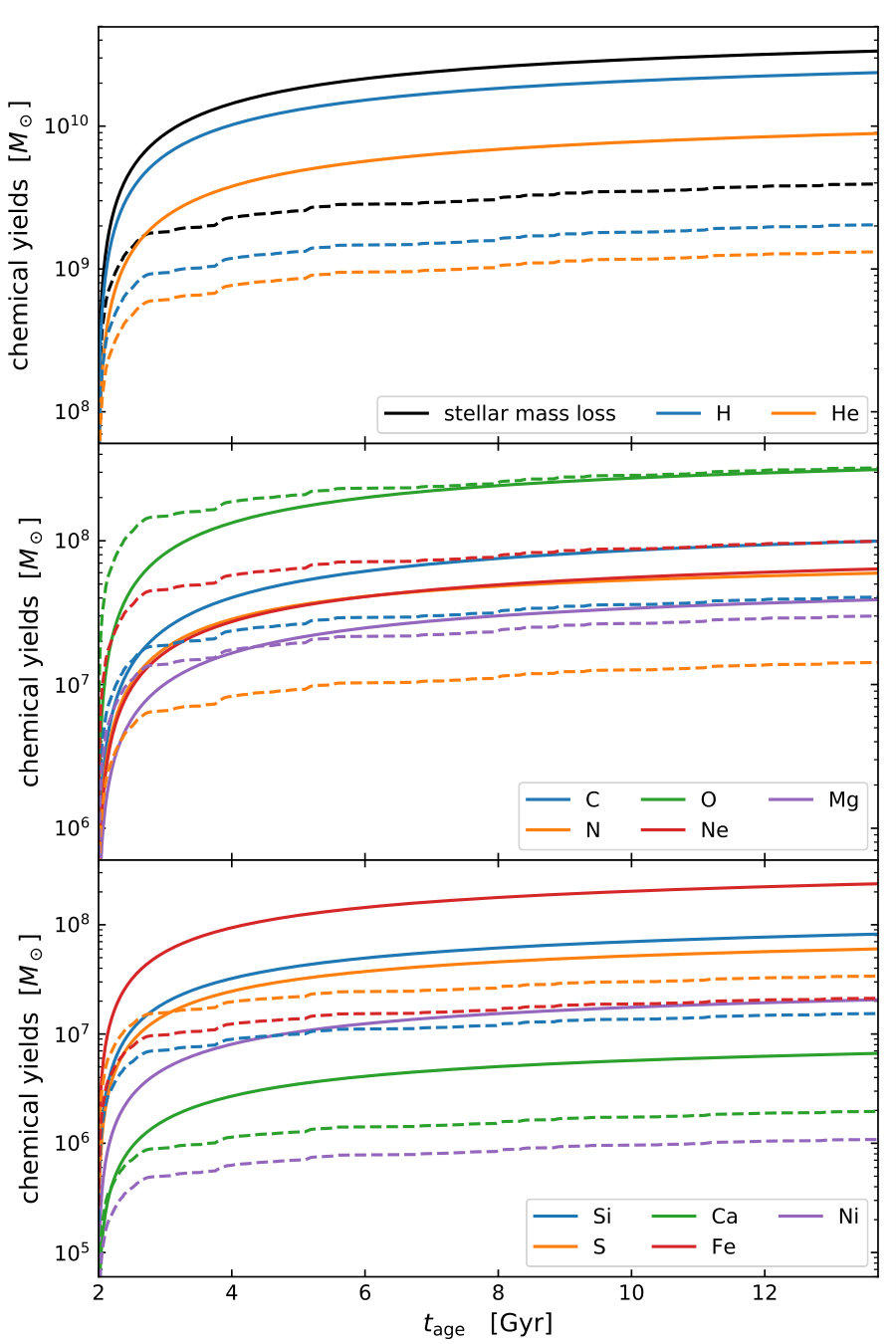 Figure 5
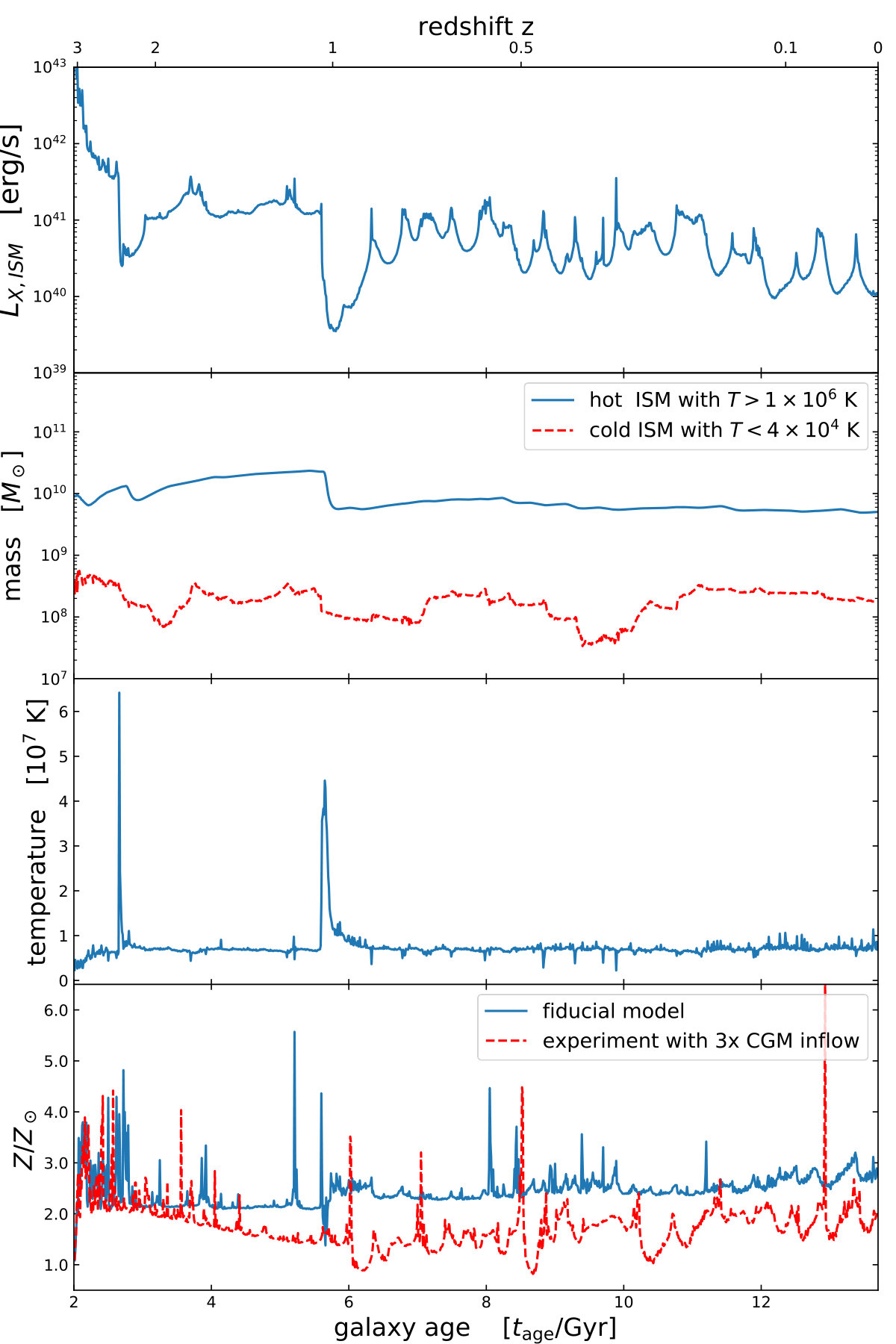 Figure 6
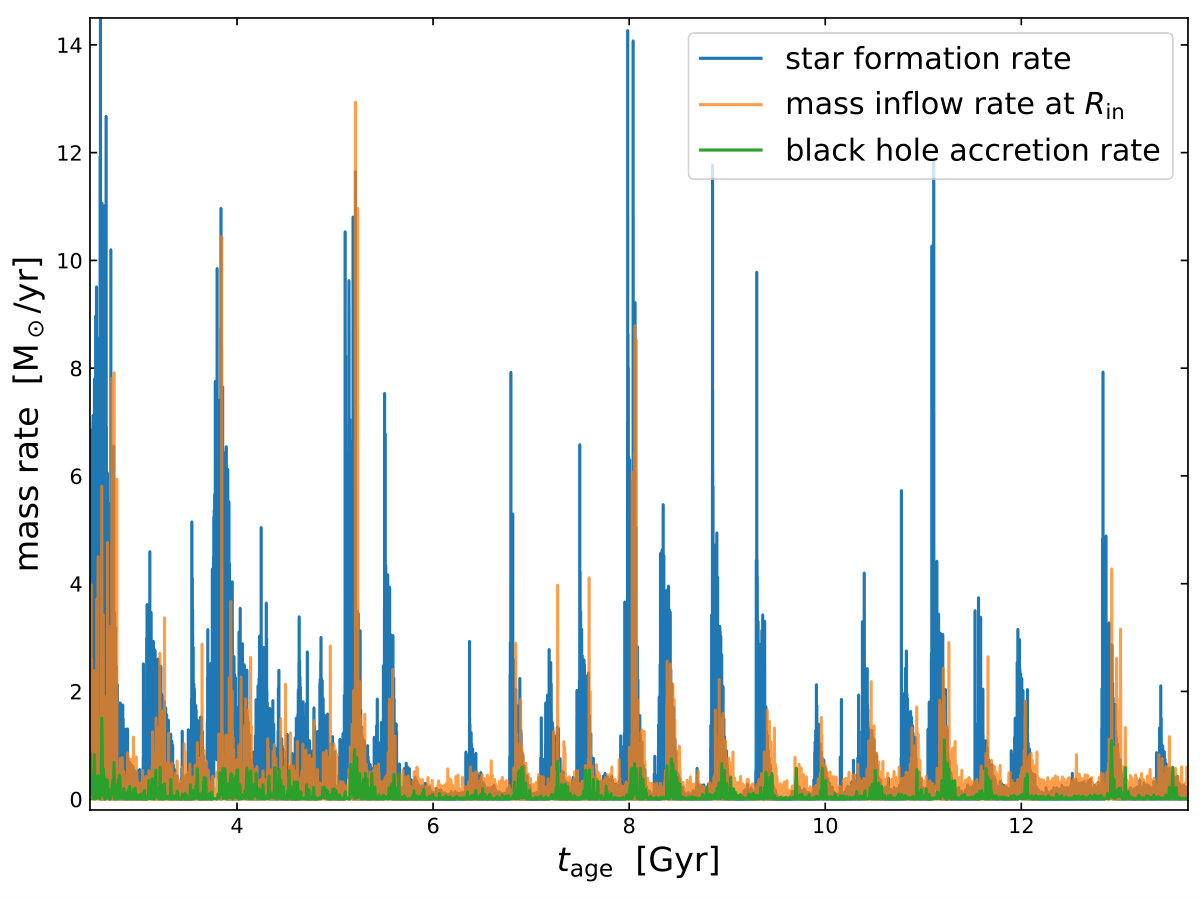 Figure 7
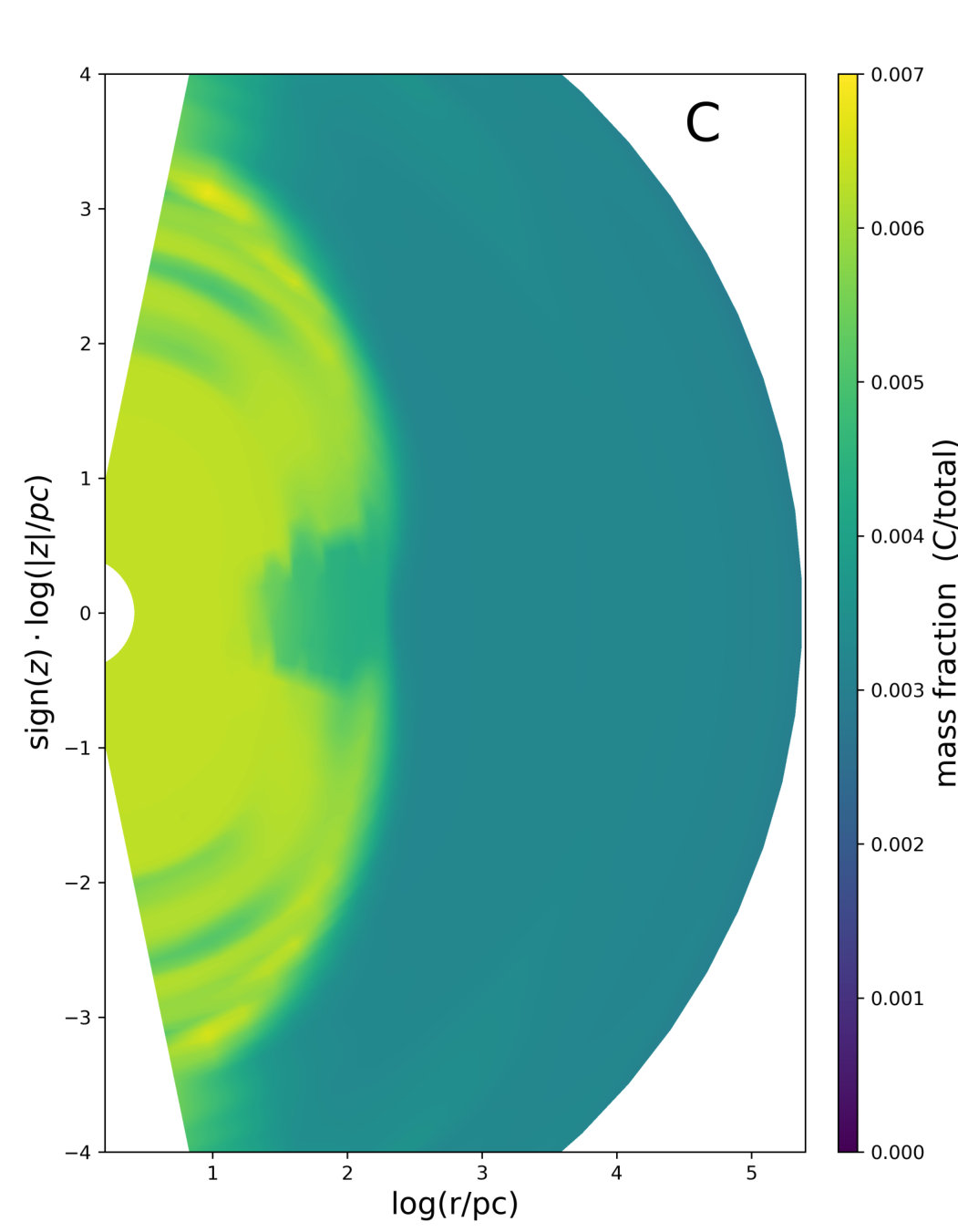 Figure 8
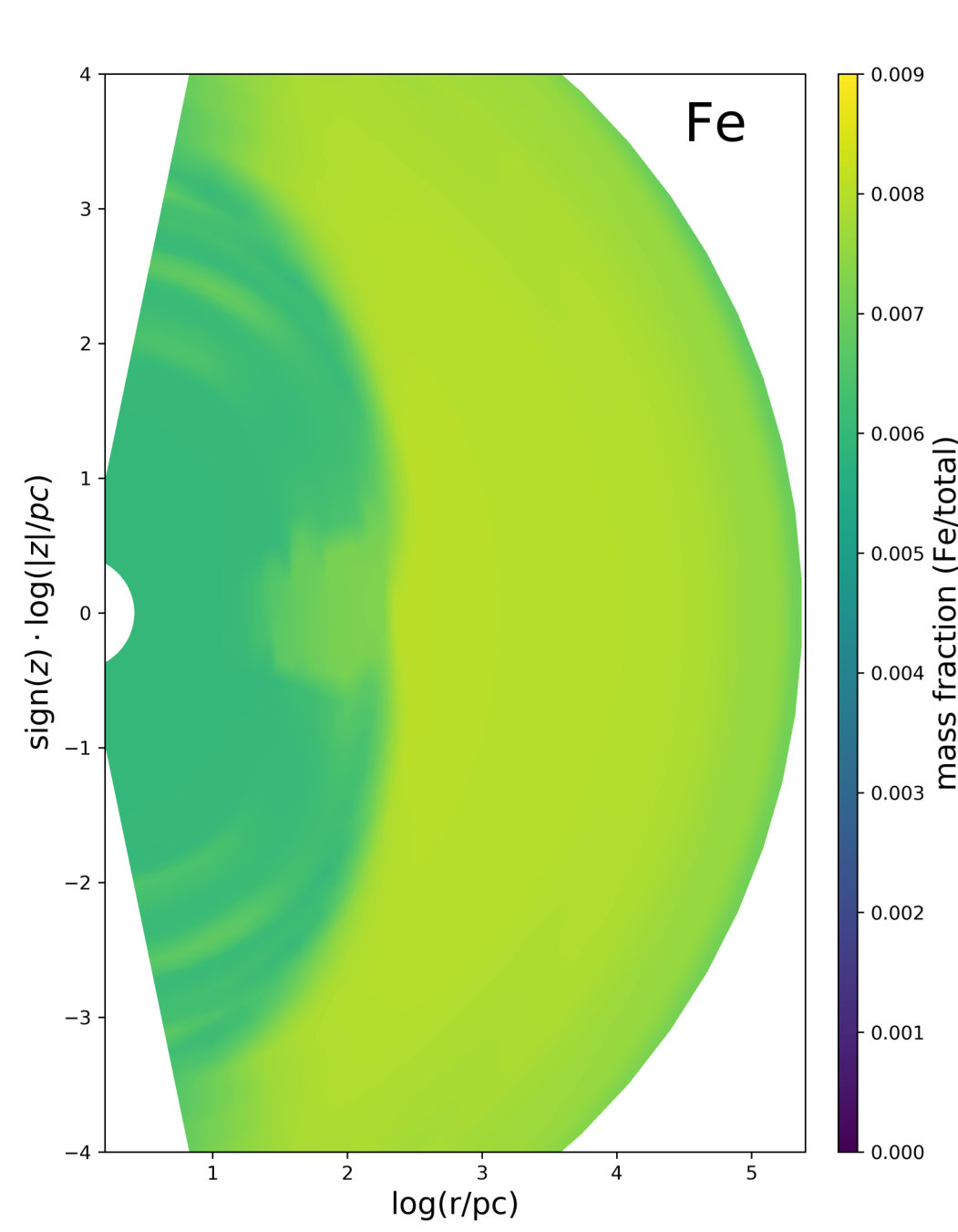 Figure 9
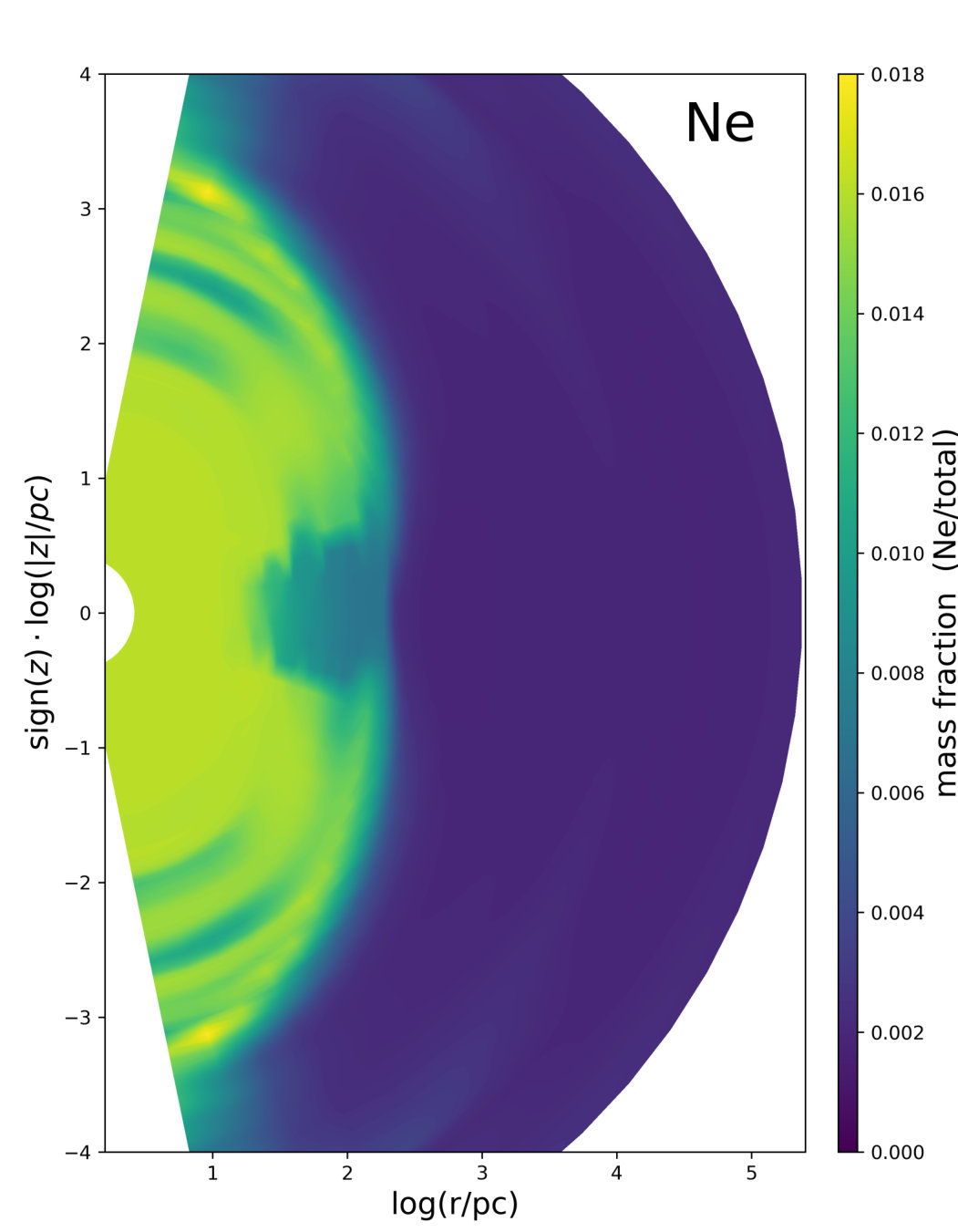 Figure 10
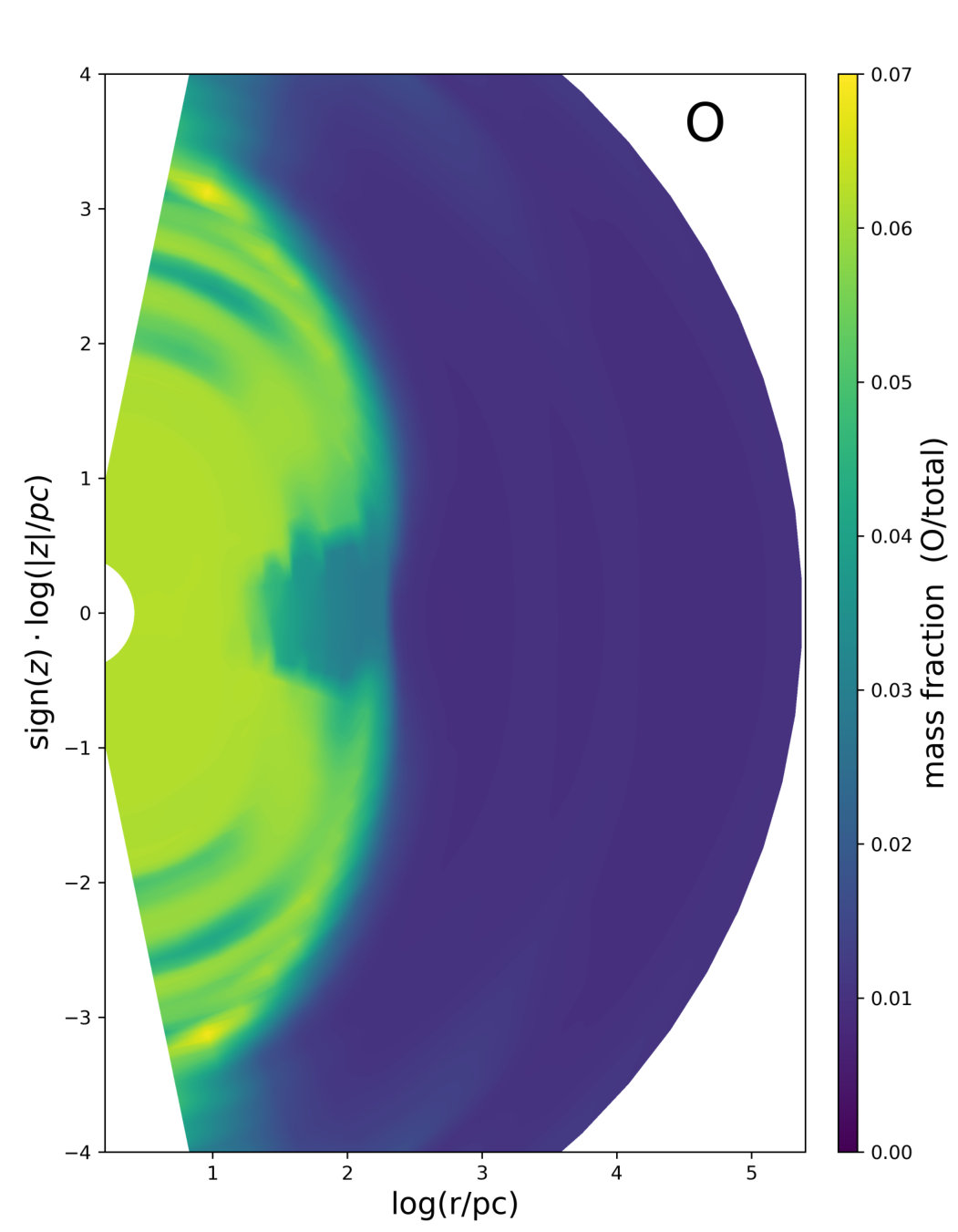 Figure 11
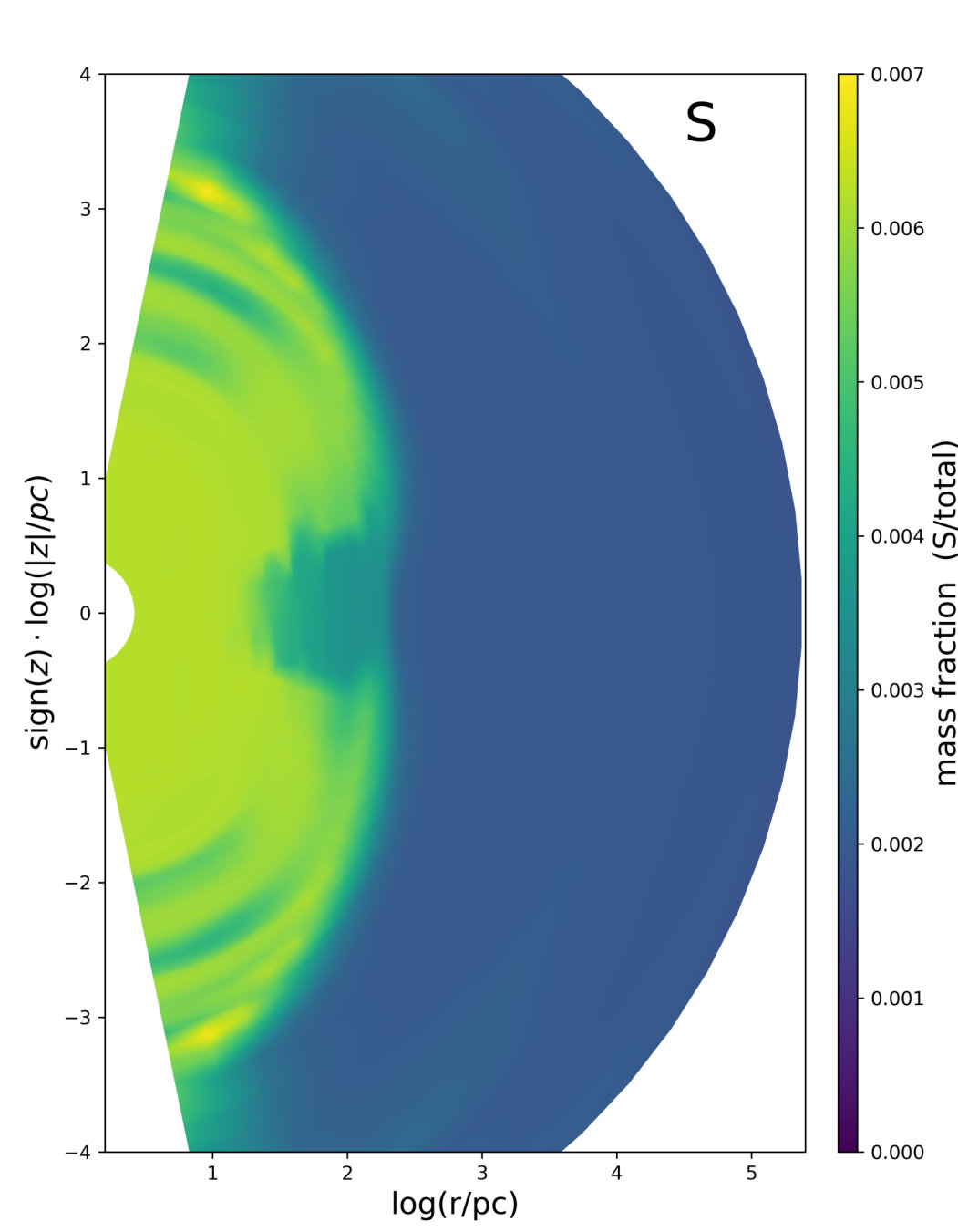 Figure 12
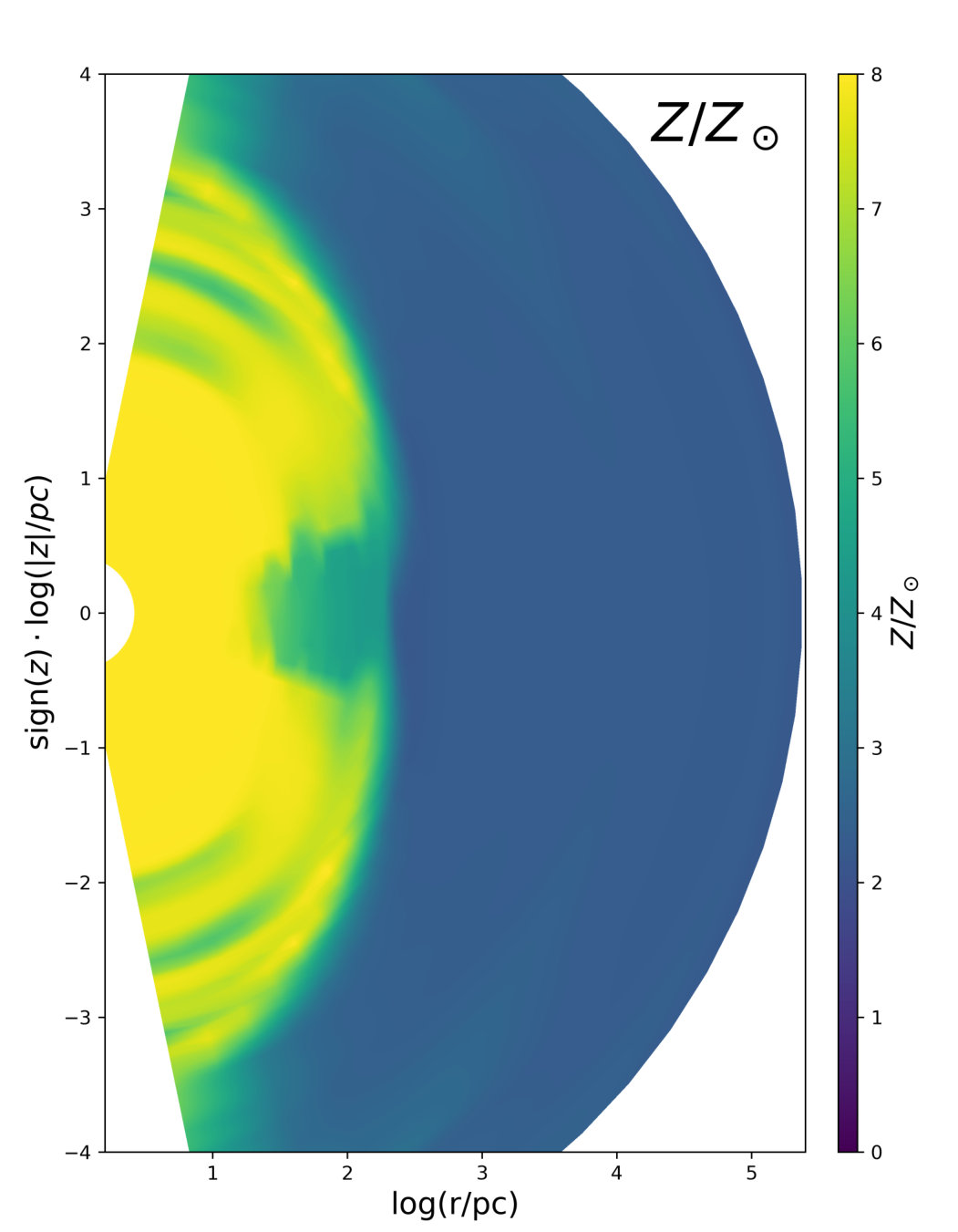 Figure 13
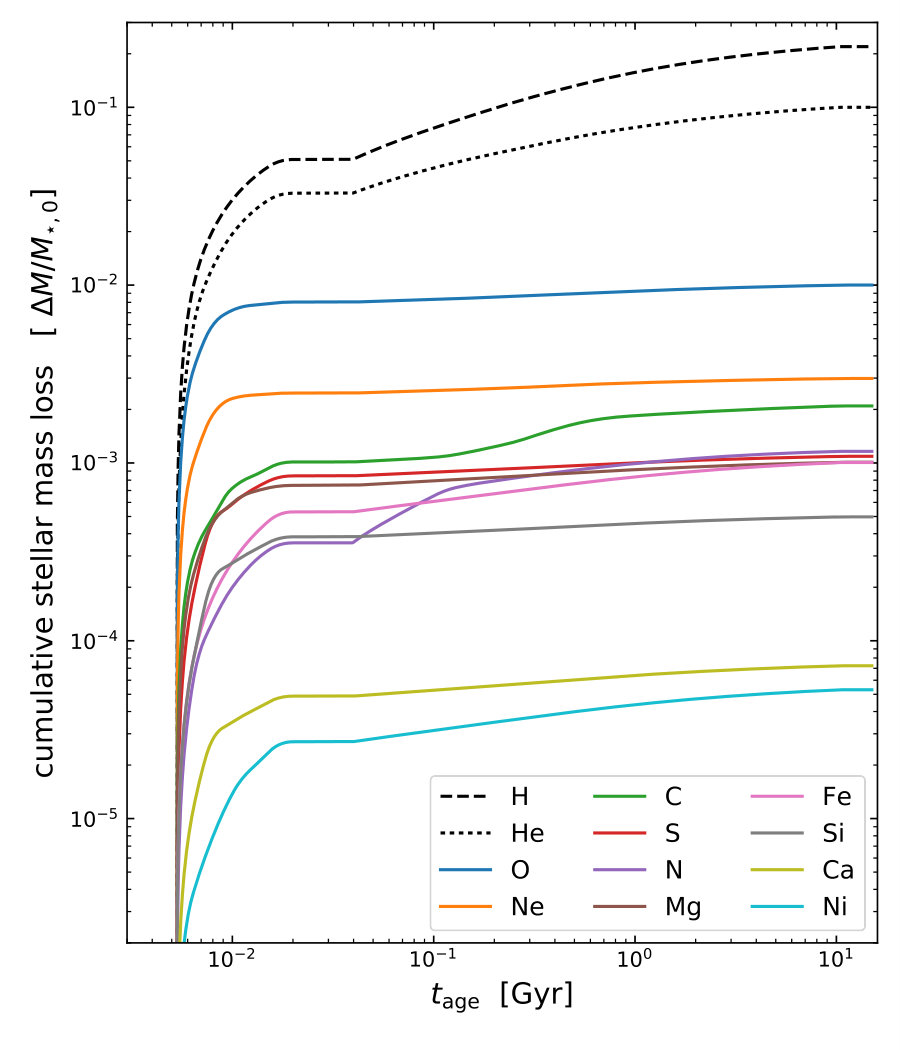 Figure 14
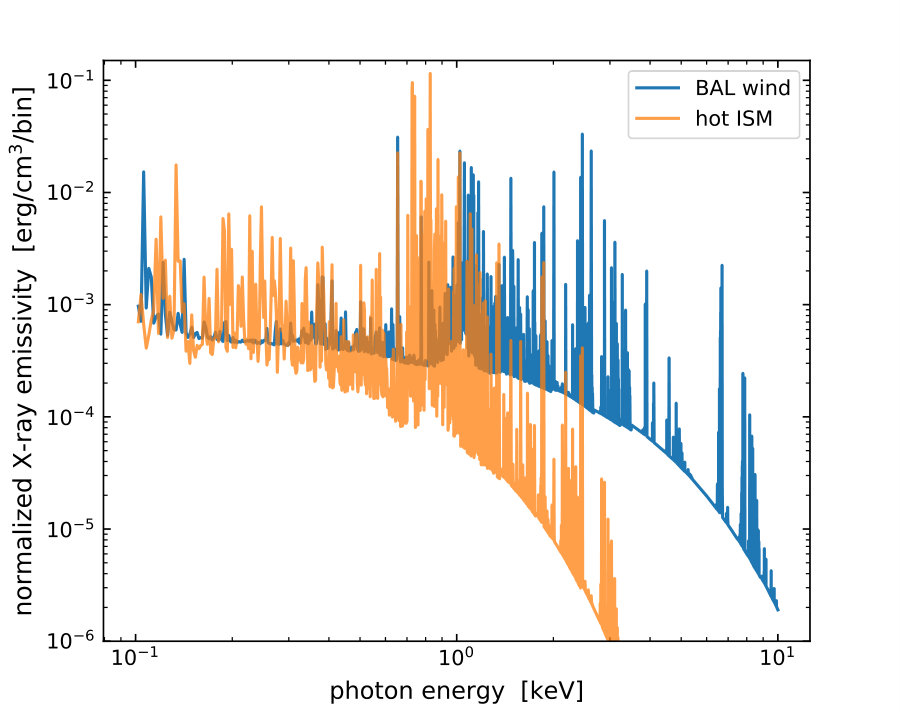 Figure 15
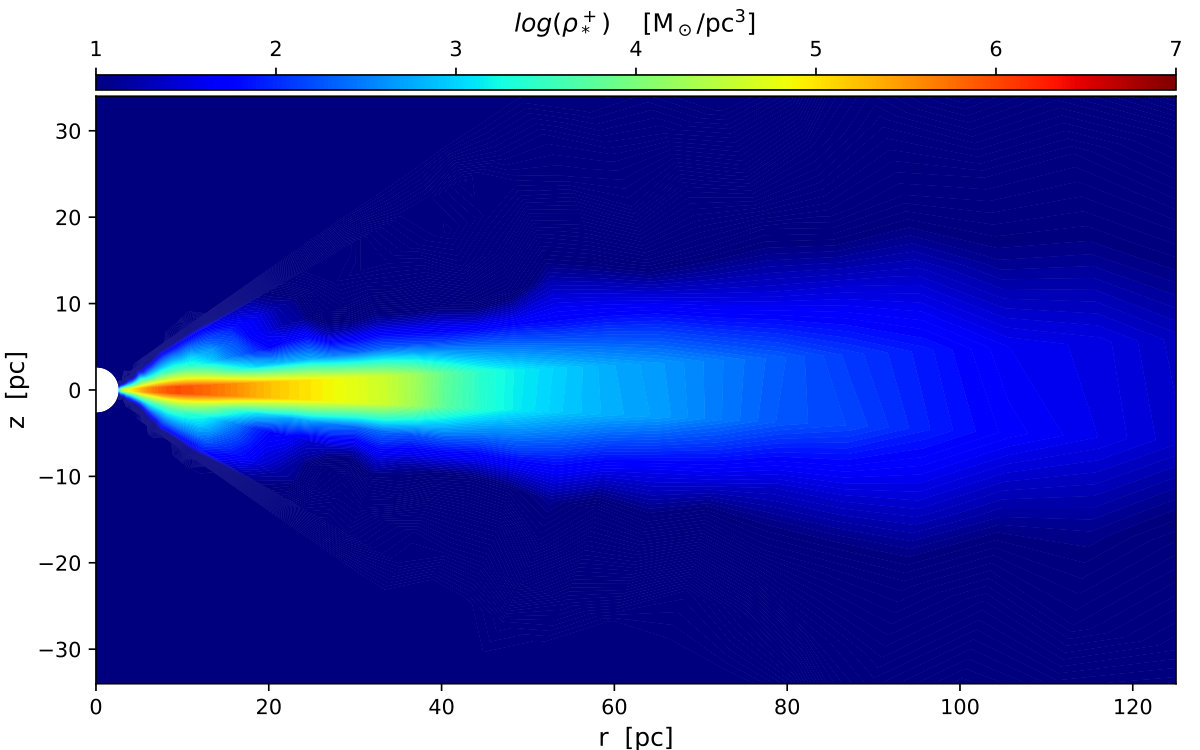 Figure 16
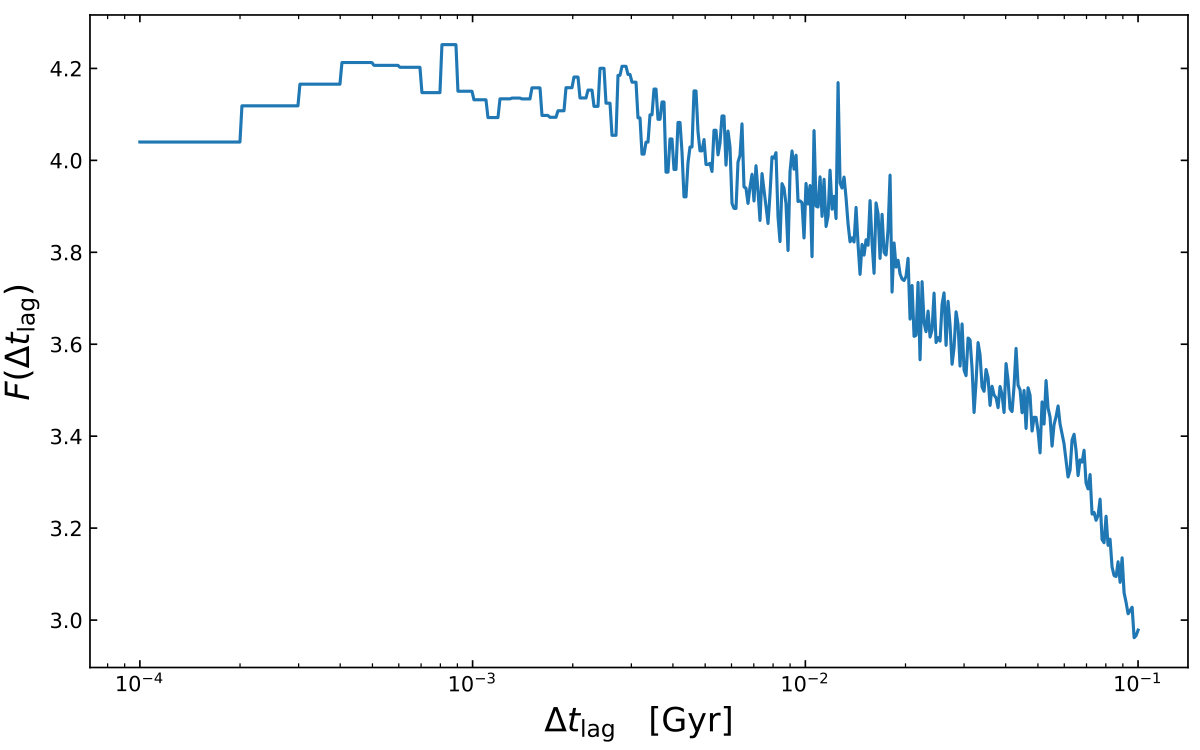 Figure 17
Peer Reviews
No public reviews on file for this paper yet. If you reviewed it on a platform where reviews are public (OpenReview, ICLR, NeurIPS, ICML), you can paste yours below so the community can read it here.
Videos
No videos yet. Explain this paper in a talk, walkthrough, or lecture? Add one.