Orbital-selective confinement effect of Ru $4d$ orbitals in SrRuO$_3$ ultrathin film
Soonmin Kang, Yi Tseng, Beom Hyun Kim, Seokhwan Yun, Byungmin Sohn,, Bongju Kim, Daniel McNally, Eugenio Paris, Choong H. Kim, Changyoung Kim, Tae, Won Noh, Sumio Ishihara, Thorsten Schmitt, Je-Geun Park

TL;DR
This study uses RIXS to reveal how quantum confinement in ultrathin SrRuO$_3$ films causes orbital splitting and drives a metal-insulator transition, highlighting the orbital-selective nature of the electronic structure.
Contribution
It demonstrates the orbital-selective quantum confinement effect causing Mott insulating behavior in ultrathin SrRuO$_3$ films, supported by RIXS and theoretical calculations.
Findings
Orbital splitting due to quantum confinement in ultrathin films
Suppression of electron-hole continuum at the metal-insulator transition
QCE induces Mott insulating phase in SrRuO$_3$
Abstract
The electronic structure of SrRuO thin film with thickness from 50 to 1 unit cell (u.c.) is investigated via the resonant inelastic x-ray scattering (RIXS) technique at the O K-edge to unravel the intriguing interplay of orbital and charge degrees of freedom. We found that orbital-selective quantum confinement effect (QCE) induces the splitting of Ru orbitals. At the same time, we observed a clear suppression of the electron-hole continuum across the metal-to-insulator transition (MIT) occurring at the 4 u.c. sample. From these two clear observations we conclude that QCE gives rise to a Mott insulating phase in ultrathin SrRuO films. Our interpretation of the RIXS spectra is supported by the configuration interaction calculations of RuO clusters.
Click any figure to enlarge with its caption.
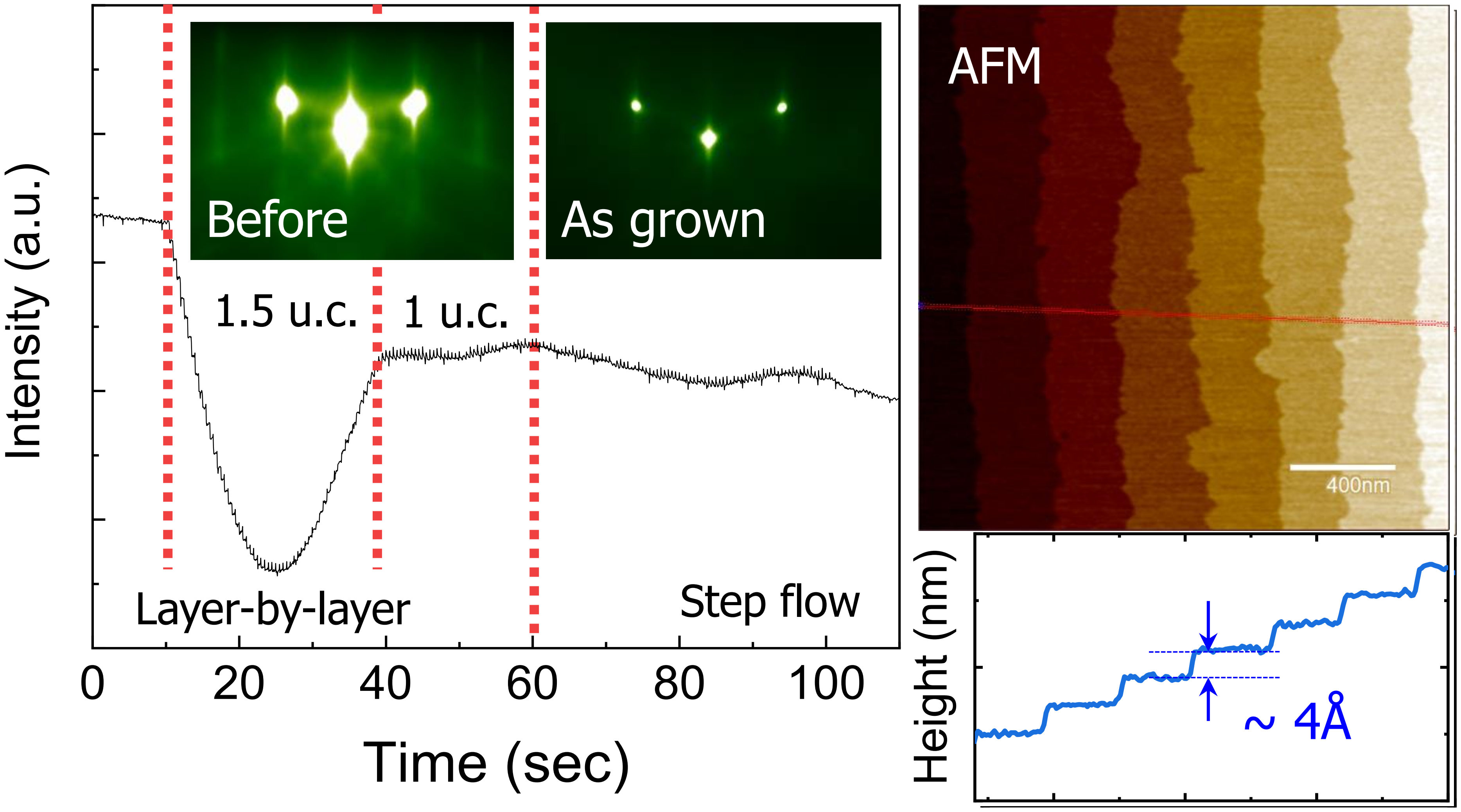 Figure 1
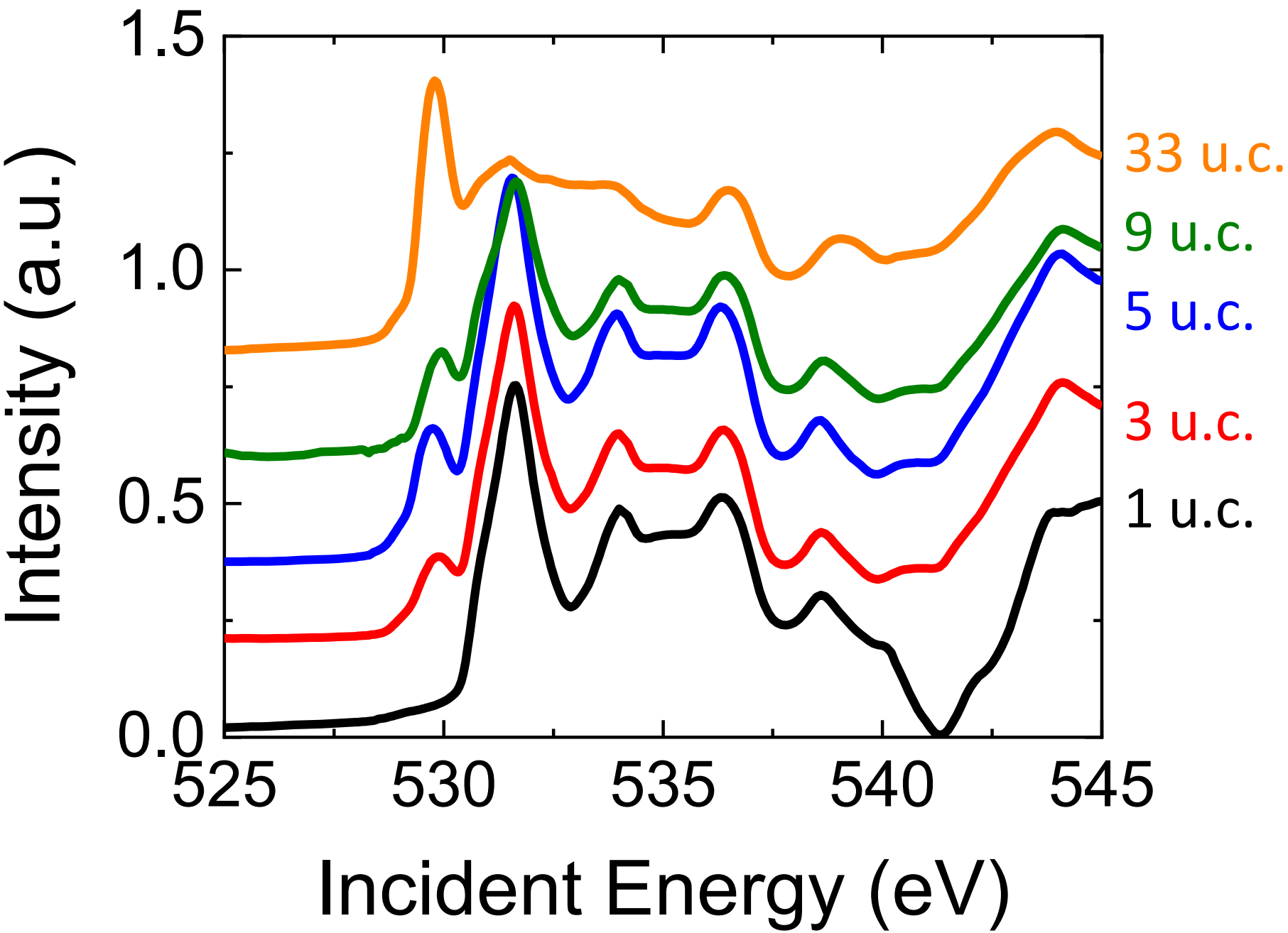 Figure 2
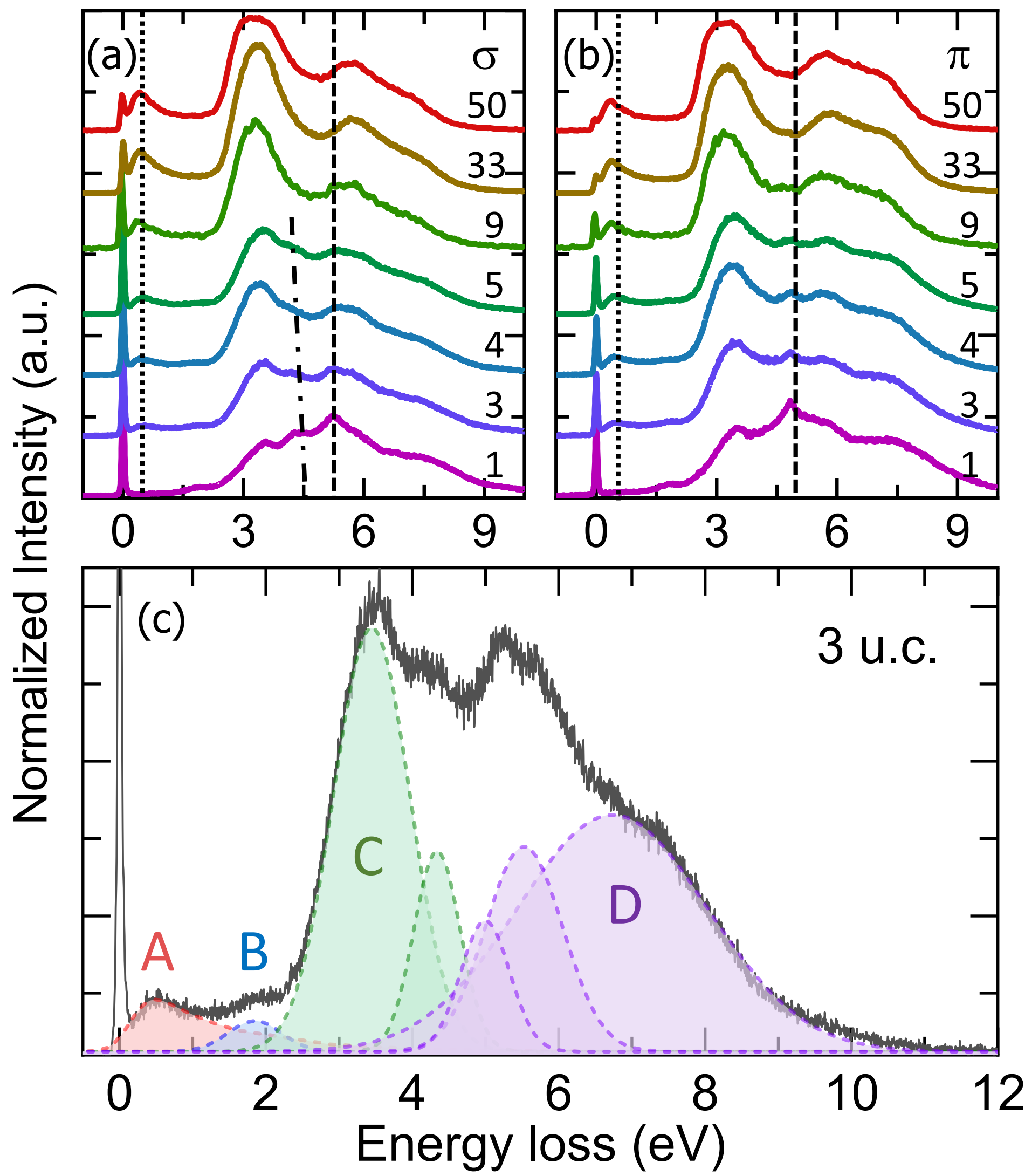 Figure 3
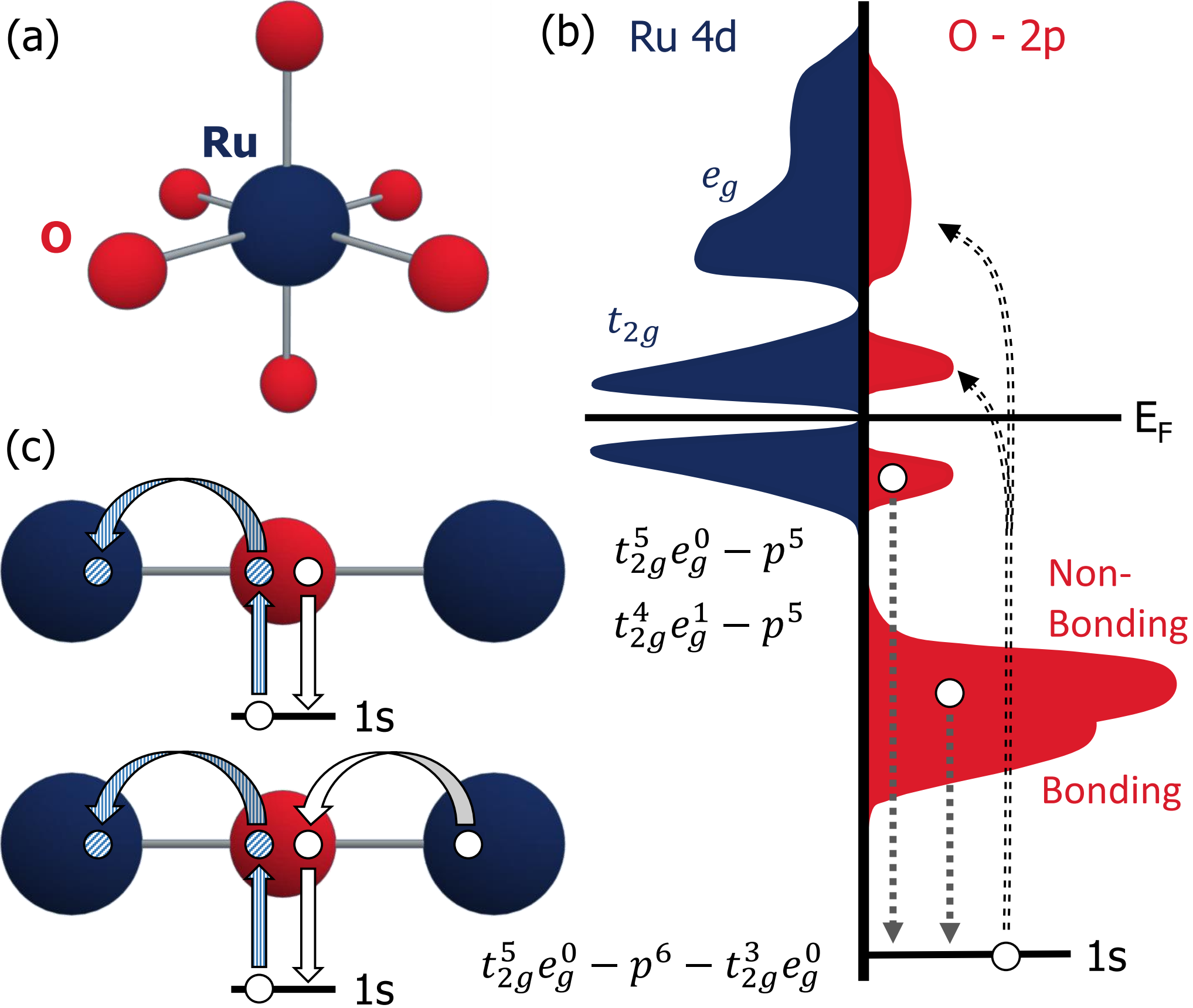 Figure 4
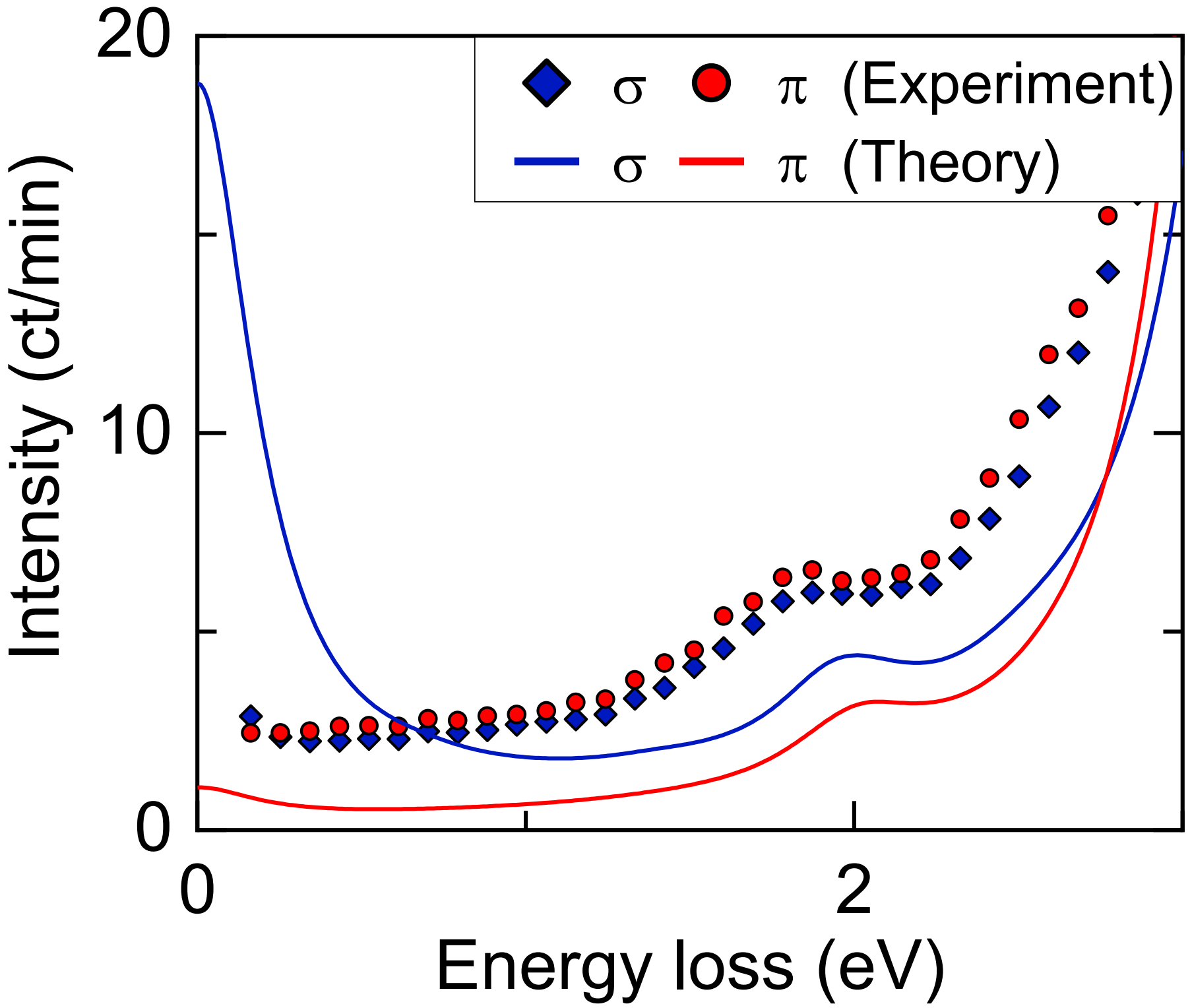 Figure 5
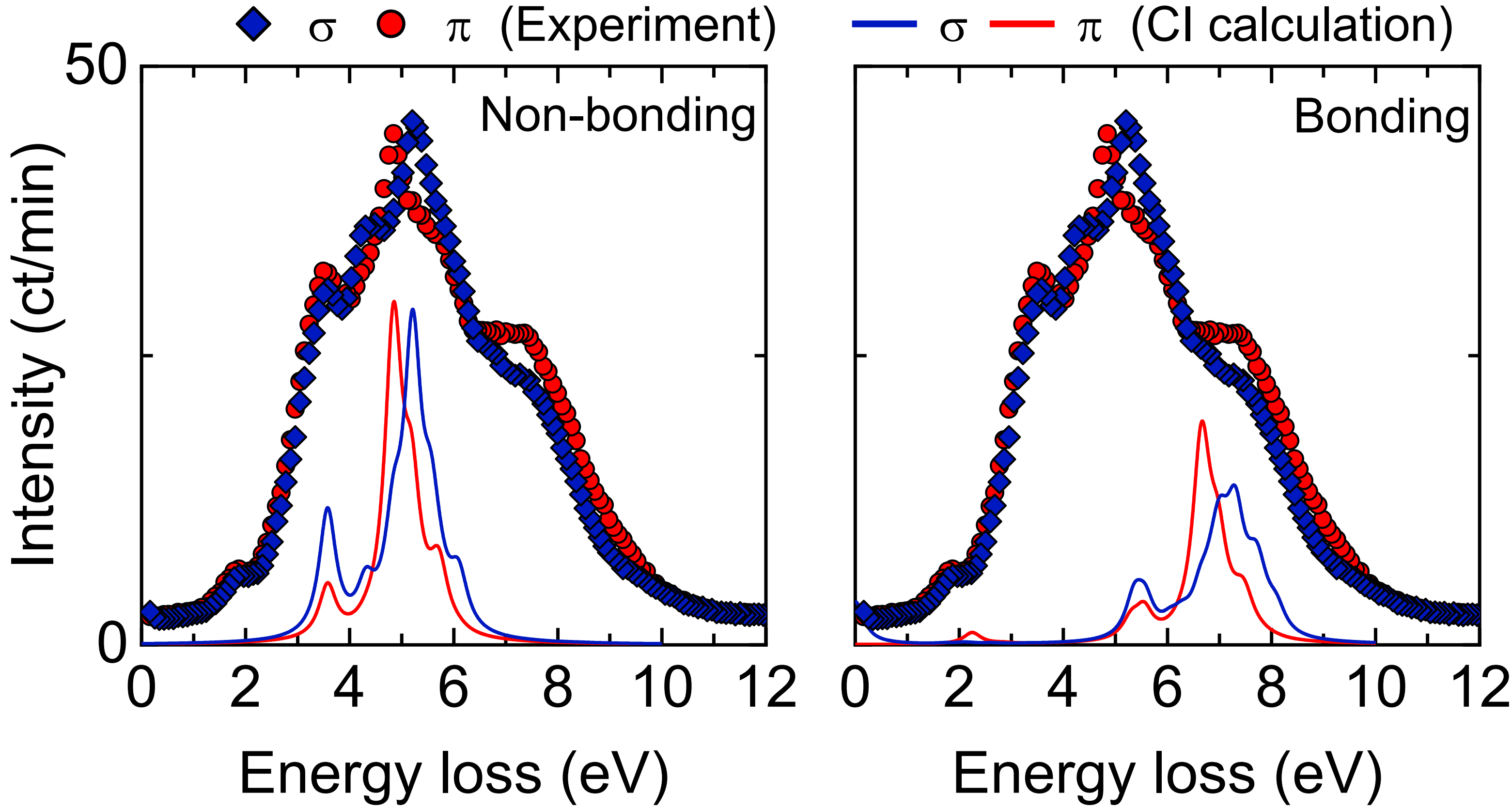 Figure 6
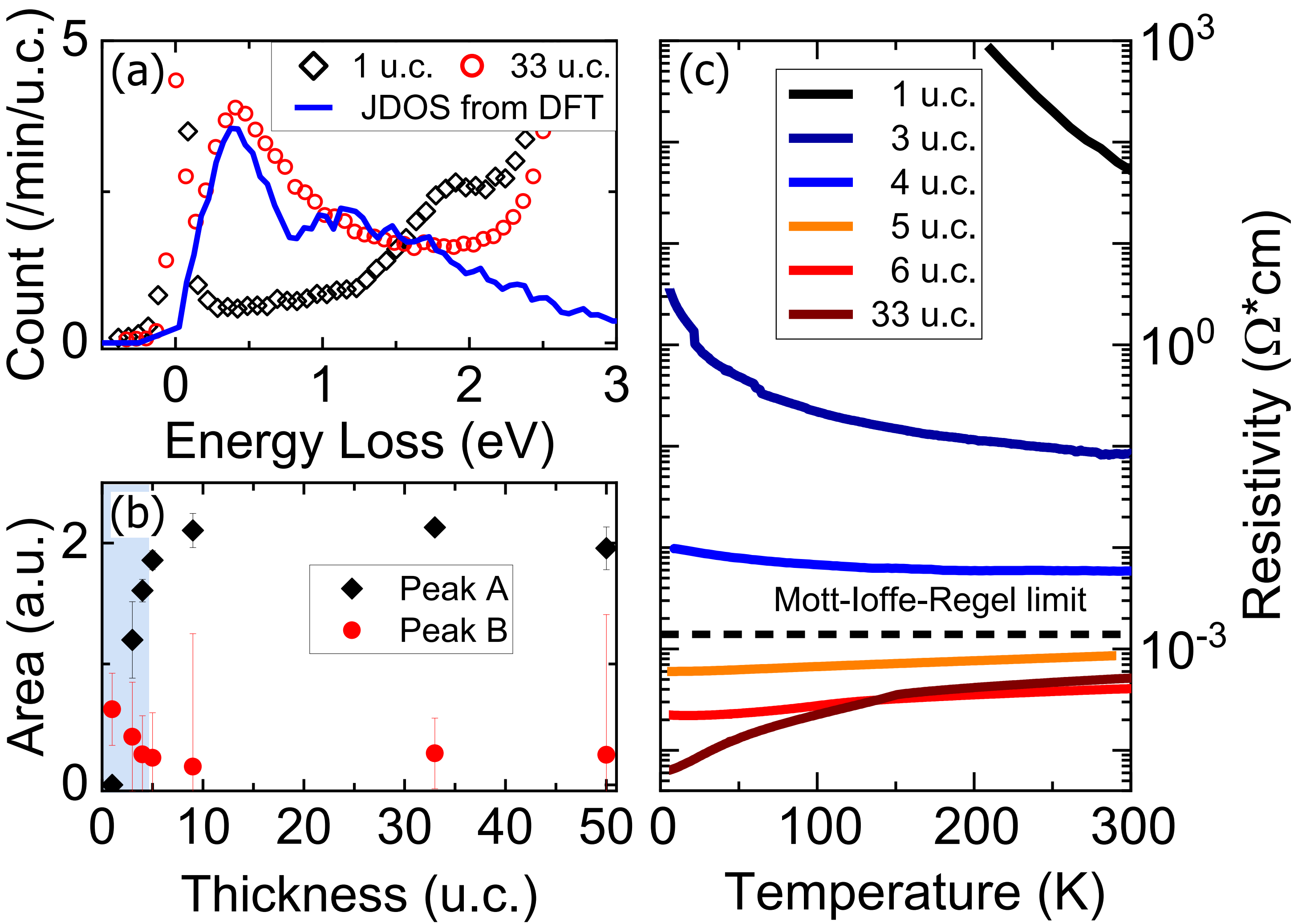 Figure 7
| 2.1 | 0.8 | 0.4 | 0.1 | 2.0 | 0.3 | 3.3 | 1.6 | -1.0 | 0.46 |
Peer Reviews
No public reviews on file for this paper yet. If you reviewed it on a platform where reviews are public (OpenReview, ICLR, NeurIPS, ICML), you can paste yours below so the community can read it here.
Videos
No videos yet. Explain this paper in a talk, walkthrough, or lecture? Add one.
Orbital-selective confinement effect of Ru 4 orbitals in SrRuO3 ultrathin film
Soonmin Kang
Center for Correlated Electron Systems, Institute for Basic Science (IBS), Seoul 08826, Korea
Department of Physics and Astronomy, Seoul National University, Seoul 08826, Korea
Yi Tseng
Swiss Light Source, Paul Scherrer Institut (PSI), CH-5232 Villigen, Switzerland
Beom Hyun Kim
Korea Institute for Advanced Study (KIAS), Seoul 02455, Korea
Seokhwan Yun
Center for Correlated Electron Systems, Institute for Basic Science (IBS), Seoul 08826, Korea
Department of Physics and Astronomy, Seoul National University, Seoul 08826, Korea
Byungmin Sohn
Center for Correlated Electron Systems, Institute for Basic Science (IBS), Seoul 08826, Korea
Department of Physics and Astronomy, Seoul National University, Seoul 08826, Korea
Bongju Kim
Center for Correlated Electron Systems, Institute for Basic Science (IBS), Seoul 08826, Korea
Department of Physics and Astronomy, Seoul National University, Seoul 08826, Korea
Daniel McNally
Swiss Light Source, Paul Scherrer Institut (PSI), CH-5232 Villigen, Switzerland
Eugenio Paris
Swiss Light Source, Paul Scherrer Institut (PSI), CH-5232 Villigen, Switzerland
Choong H. Kim
Center for Correlated Electron Systems, Institute for Basic Science (IBS), Seoul 08826, Korea
Department of Physics and Astronomy, Seoul National University, Seoul 08826, Korea
Changyoung Kim
Center for Correlated Electron Systems, Institute for Basic Science (IBS), Seoul 08826, Korea
Department of Physics and Astronomy, Seoul National University, Seoul 08826, Korea
Tae Won Noh
Center for Correlated Electron Systems, Institute for Basic Science (IBS), Seoul 08826, Korea
Department of Physics and Astronomy, Seoul National University, Seoul 08826, Korea
Sumio Ishihara
Department of Physics, Tohoku University, Sendai 980-8578, Japan
Thorsten Schmitt
Swiss Light Source, Paul Scherrer Institut (PSI), CH-5232 Villigen, Switzerland
Je-Geun Park
Center for Correlated Electron Systems, Institute for Basic Science (IBS), Seoul 08826, Korea
Department of Physics and Astronomy, Seoul National University, Seoul 08826, Korea
Abstract
The electronic structure of SrRuO3 thin film with thickness from 50 to 1 unit cell (u.c.) is investigated via the resonant inelastic x-ray scattering (RIXS) technique at the O K-edge to unravel the intriguing interplay of orbital and charge degrees of freedom. We found that orbital-selective quantum confinement effect (QCE) induces the splitting of Ru orbitals. At the same time, we observed a clear suppression of the electron-hole continuum across the metal-to-insulator transition (MIT) occurring at the 4 u.c. sample. From these two clear observations we conclude that QCE gives rise to a Mott insulating phase in ultrathin SrRuO3 films. Our interpretation of the RIXS spectra is supported by the configuration interaction calculations of RuO6 clusters.
pacs:
fill in later
I. Introduction
Orbital degree of freedom (DOF) is relatively less well understood among the four fundamental DOF of solid: charge, spin, lattice, and orbital. The role of the orbital DOF was originally recognized by the now famous Kugel-Khomskii model 82-SPU . It has since taken another decade before its full consequence was experimentally observed from numerous studies on so-called colossal magnetoresistance (CMR) manganites 01-RMP . The most direct effect of orbital DOF can be found in the so-called orbital ordering and the associated metal-insulator transition (MIT) with unique magnetic or structural transitions 06-NMAT ; 18-PRX . A more recent breakthrough in an understanding of orbital DOF is in the discovery of orbital-selective mechanism. It is now believed that several Ru and V oxides exhibit the phenomena that arise from the orbital-selective physics 06-PRL-CSRO ; 18-PRX ; 06-PRB-V2O3 ; 13-PRB-VO2 . One notable example is the orbital-selective Mott transition 16-PNAS .
The role of orbital DOF is typically enhanced for localised systems, i.e. with a larger term. So it becomes more prominent in 3 transition metal oxides, which is why CMR manganite was the first system that was identified with orbital physics. Nevertheless, several Ru compounds were also reported to have rather unique features due to the orbital physics. Despite the progress of our understanding of orbital physics for Ru, an orbital-selective process still remains pretty much unexplored for Ru compounds although it was already suggested for the doping-dependent MIT of (Ca,Sr)2RuO4 06-PRL-CSRO ; 10-JPCM-MIT ; 09-PRL-CSRO .
SrRuO3 is a well-known member of the ruthenates family with a ferromagnetic phase below the Curie temperature of 165 K. Unlike other ferromagnetic materials, conductivity of bulk SrRuO3 is high enough to make it a popular choice of electrode for various thin film samples with a stable perovskite structure 04-APL . At the same time, it is one of the rare itinerant ferromagnetic oxides, which has attracted significant interest in its own right 96-JPCM ; 08-JKPS . For example, it has long been suspected that some kind of coupling between the lattice and spin degrees of freedom works for the ferromagnetic ground state. It was also found both theoretically and experimentally that RuO6 octahedra of SrRuO3 undergoes quite irregular ‘plastic’ distortion below the ferromagnetic transition temperature 06-PRB-strain ; 13-JPCM-structure . More recently, the unusual temperature dependence of the spin gap found by inelastic neutron scattering was attributed to a possible magnetic monopole in the -space 16-NCOMMS . Interestingly, it is known too that the metallic phase of bulk SrRuO3 is close to a transition between Fermi-liquid and non-Fermi-liquid states 96-JPCM ; 98-PRB . Another interesting point, more relevant to our work, is that SrRuO3 thin films undergo MIT with decreasing thickness, whose origin is to date not well understood 05-APL ; 09-PRB ; 09-PRL . Thus, SrRuO3 thin films can be a fertile ground for exploring some of the fundamental physics related to MIT and correlation physics with the orbital DOF.
In addition, first-principle LDA+U calculations found that the Ru orbitals of SrRuO3 thin films exhibit rather unusual quantum confinement effects (QCE) when reducing thickness 09-PRL . As the thickness of film gets reduced, the proportion of RuO6 octahedra exposed to the surface increases, which makes Ru orbitals like or to prefer to form one-dimensional (1D) strips. As a result of the geometrical restriction, enhanced QCE was theoretically predicted to induce a distinctive change in the electronic structures for Ru 4 orbitals. To be more specific, density of states (DOS) for a 2D square lattice with a tight-binding model has a van Hove singularity at the band center whereas DOS for a 1D line case has two separate singularities at the each edge of the band 04-Cambridge . For example, the 2D-type van Hove singularity of DOS persists down to monolayer SrRuO3. However, and orbitals in monolayer limit do not have electron hopping along the z-axis due to spacial confinement, which induces the 1D-type singularities of their DOS. This orbital-selective QCE was theoretically suggested to be the main driving force of the intriguing paramagnetic phase found for very thin SrRuO3 samples 09-PRL . We also note that QCE was used to explain the Mott insulating phase of LaNiO3/LaAlO3 thin films 11-PRB-LNOLAO .
The purpose of this study was twofold. First, we investigated the proposed QCE by measuring the orbital-dependent charge transfer with the high-resolution RIXS studies as a function of thickness. Second, we studied how the charge dynamics changes across the MIT by examining low energy excitations across the critical thickness. Furthermore, we tried to find correlation between those two distinct characteristics of SrRuO3 thin film.
II. Experimental methods
Epitaxial SrRuO3 thin films were deposited on TiO2-terminated SrTiO3 (001) substrates by pulsed laser deposition (PLD) at 670 with oxygen pressure of 100 mTorr. Ultraviolet light coming from the excimer laser with power of 2.1 is applied to the target with a spot size of 2 . We optimized the growth condition by measuring the resistivity of our samples and thereby monitoring the quality in addition to the usual inspection of the reflection high-energy electron diffraction (RHEED) patterns. The RHEED pattern in time variation implies good surface quality, which shows a clear change in the growth mode from a layer-by-layer growth to a step flow growth as a function of time. On the other hand, the high residual resistivity ratio of 8.2 obtained for the samples testifies the high quality of our samples. In addition to the resistivity measurement, we verified the roughness of the samples in atomic force microscopy (AFM) images, another sign of the high quality of surface in thin films (Fig. 1).
We carried out O K-edge resonant inelastic x-ray scattering (RIXS) at the ADRESS beamline of Swiss Light Source 10-JSR ; 06-RSI . RIXS is a powerful tool to study the charge dynamics related to orbital physics as one can tune the energy to a specific absorption resonance of elements. Energy of ruthenium L-edge ( keV), however, just happens to be situated in between soft and hard x-ray regimes. Because of this technical reason, it is not easy to get enough photon flux and energy resolution at the Ru L-edge, which makes it experimentally challenging to do RIXS at the Ru L-edge. Instead, we carried out our experiment at the oxygen K-edge to study the charge dynamics of the Ru orbitals while varying the thickness of thin film samples.
The proper energy of the incident beam was chosen through x-ray absorption spectroscopy (XAS) with different thickness from 1 to 33 u.c. as shown in Fig. 2. The first peak at around 529.8 eV gets weaker as the thickness of the samples becomes reduced. From the fact that the relative intensity changes for different samples and also based on the previous XAS studies in SrTiO3 13-PRL_STO ; 07-PRB_STO , we conclude that peaks at above 530 eV are due to absorptions from the substrates. Therefore we chose 529.8 eV as an incident energy for our RIXS experiment with high statistics, which is slightly lower than the pure O K-edge. The energy difference between pure O K-edge and absorption from our sample comes from the hybridization energy. We verified the energy resolution to be less than 70 meV by checking the full width at half maximum of the elastic line from diffuse scattering at a carbon tape reference.
All our samples were aligned with a grazing angle () to increase the scattering cross section especially for ultrathin samples. The scattering angle from incident beam to detector was fixed to 130, with the corresponding momentum transfer of = 0.28 []. We employed two different polarizations for our experiments: polarization is parallel to the sample plane and polarization is nearly perpendicular to the plane. Thus, the former is more sensitive to () orbital while the latter is so to orbital due to the incident angle. All experiments were performed at 20 K.
Fig. 3 shows RIXS results for all seven samples with different thickness. To explain the RIXS spectra, we divided the spectra into two groups depending on the characteristic energy of the peaks and their apparent relevance to our two main questions: QCE and MIT, respectively. For example, in the high energy side ranging from 2 to 10 eV there are several strong peaks marked as C and D, respectively. These peaks are due to the charge transfer from O to Ru orbitals and so reflect the expected change in the Ru orbitals. On the other hand, there are two relatively weaker peaks below 2 eV with strong thickness dependence. These low-energy excitations can be interpreted as arising from d-d excitations or coherent peaks connected to quasiparticle states that are closely related to the metallic phase of SrRuO3. In the remaining part of the paper, we would like to focus on the charge transfers to explain QCE first and then move on to the low energy part for MIT.
III. Results and Discussion
A. Configuration interaction calculation of cluster models
In order to explain the charge transfer peaks and d-d excitations in detail, we performed the configuration interaction (CI) calculations using two cluster models of RuO6 and Ru-O-Ru (see Fig. 4a) to find that each of the calculations with different clusters shows distinct features of SrRuO3. We note that our model calculation suits for orbitals of more localized character. For instance, this calculation with the RuO6 cluster model has advantage in explaining the charge transfer between O and Ru orbitals because the cluster consists of six oxygen atoms. On the other hand, the calculation with the Ru-O-Ru cluster gives a better description of intersite d-d excitations. These calculations can also reflect the QCE by the extra control of adjusting the amount of Ru splitting. For example, we can set Ru orbitals to split into , , , and . It is to be noted that we used an unusually large energy splitting between and () orbitals (=0.8 eV) from the results of first-principle calculation in ref. 09-PRL , which is the energy difference between the 2D-type singularity of and the 1D-type singularity of ().
We also take into account both the spin-orbit coupling () and the Kanamori-type Coulomb interaction ( and ) among orbitals 15-PRB-BHKim . The energy levels of oxygen orbitals in the valence band can depend on whether they are hybridized with Ru orbitals or not 04-PRB-PES ; 05-PRB-PES ; 05-PRB-U/W . For example, O orbitals are assumed in our calculations to be non-interacting and their energy levels are given as for non-bonding and for bonding orbitals, respectively. is determined as , where is the charge transfer energy in the cubic symmetry defined as the energy difference between lowest and states. The hopping integrals between and orbitals are parameterized with for and for orbitals according to the Slater-Koster theory 54-PR . We used the parameters shown in Table 1 in order to fit the experimental RIXS spectrum.
For more details of our calculations, let and be the ground state and its energy, respectively. In the dipole and fast collision approximation, the oxygen K-edge RIXS intensity at zero momentum is given as
[TABLE]
And is the RIXS scattering operator given as
[TABLE]
where is the creation operator of oxygen p electron with orbital and spin at an -th site, and and are the polarizations of incident and outgoing x-rays, respectively15-PRB-BHKim . is the Lorentz broadening and we set eV for our calculations.
For orbital states, they can be expressed with a linear combination of bonding and non-bonding states like
[TABLE]
where and are the coefficients of orbital at the -th site for bonding and non-bonding states and , respectively. Because non-bonding orbitals are fully occupied in the ground state, only annihilation operation is allowed. We can then get the scattering operator associated with non-bonding orbitals as following
[TABLE]
where . The RIXS intensity attributed to non-bonding orbitals is given as
[TABLE]
The RIXS intensity attributed to the bonding orbitals can then be calculated using the following relation
[TABLE]
where
[TABLE]
In case of the CI calculation of a Ru-O-Ru cluster, mainly explaining the low energy excitations, we directly used Eqs. (1) and (2) instead of considering bonding and non-bonding states. In addition, we restricted the Hilbert space with the following assumption that the oxygen atom between two Ru atoms has three possible states of , , and electron configurations. The result of this calculation is shown in Fig. 5.
The peaks in the O K-edge RIXS spectrum can also be categorized according to Ru orbitals that participate in the RIXS process as shown in Fig. 4. Electrons in the core oxygen levels are excited to vacant O levels that are hybridized with Ru orbitals as seen in the O K-edge RIXS and subsequent relaxation occurs from the occupied states. We can, in principle, determine the origin of each peak by examining the energy of the emitted photons. For example, if the electrons are relaxed from level hybridized with levels that are located right below the Fermi level, the process can be considered as d-d excitations. In the case of charge transfers between and orbitals, however, the relaxation starts from states not participating in the hybridization.
B. Quantum confinement effects
According to our CI calculations, the charge transfers correspond to the peaks C and D as observed from 2 to 10 eV. Peak C, for instance, represents the charge transfer between non-bonding O states and Ru orbitals while peak D mainly originates from bonding O states and Ru orbitals. As shown in top graphs of Fig. 6, both peaks C and D undergo a considerable change depending on the thickness of the sample and the polarization of incident beam. The remarkable change of peak C is clearly seen around 4.4 eV. It is notable that this variation only occurs for the polarization. Meanwhile, an additional peak emerges around 5 eV that is most likely due to the charge transfer between O and Ru levels in both polarization channels, but the position of the peak is slightly different depending on the polarization (see Fig. 6).
The splitting of both peaks shown in Figs. 3 and 6 can be taken as the evidence of QCE, which is more pronounced for the thinner samples. The splitting of peaks around 4 and 5 eV reflects the energy splitting of Ru and , respectively. Of interest, the QCE in monolayer SrRuO3 modifies the electronic structure, which subsequently induces the separate orbital energy levels depending on the geometrical characteristics of each orbital. We comment that the energy difference between each singularity of the 2D-type band for and the 1D-type band of () corresponds quite well to the amount of peak splitting in peak C 09-PRL . It should also be noted that 0.8 eV of energy splitting cannot be obtained in the cases of the usual Jahn-Teller distortion: which is typically about 0.1 eV for of ruthenates 13-frontier .
A further interesting point is the polarization dependence of the peaks. In our explanation, the QCE pushes the energy levels of () or down so that the energy of charge transfer related to those orbitals gets shifted towards lower energy. On the other hand, orbitals such as or move in the opposite direction. In the case of the charge transfer between () and orbitals, the same amount of energy shift compensates for the hopping integral . Thus the additional peak at 4.4 eV appears only with the orbitals parallel to the surface of the samples and the one around 5 eV emerges at different energy depending on the polarization of the incident beam. Because each polarization excites different O orbitals, we believe the ‘orbital-selective’ characteristic of the QCE results in the observed polarization dependence.
C. Metal-insulator transition
While the peaks related to the charge transfer seem to support our scenario of the QCE process in SrRuO3 films, the ones in the low energy range produce the clearest evidence of MIT. For instance, with reducing the thickness peak A is suppressed rapidly but peak B gets enhanced simultaneously below the thickness of 5 u.c. This opposite trend of these two peaks A and B can be easily understood in terms of MIT as seen in the resistivity data shown in Fig. 7. We note that the critical thickness can depend on the growth conditions according to our fabrication of several SrRuO3 films used for this work.
According to our CI calculations, peak B can be ascribed to d-d excitations between intersite orbitals (Fig. 4c). Electrons are excited to O levels that hybridize with Ru levels in the valence band and afterwards relaxation occurs from the levels in the conduction band. Although the process can, in principle, involves oxygen levels, it is intrinsically the excitations between two separate bands in the valence and conduction bands.
Meanwhile, the origin of peak A can be found by calculating the joint density of states (JDOS) from first-principle calculations with density functional theory. Joint density of states (JDOS) represents the probability of allowed interband transitions including absorption or energy-loss functions 76-JDOS-JPC ; 16-JDOS . We calculated JDOS by considering the energy levels in the valence and conduction bands. In our calculation, JDOS is given as
[TABLE]
According to our experimental geometry with a grazing angle, we choose the interband transition with the fixed momentum transfer of = 0.28 [] and computed the DOS of the energy difference between two levels, which represent the theoretical spectrum of electron-hole excitations. By comparing our calculation results with the experimental data as shown in Fig. 7, the calculated JDOS for the electron-hole continuum is in good agreement with the lowest peak seen in bulk SrRuO3. It means that peak A corresponds to itinerant quasi-particle excitations while peak B does to excitations between lower and upper Hubbard bands. In this sense, the spectral weight transfer from peak A to peak B is in good agreement with the MIT in SrRuO3 thin films. We comment that the transfer of spectral weight from peak A to peak B is also consistent with MIT as seen in the resistivity data.
Another interesting point is the connection between QCE and MIT, whose experimental evidence can be readily found in the very thin SrRuO3 sample. In particular, a new peak is seen to be separated from the level below 5 u.c. and moves towards higher energy as shown in Fig. 6. This means that QCE gets enhanced in thinner SrRuO3 samples. With QCE splitting the Ru bands, MIT in SrRuO3 resembles that of Ca2RuO4, which is a classic example of an orbital-selective Mott insulator 17-NCOMM-MottInsulator-Ca2RuO4 . For our thinnest sample of 1 u.c. SrRuO3, QCE seems to split the otherwise degenerate orbitals leading to a Mott-type insulating state. Therefore, we can maintain that a new way of realizing a Mott-type insulating phase is found in the ultrathin SrRuO3 sample with thickness being a control parameter, which is different from the bulk sample.
IV. Conclusion
To conclude, the good agreement between the theoretical calculation and the experimental observation of charge-transfer peak splitting in the RIXS spectra suggests the orbital-selective QCE in ultrathin SrRuO3 film. We also found that the suppression of the low-energy excitations that arise from electron-hole continuum across the metal-insulator transition. Finally, our studies provide the clear experimental evidence that QCE leads to a Mott insulating phase in ultrathin SrRuO3.
V. Acknowledgements
We would like to acknowledge Daniel Khomskii and Bumjoon Kim for helpful discussion. The work at IBS CCES is supported by Institute of Basic Science (IBS) in Korea (Grant No. IBS-R009-G1, No. IBS-R009-G2, and IBS-R009-D1). The work at PSI is supported by the Swiss National Science Foundation through the NCCR MARVEL and the Sinergia network Mott Physics Beyond the Heisenberg Model (MPBH). We also thank Korea Institute for Advanced Study for providing computing resources (KIAS Center for Advanced Computation Linux Cluster System) for this work.
The reference list from the paper itself. Each links out to its DOI / PubMed record.
- 1(1) K. I. Kugel, and D. I. Khomskiĭ, Soviet Physics Uspekhi 25 , 231 (1982).
- 2(2) M. B. Salamon, and M. Jaime, Rev. Mod. Phys. 73 , 583 (2001).
- 3(3) S. Lee, J. -G. Park, D. T. Adroja, D. Khomskii, S. Streltsov, K. A. Mc Ewen, H. Sakai, K. Yoshimura, V. I. Anisimov, D. Mori, R. Kanno, and R. Ibberson, Nature Materials 5 , 471 (2006).
- 4(4) L. Das, F. Forte, R. Fittipaldi, C. G. Fatuzzo, V. Granata, O. Ivashko, M. Horio, F. Schindler, M. Dantz, Yi Tseng, D. E. Mc Nally, H. M. Rønnow, W. Wan, N. B. Christensen, J. Pelliciari, P. Olalde-Velasco, N. Kikugawa, T. Neupert, A. Vecchione, T. Schmitt, M. Cuoco, and J. Chang, Phys. Rev. X 8 , 011048 (2018).
- 5(5) J. S. Lee, S. J. Moon, T. W. Noh, S. Nakatsuji, and Y. Maeno, Phys. Rev. Lett. 96 , 057401 (2006).
- 6(6) M. S. Laad, L. Craco, and E. Muller-Hartmann, Phys. Rev. B 73 , 045109 (2006).
- 7(7) S. Kim, K. Kim, C.-J. Kang, and B. I. Min, Phys. Rev. B 87 , 195106 (2013).
- 8(8) S. V. Streltsov, and D. I. Khomskii, Proceedings of the National Academy of Sciences 113 , 10491 (2016).