Nanoscale Liquid Crystal Lubrication Controlled by Surface Structure and Film Composition
Pritam Kumar Jana, Wei Chen, Mikko J. Alava, Lasse Laurson

TL;DR
This study models nanoscale liquid crystal lubrication, revealing how surface structure and film composition influence friction and sliding behavior, with implications for designing advanced lubricants.
Contribution
It provides a detailed atomistic simulation showing how mica surface structure and lubricant composition affect nanoscale friction and stick-slip dynamics.
Findings
Surface potassium ion positions significantly influence friction.
Parallel grooves reduce friction compared to perpendicular ones.
Thicker layers diminish surface structure effects, aligning with experimental viscosity data.
Abstract
Liquid crystals have emerged as potential candidates for next-generation lubricants due to their tendency to exhibit long-range ordering. Here, we construct a full atomistic model of 4-cyano-4-hexylbiphenyl (6CB) nematic liquid crystal lubricants mixed with hexane and confined by mica surfaces. We explore the effect of the surface structure of mica, as well as lubricant composition and thickness, on the nanoscale friction in the system. Our results demonstrate the key role of the structure of the mica surfaces, specifically the positions of potassium () ions, in determining the nature of sliding friction with monolayer lubricants, including the presence or absence of stick-slip dynamics. With the commensurate setup of confining surfaces, when the grooves created between the periodic ions are parallel to the sliding direction we observe a lower friction force…
Click any figure to enlarge with its caption.
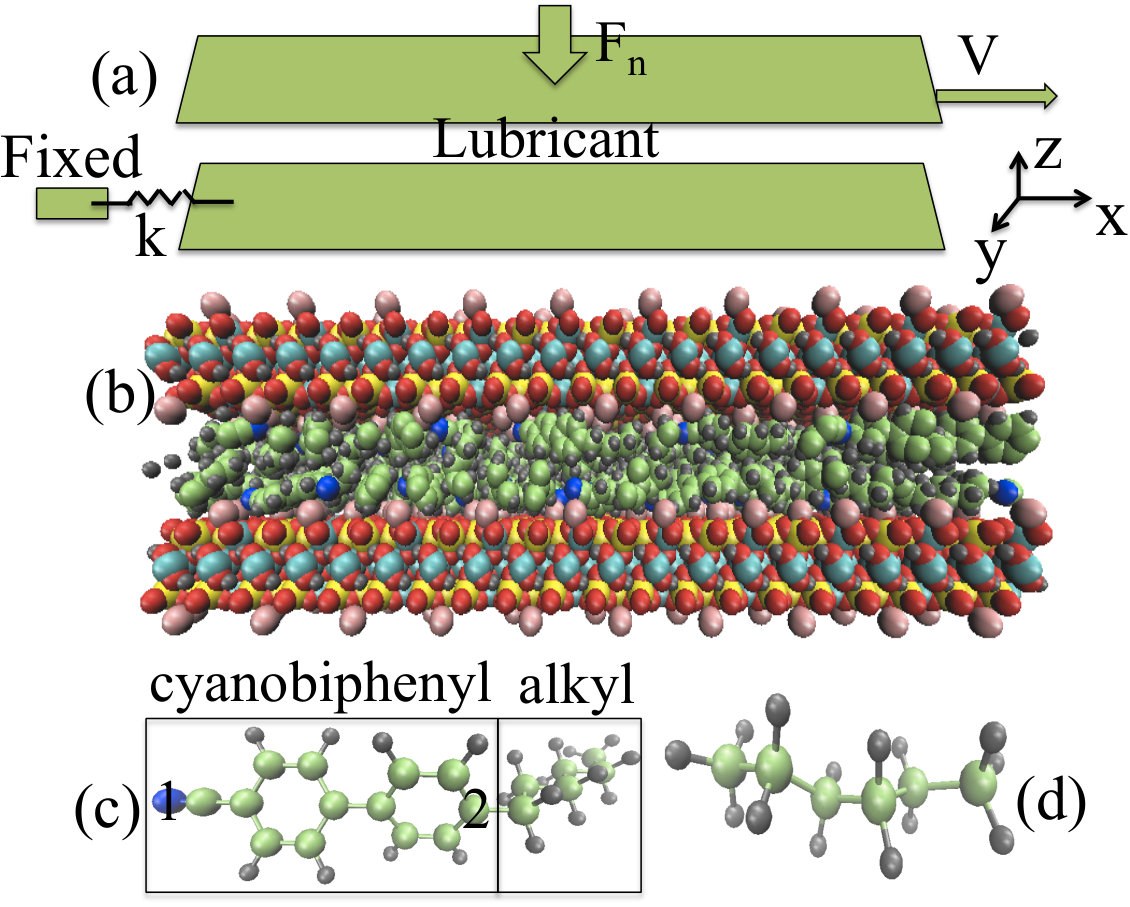 Figure 1
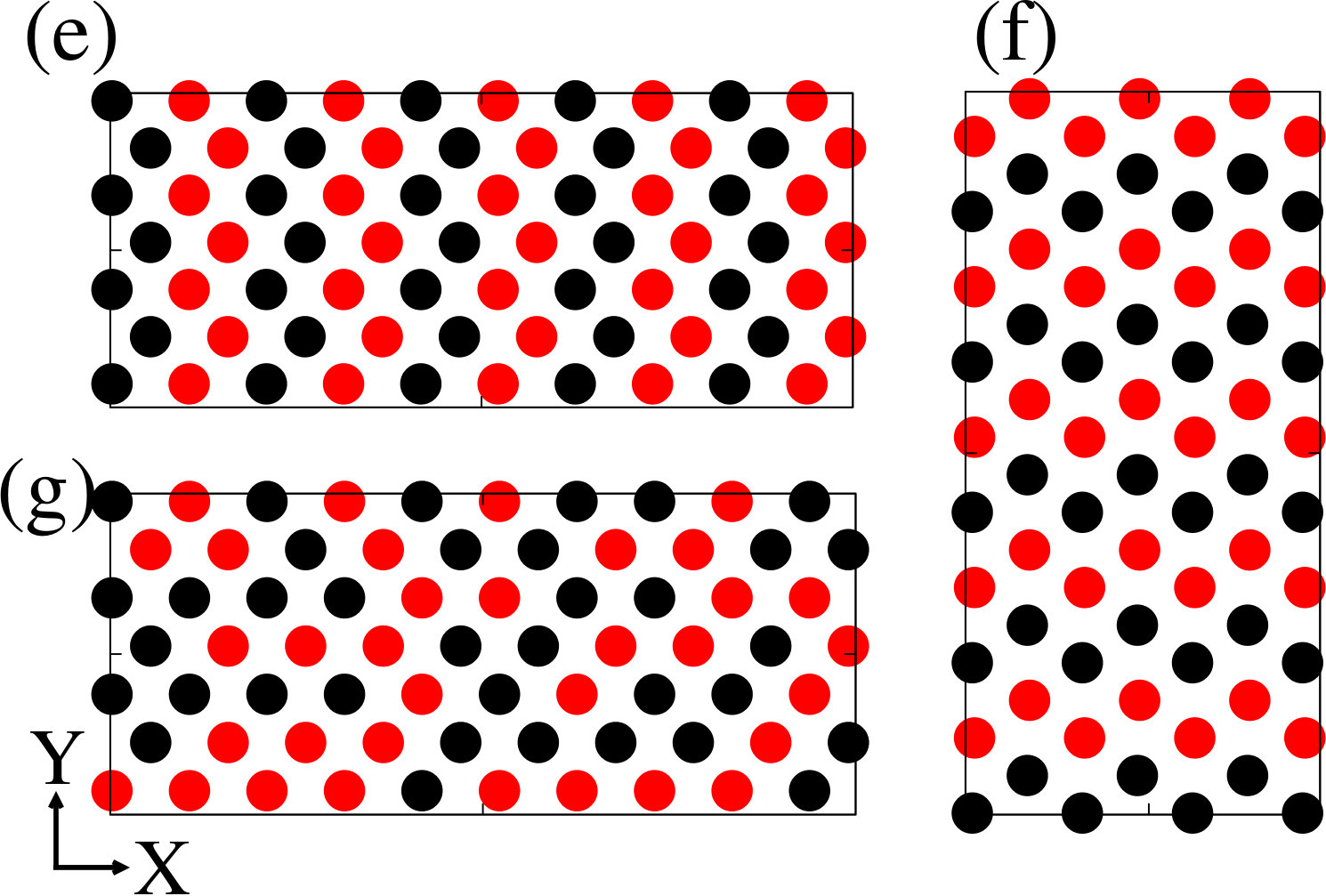 Figure 11
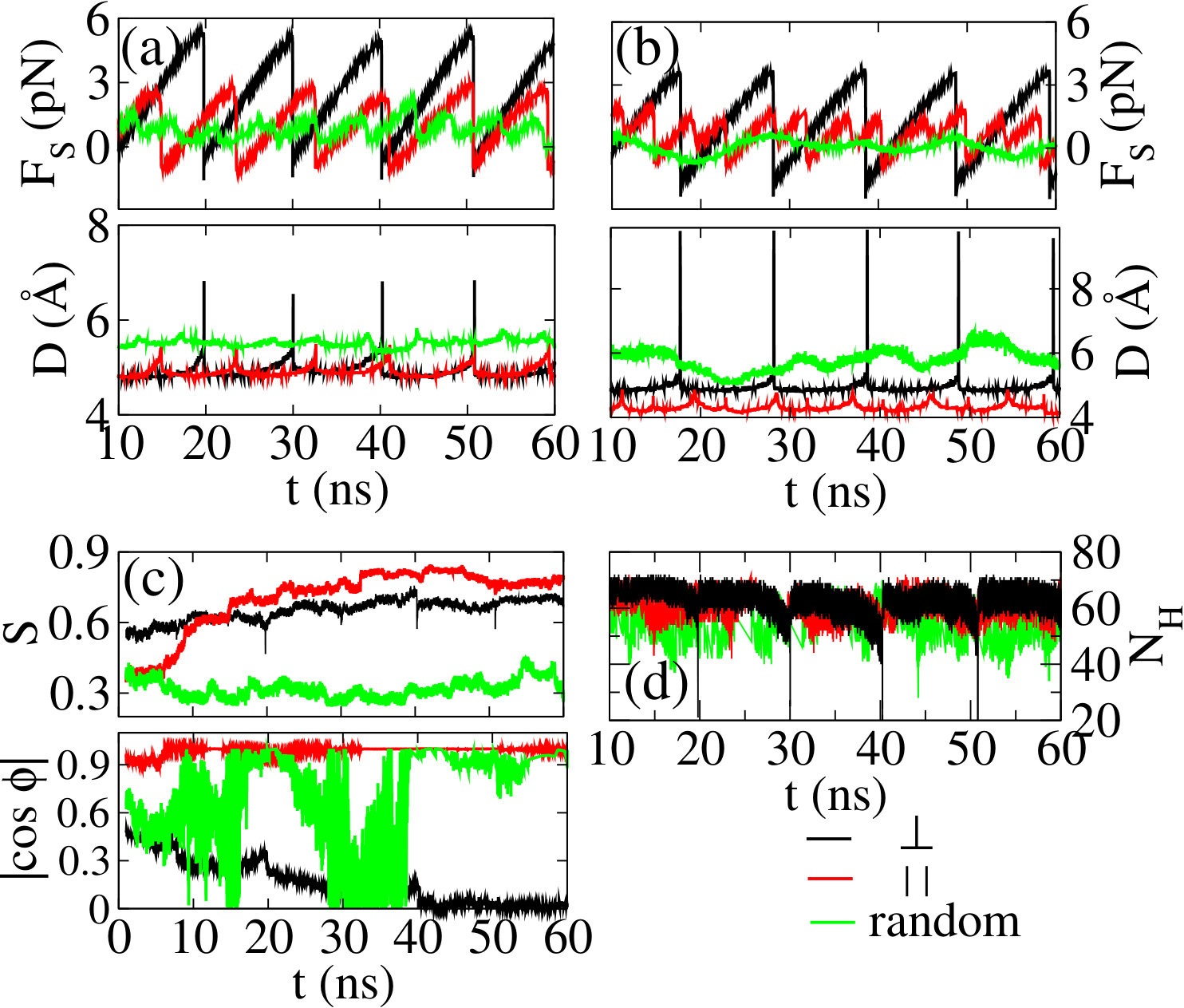 Figure 2
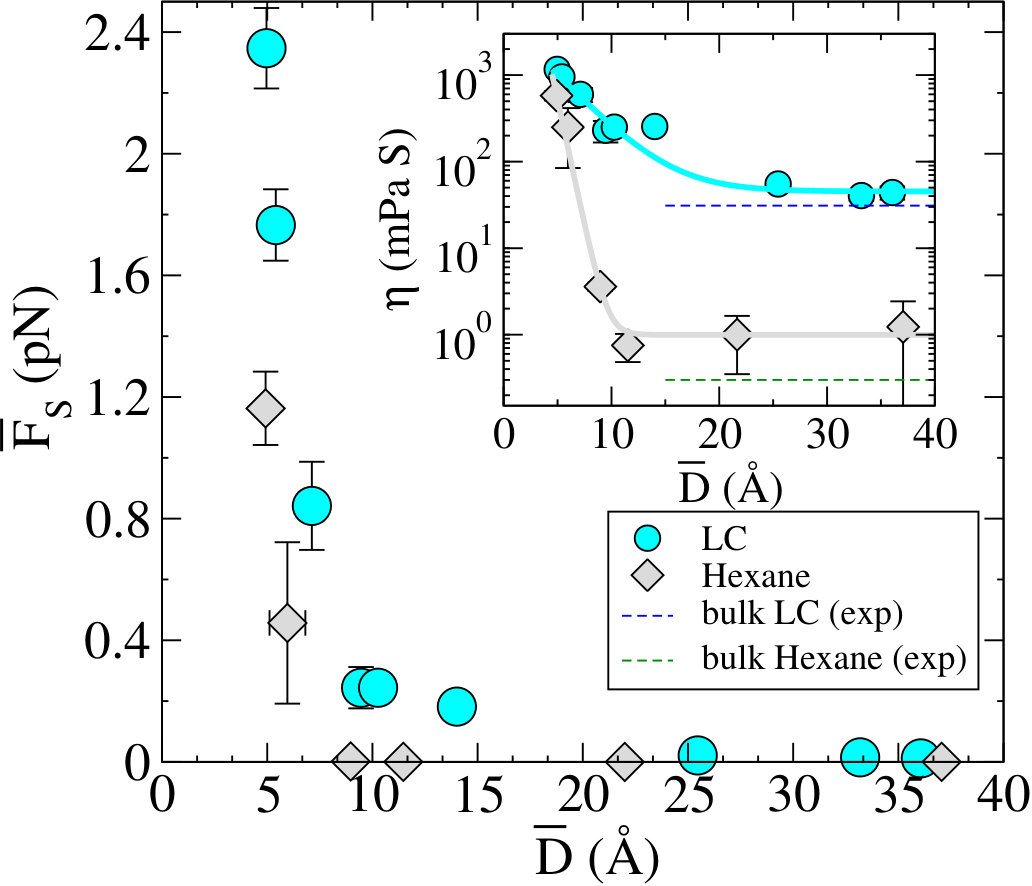 Figure 3
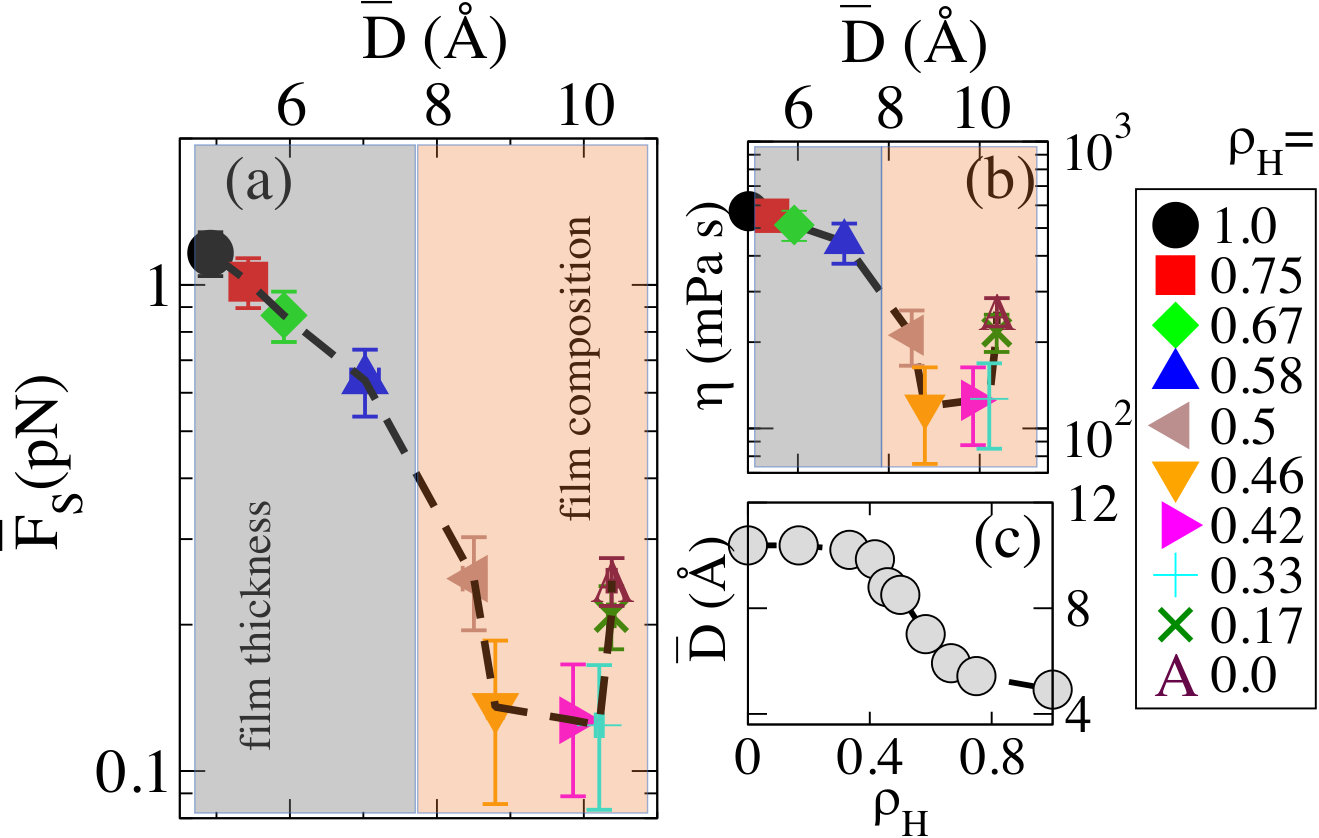 Figure 4
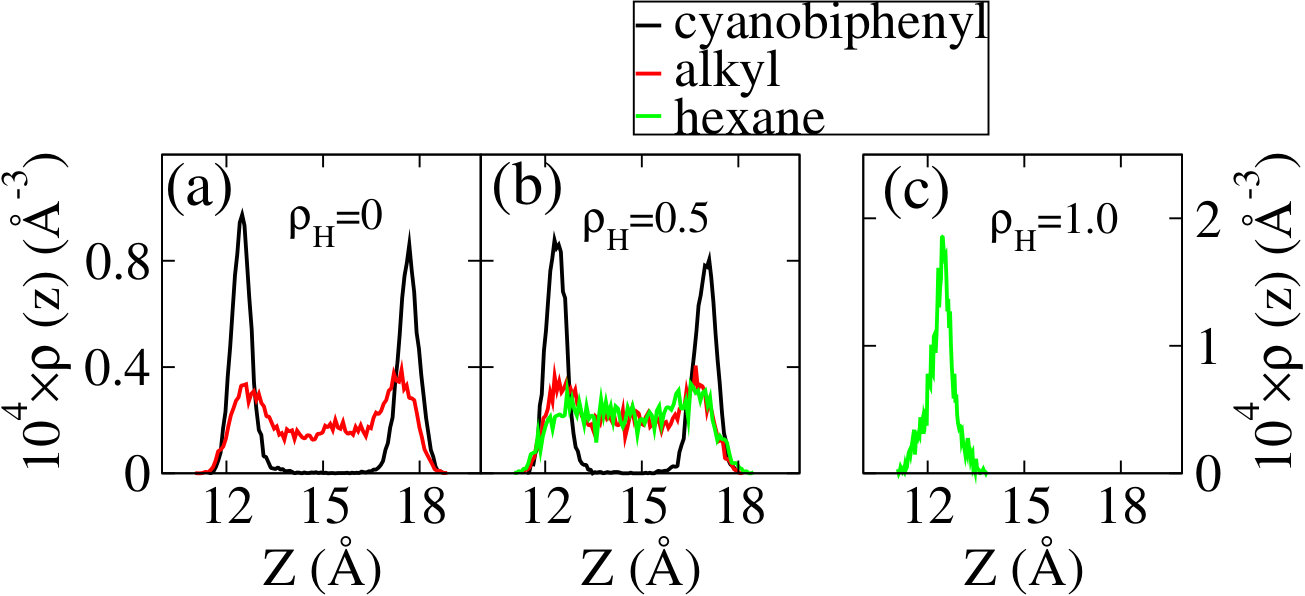 Figure 5
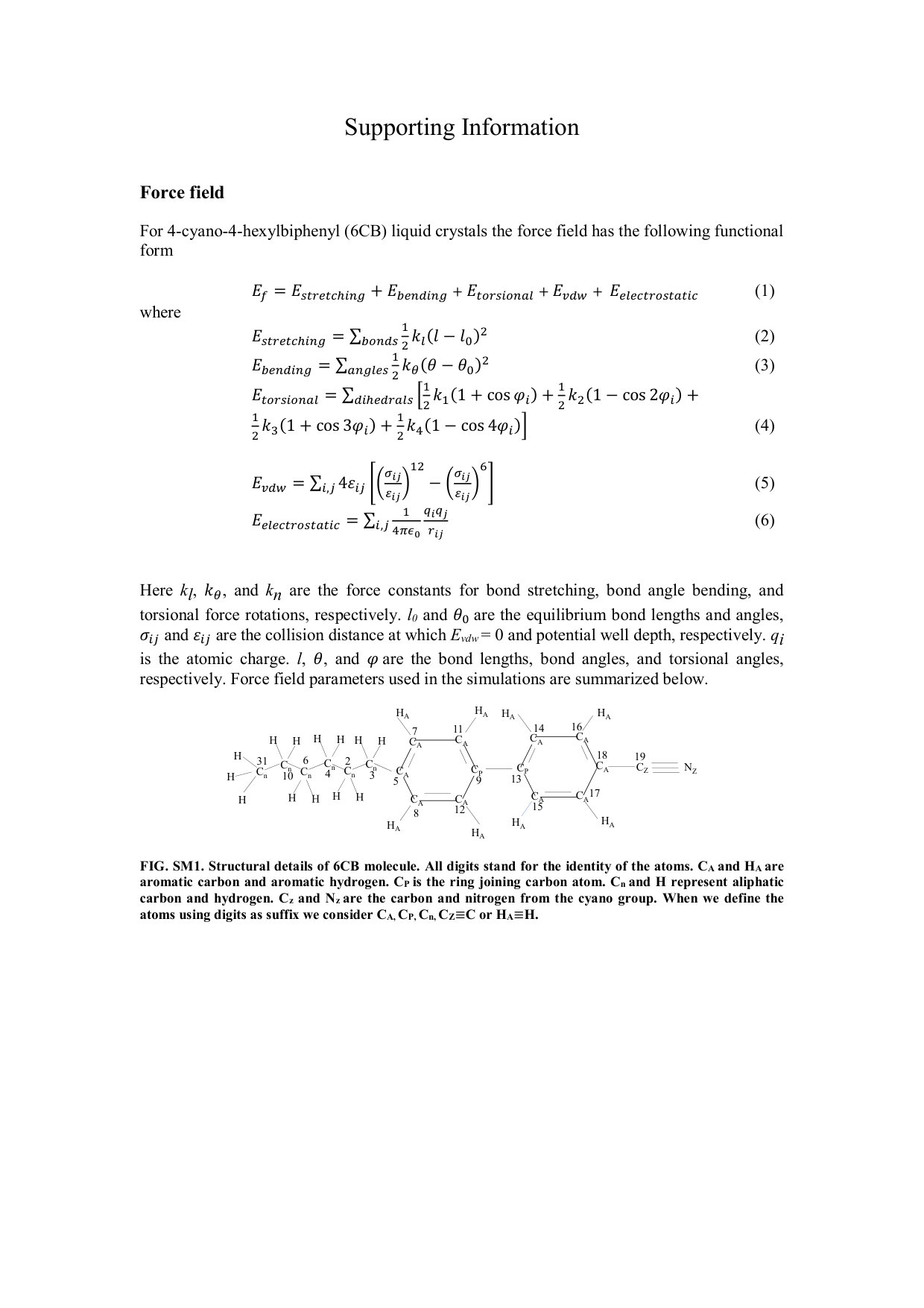 Figure 7
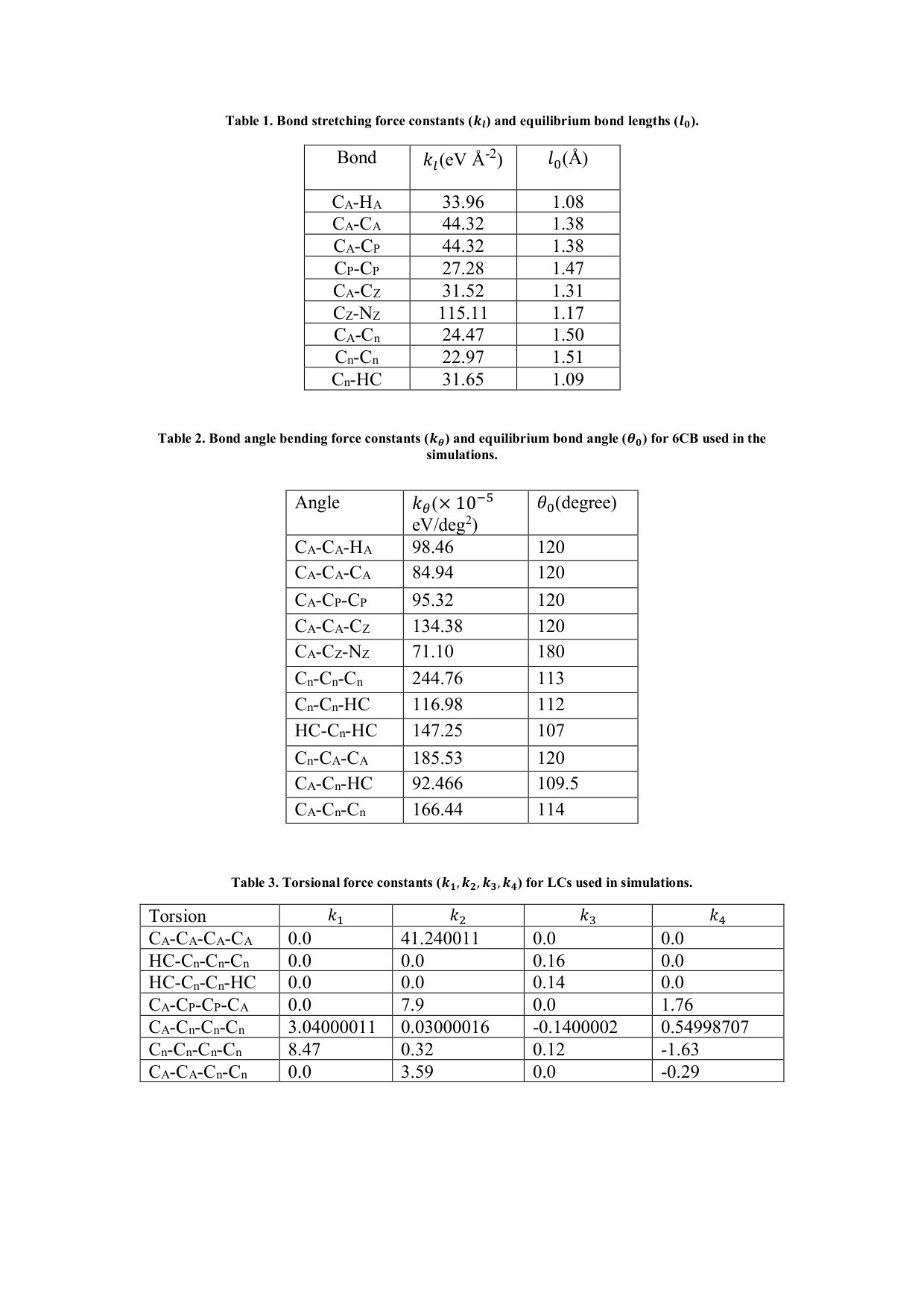 Figure 8
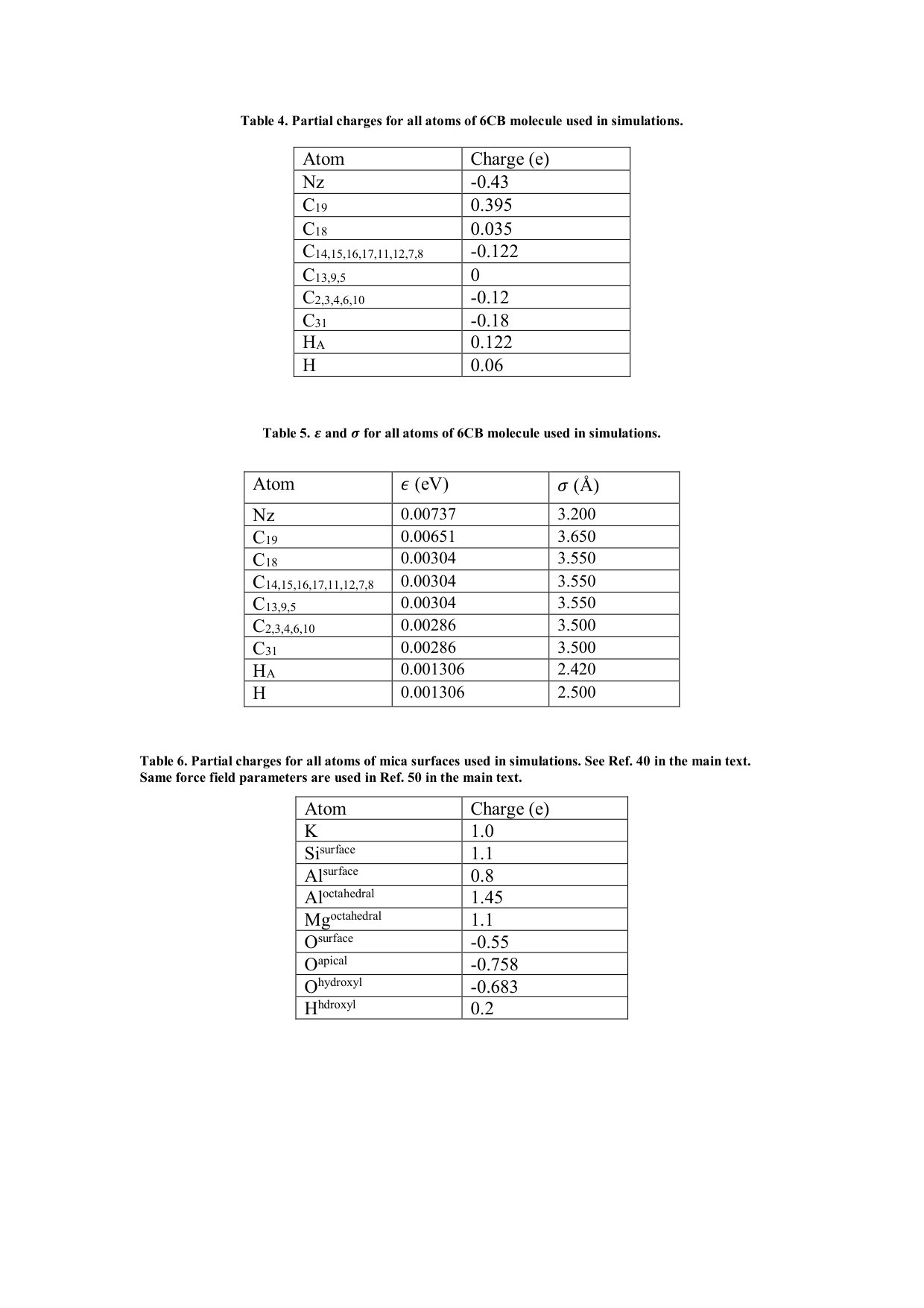 Figure 9
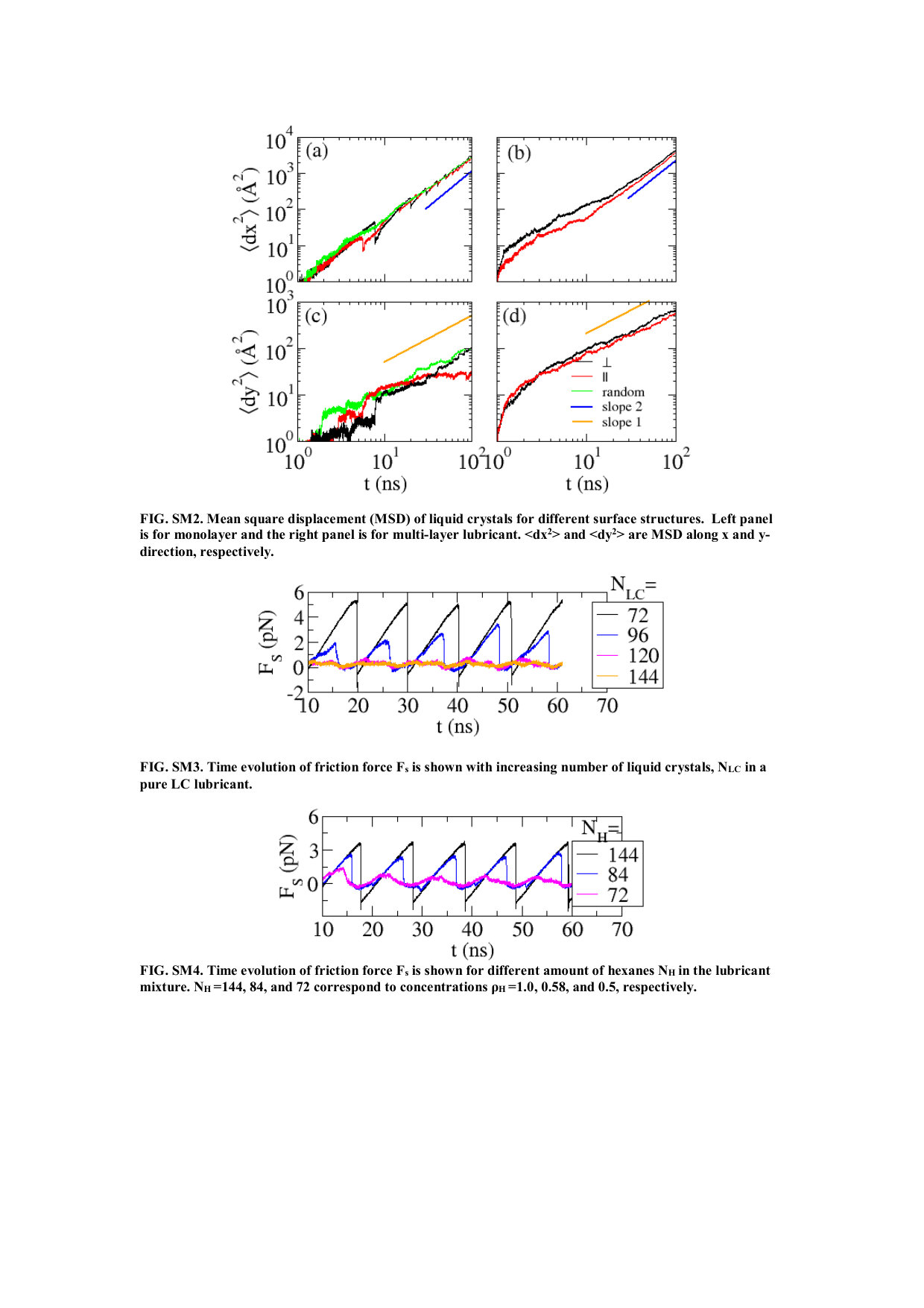 Figure 10
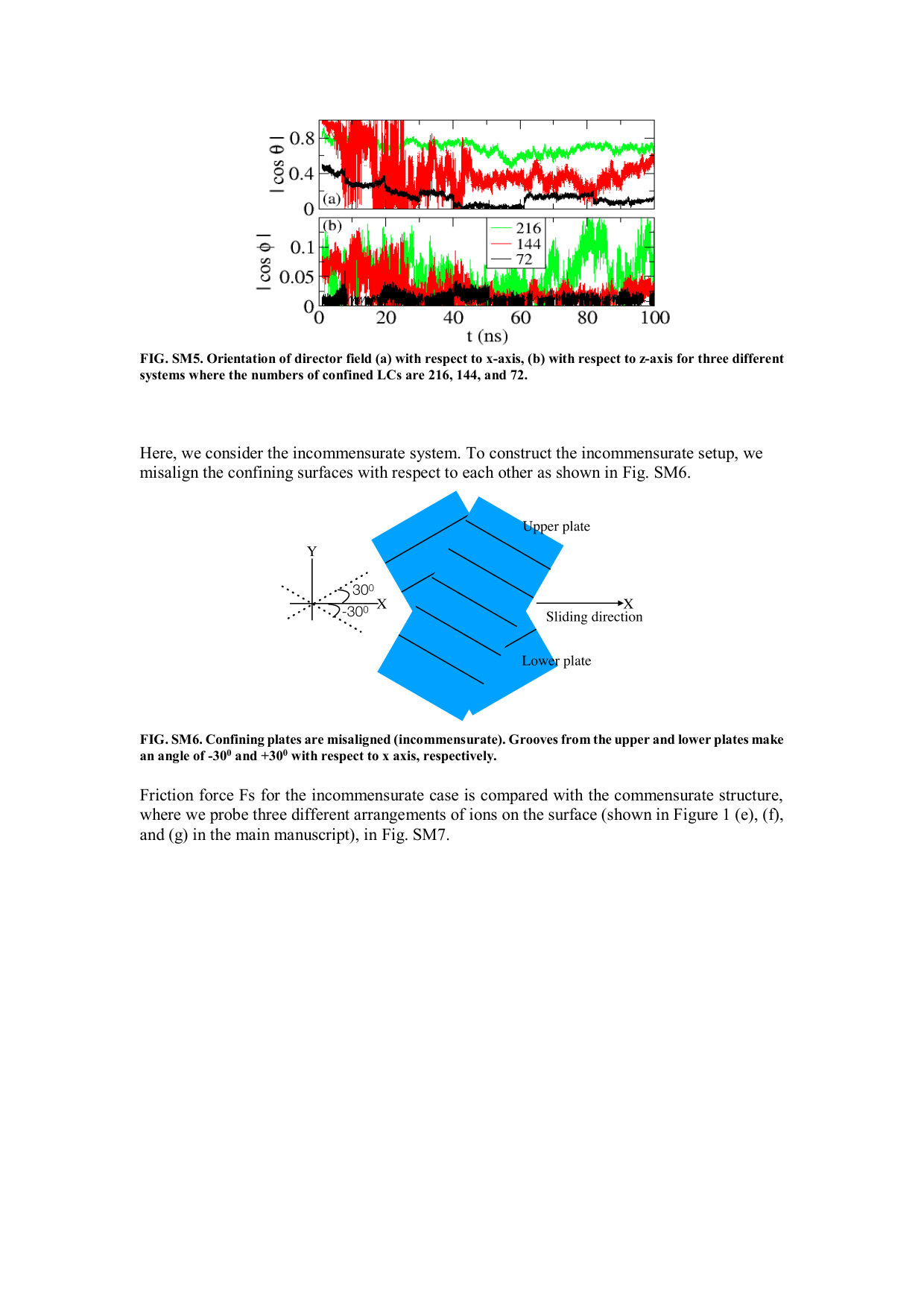 Figure 11
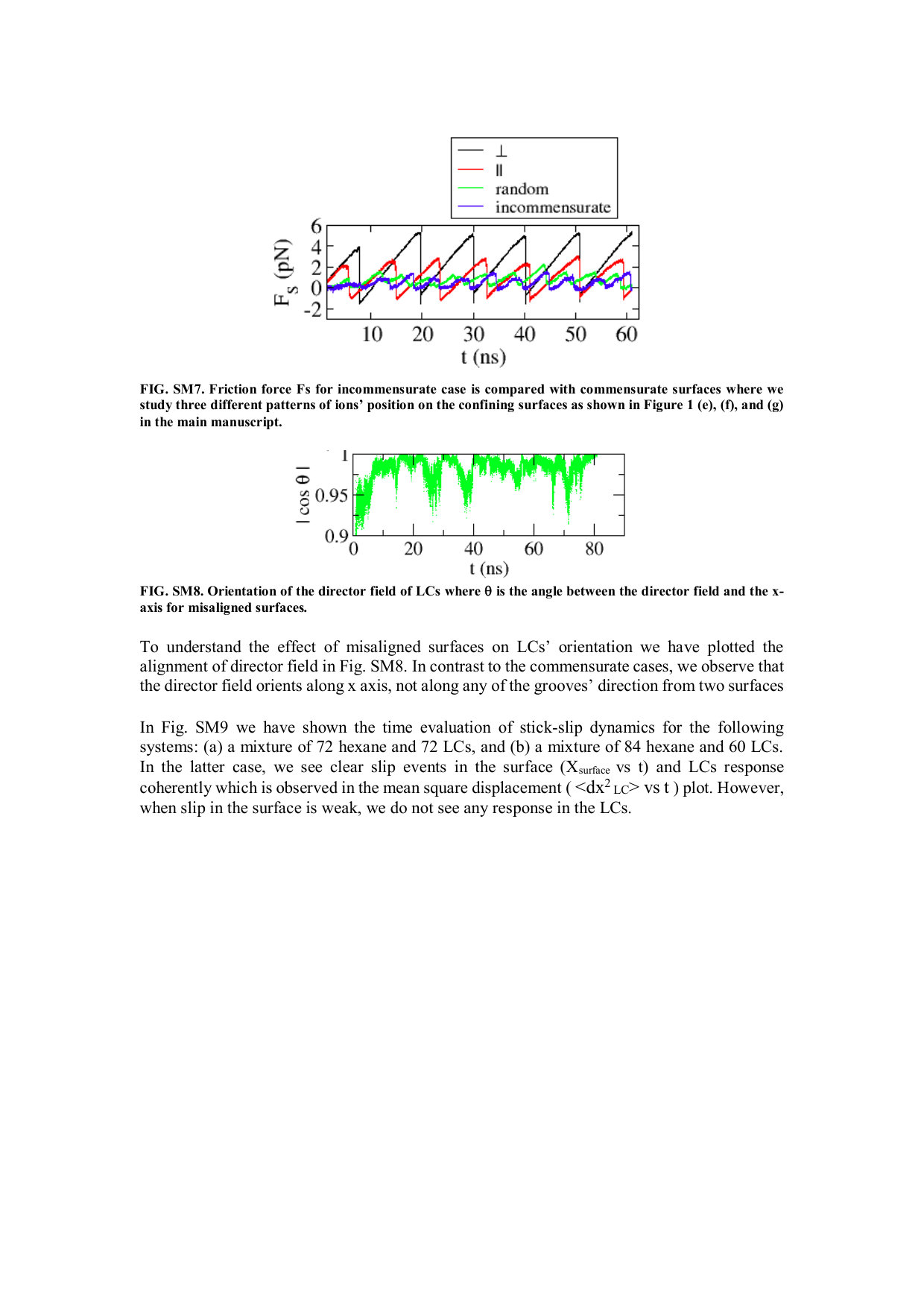 Figure 12
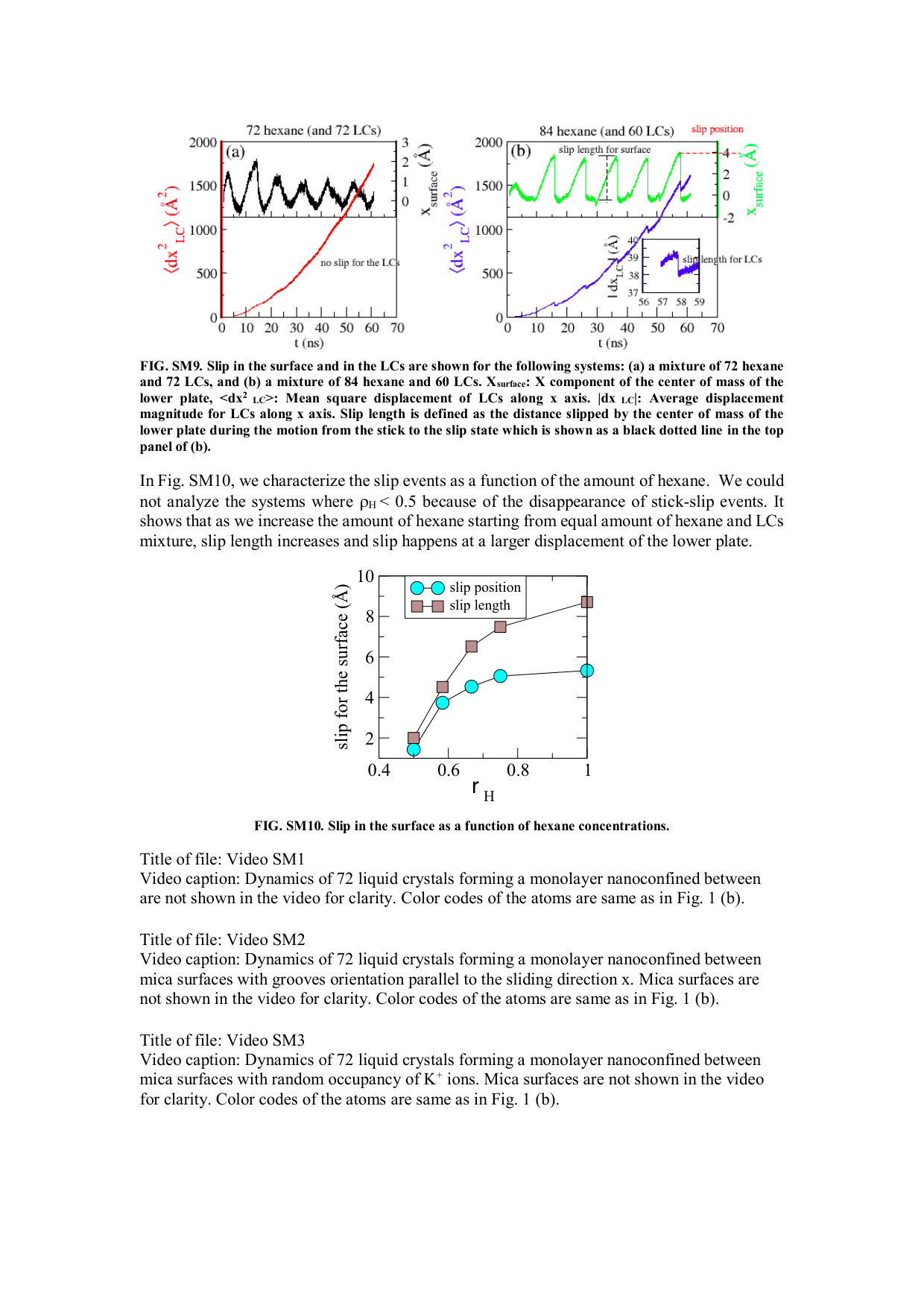 Figure 13
 Figure 14
Peer Reviews
No public reviews on file for this paper yet. If you reviewed it on a platform where reviews are public (OpenReview, ICLR, NeurIPS, ICML), you can paste yours below so the community can read it here.
Videos
No videos yet. Explain this paper in a talk, walkthrough, or lecture? Add one.
Nanoscale Liquid Crystal Lubrication Controlled by Surface Structure and Film Composition
Pritam Kumar Jana1
Wei Chen2
Mikko J. Alava1
Lasse Laurson1
1COMP Centre of Excellence, Department of Applied Physics, Aalto University, P.O.Box 11100, FI-00076 Aalto, Espoo, Finland
2State Key Laboratory of Multiphase Complex Systems, Institute of Process Engineering (IPE), Chinese Academy of Sciences (CAS), Beijing 100190, PR China.
Abstract
Liquid crystals have emerged as potential candidates for next-generation lubricants due to their tendency to exhibit long-range ordering. Here, we construct a full atomistic model of 4-cyano-4-hexylbiphenyl (6CB) nematic liquid crystal lubricants mixed with hexane and confined by mica surfaces. We explore the effect of the surface structure of mica, as well as lubricant composition and thickness, on the nanoscale friction in the system. Our results demonstrate the key role of the structure of the mica surfaces, specifically the positions of potassium () ions, in determining the nature of sliding friction with monolayer lubricants, including the presence or absence of stick-slip dynamics. With the commensurate setup of confining surfaces, when the grooves created between the periodic ions are parallel to the sliding direction we observe a lower friction force as compared to the perpendicular situation. Random positions of ions exhibit even smaller friction forces with respect to the previous two cases. For thicker lubrication layers the surface structure becomes less important and we observe a good agreement with the experimental data on bulk viscosity of 6CB and the additive hexane. In case of thicker lubrication layers, friction may still be controlled by tuning the relative concentrations of 6CB and hexane in the mixture.
pacs:
Valid PACS appear here
I Introduction
Controlling friction, wear, and lubrication by understanding the atomic-scale processes taking place at the interfaces of interacting bodies in relative motion has been a long-standing challenge, with applications, for example, in micro- and nanoelectromechanical systems Bhushan et al. (1995); Park et al. (2005); Bhushan (2005). Many classical laws of friction and lubrication in such systems are violated due to the high surface-to-volume ratio and the greater importance of molecular interactions and arrangements in determining the surface forces Smith et al. (2013). As a result, a number of fundamental questions in this field are still unsolved Urbakh et al. (2004).
A practical design goal for applications is to reduce stiction, friction and wear. To this end, one may think of two main strategies: either modulating the roughness, electrostatic interactions, crystal structure, edge orientations and other properties of the surfaces that come into contact or by using various types of lubricants between the surfacesFrenken (2006); Zhang and Chang (2018). Approaches with the idea of tuning the potential energy landscape between the interacting surfaces at the atomic scale have been proposed Frenken (2006), including the use of aperiodic quasicrystal surfaces or introducing a lattice mismatch between the two sliding crystal surfaces, leading to the superlubricity mechanism Park et al. (2005); Filippov et al. (2010); Hirano et al. (1991). However, a recent study shows that the duration of the superlubric state, i.e., the incommensurate configuration can be finite and therefore, ultralow friction does not prevail. The possibility of rotation of the sliding surface stabilizes the high frictional commensurate configuration Filippov et al. (2008); Woods et al. (2016). The idea of aligning the crystallographic orientation of confining layers is used in resonant tunneling diodes Mishchenko et al. (2014) and other novel devices Woods et al. (2016). It suggests to perform more investigations on reducing friction considering energetically stabilized high frictional commensurate setup. Guo et al. have shown that interlayer friction, in case of commensurate setup, can be reduced by functionalizing the sliding surfaces Guo et al. (2016). Several studies have been performed focusing on the quest of perfect lubricants and their dynamical properties or the adsorbate surface coverage while being sheared by the confining surfaces in relative sliding motion Bhushan et al. (1995); Thompson and Troian (1997); Zaidan et al. (2016); Ouyang et al. (2018).
Liquid crystals (LCs) have been explored as potential lubricant due to ultra-low friction as a result of their long-range orientational ordering tendency Amann and Kailer (2010). Due to the high cost of pure LCs, various mixtures of LCs with other substances are typically considered, and more extensive investigations are required to understand the effects due to such additives Manzato et al. (2015); Strelcov et al. (2015); Hu et al. (1991); Nakano et al. (2014); Chen et al. (2014). There are open questions related to details of the interactions of the LC molecules with the confining surfaces, and the phase behavior they exhibit under applied shear. While experiments, coarse-grained simulations, and theoretical studies to understand the structural and dynamical properties of LC lubricants have been performed Mar a-Dolores Berm?dez (1997); P. Iglesias (2004); Carrion et al. (2009); Manzato et al. (2015); Ruths et al. (1996); Noirez et al. (2005); Bushby and Kawata (2011); Pujolle-Robic and Noirez (2003); Idziak et al. (1994); Cheng et al. (2008); Zhang et al. (2015); Chen et al. (2014), atomistic simulations to establish a proper link between coarse-grained models and experiments are still missing.
In this article, we focus on the lubricating properties of nematic 4-cyano-4-hexylbiphenyl (6CB) LCs in pure and in presence of hexane additives where mica serves as confining surfaces by using fully atomistic model simulations. We probe the influence of the relative orientation of the surfaces including an incommensurate setup, and the effect of the random ion distribution in the confining mica surfaces. We also inspect the impact of the thickness of the lubricant film, whether pure 6CB or a 6CB/hexane mixture, on frictional response. Our results show that friction in systems with monolayer lubricant films is sensitive to the arrangement of ions on the confining surfaces or to the relative surface orientations. Moreover, we demonstrate friction control also for thicker lubricant layers via tuning the composition of the LC-hexane mixture, including controlling the presence of stick-slip.
II Model
There are several efforts to reproduce the properties, for example, the so-called odd-even effect in nematic-isotropic transition, of liquid crystal homologues namely 4-cyano-4-alkylbiphenyl (nCB) up to a satisfactory level of accuracy in computer simulationsCifelli et al. (2008); Tiberio et al. (2009). In the present study, we are specifically interested in the lubricating properties of liquid crystals because of its long-range ordering. To this end, we choose 4-cyano-4-hexylbiphenyl (6CB). There is experimental evidence on lubrication of 6CB confined between mica surfacesJanik et al. (1997); Kitaev and Kumacheva (2000); Mizukami et al. (2004). We could have chosen other homologues. However, we believe that the observed results will qualitatively remain same. We consider hexane as an additive because of its low cost and is largely used as a lubricant. To construct the atomistic models of 6CB and hexane molecules, we use force field parameters from Refs. Adam et al. (1997); Cheung et al. (2002). As for the confining mica surfaces, we consider 2M1-muscovite mica with the formula KAl2(Al,Si3)O10(OH)2, using the force field parameters as described in Ref. Heinz et al. (2005). Details of the force field parameters used in the simulations are provided in the Supporting Information. To verify the accuracy of the force field, we have calculated two friction related quantities: (a) bulk viscosity for both 6CB liquid crystal and hexane and we see a good agreement with experiments. See the inset of Fig. 3. (b) friction force for commensurate (confining surfaces are aligned) and the incommensurate surface (confining surfaces are misaligned) and we observe a lower friction in case of the incommensurate surface which is also observed in experiments. Both results, we discuss in detail in Results and discussions section. It assures that the used force field parameters are good enough to study frictional properties of 6CB and hexane.
In an experiment, Atomic Force Microscope (AFM) cannot detect potassium ions (K+) on mica surfaces. A probable reason of that is K+ ions on mica are moved around by the AFM cantilever-tip during the sliding motionXu and Salmeron (1998). However, there are several efforts on understanding the spatial arrangement of ions at the solid-liquid interface. Ricci et al. have shown that the monovalent metal ions do not adsorb on mica surfaces immersed in water randomly but form preferential ordered structures to minimize the surface energy at the mica-ion interfaceRicci et al. (2014). Most of the theoretical studies consider the periodic arrangement of K+ ionsOdelius et al. (1997). However, due to the randomness of the cleaving process of mica, uniform distribution of K+ ions is unlikelyBampoulis et al. (2017). Those experimental observations lead us to consider both periodic and random arrangements of K+ ions and examine the resulting effects on friction. Each surface consists of unit cells and linear dimensions of Å and Å, respectively. Both surfaces are kept parallel to the plane, and the upper surface is driven with a constant velocity of m/s along the direction. We do not consider the directional motion of any of the plates. As shown in Fig. 1(a), the lower surface is attached to a fixed point with a spring constant N/m, with the number of atoms in the surface which is a basic tribological setup Ouyang et al. (2016). The spring constant is consistent with experimental values as mentioned in Refs. Dienwiebel et al. (2004); Yoshizawa and Israelachvili (1993) and the sliding velocity (here 0.1m/s) of the upper plate is smaller than the critical velocity defined as the limiting velocity after which stick-slip motion disappears Lei and Leng (2011). Therefore, under the chosen values of parameters, we expect stick-slip dynamics in the system with thin layer of lubricants so that in addition to study the frictional effect of ions position on mica surfaces, we can also characterise the dynamical behavior of nano-confined liquid crystals during the stick and the slip events.
In the steady state, the upper surface is subject to a normal load corresponding to a 1 atm. We do not vary normal load. However, it could be an interesting direction to explore the responses of nanoscale friction for different normal loads that usually disobey a simple linear relationUrbakh et al. (2004).Temperature of the lubricants is maintained at K using a Langevin thermostat, applied only in the direction to avoid streaming bias Thompson and Troian (1997); Thompson and Robbins (1990); Chen et al. (2015). To make sure that thermostat does not affect our main results, we use the temperature relaxation time ns which is significantly smaller than the time required ( ns) to finish a slip event. The equations of motion are solved with the velocity Verlet algorithm implemented in the LAMMPS codePlimpton (1995), with an integration time step of 1 fs. Long-range electrostatic interactions are computed by using the particle-particle-particle-mesh solver for the slab geometry Patel et al. (2006); Pan et al. (2017) with accuracy Cerda et al. (2009) implemented in LAMMPSPlimpton (1995). Initially lubricant molecules are arranged in a simple cubic lattice and first equilibrate for 100 ps with both confining surfaces fixed. During the following 100 ps, the top surface is subject to a normal load corresponding to a 1 atm pressure and is allowed to move along the direction. After that, the top surface is driven along the axis with a velocity for 60 ns; in most cases the observables of interest have been averaged over the last 20 ns of the simulations, to ensure that a steady state is reached.
III Results and discussions
We divide our results into two subsections. First, we discuss the effects of surface structure and orientation on friction. Next, we show how additives’ concentration can tune the resulting friction forces.
III.1 Effects of surface structure and orientation on friction
As we are interested in understanding the boundary lubrication, where friction between the confining surfaces depends on the surface properties and the properties of the thin layer of lubricants, first we consider the system with monolayer of 6CB and hexane molecules. For the system geometry considered here, monolayer systems are obtained by considering 72 6CB or 144 hexane molecules, respectively. To construct a monolayer we choose the number of molecules to be such that the total area occupied by them is smaller than the area of the confining surfaces. To characterize the dynamics, we compute the friction force (the average force exerted on each atom of the bottom plate by the lubricant and the top mica plate along the direction), film thickness (distance between the two plates), and the order parameter of the LCs, i.e., the maximum eigenvalue of the average ordering tensor defined as
[TABLE]
where are the Cartesian components of the unit vector of the LC molecule , is the number of LC molecules, and is the Kronecker delta. Here, the unit vector of the LC molecule is taken to be parallel to the line connecting the nitrogen atom and the end carbon of the cyanobiphenyl group of 6CB, denoted by 1 and 2 in Fig. 1(c), respectively. We also compute the director (eigenvector of the maximum eigenvalue) of the LC molecules (the average molecular orientation), and characterize it by the angle with the -axis.
The monolayer results are summarized in Fig. 2, considering three different arrangements of the K+ ions on the mica surfaces: Figs. 1(e) and (f) display two different periodic arrangements of the ions [the structure in (f) is obtained by rotating the surface in (e) by 90*∘*], while Fig. 1(g) shows an example with randomly positioned ions. It is important to notice that in the case of the two periodic arrangements, grooves are generated along the [Fig. 1(f)] or direction [Fig. 1(e)] in between stripes of ions, resulting in an anisotropic surface structure, while in the case of randomly positioned ions, such features are absent [Fig. 1(g)]. To examine the effect of surface structure on boundary lubricated friction, we plot in Figs. 2 (a) and (b) the time-dependence of the friction force and the film thickness for those three different structures of the confining mica surfaces for 6CB and hexane, respectively; see also example movies (Videos SM1, SM2, and SM3) provided as Supporting Information. We observe regular stick-slip dynamics for both 6CB and hexane for the ordered surfaces. The maximum friction force (and thus the magnitude of the stick-slip oscillations) as well as the maximum film thickness during the “jumps” of the top plate associated with the slip events are larger in the case where the grooves of the mica surfaces are perpendicular to the sliding direction. In case of 6CB lubricated system, this effect is visible also when considering the time evolution of the number of hydrogen bonds, , formed between 6CB hydrogens and the bottom mica plate (i.e., the number of 6CB hydrogens closer than 3 Å from the bottom mica surface Chen et al. (2015). A typical hydrogen bond length is 1.5 Å to 2.5 Å which is smaller than the distance, 3 Å , that we consider as the breakage of hydrogen bonds.), see Fig. 2 (d): bonds break as the system evolves from stick to the slip state. In the case of the randomly positioned ions, 6CB exhibits more irregular stick-slip dynamics, with also some visible jumps in accompanying the slip events, while no clear signature of stick-slip is observed for hexane. Due to the incommensurate nature of the confining surfaces with randomly positioned K+ ions, the average film thickness is larger and the maximum is lower than with ordered mica surfaces. A similar observation is depicted in an experiment where surface ion induced tribological properties have been studied. It has been shown that when the ions are strongly bound and randomly distributed on mica irregular stick-slip occurs Xu and Salmeron (1998). Several experimental studies have been performed to understand the dynamical or mechanical properties of organic liquids when they are confined to few layers by solid surfaces such as mica Kumacheva and Klein (1998). A common phenomenon is the observation of stick-slip motion depending on the sliding velocity and the normal load Ohnishi et al. (2007); Rosenhek-Goldian et al. (2015). Although there are several efforts, molecular origin of stick-slip cycle in sheared solid-like lubricants is not well understood because of the difficulties to capture the behaviour of lubricants during the slip events, precisely mainly for two reasons: (a) slip events occur in nanometrically confined film (b) slip events are of very short duration and occupy a tiny fraction of the stick-slip cycle Rosenhek-Goldian et al. (2015). Therefore, a lot of understanding has been derived from theoretical and computer simulations. To this end, we also explore the behaviour of confined LCs during the stick and the slip events.
For 6CB LCs, the time-evolution of the order parameter and the angle between the LC director and the sliding direction ( axis) [Fig. 2 (c)] encode additional information about the dynamics. In particular, 6CBs have a tendency to orient along both the grooves of the confining surfaces (due to formation of hydrogen bonds between the biphenyl hydrogen and the surface oxygen exposed along the grooves), as well as along the sliding direction: is larger and is smaller when the grooves and the sliding direction are parallel [both along , see Fig. 1(f)]. For the perpendicular case, in the steady state the 6CBs point mostly along (i.e., along the grooves), but is a little smaller than in the parallel case due to the competing ordering mechanism of the sliding along . It shows that the monolayer of LCs prefers to orient along the microgrooves instead of aligning along the sliding direction due to the presence of strong chemical interactions. In contrast, for the random arrangement of K+ ions on mica, the 6CBs exhibit clearly less orientational order (smaller ), and also fluctuates significantly in time, see Fig. 2 (c). The alignment of LCs along the grooves is not a complete surprise. Vegt et al. have investigated the orientation of 4-cyano- 4-octylbiphenyl (8CB) liquid crystals on anisotropic polyimide surfaces by performing molecular dynamics simulations where they have shown that a single molecule of 8CB prefers to orient along the microgrooves because of the strong binding between polar cyano groups from LCs and the carbonyl groups from the polyimide surfaceVan der Vegt et al. (2001). In general, understanding the orientation of LCs on the surface is interesting because of its application in liquid crystal display.
To explore more about the dynamics of LCs and their response during the stick-slip cycle we measure the mean square displacement (MSD) of 6CB molecules. It shows that while the molecules move ballistically along for time scales longer than the stick-slip period for all mica surface structures (Fig. SM2 (a) in the Supporting Information) they exhibit diffusive dynamics in the direction in the long-time limit only for random ion arrangement and grooves perpendicular to the sliding direction (Fig. SM2 (c) in the Supporting Information). In contrast, for grooves parallel to the sliding direction, MSD saturates to a value comparable to the groove spacing, suggesting that in that case the grooves act as barriers for the -directional diffusion of 6CBs. However, the slip is confined to the lubricant close to the lower plate, and happens in the direction of sliding. Details are shown in the Supporting Information. Thus, for monolayer lubricants, the structure of the confining surfaces plays a decisive role in the frictional response. So far, we have discussed the system where confining surfaces are aligned with each other- thus commensurate. When we consider the incommensurate setup, i.e, two surfaces are misaligned with respect to each other, we see a frictional response which is even somewhat lower than the situation where K+ ions are randomly positioned on the surface. See Fig. SM7 in the Supporting Information. Experiments show the similar observations as misaligned mica surfaces exhibit lower friction forces as compared to the commensurate setup Filippov et al. (2010); Hirano et al. (1991).
To understand the effect of the confining films’ thickness on friction, we study here the periodic pattern of the K+ ions with the grooves perpendicular to the sliding direction; for thicker lubricant films, stick-slip dynamics gradually disappears with increasing (see Fig. SM3 in the Supporting Information), and the surface structure of mica becomes less important, with all the three surface structures from above yielding similar results for the friction force. A similar observation is reported when water is confined between mica surfaces Chen et al. (2015). We consider various systems with the number of 6CBs ranging from 72 to 600, and the number of hexane molecules from 144 to 640, and also systems with a smaller area of the confining mica plates to reach a larger for a given number of lubricant molecules. We compute the resulting average friction force as a function of the average thickness (Fig. 3; see also Supporting Information Video SM4 for an example movie of a thick 6CB system). The inset of Fig. 3 displays the corresponding dynamic viscosities , defined via , where is the surface area Leng and Cummings (2005). Under strong confinement (small ), both systems exhibit a high dynamic viscosity which decreases with increasing , and approaches the known bulk viscosity values at = 298 K, i.e., and mPas for 6CB Hirano and Sakai (2008); Jadżyn et al. (2000) and hexane Rodríguez et al. (2006), respectively. Notice that in general is expected to depend on (or the shear rate) Jabbarzadeh et al. (2005), but our results indicate that m/s is a sufficiently low sliding velocity such that approaches a value close to that of the bulk viscosity in the limit of large . We fit the data by , yielding a decay length Å and 3.36 Å for hexane and 6CB, respectively. This slower approach to bulk behavior for 6CBs may be understood via the competition between screening of the mica-mica interaction and the inherent “stickiness” of the 6CB lubricant, with the latter manifested also as the higher bulk viscosity value for 6CB. Due to their larger dielectric constant ( 9.5 for 6CB Ratna and Shashidhar (1976) vs 1.88 for hexane Mopsik (1967)), one would expect 6CBs to be more efficient at screening the electrostatic interaction between the mica plates Lee et al. (2017). However, at the same time, the sticky nature of 6CB molecules, originating from the Coulomb interaction of the positively charged mica K+ ions and the highly electronegative nitrogen atoms, as well as from the hydrogen bonding between phenyl hydrogen and mica oxygen atoms, hinders the rapid reduction of friction as increases. The difference in the screening properties of the two lubricants can also be seen by noticing that , while in the monolayer case (with and the measured -values of LCs and hexane, respectively), suggesting (in relative terms) a stronger surface-surface interaction through a thin layer of hexane as compared to the LC case. We note that a similar evolution with of the viscosity of LC lubricants has been observed experimentally Shen et al. (2001). The MSD of the 6CB molecules shows that in thicker systems they exhibit ballistic motion along and diffusive dynamics in the direction independent of the structure of the confining surfaces (Figs. SM2 (b) and (d) in the Supporting Information).
We also investigate the molecular orientation for thicker lubrication films. In contrast to the monolayer case with grooves perpendicular to the sliding direction (see Fig. 1 (e)), we observe that the director fields for thicker LC films tend to orient along the sliding motion as shown in Fig. SM5 (a) in the Supporting Information. Due to larger distances between the confining plates, they also display a -directional degree of freedom which is absent in the monolayer cases, see Fig. SM5 (b) in the Supporting Information. We do not see homeotropic alignment, i.e., a perpendicular arrangement with respect to the confining surfaces. Experiments also exhibit that in case of untreated mica, LCs have a tendency to be in the plane of the surface Ruths and Granick (2000). In these studies of LCs as a lubricant we have not paid any direct attention to the general structural properties of the LC films. This concerns both eventual smectic order in thicker systems (and the corresponding dislocations) and the point defects or disclination lines in the presence of nematic order depending on the lubrication layer thickness.
III.2 Effect of film composition on friction
Finally, to explore the potential film composition of LCs and hexane mixtures at which a reduced friction can be observed, we add various concentrations of hexane to the LC lubricant and compute the friction forces for different mixtures of 6CB LCs and hexane, see Fig. 4 (a). We fix the total number of molecules to 144, and vary the fraction of hexane from 0 to 1, where is the number of hexane molecules. Interestingly, the average friction force displays a non-monotonic dependence on (and on ). While the general trend is that decreases with decreasing and increasing , for the smallest (corresponding to the pure and almost pure LC cases), increases with decreasing and increasing .
As LCs are larger in size and stickier in nature as compared to hexane, reduction of or addition of LCs in the LC-hexane mixture renders a competing effect on friction. A larger size of LC will lead to the thickening of the film and thus decrease of friction while the stickier nature will oppose the effect. When , hexane is confined to a monolayer between mica surfaces (see Fig. 5 (c)) and stick-slip motion is observed as shown in Fig. 2 (b), thus high friction. With the addition of LCs up to 1:1 ratio, film thickness increases as shown in Fig. 4 (c) and friction decreases rapidly (see Fig. 4 (a)) because of the gradual disappearance of stick-slip. See Fig. SM4 and Video SM5 in the Supporting Information. Thus, film thickness dominates on controlling the friction. Note that, when ( is the number of LCs) probability density of the confined mixtures along the direction exhibits the formation of two layers (See Fig. 5 (b)). Due to the strong attractive interaction between cyanobiphenyl group of 6CB and mica (K+ ions and oxygens), cyanobiphenyl groups are attracted to the mica surfaces while alkyl parts as well as hexane occupy the space in the middle in between the confining surfaces as shown in Fig. 5 (b). Further addition of LCs leads to the weak changes of thickness and in that region, sticky nature of LCs plays a key role and thus a gradual increase of friction. Density profile , when , exhibits similar probability distribution as observed when . See Fig. 5 (a). The same non-monotonic behavior is visible in the corresponding dynamic viscosity [Fig. 4 (b)]. In precise, this non-monotonic behavior of friction is a result of the cross-over from a film thickness controlled friction regime (shown in Fig. 4(a) as a gray region; in this regime we observe gradual disappearance of stick-slip dynamics with decreasing ) to a film composition dependent regime (orange colored region; stick-slip not observed due to larger ). When we characterize the slip at surface depending on the amount of hexane, we see that both slip length and slip position increase as we approach the pure hexane case (See Fig. SM10 in the Supporting Information). The slip in confined LCs follows the surface-slip coherently. However, slip length at surface is larger as compared to the LCs. When the slip length at the surface is small, we do not see any slip in the LCs (See Fig. SM9 in the Supporting Information).
IV Conclusions
To summarize, we have presented an extensive study of nanoscale LC lubrication using a full atomistic model. In the boundary lubricated regime we show that nanoscale friction can be tuned by controlling the distribution of ion positions on muscovite mica. In case of commensurate setup, when ions are periodic we observe a larger friction force as compared to the case where ions are randomly placed on mica. In the latter case, the director field of the confined LCs fluctuates while in the former case, director field orients along the grooves created between periodically arranged ions. When grooves and the sliding direction are parallel, LCs exhibit higher order and the friction is lower as compared to the perpendicular case. In case of incommensurate setup, the friction force is smaller than the commensurate setup where ions are randomly arranged on mica and the confined LCs orient along the sliding direction. Tuning the charge distribution and modifying the surface geometry, one can reduce the friction in commensurate structures Guo et al. (2016). The experimental probe of the ion arrangement Bampoulis et al. (2017) can open up novel directions in controlling nanoscale friction. However, at the limit of a large thickness, surface effects disappear and we predict that effective viscosity of the confined LC and hexane exponentially decays to the bulk viscosity that exhibits a good agreement with experimental values.
On the quest of potential lubricant from LC-hexane mixtures, our results show that increase of LC and hexane concentration in the hexane Kupchinov et al. (1991) and the liquid crystal dominated regions, respectively both lead to the reduction of friction. It suggests that instead of pure LCs addition of impurity results better lubrication and it can be thought of potential lubricant in applications. By tuning the film composition, we also observe the possibility of controlling the stick-slip motion which is a major reason of wear in sliding surfaces.
Acknowledgement
PKJ, MJA and LL are supported by the Academy of Finland through project no. 251748 (Centres of Excellence Programme, 2012-2017). PKJ acknowledges support from the Academy of Finland FiDiPro program, project no. 13282993. LL acknowledges the support of the Academy of Finland via an Academy Research Fellowship (project no. 268302). WC is grateful to the financial support by the National Natural Science Foundation of China (Grant No. 11504384). We acknowledge the computational resources provided by the Aalto University School of Science “Science-IT” project, as well as those provided by CSC (Finland). We thank Jens Smiatek for useful discussions and suggestions.
The reference list from the paper itself. Each links out to its DOI / PubMed record.
- 1Bhushan et al. (1995) B. Bhushan, J. N. Israelachvili, and U. Landman, Nature 374 , 607 (1995).
- 2Park et al. (2005) J. Y. Park, D. F. Ogletree, M. Salmeron, R. A. Ribeiro, P. C. Canfield, C. J. Jenks, and P. A. Thiel, Science 309 , 1354 (2005).
- 3Bhushan (2005) B. Bhushan, Wear 259 , 1507 (2005).
- 4Smith et al. (2013) A. M. Smith, K. R. J. Lovelock, N. N. Gosvami, T. Welton, and S. Perkin, Phys. Chem. Chem. Phys. 15 , 15317 (2013).
- 5Urbakh et al. (2004) M. Urbakh, J. Klafter, D. Gourdon, and J. Israelachvili, Nature 430 , 525 (2004).
- 6Frenken (2006) J. Frenken, Nat. Nanotechnol. 1 , 20 (2006).
- 7Zhang and Chang (2018) H. Zhang and T. Chang, Nanoscale 10 , 2447 (2018) . · doi ↗
- 8Filippov et al. (2010) A. E. Filippov, A. Vanossi, and M. Urbakh, Phys. Rev. Lett. 104 , 074302 (2010).