Photoconductive Heaters Enable Control of Large-Scale Silicon Photonic Ring Resonator Circuits
Hasitha Jayatilleka, Hossam Shoman, Lukas Chrostowski, Sudip Shekhar

TL;DR
This paper introduces a scalable method for controlling large silicon photonic ring resonator circuits using doped waveguides that enable monitoring and tuning without extra components, facilitating practical large-scale photonic systems.
Contribution
The authors demonstrate a novel control approach using doped waveguides for large-scale silicon photonic circuits, enabling automatic resonance tuning without additional components or complex algorithms.
Findings
Controlled 31-ring switch with automatic resonance alignment
Controlled 14-ring coupled resonator waveguide
Achieved largest, most compact controlled silicon ring circuits to date
Abstract
A multitude of large-scale silicon photonic systems based on ring resonators have been envisioned for applications ranging from biomedical sensing to quantum computing and machine learning. Yet, due to the lack of a scalable solution for controlling ring resonators, practical demonstrations have been limited to systems with only a few rings. Here, we demonstrate that large systems can be controlled by using only doped waveguide elements inside their ringswhile preserving their area and cost. We measure the large photoconductive changes of the waveguides for monitoring the rings' resonance conditions across high-dynamic ranges and leverage their thermo-optic effects for tuning. This allows us to control ring resonators without requiring additional components, complex tuning algorithms, or additional electrical I/Os. We demonstrate automatic resonance alignment of 31 rings of a 16 x 16…
Click any figure to enlarge with its caption.
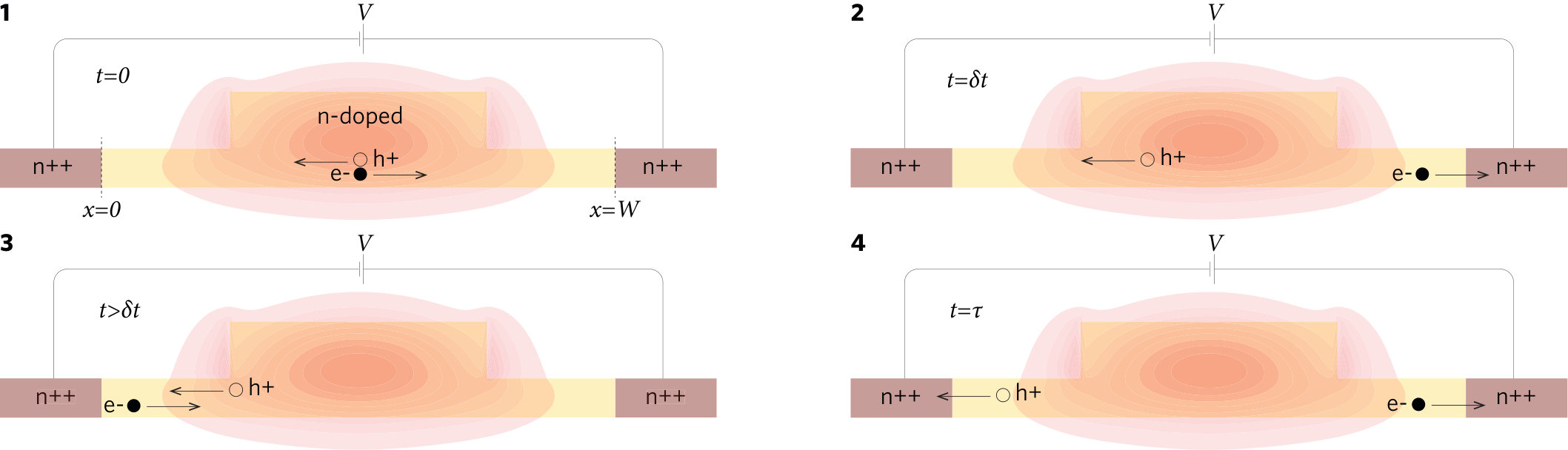 Figure 1
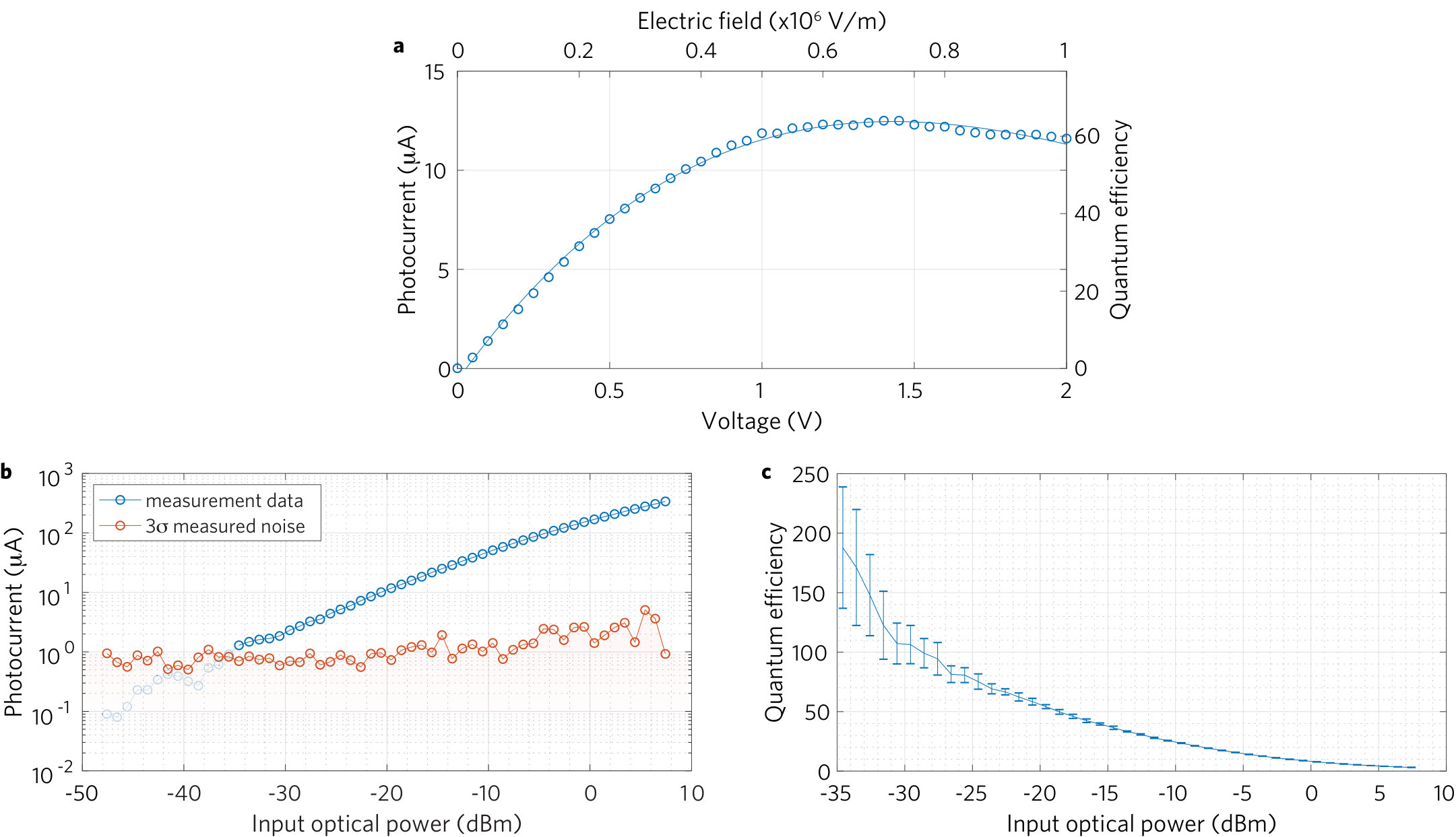 Figure 2
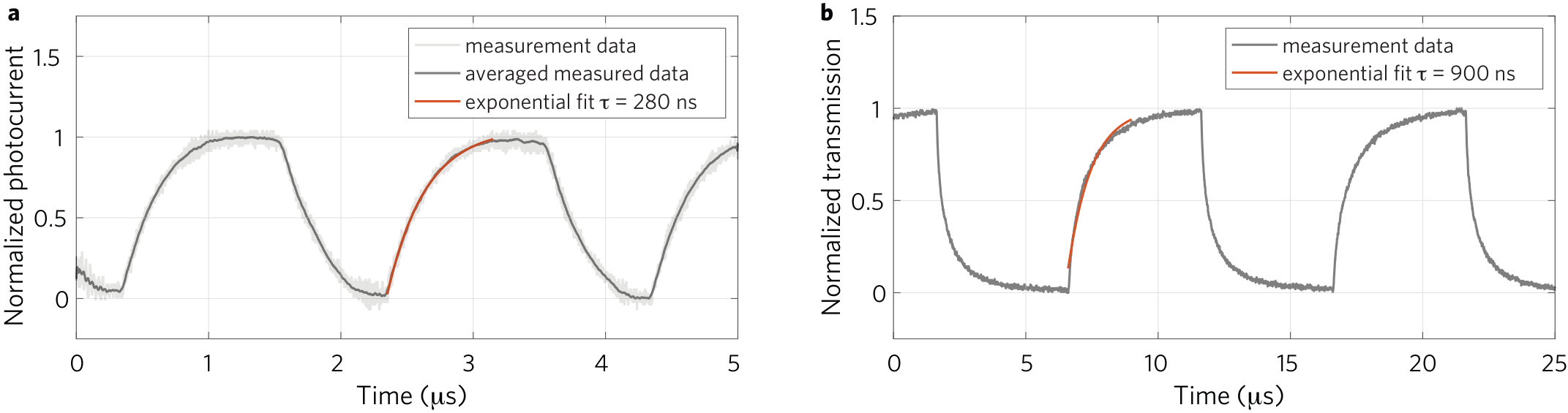 Figure 3
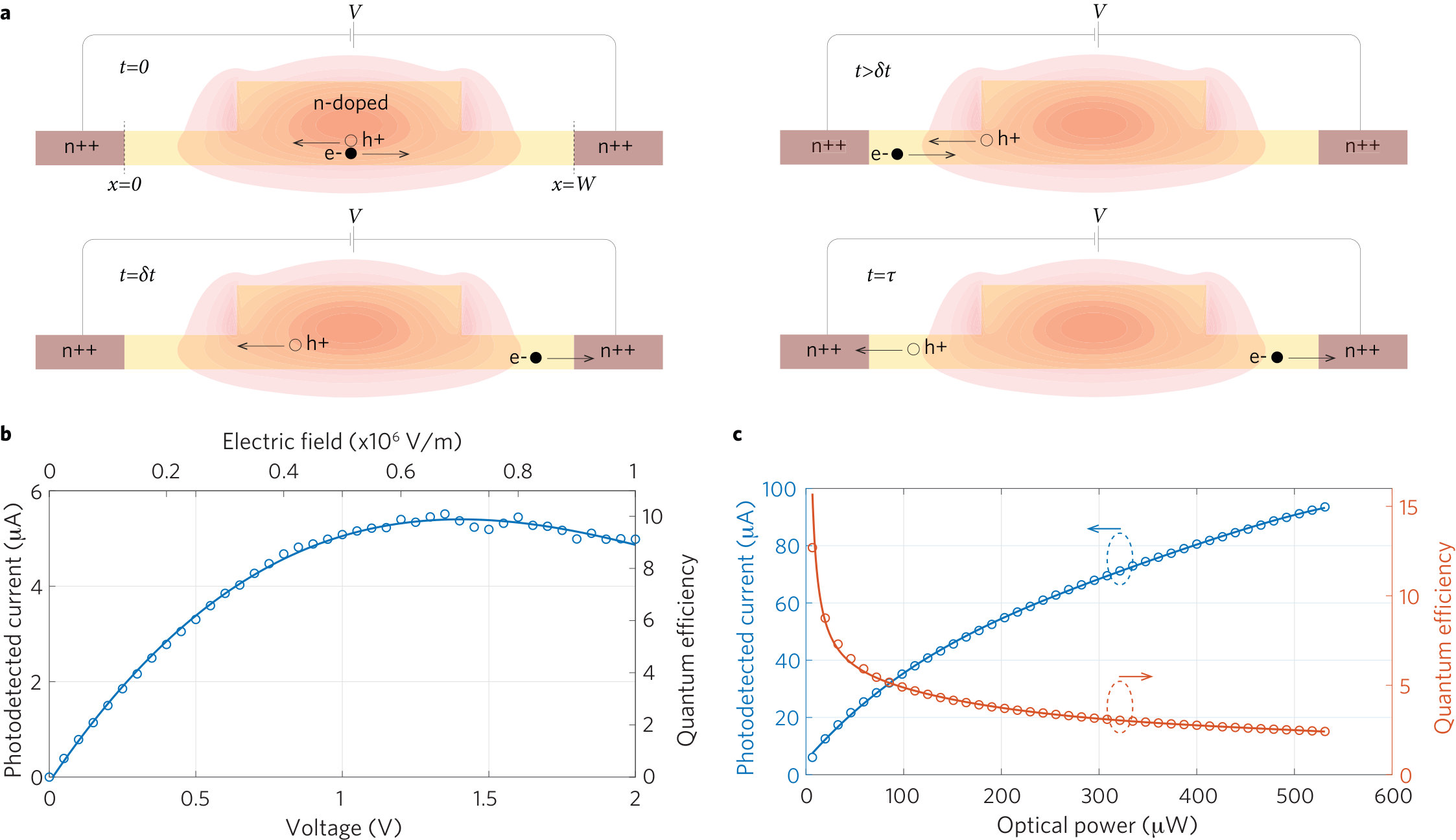 Figure 1
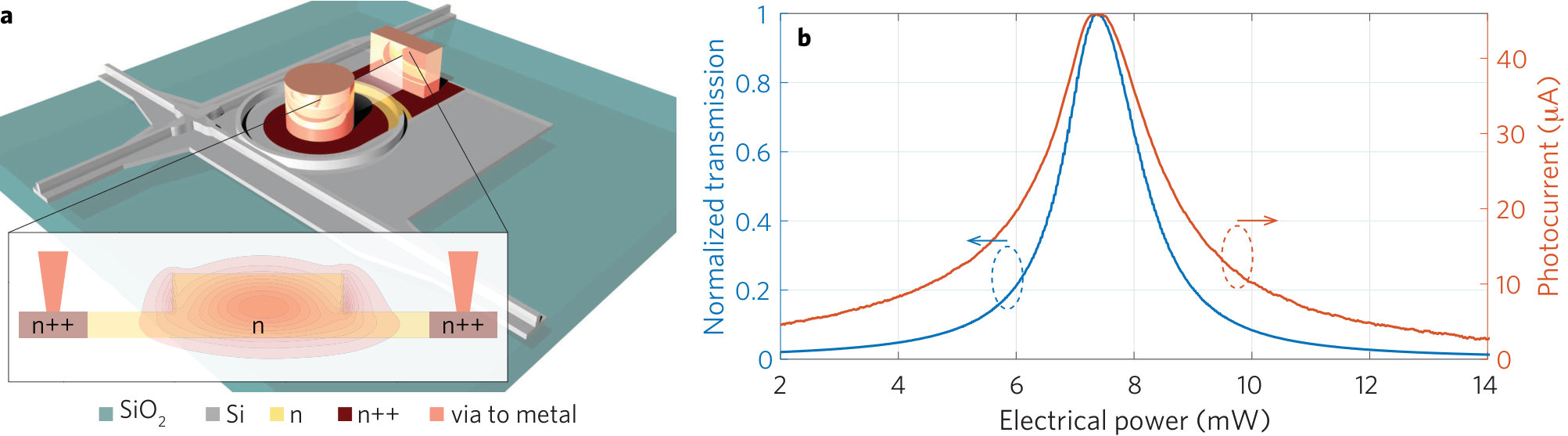 Figure 2
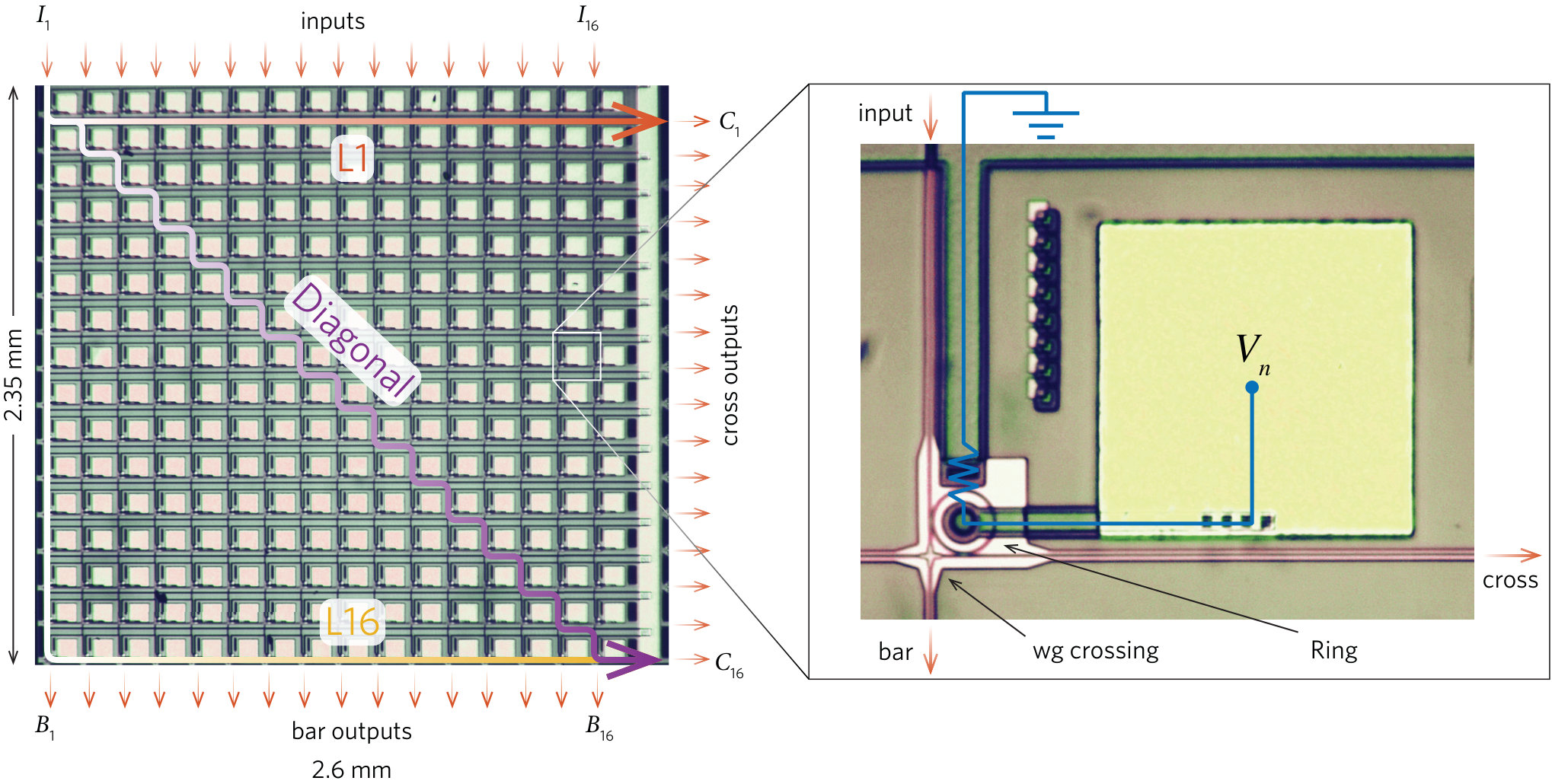 Figure 3
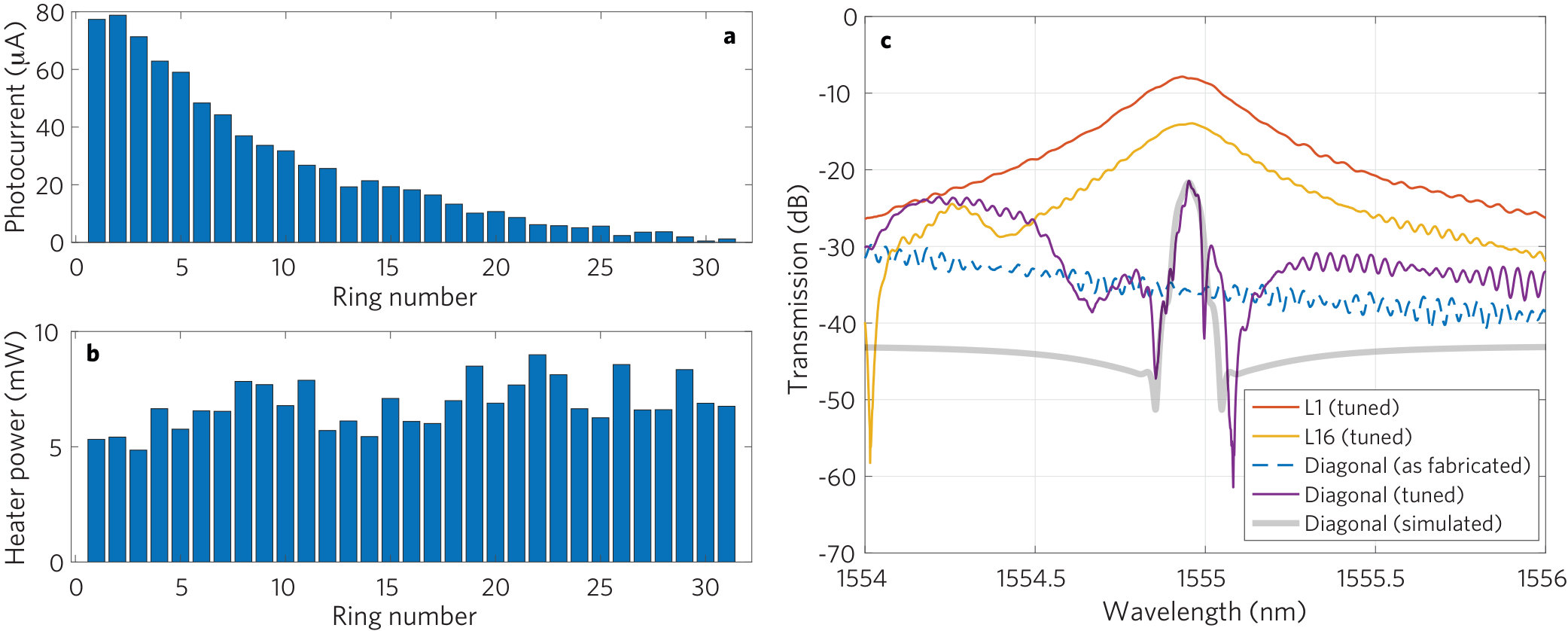 Figure 4
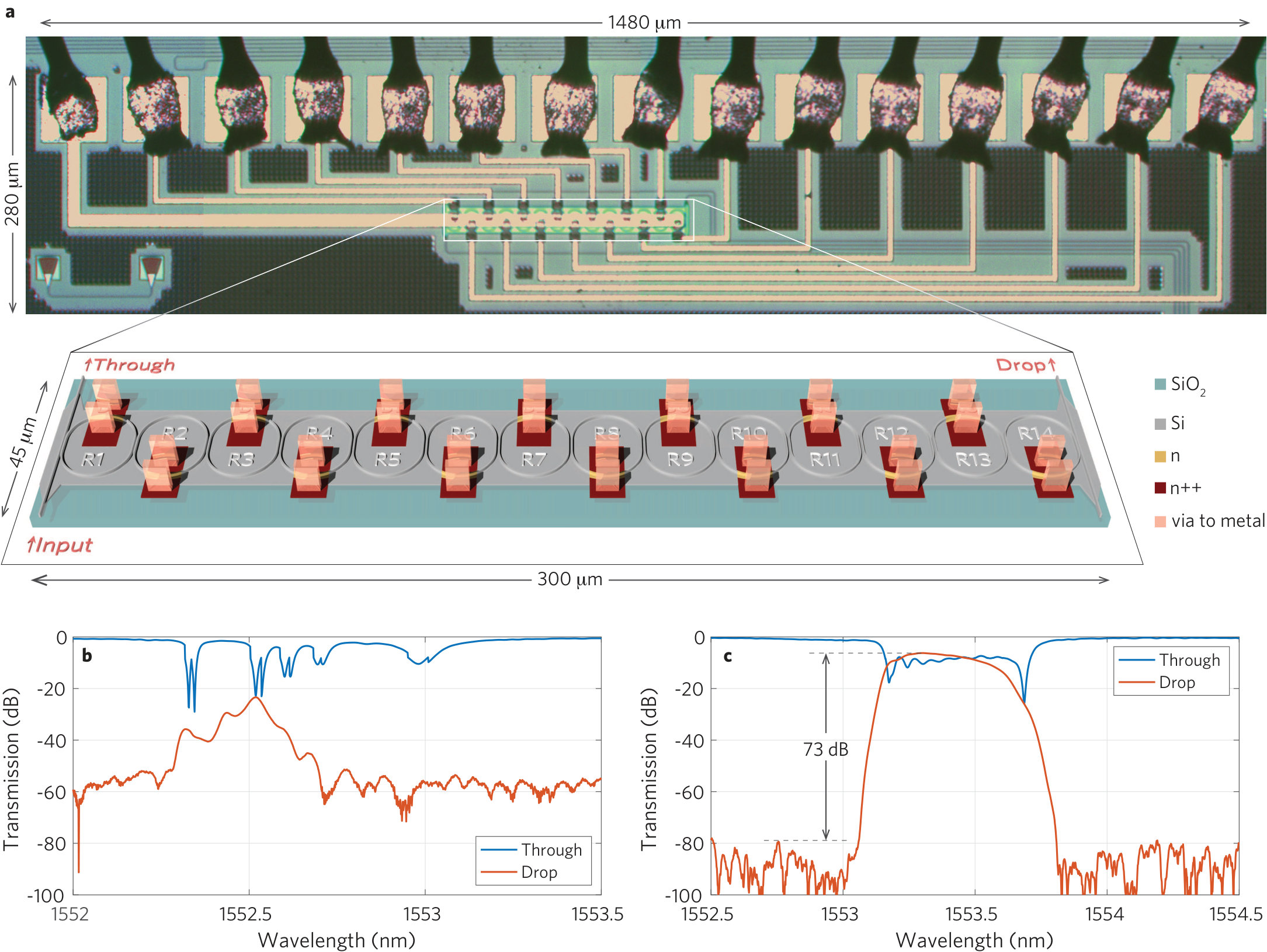 Figure 5
Peer Reviews
No public reviews on file for this paper yet. If you reviewed it on a platform where reviews are public (OpenReview, ICLR, NeurIPS, ICML), you can paste yours below so the community can read it here.
Videos
No videos yet. Explain this paper in a talk, walkthrough, or lecture? Add one.