Probing new physics in semileptonic $\Lambda_b$ decays
Atasi Ray, Suchismita Sahoo, Rukmani Mohanta

TL;DR
This paper investigates potential new physics in semileptonic Lambda_b decays by analyzing deviations from lepton universality observed in B meson decays, constraining parameters with experimental data, and predicting various decay observables.
Contribution
It provides a model-independent analysis of Lambda_b decays to explore new physics effects and lepton universality violation using current experimental constraints.
Findings
Constraints on new physics parameters from B decay data
Predicted branching ratios and asymmetries for Lambda_b decays
Assessment of lepton universality violation in Lambda_b processes
Abstract
In recent times, several hints of lepton non-universality have been observed in semileptonic meson decays, both in the charged-current () and neutral-current () transitions. Motivated by these intriguing results, we perform a model independent analysis of the semileptonic decays involving the quark level transitions , in order to scrutinize the nature of new physics. We constrain the new parameter space by using the measured branching ratios of , processes and the existing experimental results on , and parameters. Using the constrained parameters, we estimate the branching ratios, forward backward asymmetries, hadron and lepton polarization asymmetries of the processes. Moreover, we…
Click any figure to enlarge with its caption.
 Figure 1
 Figure 2
 Figure 3
 Figure 4
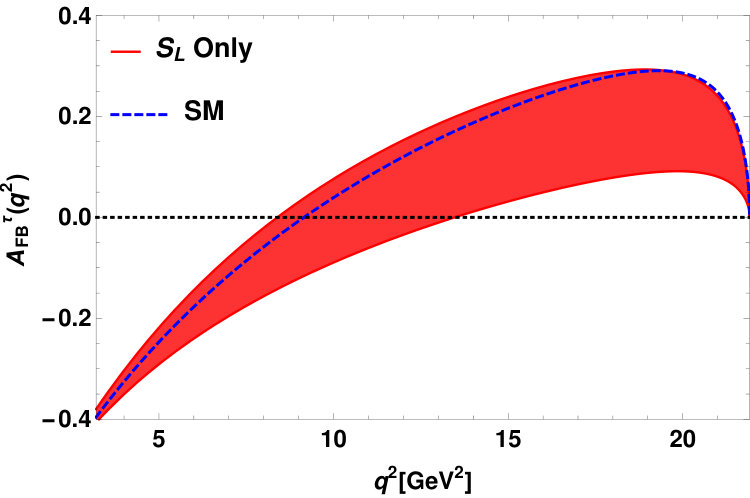 Figure 5
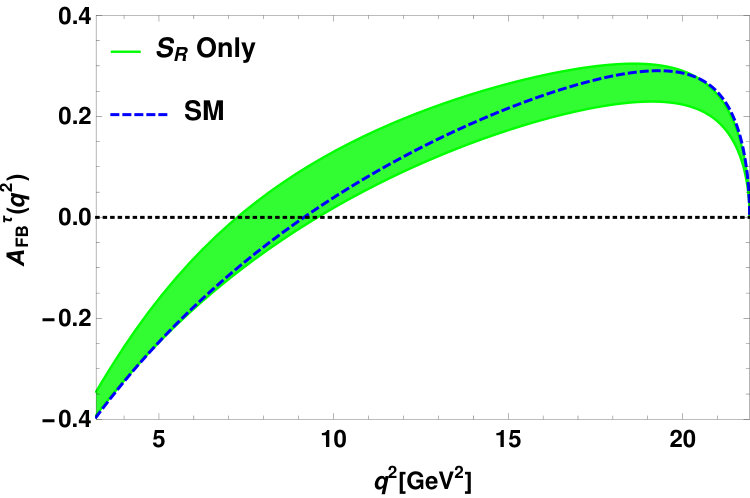 Figure 6
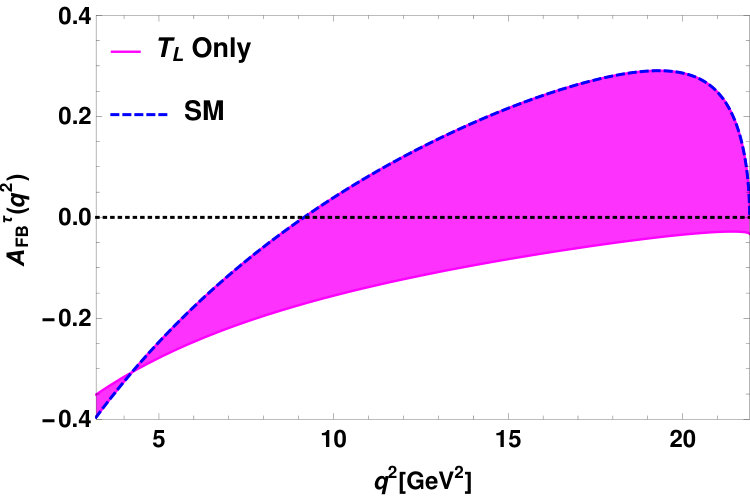 Figure 7
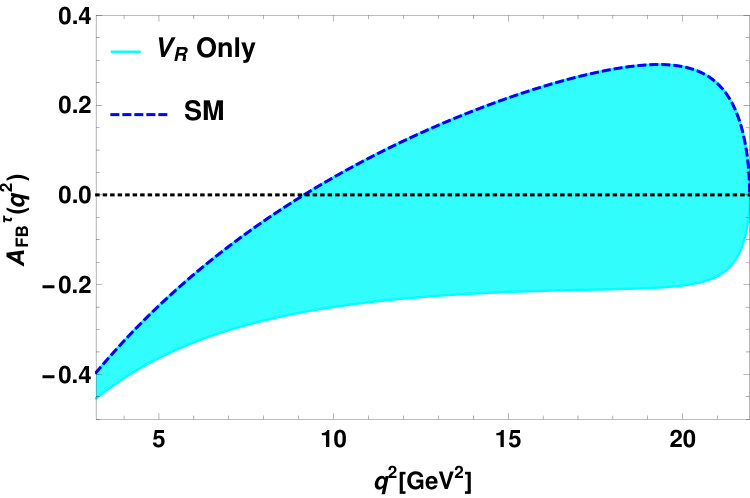 Figure 8
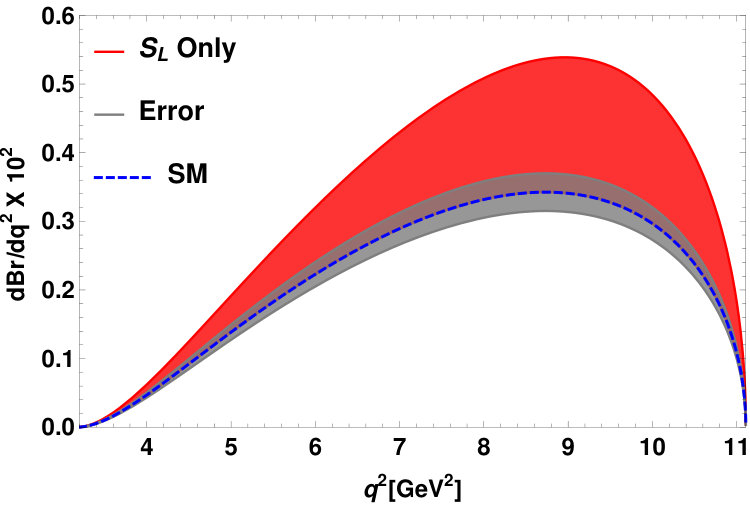 Figure 9
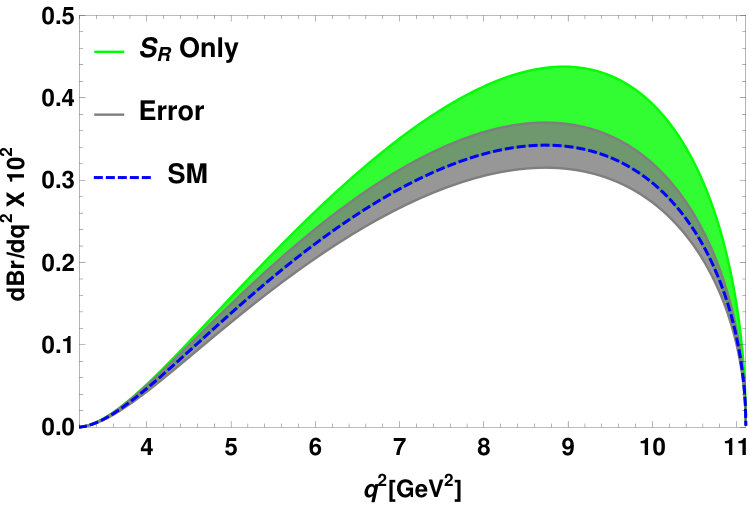 Figure 10
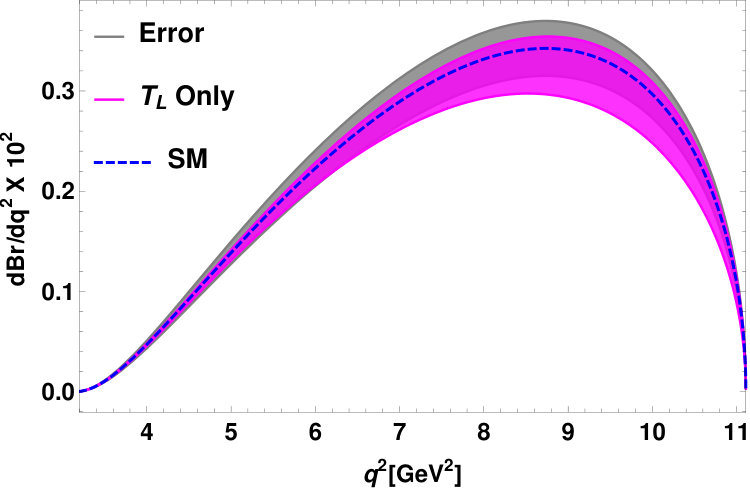 Figure 11
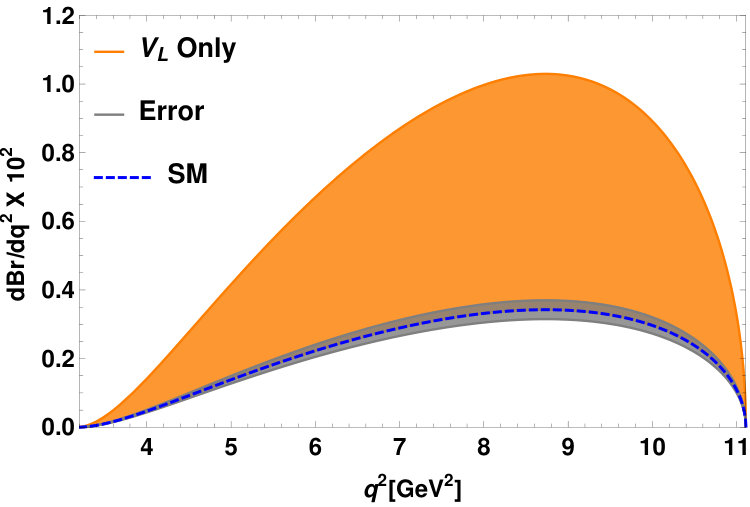 Figure 12
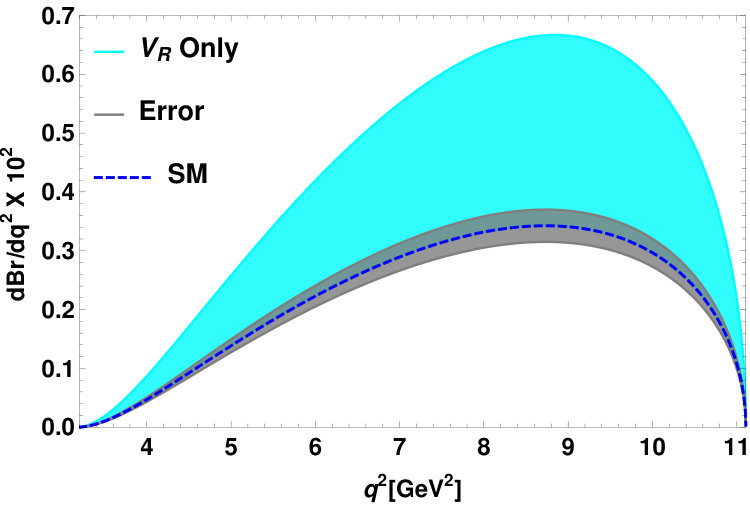 Figure 13
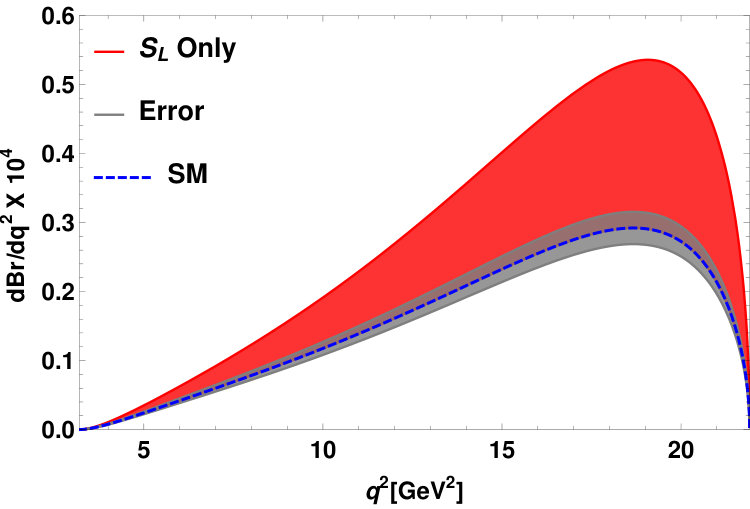 Figure 14
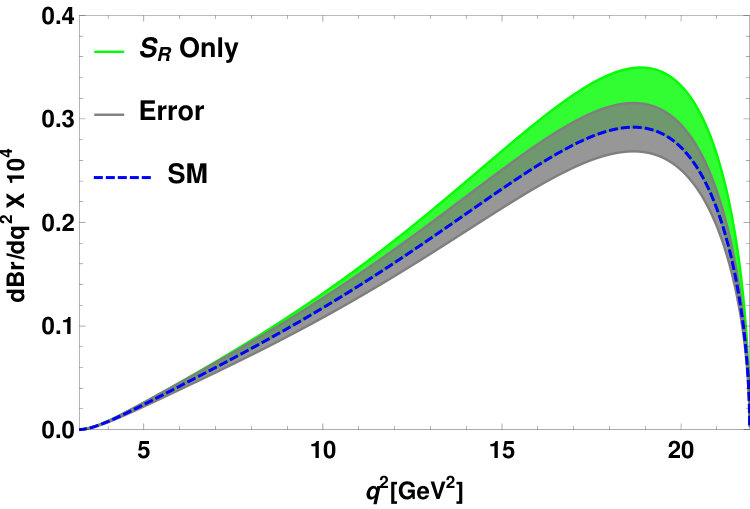 Figure 15
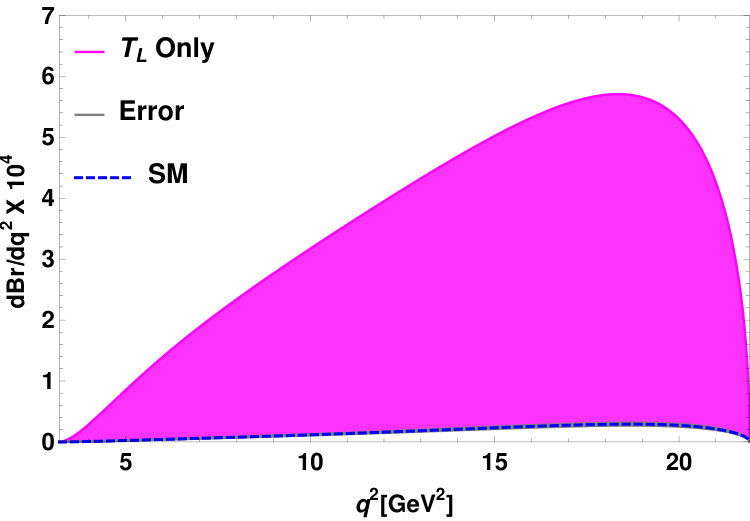 Figure 16
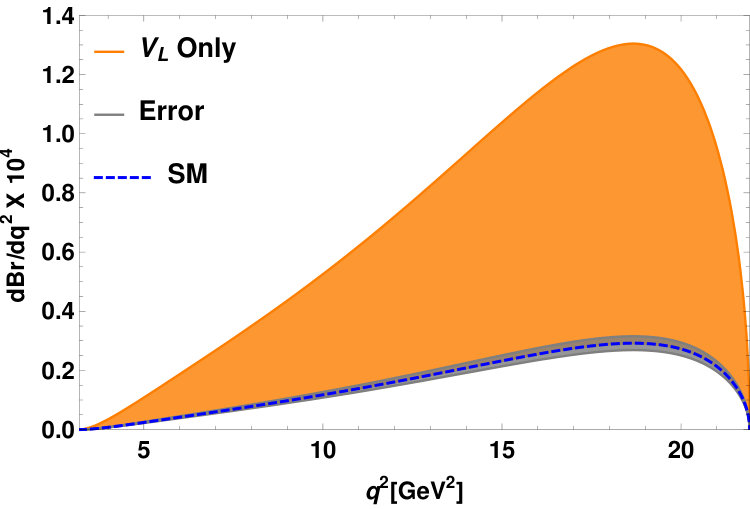 Figure 17
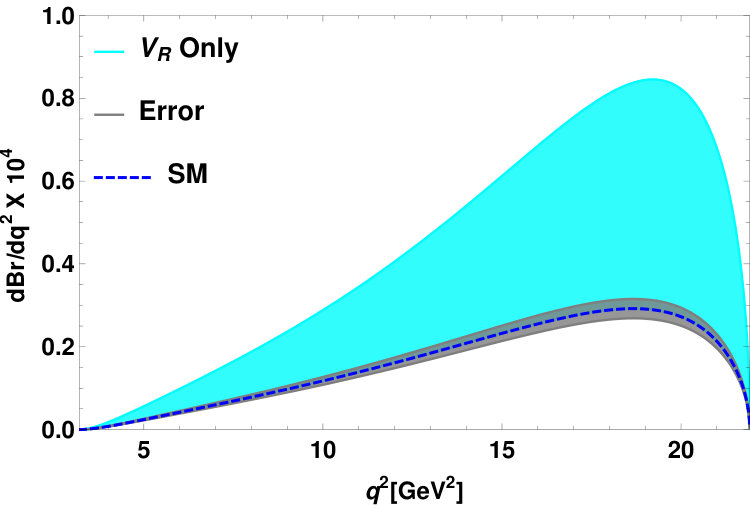 Figure 18
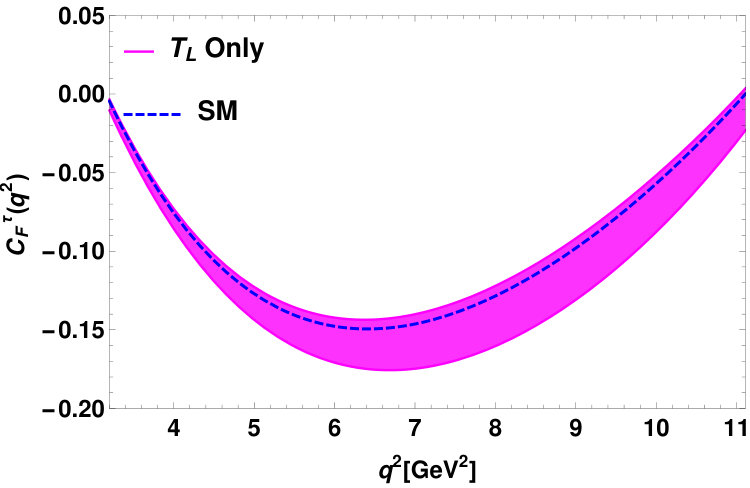 Figure 19
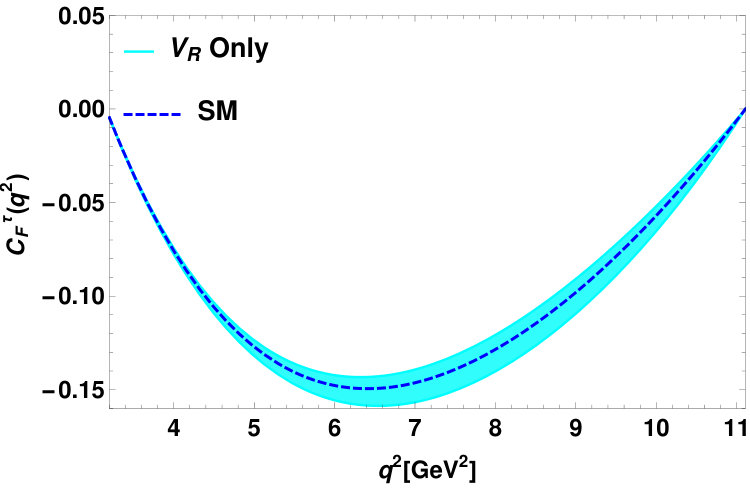 Figure 20
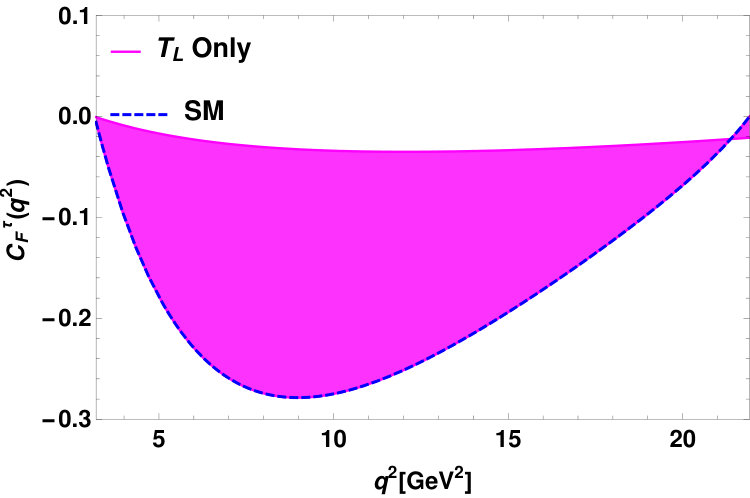 Figure 21
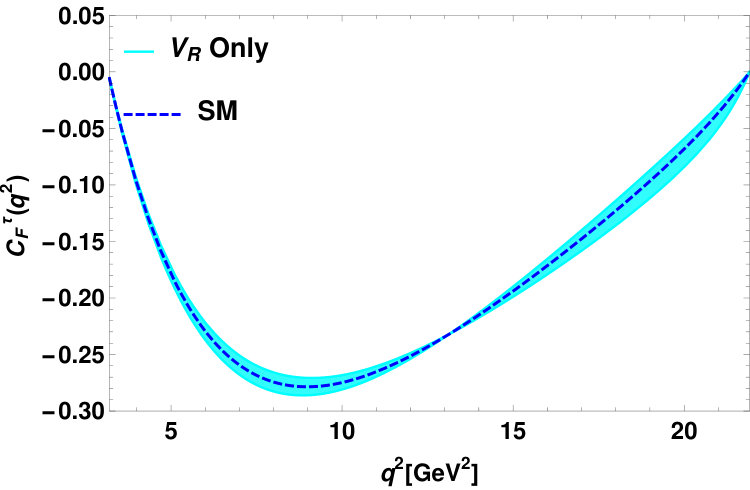 Figure 22
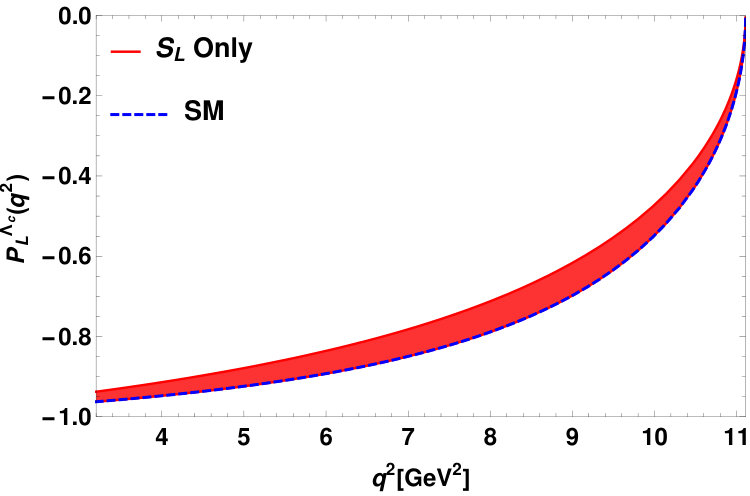 Figure 23
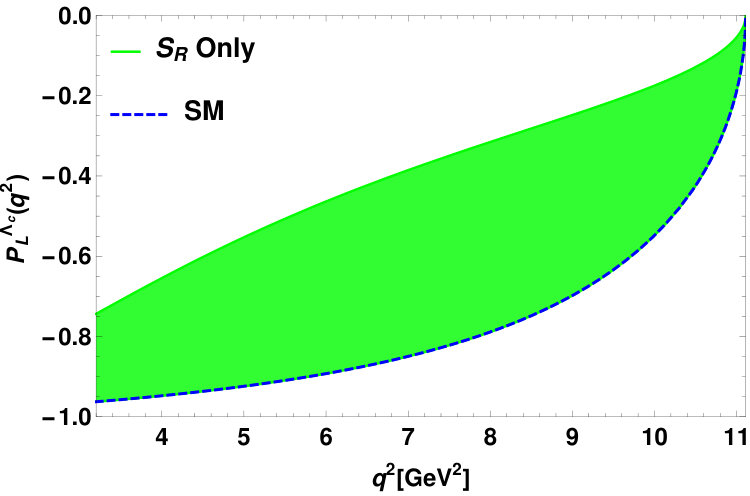 Figure 24
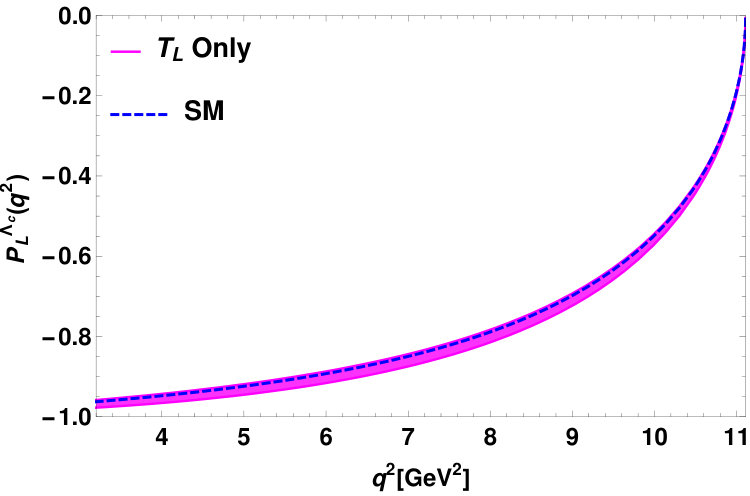 Figure 25
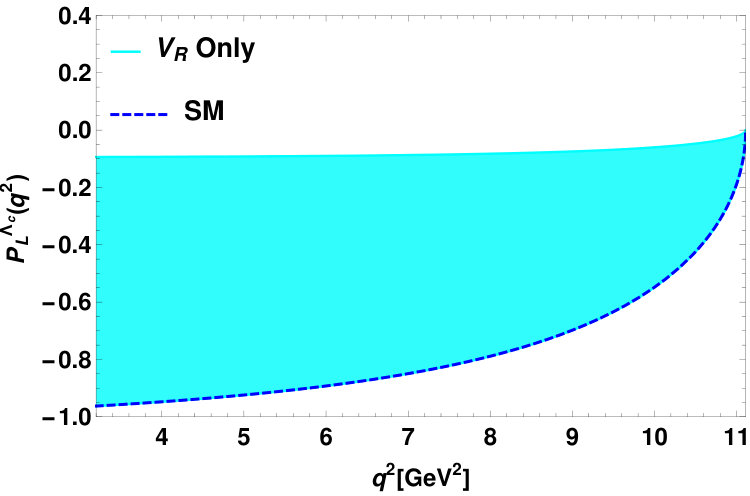 Figure 26
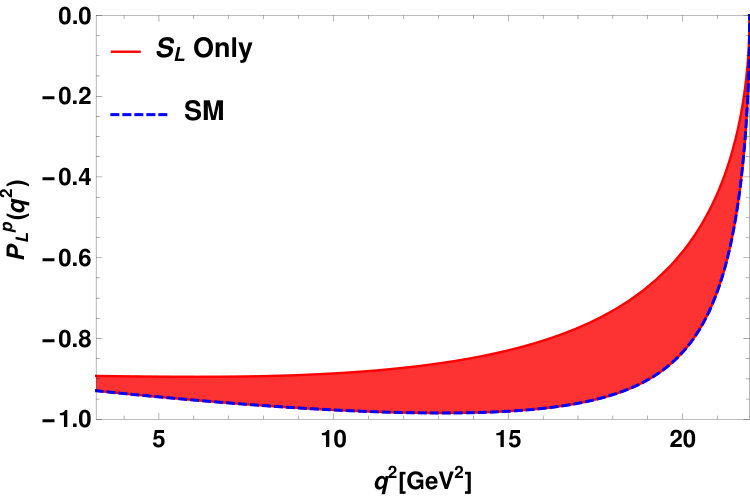 Figure 27
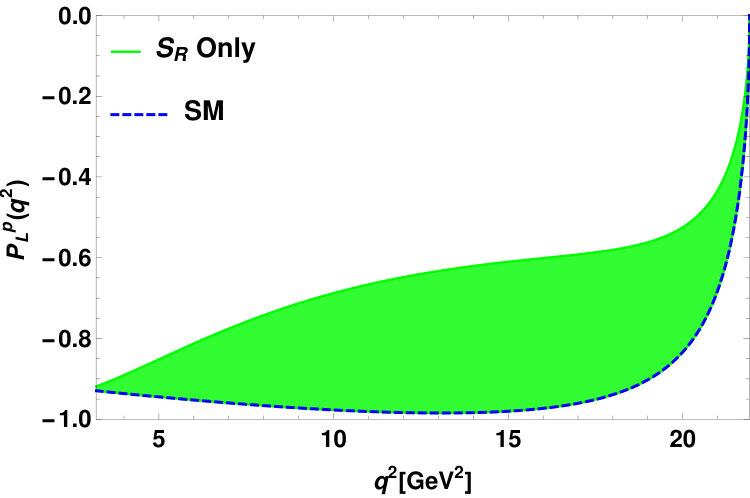 Figure 28
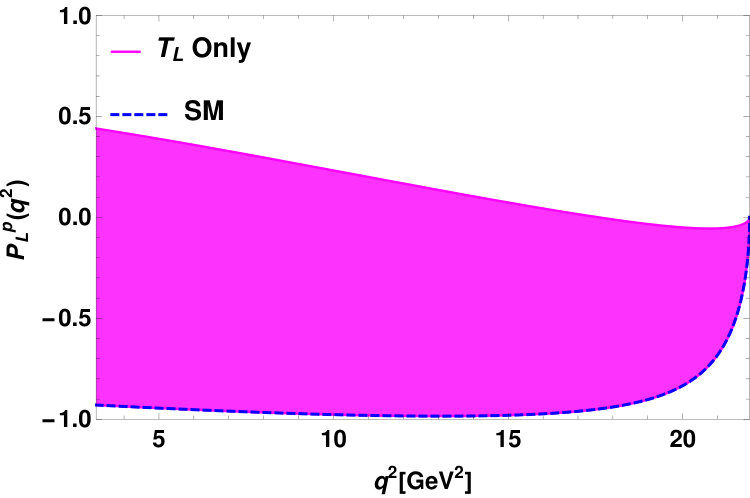 Figure 29
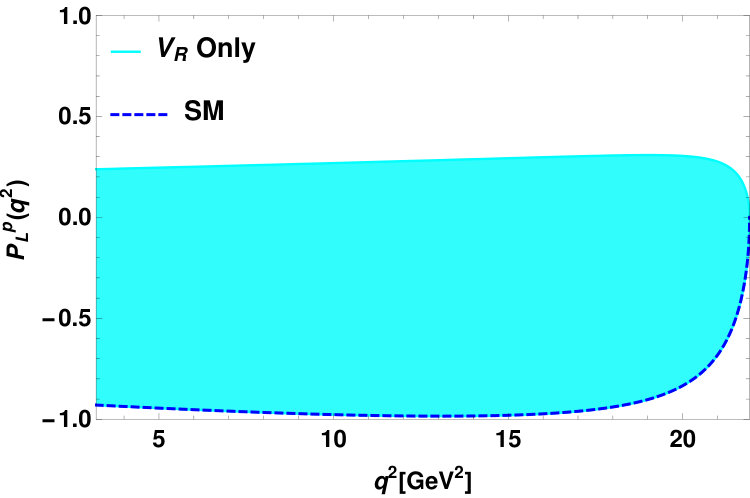 Figure 30
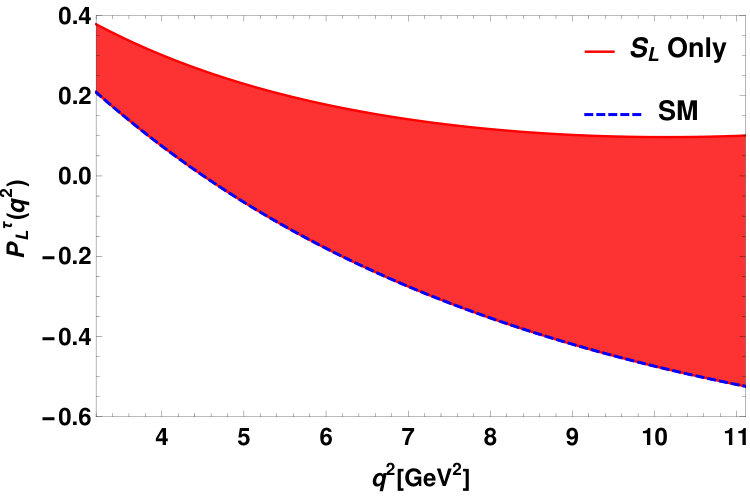 Figure 31
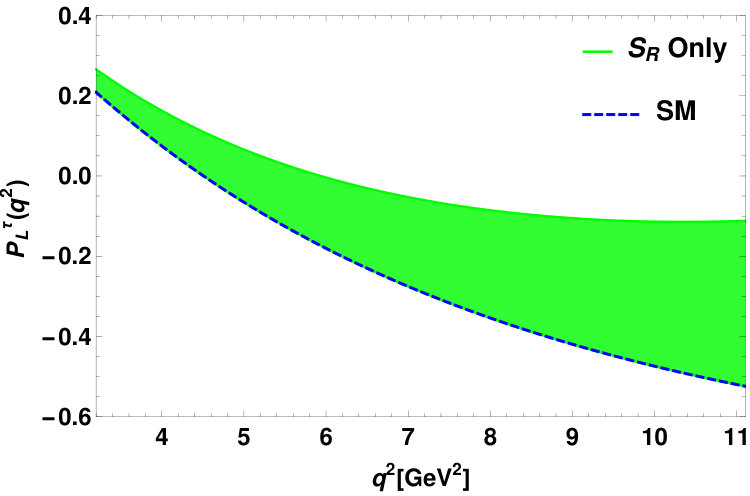 Figure 32
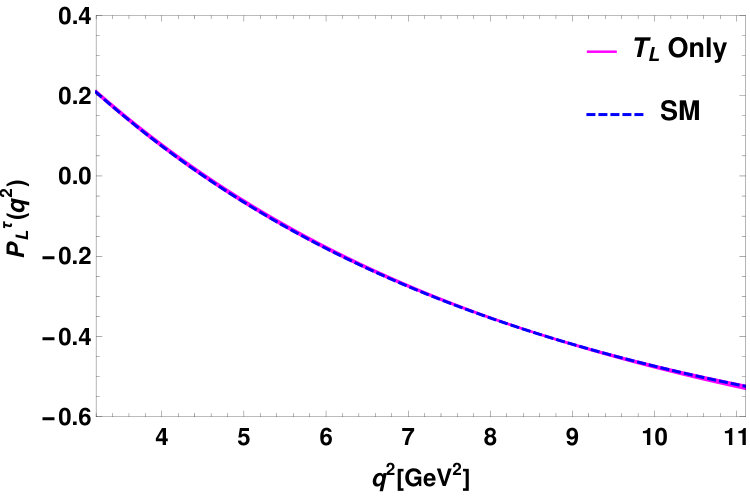 Figure 33
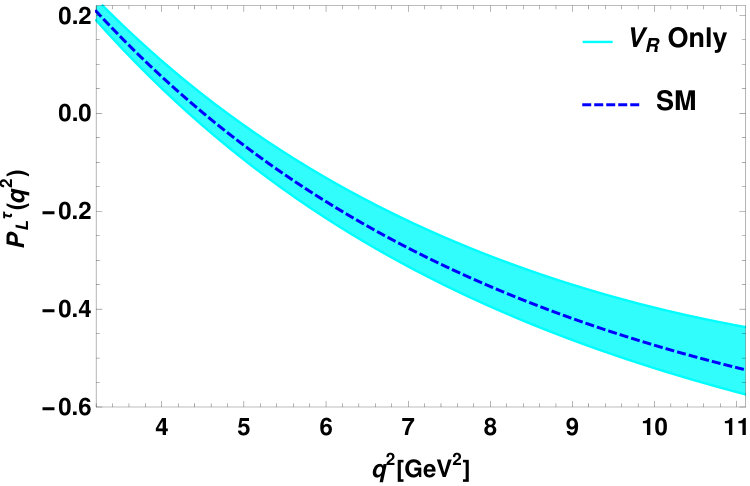 Figure 34
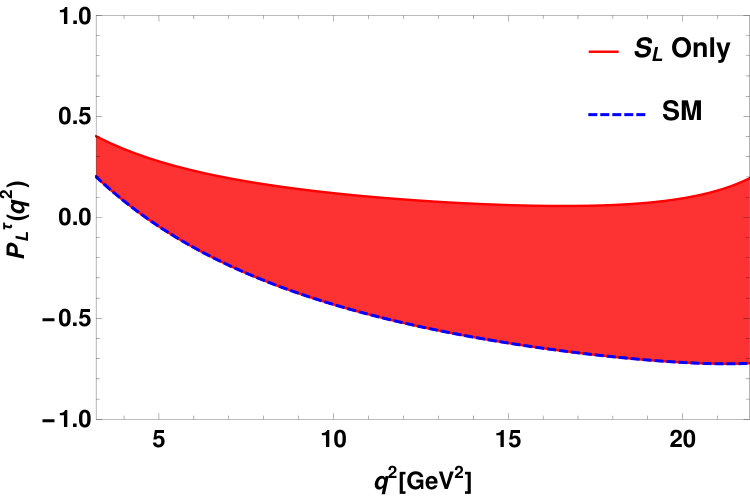 Figure 35
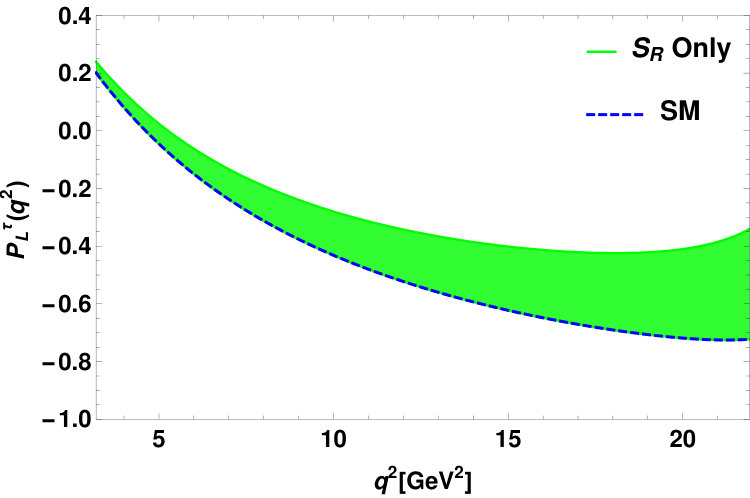 Figure 36
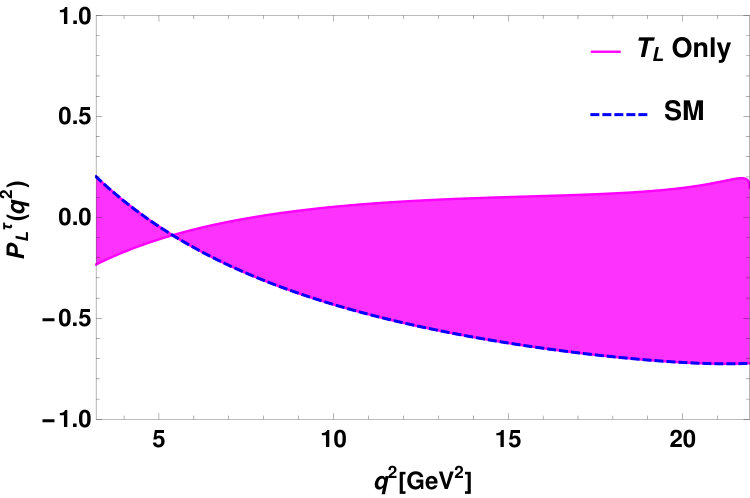 Figure 37
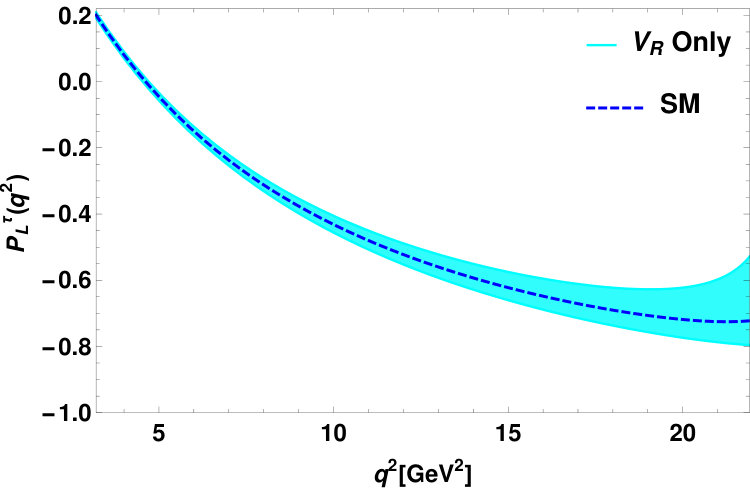 Figure 38
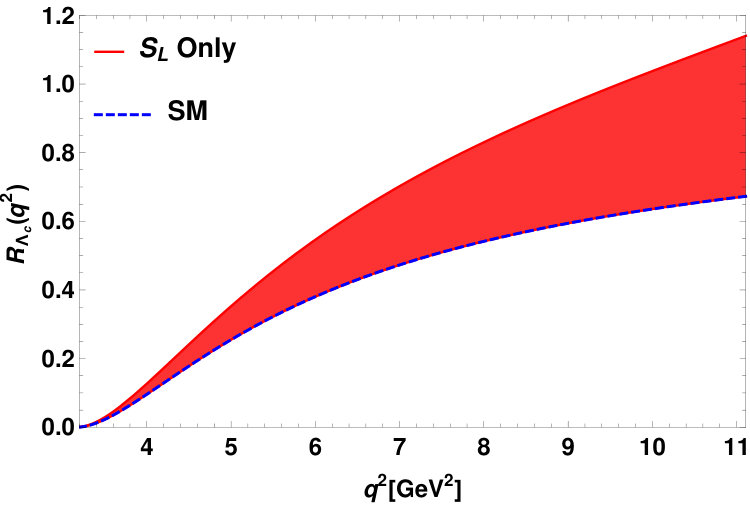 Figure 39
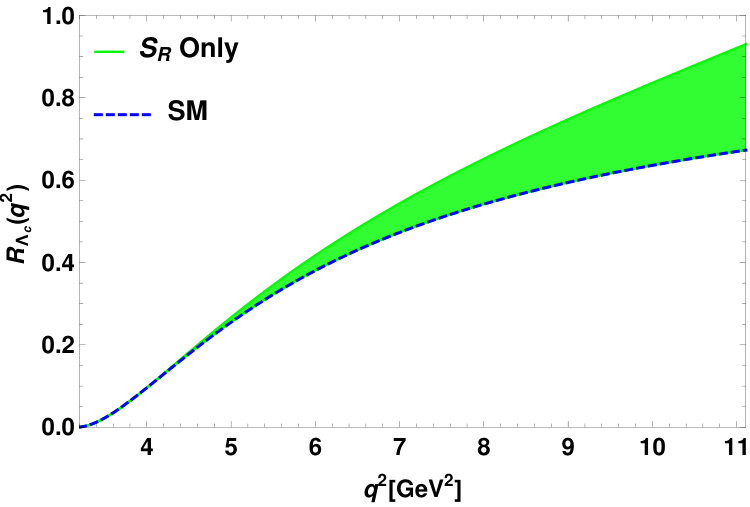 Figure 40
| LNU parameters | Experimental value | SM prediction | Deviation |
|---|---|---|---|
| Aaij et al. (2014a) | Bobeth et al. (2007) | ||
| Aaij et al. (2017) | Capdevila et al. (2018) | ||
| Aaij et al. (2017) | Capdevila et al. (2018) | ||
| Amhis et al. (2017) | Na et al. (2015) | ||
| Amhis et al. (2017) | Fajfer et al. (2012a, b) | ||
| Aaij et al. (2018) | Wang et al. (2013); Ivanov et al. (2005) |
| Decay processes | New coefficients | Minimum value | Maximum Value |
|---|---|---|---|
| Observables | SM prediction | Values for coupling | Values for coupling |
|---|---|---|---|
| Observables | Values for coupling | Values for coupling | Values for coupling |
|---|---|---|---|
Peer Reviews
No public reviews on file for this paper yet. If you reviewed it on a platform where reviews are public (OpenReview, ICLR, NeurIPS, ICML), you can paste yours below so the community can read it here.
Videos
No videos yet. Explain this paper in a talk, walkthrough, or lecture? Add one.
Probing new physics in semileptonic decays
Atasi Raya
Suchismita Sahoob
Rukmani Mohantaa
aSchool of Physics, University of Hyderabad, Hyderabad-500046, India
bTheoretical Physics Division, Physical Research Laboratory, Ahmedabad-380009, India
Abstract
In recent times, several hints of lepton non-universality have been observed in semileptonic meson decays, both in the charged-current () and neutral-current () transitions. Motivated by these intriguing results, we perform a model independent analysis of the semileptonic decays involving the quark level transitions , in order to scrutinize the nature of new physics. We constrain the new parameter space by using the measured branching ratios of , processes and the existing experimental results on , and parameters. Using the constrained parameters, we estimate the branching ratios, forward backward asymmetries, hadron and lepton polarization asymmetries of the processes. Moreover, we also examine whether there could be any lepton universality violation in these decay modes.
I Introduction
Though the Standard Model (SM) is considered as the most fundamental theory describing almost all the phenomena of particle physics, still it is unable to shed light on some of the open issues, like matter-antimatter asymmetry, dark matter, dark energy, etc., which eventually necessitates to probe the physics beyond it. In this respect, the rare decays of mesons involving the flavor changing neutral current (FCNC) transitions play an important role in the quest for new physics (NP). Even though the SM gauge interactions are lepton flavor universal, the violation of lepton universality has been observed in various semileptonic decays. Recently, the LHCb Collaboration has reported a spectacular discrepancy of Lees et al. (2012, 2013); Huschle et al. (2015); Abdesselam et al. (2016); Aaij et al. (2015a); Amhis et al. (2017) and Aaij et al. (2018) on the lepton non-universality (LNU) parameters and respectively from their corresponding SM values. Analogous LNU parameters are also observed in processes i.e., with discrepancies of Aaij et al. (2014a, 2017). The SM predictions as well as the corresponding experimental values of various LNU parameters along with their deviations are presented in Table 1 .
In addition, another discrepancy in transition is also noticed in the measured ratio
[TABLE]
where is the life time of meson. Using the experimental measured values of the branching ratios of and decay processes
[TABLE]
with from Patrignani et al. (2016), one can obtain
[TABLE]
which has also nearly deviation from its SM value . It is generally argued that, compared to the first two generations, the processes involving the third generation leptons are more sensitive to NP due to their reasonably large mass. As the LNU parameters are the ratio of branching fractions, the uncertainties arising due to the CKM matrix elements and hadronic form factors are expected to be reduced, as they cancelled out in the ratio. Hence, these deviations of various LNU parameters hint towards the possible interplay of new physics in an ambiguous manner.
On the other hand, around of the total number of hadrons produced at LHCb are baryon Aaij et al. (2012, 2014b), and hence the study of becomes quite interesting in these days. The quark level transitions can be probed in both and decays. Thus, as in decays one can also scrutinize the presence of lepton universality violation in the corresponding semileptonic baryon decays to corroborate the results from sector and thus, to probe the structure of NP. The heavy-heavy and heavy-light semileptonic decays of baryons can serve as an additional source for the determination of the Cabbibo-Kobayashi-Maskawa (CKM) matrix elements Aaij et al. (2015b); Fiore (2015); Patrignani et al. (2016); Hsiao and Geng (2017). In the literature Woloshyn (2013); Wu (2015); Shivashankara et al. (2015); Gutsche et al. (2016, 2015); Detmold et al. (2015); Dutta (2016); Pervin et al. (2005); Faustov and Galkin (2016); Datta et al. (2017); Li et al. (2017); Di Salvo et al. (2018); Bernlochner et al. (2018), the baryonic decay modes mediated by quark level transitions are studied both in model dependent and independent approaches. The analysis of decay in the context of SM and various NP couplings are performed in Shivashankara et al. (2015). In Ref. Gutsche et al. (2015), the SM hadron and lepton polarization asymmetries are computed in the covariant confined quark model. The precise lattice QCD calculation of form factors and the investigation of semileptonic baryonic processes are performed in Detmold et al. (2015). Ref. Di Salvo et al. (2018) investigates the impact of five possible new physics interactions, adopting five different form factors of decay mode. Considering various real NP couplings, the differential decay distributions, forward-backward asymmetries and the ratios of branching fractions of these baryonic decay modes are investigated in Dutta (2016). In this work, we intend to analyse the effect of complex new couplings on decay processes in a model independent way. The main goal of this work is to check the possible existence of lepton universality violation in baryonic decays. The new coefficients are constrained by using the branching ratios of , processes and the experimental data on ratios. We then compute the branching ratios, forward-backward asymmetries, lepton and hadron polarization asymmetries of these baryonic decay modes. We also check the LNU parameters by using the constrained new couplings. The main difference between our approach and the previous analyses in Shivashankara et al. (2015); Datta et al. (2017) is that, we investigate the impact of individual complex new couplings on all the angular observables including the lepton and hadron polarization asymmetries. We use the updated experimental limits on ratios including new parameter to constrain the allowed parameter space.
The outline of our paper is follows. In section II, we present the general effective Lagrangian of processes in presence of NP, and the necessary theoretical framework for analysing these processes. The constraints on new parameter space associated with transitions are computed from the experimental data on , and observables in section III. In section IV, we discuss the branching ratios and all the physical angular observables of processes. Our findings are summarized in section V.
II Theoretical framework
The most general effective Lagrangian associated with decay processes, where mediated by the quark level transition is given by Bhattacharya et al. (2012); Cirigliano et al. (2010)
[TABLE]
where denotes the Fermi constant, are the CKM matrix elements and are the chiral quark(lepton) fields with as the projection operators. Here represent the vector, scalar and tensor type NP couplings, which are zero in the SM.
In the presence of NP, the double differential decay distribution for processes with respect to and ( is the angle between the directions of parent baryon and the in the dilepton rest frame) is given as Shivashankara et al. (2015); Li et al. (2017)
[TABLE]
where
[TABLE]
with
[TABLE]
and
[TABLE]
Here and are the masses of baryon and charged leptons respectively. The helicity amplitudes in terms of the various form factors and the NP couplings are given as Shivashankara et al. (2015); Li et al. (2017)
[TABLE]
[TABLE]
where and are the various form factors. After integrating out in Eqn. (6), one can obtain the dependent differential decay rate. Besides the branching ratios, other interesting observables in these decay modes are
- •
Forward-backward asymmetry parameter:
[TABLE]
- •
Convexity parameter:
[TABLE]
- •
Longitudinal hadron polarization asymmetry parameter:
[TABLE]
where are the individual helicity-dependent differential decay rates, whose detailed expressions are given in Appendix A Li et al. (2017).
- •
Longitudinal lepton polarization asymmetry parameter:
[TABLE]
where are the individual helicity-dependent differential decay rates, whose detailed expressions are given in Appendix A Li et al. (2017).
- •
Lepton non-universality parameter:
[TABLE]
- •
The LHCb Collaboration has measured the ratio of the partially integrated decay rates of over the process as
[TABLE]
and put constraint on the ratio Aaij et al. (2015b). Similarly, we define the following parameter, to investigate if there is any possible role of NP
[TABLE]
III Constraints on new couplings
After assembling the expressions for all the interesting observables in presence of NP, we now proceed to constrain the new coefficients by using the experimental bounds on , , , and parameters. In this analysis, the new Wilson coefficients are considered as complex. We further assume that only one new coefficient to present at a time and accordingly compute the allowed parameter space of these couplings.
The branching ratios of processes in the presence of NP couplings are given by Biancofiore et al. (2013)
[TABLE]
where is the mass of meson. By using the masses of all the particles, lifetime of meson, CKM matrix elements from Patrignani et al. (2016) and decay constants MeV, MeV from Aoki et al. (2014); Chiu et al. (2007), the branching ratios of processes in the SM are found to be
[TABLE]
Using the current world average of the lifetime, the upper limit on the branching ratio of process is Akeroyd and Chen (2017)
[TABLE]
The branching ratios of ( ) are given as Sakaki et al. (2013); Tanaka and Watanabe (2013)
[TABLE]
where the helicity amplitudes in terms of form factors are expressed as
[TABLE]
Using the values of the form factors from Khodjamirian et al. (2011); Bourrely et al. (2009); Boyd et al. (1995a, b), the obtained branching ratios of processes, in the SM are given as
[TABLE]
It should be noted that, the branching ratio of the muonic channel agrees reasonably well with the experimental value as given in Eqn. (3), whereas the tau-channel is within its current experimental limit Patrignani et al. (2016)
[TABLE]
The branching ratios of , where , are given as Sakaki et al. (2013); Tanaka and Watanabe (2013)
[TABLE]
where , , and are the hadronic amplitudes Sakaki et al. (2013); Tanaka and Watanabe (2013).
In this analysis, we consider the new physics contribution to third generation lepton only and the couplings with light leptons are assumed to be SM like. By allowing only one coefficient at a time, we constrain its real and imaginary parts by comparing the theoretically predicted values of and with their corresponding range of observed experimental results for transitions. We have also used the upper limit of the branching ratio of process. In Fig. 1 , we show the constraints on real and imaginary parts of new coefficients (top-left panel), (top-right panel), (middle-left panel) and (middle-right panel) obtained from the , and observables. Since the branching ratio of process does not receive any contribution from tensor operator, the allowed region of real and imaginary parts of tensor coupling obtained only from the upper limit on , and is presented in the bottom panel of this figure. Now imposing the extrema conditions, the allowed range of the new couplings associated with transition are presented in Table 2 . For the case of decay processes, the constraints on the real and imaginary parts of individual (top-left panel), (top-right panel), (middle-left panel) and (middle-right panel) coefficients obtained from and parameters are shown in Fig. 2 . Till now, there is no precise determination of the form factors associated with tensorial operators for process both from the theoretical and experimental sides. In addition, the leptonic meson decays do not receive any contribution from tensor coupling. Therefore, the constraints on coupling is obtained from the experimental data on , which is shown in the bottom panel of Fig. 2. In Table 2 , we have presented the allowed values of and coefficients, which are compatible with the range of the experimental data.
The constraints on these parameters are obtained earlier from various decays in Refs. Fajfer et al. (2012a, b); Shivashankara et al. (2015); Dutta (2016); Biancofiore et al. (2013); Tanaka and Watanabe (2013); Ivanov et al. (2017); Tran et al. (2018); Ivanov et al. (2016). Our analysis is similar to Refs. Shivashankara et al. (2015); Datta et al. (2017). In Ref. Shivashankara et al. (2015), the authors have considered the couplings to be complex and constrained the new coefficients associated with from data. However, they have not includeed the tensor couplings in their analysis, and found that the effects produced by the pseudoscalar coefficient are larger than those obtained from the scalar coefficient. In Ref. Dutta (2016), the author assumed the couplings as real and computed the allowed parameter space by comparing the , parameters with their corresponding experimental data. In Ivanov et al. (2016), the authors have considered the covariant confined quark model and studied the effect of new physics in the . They took the new coefficients as complex and constrained them using the experimental values of and within their range. Recently, the decay process has been studied, in the covariant confined quark model Tran et al. (2018), where the parameter space is constrained by using the experimental values of within range. The new coefficients are considered to be complex and their best fit values are . Though our analysis is similar to these approaches, but we get more severe bounds on the phases and strengths of the couplings due to additional constraints from and parameters for case and from and observables for process.
IV Numerical analysis and discussion
In this section, we present the numerical results for semileptonic decay modes with third generation leptons in the final state. The masses of all the particles and the lifetime of are taken from Patrignani et al. (2016). The dependence of the helicity form factors in the lattice QCD calculation can be parametrized as Detmold et al. (2015); Datta et al. (2017)
[TABLE]
where is the pole mass and
[TABLE]
with . The values of the parameters , associated with (axial)vector and (pseudo)scalar form factors are taken from Detmold et al. (2015). In the lattice QCD approach, the , parameters linked to tensor form factors of process are computed in Datta et al. (2017). However, currently no lattice results are available on the tensor form factors associated with process. Hence, we relate the tensor form factors of decay mode with its (axial)vector form factors by using the HQET relations as Feldmann and Yip (2012); Li et al. (2017); Chen and Geng (2001),
[TABLE]
The detailed relation between the helicity form factors with other various hadronic form factors are listed in Appendix B Feldmann and Yip (2012). Using all these input parameters, the predicted branching ratios of processes in the SM are given by
[TABLE]
which are in reasonable agreement with the corresponding experimental data Patrignani et al. (2016)
[TABLE]
The values of the forward-backward asymmetries in these channels are found to be
[TABLE]
In Eqn. (IV , 33), the theoretical uncertainties are mainly due to the uncertainties associated with the CKM matrix elements and the form factor parameters. After having idea on all the required input parameters and the allowed parameter space of new couplings, we now proceed to discuss various new physics scenarios and their impact on decay modes in a model independent way.
IV.1 Scenario A: Only coefficient
In this scenario, we assume that the additional new physics contribution to the SM result is coming only from the coupling associated with the left-handed vector like quark currents i.e., and . Since in this case, the NP operator has the same Lorentz structure as the SM operator, the SM decay rate gets modified by the factor . Imposing constraint on Br(), Br(), , and observables, the allowed parameter space of couplings associated with are shown in Figs. 1 and 2 respectively.
Using the minimum and maximum values on real and imaginary parts of coefficient from Table 2 , we present the differential branching ratios of (left panel) and (right panel) processes with respect to in Fig. 3 . In these figures, the blue dashed lines represent the SM contribution, the orange bands are due to the presence of new coefficient and the grey bands stand for the theoretical uncertainties associated with the input parameters like form factors, CKM matrix elements etc. The branching ratios of deviate significantly from their corresponding SM values due to the NP contribution. In addition to the decay rate, other interesting observables, which can be used to probe new physics, are the zero crossing of the forward-backward asymmetry and the convexity parameters. From Eqn. (12), one can notice that the convexity parameter depends only on the and couplings. The values for forward-backward asymmetries of processes in the SM are
[TABLE]
and the corresponding values for the convexity parameters are
[TABLE]
We found no deviation from SM results for the forward-backward asymmetry and convexity parameters due to the presence of coefficient.
In Fig. 4 , left (right) panel depicts the variation of lepton universality violating parameters . We observe that the NP contribution coming from the coupling has significant impact on and parameters. The variation of parameter with for this case, is presented in the left panel of Fig. 7 . The numerical values of the branching ratios and the LNU parameters for both the SM and the -type NP scenario are given in Table 3 . Besides the branching ratios, forward-backward asymmetry and LNU parameters of processes, the NP effects can also be observed in the hadron and lepton polarization asymmetries. However, no deviation has been found in the presence of coupling from their corresponding SM results.
IV.2 Scenario B: Only coefficient
Here, we assume that only the new coefficient is present in addition to the SM contribution, in the effective Lagrangian (5). To investigate the effect of NP coming from coefficient, we first constrain the new coefficient by imposing experimental bound on the anomalies. Using the values from Table 2 , we show the plots for the branching ratios of process in the top-left panel (top-right panel) of Fig. 5 . In these figures, the cyan bands are due to the additional contribution from coefficient. We notice significant deviation in the branching ratios from their corresponding SM results. The predicted values of the branching ratios for coefficient are presented in Table 3 . Apart from branching ratios, we are also interested to see the effect of this new coefficient on various dependent observables. The variation of the forward backward asymmetry and the convexity parameters for (left) and (right) decay processes are depicted in the middle and bottom panels of Fig. 5 , respectively. The deviation of convexity parameters from their SM prediction are quite noticeable in these plots. In the presence of coefficient, the numerical values of the parameters are
[TABLE]
The effect of coefficient is found to be rather significant on the forward-backward asymmetry observables of both decay modes and the corresponding numerical values are
[TABLE]
Left and right panels of Fig. 6, depict the variation of and parameters with respect to . Though there are no experimental limits on these parameters, significant deviation from their SM values are noticed in the scenario with only coupling. The right panel of Fig. 7 represents the variation of parameter. The corresponding numerical values are listed in Table 3 .
Though the presence of coefficient has no effect on the lepton and hadron polarization asymmetries of decay modes, the coefficient has significant impact on these parameters. In the top panel of Fig. 8 , the distribution of the longitudinal polarization components of the daughter baryon (left panel) and (right panel) are shown both in the SM and in the presence of only coefficient, and the corresponding plots for the charged lepton are presented in the bottom panel. The integrated values of the hadron longitudinal polarization asymmetry parameters in the full physical phase space are
[TABLE]
and the corresponding numerical values for the charged lepton , are
[TABLE]
IV.3 Scenario C: Only coefficient
Here, we explore the impact of only coefficient on the angular observables of heavy-heavy and heavy-light semileptonic decays of baryon. In section III, we discussed the constraints on the coupling. In the top panel Fig. 9 , we present the plots for the differential branching ratios of (left) and (right) decay processes with respect to in the presence of coefficient. The corresponding plots for the forward-backward asymmetry are shown in the bottom panel. In these figures, the red bands stand for the NP contribution from coefficient. The additional contributions provide deviation in the branching ratios and forward-backward asymmetries from their SM values. The variation of the (left panel) and (right panel) LNU parameters in the presence of coupling are given in Fig. 10 . In the presence of only coupling, the longitudinal polarization components of the (top-left panel) and (top-right panel) daughter baryons with respect to are presented in the top panel of Fig. 11 and the bottom panel depicts the longitudinal lepton polarization asymmetry parameters for processes. The lepton polarization asymmetry parameters provide profound deviation from the SM in comparison to their longitudinal hadron polarization parameters. The top-left panel of Fig. 18 shows the variation of parameter with . In Table 4 , we report the numerical values of all these parameters.
IV.4 Scenario D: Only coefficient
In this subsection, we perform an analysis for semileptonic decay modes of baryon with the additional coupling. Using the allowed ranges of the real and imaginary part of coupling from Table 2 , the branching ratios of (left) and (right) decay processes with respect to are presented in Fig. 12 . The bottom panel of this figure represents the variation of the forward-backward asymmetry for (left) and (right). In these figures, the green bands are due to the additional new contribution of coefficient to the SM. We observe profound deviation in the branching ratios and forward-backward asymmetries of these decay modes from their SM values. Left (right) panel of Fig. 13, show the effect of coupling on the variation of () parameter. The longitudinal polarization components of the (top-left panel) and (top-right panel) daughter baryons with respect to in the presence of contribution from only coefficient, are presented in the top panel of Fig. 14 and the bottom panel depict the longitudinal lepton polarization asymmetry parameters for processes. We notice significant deviation of hadron and lepton polarization asymmetries from their corresponding SM values due to additional contribution from coupling. The plot for the parameter with in the presence of only coefficient is presented in the right panel of Fig. 18 . The numerical values of all these parameters are presented in Table 4 . Since the convexity parameters are independent of scalar type couplings, the coefficients play no role for this parameter.
IV.5 Scenario E: Only coefficient
The sensitivity of tensor coupling on various physical observables associated with semileptonic baryonic decay processes will be investigated in this subsection. The allowed region of real and imaginary parts of the tensor coupling are presented in section III. Using all the input parameters and the constrained new tensor coefficient, we show the variation of branching ratio (left-top panel), forward-backward asymmetry (left-middle panel) and convexity parameter (left-bottom panel) of decay mode in the left panel of Fig. 15 . The right panel of this figure represents the corresponding plots for process. Here the magenta bands represent the additional contribution coming from the new coefficient. For process, as the bound on is weak, the branching ratio, forward-backward asymmetry and the convexity parameter deviate significantly from their SM predications compared to the observables for process. For process, the deviations are quite minimal as the coefficient is severely constrained. In the presence of coefficient, the numerical values of the convexity parameters are
[TABLE]
The plots for the lepton nonuniversality parameter (left panel) and (right panel) are shown in Fig. 16 . The top panel of Fig. 17 represents the hadron polarization asymmetry parameters of (left panel) and (right panel) process and the corresponding plots for lepton polarization asymmetries are given in the bottom panel of this figure. We observe that, the LNU parameter, longitudinal hadron and lepton polarization asymmetries of process have large deviation from their SM values due to the presence of tensor coupling, whereas negligible deviations ( has some deviation from its SM result) are noticed for the observables of decay mode. The variation of parameter is depicted in the bottom panel of Fig. 18 . Table 4 shows the integrated values of all these angular observables.
V Conclusion
In this work, we have performed a model independent analysis of baryonic decay processes by considering the generalized effective Lagrangian in the presence of new physics. We considered the new couplings to be complex in our analysis. In order to constrain the new couplings, we have assumed that only one coefficient to be present at a time and constrained the new coefficients by comparing the theoretical predictions of , , , and observables with their measured experimental data. Using the allowed parameter space, we estimated the branching ratios, forward-backward asymmetries, convexity parameters of decay processes. We also investigated the longitudinal polarization components of the daughter baryon and the final state charged lepton, . The convexity parameter only depend on the (axial)vector and tensor type couplings and are independent of the coefficients. Inspired by the observation of lepton non-universality parameters in various meson decays, we have also scrutinized the lepton universality violating parameters in the baryonic decay modes. We found significant deviation in the branching ratios and the parameters from their corresponding standard model values, in the presence of additional new vector like coupling ( coefficient). However, such coupling does not affect the convexity parameter, forward-backward asymmetries, lepton and hadron polarization asymmetries. We further, noticed profound deviation in the branching ratios and all other angular observables of semileptonic baryonic decay processes due to the additional contribution of coupling to the SM. The branching ratios, forward-backward asymmetries, longitudinal hadron and lepton polarization asymmetry parameter and the LNU observables deviate significantly from their corresponding standard model results in the presence of coefficients. These coefficients do not have significant effect on parameter. We have also computed the branching ratio, forward-backward asymmetry, convexity parameter, hadron and lepton polarization asymmetries and LNU parameter of decay process by using the additional contribution from new tensor coupling. All the angular observables of process receive significant deviations from their SM values, compared to the corresponding parameters of decay mode. To conclude, we have explored the effect of individual complex , and couplings on the angular observables of baryonic decays of baryon. We found profound deviation from the standard model results due to the presence of these new couplings. We noticed that the and couplings significantly affect all the observables and the tensor coupling plays a vital role in the case of decay mode. Though there is no experimental measurement on these baryonic decay processes, the study of these modes are found to be very crucial in order to shed light on the nature of new physics.
Acknowledgements.
RM would like to thank Science and Engineering Research Board (SERB), Government of India for financial support through grant No. SB/S2/HEP-017/2013. AR acknowledges University Grants Commission for financial support.
Appendix A Helicity-dependent differential decay rates
The expressions for the helicity-dependent differential decay rates required to analyze the longitudinal hadron and lepton polarization asymmetries are given by Li et al. (2017)
[TABLE]
Appendix B Form factors relations
The relation betwen various form factors are given as Feldmann and Yip (2012); Chen and Geng (2001)
[TABLE]
with
[TABLE]
The reference list from the paper itself. Each links out to its DOI / PubMed record.
- 1Lees et al. (2012) J. P. Lees et al. (Ba Bar), Phys. Rev. Lett. 109 , 101802 (2012), eprint 1205.5442.
- 2Lees et al. (2013) J. P. Lees et al. (Ba Bar), Phys. Rev. D 88 , 072012 (2013), eprint 1303.0571.
- 3Huschle et al. (2015) M. Huschle et al. (Belle), Phys. Rev. D 92 , 072014 (2015), eprint 1507.03233.
- 4Abdesselam et al. (2016) A. Abdesselam et al. (Belle), in Proceedings, 51st Rencontres de Moriond on Electroweak Interactions and Unified Theories: La Thuile, Italy, March 12-19, 2016 (2016), eprint 1603.06711, URL http://inspirehep.net/record/1431982/files/ar Xiv:1603.06711.pdf .
- 5Aaij et al. (2015 a) R. Aaij et al. (LH Cb), Phys. Rev. Lett. 115 , 111803 (2015 a), [Erratum: Phys. Rev. Lett.115,no.15,159901(2015)], eprint 1506.08614.
- 6Amhis et al. (2017) Y. Amhis et al. (Heavy Flavor Averaging Group), Eur. Phys. J. C 77 , 895 (2017), updated results and plots available at https://hflav.web.cern.ch , eprint 1612.07233.
- 7Aaij et al. (2018) R. Aaij et al. (LH Cb), Phys. Rev. Lett. 120 , 121801 (2018), eprint 1711.05623.
- 8Aaij et al. (2014 a) R. Aaij et al. (LH Cb), Phys. Rev. Lett. 113 , 151601 (2014 a), eprint 1406.6482.