Multitask Painting Categorization by Deep Multibranch Neural Network
Simone Bianco, Davide Mazzini, Paolo Napoletano, Raimondo Schettini

TL;DR
This paper introduces a deep multibranch neural network for multitask painting categorization, combining multi-resolution crops, spatial transformer-based region extraction, and handcrafted features, evaluated on a new large dataset.
Contribution
The work presents a novel multitask neural network architecture with crop strategies and feature fusion, applied to a new extensive painting dataset for artist, style, and genre classification.
Findings
Achieved 56.5% accuracy in artist prediction
Achieved 57.2% accuracy in style prediction
Achieved 63.6% accuracy in genre prediction
Abstract
In this work we propose a new deep multibranch neural network to solve the tasks of artist, style, and genre categorization in a multitask formulation. In order to gather clues from low-level texture details and, at the same time, exploit the coarse layout of the painting, the branches of the proposed networks are fed with crops at different resolutions. We propose and compare two different crop strategies: the first one is a random-crop strategy that permits to manage the tradeoff between accuracy and speed; the second one is a smart extractor based on Spatial Transformer Networks trained to extract the most representative subregions. Furthermore, inspired by the results obtained in other domains, we experiment the joint use of hand-crafted features directly computed on the input images along with neural ones. Experiments are performed on a new dataset originally sourced from…
Click any figure to enlarge with its caption.
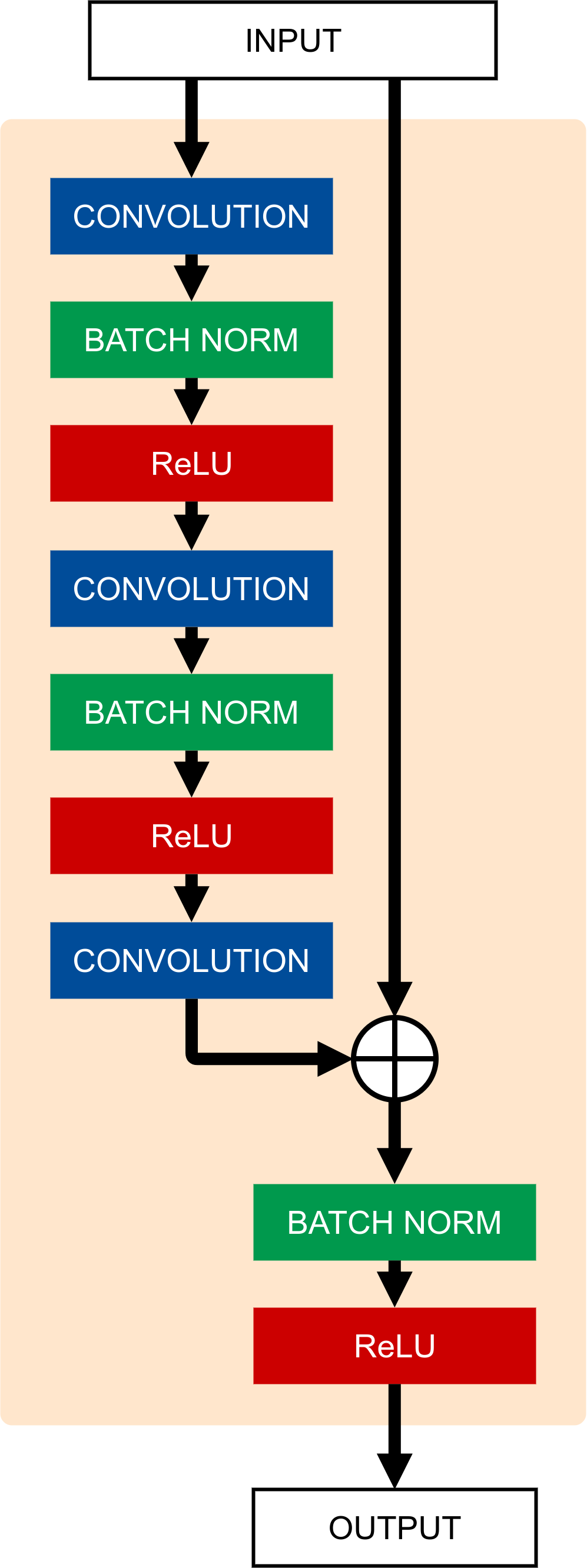 Figure 1
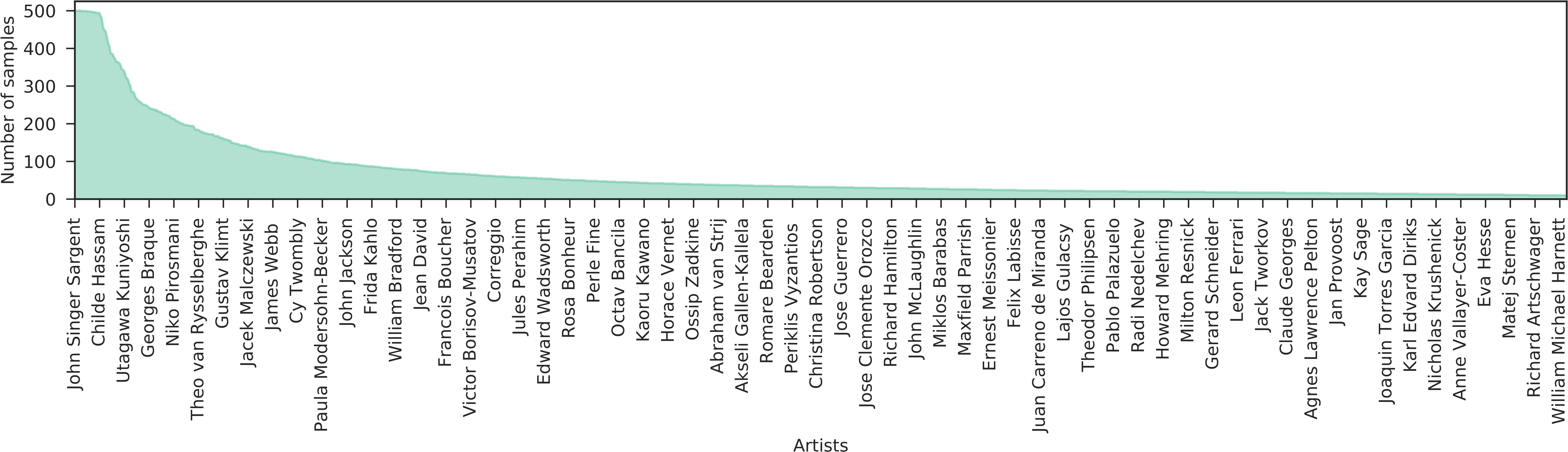 Figure 2
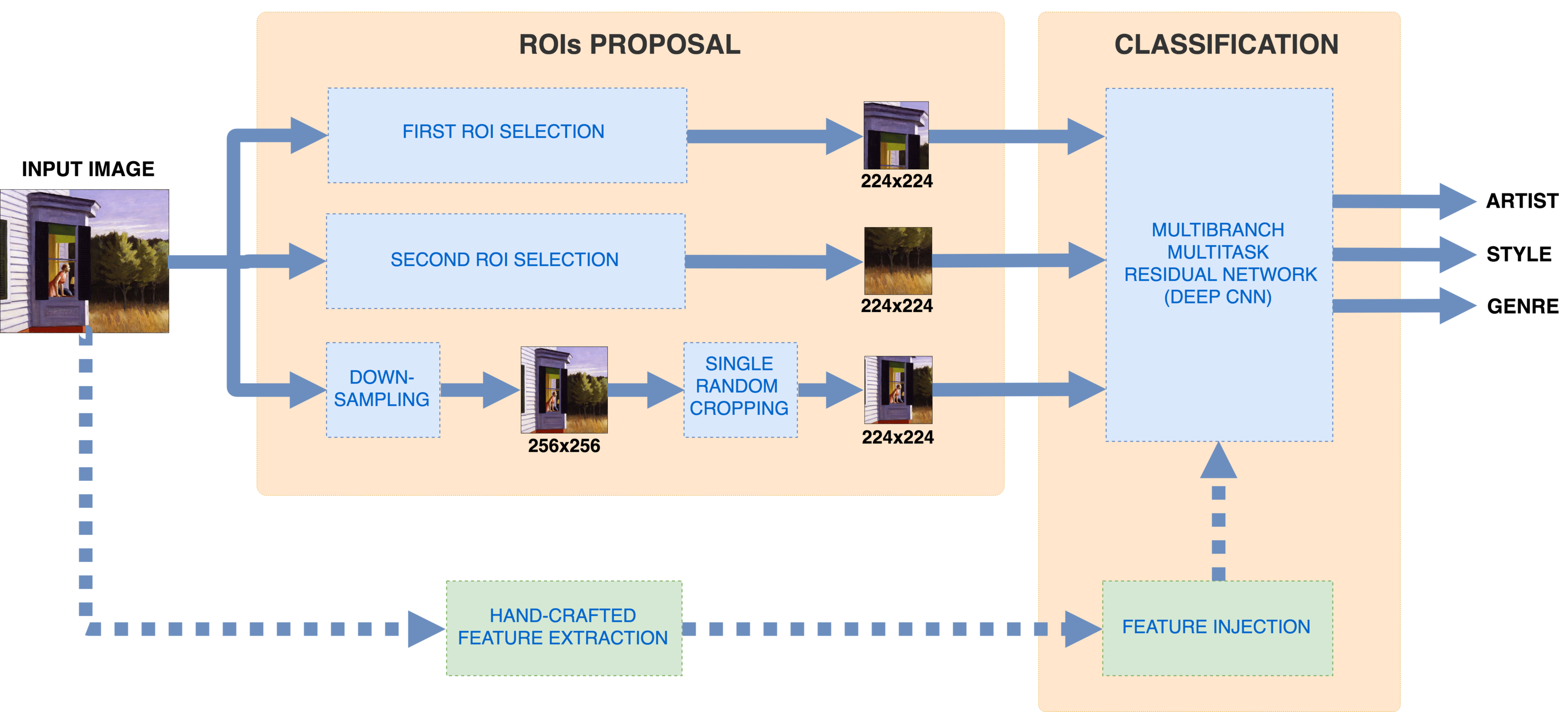 Figure 3
 Figure 4
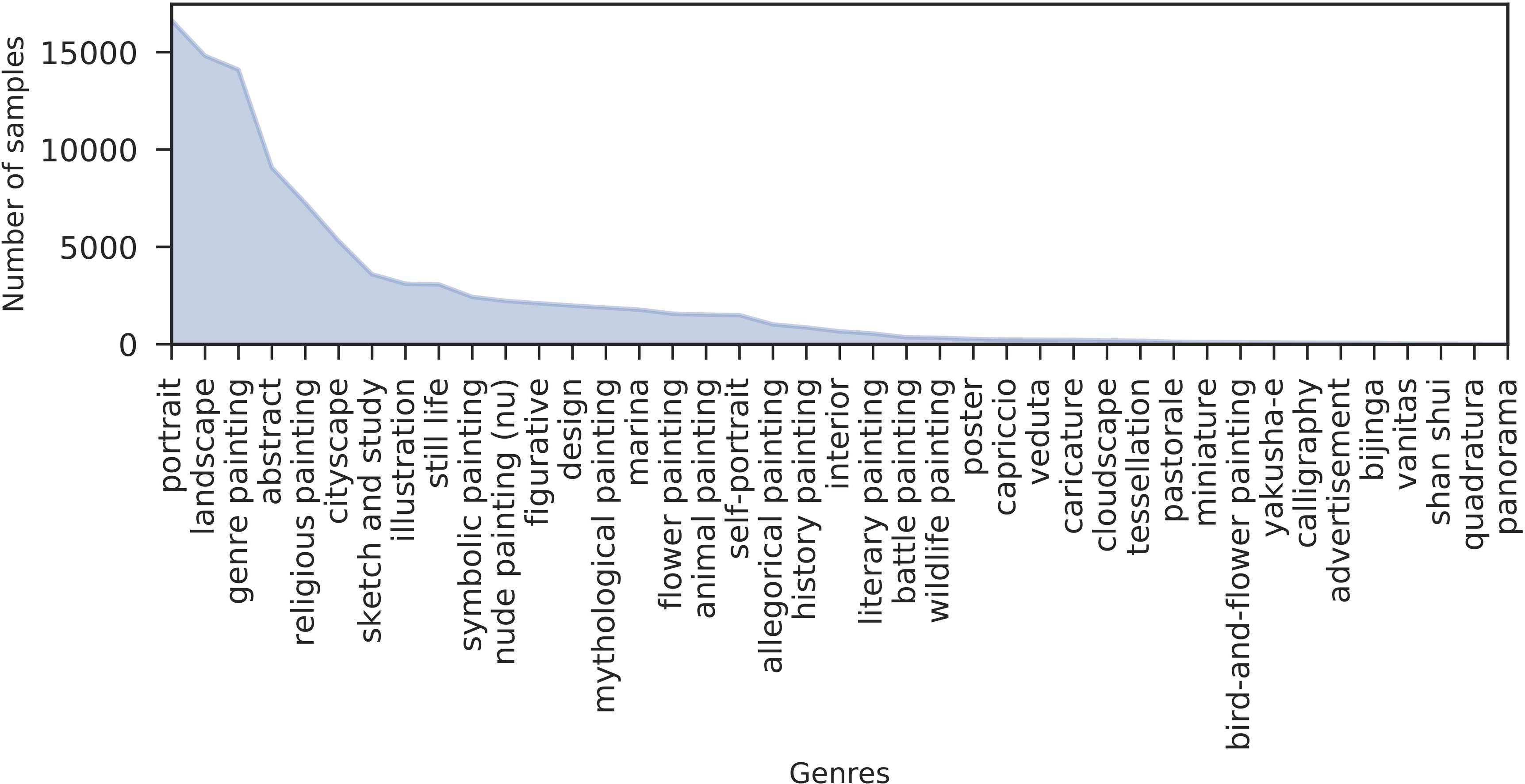 Figure 5
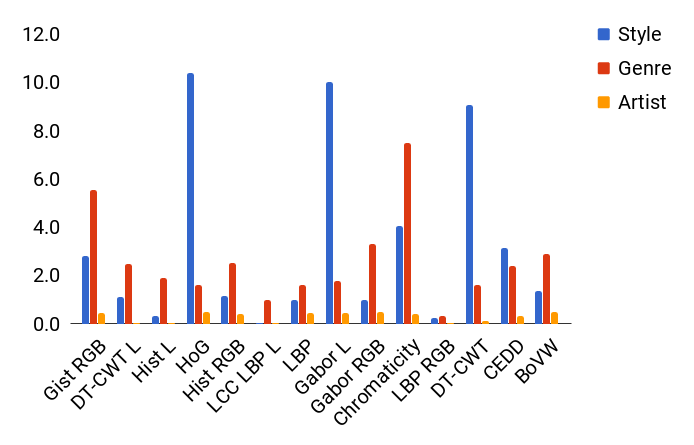 Figure 6
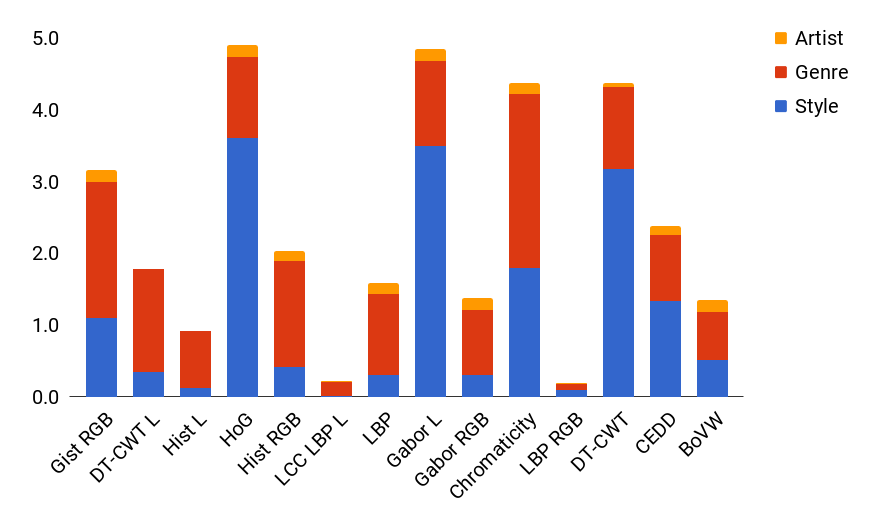 Figure 7
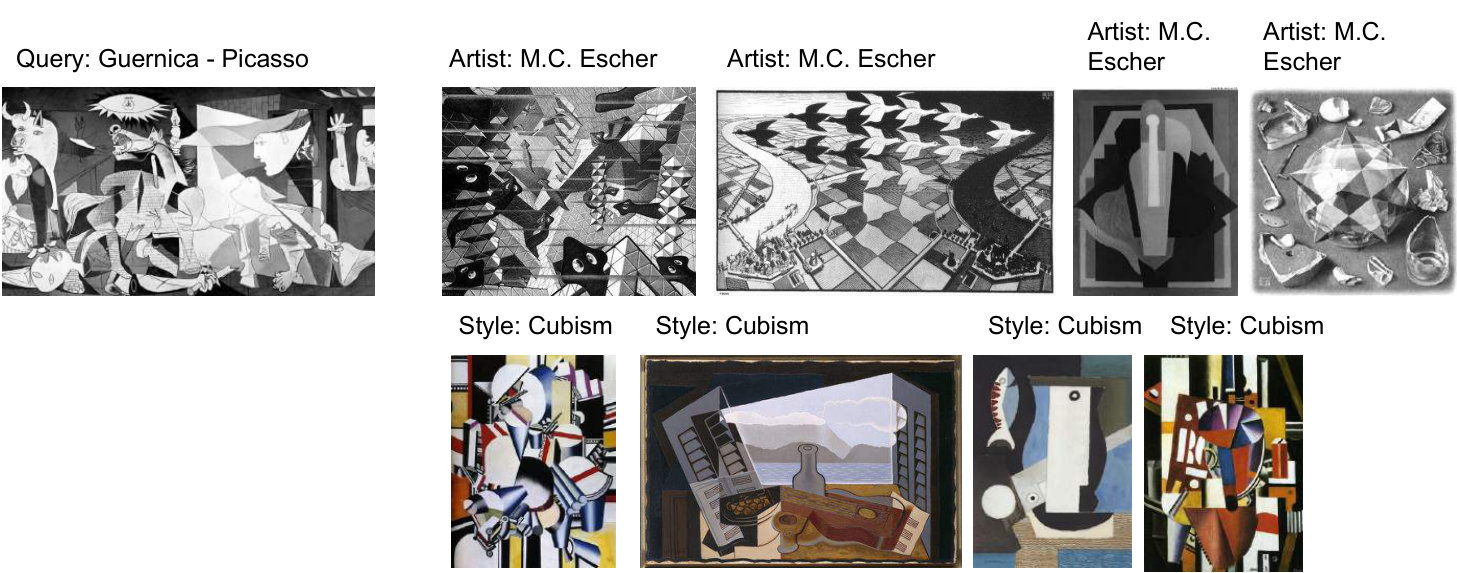 Figure 8
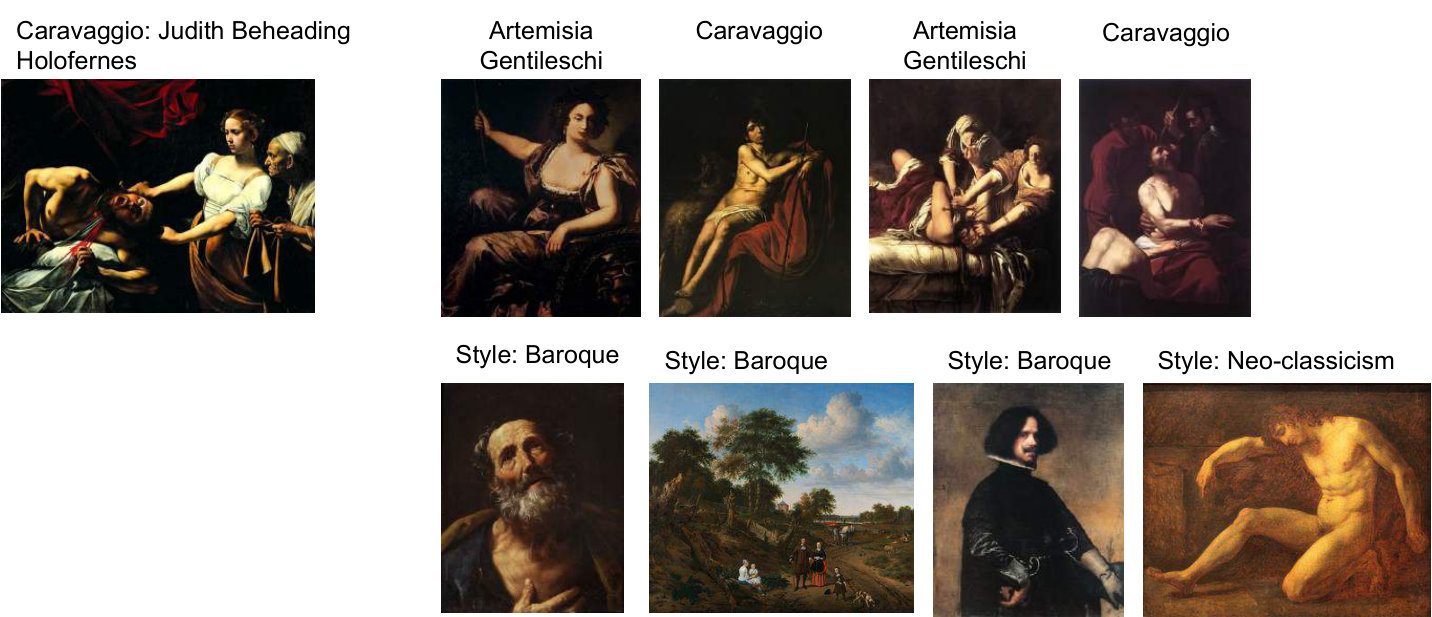 Figure 9
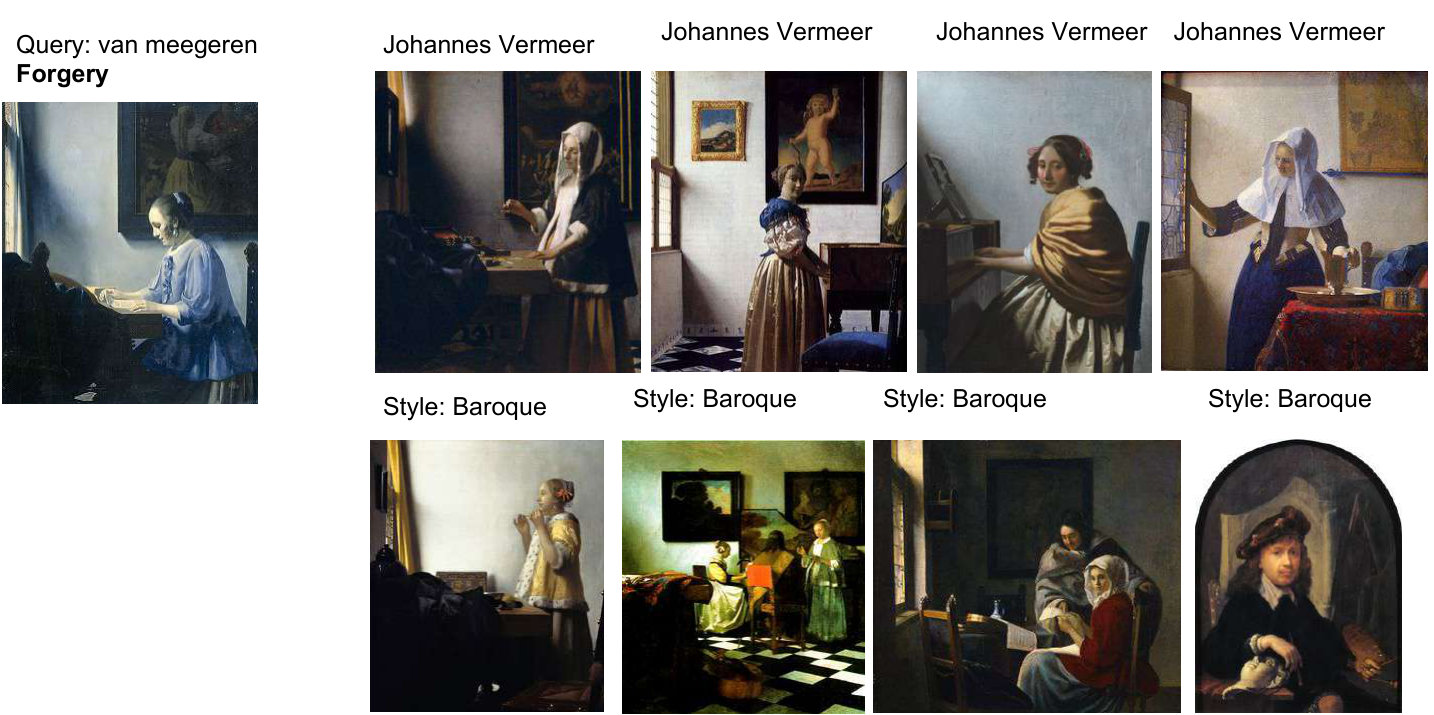 Figure 10
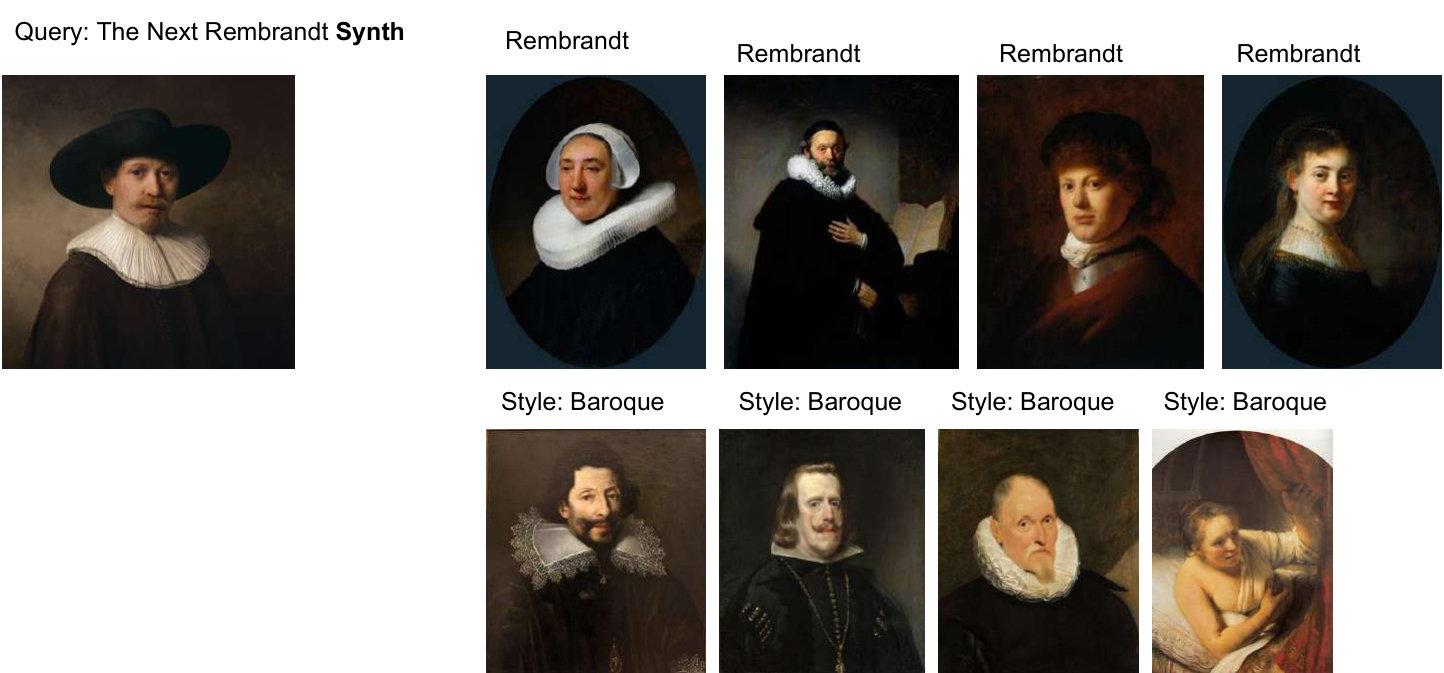 Figure 11
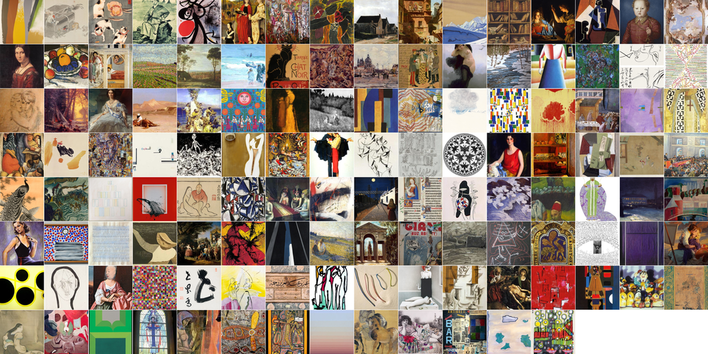 Figure 12
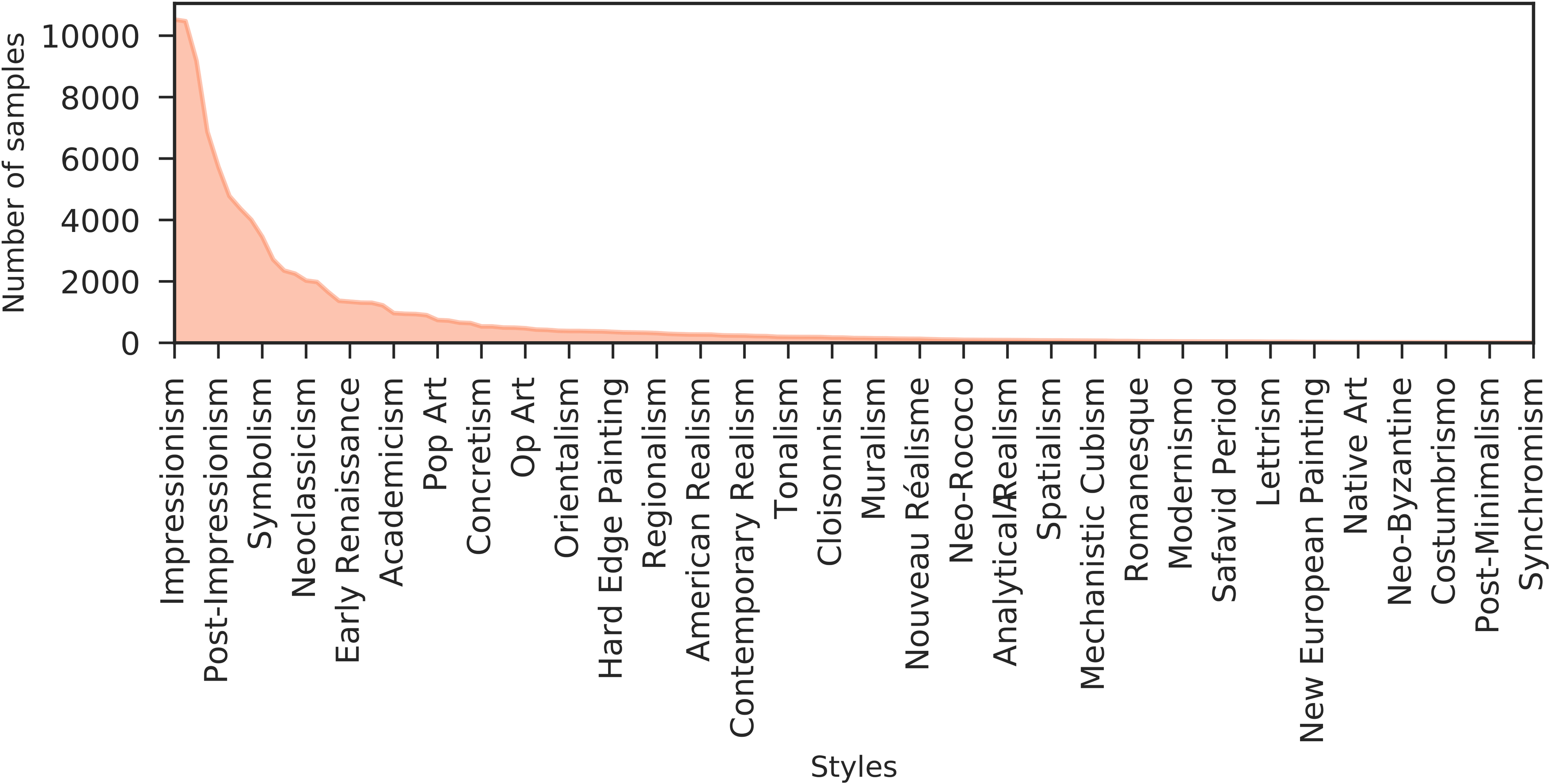 Figure 13
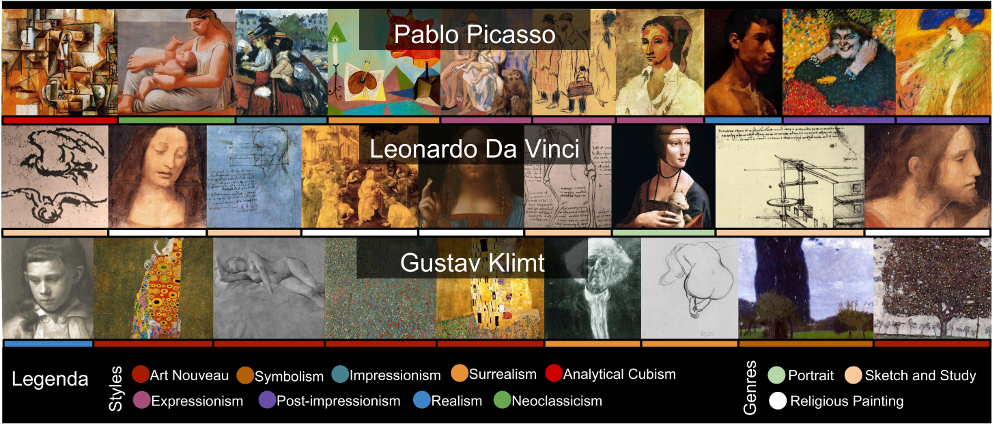 Figure 14
| Painting-91 | WikiArt-WikiPaintings/Art500k | |||||
|---|---|---|---|---|---|---|
| Model | Year | Artist | Style | Artist | Style | Genre |
| [3] | 2014 | 53.1(91) | 62.2(13) | |||
| [9] | 2015 | 56.4(91) | 69.2(13) | |||
| [5] | 2016 | 64.5(91) | 78.4(13) | |||
| [10] | 2016 | 63.2(91) | 73.6(13) | 58.2(25) | ||
| [11] | 2016 | 59.0(91) | 67.4(13) | |||
| [12] | 2016 | 65.8(91) | 73.2(13) | |||
| [13] | 2016 | 57.3(91) | 70.1(13) | |||
| [14] | 2016 | 45.0(91) | 64.5(13) | |||
| [15] | 2016 | 76.1(23) | 54,5(27) | 74,1(10) | ||
| [16] | 2016 | 63.1(23) | 46.0(27) | 60.3(10) | ||
| [17] | 2017 | 78.5(91) | 84.4(13) | |||
| [18] | 2017 | 81.9(19) | 50.1(25) | 69.0(10) | ||
| [4] | 2017 | 30.2(1000) | 39.2(55) | 39.2(42) | ||
| [19] | 2018 | 64.3(91) | 78.3(13) | |||
| Output Size | Layers | ||
|---|---|---|---|
| branch 1 | branch 2 | branch 3 | |
| Conv7 | Conv7 | Conv7 | |
| BatchNorm | BatchNorm | BatchNorm | |
| ReLU | ReLU | ReLU | |
| 112x112x64 | MaxPool | MaxPool | MaxPool |
| 56x56x256 | 3 ResBlock | 3 ResBlock | 3 ResBlock |
| 56x56x768 | Concatenation (channel dimension) | ||
| 56x56x256 | Join ResBlock, stride 1 | ||
| ResBlock, stride 2 | |||
| 28x28x512 | 2 ResBlock | ||
| ResBlock, stride 2 | |||
| 14x14x1024 | 5 ResBlock | ||
| ResBlock, stride 2 | |||
| 7x7x2048 | 3 ResBlock | ||
| 1x1x2048 | AvgPool | ||
| Num. Classes | FC-1508 | FC-125 | FC-41 |
| MultitaskPainting100k | ||||||
|---|---|---|---|---|---|---|
| Model | Crop strategy | Feat. injection | Artist | Style | Genre | Average |
| [4]† | 30.2(1000) | 39.2(55) | 39.2(42) | 36.2 | ||
| Multibranch [17] | random | - | 53.1(1508) | 51.5(125) | 64.3(41) | 56.3 |
| Multibranch multitask | random | - | 53.3(1508) | 55.4(125) | 63.0(41) | 57.2 |
| Multibranch multitask | STN | - | 56.1(1508) | 57.0(125) | 64.1(41) | 59.1 |
| Multibranch multitask | STN | HOG | 56.5(1508) | 57.2(125) | 63.6(41) | 59.1 |
| † Evaluated on the Art500k dataset | ||||||
Peer Reviews
No public reviews on file for this paper yet. If you reviewed it on a platform where reviews are public (OpenReview, ICLR, NeurIPS, ICML), you can paste yours below so the community can read it here.
Videos
No videos yet. Explain this paper in a talk, walkthrough, or lecture? Add one.
Taxonomy
MethodsLinear Layer · Absolute Position Encodings · Position-Wise Feed-Forward Layer · Spatial Transformer · Residual Connection · Byte Pair Encoding · Dense Connections · Label Smoothing · *Communicated@Fast*How Do I Communicate to Expedia? · Adam
Multitask Painting Categorization by Deep Multibranch Neural Network
Simone Bianco∗, Davide Mazzini, Paolo Napoletano, Raimondo Schettini
Department of Informatics, Systems and Communication (DISCo), University of Milano-Bicocca, Viale Sarca 336, 20126 Milan, Italy
{bianco,napoletano,mazzini,schettini}@disco.unimib.it
Abstract
In this work we propose a new deep multibranch neural network to solve the tasks of artist, style, and genre categorization in a multitask formulation. In order to gather clues from low-level texture details and, at the same time, exploit the coarse layout of the painting, the branches of the proposed networks are fed with crops at different resolutions. We propose and compare two different crop strategies: the first one is a random-crop strategy that permits to manage the tradeoff between accuracy and speed; the second one is a smart extractor based on Spatial Transformer Networks trained to extract the most representative subregions. Furthermore, inspired by the results obtained in other domains, we experiment the joint use of hand-crafted features directly computed on the input images along with neural ones.
Experiments are performed on a new dataset originally sourced from wikiart.org and hosted by Kaggle, and made suitable for artist, style and genre multitask learning. The dataset here proposed, named MultitaskPainting100k, is composed by 100K paintings, 1508 artists, 125 styles and 41 genres. Our best method, tested on the MultitaskPainting100k dataset, achieves accuracy levels of 56.5%, 57.2%, and 63.6% on the tasks of artist, style and genre prediction respectively.
keywords:
Painting Categorization, Painting Style Classification, Painter Recognition, Deep Convolutional Neural Network, Multiresolution, Multitask
MSC:
[2010] 00-01, 99-00
††journal: Journal of LaTeX Templates
1 Introduction
Automatic categorization and retrieval of digital paintings is gaining increasing attention due to the large quantities of visual artistic data made available by art museums that have digitized or are digitizing their artworks [1, 2, 3, 4].
In this work, we deal with the problem of categorizing paintings by automatically predicting the artist who painted them (e.g. Monet, van Gogh, etc.), the pictorial styles (e.g. Impressionism, Baroque, etc.), and the genres (e.g. portrait, landscape, etc.) [5]. These three tasks are very challenging due to the large amount of both inter- and intra-class variations: in fact there are different personal styles in the same art movement, and the same artist may have drawn in one or more different pictorial styles and genres. To have an idea of the difficulty of these tasks some examples taken from the dataset used in this work (i.e. MultitaskPainting100k) are reported in Figure 1.
Artist classification consists in automatically associating the painting to its painter. In this task factors such as stroke patterns, the color palette used, the scene composition, and the subject depicted must be taken into account [6]. Style classification consists in automatically assigning a painting into the school or art movement it belongs to. Art theorists define an artistic style as the combination of iconographic, technical and compositional features that give to a work its character [7]. Style classification is complicated by the fact that styles may not remain pure but could be influenced by others. Finally, genre classification consists in automatically categorizing a painting on the basis of the subject depicted.
The problems of automatic painter, style and genre categorization have been faced using different techniques. Some earlier approaches made use of traditional hand-crafted features [1, 3] whereas more recent works rely on the use of deep neural networks for these tasks.
[16] investigated a comprehensive list of visual features and metric learning approaches to learn an optimized similarity measure between paintings, which is then used to predict painting style, genre and artist.
[5] used a deformable part model in order to combine low-level details and an holistic representation of the whole painting. Inspired from the results obtained by deep networks as features extractors to solve different tasks [20, 21], [22] used pretrained deep networks to deal with the small quantity of images available for painter and style categorization. [15] made different experiments by training a network from scratch or fine-tuning an existing network for the tasks of style and painter recognition. Similarly, also [14] investigated the use of a pre-trained network. [23] performed interesting experiments about the quantity of data needed to fine-tune the network by [24] for the task of style classification. [10, 19] investigated the use of deep intra-layer and inter-layer correlation features as style descriptors, showing their superiority with respect to CNN features coming from fully-connected layers. [11, 12] presented a novel set of image features that encode the local, color, spatial, relative intensity information and gradient orientation of the painting image for painting artist classification, style classification as well as artist and style influence analysis. [13] approached the problem of painter and style categorization together with other abstract tasks.
[4] with the aim to generate a better representation of visual arts, presented a unified framework to learn joint representations that can simultaneously capture content and style of visual arts. [18] proposed a novel two-channel deep residual network to classify fine-art painting images, where the first channel is the RGB channel and the second one is the brush stroke information channel. [17] proposed a novel deep multibranch neural network to automatically predict painting’s artist and style, where the different branches processed the input image at different scales to jointly model the fine and coarse features of the painting.
All these works measure their performance mainly on three large scale datasets. The most used is the Painting-91 dataset [3], which consists of 4266 painting images from 91 different painters belonging to 13 different styles. This dataset is also the one used more consistently, since all the works adopting it use the same number of painters and styles. Another large scale dataset is the WikiArt-WikiPaintings, that consists of 100,000 high-art images [8]. The dataset was built for the task of style recognition and originally from these images only the styles with more than 1,000 examples were selected, for a total of 25 styles and 85,000 images. Concerning the genre and artist recognition tasks, later works extracted from this dataset 10 different genres and from 19 to 23 artists. The largest and most recent dataset is the Art500k [4], which contains 554,198 images of visual arts mainly scraped from WikiArt, Web Gallery of Art, Rijks Museum, and Google Arts & Culture websites. From these images 1,000 artists, 55 styles and 42 genres were extracted.
The average accuracy for the task of artist, style, and genre classification obtained by the state of the art approaches described, measured on the datasets respectively adopted are reported in Table 1. For each entry we also report as a subscript the number of classes considered in the experiments presented in each paper, that may be lower than the number of classes actually available in the original dataset.
This work builds on the results obtained in our previous work [17] and significantly extends it, adding the following main contributions:
a novel deep neural network architecture, where different branches process the input image at different scales to jointly model fine and coarse features of the painting. The architecture is designed to simultaneously perform the classification of the author, the style and the genre in a multitask setup in order to both reduce the processing time and to induce a form of regularization;
- -
the use of a trainable crop strategy to feed the network branches with the most significant regions for painting categorization [25];
- -
the use of hand-crafted features for painting categorization; the best performing features have been exploited in our model by applying feature injection;
- -
a new dataset created starting from a dataset originally collected for a public competition on painter verification, and made suitable for artist, style and genre multitask learning. The final dataset is named MultitaskPainting100k, and is composed of 100k paintings from 1508 artists, 125 styles and 41 genres;
- -
the evaluation of different strategies, with our best performing method achieving an accuracy level of 56.5%, 57.2%, and 63.6% on the tasks of artist, style and genre prediction respectively on the MultitaskPainting100k dataset considering all the 1508 artists, 125 styles and 41 genres.
2 Deep Multibranch Neural Network
Figure 2 shows the scheme of our Deep Multibranch Neural Network. The Regions Of Interest (ROIs) proposal module extracts three regions of interest from the input image that are sent into the multitask classification module, which is made of a three-branch multitask residual network, and outputs the artist, style and genre prediction for the input image.
The scheme includes also the use of hand-crafted features, that are extracted directly from the input image and injected in the neural network before the last fully-connected layer. In the following sections each module of the scheme is discussed in more detail.
2.1 ROIs proposal
The scene composition and the subject depicted are important clues to recognize a particular author or a painting style. These elements need to be extracted from the whole painting. At the same time finer details, such as stroke patterns or the line styles, are also very good clues. Obviously a powerful discriminative model should consider both the coarse and fine level details. On the basis of these considerations we extract three subregions by following a multiresolution and multi-regions approach: two squared “small” subregions are extracted from the high-resolution image and one “large” subregion is extracted from the low-resolution image. We use only two scales since, in our preliminary experiments, the use of a higher number of scales brought a slight improvement compared to the exponential increase of computational burden.
Since paintings exhibit high variability in terms of aspect-ratios, the input images are resized such as the minimum side is 512 pixels and the aspect ratio is preserved. From the resulting images we extract two squared subregions of 224 by 224 pixels. Two possible ways to extract these two subregions are investigated: random crop selection, and a trainable cropping strategy based on a Spatial Transformer Network.
The third subregion of 224 by 224 pixels is randomly selected from the images downsampled so that the minimum side is 256 pixels.
All the subregions extracted are squared, independently from the original aspect ratio of the input image. This is done to improve the computational efficiency of the GPU memory. Images and regions sizes have been chosen as a trade-off between the resolution of fine details in smaller images and the computational burden of processing larger images.
2.1.1 Random subregion selection
The coordinates of the subregions inside the input image are randomly chosen with the only constraint that the selected subregions do not overlap. The rationale behind this choice is that the salient details can be anywhere inside the painting, and the extraction of subregions at no-overlapping random locations permits to increase the probability to get different painting details.
2.1.2 Trainable subregion selection
The subregions inside the input image are extracted by a trainable strategy that in the training phase learns how to extract the best subregions to maximize classification accuracy. The implemented strategy exploits a Spatial Transformer Network (STN), that was introduced by [25] to explicitly model the spatial manipulation of data within the network. The STN is composed by three modules. The first module is a Localization Network, that takes the input feature map where represent the feature map width, height and channels respectively, and outputs the parameters of the transformation to be applied to the feature map, i.e. . The second module is a Parametrized Sampling Grid, that takes as input the parameters from the Localization Network and produces a sampling grid. The third module is the Bilinear Sampler, which is a differentiable bilinear interpolation layer that takes as input the feature map and the sampling grid and performs the actual spatial warping.
In our implementation we used as Localization Network the ResNet-18 [26] with the same type of Residual Blocks used for the main network as described in Section 2.2. In order to maintain the geometric structure of the paintings, we also limited the type of transformations handled by the Sampling Grid layer allowing only translation and scale.
We used two STNs, one for each of the first two branches of our network, that are jointly trained with the rest of the network for multitask painting categorization.
2.2 Classification: deep network architecture
A novel architecture based on Residual Blocks [26] that includes three branches and deals with the problem of artist, style and genre prediction at the same time is proposed. Table 2 shows the architecture of our network more in detail. Each branch processes the subregions coming from the ROIs proposal module separately until the processing flow is merged through the concatenation along the channel dimension of three feature maps to produce a feature map.
Both in the three branches and in the classification module our deep network makes use of Residual Blocks which have been shown to be an effective architectural choice to build very deep networks [26] and tackle the problem of vanishing gradients by using shortcut connections. In particular, we used “bottleneck” Residual Blocks, which allow the network architecture to be even deeper [26]. Each skip connection has four times the number of channels with respect to the internal elements of the block. This permits a large troughput of information among layers while maintaining a low computational complexity and low memory use inside each block. Our Residual Block structure is different from the one used by [26]: we moved the Batch Normalization layer [27] after the sum with the skip connection because, in our experiments, the resulting configuration has shown better performances.
The Residual Block we used is shown in Figure 3. In our network
each of the three branches is composed by three Residual Blocks plus four layers near the input which perform the first processing (Convolution + BatchNorm [27] + ReLU [28]) and an initial downsampling (Max Pooling).
The concatenation layer gathers the output of the three branches and stacks the output features along the channel dimension. The join layer is a particular Residual Block then converts the concatenated features to a smaller-dimensional feature space by compressing information along the channel dimension. The reason behind this operation is to make the computations feasible in the following layers by reducing the channel dimension of the output by a factor of three.
The common part of the network is composed by 13 Residual Blocks plus a spatial Average Pooling layer. While the Residual Blocks in the three branches do not include any downsampling operator, this part of the network includes convolution operators with stride two to perform a spatial downsampling of the input.
This leads to a gradual increasing of the receptive-field of the network in the deeper layers and also favors more abstract representations of the input. In the final part of the classification module a fully-connected layer maps the output to the right number of classes depending on the task, respectively artist, style or genre prediction. Finally, the Fully-connected layer is followed by a Softmax layer that outputs the classes probabilities.
2.3 Classification: hand-crafted feature injection
We investigated the joint use of hand-crafted features along with learned neural features by adding them to the input of the last fully-connected layer of our network [29].
Hand-crafted descriptors are features extracted using manually predefined algorithms based on the expert knowledge. These features can be global and local [21, 30].
Global hand-crafted features describe an image as a whole in terms of colour, texture and shape distributions [31], while local hand-crafted descriptors, like Scale Invariant Feature Transform (SIFT) [32, 21], provide a way to describe salient patches around properly chosen key points within the images.
The hand-crafted features evaluated in this paper are the following:
256-dimensional gray-scale histogram (Hist L) [33];
- -
768-dimensional RGB histograms (Hist RGB) [34];
- -
10-dimensional feature vector composed of normalized chromaticity moments, as defined in [35] (Chromaticity);
- -
8-dimensional Dual Tree Complex Wavelet Transform features obtained considering, for each color channel, four scales, mean and standard deviation (DT-CWT and DT-CWT L) [36, 37];
- -
512-dimensional Gist features obtained considering eight orientations, four scales and 4 sub-windows for each channel (Gist RGB) [38];
- -
32-dimensional Gabor features composed of, for each color channel, mean and standard deviation of six orientations extracted at four frequencies, and normalized to be rotation invariant (Gabor L and Gabor RGB) [36, 39];
- -
243-dimensional Local Binary Patterns (LBP) feature vector for each channel. We consider LBP applied to gray images and to color images represented in RGB [40]. We select the LBP with a circular neighbourhood of radius 2 and 16 elements, and 18 uniform and no-rotation invariant patterns (LBP L and LBP RGB).
- -
499-dimensional LBP L combined with the Local Color Contrast (LCC) descriptor, as described in [41, 42, 43, 44].
- -
144-dimensional Colour and Edge Directivity Descriptor (CEDD) features [45]. This descriptor uses a fuzzy version of the five digital filters proposed by the MPEG-7 Edge Histogram Descriptor (EHD), forming 6 texture areas. CEDD uses 2 fuzzy systems that map the colours of the image in a 24-color custom palette;
- -
81-dimensional Histogram of Oriented Gradients feature vector [46]. Nine histograms with nine bins are concatenated to achieve the final feature vector (HoG);
- -
1024-dimensional Bag of Visual Words (BoVW) of a 128-dimensional Scale Invariant Feature Transform (SIFT) calculated on the gray-scale image. The codebook of 1024 visual words is obtained by exploiting images from external sources [47].
The gray-scale image L is defined as follows: L = 0.299R + 0.587G + 0.114B. All feature vectors have been -normalized (i.e. they have been divided by their -norm).
3 Artist, style and genre: the MultitaskPainting100k dataset
The dataset used for the evaluation of our multitask deep multibranch neural network has been obtained from the Painter by Numbers Kaggle competition111https://www.kaggle.com/c/painter-by-numbers. The goal of the competition was to predict if a pair of images are artworks made by the same artist or not. The dataset contained 103250 images of paintings obtained mainly from WikiArt.org, that is a publicly available provider of digital artworks. Additional paintings have been provided by artists specifically for the competition. Images are at different resolutions but in general not smaller than 512px per side. The dataset includes a set of metadata for each painting, such as the artist name, style and genre of the painting. Giorgio De Chirico and Salvador Dalí are some examples of artist names. Romanticism and impressionism are some examples of painting styles, while cityscape and landscape are some examples of painting genres.
While the competition provided a training/test split of the data to accomplish the task of predicting from a pair of images whether or not they are made by the same artist, we use this dataset here for another task: the prediction, given an image painting, of the artist name, style and genre. For this reason, the original split is not suitable for our task. To accomplish our task we select a subset of the original dataset such that there are at least 10 images in every class
for each of the three tasks, i.e. author, style and genre classification. After this selection the dataset contains 99816 images
for a total of 1508 artists, 125 styles and 41 genres. We call this selection the MultitaskPainting100k dataset. The dataset is split in two parts: a random 70% belonging to the train set and the remaining 30% to the test set. We report in Fig. 1 a subset of the paintings in the MultitaskPainting100k dataset from three different artists (Pablo Picasso, Leonardo Da Vinci and Gustav Klimt) to let the reader getting the complexity of the recognition task. Each of the three selected artists has drawn, during his life, paintings with several styles and genres. This behavior is quite common among artists and this, along with the fact that the painting distribution is unbalanced across classes, makes recognition task quite challenging. Figures 4(a), (b) and (c) show the distributions of artists, genres and styles in terms of number of paintings for each class in the MultitaskPainting100k dataset. In the case of the artist distribution it is clear that about 70% of all artists have less than 100 paintings and about 50% of the artists have less than 50 paintings. In the case of genres and styles we observe a similar behavior: 50% of all the genres and styles have less than 1000 and 500 paintings respectively.
Figures 5(a) and (b) show a sample of each genre and style class within the MultitaskPainting100k dataset. Images and annotations of the MultitaskPainting100k dataset together with our train-test split will be made available on our website 222http://www.ivl.disco.unimib.it/activities/paintings/.
4 Experiments
Our multitask deep multibrach neural network solutions is evaluated on the MultitaskPainting100k dataset. We compare our solution with that from [17] that, as already shown in Table 1, has demonstrated to perform much better than the state of the art on the Painting-91 dataset [3].
The solution in [17] included two different networks, one for the prediction of the artist name and another for the prediction of the painting style. To make it possible the comparison with the network proposed in this paper, we train three networks on the MultitaskPainting100k dataset in order to accomplish the artist, style and genre prediction tasks separately. In addition we compare also with the method by [4], that is the only work reporting results on a dataset having the closest number of classes to the proposed MultitaskPainting100k dataset. Given the difficulty to exactly replicate their approach, we report the results taken from their paper.
In all the experiments, to cope with the small amount of training data we exploited some data augmentation techniques:
Color jitter. It consists in randomly modifying contrast, brightness and saturation of the input image independently.
- -
Lighting noise. It is a pixelwise transform based on the eigenvalues of the RGB pixel distribution of the dataset. It has been introduced by [24].
- -
Gaussian blur. It consists in applying a blur filter with fixed to random images chosen with probability 0.5.
- -
Geometric transforms. It includes small changes in scale and aspect-ratio of the input image.
4.1 Results
Table 3 reports the comparison between the network proposed in [17], the one proposed in [4], and three variants of our proposal:
the multibranch-multitask network coupled with a random crop selection strategy;
- -
the multibranch-multitask network coupled with the trained crop selection strategy (STN);
- -
the multibranch-multitask network with the injection of HOG features, and coupled with the trained crop selection strategy (STN).
The performance is measured on the MultitaskPainting100k dataset in terms of average classification accuracy, that is the mean of the accuracy obtained for each class.
Looking at the results reported in Table 3 it is quite clear that the joint multitask training over all the tasks gives a big boost on style accuracy at the expense of a small decrease in performance on genre. The same happens with the injection of HOG features. We suppose that artist and style are much more correlated tasks, thus the training can benefit more from a joint loss optimization. The use of Spatial Transformer Networks improves the performances on all tasks showing the contribution of the smart crop extraction strategy. Although a direct comparison with other state of the art method is not possible, we can indirectly compare our solution with that of [4], that uses a dataset with a common origin to the MultitaskPainting100k and has a similar number of classes. We can observe that for the artist task, even if we have 508 more classes, our results are 23.3% better; for the style task, even if we have 70 more classes, our results are 18.0% better; for the Genre task, where the results are more comparable since we have just one less class, our results are 24.4% better.
4.2 Evaluation of hand-crafted features
To assess the improvement that hand-crafted features could bring to our existing architecture we did some preliminary experiments. We trained a linear classifier on top of each hand-crafted feature in order to classify each of the three tasks: artist, genre and style. Figure 6 shows the percentage of accuracy achieved by each hand-crafted feature and for each task. This experiment gives a first glance on the discriminative power of the considered features for our classification tasks. As expected the accuracy for the task of artist prediction is quite low. This is the most difficult of the three tasks due to the large set of classes (i.e. 1508). On style and genre prediction some descriptors show an accuracy over 4%. In particular the best features for style prediction are HOG and Gabor L, both grayscale descriptors, whereas for genre prediction genre classification the best descriptors are GIST color and chromaticity moments which relies both strongly on color information.
We made a second experiment in order to evaluate whenever an hand-crafted descriptor is able to correctly classify examples that are misclassified by our deep architecture. We used the trained linear classifiers on top of hand-crafted features to classify only the misclassified examples of our neural network architecture. Figure 7 shows a stacked bar graph. Each bar represents the cumulative contribution for all of the three tasks. From this graph are clearly visible the features that correctly classify the highest number of examples: HOG, Gabor L, Chromaticity Moments and DT-CWT.
These preliminary experiments help to highlight that among the hand-crafted descriptors, HOG is the most promising to be included in our classification pipeline. We fed the extracted features directly before the last fully-connected layer of our deep network. Table 3 shows the accuracy achieved by the deep network combined with the HOG descriptor for the three classification tasks. In the case of artist and style classification, the use of HOG slightly improves the accuracy achieved by the deep network. In contrast, in the case of genre classification, the use of HOG features does not produce any improvements, so that the average accuracy over the three tasks is exactly the same with and without HOG features.
4.3 Similarity search
In the following we show some interesting results obtained when the proposed method is used for similarity search. Given one painting as input we extract three sets of features, one for each classification task faced (i.e. artist, style and genre). The features are the -normalized activations of the last Fully-connected layer before the Softmax layer. In this way, each set of features can be used to compute the similarity in terms of artist, style and genre respectively. We report the similarity results for four different paintings. For each of them, we retrieve the four most similar paintings using the artist features, and the four most similar paintings using the style features. In Figure 8 the Guernica painting by Picasso is fed to the system. The first four most similar paintings retrieved by the system using the artist features all belong to M.C. Escher, that in fact are much more similar to the input than any other painting from Picasso himself. This example shows the difficulty of the task of painter recognition, especially for those artist that have used many different styles across their artistic production as for example Picasso himself (have a look to the first row of Figure 1 to see some examples). On the other hand, all the first four paintings retrieved using the style features belong to the Cubism style, that is the same style of the input painting.
A second example is reported in Figure 9, where the painting Judith beheading Holofernes by Caravaggio is given as input to our system. Although the most similar painting retrieved with the artist features is not from the correct author, the second and the fourth ones are from Caravaggio. Furthermore, it is interesting to notice that the third most similar painting, although from a different author, depicts the same subject, i.e. Judith beheading Holofernes, with very similar body poses. For what concerns the style, all the the first four paintings retrieved using the style features belong to the Baroque style, that is the same style of the input painting.
A third example is reported in Figure 10, where a painting by H.A. van Meegeren (that does not belong to the MultitaskPainting100k dataset), is given as input to the system. H.A. van Meegeren is famous for having forged paintings of some of the world’s most famous artists, including Frans Hals, Pieter de Hooch, Gerard ter Borch, and Johannes Vermeer. He so well replicated the styles and colors of the artists that the best art critics and experts of the time regarded his paintings as genuine and sometimes exquisite. Then, it makes completely sense that the all the four most similar paintings retrieved by our system using the artist features are from Johannes Vermeer. Furthermore, the retrieved paintings are similar to the input also from a compositional point of view, with a girl painted against a clear wall, close to a table and with the same light coming from a window in the upper left corner of the painting. Concerning artistic style, all the the first four paintings retrieved using the style features belong to the Baroque style, that is the same style of the input painting.
A final example is reported in Figure 11, where a painting from The Next Rembrandt (https://www.nextrembrandt.com/) is given as input to our system. The painting has been synthetically generated from data derived from 346 known paintings by Rembrandt, and was created from a deep, 18-month analysis of his work. A facial recognition algorithm learned Rembrandt’s techniques, pixel data helped the computer mimic brush strokes, and an advanced 3D printer brought the painting to life using 13 layers of ink. The portrait consists of 148 million pixels and is based on 168,263 fragments from Rembrandt’s portfolio. Interestingly, all the four most similar paintings retrieved by the system using the artist features are from Rembrandt, and all the the first four paintings retrieved using the style features belong to the Baroque style, that is the same style of the input painting.
5 Conclusions
In this work we tackled the problem of artist, style, and genre categorization of paintings. We proposed a new deep multibranch neural network to solve simultaneously all the three the problems in a multitask formulation. The branches of the proposed network are fed with crops at different resolutions in order to gather clues from low-level texture details and exploit at the same time the coarse layout of the painting. We proposed and compared two different cropping strategies: a random one, and one based on Spatial Transformer Networks. Furthermore, we have also experimented the injection in the proposed network of different hand-crafted features directly computed on the input images. The evaluation has been carried out on a new dataset originally sourced from wikiart.org and hosted by Kaggle, that we made suitable for artist, style and genre multitask learning. This dataset, that we named MultitaskPainting100k, is composed of 100K paintings divided into 1508 artists, 125 styles and 41 genres. We used MultitaskPainting100k to evaluate and compare the effectiveness of the different variants of the proposed approach. The best solution, which exploits the STN cropping strategy and the injection of HOG features, achieved accuracy levels of 56.5%, 57.2%, and 63.6% on the tasks of artist, style and genre prediction respectively. In order to facilitate a fair comparison with other methods in the state of the art, the MultitaskPainting100k dataset along with the training and test splits used are made available as well as a web demo that makes it possible to interactively experience the proposed method (http://www.ivl.disco.unimib.it/activities/paintings/).
Acknowledgment
The authors gratefully acknowledge the support of NVIDIA Corporation with the donation of the Titan X Pascal GPU used for this research.
References
- [1]
G. Carneiro, N. P. da Silva, A. Del Bue, J. P. Costeira, Artistic image classification: An analysis on the printart database, in: European Conference on Computer Vision, Springer, 2012, pp. 143–157.
- [2]
T. Mensink, J. Van Gemert, The rijksmuseum challenge: Museum-centered visual recognition, in: Proceedings of International Conference on Multimedia Retrieval, ACM, 2014, p. 451.
- [3]
F. S. Khan, S. Beigpour, J. Van de Weijer, M. Felsberg, Painting-91: a large scale database for computational painting categorization, Machine vision and applications 25 (6) (2014) 1385–1397.
- [4]
H. Mao, M. Cheung, J. She, Deepart: Learning joint representations of visual arts, in: Proceedings of the 2017 ACM on Multimedia Conference, ACM, 2017, pp. 1183–1191.
- [5]
R. M. Anwer, F. S. Khan, J. van de Weijer, J. Laaksonen, Combining holistic and part-based deep representations for computational painting categorization, in: Proceedings of the 2016 ACM on International Conference on Multimedia Retrieval, ACM, 2016, pp. 339–342.
- [6]
L. Fichner-Rathus, Foundations of Art and Design: An Enhanced Media Edition, Cengage Learning, 2011.
- [7]
I. Widjaja, W. K. Leow, F.-C. Wu, Identifying painters from color profiles of skin patches in painting images, in: Image Processing, 2003. ICIP 2003. Proceedings. 2003 International Conference on, Vol. 1, IEEE, 2003, pp. I–845.
- [8]
S. Karayev, M. Trentacoste, H. Han, A. Agarwala, T. Darrell, A. Hertzmann, H. Winnemoeller, Recognizing image style, in: BMVC 2014 - Proceedings of the British Machine Vision Conference 2014, 2014, pp. 1–20.
- [9]
K.-C. Peng, T. Chen, Cross-layer features in convolutional neural networks for generic classification tasks, in: Image Processing (ICIP), 2015 IEEE International Conference on, IEEE, 2015, pp. 3057–3061.
- [10]
W.-T. Chu, Y.-L. Wu, Deep correlation features for image style classification, in: Proceedings of the 2016 ACM on Multimedia Conference, ACM, 2016, pp. 402–406.
- [11]
A. Puthenputhussery, Q. Liu, C. Liu, Color multi-fusion fisher vector feature for fine art painting categorization and influence analysis, in: Applications of Computer Vision (WACV), 2016 IEEE Winter Conference on, IEEE, 2016, pp. 1–9.
- [12]
A. Puthenputhussery, Q. Liu, C. Liu, Sparse representation based complete kernel marginal fisher analysis framework for computational art painting categorization, in: European Conference on Computer Vision, Springer, 2016, pp. 612–627.
- [13]
K.-C. Peng, T. Chen, Toward correlating and solving abstract tasks using convolutional neural networks, in: Applications of Computer Vision (WACV), 2016 IEEE Winter Conference on, IEEE, 2016, pp. 1–9.
- [14]
S. Banerji, A. Sinha, Painting classification using a pre-trained convolutional neural network, in: International Conference on Computer Vision, Graphics, and Image processing, Springer, 2016, pp. 168–179.
- [15]
W. R. Tan, C. S. Chan, H. E. Aguirre, K. Tanaka, Ceci n’est pas une pipe: A deep convolutional network for fine-art paintings classification, in: Image Processing (ICIP), 2016 IEEE International Conference on, IEEE, 2016, pp. 3703–3707.
- [16]
B. Saleh, A. Elgammal, Large-scale classification of fine-art paintings: Learning the right metric on the right feature, International Journal for Digital Art History 2 (Oct) (2016) 71–93.
- [17]
S. Bianco, D. Mazzini, R. Schettini, Deep multibranch neural network for painting categorization, in: International Conference on Image Analysis and Processing, Springer, 2017, pp. 414–423.
- [18]
X. Huang, S.-h. Zhong, Z. Xiao, Fine-art painting classification via two-channel deep residual network, in: Pacific Rim Conference on Multimedia, Springer, 2017, pp. 79–88.
- [19]
W.-T. Chu, Y.-L. Wu, Image style classification based on learnt deep correlation features, IEEE Transactions on Multimedia.
- [20]
A. Sharif Razavian, H. Azizpour, J. Sullivan, S. Carlsson, Cnn features off-the-shelf: an astounding baseline for recognition, in: Proceedings of the IEEE Conference on Computer Vision and Pattern Recognition Workshops, 2014, pp. 806–813.
- [21]
S. Bianco, D. Mazzini, D. Pau, R. Schettini, Local detectors and compact descriptors for visual search: a quantitative comparison, Digital Signal Processing 44 (2015) 1–13.
- [22]
K.-C. Peng, T. Chen, A framework of extracting multi-scale features using multiple convolutional neural networks, in: 2015 IEEE International Conference on Multimedia and Expo (ICME), IEEE, 2015, pp. 1–6.
- [23]
C. Hentschel, T. P. Wiradarma, H. Sack, Fine tuning cnns with scarce training data—adapting imagenet to art epoch classification, in: Image Processing (ICIP), 2016 IEEE International Conference on, IEEE, 2016, pp. 3693–3697.
- [24]
A. Krizhevsky, I. Sutskever, G. E. Hinton, Imagenet classification with deep convolutional neural networks, in: Advances in neural information processing systems, 2012, pp. 1097–1105.
- [25]
M. Jaderberg, K. Simonyan, A. Zisserman, et al., Spatial transformer networks, in: Advances in Neural Information Processing Systems, 2015, pp. 2017–2025.
- [26]
K. He, X. Zhang, S. Ren, J. Sun, Deep residual learning for image recognition, in: Proceedings of the IEEE Conference on Computer Vision and Pattern Recognition, 2016, pp. 770–778.
- [27]
S. Ioffe, C. Szegedy, Batch normalization: Accelerating deep network training by reducing internal covariate shift, in: Proceedings of The 32nd International Conference on Machine Learning, 2015, pp. 448–456.
- [28]
V. Nair, G. E. Hinton, Rectified linear units improve restricted boltzmann machines, in: Proceedings of the 27th international conference on machine learning (ICML-10), 2010, pp. 807–814.
- [29]
S. Bianco, Large age-gap face verification by feature injection in deep networks, Pattern Recognition Letters 90 (2017) 36–42.
- [30]
P. Napoletano, Visual descriptors for content-based retrieval of remote-sensing images, International Journal of Remote Sensing 39 (5) (2018) 1343–1376.
- [31]
M. Mirmehdi, Handbook of texture analysis, Imperial College Press, 2008.
- [32]
D. G. Lowe, Distinctive image features from scale-invariant keypoints, International journal of computer vision 60 (2) (2004) 91–110.
- [33]
C. L. Novak, S. Shafer, et al., Anatomy of a color histogram, in: Computer Vision and Pattern Recognition, 1992. Proceedings CVPR’92., 1992 IEEE Computer Society Conference on, IEEE, 1992, pp. 599–605.
- [34]
M. Pietikainen, S. Nieminen, E. Marszalec, T. Ojala, Accurate color discrimination with classification based on feature distributions, in: Proceedings of the 13th International Conference on Pattern Recognition, Vol. 3, 1996, pp. 833–838.
- [35]
G. Paschos, I. Radev, N. Prabakar, Image content-based retrieval using chromaticity moments, IEEE Transactions on Knowledge and Data Engineering 15 (5) (2003) 1069–1072.
- [36]
F. Bianconi, R. Harvey, P. Southam, A. Fernández, Theoretical and experimental comparison of different approaches for color texture classification, Journal of Electronic Imaging 20 (4).
- [37]
M. Barilla, M. Spann, Colour-based texture image classification using the complex wavelet transform, in: Electrical Engineering, Computing Science and Automatic Control, 2008. CCE 2008. 5th International Conference on, 2008, pp. 358 –363.
- [38]
A. Oliva, A. Torralba, Modeling the shape of the scene: A holistic representation of the spatial envelope, Int’l J. Computer Vision 42 (3) (2001) 145–175.
- [39]
F. Bianconi, A. Fernández, Evaluation of the effects of gabor filter parameters on texture classification, Pattern Recognition 40 (12) (2007) 3325 – 3335.
- [40]
T. Mäenpää, M. Pietikäinen, Classification with color and texture: jointly or separately?, Pattern Recognition 37 (8) (2004) 1629–1640.
- [41]
C. Cusano, P. Napoletano, R. Schettini, Combining multiple features for color texture classification, Journal of Electronic Imaging 25 (6) (2016) 061410–061410.
- [42]
C. Cusano, P. Napoletano, R. Schettini, Combining local binary patterns and local color contrast for texture classification under varying illumination, JOSA A 31 (7) (2014) 1453–1461.
- [43]
C. Cusano, P. Napoletano, R. Schettini, Illuminant invariant descriptors for color texture classification, in: Computational Color Imaging, Vol. 7786 of Lecture Notes in Computer Science, 2013, pp. 239–249.
- [44]
S. Bianco, C. Cusano, P. Napoletano, R. Schettini, On the robustness of color texture descriptors across illuminants, in: International Conference on Image Analysis and Processing, Springer, 2013, pp. 652–662.
- [45]
S. A. Chatzichristofis, Y. S. Boutalis, Cedd: color and edge directivity descriptor: a compact descriptor for image indexing and retrieval, in: International Conference on Computer Vision Systems, Springer, 2008, pp. 312–322.
- [46]
O. L. Junior, D. Delgado, V. Gonçalves, U. Nunes, Trainable classifier-fusion schemes: an application to pedestrian detection, in: Intelligent Transportation Systems, 2009.
- [47]
Y. Yang, S. Newsam, Bag-of-visual-words and spatial extensions for land-use classification, in: Proc. of the Int’l Conf. on Advances in Geographic Information Systems, 2010, pp. 270–279.
The reference list from the paper itself. Each links out to its DOI / PubMed record.
- 1[1] G. Carneiro, N. P. da Silva, A. Del Bue, J. P. Costeira, Artistic image classification: An analysis on the printart database, in: European Conference on Computer Vision, Springer, 2012, pp. 143–157.
- 2[2] T. Mensink, J. Van Gemert, The rijksmuseum challenge: Museum-centered visual recognition, in: Proceedings of International Conference on Multimedia Retrieval, ACM, 2014, p. 451.
- 3[3] F. S. Khan, S. Beigpour, J. Van de Weijer, M. Felsberg, Painting-91: a large scale database for computational painting categorization, Machine vision and applications 25 (6) (2014) 1385–1397.
- 4[4] H. Mao, M. Cheung, J. She, Deepart: Learning joint representations of visual arts, in: Proceedings of the 2017 ACM on Multimedia Conference, ACM, 2017, pp. 1183–1191.
- 5[5] R. M. Anwer, F. S. Khan, J. van de Weijer, J. Laaksonen, Combining holistic and part-based deep representations for computational painting categorization, in: Proceedings of the 2016 ACM on International Conference on Multimedia Retrieval, ACM, 2016, pp. 339–342.
- 6[6] L. Fichner-Rathus, Foundations of Art and Design: An Enhanced Media Edition, Cengage Learning, 2011.
- 7[7] I. Widjaja, W. K. Leow, F.-C. Wu, Identifying painters from color profiles of skin patches in painting images, in: Image Processing, 2003. ICIP 2003. Proceedings. 2003 International Conference on, Vol. 1, IEEE, 2003, pp. I–845.
- 8[8] S. Karayev, M. Trentacoste, H. Han, A. Agarwala, T. Darrell, A. Hertzmann, H. Winnemoeller, Recognizing image style, in: BMVC 2014 - Proceedings of the British Machine Vision Conference 2014, 2014, pp. 1–20.