Observation of Mollow quintuplet in F=3/2 hyperfine structure state of 3He atomic cell
Yuanzhi Zhan, Xiang Peng, Sheng Li, Liang Zhang, Jingbiao Chen, and, Hong Guo

TL;DR
This paper reports the experimental observation of the Mollow quintuplet in the F=3/2 hyperfine state of helium-3 atoms, demonstrating a complex quantum optical phenomenon transfer via metastability-exchange collisions.
Contribution
First experimental demonstration of the Mollow quintuplet in the hyperfine structure of helium-3, extending understanding of quantum optical effects in atomic systems.
Findings
Observation of Mollow quintuplet in 3He hyperfine state
Transfer of Mollow Triplet via metastability-exchange collisions
Effect also observed in 3He-4He mixture cell
Abstract
We experimentally observed the Mollow quintuplet (MQ) in F=3/2 hyperfine structure state of 3He atoms. The metastability-exchange collisions (MECs) transfer the Mollow Triplet (MT) from the ground states of 3He atoms to the metastable states, and the MQ is demonstrated by four Zeeman levels of F=3/2 hyperfine states with linearly polarized light. The similar effect also achieves in the mixture cell of 3He and 4He.
Click any figure to enlarge with its caption.
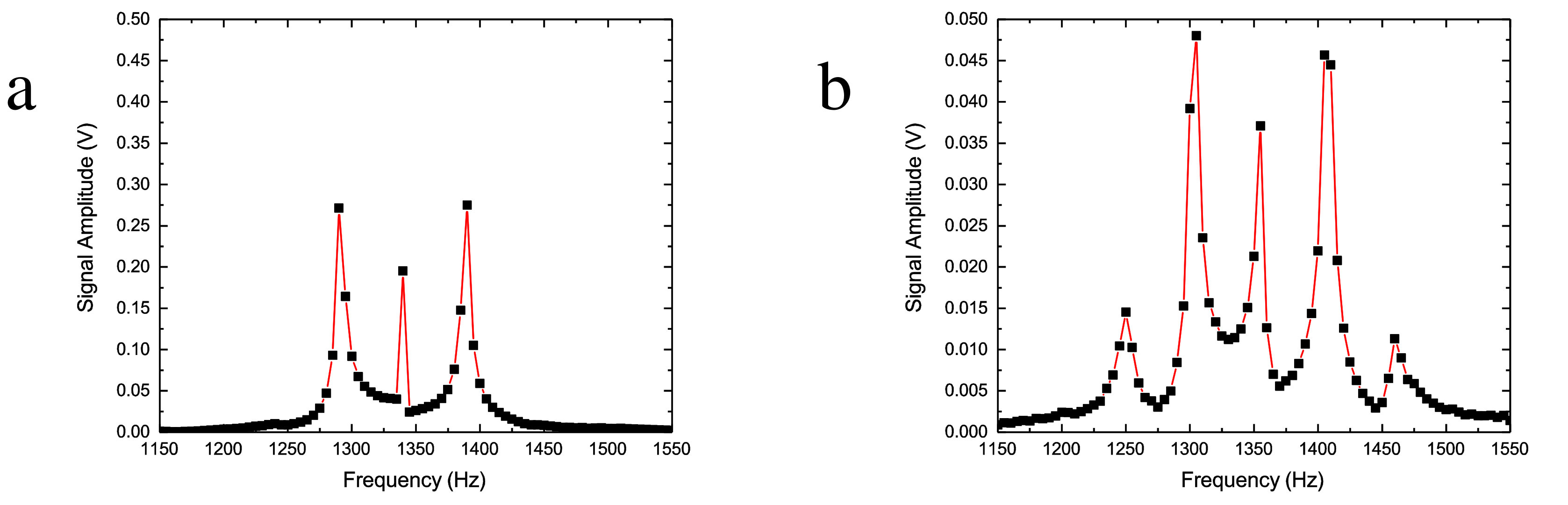 Figure 1
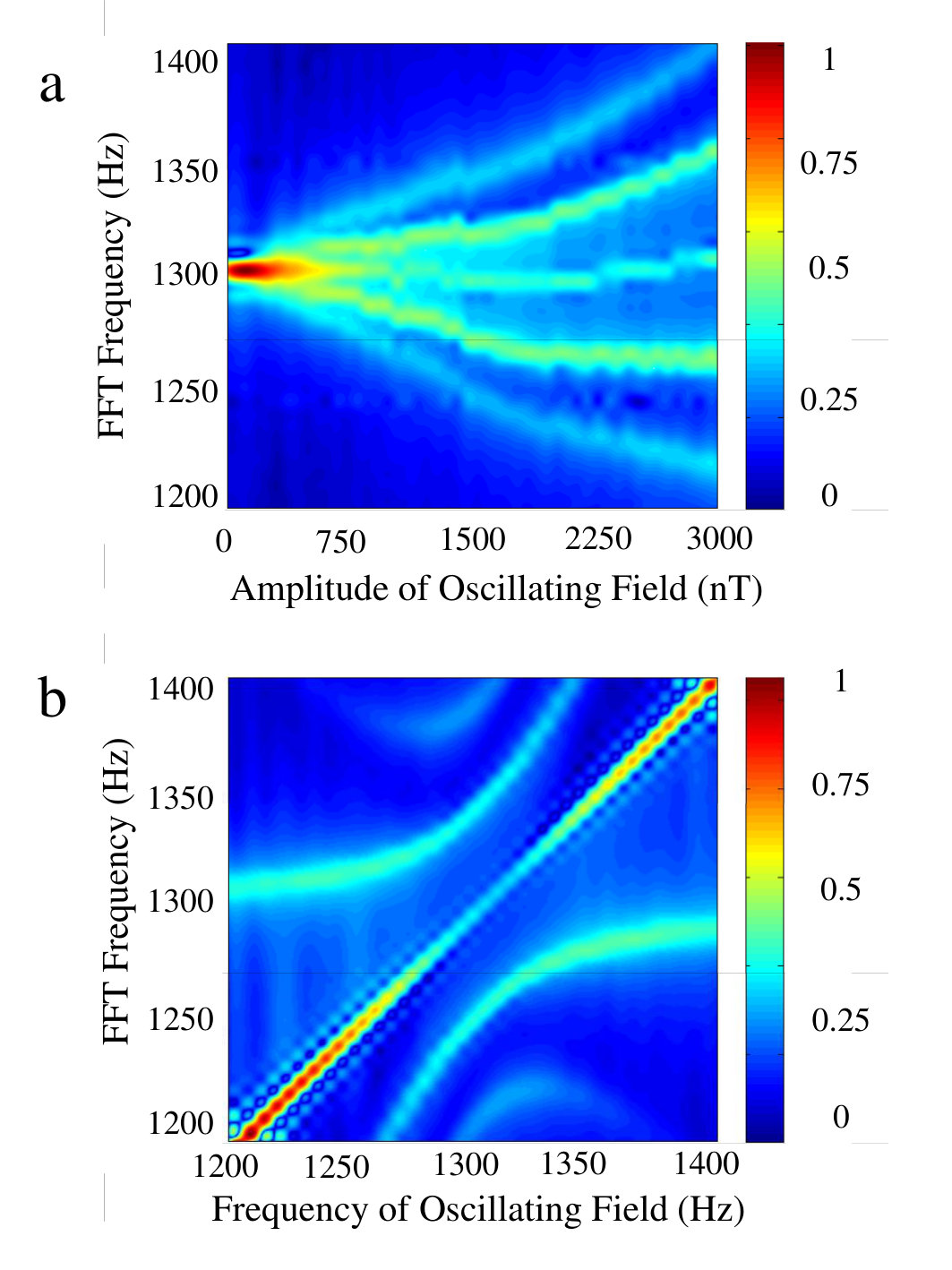 Figure 2
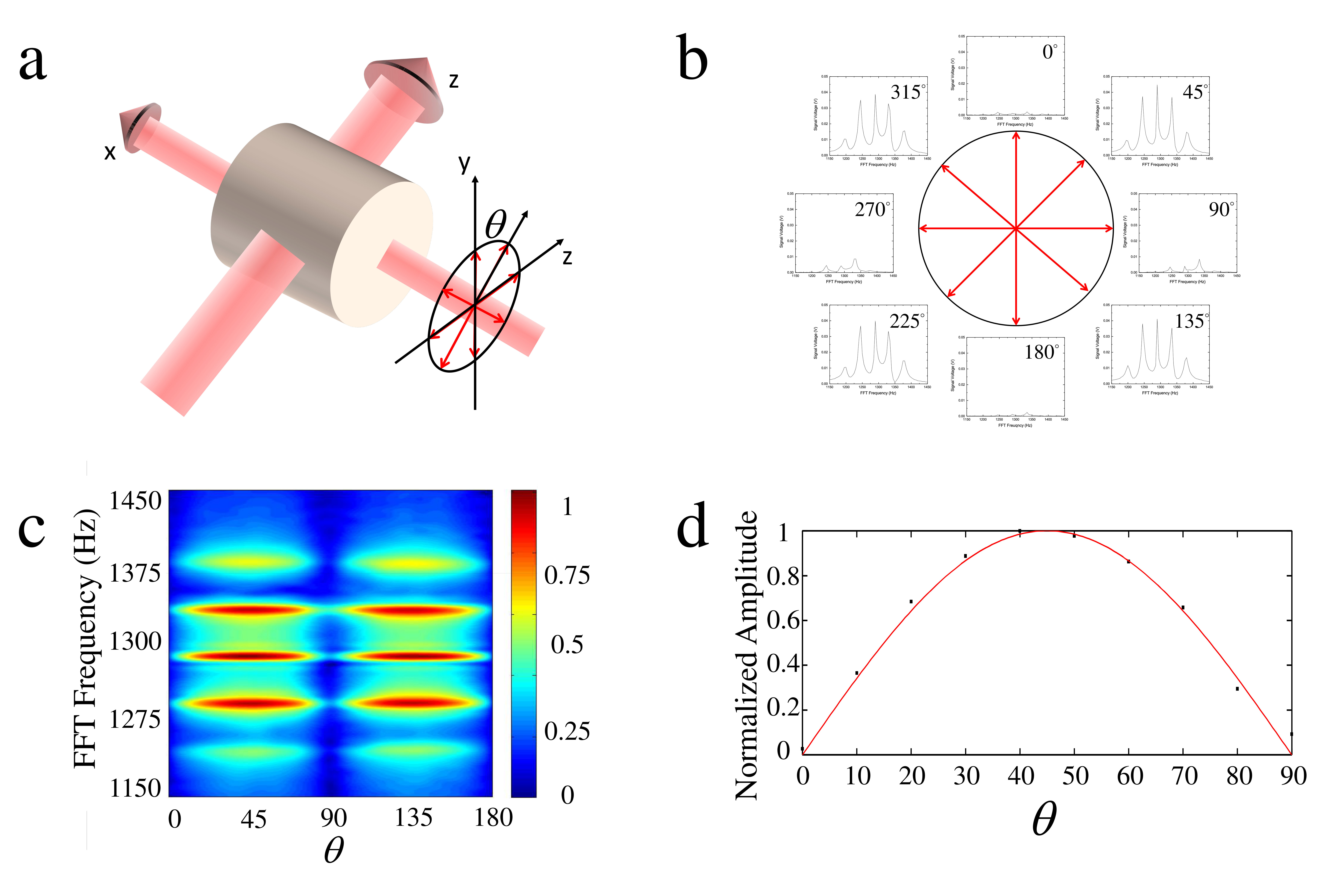 Figure 3
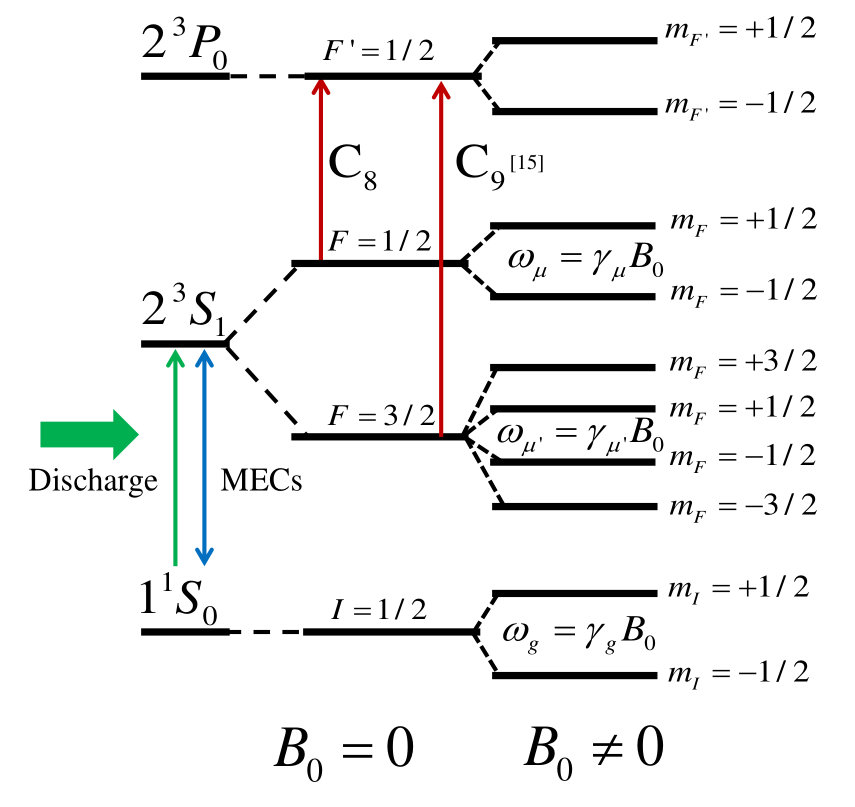 Figure 4
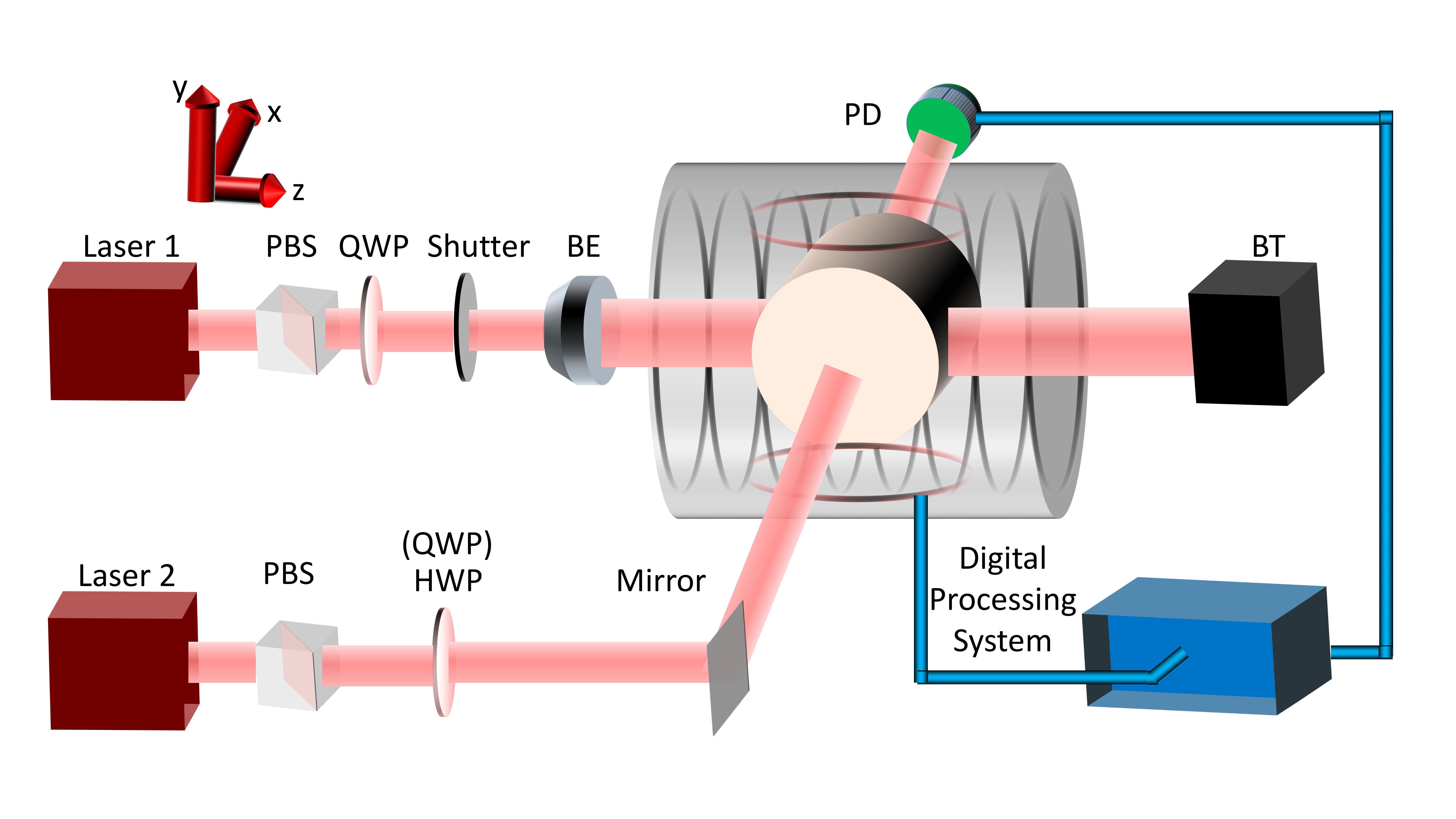 Figure 5
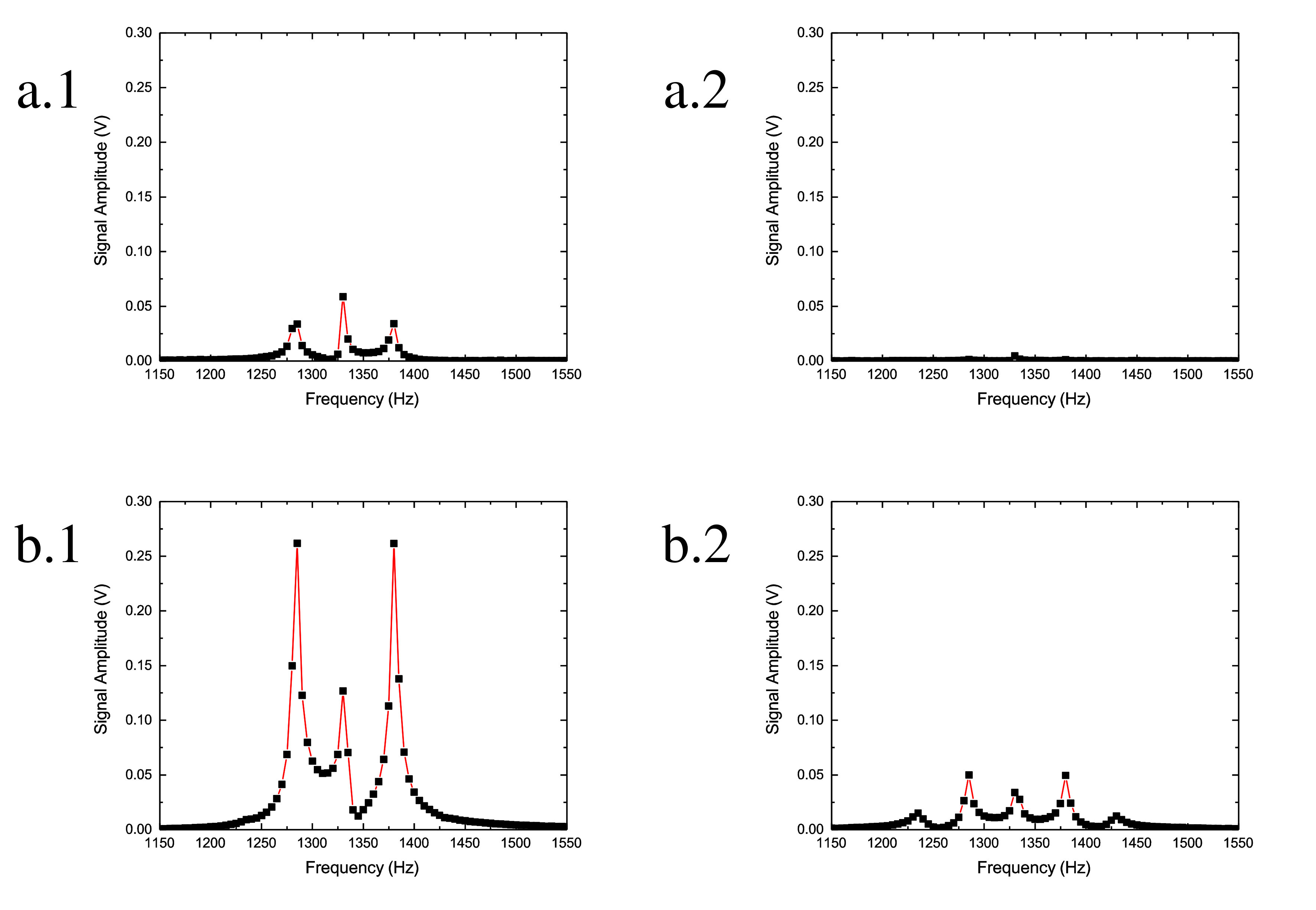 Figure 6
Peer Reviews
No public reviews on file for this paper yet. If you reviewed it on a platform where reviews are public (OpenReview, ICLR, NeurIPS, ICML), you can paste yours below so the community can read it here.
Videos
No videos yet. Explain this paper in a talk, walkthrough, or lecture? Add one.
Taxonomy
TopicsQuantum, superfluid, helium dynamics · Atomic and Subatomic Physics Research · Physics of Superconductivity and Magnetism
Observation of Mollow quintuplet in hyperfine structure state of atomic cell
Yuanzhi Zhan
Xiang Peng
Sheng Li
Liang Zhang
Jingbiao Chen
Hong Guo
State Key Laboratory of Advanced Optical Communication Systems and Networks, School of Electronics Engineering and Computer Science, and Center for Quantum Information Technology, Peking University, Beijing 100871, China
Abstract
We experimentally observed the Mollow quintuplet (MQ) in hyperfine structure state of atoms. The metastability-exchange collisions (MECs) transfer the Mollow Triplet (MT) from the ground states of atoms to the metastable states, and the MQ is demonstrated by four Zeeman levels of hyperfine states with linearly polarized light. The similar effect also achieves in the mixture cell of and .
pacs:
Valid PACS appear here
††preprint: APS/123-QED
The interaction between light and materials is an important research area of quantum system. The Fermi Golden Rule describes the weak coupling between the light and atoms, which reveals the transition between the energy eigenstates of atoms fermi1950 . Mollow triplet (MT) is described as that two-level atoms are driven by strong coherent field in free space mollow1969power , which reveals the change from singlet spectrum to the triplet. MT of resonant light scattering was achieved in the atomic beam of sodium wu1975investigation , quantum dot fischer2016self , silicon vacancy of diamond zhou2017coherent , and superconducting circuits baur2009measurement . The ratio of center peak and sidebands of MT is influenced by coherence nathan2015theory or collisions khoa2016mollow . The quintuplet spectrum has been reported in three different systems. The first one is three-level atoms coupled with two high-intensity resonant laser beam sharing a common level cohen1977simultaneous , the second one is two-level atoms coupled with bimodality cavity Nha2000resonance , and the third one is the resonance fluorescence spectrum of quantum dots system vam2009spin . The so-called Mollow quintuplet (MQ) is modeled by summing Mollow triplets (MTs) of two natural excitons polarized in orthogonal direction of quantum dot with the same laser rong2013mollow , and furthermore two modified MTs can induce the Mollow nonuplets (MNs) in two coupled quantum dots system at strong exchange regime angelatos2015entanglement .
In this letter we observe the MQ in hyperfine structure state of atoms by detection with linearly polarized light, and the experimental results indicate to the alignment effect with a different physical process from that mentioned before. We use a RF field to drive the ground state , and the MT is induced in and states, according to the energy-level diagram of atoms shown in Fig. 1. The metastability-exchange collisions (MECs) can transfer the MT from the ground states to metastable states zhan2018observation , and the transferred MT also induced the further MQ in metastable states. The experimental results reveal that the MQ effect is related the higher order spin quantum number state and the detection with linearly polarized light.
The experimental setup is shown in Fig. 2 and we use the two lasers to pump and detect hyperfine states of metastable states, respectively. Both the pump (laser 1) and the probe (laser 2) beams are from laser source (NKT Photonics Y10), and the pump beam is power-enhanced by the a laser amplifier (LEA Photonics MLXX-EYFA-CW-SLM-P-TKS). The pump (probe) beam propagates along () axis and has the power of 15 W (0.3 mW) with waist diameter of about 20 mm (1 mm). The pump beam keeps the circularly polarized before entering atomic cell, and the probe beam is circularly or linearly polarized to observe the orientation and alignment effect of the metastable states. The home-made pure (pressure: 0.6 Torr) cylindrical atomic cell (size: 50L70 mm3 ) is located in the seven-layer magnetic shield, and is excited by a radio-frequency power source (50 MHz, 0.8 W) to continuously discharge and generate the metastable-state atoms. The solenoid generates the static magnetic field along , and a set of helmholtz coil generates the oscillating magnetic field along . The digital processing system includes the PXI-4461 and PXI-4462 (resolution: 24-Bit, sampling rate: 204.8 kS/s) of the National Instruments, which is used for controlling the helmholtz coil and signal acquisition.
Figure 3 manifests the MT and MQ spectra by detection of different optical polarization and different hyperfine structure states. The first row of the Fig. 3 shows the detection with line, while the second row shows the ones. The pumping beam keeps the circularly polarized light, and the Fig. 3(a.1 and b.1) shows the circularly polarized probe while Fig. 3(a.2 and b.2) shows the linearly polarized probe. Comparing each figure in Fig. 3, the MT appears by the detection with circularly polarized light no matter which hyperfine structure state is probed, while the MQ appears by the linearly polarized probe and only in hyperfine structure state. Notice that the center frequency of the MT and MQ signal is the Larmor frequency of the ground state. We have reported a MT signal of ground state can be transferred through metastability exchange collisions (MECs) to the metastable states, which reveals that the signal of Fig. 3 (b.1) is the transferred MT of ground state. The different polarized probe beam indicates that the orientation and alignment effect of the metastable states atoms may be related to the MT and MQ signal, respectively.
The circularly polarized pump beam (in z axis) and linearly polarized probe beam (in x axis) continuously interact with the atoms, and the frequency of oscillating magnetic field (in y axis) is set as . The direction of the polarization is rotated in y-z plane shown in Fig. 4(a), and the parameter is defined as the angle between the polarization and y axis. Changing , the MQ signals will disappear at (perpendicular or parallel the static magnetic field ) shown in Fig. 4(b). The detailed relationship between MQ signal and direction of linearly polarized light is shown in Fig. 4(c), which shows the amplitude of MQ each peaks is changed simultaneously with , and the maximum of the amplitude appears at the condition . Focusing on the amplitude of center peak, the relationship with is shown in Fig. 4(d). The experimental data (black squares) are corresponding to the function \rm sin$$(2\theta).
With changing both the amplitude and frequency of oscillating magnetic field at the condition , the MQ signals are shown in Fig. 5. The interval of each peak is the Rabi frequency , and the first order sidebands and second order sidebands appear together with changing the amplitude of oscillating magnetic field. approximately behaves linearly with changing the amplitude of the resonant oscillating magnetic field , which accords with and indicates a method of measuring the amplitude for the oscillating magnetic field. Figure 5(b) shows the center peak and the first sidebands changing like MT signal with changing frequency of oscillating field, and the second order sidebands only appears at the . The small sidebands near center peak appearing at the far detuning condition still need further researches.
Depending on the experimental results, an possible explanation of the Mollow quintuplet manifests here. The physical picture of MT has been described as the dressed atom cohenbook , and the MT transfer from the ground state to metastable state has been reported zhan2018observation . The oscillating magnetic field drives the ground-state coherence of two Zeeman energy eigenstates or bare states |$$\uparrow$$\rangle_{\textrm{g}} and |$$\downarrow$$\rangle_{\textrm{g}}. The new energy eigenstates or a series of dressed states are formed as the superposition states |$$+,N$$\rangle_{\textrm{g}}$$=(1/\sqrt{2})$$($$|$$\downarrow,n$$\rangle_{\textrm{g}}$$+$$|$$\uparrow,n-1$$\rangle_{\textrm{g}}$$) and |$$-,N$$\rangle_{\textrm{g}}$$=(1/\sqrt{2})$$($$|$$\downarrow,n$$\rangle_{\textrm{g}}$$-$$|$$\uparrow,n-1$$\rangle_{\textrm{g}}$$), where is the quantum number of oscillating field, |$$\uparrow,n$$\rangle_{\textrm{g}} (|$$\downarrow,n$$\rangle_{\textrm{g}}) is the direct product state of atoms and the oscillating field and is the total number of the excitations in the system. Note that the energy interval , where is the amplitude of the oscillating magnetic field. The MT can be transferred from the ground state to the metastable states has been reported, which reveals that the MECs between the dressed ground state and the undressed metastable states is a linear effect of the first order tensors of the density matrix and . Furthermore, the MECs between the dressed ground state and the dressed metastable states create higher order nonlinear effect, and the MQ is the second order tensors of the density matrix like and . The second order tensors and include two transitions, which are between and dressed states. The two transitions happen continuously, like that the Rabi oscillation modulates the MT, which change the frequencies of MT to the , and . The spectrum of the effect contain five frequencies , , , and called Mollow quintuplet. In order to verify the explanation, the experimental results of - hybrid cell is show in Fig. 6. The metastable state of has three Zeeman states whose alignment effect also can be detected by linearly polarized light, and the spectrum gives a MQ signal.
We have observed the MQ signal in hyperfine structure state of atoms by detecting with linearly polarized light tuned to line. Comparing the MT and MQ signal at different polarization and center frequency of probe light, we give an possible explanation for MQ is related to the alignment of atoms, and the experimental results of - hybrid cell give more evidence for the explanation. The difference between the MT and MQ signal reveals the demand of a new model for the MECs. The existing models of quintuplet spectrum are three levels system coupled two strong laser, two levels system coupled bimodality cavity, and two orthogonal polarization coupled one strong laser, but they cannot describe our experiments. We only give a phenomenological description to explain the generation of MQ, and the further theory needs more research. The frequency interval of the sidebands is linear with the amplitude of the resonant oscillating magnetic field, which satisfies , and indicates the possible method of measuring the amplitude of the oscillating magnetic field.
Funding. This project is supported by National Natural Science Foundation of China (61571018, 61531003, 91436210); National key research and development program.
Acknowledgment. We thank for W.L., H.W. and H.d.W with experimental and technical assistance.
The reference list from the paper itself. Each links out to its DOI / PubMed record.
- 1[1] E. Fermi, Nuclear Physics, Notes compiled by J. Orear, A. H. Rosenfeld, and R. A. Schluter (The University of Chicago Press, Chicago, 1950).
- 2[2] B. R. Mollow, Phys. Rev. 𝟏𝟖𝟖 188 \bf{188} , 1969 (1969).
- 3[3] F. Y. Wu, R. E. Grove, and S. Ezekiel, Phys. Rev. Lett. 𝟑𝟓 35 \bf{35} , 1426 (1975).
- 4[4] K. A. Fischer, K. Müller, A. Rundquist, T. Sarmiento, A. Y. Piggott, Y. Kelaita, C. Dory, K. G. Lagoudakis, and J. Vučković, Nat. Photonics 𝟏𝟎 10 \bf{10} , 163 (2016).
- 5[5] Y. Zhou, A. Rasmita, K. Li, Q. Xiong, I. Aharonovich, and W. Gao, Nat. Commun. 8, 14451 (2017).
- 6[6] M. Baur, S. Filipp, R. Bianchetti, J. M. Fink, M. Göppl, L. Steffen, P. J. Leek, A. Blais, and A. Wallraff, Phys. Rev. Lett. 𝟏𝟎𝟐 102 \bf{102} , 243602 (2009).
- 7[7] Shammah, N., and De Liberato, S., Physical Review B, 92(20), 201402 (2015).
- 8[8] Quoc, K. D., Van, L. C., Van, H. N., and Ngoc, H. N., Optical and Quantum Electronics, 48(1), 45 (2016).