Entanglement Entropy and Phase Portrait of f(R)-AdS Black Holes in the Grand Canonical Ensemble
A. Belhaj, H. El Moumni

TL;DR
This paper explores the thermodynamics and phase structure of charged AdS black holes in f(R) gravity using holographic entanglement entropy, showing they behave similarly to RN-AdS black holes.
Contribution
It demonstrates that the phase portrait of f(R)-AdS black holes in the grand canonical ensemble mirrors that of RN-AdS black holes using holographic entanglement entropy.
Findings
Thermodynamical behavior matches thermal entropy results.
Phase portrait remains consistent in holographic framework.
Charged f(R) AdS black holes resemble RN-AdS black holes.
Abstract
In this work, we investigate the thermodynamical behavior of charged AdS black holes from gravity corrections with a constant Ricci scalar curvature in the grand-canonical ensemble. Using the holographic entanglement entropy, we show that the physical observables behave as in the case of the thermal entropy. By performing numerical computations associated with the thermodynamical quantities versus the entanglement entropy, we confirm that the same phase portrait persists in the holographic framework. In the grand-canonical ensemble, the present result supports the former finding which reveals that the charged AdS black holes behave much like RN-AdS black holes.
Click any figure to enlarge with its caption.
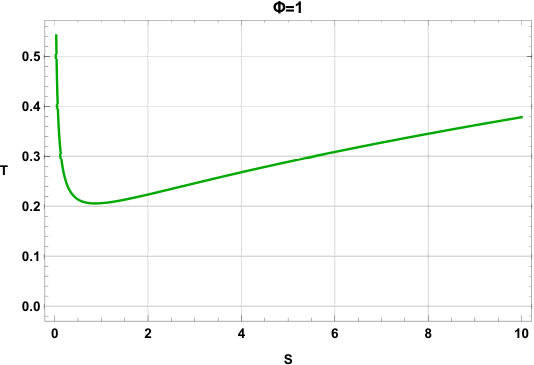 Figure 1
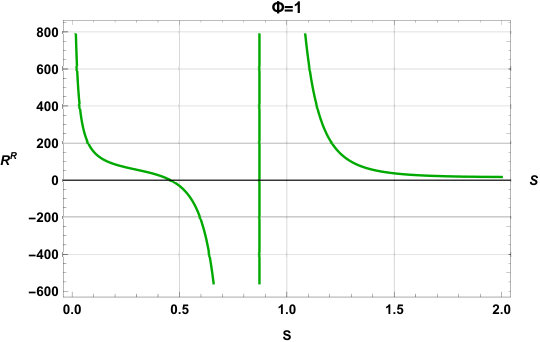 Figure 2
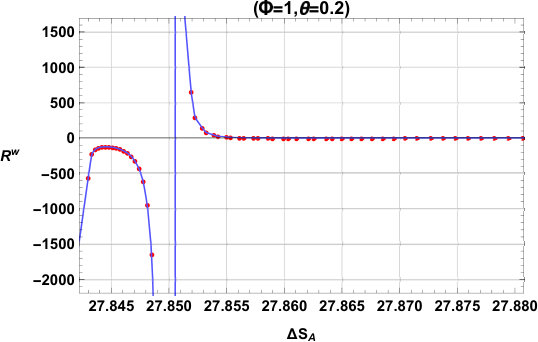 Figure 3
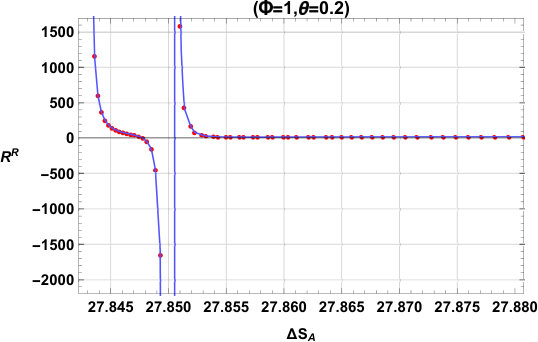 Figure 4
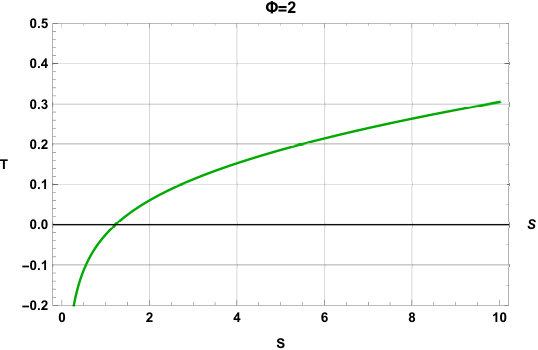 Figure 5
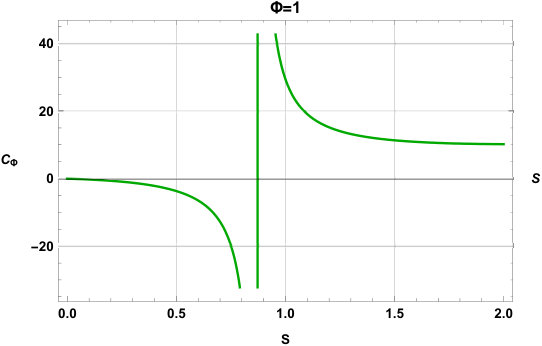 Figure 6
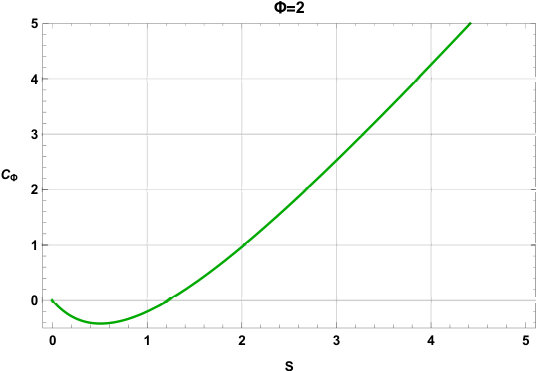 Figure 7
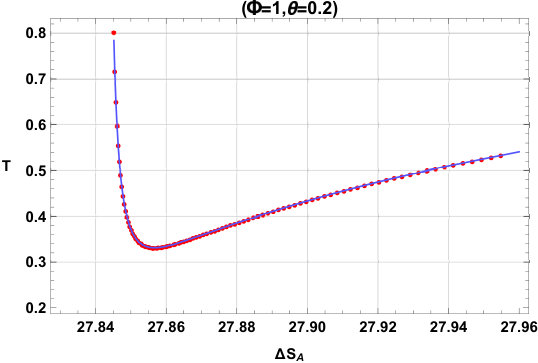 Figure 8
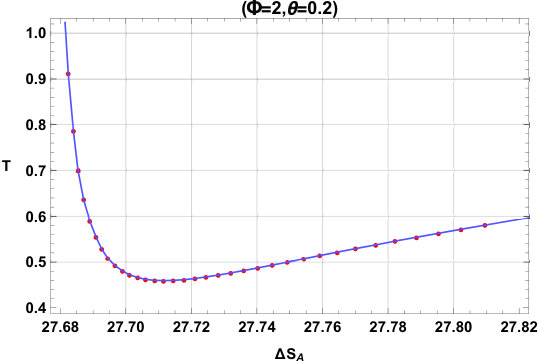 Figure 9
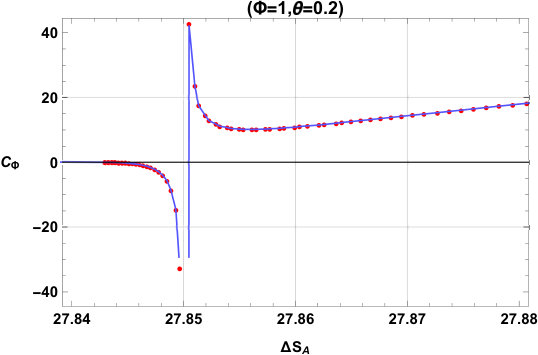 Figure 10
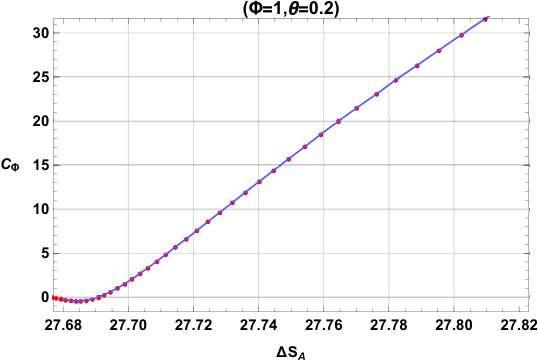 Figure 11
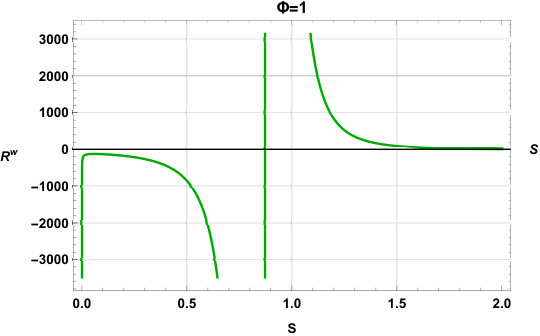 Figure 12
Peer Reviews
No public reviews on file for this paper yet. If you reviewed it on a platform where reviews are public (OpenReview, ICLR, NeurIPS, ICML), you can paste yours below so the community can read it here.
Videos
No videos yet. Explain this paper in a talk, walkthrough, or lecture? Add one.
Entanglement Entropy and Phase Portrait of f(R)-AdS Black Holes
in the Grand Canonical Ensemble
A. Belhaj1[email protected] , H. El Moumni2,3[email protected] (Corresponding author)
Abstract
In this work, we investigate the thermodynamical behavior of charged AdS black holes from gravity corrections with a constant Ricci scalar curvature in the grand-canonical ensemble. Using the holographic entanglement entropy, we show that the physical observables behave as in the case of the thermal entropy. By performing numerical computations associated with the thermodynamical quantities versus the entanglement entropy, we confirm that the same phase portrait persists in the holographic framework. In the grand-canonical ensemble, the present result supports the former finding which reveals that the charged AdS black holes behave much like RN-AdS black holes.
a* ERPTM, Polydisciplinary Faculty, Sultan Moulay Slimane University, Béni Mellal, Morocco.
b* EPTHE, Faculty of Sciences, Ibn Zohr University, B.P 8106, Agadir, Morocco.
c* High Energy Physics and Astrophysics Laboratory, Faculty of Science Semlalia, Cadi Ayyad University, 40000 Marrakesh, Morocco.
Contents
1 Introduction
Recently, the gravity has received a remarkable attention in connections with many theoretical physics subjects. It has been approached from different angles including gravitation and cosmology associated with high energy physics problems. In particular, it has been used to understand, among others, the history of universe, especially the current cosmic accelerations, the inflation and the structure formation in the early Universe [1, 2]. It has been observed that the black holes in such backgrounds bring a different physics with respect of the one based on Einstein gravity by introducing either higher powers of the scalar curvature or the Riemann and the Ricci tensors, including their derivatives to the lagrangian contributions [3, 1, 2, 4, 5].
More recently, the notion of the extended phase space comes up with a new vitality into the study of the black hole thermodynamics via the identification of the cosmological constant with the pressure and its conjugate quantity with the thermodynamic volume [6]. Concretely, it has been shown that black holes are, in general, quite analogous to Van der Waals fluids [7, 8] leading to a remarkable result. Many extensions of these works have been elaborated for rotating and hairy black holes [9, 10], including the ones embedded in high curvature theories of superstrings and M-branes [11, 12, 13, 14]. More exotic results as holographic heat engine [15] as well as other technics ranging from the behavior of the quasi-normal modes [16, 17], microscopic structure [18] and Joule-Thomson expansion [19] to chaos structure [20] have consolidated the similarity with the Van der Waals fluids. On the other hand, another beautiful analogy is the probe of the critical behaviors of the AdS black holes using the AdS/CFT tools including entanglement entropy, Wilson loop and two point correlation functions [21, 22, 23, 24, 25, 26, 27, 28, 29, 30].
It turns out that the thermodynamics of the gravity attracts a huge part of attention in recent literature. In particular, the four dimensional charged black holes in the gravity have been elaborated in the canonical ensemble context [31]. Concretely, the phase transition and its thermodynamic geometry have been extensively investigated[32]. These results have been extended to the grand-canonical ensemble[33]. This extension has shown a remarkable difference in the associated black hole physics in both ensembles. In the case of four dimensional charged AdS blacks in the gravity with a constant curvature in the grand canonical ensemble, the phase transition has been investigated in some details. Precisely, it has been revealed that the corresponding thermodynamics is quite different from the one appearing in the canonical ensemble. For fixed electric potentials, other physical quantities have been also obtained including the specific heat and the isothermal compressibility coefficient showing certain divergences in the associated expressions. Moreover, the thermodynamic geometry has been also discussed to deal with the corresponding phase structure.
In this paper, we holographically investigate the thermodynamical behavior of AdS black holes using the entanglement entropy in the grand-canonical ensemble. Concretely, we discuss the thermodynamical aspects of charged AdS black holes with a constant Ricci scalar curvature in such an ensemble. Calculating the holographic entropy, we show that the physical observable behave like in the thermal entropy case. Plotting thermodynamical quantities versus the entanglement entropy, we confirm that the same phase portrait persists in the holographic framework. In the grand canonical ensemble, the present results support the former finding revealing that the charged AdS black holes behave like RN-AdS black holes.
The organization of the manuscript is as follow. In section 2, we give a concise review on the phase transition of the AdS black holes in the grand-canonical ensemble. Section 3 concerns the holographic entanglement entropy and the phase structure of such black hole solutions. In section 4, we elaborate the geometrothermodynamics for the AdS black holes in order to discuss the corresponding phase structure. The last section is devoted to conclusions and remarks.
2 Phase transition of
AdS black holes in grand-canonical ensemble
In this section, we give a concise review on the black hole solutions in the gravity with a constant curvature. The action describing a four-dimensional charged AdS black hole solution in such gravity backgrounds is given by [34]
[TABLE]
Here, denotes the Ricci scalar curvature while is an arbitrary function of . It is recalled that is the abelian electromagnetic field tensor being related to the electromagnetic potential as follows
[TABLE]
To get the corresponding equations of motion, one may use the variation of the action (1) with respect to these fields. For the gravitational field , one gets
[TABLE]
while for the gauge field , one obtains
[TABLE]
Moon et al [34] consider the simple case where the Ricci scalar curvature is constant which provides an analytical solution of the equation (3). Under the constant Ricci scalar curvature assumption, this equation becomes
[TABLE]
In what follows, we discuss the black hole in such a concrete geometry.
2.1 Black holes in the gravity with constant curvature
It turns out that a four-dimensional charged AdS black hole solution in the gravity with constant curvature has been obtained with its thermodynamic quantities. In particular, energy, entropy, heat capacity and Helmholtz free energy have been computed and discussed [34]. Moreover, the criticality of this solution has been investigated in [31]. The coexistence curve and the density number of molecules for such a black hole solution have been dealt with in [35]. Concretely, it has been studied the phase transition in the canonical ensemble for a black hole having fixed charges[32].
To understand such activities, consider the RN-AdS black hole [34]. In this way, the metric line element, in the gravity backgrounds, reads as
[TABLE]
where the function should satisfy Eq.(5) and takes the following form
[TABLE]
Here, the quantity is written as follows
[TABLE]
In this solution, one has and . Taking and , it is observed that such a black hole solution can be reduced to the RN-AdS black hole. Moreover, it has been shown that the black hole ADM mass and the electric charge are related to the parameters and , respectively [34]. They are given by
[TABLE]
According to [31], the corresponding thermodynamic quantities can be derived using the associated computations. Some of them are given by the following expressions
[TABLE]
where , and indicate the Hawking temperature, the entropy and the electric potential respectively. It is recalled that the entropy can be obtained by exploiting the Wald method developed in [2]. More details on such calculations can be found in [36].
Having discussed the thermodynamic quantities on such gravity backgrounds, we move now to investigate the associated phase transition.
2.2 Phase transition of AdS black holes
For facility reasons, it is useful to rebuilt the important quantities in terms of the entropy and the electric potential . Indeed, the calculations show that the Hawking temperature reads as
[TABLE]
Using this equation, one can obtain the following derivative relations, which will be used later,
[TABLE]
The solution of the first equation is given by
[TABLE]
Taking and , the constraint is needed to ensure the positivity of the entropy appearing in Eq.(16). Substituting Eq.(16) into Eq.(15), one gets
[TABLE]
The Hawking temperature for both cases and is illustrated in Fig.1a and Fig.1b respectively.
It follows from Fig.1a that there exists a minimum temperature associated with the condition . Substituting Eq.(16) into Eq.(13), this temperature is explicitly given by
[TABLE]
It is observed, however, that the Hawking temperature increases monotonically when . This behavior is represented in Fig.1b.
To approach the phase transition, one may examine the specific heat behavior for fixed charges. In the grand-canonical ensemble associated with a fixed electric potential of AdS black hole, the specific heat takes the following form
[TABLE]
It is remarked that the denominator of Eq.(19) is exactly the same as the numerator of Eq.(14). This shows that the divergence of corresponds to the minimum Hawking temperature.
In this way, it is easy to obtain the condition showing the divergence of the heat capacity . Indeed, it is given by the following constraint
[TABLE]
This condition can be solved by taking
[TABLE]
Using the restrictions and , the above root is accepted physically only for .
The corresponding behaviors are plotted in Fig.2a and Fig.2b. In particular, Fig.2a is associated with the case of while Fig.2b corresponds to the case of . It follows form these computations that the specific heat involves a divergence for . However, the divergence is removed in the case of . This result differs from the one obtained in the canonical ensemble [32], where the system can involve two, one or no divergence points for the specific heat .
3 Holographic entanglement entropy and the phase structure
Having understood the essential of thermodynamical behaviors of such black holes in the grand-canonical ensemble, and motivated by recent research in holographic domain [21, 22, 23, 24, 25], we would like to employ the non local observables like the holographic entanglement entropy to check whether this quantity can respect the grand-canonical ensemble phase structure. To do so, let us consider a quantum field theory described by a density matrix , with is a region of a spacetime Cauchy surface and is its complement. In this way, the entanglement entropy between these two regions can be defined as
[TABLE]
where is the reduced density matrix of given by
[TABLE]
According to [37, 38], it is well known that when a gravitational theory contains higher powers of the curvature, the Ryu and Takayanagi formula [39, 40] must include additional contributions originated form the extrinsic curvature. Generally, these corrections read as
[TABLE]
where is the associated Lagrangian and indicates the extrinsic curvature. It is recalled that and stand for the a term of expansion and an anomaly term, respectively, while the couple denotes the orthogonal complex coordinates 333More details can be found in the appendix of [37].. In the present gravity model, the Lagrangian depends on the Riemann tensor only through the Ricci scalar . Under this assumption, the general formula given in (24) reduces to
[TABLE]
The second term in (24), which involves extrinsic curvatures, vanishes due to the fact that does not contain components of the form . It has been shown that this is a consistency verification of the formula. Indeed, transforming gravity to a theory of Einstein gravity coupled to a scalar, and using the Ryu-Takayanagi formula, we can find the same entanglement entropy [37, 38]. Precisely, the entanglement entropy takes the following form
[TABLE]
where is a codimension-2 minimal surface with the boundary condition , and where is the gravitational Newton’s constant.
For the present black hole configurations, we choose the region to be a spherical cap on the boundary delimited by and parameterized by the coordinate . Thus, the minimal area corresponding to the entanglement entropy can be written as
[TABLE]
where and is the boundary of the entangled region. The function can be obtained by interpreting Eq.(27) as a Lagrangian and solving the following equation of motion
[TABLE]
with the following boundary conditions
[TABLE]
To regularize the entanglement entropy, we subtract the area of the minimal surface in the pure AdS geometry whose the boundary is also with
[TABLE]
Performing numerical calculations, we can easily solve the equation Eq.(28) by using the boundary conditions of Eq.(29) and taking with different electric potential values namely and , while the parameter is set to be . In the present investigation, the Ultra Violet cutoff is chosen to be .
Now we are in position to give a comparative analysis with the thermal structure. For this reason, we plot in Fig.3 the relations between the Hawking temperature and the heat capacity versus the holographic entanglement entropy for different values of parameters the electric potential with the chosen .
It is remarked that Fig.3 shares similarities with Fig.1 and Fig.2. Especially, it has been observed a minimum of the temperature in the case and a monotony when . For the heat capacity also the divergence point is recovered in the first case as the continuity in the second one. Having provided the same behavior for the both plans and , we can conclude that the phase structure of the holographic entanglement entropy is the same as in the thermal entropy structure in the grand-canonical ensemble framework.
4 Thermodynamic geometry in grand-canonical ensemble
To completely explore this phase transition and reinforce the conclusion of the previous section, we will recall the thermodynamical geometry tools, such as the Weinhold geometry [41] and the Ruppeiner one [42].
The Weinhold metric is defined as the second derivative of the internal energy with respect to the entropy and other extensive quantities in the energy representation, while the Ruppeiner metric is related to the Weinhold metric by a temperature conformal scale factor. Indeed, one has the following relation
[TABLE]
In this context, we can evaluate the thermodynamical curvature of the presented black holes. Concretely, the Weinhold and the Ruppeiner metric are given, respectively, by
[TABLE]
where stands for , and . According to [33], the expressions of Weinhold and Ruppeiner scalar curvatures can be obtained explicitly. Precisely, they are given, respectively, by
[TABLE]
[TABLE]
where the function stands for
[TABLE]
Comparing Eq.(33) and Eq.(34) with Eq.(20), one may find that the Weinhold scalar curvature shares the same factor in the denominator as the specific heat does. This means that it would diverge exactly where the specific heat diverges. This is also shown intuitively in Fig.4, representing the behavior of these scalar curvatures as function of the entropy .
In the remaining part of this work, we plot also the variation of the Weinhold and the Ruppeiner Ricci scalars in terms of the holographic entanglement entropy. This is illustrated in Fig.5.
Comparing with Fig.4, we can observe that the holographic entanglement entropy can reproduce the same phase portrait for the studied black hole in the grand-canonical ensemble as the thermal picture. A close examination of the diagram shows that the scalar curvature exhibits the same singularity schemes as the plan confirming the statement presented in the end of Sec.3.
5 Conclusions and discussions
In this paper, we have investigated the thermodynamic and the geothermodyanamic behaviors in the grand-canonical ensemble by fixing the electric potential of the charged AdS black holes in the gravity in four dimensions. Treating the cosmological constant and its conjugate quantity as thermodynamic variables and using the holographic entanglement, this study has been made within an extended phase space. First, we have presented the essential of the thermodynamical behavior in the thermal structure. Then, we have moved to show that all thermodynamical quantities exhibit the same behavior versus entropy as well as the holographic entanglement entropy. Moreover, we have found that the phase structure of such charged AdS black holes in the grand-canonical ensemble can probe the holographic entanglement entropy reproducing the same thermodynamical behavior of the thermal structure. It has been remarked that this provides a new approach to understand the phase structure from the holography point view associated with fixed electric potentials.
This work comes up with certain open questions related to quantum information theory. In particular, it would be interesting to see if this has any possible connection with quantum discord and complexity properties, by assuming that Ads black holes can be viewed as qubit systems. Moreover, it should be of relevance to approach quantum information concepts using quantum gravity in connection with black holes. This will be addressed elsewhere.
The reference list from the paper itself. Each links out to its DOI / PubMed record.
- 1[1] Alexei A. Starobinsky. A New Type of Isotropic Cosmological Models Without Singularity. Phys. Lett. , 91B:99–102, 1980.
- 2[2] Antonio De Felice and Shinji Tsujikawa. f(R) theories. Living Rev. Rel. , 13:3, 2010.
- 3[3] Hans A. Buchdahl. Non-linear Lagrangians and cosmological theory. Mon. Not. Roy. Astron. Soc. , 150:1, 1970.
- 4[4] Salvatore Capozziello and Mariafelicia De Laurentis. Extended Theories of Gravity. Phys. Rept. , 509:167–321, 2011.
- 5[5] Shin’ichi Nojiri and Sergei D. Odintsov. Unified cosmic history in modified gravity: from F(R) theory to Lorentz non-invariant models. Phys. Rept. , 505:59–144, 2011.
- 6[6] David Kastor, Sourya Ray, and Jennie Traschen. Enthalpy and the Mechanics of Ad S Black Holes. Class. Quant. Grav. , 26:195011, 2009.
- 7[7] David Kubiznak and Robert B. Mann. P-V criticality of charged Ad S black holes. JHEP , 07:033, 2012.
- 8[8] A. Belhaj, M. Chabab, H. El Moumni, and M. B. Sedra. On Thermodynamics of Ad S Black Holes in Arbitrary Dimensions. Chin. Phys. Lett. , 29:100401, 2012.