All Electrical Access to Topological Transport Features in Mn$_{1.8}$PtSn Films
Richard Schlitz, Peter Swekis, Anastasios Markou, Helena Reichlova,, Michaela Lammel, Jacob Gayles, Andy Thomas, Kornelius Nielsch, Claudia, Felser, Sebastian T. B. Goennenwein

TL;DR
This paper demonstrates electrical detection of topological transport effects in Mn$_{1.8}$PtSn thin films, enabling studies of topological spin structures without separate magnetometry, crucial for nano-patterned materials.
Contribution
It introduces an electrical method to identify topological transport effects directly, eliminating the need for independent magnetometry in thin film studies.
Findings
Large topological Hall and Nernst effects observed below 190K.
Topological signals comparable to bulk materials.
Method allows detection without magnetometry artifacts.
Abstract
The presence of non-trivial magnetic topology can give rise to non-vanishing scalar spin chirality and consequently a topological Hall or Nernst effect. In turn, topological transport signals can serve as indicators for topological spin structures. This is particularly important in thin films or nanopatterned materials where the spin structure is not readily accessible. Conventionally, the topological response is determined by combining magnetotransport data with an independent magnetometry experiment. This approach is prone to introduce measurement artifacts. In this study, we report the observation of large topological Hall and Nernst effects in micropatterned thin films of MnPtSn below the spin reorientation temperature K. The magnitude of the topological Hall effect nm is close to the value reported in bulk…
Click any figure to enlarge with its caption.
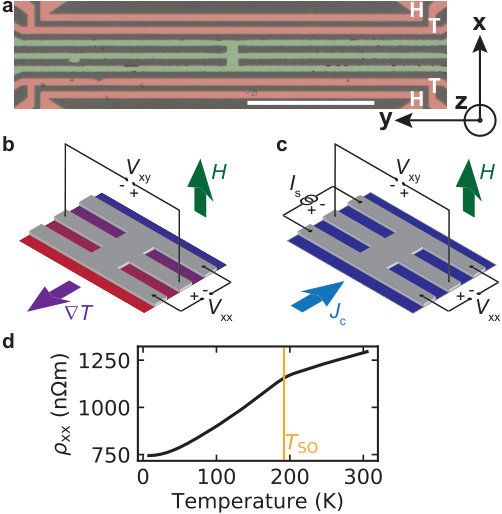 Figure 1
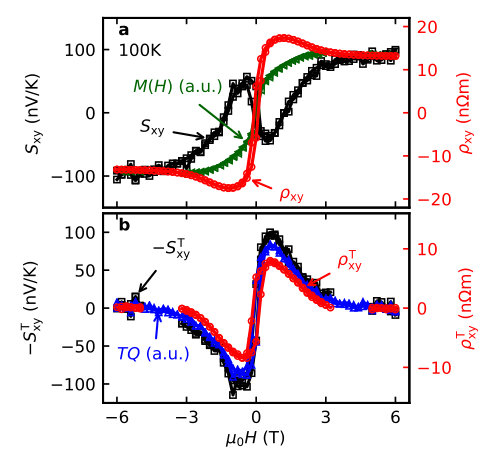 Figure 2
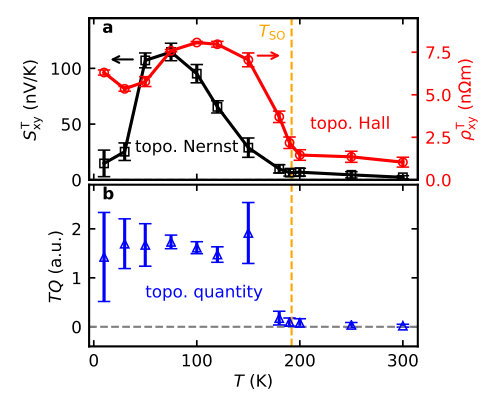 Figure 3
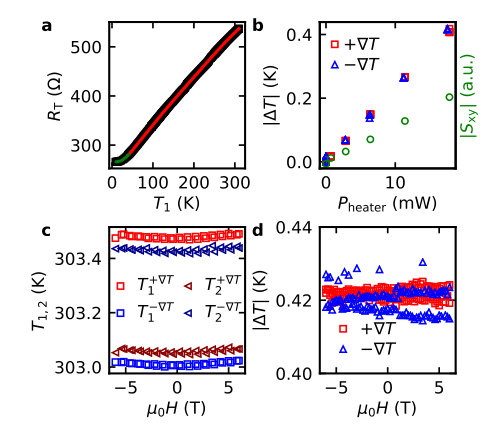 Figure 1
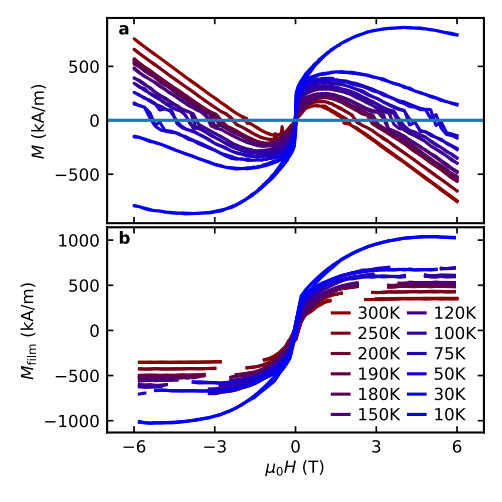 Figure 2
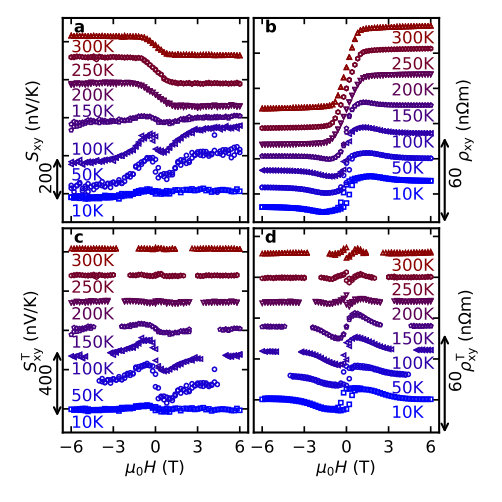 Figure 3
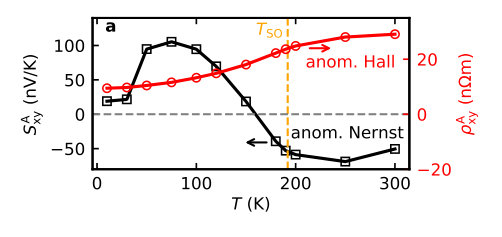 Figure 4
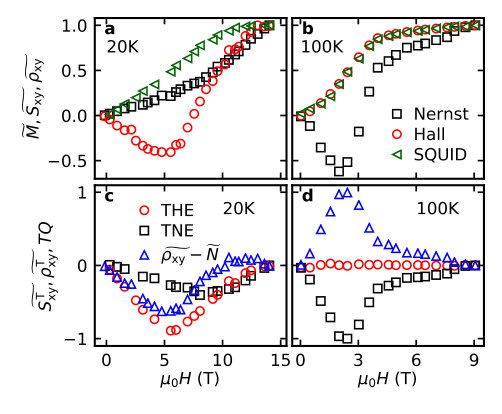 Figure 5
Peer Reviews
No public reviews on file for this paper yet. If you reviewed it on a platform where reviews are public (OpenReview, ICLR, NeurIPS, ICML), you can paste yours below so the community can read it here.
Videos
No videos yet. Explain this paper in a talk, walkthrough, or lecture? Add one.
All Electrical Access to Topological Transport Features in \chMn_1.8PtSn Films
Richard Schlitz
Institut für Festkörper- und Materialphysik, Technische Universität Dresden, 01062 Dresden, Germany
Peter Swekis
Max-Planck Institute for Chemical Physics of Solids, 01187 Dresden, Germany
Anastasios Markou
Max-Planck Institute for Chemical Physics of Solids, 01187 Dresden, Germany
Helena Reichlova
Institut für Festkörper- und Materialphysik, Technische Universität Dresden, 01062 Dresden, Germany
Michaela Lammel
Leibniz Institute for Solid State and Materials Research Dresden (IFW Dresden), Institute for Metallic Materials, 01069 Dresden, Germany
Jacob Gayles
Max-Planck Institute for Chemical Physics of Solids, 01187 Dresden, Germany
Andy Thomas
Leibniz Institute for Solid State and Materials Research Dresden (IFW Dresden), Institute for Metallic Materials, 01069 Dresden, Germany
Kornelius Nielsch
Leibniz Institute for Solid State and Materials Research Dresden (IFW Dresden), Institute for Metallic Materials, 01069 Dresden, Germany
Claudia Felser
Max-Planck Institute for Chemical Physics of Solids, 01187 Dresden, Germany
Sebastian T. B. Goennenwein
Institut für Festkörper- und Materialphysik, Technische Universität Dresden, 01062 Dresden, Germany
Abstract
The presence of non-trivial magnetic topology can give rise to non-vanishing scalar spin chirality and consequently a topological Hall or Nernst effect. In turn, topological transport signals can serve as indicators for topological spin structures. This is particularly important in thin films or nanopatterned materials where the spin structure is not readily accessible. Conventionally, the topological response is determined by combining magnetotransport data with an independent magnetometry experiment. This approach is prone to introduce measurement artifacts. In this study, we report the observation of large topological Hall and Nernst effects in micropatterned thin films of \chMn_1.8PtSn below the spin reorientation temperature T_{\mathrm{SR}}$$\approx190\text{,}\mathrm{K}. The magnitude of the topological Hall effect $\rho_{\mathrm{xy}}^{\mathrm{T}}=$8\text{\,}\mathrm{n\SIUnitSymbolOhm}\text{\,}\mathrm{m} is close to the value reported in bulk \chMn2PtSn, and the topological Nernst effect 115\text{,}\mathrm{nV}\text{,}{\mathrm{K}}^{-1} measured in the same microstructure has a similar magnitude as reported for bulk \chMnGe ($S_{\mathrm{xy}}^{\mathrm{T}}\sim$150\text{\,}\mathrm{nV}\text{\,}{\mathrm{K}}^{-1}), the only other material where a topological Nernst was reported. We use our data as a model system to introduce a topological quantity, which allows to detect the presence of topological transport effects without the need for independent magnetometry data. Our approach thus enables the study of topological transport also in nano-patterned materials without detrimental magnetization related limitations.
\alsoaffiliation
Center for Transport and Devices of Emergent Materials, Technische Universität Dresden, 01062 Dresden, Germany
\alsoaffiliationCenter for Transport and Devices of Emergent Materials, Technische Universität Dresden, 01062 Dresden, Germany \alsoaffiliationInstitute of Physics ASCR, v. v. i., Cukrovarnická 10, 162 53, Praha 6, Czech Republic
\alsoaffiliationCenter for Transport and Devices of Emergent Materials, Technische Universität Dresden, 01062 Dresden, Germany
\alsoaffiliationCenter for Transport and Devices of Emergent Materials, Technische Universität Dresden, 01062 Dresden, Germany
\alsoaffiliationTechnische Universität Dresden, Institute of Materials Science, 01062 Dresden, Germany
\alsoaffiliationCenter for Transport and Devices of Emergent Materials, Technische Universität Dresden, 01062 Dresden, Germany
Non-coplanar spin configurations, such as Skyrmions or other topological configurations are very exciting.1, 2, 3, 4, 5, 6 In magnetic materials, such topological spin structures can give rise to a finite scalar spin chirality between neighbouring spins on the sites .7 In a semi-classical picture, itinerant electrons moving through a spin texture with finite scalar spin chirality or a Skyrmion lattice5 accumulate a Berry phase, with the latter acting like an additional magnetic field on those electrons.8, 9, 7, 10, 11 This (fictitious) magnetic field in turn leads to an additional contribution to the Hall and Nernst effects.7, 12, 13, 14, 15, 16, 17 The connection between topological features in transport and non-trivial magnetic textures was experimentally demonstrated by comparison to Neutron diffraction results12 or Lorentz transmission electron microscopy studies.18 Thus, the presence of a topological Hall (THE) and/or Nernst (TNE) effect has been proposed as means to electrically detect the presence of Skyrmions or other topologically non-trivial spin textures in a multitude of materials. Specifically, the THE was studied in many bulk 12, 19, 13, 20, 16 and thin film materials 14, 18, 21, 22, 23, 24, 25, 26, 27, while until now the TNE was only investigated in bulk MnGe.15 Since the exact origin of the topological contribution is still vividly discussed, the topological Hall signal is usually extracted using a heuristic method: The magnetic field dependence of the Hall response
[TABLE]
is linked to the magnetization , which is usually measured in a separate setup on unpatterned samples. Here, is the ordinary Hall coefficient, contains the instrinsic and side-jump contribution to the anomalous Hall effect (AHE), is a measure for the skew scattering contribution to the AHE and is the resistivity of the material.28
In this letter, we investigate the Hall and Nernst signals in \chMn_1.8PtSn thin films as a function of temperature and magnetic fields and report both a large THE and a large TNE comparable to the TNE observed in bulk \chMnGe.15 \chMn2PtSn and its related compounds are known for hosting antiskyrmions29 (\chMn_1.4Pt_0.9Pd_0.1Sn) as well as having a large THE below a transition temperature in bulk 17 (\chMn2PtSn) and thin films26, 27 (\chMn_1.5-2PtSn) and thus are promising candidates for studying topological transport features. Motivated by these recent studies, we use \chMn_1.8PtSn as a model system to establish a technique enabling the extraction of the topological features without prior knowledge of the magnetization. By combining the Hall and Nernst response measured in the same microstructure, we are able to remove the conventional (anomalous) transport features, revealing the salient features seen in the topological contributions. Since our approach does not rely on magnetization measurements, it is viable also for nano-patterned materials.
1 Methods
The \chMn_1.8PtSn films were grown by DC magnetron co-sputtering of \chMn, \chPt and \chSn on MgO (001) substrates. The substrate temperature during deposition was and the Argon pressure was . After deposition the samples were post-annealed for at the growth temperature and capped with a thick \chAl capping layer at room temperature to prevent oxidation. The crystalline quality was verified by X-ray diffraction and the thickness 35\text{,}\mathrm{nm}$$ was determined using X-ray reflectometry. For further details about the film composition and structural properties refer to Ref. 27.
Magnetization loops were measured in a QuantumDesign MPMS XL7 on the as-grown samples and are shown in the supplementary information30. For magnetotransport measurements the samples were patterned using optical lithography and subsequent \chAr ion milling. In the last step, symmetric Pt heaters and thermometers were defined in a lift-off process with of sputtered Pt. We will refer to the heaters and thermometers at one or the other end of the Hall-bar as “top” and “bottom” heater and thermometer, respectively. An optical micrograph of a typical structure is shown in Fig. 1a. All transport measurements were performed in a superconducting magnet cryostat with a magnetic field 6\text{,}\mathrm{T}$$ applied along the direction, perpendicular to the film plane.
To accurately measure the thermovoltage and thus obtain the Nernst signal, we employ an on-chip alternating gradient technique: We alternatingly drive a current 5\text{,}\mathrm{mA}$$ through the heaters at either side (i.e. current through the bottom heater and no current through the top heater = heat flow direction , and vice versa bottom heater off and current through the top heater = heat flow direction ) and simultaneously monitor the resistance of the two thermometers on top and bottom of the Hall-bar to determine the temperature gradient along the direction (MgO [100] axis).
To extract the part of the obtained voltage that is antisymmetric with respect to the gradient direction we subtract the two voltages measured for the two respective directions of heat flow and and calculate the Nernst signal as
[TABLE]
Here, is the length of the heaters, i.e. the length of the contacts that is heated. The inversion of the thermal gradient allows to remove spurious thermoeletric contributions caused by the setup in analogy to an electric current reversal technique or other modulation techniques applied in measuring a multitude of physical properties.31, 32, 33, 34 A sketch of the measurement principle is shown in Fig. 1b. For more information on the thermometry, see the supplementary information30.
To record the magnetoresistive and Hall response, we drive a current of 200\text{,}\mathrm{\SIUnitSymbolMicro A}$$ along the Hall-bar with a Keithley 2450 sourcemeter. The longitudinal and transverse voltage drop and are simultaneously detected by two Keithley 2182 nanovoltmeters. The measurement scheme is depicted in Fig. 1c. To increase the measurement sensitivity and to remove thermoelectric contributions to the voltage, we employ a current reversal technique.31
The obtained temperature dependent resistivity of \chMn_1.8PtSn (cf. Fig. 1d) shows a kink around T_{\mathrm{SR}}$$\approx190\text{,}\mathrm{K}, which we attribute to the spin reorientation already observed in bulk \chMn2PtSn[17](#bib.bib17) at $T_{\mathrm{SR,bulk}}=$192\text{\,}\mathrm{K} and similarly in \chMn2RhSn at 80\text{,}\mathrm{K}$$.35 Below , the magnetic sublattices change from a collinear to a non-collinear configuration.36, 27
2 Results and Discussion
In the following, we will discuss the field dependence of the measured signals at 100\text{,}\mathrm{K}$$. This temperature is well enough below and simultaneously high enough to still observe a clear anomalous Nernst effect. The Nernst and Hall effect signals, and , respectively, are shown together with the magnetization in Fig. 2a. In contrast to the curve shape expected for a ferromagnetic material – where the signals mimic the magnetization – an additional dip (peak) is visible in the Nernst (Hall) curve at positive magnetic fields (cf. Eq. (1)).28, 13, 18 This additional feature is attributed to the aforementioned topological Nernst and Hall effect.12, 15 Both, the anomalous Nernst and Hall have the same sign in saturation, whereas the topological features are of opposite sign with respect to each other. Note that in a free electron picture, the Hall and Nernst signals should be of opposite sign, since the electron velocity is in the opposite direction in the two measurement configurations (cf. Fig. 1b,c).
To extract the topological transport response from the data, we now first follow the procedure customarily employed in the literature28, 27, 15, 26, 16 and subtract the anomalous effects from the measured curves using the magnetization loop in conjunction with a simplified version of Eq. (1).
[TABLE]
Here, , and are the amplitudes of the anomalous Hall and Nernst effect as well as the magnetization in the saturated field region (4\text{,}\mathrm{T}$$), respectively. These equations neglect the ordinary Nernst and Hall effect signals as well as the contributions of the field dependent Seebeck and magnetoresistive signal and , respectively. Taking the magnetoresistance and the field dependent magneto-Seebeck signal to be smaller than , the quantitative error using this simplified approach is approximately when considering only intrinsic and side-jump scattering effects27. The resulting topological Nernst and Hall signals are shown in Fig. 2b with black and red symbols, respectively. The missing points in the TNE and THE curves correspond to the zero-crossings in the loops where the extraction of the magnetic moment fails (cf. supplementary material30).
We now present a different approach to verify the presence of topological transport features. Building on the fact, that the anomalous Nernst and Hall signals both scale similarly with the magnetization, we can also take the difference of these two transport signals to remove the anomalous contributions instead of using the magnetization. Since the saturation values and units of the two effects are different, we hereby normalize both curves to their respective saturation values or and obtain
[TABLE]
As discussed above, the anomalous effects, scaling like the magnetization drop out entirely, leaving only the topological contributions. The difference of the two normalized signals, which we name topological quantity , is shown in Fig. 2b (blue triangles).
The field dependence of the , the TNE and the THE agree well, all having the same peak-dip structure in the intermediate field region (-4\text{\,}\mathrm{T}$\leq\mu_{0}H\leq$4\text{\,}\mathrm{T}). This corroborates the idea, that the extraction of the topological features is possible using only electrical detection, even without the knowledge of the magnetization curves. It is important to stress once more that the determination of the topological quantity does only require transport data, such that this approach is compatible with nano-patterned samples. Eliminating the need for magnetization measurements furthermore allows to exclude several artifacts arising from comparing measurements taken in independent runs, in separates setups. In particular, as the Hall and Nernst signals are measured using the same contacts on the same sample in our approach, misalignment of the magnetic field with respect to the surface normal cannot contribute to the evaluation unless the sample is remounted between measurements. Moreover, different temperature calibrations or local temperatures in different measurement setups can be ruled out. The biggest caveat in using the extraction technique, is that the quantitative size of the TNE/THE is not known due to the normalization (cf. Eq. (5)) and the possibly different contribution of the Nernst and Hall effects to the . However, the magnitude of still allows to infer an order of magnitude for the effect sizes. The ranges for the maximum topological Nernst and Hall effect at a given temperature are determined by 150\text{,}\mathrm{nV}\text{,}{\mathrm{K}}^{-1} and $\rho_{\mathrm{xy}}^{T}\leq TQ\cdot\rho_{\mathrm{xy}}^{\mathrm{A}}\sim$21\text{\,}\mathrm{n\SIUnitSymbolOhm}\text{\,}\mathrm{m}, respectively. As expected, the observed maximum amplitudes of the TNE 100\text{,}\mathrm{nV}\text{,}{\mathrm{K}}^{-1} and THE $\rho_{\mathrm{xy}}^{T}\sim$8\text{\,}\mathrm{n\SIUnitSymbolOhm}\text{\,}\mathrm{m} lie within these ranges. Taken together, the approach thus is a robust and scalable approach to infer the presence of topological transport features. Further information on the extraction of the magnitudes and the extraction technique in general is given in the supplementary material.30
Finally, we summarize the maximum amplitudes of the TNE and THE in Fig. 3a. The maximum TNE and THE over the full temperature range are 75\text{,}\mathrm{K}115\text{,}\mathrm{nV}\text{,}{\mathrm{K}}^{-1} and 100\text{,}\mathrm{K}8\text{,}\mathrm{n\SIUnitSymbolOhm}\text{,}\mathrm{m}$$, respectively. Additionally, the maximum of is plotted in Fig. 3b. The topological quantity shows roughly the same temperature dependence as the THE with one significant difference: Above the spin reorientation temperature marked as vertical orange line, the THE and TNE seem to remain finite, while the topological quantity decrease to zero within the measurement error. This suggests that indeed artifacts introduced by the comparison of the magnetometry and transport measurements in the conventional approach might be the origin of the features observed above .
In summary, we have presented measurements of the anomalous and topological Hall and Nernst effect in \chMn_1.8PtSn thin films, utilizing an alternating thermal gradient measurement technique. We observe clear topological contributions to both the Hall and Nernst response. This is the first measurement of the topological Nernst in a thin film material, with a very large amplitude of 115\text{,}\mathrm{nV}\text{,}{\mathrm{K}}^{-1} on-par with the value reported for bulk \chMnGe $S_{\mathrm{xy}}^{\mathrm{T}}(\ch{MnGe})\sim$150\text{\,}\mathrm{nV}\text{\,}{\mathrm{K}}^{-1}.15
Furthermore, we demonstrated that by combining the Hall and Nernst signals measured in the same device, it is possible to detect the presence of topological features without using magnetization measurements. The results open a pathway for an all-electric detection of topologically non-trivial magnetization textures in particular in micro- and nanostructures, where quantitative magnetometry experiments are very difficult and thus impede the conventional approach for the determination of the topological contributions. As a side effect, the resulting topological quantity can be used as a complementary method to gauge artifacts introduced by the magnetization measurements: Although the TNE and THE extracted using the established method remain finite above the spin reorientation temperature, the vanishes.
{acknowledgement}
We acknowledge fruitful discussions with J. Kübler and technical support by B. Weise as well as S. Piontek. Additionally, we acknowledge funding by the Deutsche Forschungsgemeinschaft (projects GO 944/4-2, SFB 1143/C08 and SPP 2137/403502666), by the Ministry of Education of the Czech Republic Grant No. LM2018110 and LNSM-LNSpin, Czech Science Foundation Grant No. 19-28375X, EU FET OpenRIA Grant No. 766566.
{suppinfo}
Details on the thermometry, the magnetometry data, the temperature evolution of the Hall and Nernst curves, the temperature dependent amplitudes of the anomalous Hall and Nernst as well as as discussion of the prerequisites of the extraction method are given in the supplementary information.
The reference list from the paper itself. Each links out to its DOI / PubMed record.
- 1Bogdanov and Yablonskii 1989 Bogdanov, A.; Yablonskii, D. Thermodynamically stable ‘vortices’ in magnetically ordered crystals. The mixed state of magnets. Journal of Experimental and Theoretical Physics 1989 , 95 , 178
- 2Dzyaloshinsky 1958 Dzyaloshinsky, I. A thermodynamic theory of “weak” ferromagnetism of antiferromagnetics. Journal of Physics and Chemistry of Solids 1958 , 4 , 241–255
- 3Moriya 1960 Moriya, T. Anisotropic Superexchange Interaction and Weak Ferromagnetism. Physical Review 1960 , 120 , 91–98
- 4Skyrme 1961 Skyrme, T. H. R. A non-linear field theory. Proceedings of the Royal Society of London A: Mathematical, Physical and Engineering Sciences 1961 , 260 , 127–138
- 5Rößler et al. 2006 Rößler, U. K.; Bogdanov, A. N.; Pfleiderer, C. Spontaneous skyrmion ground states in magnetic metals. Nature 2006 , 442 , 797 EP –
- 6Mühlbauer et al. 2009 Mühlbauer, S.; Binz, B.; Jonietz, F.; Pfleiderer, C.; Rosch, A.; Neubauer, A.; Georgii, R.; Böni, P. Skyrmion Lattice in a Chiral Magnet. Science 2009 , 323 , 915
- 7Taguchi et al. 2001 Taguchi, Y.; Oohara, Y.; Yoshizawa, H.; Nagaosa, N.; Tokura, Y. Spin Chirality, Berry Phase, and Anomalous Hall Effect in a Frustrated Ferromagnet. Science 2001 , 291 , 2573
- 8Ye et al. 1999 Ye, J.; Kim, Y. B.; Millis, A. J.; Shraiman, B. I.; Majumdar, P.; Tešanović, Z. Berry Phase Theory of the Anomalous Hall Effect: Application to Colossal Magnetoresistance Manganites. Physical Review Letters 1999 , 83 , 3737–3740