Combinatorial invariants of metric filtrations and automorphisms; the universal adic graph
A.Vershik, P.Zatitskiy

TL;DR
This paper introduces a combinatorial classification of metric filtrations using a measure on hierarchies, leading to new invariants for automorphisms, and constructs a universal graph with an adic structure to realize all automorphisms.
Contribution
It provides a complete combinatorial invariant for metric filtrations and constructs a universal adic graph capable of representing all automorphisms.
Findings
Complete invariant of metric filtrations via combinatorial schemes
Introduction of a universal adic graph for automorphisms
New metric invariants derived from combinatorial schemes
Abstract
We suggest a combinatorial classification of metric filtrations in measure spaces; a complete invariant of such a filtration is its combinatorial scheme, a measure on the space of hierarchies of the group~. In turn, the notion of combinatorial scheme is a source of new metric invariants of automorphisms approximated via basic filtrations. We construct a universal graph endowed with an adic structure such that every automorphism can be realized in its path space.
Click any figure to enlarge with its caption.
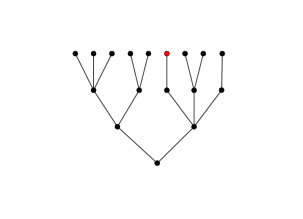 Figure 1
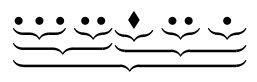 Figure 2
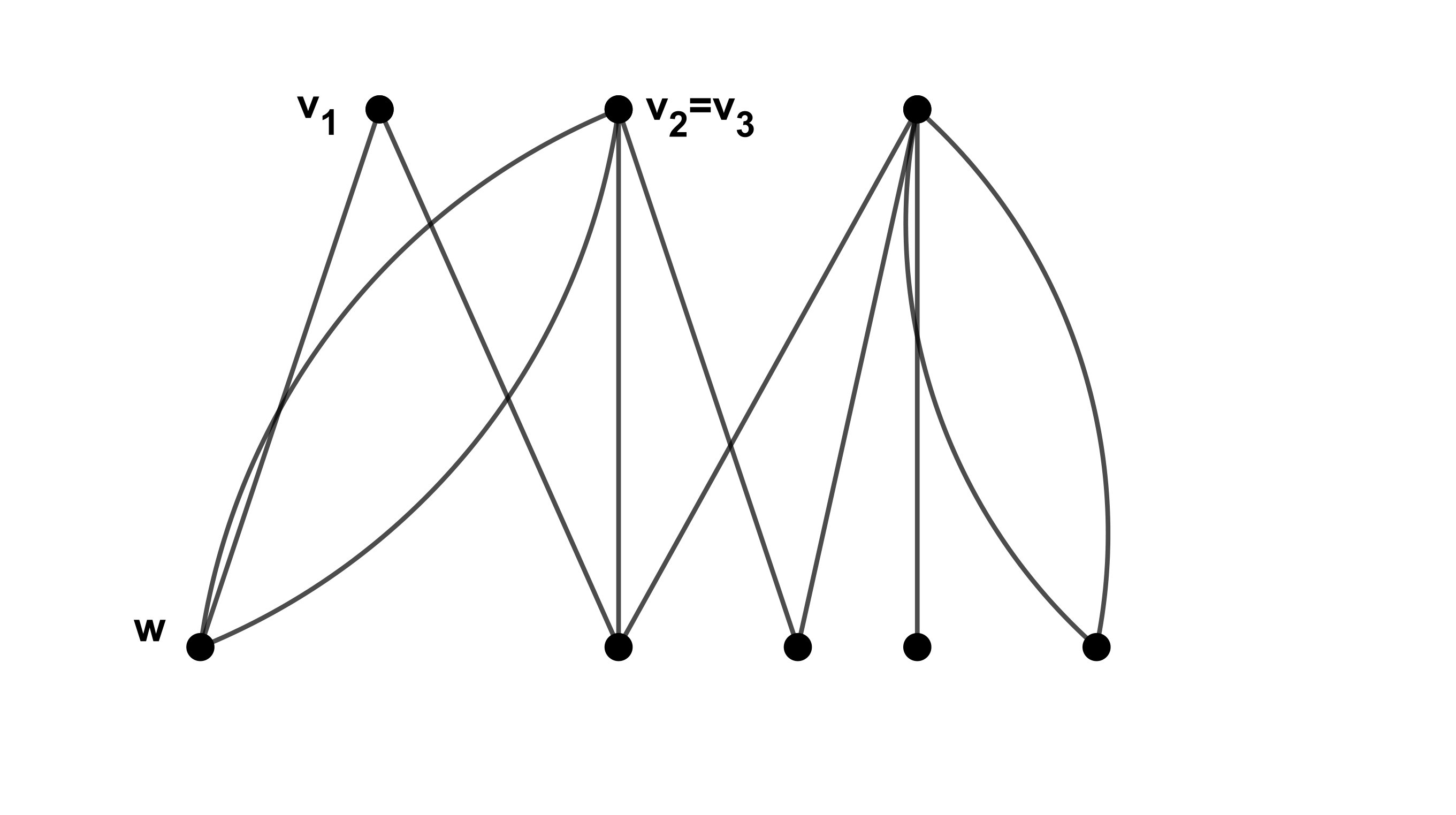 Figure 3
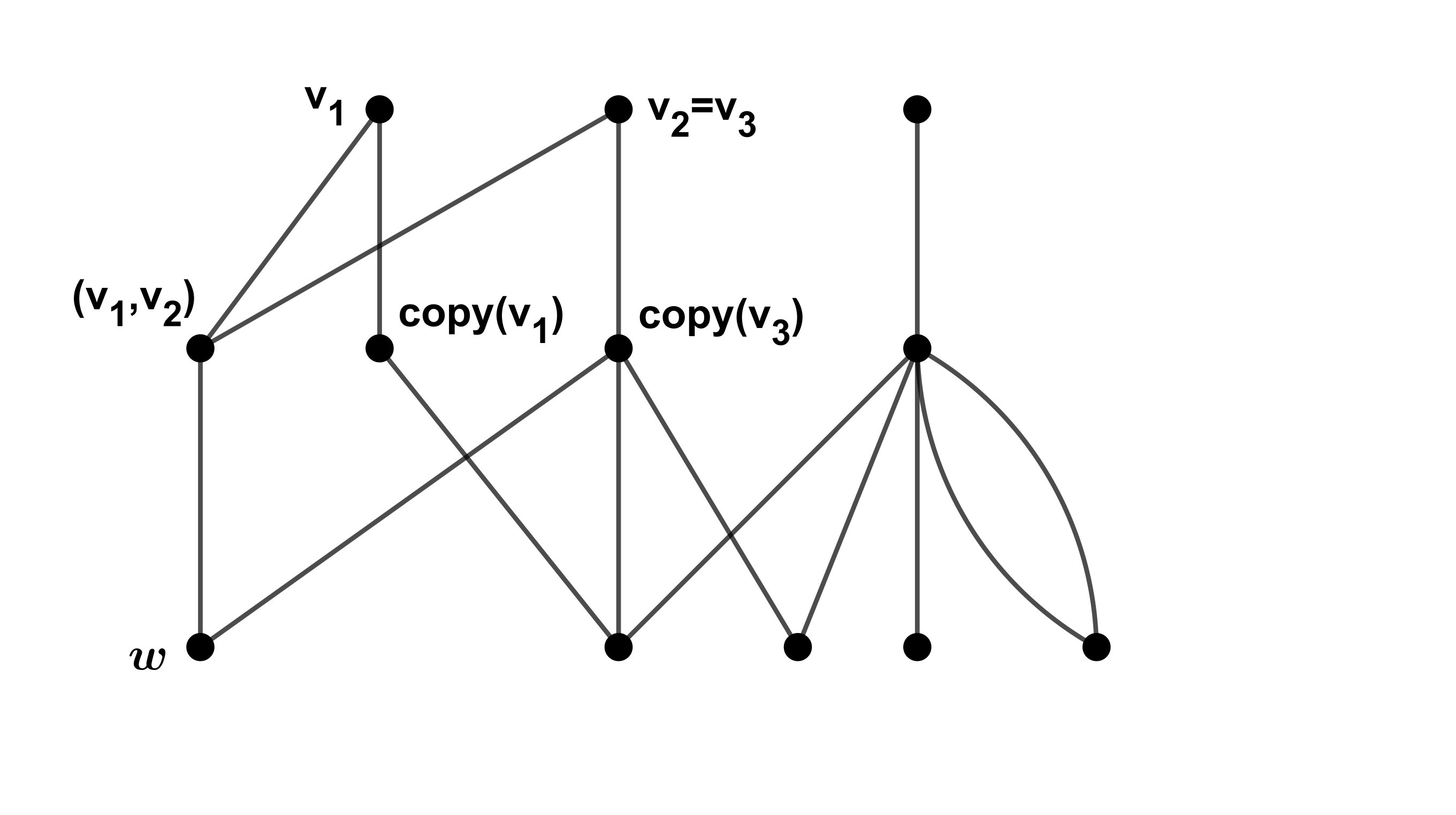 Figure 4
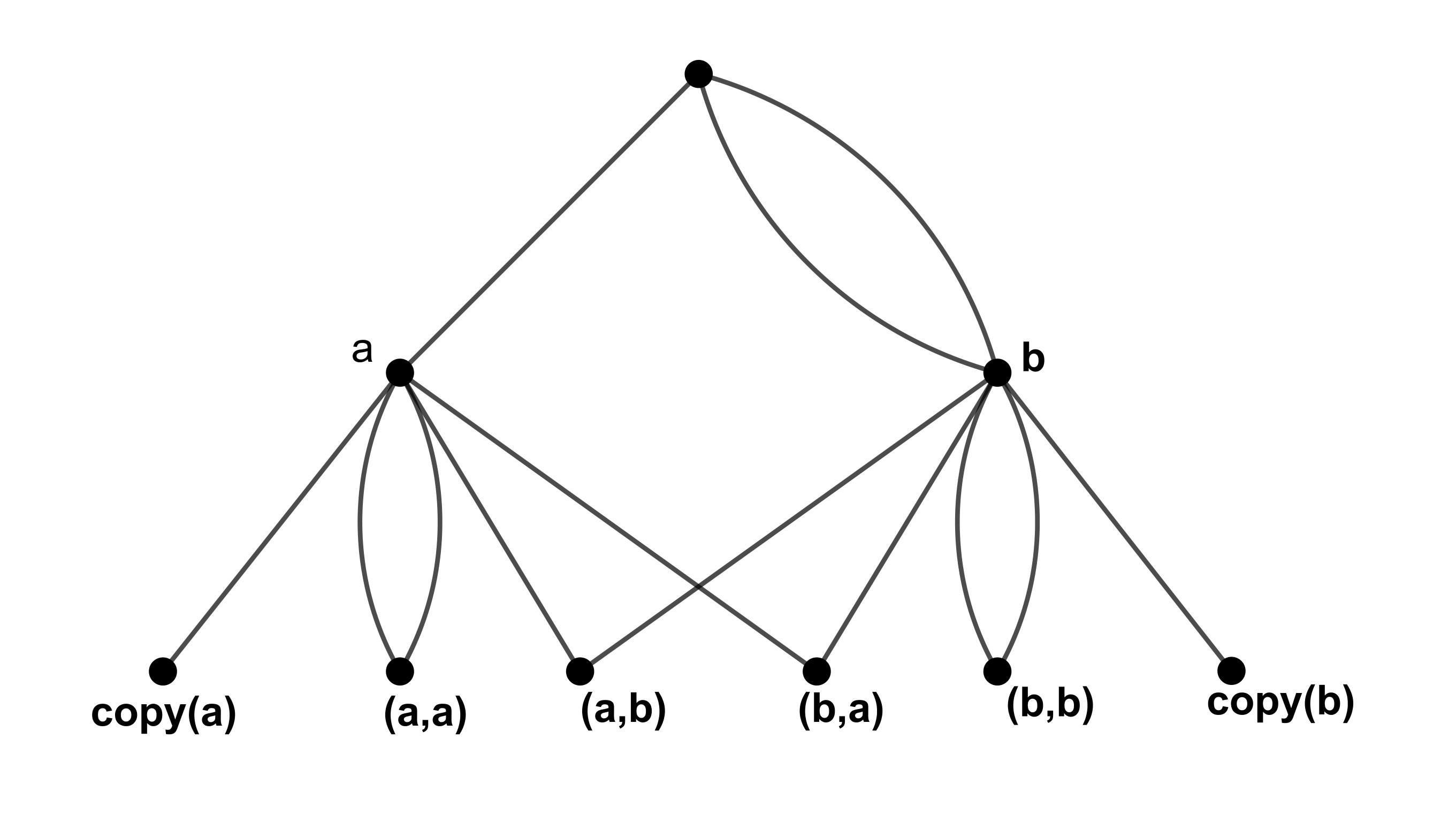 Figure 5
Peer Reviews
No public reviews on file for this paper yet. If you reviewed it on a platform where reviews are public (OpenReview, ICLR, NeurIPS, ICML), you can paste yours below so the community can read it here.
Videos
No videos yet. Explain this paper in a talk, walkthrough, or lecture? Add one.
Taxonomy
Topicsadvanced mathematical theories · Mathematical Dynamics and Fractals · Topological and Geometric Data Analysis
Combinatorial invariants of metric filtrations and automorphisms; the universal adic graph††thanks: Supported by the RSF grant 17-71-20153.
A. M. Vershik St. Petersburg Department of Steklov Institute of Mathematics, St. Petersburg State University, and Institute for Information Transmission Problems. E-mail: [email protected].
P. B. Zatitskiy St. Petersburg State University and St. Petersburg Department of Steklov Institute of Mathematics. E-mail: [email protected].
Abstract
We suggest a combinatorial classification of metric filtrations in measure spaces; a complete invariant of such a filtration is its combinatorial scheme, a measure on the space of hierarchies of the group . In turn, the notion of combinatorial scheme is a source of new metric invariants of automorphisms approximated via basic filtrations. We construct a universal graph endowed with an adic structure such that every automorphism can be realized in its path space.
Contents
-
1.2 Rokhlin’s lemma, a sequence of uniform approximations, basic filtrations
-
2.2 Combinatorial equivalence of filtrations and the canonical quotient
-
2.3 Random hierarchies on and classification of combinatorially definite filtrations
-
3 Realization of colored filtrations as tail filtrations on path spaces of graphs
1 Introduction
1.1 Metric filtrations and their applications
This paper deals with applications of the theory of metric filtrations (see [16] and the references therein) to uniform approximation of automorphisms of measure spaces and the analysis of adic transformations in path spaces of graphs. Conceptually, it is closely related to the first author’s work on dyadic and homogeneous sequences of measurable partitions (= filtrations), standardness, the “scale” metric invariant, etc. (see [8, 9, 10, 12, 11, 15, 17]). Essentially, we pass from homogeneous filtrations to arbitrary ones, pose a number of problems on so-called combinatorially definite (standard) filtrations, and relate them to properties of automorphisms being approximated. On the other hand, the main example of filtrations is provided by so-called tail filtrations in path spaces of graded graphs, or, equivalently, spaces of realizations of Markov chains, so we arrive at a realization of automorphisms as adic transformations (see [13, 14]).
It is characteristic of numerous classification problems in ergodic theory that the most important objects (automorphisms, group actions) have no nontrivial finite invariants, i.e., metric invariants arising from finite approximations or finite projections. This means that classification problems are of purely asymptotic nature. An illustration of this point is, for example, the classical Rokhlin’s lemma, which says that every aperiodic automorphism (more exactly, every free action of the group with invariant measure) can be approximated with any accuracy in all reasonable metrics by periodic automorphisms. Hence, to obtain nontrivial invariants of automorphisms, one should consider infinite sequences of periodic approximations and their invariants.
There are two theories of infinite approximations by periodic transformations: the theory of weak approximations, in the weak (operator) topology, successfully developed in the 1960s–1970s by A. Katok, A. Stepin, and others (see [6, 4, 7]), and the theory of uniform approximations, in the uniform metric, initiated by the first author in the 1960s simultaneously with the theory of filtrations, i.e., decreasing sequences of -algebras or measurable partitions, see the references above. The theory of uniform approximations and orbit theory were the main applications of the theory of filtrations. Another important area of application for the theory of filtrations, which we do not touch upon in this paper, is the theory of stationary filtrations arising as decreasing sequences of -algebras of “pasts” of stationary random processes, or, which is the same, sequences of preimages of the full -algebra under powers of faithful endomorphisms.
In this paper, we explain that a monotone sequence of uniform approximations of an automorphism in a measure space determines, in a natural way, a filtration whose partitions are orbit partitions of periodic automorphisms. This filtration is special in the sense that it is endowed with an order and is semihomogeneous; in other words, it inherits two approximation structures: a coherent ordering of points in almost all elements of all partitions (a linear order in the group ) and semihomogeneity, i.e., the uniformness of almost all conditional measures, which follows from the invariance of the measure under the automorphism. In terms of the theory of graded graphs, this means that the graph is endowed with a structure of a linear order on the edges entering each vertex (an “adic structure”), and that the measure on the path space is central, i.e., the conditional measure on initial segments of paths is uniform. Moreover, a semihomogeneous filtration endowed with such an order uniquely determines the corresponding automorphism (without order, one cannot recover the automorphism from the filtration up to isomorphism). From this viewpoint, the filtration approach and uniform approximation are related to the problem of metric isomorphism more closely than weak approximation. The study and construction of invariants of automorphisms and groups of automorphisms is preceded by the study of invariants of filtrations.
All metric invariants of filtrations fall into two classes: combinatorial (finite) invariants and transfinite ones. Combinatorial invariants are invariants of all finite fragments of filtrations, i.e., invariants of periodic approximations; they are described below and represent some measures on the space of hierarchies on the group . The prospect of obtaining an efficient combinatorial classification of filtrations described below was observed in [16], but the fact that this classification problem has indeed turned out to be tame gives hope for further classifications.
Transfinite invariants, whose existence is not obvious, are not combinatorial; their study requires considering deeper properties of filtrations, related to the notion of standardness or combinatorial definiteness. Standard, or combinatorially definite, filtrations are filtrations that are uniquely determined up to metric isomorphism by the combinatorial invariants. For example, a dyadic standard filtration is a Bernoulli filtration, it is combinatorially definite and can be recovered from its one-dimensional distribution.
By the lacunary theorem (see [8, 16] and Section 4), every filtration contains a “thinning” that is already a combinatorially definite filtration; thus, every automorphism becomes combinatorially definite with respect to some “thinning.” So, we obtain a chain of invariants also for filtrations that are not combinatorially definite, and for general automorphisms.
The adic dynamics (see [13, 14]), i.e., a special transformation of the path space of a graded graph, has already given many new nontrivial examples of dynamical systems. For instance, the Pascal automorphism (whose spectrum is still unknown) is combinatorially definite in the sense of this paper. In general, adic transformations are of great interest both from theoretical and practical point of view. Here we suggest constructions of universal graphs on which every automorphism can be realized as an adic shift. The study of specific automorphisms has already begun (see the survey [1], and also [2]), but, according to the conclusion of the paper [16] (see also below), the problem of classification of combinatorially definite filtrations is tame, i.e., there is a manageable space of classes, or orbits, or complete metric invariants of such filtrations (see the definition of combinatorial schemes of hierarchies below). This gives a chance to obtain a reasonable combinatorial classification of measure-preserving automorphisms. One may hope that such an approach is also possible for actions of other (amenable) groups, primarily for locally finite groups, such as , and for the lattices .
1.2 Rokhlin’s lemma, a sequence of uniform approximations, basic filtrations
Recall, in a form suitable for our purposes, the well-known Rokhlin’s lemma on approximation of a measure-preserving aperiodic automorphism by periodic automorphisms in the uniform metric. The uniform metric on the space of transformations of a space preserving a measure is defined as follows: given transformations and ,
[TABLE]
Lemma 1** (Rokhlin’s lemma).**
For every , every positive integer , and every measure-preserving aperiodic automorphism in a Lebesgue space there exists a periodic automorphism with period such that
[TABLE]
In what follows, it is useful to drop the condition that has period almost everywhere and assume that the periods of can be different at different points but uniformly bounded on a subset of full measure. This weaker assertion is even slightly easier to prove than the classical Rokhlin’s lemma. Denote by the measurable partition of the space into the orbits of ; we may assume that almost all elements of this partition are finite sets of the form endowed with the uniform conditional measure and a linear order such that the resulting ordered space is isomorphic to an arbitrary interval of the line (we set for every ).
Greater freedom in choosing approximations is needed to construct a coherent sequence of approximations satisfying the following properties: , and the partitions become coarser, i.e., almost every orbit of consists of several orbits of . Besides, for every the quotient of by is endowed with a linear order. Let us introduce an abstract definition for the resulting structure.
Definition 1**.**
A filtration in a Lebesgue space with continuous measure is a decreasing sequence of measurable partitions with being the partition into singletons. A filtration is said to be ergodic if the measurable intersection is the trivial partition, which is usually denoted by .
We introduce the following special properties of filtrations. A filtration is said to
- •
be locally finite if for every almost all elements of are finite sets, and the number of different types of conditional measures on elements of is finite (depending on );
- •
be semihomogeneous if the conditional measures on the elements of are uniform for all ;
- •
induce an order if every element of the quotient partition is endowed with a measurable linear order (measurability means that the set of all points with a given number in the elements of is measurable); these orders induce a coherent order on the elements of the partitions , and hence on the classes of the limiting partition (which is in general not measurable); we assume that the order type is for almost all classes.
Filtrations satisfying all these properties are said to be basic.
Definition 2**.**
Let be an aperiodic automorphism of a Lebesgue space . We say that a basic filtration of is basic for if the corresponding order is induced by and the limit of is the partition into the orbits of mod 0.
Of course, for every aperiodic automorphism there are many basic filtrations. If is ergodic, then its basic filtrations are also ergodic. Given a basic filtration for , one can construct a coherent sequence of automorphisms approximating in the sense described above. So, the language of basic filtrations and that of coherent sequences of approximating automorhisms are equivalent.
2 Invariants of the combinatorial equivalence of filtrations and combinatorial definiteness of automorphisms
2.1 Combinatorial definiteness of automorphisms
Let be an arbitrary finite set and be an ordered finite filtration on this set, the last partition being trivial (consisting of a single nonempty class). We construct an ordered graded tree corresponding to this finite filtration as follows. The vertices of level in this tree correspond to the elements of . A vertex of level is joined by an edge with a vertex of level if the corresponding elements of partitions are nested. The th level contains a single vertex, while the vertices of level [math] are the elements of . The set is endowed with a linear order: the order from the definition of a filtration determines an order on the edges joining every vertex with vertices of the previous level. The obtained graded tree will be called the filtration tree on the set (see Fig. 1). The set of all ordered graded finite trees will be denoted by . Besides, we will consider trees with a marked vertex (leaf). The set of all ordered graded finite trees with a marked leaf will be denoted by .
Let be a basic filtration on a space . For and , consider the ordered graded tree corresponding to the restriction of the finite filtration on the element of containing with the marked leaf corresponding to . By we denote the same ordered tree without marked vertex. Consider the partition of the space into the preimages of points under the map . We say that the sequence of refining partitions is associated with the basic filtration .
Definition 3** (see [9, 16]).**
We say that a basic filtration on a space is combinatorially definite if the sequence of partitions , , is a basis in the space , that is, it converges to the partition into singletons mod 0 (in more detail, this means that there exists a subset of full measure such that for any two points there exists such that and lie in different elements of the partition .
Essentially, this definition singles out a class of basic filtrations that are completely determined, up to metric isomorphism, by the collection of invariants of their finite fragments. These invariants are of combinatorial nature, which explains the name. The definition is inspired by another one (see [16]), which singles out a class of arbitrary (not necessarily basic) filtrations called standard. The latter definition is, in turn, a generalization of earlier work on standard dyadic and homogeneous filtrations [9, 15]. The important question of the relation between the notions of combinatorial definiteness and standardness will be considered later.
2.2 Combinatorial equivalence of filtrations and the canonical quotient
Definition 4** (see [16]).**
We say that two basic filtrations and on Lebesgue spaces and , respectively, are combinatorially equivalent, or have the same combinatorial type, if for every the finite filtrations of and of are metrically isomorphic.
It is clear from the previous definition that for combinatorially definite basic filtrations, combinatorial equivalence coincides with metric isomorphism.
Let be a basic filtration on a space . Consider the equivalence relation on determined by the associated sequence of measurable partitions : points and lie in the same equivalence class if and only if for all . This equivalence relation is measurable and respects the order, hence we can take the corresponding quotient. The resulting filtration will be called the canonical quotient of the basic filtration .
Remark 1**.**
The canonical quotient of a combinatorially definite basic filtration coincides with itself. The canonical quotient of an arbitrary basic filtration is combinatorially equivalent to , but, in general, not metrically isomorphic to .
Remark 2**.**
If is a basic filtration for an automorphism , then the canonical quotient of determines a quotient of . However, unlike the quotient filtration, this quotient automorphism is not canonical, since it depends on the choice of an approximation.
The canonical projection turns the space of all basic filtrations into a bundle over the space of all combinatorially definite basic filtrations. A very important and interesting question is whether the fibers of this bundle are isomorphic in some sense, i.e., whether the bundle is isomorphic to a direct product.
2.3 Random hierarchies on and classification of combinatorially definite filtrations
Definition 5**.**
A hierarchy on is a filtration on the space endowed with the counting measure that is basic for the left shift in the sense of Definition 2. By we denote the set of all hierarchies on ; this is a compact space in the natural topology.
In other words, a hierarchy on is a coarsening sequence of partitions of such that every element of every partition is a finite interval of consecutive integers and any two integers lie in the same element of some partition with a sufficiently large number.
Let be a basic filtration on a space . With almost every point we associate the hierarchy on determined by the restriction of to the orbit of identified with in a natural way (the point , is identified with ). Note that the hierarchy can be understood as the inductive limit as of the ordered graded trees with marked vertices.
The image of the measure under the map is a shift-invariant measure on the space . Thus, a basic filtration determines an invariant random hierarchy on . This measure will be called the combinatorial scheme of . A basic filtration is combinatorially definite if and only if the map is injective mod 0. Given an invariant measure on the space , there exists a space and a basic combinatorially definite filtration on this space such that is the combinatorial scheme of .
Theorem 1**.**
In the class of combinatorially definite filtrations, the combinatorial scheme is a complete metric invariant.
We illustrate the introduced notion with a simplest example. A measure on the space of hierarchies is determined by its values on the cylinders, i.e., sets of hierarchies having a fixed structure on a given element of the partition of level containing [math]. In the case where is a dyadic filtration on a Lebesgue space , the hierarchies corresponding to points of are also dyadic. The only shift-invariant measure concentrated on dyadic hierarchies is uniform: all cylinders determined by elements of the partition of level have equal probabilities.
Definition 6**.**
We say that an automorphism of a space is combinatorially definite with respect to a combinatorial scheme if there is a combinatorially definite basic filtration of with this combinatorial scheme.
Theorem 2**.**
Every automorphism is combinatorially definite with respect to some combinatorial scheme.
The proof of this theorem essentially follows from an analog of the lacunary theorem, see Section 4, Corollary 1.
The collection of combinatorial schemes with respect to which an automorphism is combinatorially definite will be called the combinatorial scheme of . Some characteristics of this scheme are metric invariants of the automorphism.
It is of interest to study the behavior of the combinatorial scheme of an automorphism with respect to various operations (taking a derivative or integral automorphism, the product of automorphisms, etc.).
One can easily see a similarity between this definition and that of the scale of an automorphism (see [12]), which is exactly one of the invariant characteristics of the combinatorial scheme and the automorphism itself. In more detail this relation will be discussed elsewhere.
The most interesting class consists of automorphisms with the simplest possible combinatorial scheme, the dyadic one; it is this scheme that is related to the notion of a measure-preserving automorphism with complete scale (see [12, 16]). In a later paper [5], the notion of a standard automorphism was defined (the term is chosen by analogy with the notion of a standard dyadic filtration introduced in [9]); the definition involves the notion of monotone equivalence in the sense of Kakutani. Apparently, the standardness of an automorphism in the sense of [5] is close to our combinatorial definiteness of an automorhism with respect to the dyadic scale.
The concept of the combinatorial scheme of an automorphism also covers substitutional ergodic theorems related to the scale, see [12].
3 Realization of colored filtrations as tail filtrations on path spaces of graphs
As already mentioned, adic shifts on path spaces of graded graphs are important examples of automorphisms of measure spaces. On the other hand, in [13, 14] the first author proved that every ergodic automorphism has an adic realization.
Theorem 3** ([14]).**
For every ergodic automorphism of a Lebesgue space there is a graded graph endowed with an adic structure and a central measure on the path space of such that the adic shift is isomorphic to .
The language of graded graphs is closely related to the language of basic filtrations. Let be a graded graph endowed with an adic structure; the space of infinite paths in is equipped with the tail filtration determined by the structure of the graph: two paths lie in the same element of the partition if they coincide starting from the th level. Let be a central measure on such that almost every path has a successor and a predecessor in the sense of the adic order; in what follows, such a measure is said to be an essential central measure. Then is a basic filtration on the space , the corresponding order being determined by the adic structure.
Let be a graded graph endowed with an adic structure. With each vertex of we associate an ordered graded tree according to the following rule. With the vertex of level [math] we associate the tree consisting of a single vertex. Then we apply the following recursive (on , where ) procedure. Let be a vertex of level in , and let be all edges leading to from vertices of level in the adic order (some vertices may be repeated). The graded tree is defined as follows: its root corresponds to the vertex itself; there are edges joining it with the vertices corresponding to (counting multiplicities), the ordered graded tree , , already defined at the previous step hanging from each of these vertices as a root. An order on the edges leading from the root is determined by the adic structure of the graph .
The leaves of the constructed tree are in a one-to-one correspondence with the paths in leading to from the vertex of level [math], and the order on them corresponds to the adic order. The graded tree in which the leaf corresponding to a path to is marked will be denoted by .
Thus we have defined a map from the set of vertices of the graph to the set of ordered graded trees; we have also defined a map, denoted by the same symbol, that sends finite paths starting at the vertex of level [math] in to ordered graded trees with marked vertices.
Definition 7**.**
Let be a graded graph endowed with an adic structure. We say that is minimal if for any two vertices of the same level, the trees and are different.
Let be an essential central measure on the space of infinite paths in . We say that the measure is minimal if almost all infinite paths differ in the graded trees corresponding to their initial segments (i.e., there exists a subset of full measure in such that for any two paths and from this subset there is such that , where and are the initial segments of length of and , respectively).
Proposition 1**.**
A basic filtration on a space is combinatorially definite if and only if it is isomorphic to the tail filtration of a minimal graded graph endowed with an adic structure and an essential central measure on the path space.
Proof.
Let be a combinatorially definite basic filtration. We construct a graded graph in which the vertices of level , , correspond to the different types of ordered trees , . Two vertices of neighboring levels are joined by an edge if they correspond to nested ordered trees; an order on the edges entering each vertex is determined in a natural way by the order of the corresponding tree. With each point we associate the infinite path in the constructed graph that passes through the vertices corresponding to the trees , , and edges corresponding to the embeddings of into . Since is combinatorially definite, the resulting map is injective mod 0, and it sends the order of to the adic order on the graph. It follows that the pullback of under this embedding is a central measure. It is an essential central measure, since the filtration is basic. Obviously, the tail filtration of the constructed graph endowed with this measure and the adic order is isomorphic to the original basic filtration . The minimality of the graph follows from the construction: one can easily check that for every vertex the ordered graded tree is exactly the tree with which is associated in the construction.
Conversely, assume that we have a minimal graded graph endowed with an adic structure and is its tail filtration. If is a path in this graph, then , where is the initial segment of of length . Since the graph is minimal, every path is uniquely determined by the collection of graded trees , , which means exactly that is combinatorially definite. ∎
Remark 3**.**
Let be a graded graph and be the tail filtration of . If is an essential minimal central measure on the path space , then is a combinatorially definite basic filtration of the space .
Proposition 1 shows that only a combinatorially definite basic filtration can have an adic realization on a minimal graph. In the case of a basic filtration that is not combinatorially definite, the construction described in the proof of Proposition 1 determines a quotient of this filtration isomorphic to the tail filtration of a minimal graph; essentially, this is exactly the canonical quotient. To construct an adic realization of a basic filtration that is not combinatorially definite, it is convenient to use the language of colored filtrations.
Definition 8**.**
Let be a measurable partition of a space . We say that is a colored partition if the quotient space is endowed with a finite measurable partition , called a coloring, which assigns colors to the elements of .
A basic filtration is called a colored filtration if each partition is endowed with a coloring .
Let be a colored basic filtration of a space . For every and almost every point , the ordered trees considered above also become colored: the color of a vertex of level is defined as the color of the corresponding element of the partition . Let be the colored tree with a marked vertex. The measurable partition of the space into the preimages of points under the map will be denoted by .
Definition 9**.**
We say that a colored basic filtration of a space is combinatorially definite if the sequence of partitions , , is a basis of .
Let be a graded graph endowed with an adic structure and be the tail filtration on the path space . Let be an essential central measure on , not necessarily minimal. Then is a basic filtration on the space . A natural coloring of the elements of the partition , , is determined by the vertices of level in : assign a color to each such vertex, and define the color of an element of as the color of the vertex of level lying on the paths from this element. The colored basic filtration thus defined will be called the canonical colored filtration of the graph .
Proposition 2**.**
Let be a graded graph endowed with an adic structure and an essential central measure. Then its canonical colored filtration is combinatorially definite. Conversely, if a Lebesgue space is endowed with a combinatorially definite colored basic filtration , then there exists a graded graph and an essential central measure on its path space such that the canonical colored filtration of is isomorphic to .
Proof.
The proof reproduces the proof of Proposition 1. ∎
Proposition 3**.**
For every basic filtration on a Lebesgue space there is a coloring such that the resulting colored basic filtration is combinatorially definite.
Proof.
Let be a given basic filtration on a Lebesgue space . Fix a sequence of finite partitions of the space that separates points mod 0. Since is a basic filtration, for every every element of the partition is a finite ordered set of size bounded by a constant depending only on . Let us regard as a coloring of the points of into a finite number, say , colors. Then every element of is a finite ordered colored set; in total, there are at most possible colorings. Thus we have defined a coloring of the partition . The filtration colored in this way is combinatorially definite. Indeed, for almost any two points there is such that lie in different elements of the partition . But then the colored trees and are different. ∎
Propositions 2 and 3 essentially describe the proof of Theorem 3. The question about a realization of a periodic ergodic automorphism is meaningless, hence we may assume that the automorphism is aperiodic. In this case, we can construct a basic filtration, which is not necessarily combinatorially definite, but, according to Proposition 3, can be colored in such a way as to become combinatorially definite. Proposition 2 gives a construction of an adic realization of a colored filtration, completing the proof of Theorem 3.
4 The universal adic graph
In this section, we prove a strengthening of Theorem 3. Namely, we prove that all (aperiodic) automorphisms of a Lebesgue space can be realized on a single special graph endowed with an adic structure; it suffices to vary only a central measure on its path space. Earlier, a similar result was obtained for the class of automorphisms having the dyadic odometer as a quotient: all such automorphisms can be realized on the so-called graph of ordered pairs (for details, see [18]).
4.1 Construction of the uniadic graph
Consider the following graded graph. Level [math] contains a single vertex. Having a set of vertices of level , we define a set of vertices of level as . Every vertex is understood as an ordered pair of vertices of level , and we draw edges from and to , endowing them with a natural order: the edge is greater than . Every vertex is understood as a copy of a vertex of level , and we draw a unique edge from to . The resulting graph endowed with an adic structure will be called the uniadic graph and denoted by (see Fig. 2).
Recall the definition of a telescoping of a graded graph.
Definition 10**.**
Let be a graded graph and be a strictly increasing sequence of nonnegative integers with . We define a telescoping of as follows. The vertices of level in the new graph correspond to the vertices of level in , and two vertices of neighboring levels in the new graph are joined by an edge of multiplicity equal to the number of paths in between the corresponding vertices. An adic order on the edges of the new graph is determined by the adic order on the corresponding paths in the original graph.
Definition 11**.**
We say that a graded graph is an induced subgraph of a graded graph if the set of vertices and the set of edges of are subsets of the set of vertices and and the set of edges of , respectively, and, besides, if is a vertex of , then contains all edges of coming to from vertices of the previous level. An order on the edges is inherited in a natural way.
The following properties are clear from definitions.
Remark 4**.**
If a graded graph is an induced subgraph of a graded graph , then the space of infinite paths in is a subset of the space of infinite paths in invariant under the adic shift on .
Remark 5**.**
If a graded graph is a telescoping of a graded graph , then the adic shifts on these graphs are isomorphic.
4.2 The universality theorem
The uniadic graph is universal in the following sense.
Proposition 4**.**
Let be a graded graph endowed with an adic structure such that every vertex has at least two edges entering it from above. Then there exists an induced subgraph of such that some telescoping of is isomorphic to (with the isomorphism respecting the adic order).111Proposition 4 is, in a sense, akin to the lacunary theorem (see [8, 16]): an appropriately thinned filtration becomes combinatorially definite (in the lacunary theorem, standard).
Proof.
To prove this, it suffices to realize that for every , the bipartite graph formed by the th and th level of can be extended by several intermediate levels so that the resulting graded graph (with finitely many levels) satisfies the following two properties: every vertex of every level (except the topmost one) has either one edge or an ordered pair of edges entering it from above, and no two vertices have the same ancestors (taking into account the order); a telescoping of this graph coincides with the original bipartite graph.
The existence of such a thinning of the bipartite graph can be proved as follows. First, by an appropriate thinning, we ensure that no level contains two vertices with the same ancestors. The rest can be easily proved by induction on the number of edges in the bipartite graph. If some vertex of the bottom level has more than two incoming edges, say from vertices (taking into account the order), then insert an intermediate level consisting of a copy of the top level with one additional vertex . Join this vertex by two upward edges with and , exactly in this order. Join all vertices of the bottom level except with copies of vertices of the top level as in the original bipartite graph. Finally, join with the vertex and the copies of the other vertices , (see Fig. 3). The path space of the new graph is isomorphic to the path space of the original graph, but now it remains to construct a thinning of a bipartite graph with one edge less.
∎
It is not difficult to see that in Theorem 3, given an aperiodic ergodic automorphism , one can require that the constructed graded graph satisfies the conditions of Proposition 4 (see [14] and [19]). This proposition allows one to embed the path space of such a graph into , and thus we arrive at the following theorem.
Theorem 4** (metric universality of the uniadic graph).**
For every ergodic automorphism of a Lebesgue space there is a central measure on the path space of the uniadic graph such that the adic shift on the space is isomorphic to .
Corollary 1**.**
For every ergodic automorphism of a Lebesgue space there is a combinatorially definite basic filtration on .
Proof.
Use Theorem 4 to find a central measure on the path space of the uniadic graph such that the adic shift on the space is isomorphic to . The graph is minimal in the sense of Definition 7, hence, by Proposition 1, its tail filtration is combinatorially definite for the adic shift isomorphic to . ∎
Theorem 4 essentially states that for every aperiodic automorphism of a Lebesgue space there is a measurable mod 0 injective map from to the path space of the uniadic graph that sends to the adic shift. If we fix the space and the transformation and vary the invariant measure , then the map described above will, in general, vary, since the construction of an adic realization of a given automorphism depends on the measure (see [14]). But can one make the map independent of the measure ?
Arguing in this way, we arrive at the following “Borel” question, which was raised in [18]. Let be a standard Borel space and be an (aperiodic) Borel automorphism of . Does there exist a graded graph endowed with an adic structure and a Borel-measurable embedding of into the path space that sends to the adic shift?
It turns out that the answer to this question is positive. If is an aperiodic Borel automorphism of a separable metric space , then one can construct such a graph and such an embedding . Moreover, by Proposition 4, the same uniadic graph can serve as a Borel universal graph.
Theorem 5** (Borel universality of the uniadic graph, [19]).**
Let be an aperiodic Borel automorphism of a separable metric space . Then there exists a Borel subset such that for every -invariant Borel measure on and a Borel-measurable injective map from to the path space of the uniadic graph that sends to the adic shift.
A complete proof of this theorem will be published separately (see [19]). Here we give only a sketch of the proof. It essentially follows the proof of Theorem 3, except that all steps of the construction should now be Borel, i.e., independent of the measure.
The first step of the proof, as in the case of Theorem 3, is a weakening of Rokhlin’s lemma. A Borel version of Rokhlin’s lemma, unlike the classical one, seems far from being a trivial problem. For example, if we consider the shift on the space , it says that for every there is a Borel subset such that and for every -invariant aperiodic measure on , we have . The problem of finding a measure-free proof of the lemma, i.e., proving its Borel version, was posed by V. A. Rokhlin in a conversation with the first author.
A Borel version of Rokhlin’s lemma was proved by B. Weiss and E. Glasner [3, p. 628, Proposition 7.9].
Lemma 2**.**
Let be a homeomorphism of a Polish space . Let and . Then there exists a Borel subset such that the sets are pairwise disjoint and
[TABLE]
for every -invariant aperiodic measure on .
To prove Theorem 5, as in the case of Theorem 3, one should first weaken this version of the lemma by dropping the periodicity condition for approximating automorphisms, and then apply it repeatedly, passing after each iteration to the derivative automorphism on the constructed set . In the language of filtrations, the proof consists in constructing a Borel basic filtration of the automorphism , coloring it, and embedding the colored filtration into the path space of the uniadic graph. For details, see [19].
The reference list from the paper itself. Each links out to its DOI / PubMed record.
- 1[1] S. Bezuglyi, O. Karpel, Bratteli diagrams: structure, measures, dynamics , in: Dynamics and Numbers, Contemp. Math., 669 (2016), pp. 1–36.
- 2[2] R. Gjerde, O. Johansen, Bratteli–Vershik models for Cantor minimal systems associated to interval exchange transformations , Math. Scand., 90 (2002), 87–100.
- 3[3] E. Glasner, B. Weiss, On the interplay between measurable and topological dynamics , in: B. Hasselblatt, A. Katok (eds.), Handbook of Dynamical Systems, Vol 1B. Elsevier, Amsterdam, 2006, pp. 597–648.
- 4[4] B. Hasselblatt, A. Katok (eds.), Handbook of Dynamical Systems , Elsevier, 2002.
- 5[5] A. B. Katok, Monotone equivalence in ergodic theory , Math. USSR, Izv., 11:1 (1977), 99–146.
- 6[6] A. B. Katok, A. M. Stepin, Approximations in ergodic theory , Russian Math. Surveys, 22:5 (1967), 77–102.
- 7[7] A. M. Stepin, On entropy invariants of decreasing sequences of measurable partitions , Funct. Anal. Appl., 5:3 (1971), 237–240.
- 8[8] A. M. Vershik, Theorem on lacunary isomorphisms of monotonic sequences of partitions , Funct. Anal. Appl., 2:3 (1968), 200–203.