Regularity and solvability of linear differential operators in Gevrey spaces: omitted proofs
Gabriel Ara\'ujo

TL;DR
This paper provides detailed proofs for certain results related to the regularity and solvability of linear differential operators in Gevrey spaces, complementing a previous article and ensuring completeness.
Contribution
It supplies the omitted proofs for key theorems in a prior work, clarifying the mathematical foundations of differential operators in Gevrey spaces.
Findings
Proofs confirm regularity properties of differential operators in Gevrey spaces.
Results align with existing literature, with minor modifications.
Completes the theoretical framework for solvability in Gevrey spaces.
Abstract
This is an addendum to a previous article, which aims to provide the proofs of some results in that paper (Theorem 7.5 and Proposition 9.15) which were removed from its final version. The reason for such omission is that these proofs follow quite closely others already present in the literature, with minor modifications. I make them publicly available for the sake of completeness.
Click any figure to enlarge with its caption.
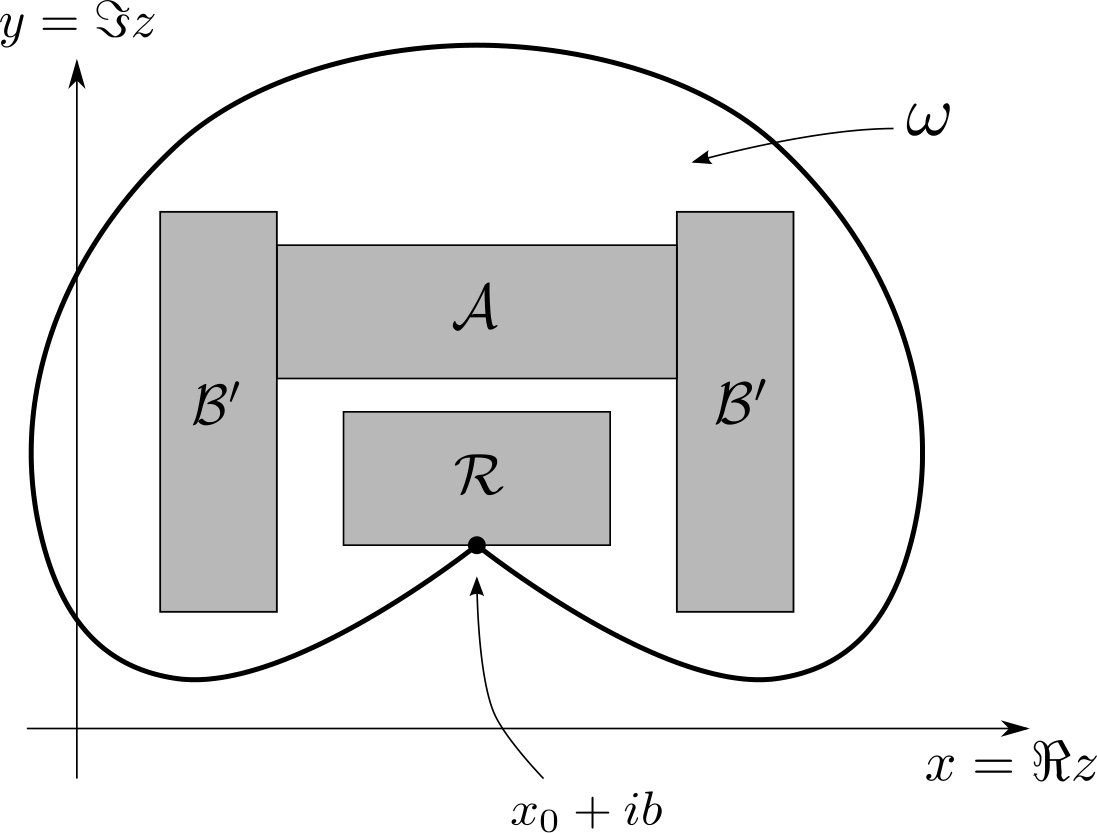 Figure 1
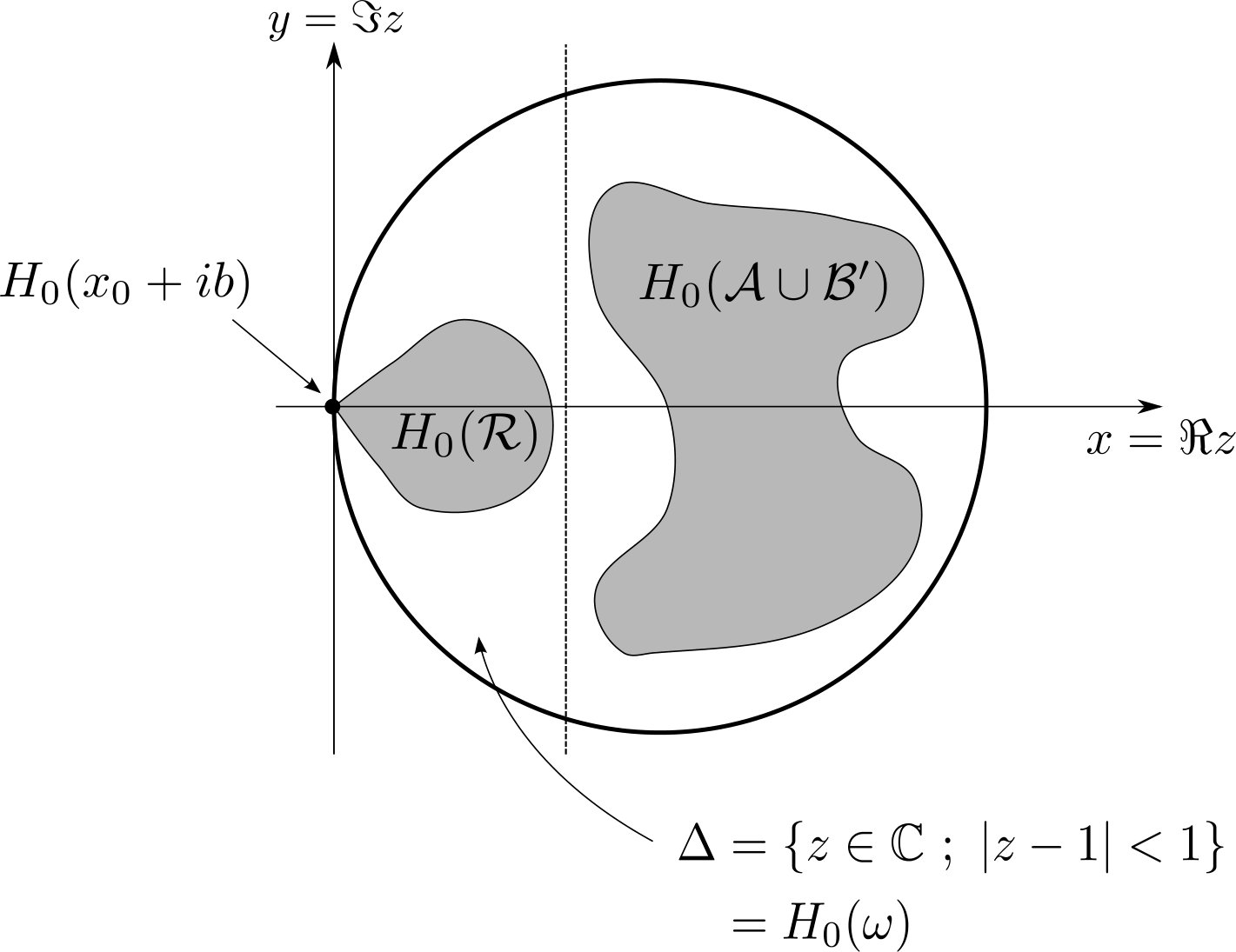 Figure 2
Peer Reviews
No public reviews on file for this paper yet. If you reviewed it on a platform where reviews are public (OpenReview, ICLR, NeurIPS, ICML), you can paste yours below so the community can read it here.
Videos
No videos yet. Explain this paper in a talk, walkthrough, or lecture? Add one.
Taxonomy
TopicsDifferential Equations and Numerical Methods · Advanced Mathematical Modeling in Engineering · Differential Equations and Boundary Problems
Regularity and solvability of linear differential operators in Gevrey spaces: omitted proofs
Gabriel Araújo
This is an addendum to [1] which aims to provide the proofs of some results in that paper (Theorem 7.5 and Proposition 9.15) which were removed from its final version. The reason for such omission is that these proofs follow quite closely others already present in the literature, with minor modifications. I make them publicly available for the sake of completeness.
1. Proof of Theorem 7.5
Our main reference here is Hörmander [4]. We will start by proving analogous versions of several auxiliary lemmas used in his book, which we did not find in the literature (especially the ones not covered by Björck [2]). Although the proofs of these lemmas are very much like their counterparts in [4], we chose to present them here for the sake of completeness. We will, however, make free use of the results already proven in [2].
For the first result in this section (which is an adaptation of [4, Theorem 10.1.5]) we recall that for each one defines, in accordance with [2] and [4],
[TABLE]
Also, for let stand for the set of functions such that
[TABLE]
so is exactly the union of all .
Lemma 1.1**.**
For each , each and each there exist and such that, for every one has
- (1)
* and* 2. (2)
.
Proof.
For let
[TABLE]
which defines and element of . Indeed, for we have
[TABLE]
Notice that
[TABLE]
where the constant on the far right (call it ) is finite, proving the first statement. A change of variables allows us to write, for ,
[TABLE]
and so we have
[TABLE]
thus implying that . ∎
Now we present a version of [4, Lemma 13.3.1].
Lemma 1.2**.**
Let and, for each , let be as in Lemma 1.1. Then for each there exists such that
[TABLE]
for every and every .
Proof.
From [2, Theorem 2.2.7] we have, for every ,
[TABLE]
so it is enough to prove the existence of a such that
[TABLE]
for every . But from the definition of the norms we have
[TABLE]
because uniformly on compact set as : this follows immediately from Lemma 1.1, which also implies that and are the same as topological vector spaces, since their norms are equivalent. ∎
Now we proceed with the proof of Theorem 7.5 from [1]. We shall not reproduce its statement here. Due to [4, Lemma 13.1.2] there exist operators with constant coefficients and functions , that are uniquely determined by the following properties:
- •
for every ;
- •
for every ;
- •
and, in ,
[TABLE]
Since we are also assuming that the coefficients of belong to one can actually show that . For every , define
[TABLE]
and select such that . Let be equal to in a neighborhood of and
[TABLE]
be a fundamental solution of , and define
[TABLE]
If has its support in then in , hence
[TABLE]
Now let be such that
[TABLE]
and define . We claim the existence of such that for each and each the equation
[TABLE]
has a unique solution . Proceeding as in [4], we provisionally assume this claim and define the operator as
[TABLE]
where is the unique solution of (1.2), which yields a linear map : we will prove that if is small enough then this operator has the properties described in the statement above.
First, since equation (1.2) implies that , so in
[TABLE]
thus proving the first property claimed. Second, let be such that and : putting in the left-hand side of (1.2) we get
[TABLE]
that is, solves equation (1.2), and by uniqueness we have
[TABLE]
This proves the second property of .
The last property of – the estimate between norms – will follow from the proof of our claim about existence and uniqueness of solutions of equation (1.2), so now we proceed in that direction. For every we define a linear map by the expression
[TABLE]
which is well-defined for every , for is compactly supported. Let and, for , let as in Lemma 1.2 (in which case , with equivalent defining norms): according to it, there exists such that if one has
[TABLE]
as long as (recall that for every according to [1, Lemma 7.4]. Now, since and there are constants such that
[TABLE]
for every , so if we define we have that
[TABLE]
for every : therefore
[TABLE]
and thus continuously. Now [4, Lemma 13.3.2] allows us to choose such that
[TABLE]
for every . We stress that such a choice is independent of , and hence
[TABLE]
for every . We conclude that is invertible, which means that equation (1.2) has a unique solution whenever , which must have compact support for reasons already mentioned. We need one more lemma to finish this argument.
Lemma 1.3**.**
Let . Every belongs to for some .
Proof of Lemma 1.3.
For , [2, Theorem 1.8.14] ensures, among other things, the existence of constants and such that
[TABLE]
Of course we can assume , so defines an element of and
[TABLE]
so (i.e. ) no matter what is. ∎
Now we turn back to the deduction of estimate (7.2) in the statement of the theorem (see [1]). Let and take the unique solution of (1.2): by (1.3) we have
[TABLE]
thus
[TABLE]
where we used Lemma 1.2 again. On the other hand, Lemma 1.1 ensures that the norms and are equivalent: an explicit calculation actually shows that
[TABLE]
In the same manner one obtains
[TABLE]
so now we have
[TABLE]
∎
2. Proof of Proposition 9.15
In this section we follow very closely the arguments in [3, pp. 53–56]; this is indeed the “Gevrey version” of them. Again, the reader is referred to our main article for the statement of Proposition 9.15, which we shall not recall here.
We assume that and are such that and : the other case (i.e. the opposite choice of signs) can be treated analogously. First of all, compactness of ensures the existence of a constant (which does not depend on ) such that
[TABLE]
Fix some and define
[TABLE]
which belongs, for instance, to since is a real-analytic map. Denoting by
[TABLE]
the projection onto the -variable, we have since is cylindrical, and so
[TABLE]
This observation allows us to define
[TABLE]
which belongs to and, recalling that over we have an identification we can define as the (unique) component of in that direct sum. We claim that if the support of is conveniently chosen we can achieve i.e. will be a section of . Indeed, without extra assumptions we have
[TABLE]
However
[TABLE]
hence
[TABLE]
is a section of over : if we can prove that is also a section of then our claim will follow. This is where the choice of (or, rather, its support) kicks in: we can choose it so that this summand is actually zero.
Indeed, let and and define the strip
[TABLE]
From the definition of we have
[TABLE]
and if then
[TABLE]
So if we choose such that then . In particular, choosing yields
[TABLE]
Since we already had
[TABLE]
for by hypothesis, we must have and disjoint, hence vanishes in . We conclude that .
We introduce a new parameter (to be specified later) and let be such that and
[TABLE]
Let also be defined as
[TABLE]
hence
[TABLE]
is a section of with coefficients. Since we have that
[TABLE]
the latter being a compact subset of if we choose sufficiently small: in that case . It follows from all the definitions that
[TABLE]
We remark that the first identity follows from the fact that is a section of (so its wedge with is zero) and that the correct sign in the last identity is irrelevant for our purposes: we are only interested in studying the vanishing of their integrals. Also, recalling that and that if , it is clear that if we further impose that then on , and hence
[TABLE]
Now notice that
[TABLE]
We will now assume that is non-negative, and define as
[TABLE]
which clearly satisfies
[TABLE]
A simple calculation also shows that since contains then it also contains . Letting we conclude that
[TABLE]
hence
[TABLE]
We claim that, for the choices above, is compactly supported in . Indeed, since we have and thus
[TABLE]
the latter a compact subset of , while the former clearly contains the support of , hence our claim. It then follows from Stokes’s Theorem that
[TABLE]
which in turn implies
[TABLE]
But notice that
[TABLE]
where the first summand is zero since : this follows from the fact that and , and thus implies that
[TABLE]
Now we are going to impose further restrictions on . Recall that , meaning that for all : by compactness, there exists such that
[TABLE]
Once again we shrink so that , and thus , which allows us to choose such that
[TABLE]
If we further assume that
[TABLE]
then it follows from the definition of that
[TABLE]
For and we then have
[TABLE]
which implies that
[TABLE]
holds whenever and .
Now recall that is a cylindrical open set centered at the origin, hence there exists an open interval centered at [math] such that . Hence
[TABLE]
defines a function which allows us to write
[TABLE]
for such that and . It is also clear that
[TABLE]
and therefore
[TABLE]
where
[TABLE]
if we assume nonzero: equivalence (9.5) from [1] is proven.
We now turn to the second part of the statement: we will prove that if we shrink as well as the difference (but keeping fixed) then there exists such that
[TABLE]
Recall that , and from (2.2) and (2.1) we have
[TABLE]
and thus
[TABLE]
We denote by the latter set above, and also define the quantities
[TABLE]
as well as the following subsets of the complex plane
[TABLE]
We claim that . In order to check this, notice first that since is a section of we have
[TABLE]
hence, clearly,
[TABLE]
On the other hand
[TABLE]
which, together, ensure that is contained in the union of the sets below:
[TABLE]
Clearly, maps into . Also, if we have
[TABLE]
and from the definitions of , , and we have , proving our claim.
For a better visualization of the argument, we define the sets
[TABLE]
(which contains ) and which, on the one hand, contains , and, on the other hand, does not intercept (see Figure 1). It is clear that there exists a bounded open set , which is connected and simply connected, such that:
- (1)
it contains and , except for the point ; 2. (2)
its boundary is a Jordan curve that contains the point ; and 3. (3)
is connected.
Let stand for the unit open disc centered at : a result due to Carathéodory ensures the existence of a homeomorphism which is a biholomorphism between interiors, and we can assume without loss of generality that (see Figure 2). In particular, for every except for . Since is a compact set, there exists such that
[TABLE]
Also, if we further shrink and choose sufficiently close to (so that is “thin” in the -direction) then
[TABLE]
Finally, Mergelyan’s Theorem allows us to approximate by an entire function such that
[TABLE]
thus setting finishes the proof. ∎
The reference list from the paper itself. Each links out to its DOI / PubMed record.
- 1[1] G. Araújo. Regularity and solvability of linear differential operators in Gevrey spaces. Math. Nachr. , 291:729–758, 2018.
- 2[2] G. Björck. Linear partial differential operators and generalized distributions. Ark. Mat. , 6:351–407 (1966), 1966.
- 3[3] P. D. Cordaro and F. Treves. Homology and cohomology in hypo-analytic structures of the hypersurface type. J. Geom. Anal. , 1(1):39–70, 1991.
- 4[4] L. Hörmander. The analysis of linear partial differential operators. II , volume 257 of Grundlehren der Mathematischen Wissenschaften [Fundamental Principles of Mathematical Sciences] . Springer-Verlag, Berlin, 1983. Differential operators with constant coefficients.