Robust deblending of simultaneous source seismic data
Aaron Stanton, Keith Wilkinson

TL;DR
This paper introduces a robust inversion-based deblending algorithm for simultaneous source seismic data that effectively handles situations where traditional incoherence assumptions fail, improving seismic data quality.
Contribution
The paper presents a novel robust deblending method that overcomes limitations of existing techniques by handling noise, amplitude variations, and non-random shooting times.
Findings
Effective removal of interference in challenging conditions
Improved seismic data quality in noisy environments
Robustness to non-ideal acquisition scenarios
Abstract
Simultaneous source seismic acquisition is an efficient method of seismic surveying that can considerably reduce the cost of high density seismic acquisition. The method results in overlapping records, or interference, that must be removed prior to subsequent processing. Deblending methods typically rely on the incoherence of the blending noise relative to the underlying signal. There are many common situations where these assumptions break down, for instance, when the underlying signal contains noise or erratic amplitudes, or when shooting times are not sufficiently random. We present a robust inversion based deblending algorithm that can overcome these challenges.
Click any figure to enlarge with its caption.
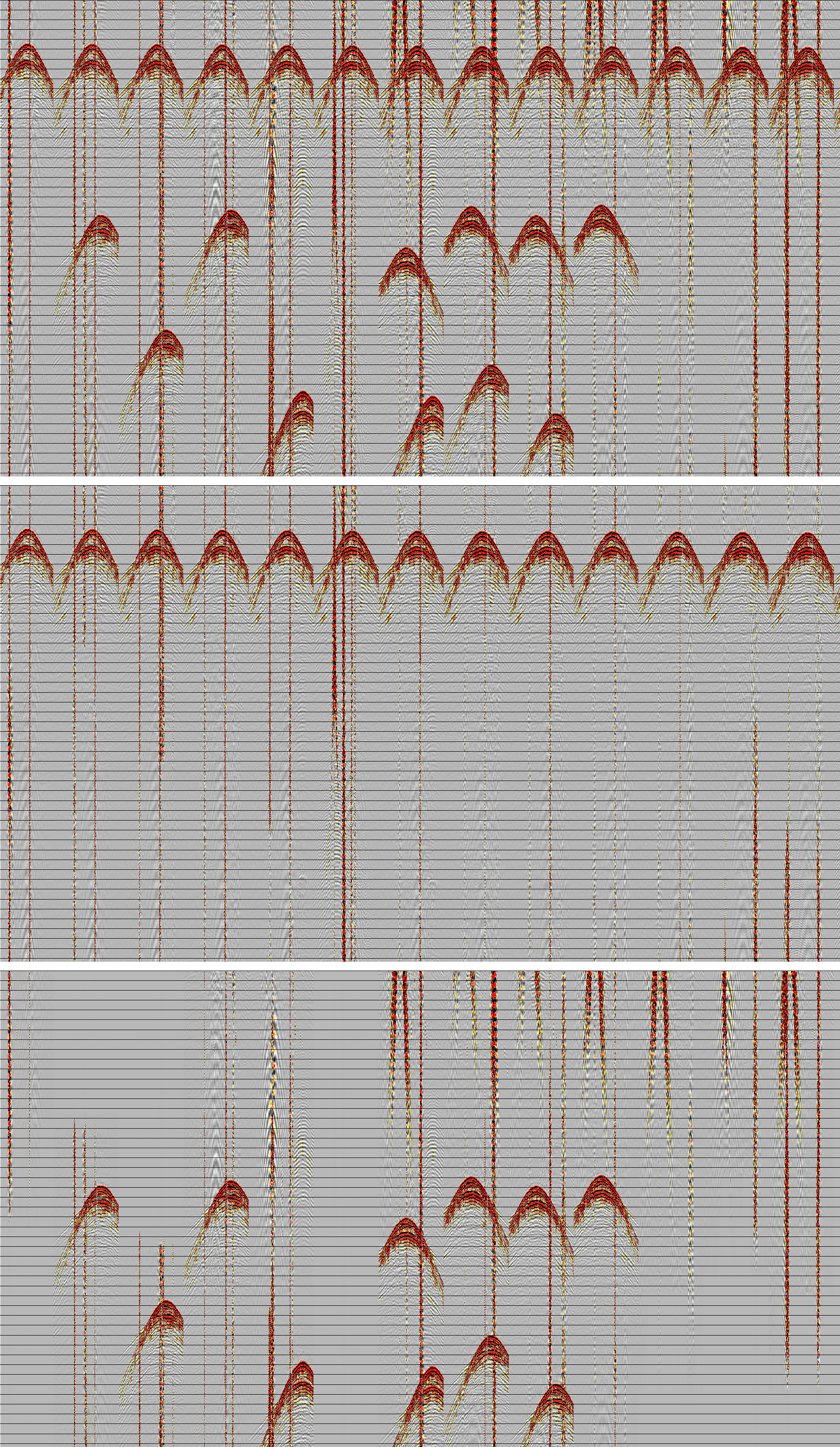 Figure 1
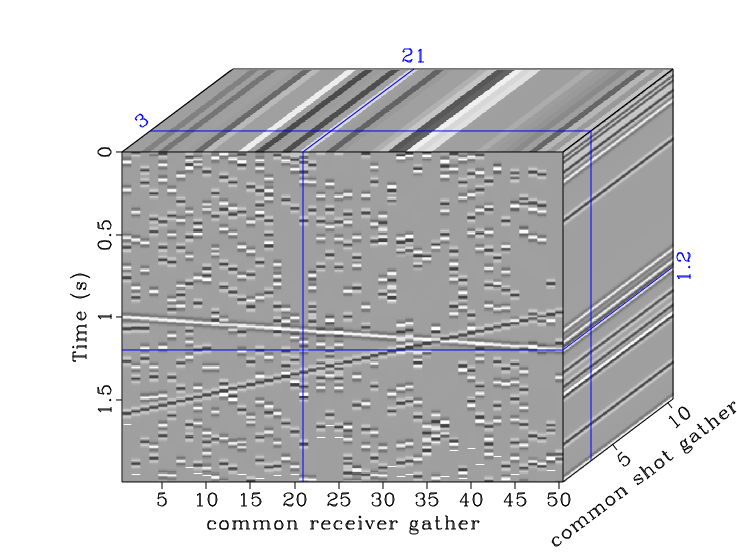 Figure 2
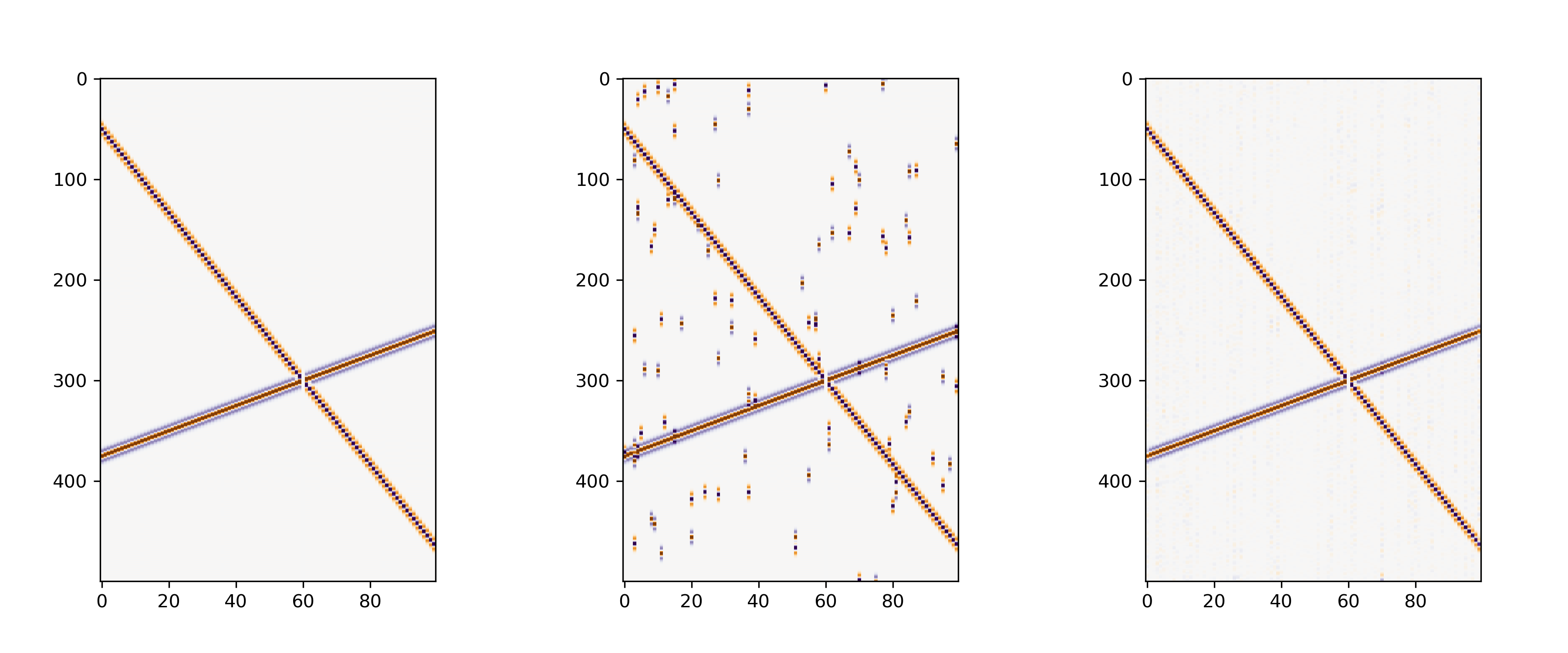 Figure 3
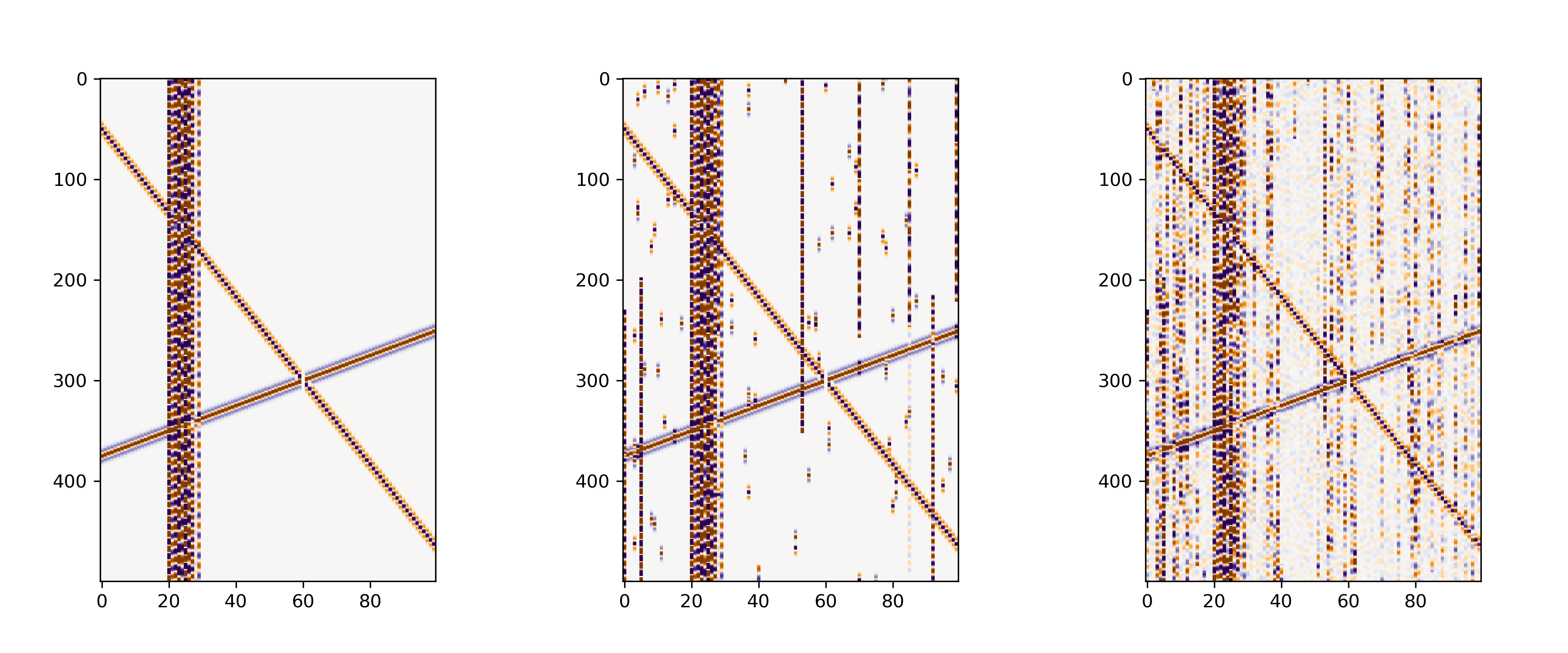 Figure 4
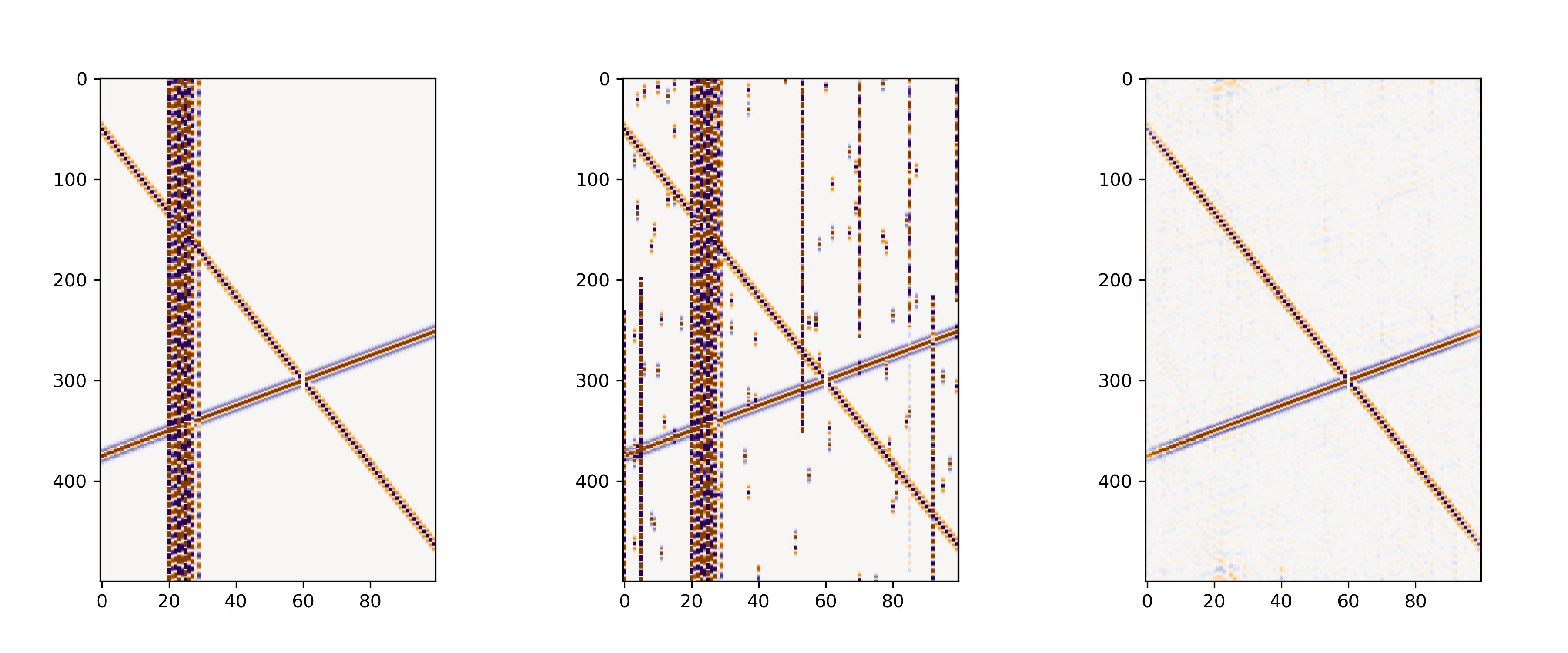 Figure 5
Peer Reviews
No public reviews on file for this paper yet. If you reviewed it on a platform where reviews are public (OpenReview, ICLR, NeurIPS, ICML), you can paste yours below so the community can read it here.
Videos
No videos yet. Explain this paper in a talk, walkthrough, or lecture? Add one.
Taxonomy
TopicsSeismic Imaging and Inversion Techniques · Seismic Waves and Analysis · Reservoir Engineering and Simulation Methods
Robust deblending of simultaneous source seismic data
Aaron Stanton and Keith Wilkinson
Key Seismic Solutions Ltd.
Calgary, Alberta
Abstract
Simultaneous source seismic acquisition is an efficient method of seismic surveying that can considerably reduce the cost of high density seismic acquisition. The method results in overlapping records, or interference, that must be removed prior to subsequent processing. Deblending methods typically rely on the incoherence of the blending noise relative to the underlying signal. There are many common situations where these assumptions break down, for instance, when the underlying signal contains noise or erratic amplitudes, or when shooting times are not sufficiently random. We present a robust inversion based deblending algorithm that can overcome these challenges.
Introduction
Blended seismic acquisition reduces the time needed to acquire a seismic survey by allowing neighbouring shots to overlap in time and space. Numerous studies have shown the effectiveness of the approach to provide high trace density data at a reduced cost (Berkhout,, 2008; Howe et al.,, 2009; Li et al.,, 2017). A number of approaches to process blended data have been proposed. Dragoset et al., (2009) apply conventional processing to blended data, relying on the power of stacking to attenuate much of the noise, while Martinez and Crews, (2005) rely on the orthogonality of source encodings to separate data by correlation. Others have applied conventional noise attenuation methods to separate blended data (Gülünay and Pattberg,, 2001). More recently, a number of inversion based methods have been proposed to deblend seismic data (Abma et al.,, 2015).
Inversion based deblending attempts to solve an underdetermined inverse problem. It is typically constrained by a regularization term that enforces coherency in the model. A variety of techniques have been used to enforce coherency in deblending, such as F-K filtering (Doulgeris et al.,, 2010), median filtering (van Borselen et al.,, 2012), rank reduction (Cheng and Sacchi,, 2015), as well as thresholding in the F-K and Radon domains (Abma et al.,, 2015; Ibrahim and Sacchi,, 2013). These methods all rely on the property that shot interference is incoherent in some domain (for example common receiver gathers). The incoherence of the interference depends on random relative shooting times between adjacent traces. If neighbouring traces in a domain are from the same source (for example in common shot gathers), the shot interference will be coherent from trace to trace and these methods will fail to isolate signal from interference. This property is illustrated in Figure 1. The interference appears incoherent within a common receiver gather, and coherent within a common shot gather.
The underlying assumptions of inversion based deblending are as follows:
the unblended data is coherent 2. 2.
the interference is incoherent in some domain
There are a number of reasons why assumption 1 could be violated, particularly in land acquisition. For example, variable source coupling, statics, surface waves, as well as survey noise all violate the assumption that the unblended data are coherent. It is important to make a distinction between survey noise and background noise. Berkhout and Blacquiere, (2013) point out that simultaneous shooting can provide a higher signal to noise ratio than conventional shooting simply because a shorter survey time will result in less recorded background noise relative to the total amount of signal imparted into the earth. While background noise may be reduced by this effect, in general we see an increase in the amount of survey noise in simultaneous shooting due to increased surface activity. Another obvious violation of assumption 1 are occasional shots with a vibrator malfunction. This could be a partial sweep or a shot that does not generate a start time. These shots represent a form of signal that clearly violates the blending system of equations. Lastly, spatio-temporal coherence in shooting patterns throughout a survey could unintentionally violate assumption 2. This can be particularly problematic for the deblending of low frequencies (Abma,, 2014).
Violating these assumptions in the deblending process leads to loss of signal and poor attenuation of interference. We aim to overcome some of these challenges by incorporating robust statistics into the deblending problem.
Theory
Blended seismic data, , can be modeled using unblended data, , via
[TABLE]
where is a blending operator that shifts and sums the data. Because compresses the data, solving for by minimizing is an ill-posed problem. The problem may be further constrained by including a regularization term that penalizes incoherent energy in the model, and a robust weighting function that mitigates the effects of outliers in the data
[TABLE]
where is a diagonal matrix of weights and is an operator that emphasizes sharp contrasts in the model (for example a spatial derivative matrix). While this objective function better constrains the problem while mitigating the effects of outliers in the data, it leads to two practical challenges. First, the operator must be strong enough to penalize interference in the model, but gentle enough to recover subtle features in the model; and second, the operator must be designed to suppress outliers in the data, but without the aid of spatial information ( represents blended data in continuous receiver gather format). We propose an alternative objective function,
[TABLE]
where is a projection that mitigates the effects of erratic amplitudes, and is a projection that enforces lateral coherency. This cascaded projection is able to enforce lateral coherency in the data while also overcoming the effects of erratic amplitudes and spatial aliasing that may result from coherency in shooting times. A number of different approaches can be used for the projection (for example median filtering), as well as for the projection (for example prediction filtering, rank reduction or thresholding in the Fourier, Radon, or Curvelet domains). To minimize Equation 3 we use an accelerated gradient descent approach (Nesterov,, 1983).
Synthetic data example
To illustrate the effect of erratic amplitudes consider the synthetic data shown in Figure 2. The data consist of a 100 trace common receiver gather with two dipping events (left panel). After blending the interference appears incoherent due to the delays between shots (middle panel). Deblending of these data using a conventional approach leads to satisfactory results (right panel). Now consider data with added erratic noise as shown in Figure 3 (left panel). After blending the data consist of blended signal as well as blended erratic noise (middle panel). After deblending (right panel) we see much of the interference resulting from coherent events has been attenuated, while the interference resulting from the erratic noise has been smeared throughout the data. Robust deblending (Figure 4) is able to mitigate the effects of the outliers.
Field data example
We applied deblending to a land dataset in the Western Canadian Sedimentary Basin. The data have an average blend fold of approximately 2 when measured over a +/- 5 second window. Figure 5 (top) shows a selection of input shot records prior to deblending. The input data show several distinct types of blending interference including interference from earlier shots, interference from later shots, harmonic noise from later shots, as well as erratic noise. The data after deblending (middle) show a high level of blend noise attenuation, while the difference panel (bottom) shows a high level of signal preservation.
Conclusions
Inversion based deblending is an effective method to supress simultaneous source interference, but special care must be taken to mitigate the effects of erratic amplitudes. In this abstract we presented a robust deblending approach that is able to achieve a high level of blend noise attenuation while preserving much of the underlying signal.
Acknowledgements
We thank our colleagues Jeff Deere, Richard Bale and Mark Jiang for their advice and technical support and Key Seismic Solutions Ltd. for permission to publish. The seismic data used in the example was generously provided by an anonymous client.
The reference list from the paper itself. Each links out to its DOI / PubMed record.
- 1Abma, (2014) Abma, R., 2014, Shot scheduling in simultaneous shooting, in SEG Technical Program Expanded Abstracts 2014: Society of Exploration Geophysicists, 94–98.
- 2Abma et al., (2015) Abma, R., D. Howe, M. Foster, I. Ahmed, M. Tanis, Q. Zhang, A. Arogunmati, and G. Alexander, 2015, Independent simultaneous source acquisition and processing: Geophysics, 80 , WD 37–WD 44.
- 3Berkhout, (2008) Berkhout, G., 2008, Changing the mindset in seismic data acquisition: The Leading Edge, 27 , 924–938.
- 4Berkhout and Blacquiere, (2013) Berkhout, G., and G. Blacquiere, 2013, Effect of noise in blending and deblending: Geophysics, 78 , A 35–A 38.
- 5Cheng and Sacchi, (2015) Cheng, J., and M. D. Sacchi, 2015, Separation and reconstruction of simultaneous source data via iterative rank reduction: Geophysics, 80 , V 57–V 66.
- 6Doulgeris et al., (2010) Doulgeris, P., A. Mahdad, and G. Blacquiere, 2010, Separation of blended data by iterative estimation and subtraction of interference noise, in SEG Technical Program Expanded Abstracts 2010: Society of Exploration Geophysicists, 3514–3518.
- 7Dragoset et al., (2009) Dragoset, W., H. Li, L. Cooper, D. Eke, J. Kapoor, I. Moore, and C. Beasley, 2009, A 3d wide-azimuth field test with simultaneous marine sources: Presented at the 71st EAGE Conference and Exhibition incorporating SPE EUROPEC 2009.
- 8Gülünay and Pattberg, (2001) Gülünay, N., and D. Pattberg, 2001, Seismic interference noise removal, in SEG Technical Program Expanded Abstracts 2001: Society of Exploration Geophysicists, 1989–1992.