Non-standard interactions in $\tau^- \to (\pi^-\eta,\pi^-\pi^0)\nu_{\tau}$ decays
G. L\'opez Castro

TL;DR
This paper investigates how semileptonic tau decays can constrain non-standard weak interactions, showing current data limits scalar and tensor NS interactions, with future experiments promising tighter bounds.
Contribution
The study provides new constraints on non-standard scalar and tensor interactions in tau decays, highlighting the potential of upcoming measurements to improve these limits.
Findings
Experimental data constrains NS scalar and tensor interactions.
Future measurements at Belle II can tighten these constraints.
Improved form factor knowledge enhances sensitivity to NS interactions.
Abstract
Originally thought as clean processes to study the hadronization of the weak currents, semileptonic tau lepton decays can be useful to set constraints on non-standard (NS) weak interactions. In this talk we summarize our recent studies on the effects of NS interactions in decays. We find that experimental data on these decays provide strong constraints on NS scalar and tensor interactions, respectively. Further improved measurements at Belle II and a better knowledge of necessary tensor and scalar form factors will allow to set limits on these NS interactions that are similar or better to contraints obtained from other low-energy processes.
Click any figure to enlarge with its caption.
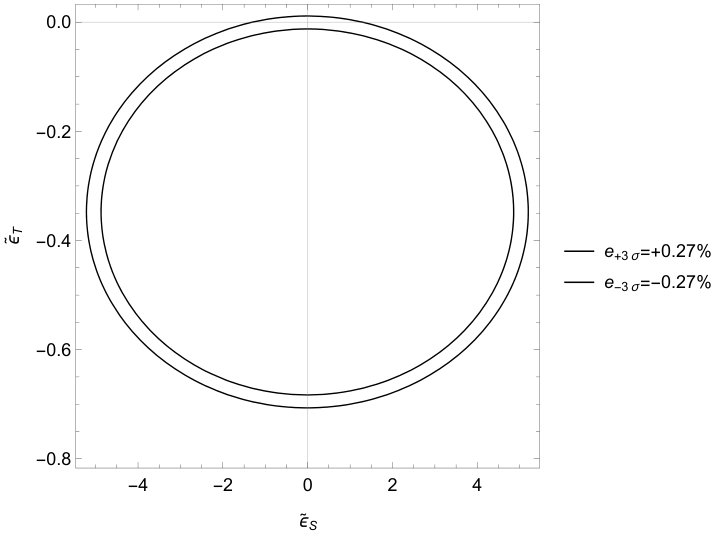 Figure 1
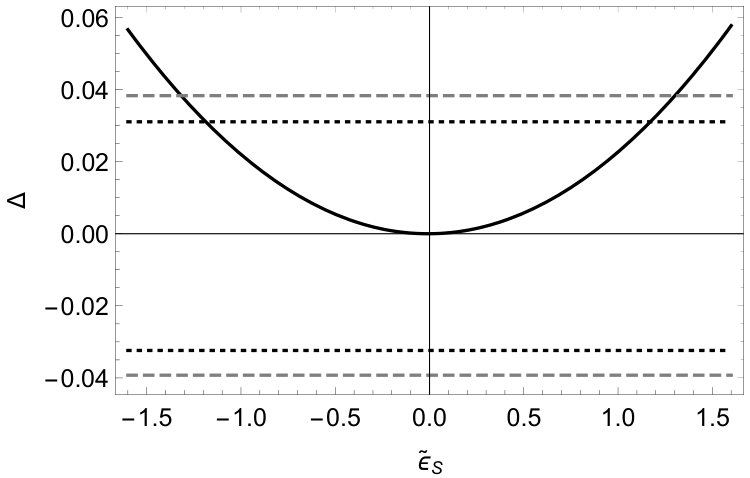 Figure 2
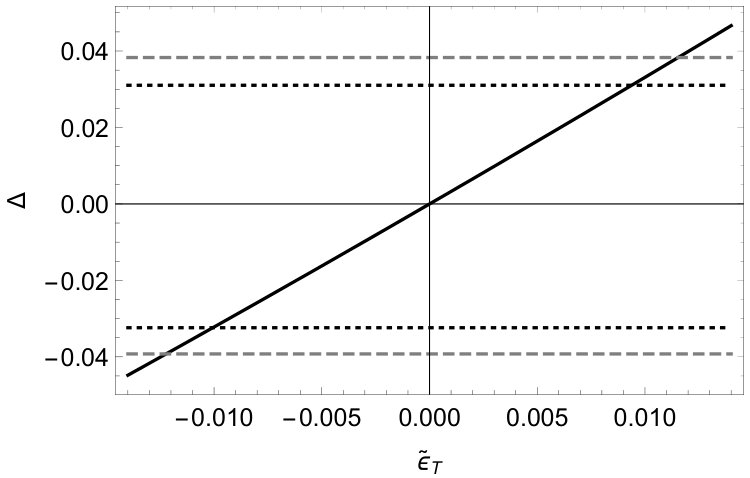 Figure 3
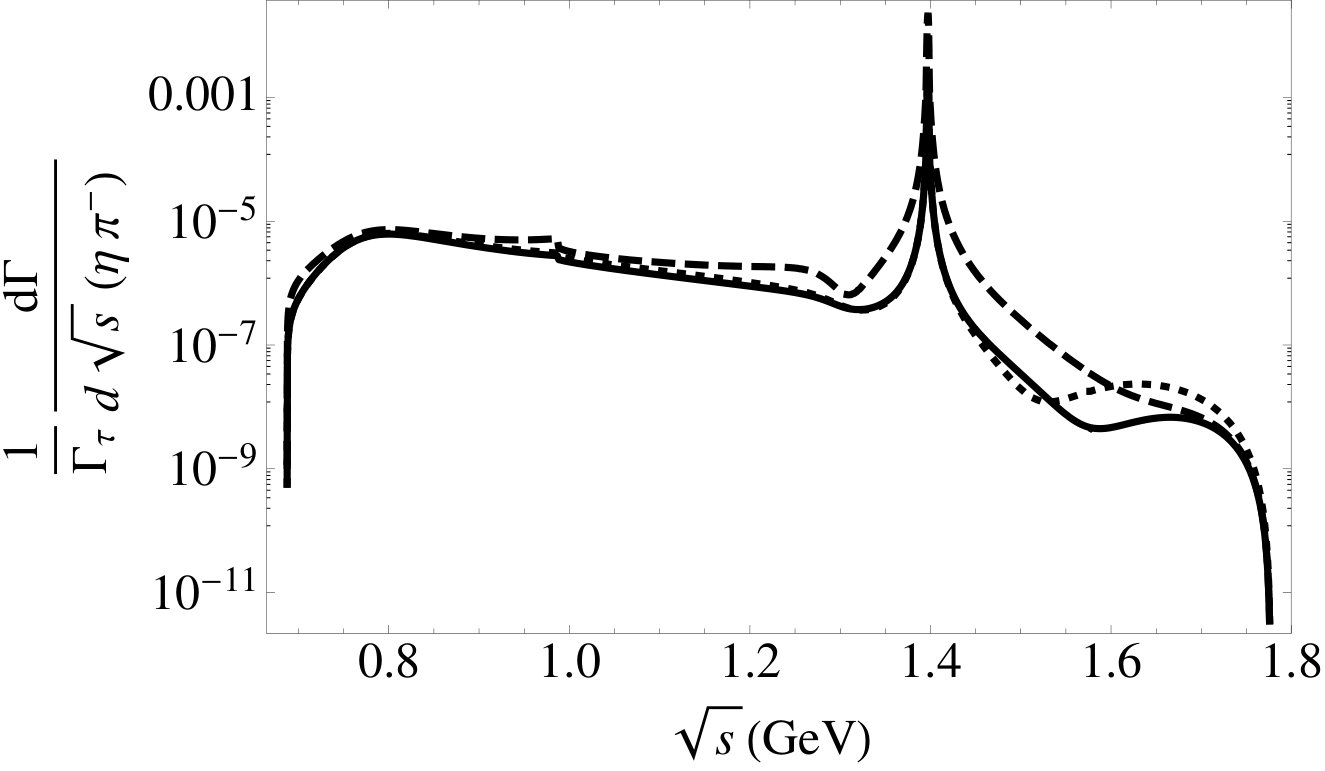 Figure 4
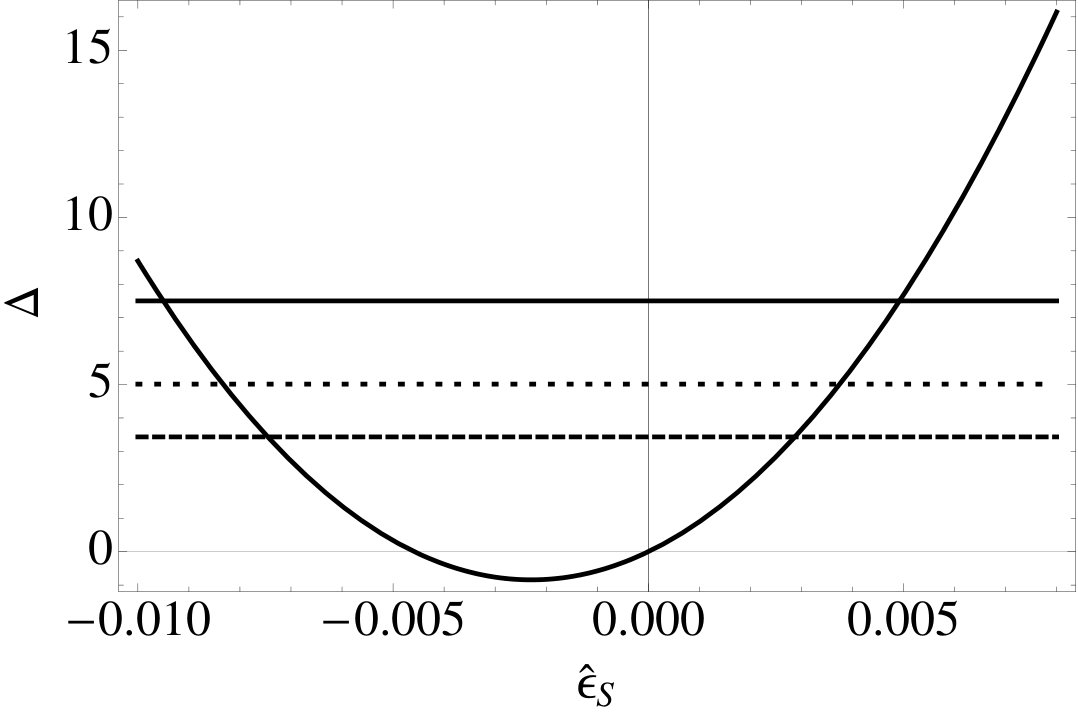 Figure 5
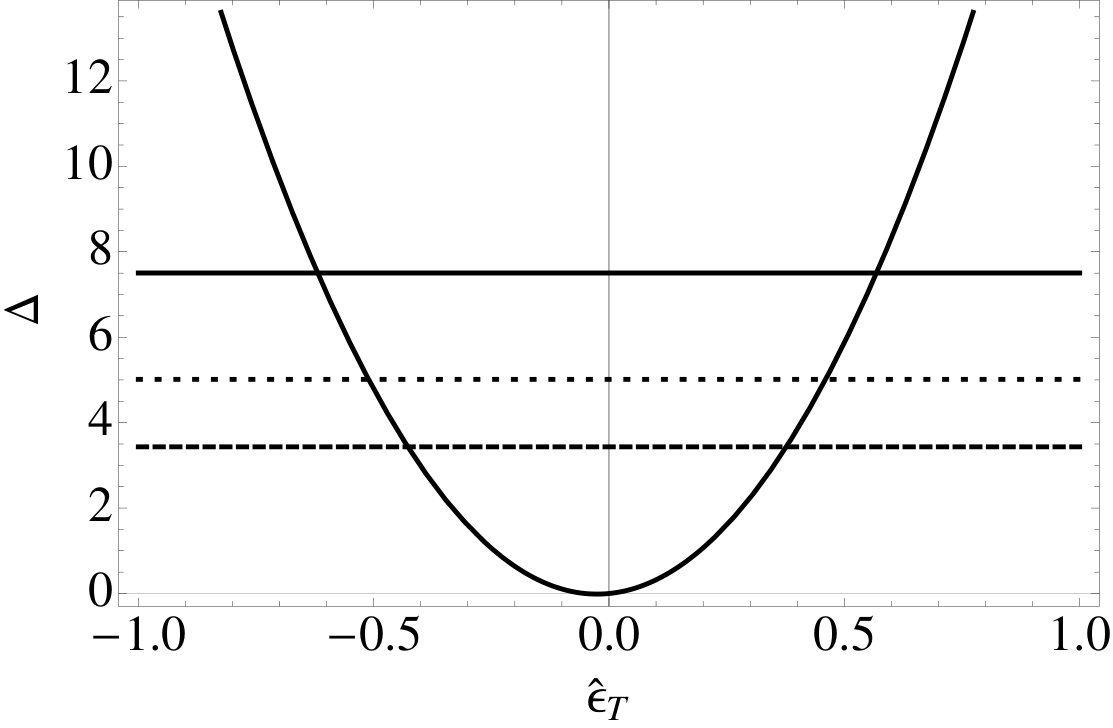 Figure 5
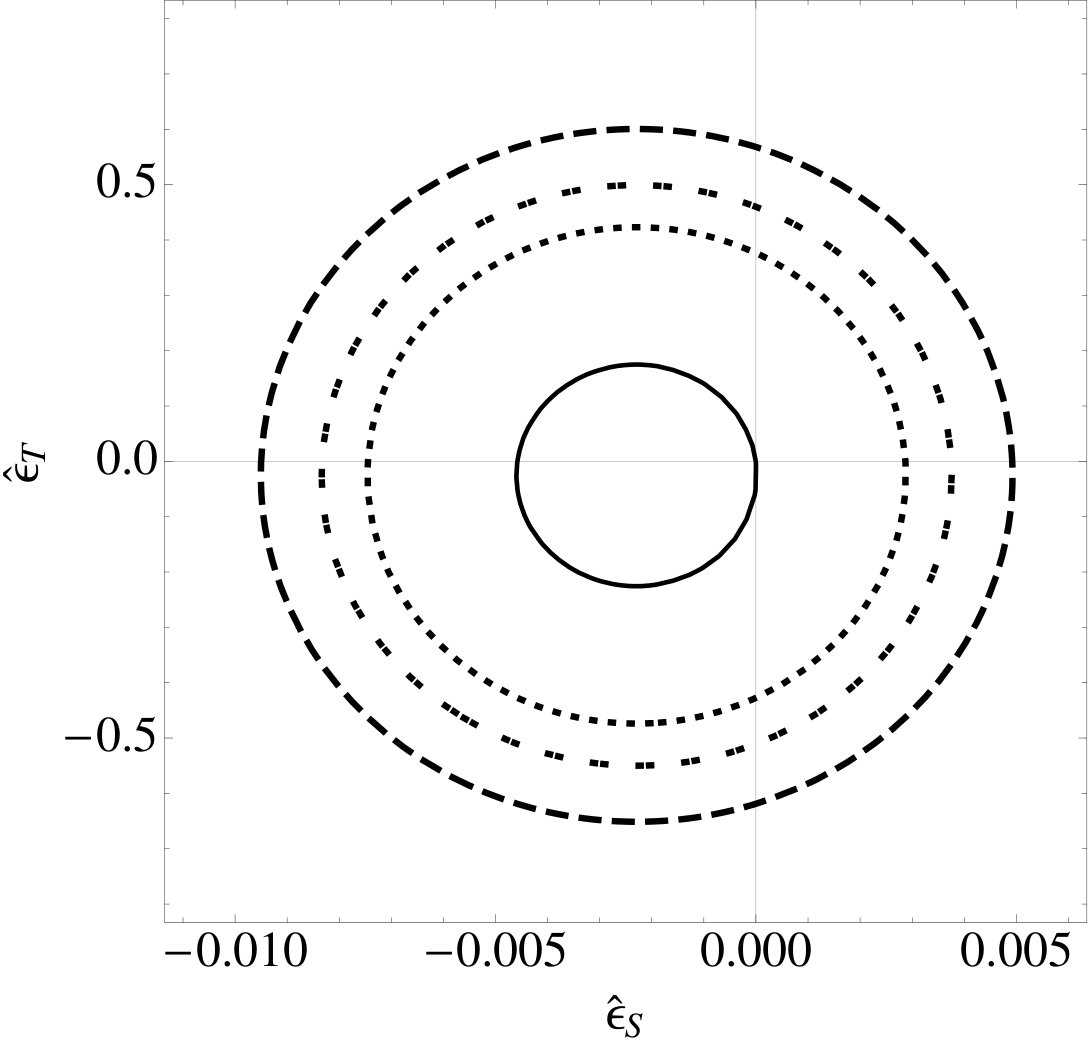 Figure 7
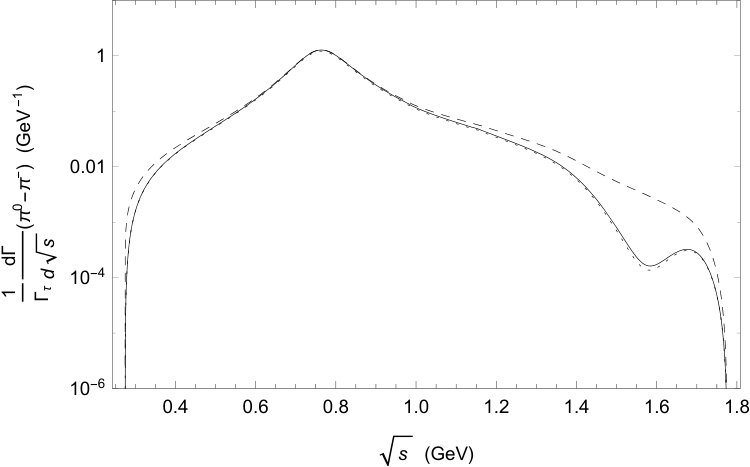 Figure 8
 Figure 9
| channel | ||||
|---|---|---|---|---|
Peer Reviews
No public reviews on file for this paper yet. If you reviewed it on a platform where reviews are public (OpenReview, ICLR, NeurIPS, ICML), you can paste yours below so the community can read it here.
Videos
No videos yet. Explain this paper in a talk, walkthrough, or lecture? Add one.
Taxonomy
TopicsParticle physics theoretical and experimental studies · Quantum Chromodynamics and Particle Interactions · Computational Physics and Python Applications
Non-standard interactions in decays
G. López Castro 1
1 Departamento de Física, Centro de Investigación y de Estudios Avanzados, Apartado Postal 14-740, C.P. 07000 Ciudad de México, México
email: [email protected]
*Proceedings for the 15th International Workshop on Tau Lepton Physics,
Amsterdam, The Netherlands, 24-28 September 2018*
scipost.org/SciPostPhysProc.Tau2018
Abstract
Originally thought as clean processes to study the hadronization of the weak currents, semileptonic tau lepton decays can be useful to set constraints on non-standard (NS) weak interactions. In this talk we summarize our recent studies on the effects of NS interactions in decays. We find that experimental data on these decays provide strong constraints on NS scalar and tensor interactions, respectively. Further improved measurements at Belle II and a better knowledge of necessary tensor and scalar form factors will allow to set limits on these NS interactions that are similar or better to contraints obtained from other low-energy processes.
Contents
1 Introduction
Exclusive semileptonic decays of tau leptons provide a clean environment to study the hadronization of the charged weak currents up to the tau lepton mass scale [1]. For the same reason, they are useful also to study the properties of light hadronic resonances and to extract information on the quark mixing parameters and . On the other hand, if we rely on the Standard Model (SM) description of the hadronization processes, semileptonic decays of tau leptons can be very useful in constraining the effects of non-standard (NS) interactions. Here we summarize some of our recent contributions [2, 3] which show that scalar and tensor interactions can be sensitively constrained from semileptonic decays, respectively.
The interest of ( a pseudoscalar meson) semileptonic decays in the search of effects of New Physics is not new. Forty years ago it was suggested [4] that scalar (second class) currents [5], if they exist, could manifest in decays through the dominance of the scalar meson. Despite strong experimental efforts, this process has not been observed so-far and the experimental upper limit of (95% c.l.) [6, 7] has been set on its branching ratio. On the theoretical side, the different predictions for this decay spread over an order or magnitude (see Table 1 for recent predictions [8]-[12]), mainly because experimental information on the scalar form factor associated to the system is not available.
Non-standard scalar and tensor interactions have been invoked as a mechanism to induce CP violation in [13]. Although these currents can indeed generate CP violation in semileptonic tau decays, tensor currents can not be responsible [14] for the large CP rate asymmetry reported by BABAR [15].
This contribution presents a summary of our recent studies on the effects of non-standard scalar and tensor interactions in [2] and [3] decays. These two decays are very sensitive probes of NS interactions and provide complementary constraints on both types of NS couplings. A different approach to NS interactions in tau semileptonic decays has been presented in [16] with similar conclusions.
2 NS interactions in semileptonic tau lepton decays
Effects of New Physics degrees of freedom in strangeness-conserving semileptonic lepton decays should manifest in the following dimension-6, lepton-flavor conserving effective Lagrangian [17]:
[TABLE]
where the subindices in the lepton fields refers to Left- or Right-handed chiralities and we have defined , () and . The SM is recovered when the dimensionless Wilson coefficients vanish.
By including the effects of short-distance electroweak corrections (its numerical value is not relevant here as it cancels in our observables), the decay amplitude for semileptonic (with ) reads:
[TABLE]
where we have defined the leptonic currents and the hadronic matrix elements:
[TABLE]
where we have defined .
The four form factors involved in hadronic matrix elements depend on the momentum transfer squared , within the kinematical range . Owing to the divergence of the vector current , we can relate the true and induced scalar form factors, in such a way that the former can be absorbed into the later giving rise to the following effective scalar form factor [2, 3] to be replaced in the induced form factor in the decay amplitude 2
[TABLE]
It is interesting to note that the effects of NS scalar interactions grow linearly with . On the other hand, in the case of final states, where the induced scalar form factor is suppressed by isospin breaking, the effects of new scalar interactions is of in the isospin breaking parameter. This allows us to expect that decays will be sensitive to tensor interactions, while the isospin breaking violating decays can be sensitive to scalar interactions. In this way, both decays play a complementary role in constraining the non-standard scalar and tensor interactions.
3 Form factor models
Following the redefinition in Eq. (4), each of the tau lepton decays under consideration depend upon three form factors. While experimental information is available for the vector form factor below the tau mass scale, this is not the case for the scalar and tensor form factors. For the later we have to rely on theoretical models subject to general basic constraints. For definiteness hereafter we will refer only to the and decay channels of tau leptons.
3.1 Vector form factor
The vector form factor for decay can be written as [12], where corresponds to the mixing ‘angle’ and corresponds to the weak pion vector form factor. For the later we use the expression derived [18] using from unitarized chiral perturbation theory matched to resonances where the free parameters are fixed from the pion form factor obtained from Belle data [19].
3.2 Scalar form factor
As discussed in the previous section, information on the scalar form factor is relevant only for the description of decays. The spread of predictions in Table 1 stems mainly from the different models for this form factor. In Ref [2] we have used a three-times subtracted dispersive and unitarized representation of the scalar form factor where the phase is fixed from the three coupled channel analysis that are permited in rescattering [12]. In Ref. [3] we follow the analysis of Ref. [11] for the subleading scalar form factor in the elastic approach.
3.3 Tensor form factor
The tensor form factor describing the hadronization of the tensor current is obtained (at zero recoil)[2] from the leading chiral Lagrangian (see definitions in [20]): . Based on dimensional arguments, we have estimated GeV*-1* [2], which is about a factor 5 larger than a calculation based on lattice QCD ( GeV*-1*) [21]. Since the tensor form factor has a negligible effect in decays, its precise normalization and -dependence is not very relevant.
A more precise description of the tensor form factor is required for decays. Here, a dispersive representation of the form factor [3]
[TABLE]
looks more appropriate. In the elastic approximation, the phase can be approximated by the spin-1 -resonance in the region below 1 GeV [3, 16]. For the normalization of the tensor form factor we use GeV*-1* which is estimated from the tensor charge of the pion form factor evaluated in the lattice calculation of Ref. [21].
4 Decay observables
In Refs. [2, 3] we have studied different observables (Dalit Plot, hadronic-mass and angular distributions, forward-backward asymmetries of the charged pion, decay rates) associated to the decays. Although some of them exhibit some sensitivity to the effects of NS interactions, the most sensitive turns out to be the properly normalized decay rates. Therefore, in this contribution we will focus only on the results obtained from the decay rates for the and channels.
In the rest frame of the decaying tau lepton, the hadronic mass distribution for the generic semileptonic decay is given by:
[TABLE]
where is the three-momentum of the in the rest frame of the system and
[TABLE]
with and .
The above expressions clearly illustrate the sensitivities of the two process under consideration to the effects of NS interactions. In the case of the final state the coefficient of the effective scalar form factor is very suppressed and we could expect some sensitivity to the tensor interactions. For the final state, the large mass difference between the hadrons in the final state, and the non-suppressed (by isospin breaking) scalar interactions, enhances the sensitivity of the decay rates to that NS interaction. Figure 1 illustrates the sensitivity of the hadronic mass distributions to NS interactions: for the () channel, this observable is sensitive to small effects of scalar (tensor) interactions and sizable distortions with respect to the SM contributions are observed in the region around the peak (respectively, close to the ends) of the spectrum in the case of () final states.
4.1 Decay rate
The observable in decays that is the most sensitive to the effects of non-standard interactions in our studies turns out to be the integrated rates. The partial rates can be obtained by integrating Eq. (6) over the whole kinematical range (integration over a smaller kinematic range where the effects of NS interactions are larger can enhance the sensitivity). We define the following most sensitive observable:
[TABLE]
where is the reference value computed using the form factors of Ref. [12] and can be identified with the SM decay rate.
The coefficients of the quadratic form in Eq. (8) are displayed in Table 2:
It is clear that decay rates of processes involving the () meson are sensitive to the effects of NS scalar interactions while the dominant and the most precisely measured semileptonic channel is more sensitive to the effects of NS tensor interactions.
4.2 Constraints on NS interactions
Figure 2 exhibits the dependence of on a single NS coupling (the other one is set to zero). This is compared (upper-half of the plot) to the upper limits on obtained from different -factory experiments [22, 23, 24] which are represented by horizontal lines as indicated in Figure 2. In the lower-half of the plot, a comparison is shown with the three standard-deviations error band of the measured branching fraction of [19] and with an hypothetical future improved measurement at Belle II [25]. In addition to improved measurements of branching fractions, better inputs for scalar and tensor form factors is required in order to further constraint (or discover!) NS couplings.
Figure 3 displays the constraints on both NS couplings derived from Eq. (8). The regions of parameter space for NS interactions are similar to the one in Figure 2. Although only an upper limit is available for tau decays into channel, combining the information on the allowed and suppressed semileptonic decays leads to very strong constraints on NS interactions, favouring couplings of for scalar and tensor couplings. The constraints that can be obtained from available measurements on the branching fractions without imposing an external input on one of the NS couplings are shown as intervals in Table 3. On the other hand, if we use the constraint from [17], we obtain [3]
[TABLE]
from a fit to the spectrum of decay measured by Belle [19], which is competitive to results obtained from other low-energy measurements [26] (although they are obtained from processes involving different leptonic currents).
These results show that NS scalar couplings are strongly constrained from the upper limits on , while NS tensor couplings are better constrained from the precision measurement of . They are similar to constraints obtained from other low energy observables as shown in Table 3, keeping in mind that different leptons are involved.
5 Conclusions
Non-standard interactions arising from heavier degrees of freedom can manifest at low energies in semileptonic lepton decays as new four-fermion interactions characterized by a set of five () Wilson coefficients [17]. A priori these new couplings do not obey lepton universality, thus semileptonic lepton decays offer a unique framework to constrain these NS couplings in view of current data and expected future improvements at lepton factories [25].
In this talk we have presented a summary of our recent results on this subject [2, 3] (a different approach using semileptonic lepton decays that reach similar conclusions is presented in [16]). We have shown that current upper limits on the branching fraction of the rare decay, allow powerful constraints on the scalar (second class) currents due to the suppression (by approximate isospin symmetry) of the Standard Model contribution [2]. If this decay is measured at Belle II for the first time (see Ref. [27]), it will allow to improve the present constraint reported here or (hopefully) observe the effects of NS scalar coupling. On the other hand, the very precise measurements of the hadronic spectrum and the branching fraction of the decay, allow to set strong constraints on the NS tensor coupling. This is possible owing to the very strong suppression of the scalar form factor contribution in this case.
The expected improvements in the measurements/searches of these two semileptonic decays of the tau lepton at Belle II [25], will allow to set some of the stronger constraints on NS scalar and tensor interactions. Of course, this will requiere an improvement in the description of the scalar (for the ) and the tensor (for ) weak form factors. Hopefully, these expected improvements will allow to constraint the new weakly-coupled degrees of freedom to be heavier than the 10 TeV mass scale.
Acknowledgements
This work has been supported by Conacyt project CB-236394. I would like to thank Pablo Roig for several discussions, a fruitful collaboration and comments on this paper.
The reference list from the paper itself. Each links out to its DOI / PubMed record.
- 1[1] A. Pich, Precision Tau Physics , Prog. Part. Nucl. Phys. 75 , 41 (2014) doi:10.1016/j.ppnp.2013.11.002 ; M. Davier, A. Hocker and Z. Zhang, The Physics of hadronic tau decays , Rev. Mod. Phys. 78 , 1043 (2006) doi:10.1103/Rev Mod Phys.78.1043
- 2[2] E. A. Garcés, M. Hernández Villanueva, G. López Castro and P. Roig, Effective-field theory analysis of the τ − → η ( ′ ) π − ν τ → superscript 𝜏 superscript 𝜂 ′ superscript 𝜋 subscript 𝜈 𝜏 \tau^{-}\to\eta^{(\prime)}\pi^{-}\nu_{\tau} decays , JHEP 1712 , 027 (2017) doi:10.1007/JHEP 12(2017)027
- 3[3] J. A. Miranda and P. Roig, Effective-field theory analysis of the τ − → π − π 0 ν τ → superscript 𝜏 superscript 𝜋 superscript 𝜋 0 subscript 𝜈 𝜏 \tau^{-}\to\pi^{-}\pi^{0}\nu_{\tau} decays , JHEP 11 , 038 (2018) doi.org/10.1007/JHEP 11(2018)038
- 4[4] C. Leroy and J. Pestieau, Tau Decay and Second Class Currents , Phys. Lett. 72B , 398 (1978). doi:10.1016/0370-2693(78)90148-X
- 5[5] S. Weinberg, Charge symmetry of weak interactions , Phys. Rev. 112 , 1375 (1958). doi:10.1103/Phys Rev.112.1375
- 6[6] P. del Amo Sanchez et al. [Ba Bar Collaboration], Studies of τ − → η K − ν → superscript 𝜏 𝜂 superscript 𝐾 𝜈 \tau^{-}\to\eta K^{-}\nu and τ − → η π − ν τ → superscript 𝜏 𝜂 superscript 𝜋 subscript 𝜈 𝜏 \tau^{-}\to\eta\pi^{-}\nu_{\tau} at Ba Bar and a search for a second-class current , Phys. Rev. D 83 , 032002 (2011) doi:10.1103/Phys Rev D.83.032002
- 7[7] M. Tanabashi et al. [Particle Data Group], Review of Particle Physics , Phys. Rev. D 98 , 030001 (2018). doi:10.1103/Phys Rev D.98.030001
- 8[8] S. Nussinov and A. Soffer, Estimate of the branching fraction tau —¿ eta pi- nu(tau), the a(0)-(980), and non-standard weak interactions , Phys. Rev. D 78 , 033006 (2008) doi:10.1103/Phys Rev D.78.033006