The Higgs Mode of Planar Coupled Spin-Ladders and its Observation in C$_9$H$_{18}$N$_2$CuBr$_4$
Tao Ying, Kai P. Schmidt, Stefan Wessel

TL;DR
This paper combines neutron scattering experiments and large-scale quantum Monte Carlo simulations to analyze the Higgs mode in a two-dimensional quantum spin ladder compound, revealing its evolution from classical to quantum limits.
Contribution
It provides a detailed theoretical analysis of the Higgs mode in planar coupled spin-ladders, matching experimental data and tracing its evolution across different quantum regimes.
Findings
Quantitative agreement with neutron scattering data
Evolution of the Higgs mode from bound state to overdamped continuum
Identification of the continuous transition from classical to quantum behavior
Abstract
Polarized inelastic neutron scattering experiments recently identified the amplitude (Higgs) mode in CHNCuBr, a two-dimensional near-quantum-critical spin-1/2 two-leg ladder compound, which exhibits a weak easy-axis exchange anisotropy. Here, we theoretically examine the dynamic spin structure factor of such planar coupled spin-ladder systems using large-scale quantum Monte Carlo simulations. This allows us to provide a quantitative account of the experimental neutron scattering data within a consistent quantum spin model. Moreover, we trance the details of the continuous evolution of the amplitude mode from a two-particle bound state of coupled ladders in the classical Ising limit all the way to the quantum spin-1/2 Heisenberg limit with fully restored SU(2) symmetry, where it gets overdamped by the two-magnon continuum in neutron scattering.
Click any figure to enlarge with its caption.
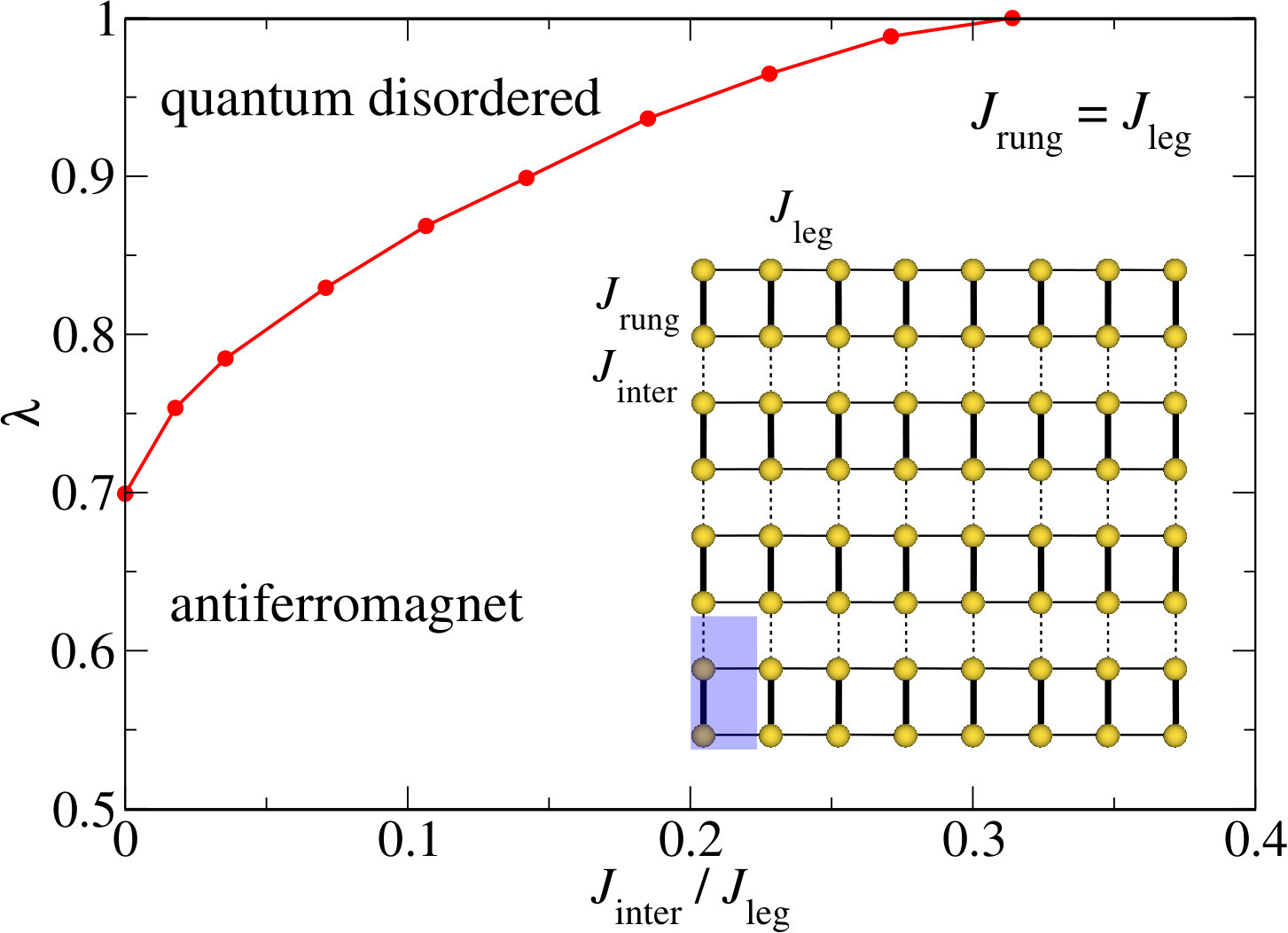 Figure 1
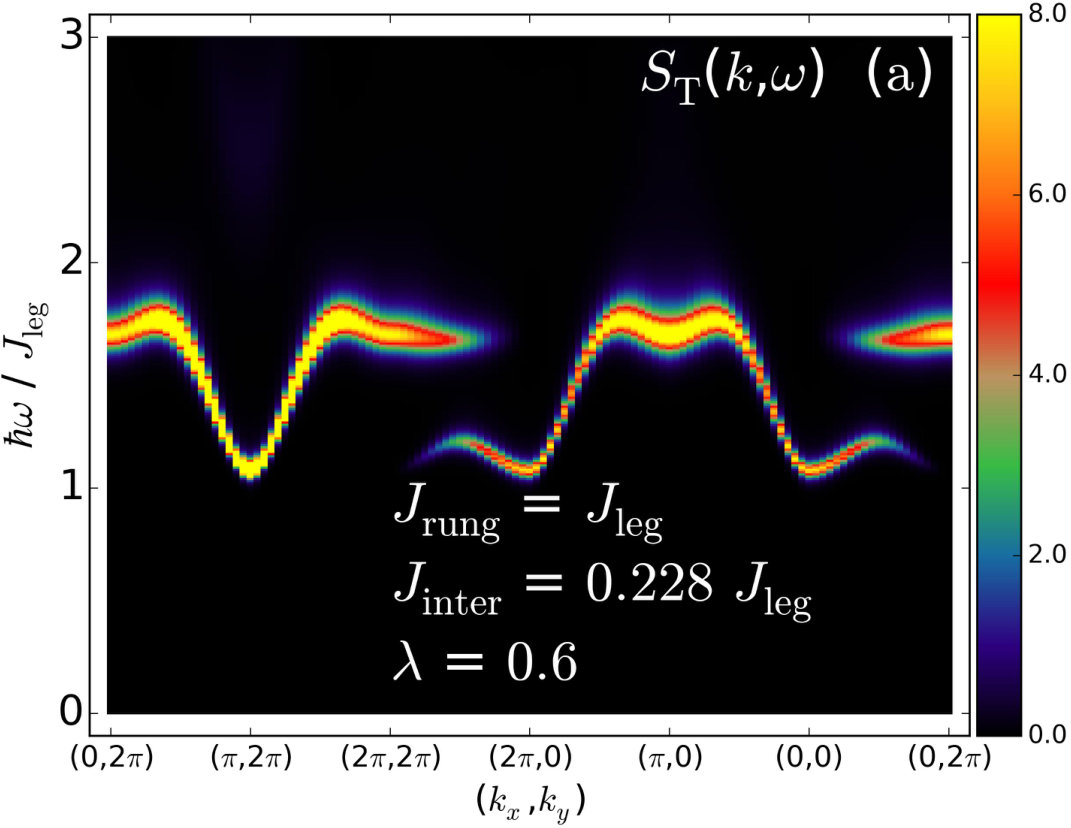 Figure 2
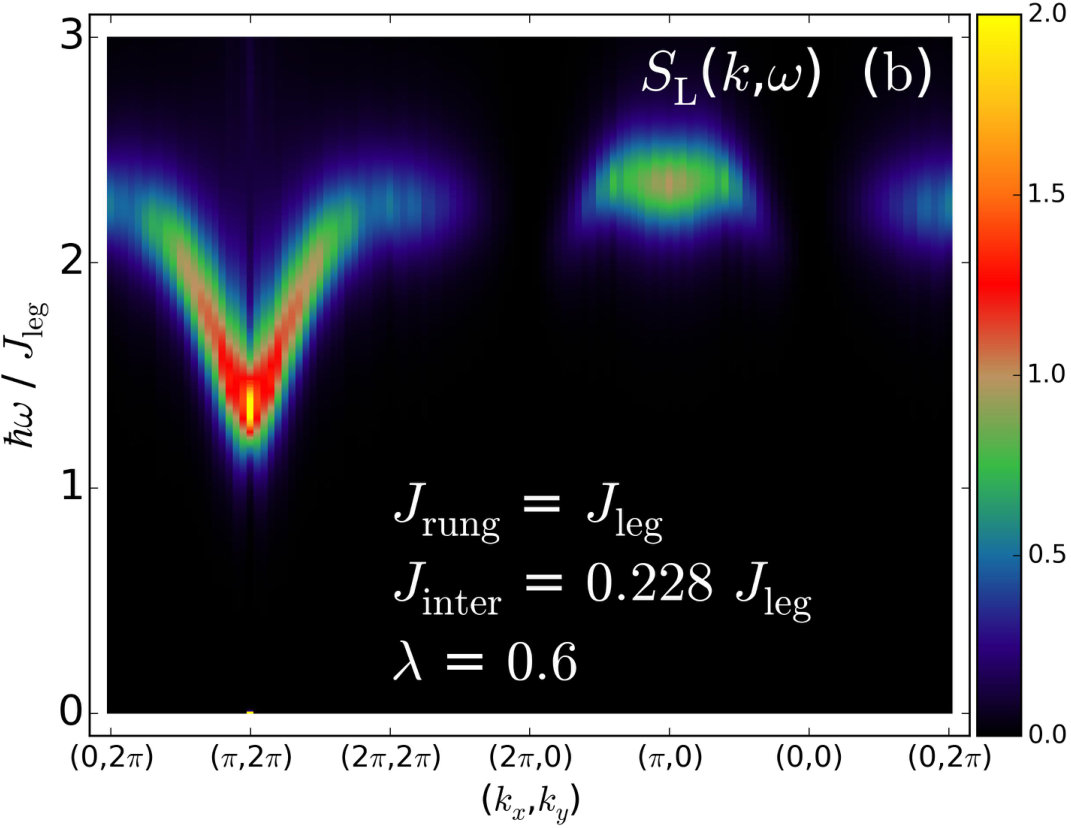 Figure 2
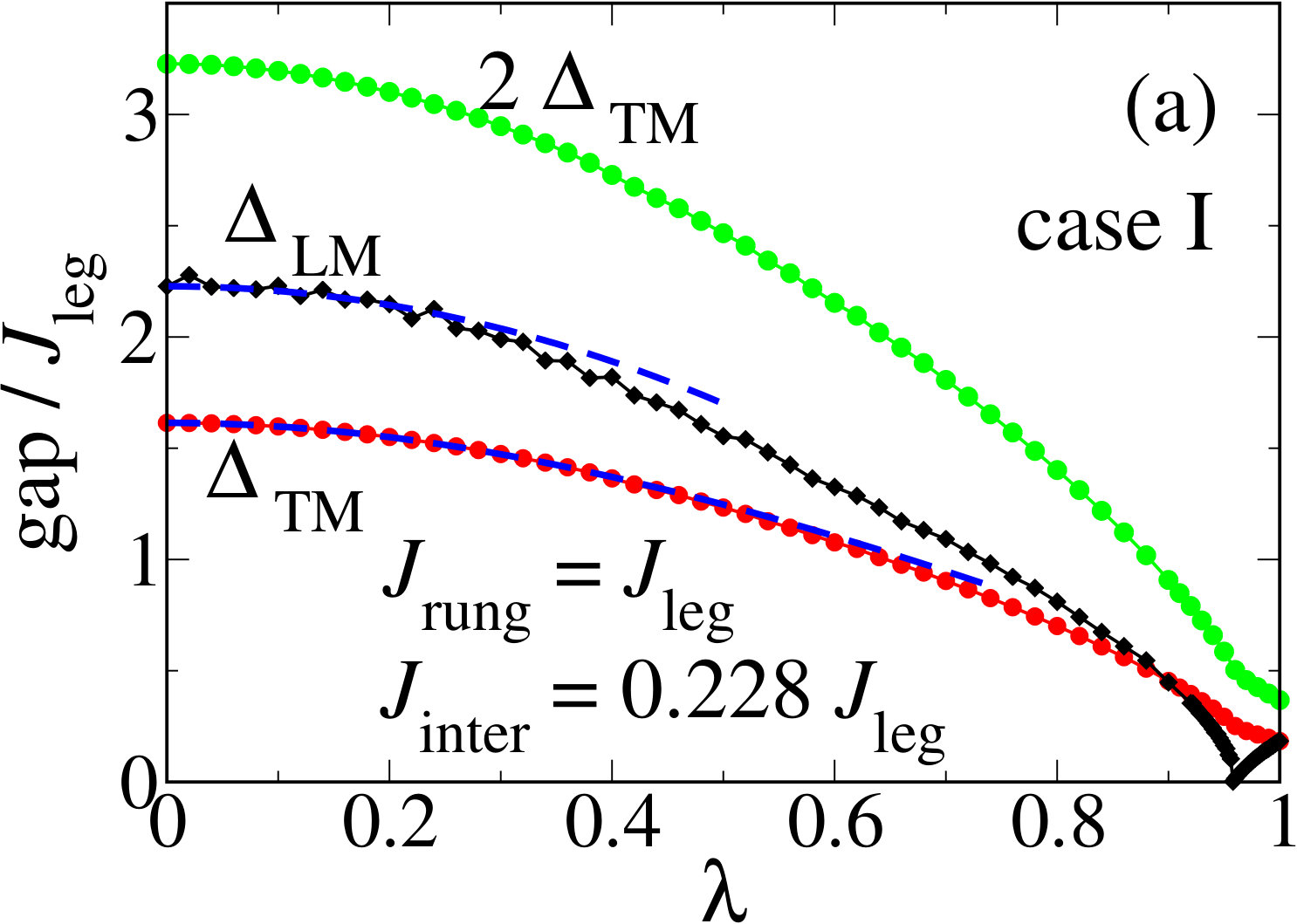 Figure 3
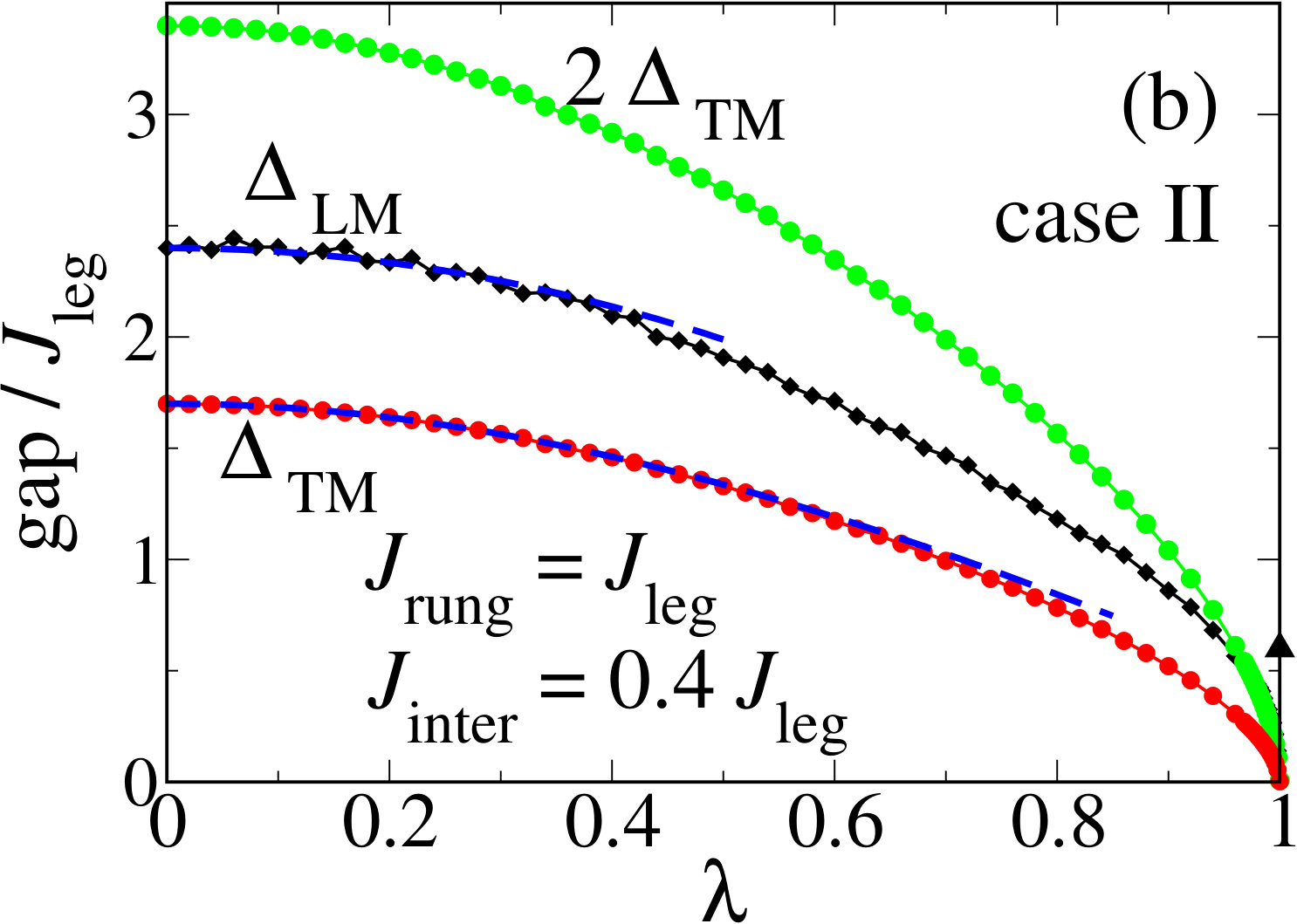 Figure 3
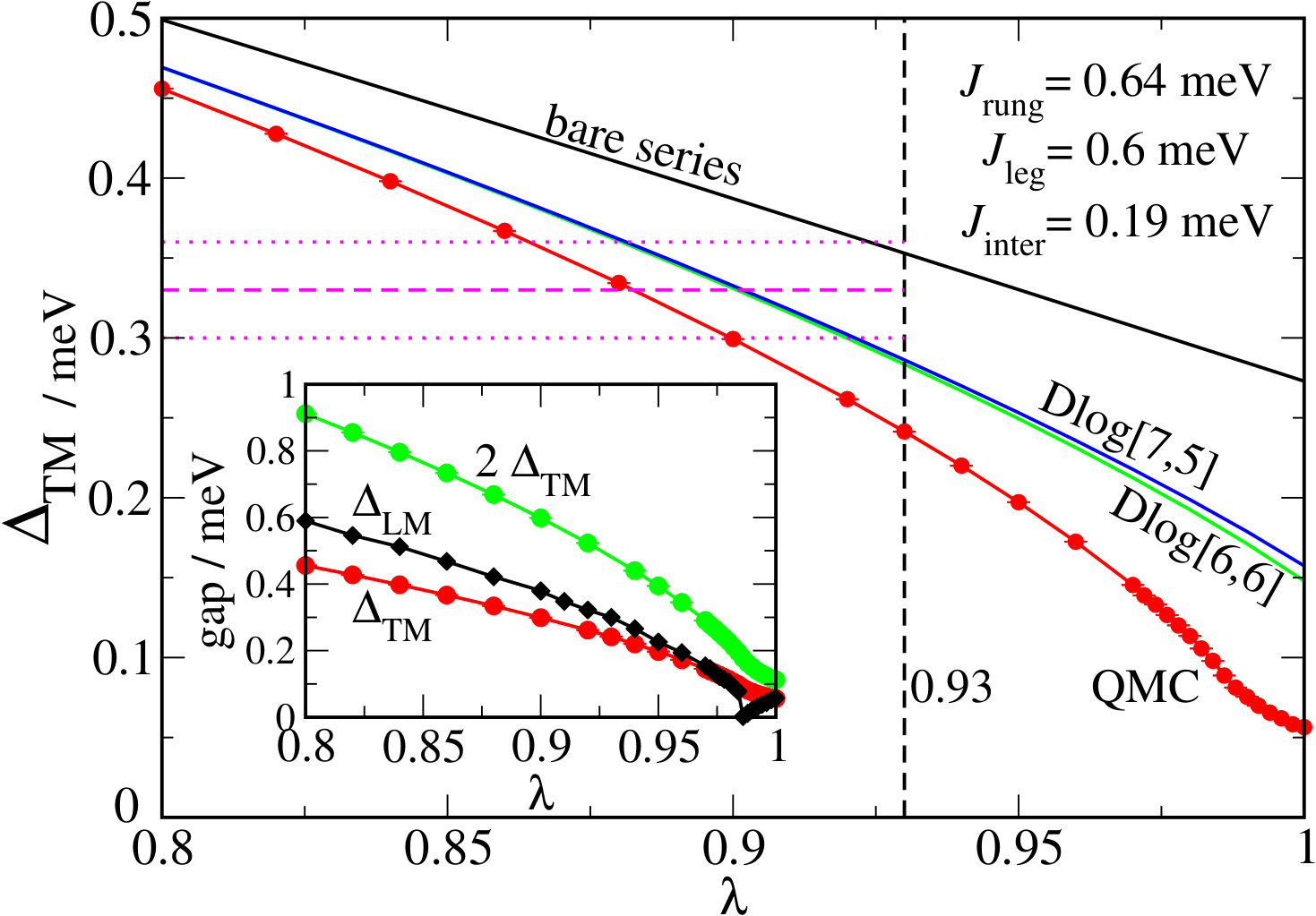 Figure 4
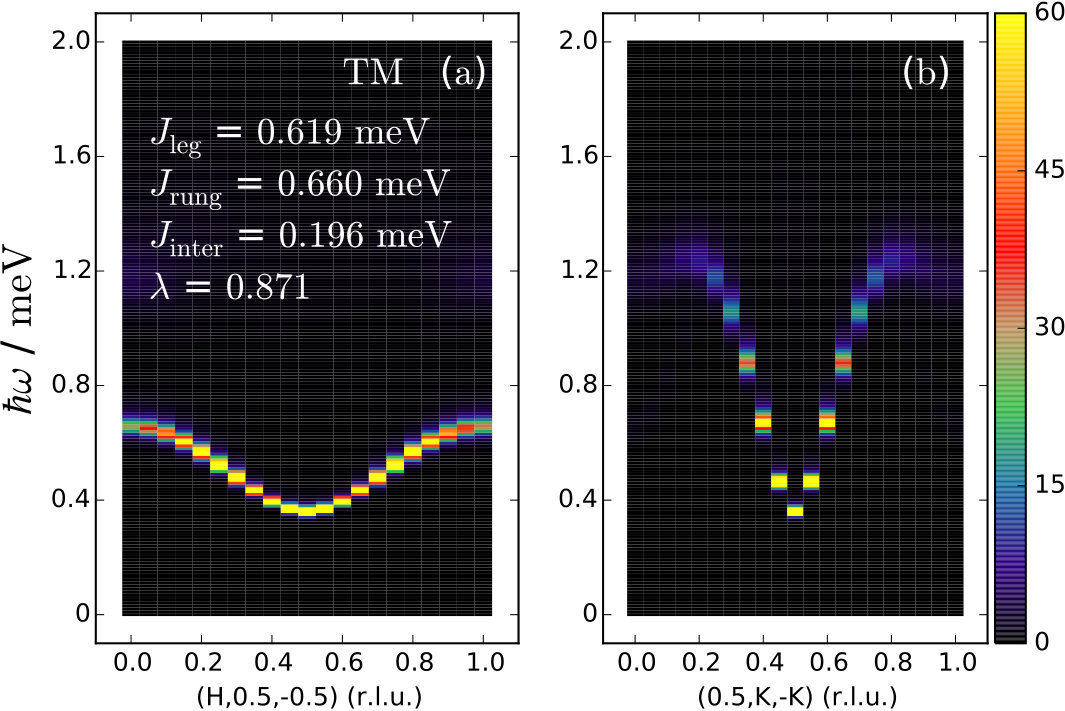 Figure 5
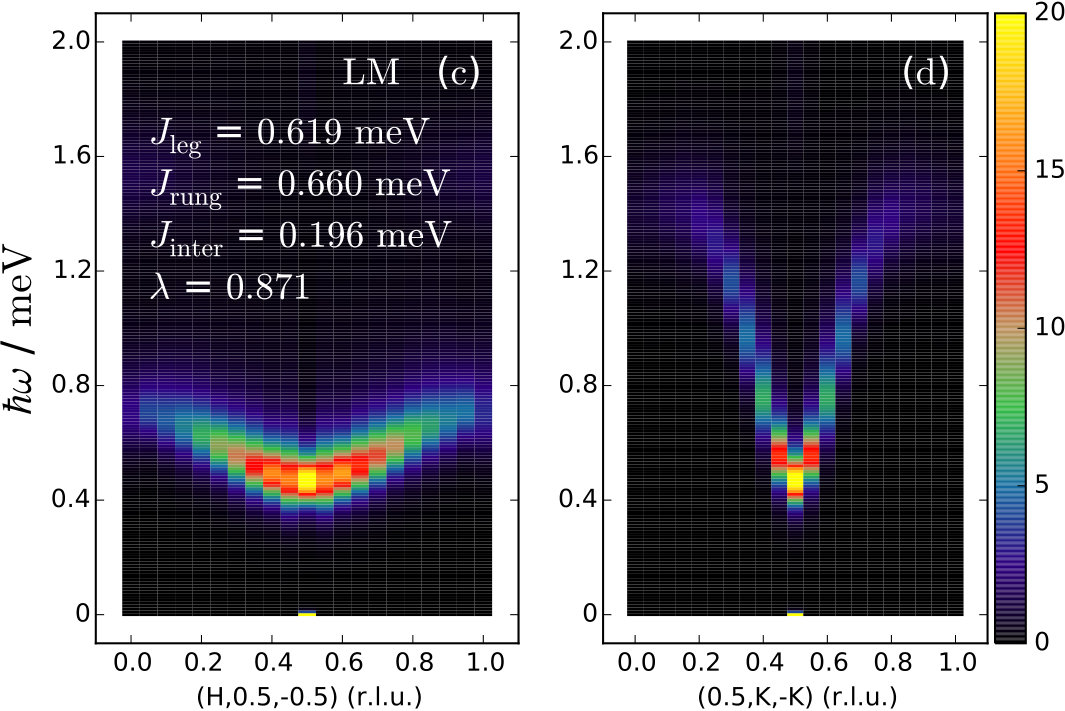 Figure 5
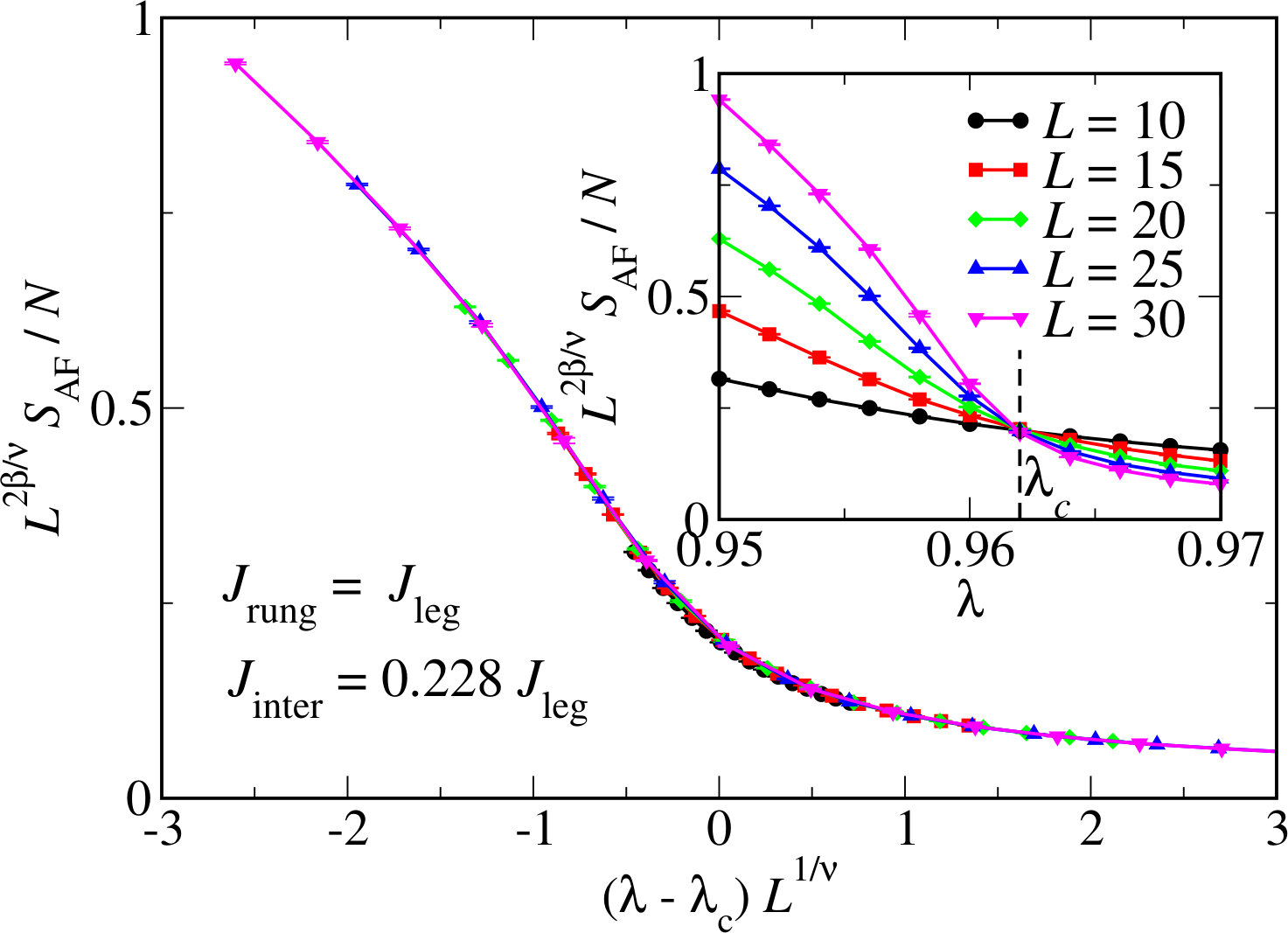 Figure 9
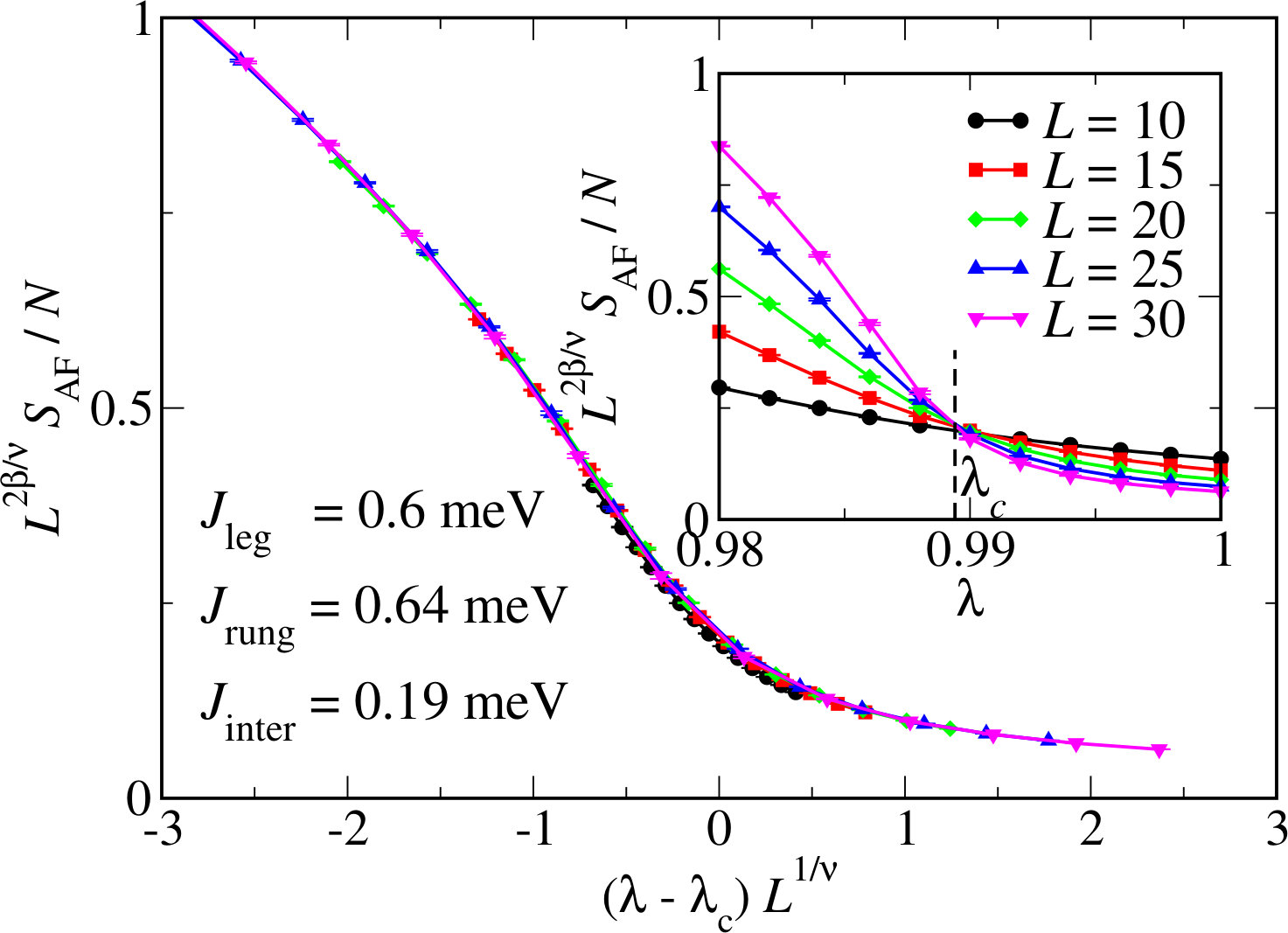 Figure 10
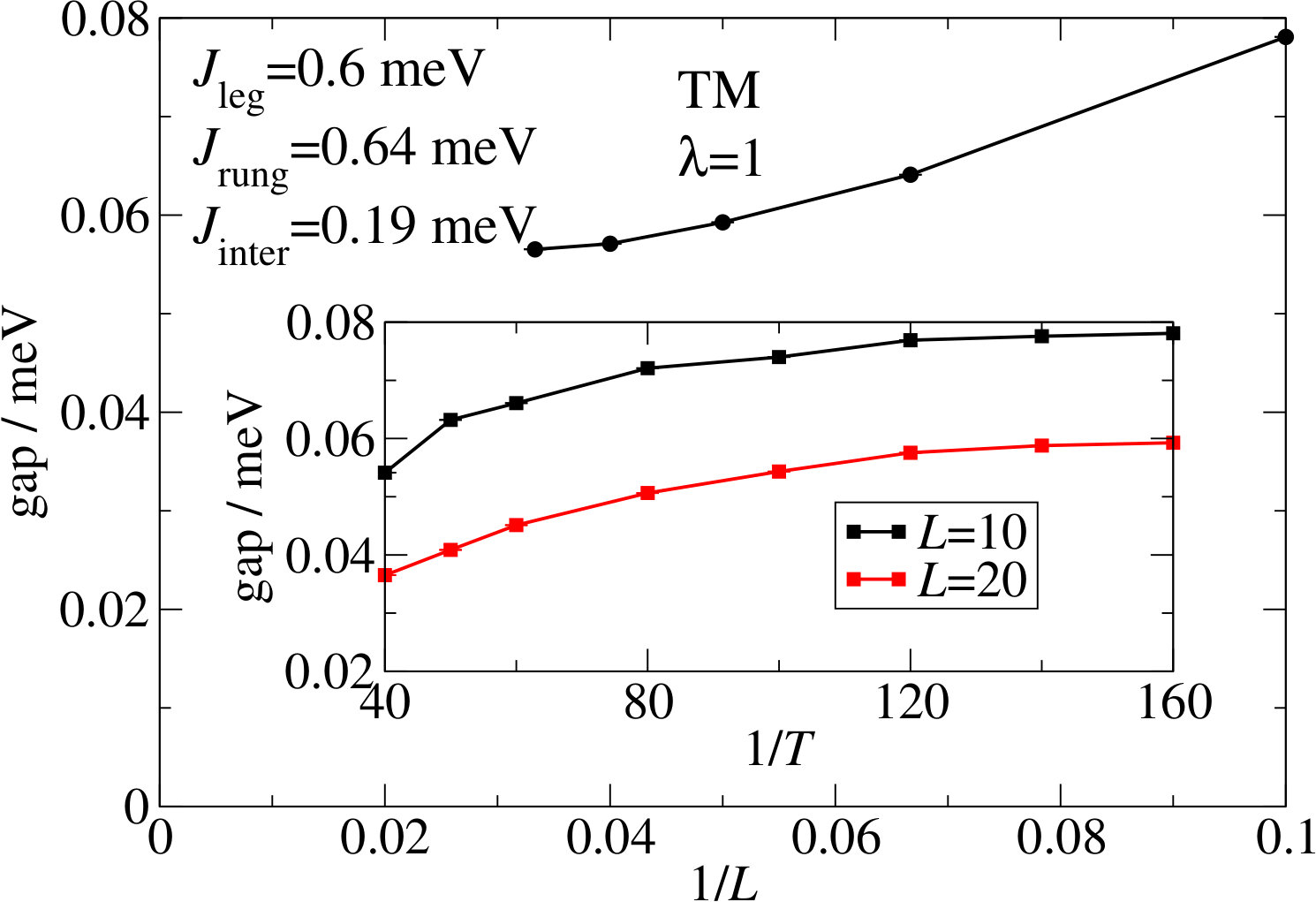 Figure 11
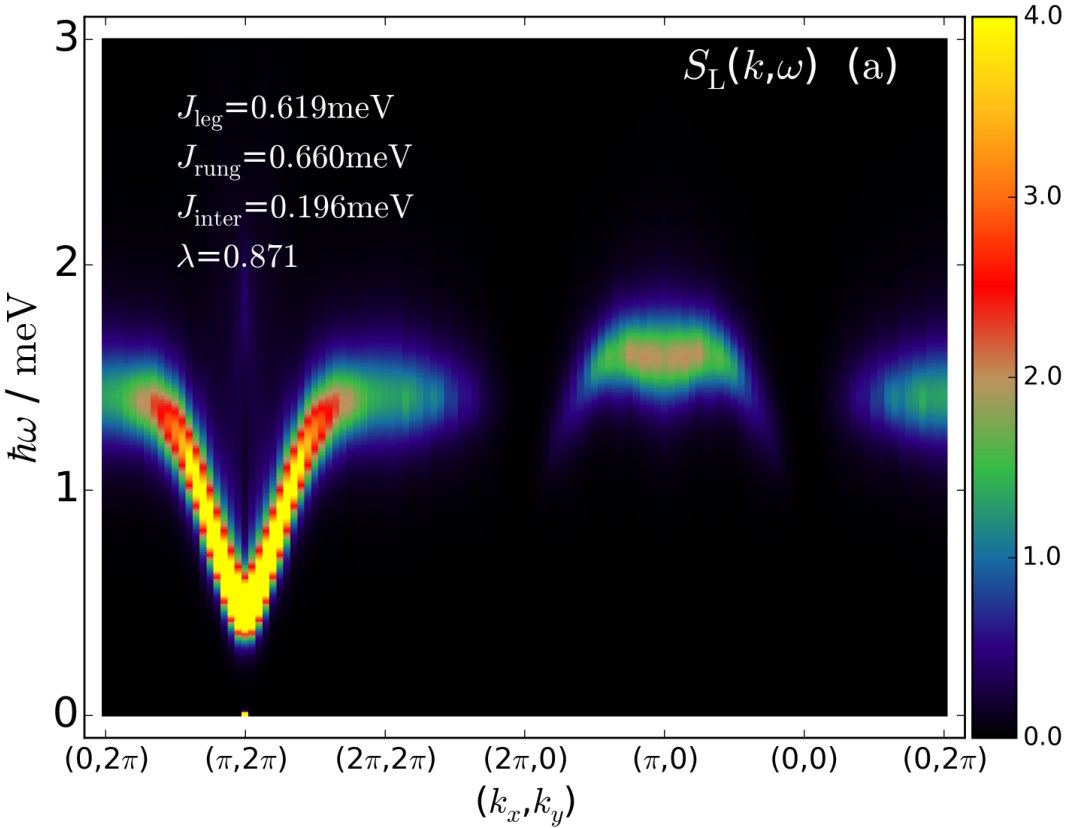 Figure 12
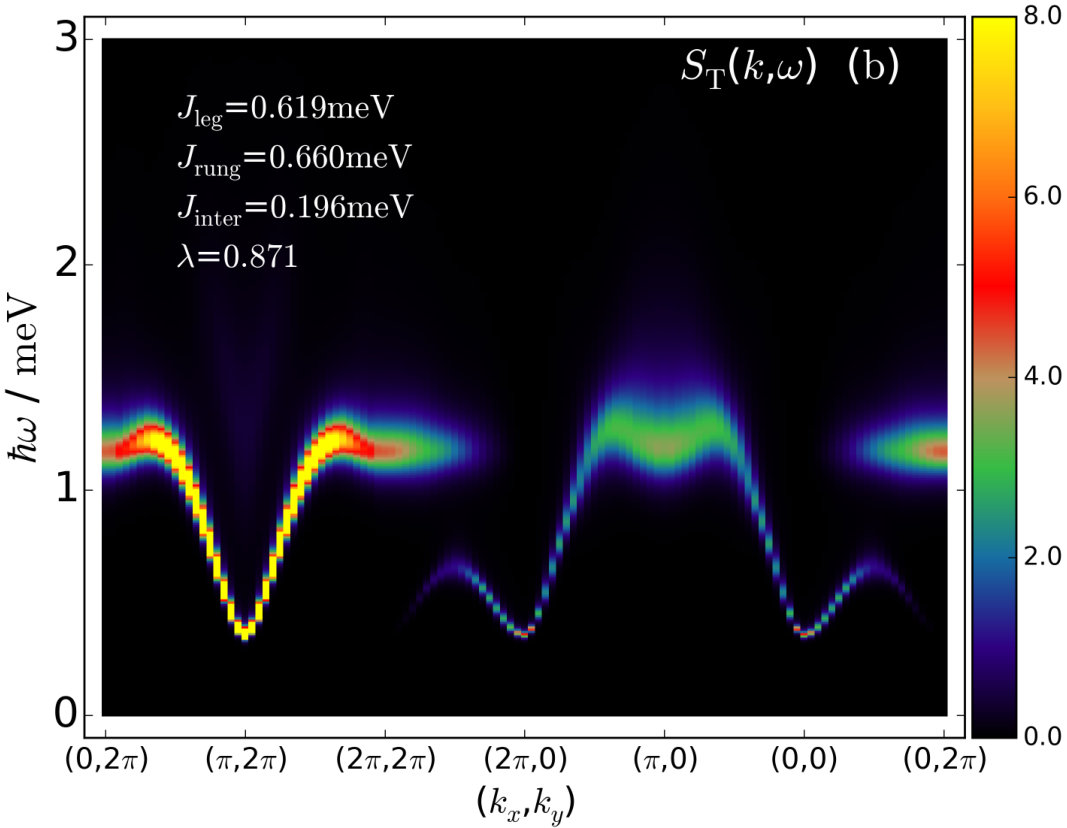 Figure 13
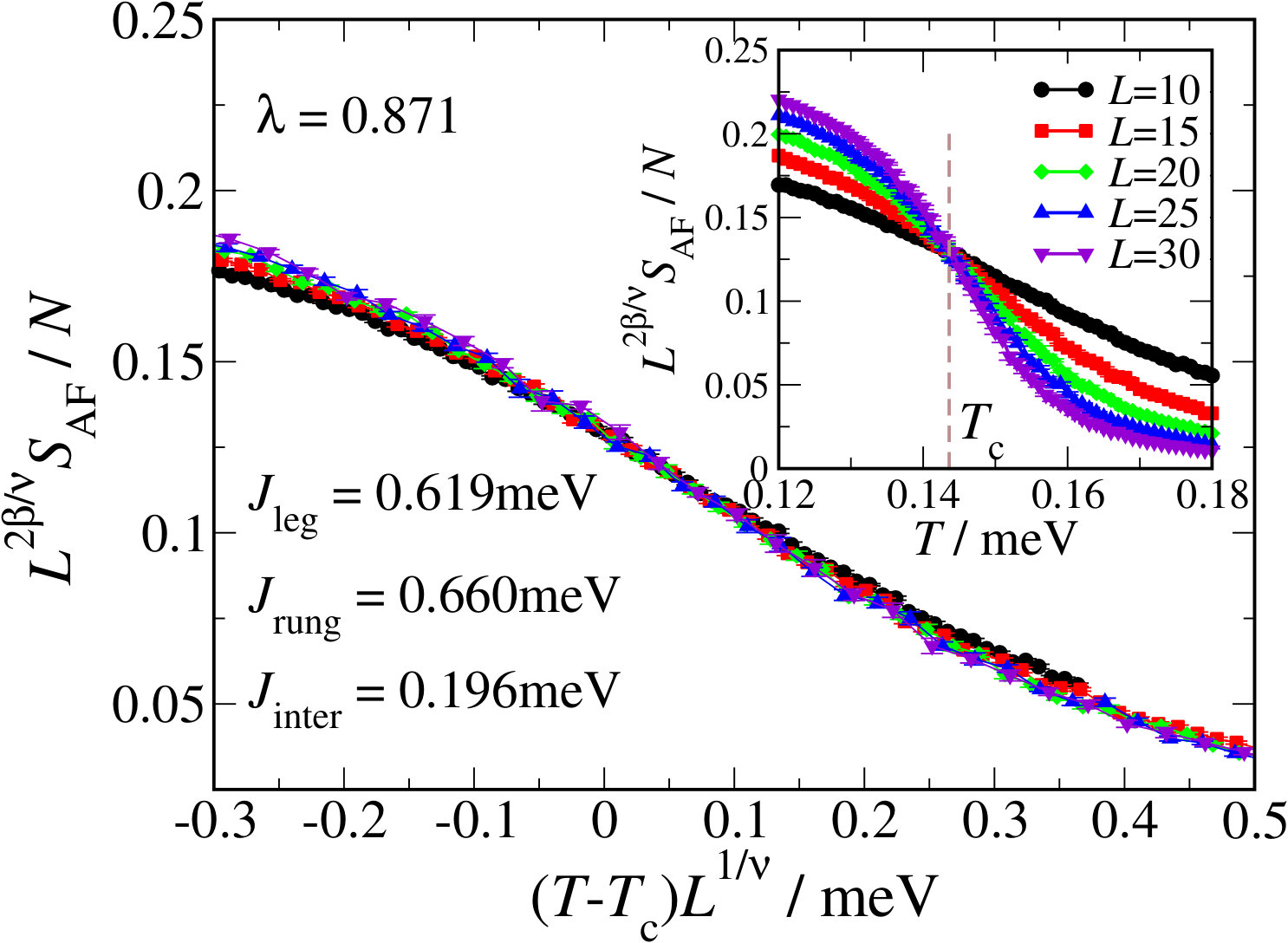 Figure 14
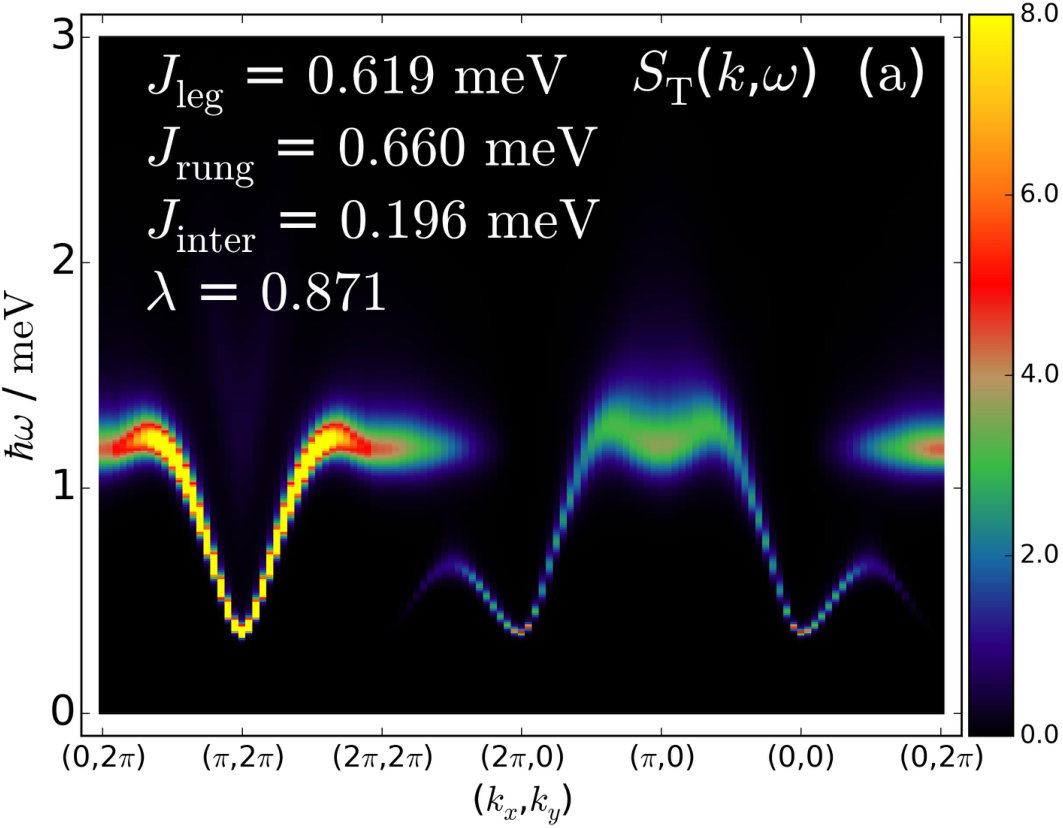 Figure 15
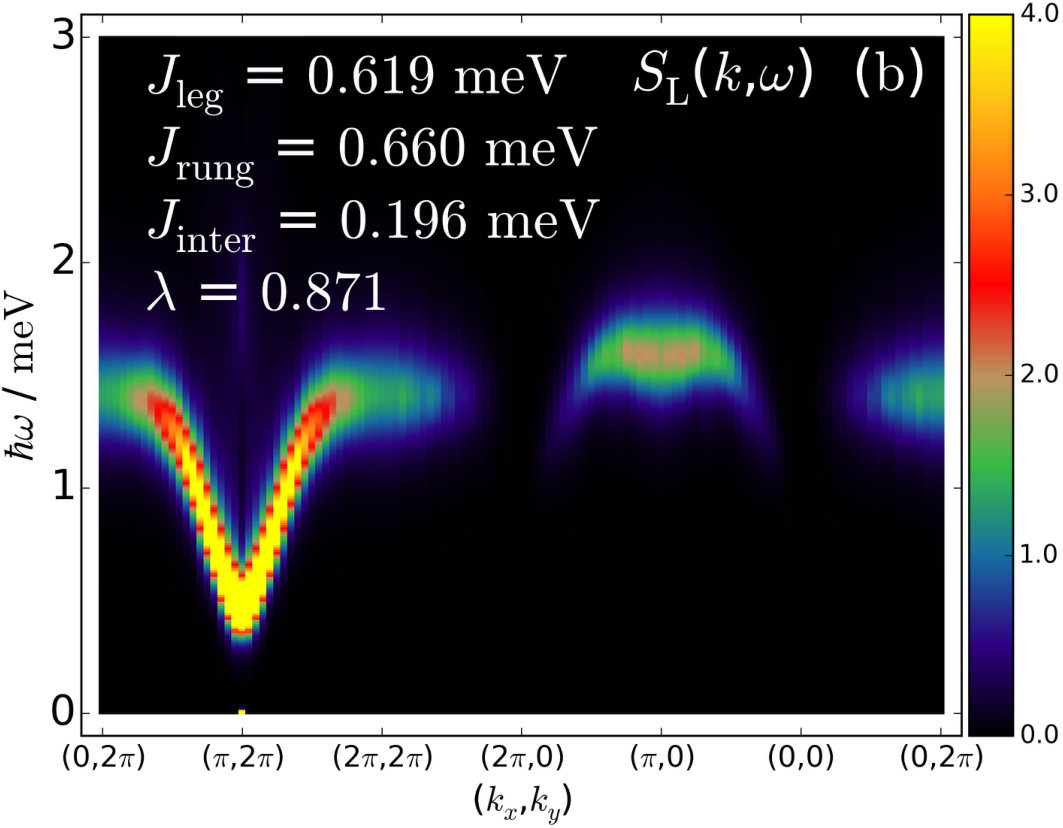 Figure 16
Peer Reviews
No public reviews on file for this paper yet. If you reviewed it on a platform where reviews are public (OpenReview, ICLR, NeurIPS, ICML), you can paste yours below so the community can read it here.
Videos
No videos yet. Explain this paper in a talk, walkthrough, or lecture? Add one.
The Higgs Mode of Planar Coupled Spin-Ladders
and its Observation in C9H18N2CuBr4
T. Ying
Institut für Theoretische Festkörperphysik, JARA-FIT and JARA-HPC, RWTH Aachen University, 52056 Aachen, Germany
Department of Physics, Harbin Institute of Technology, 150001 Harbin, China
K. P. Schmidt
Institut für Theoretische Physik, FAU Erlangen-Nürnberg, Germany
S. Wessel
Institut für Theoretische Festkörperphysik, JARA-FIT and JARA-HPC, RWTH Aachen University, 52056 Aachen, Germany
Abstract
Polarized inelastic neutron scattering experiments recently identified the amplitude (Higgs) mode in C9H18N2CuBr4, a two-dimensional near-quantum-critical spin-1/2 two-leg ladder compound, which exhibits a weak easy-axis exchange anisotropy. Here, we theoretically examine the dynamic spin structure factor of such planar coupled spin-ladder systems using large-scale quantum Monte Carlo simulations. This allows us to provide a quantitative account of the experimental neutron scattering data within a consistent quantum spin model. Moreover, we trance the details of the continuous evolution of the amplitude mode from a two-particle bound state of coupled ladders in the classical Ising limit all the way to the quantum spin-1/2 Heisenberg limit with fully restored SU(2) symmetry, where it gets overdamped by the two-magnon continuum in neutron scattering.
A central aspect of current research in quantum magnetism is the exploration of emerging phases and quantum phase transition and the associated collective excitations of quantum matter. For one of the most fundamental ordering phenomena in quantum magnetism – antiferromagnetism from spontaneous SU(2) spin symmetry breaking – the collective excitations can be characterized as fluctuations in the phase and the amplitude of the order parameter field. The phase oscillations correspond to low-energy magnon modes, i.e., gapless Nambu-Goldstone bosons, which are readily detected in inelastic neutron scattering (INS) experiments. However, in low-dimensional systems, for which quantum fluctuations prevail, the Higgs mode, associated to the amplitude fluctuations, is prone to decay into pairs of NambuGoldstone modes Podolsky11 ; Podolsky12 ; Pekker15 . In low-dimensional magnets, the Higgs mode thus gets strongly masked by this coupling to the two-magnon continuum, which makes its detection formidable by magnetic probes such as INS Affleck92 ; Weidinger15 . However, near-quantum-critical systems were recently found to be providential for the detection of the Higgs mode in 2D systems, alert via its response in scalar susceptibilities as opposed to the magnetic response accessed in, e.g., INS experiments Podolsky11 ; Podolsky12 ; Pollet12 ; Chen13 ; Gazit14 ; Rancon14 ; Lohoefer17 .
A feasible route towards the observation of the Higgs mode in near quantum-critical low-dimensional magnets was explored in a recent INS study Hong17 of the layered system of coupled spin-ladders in the metall-organic compound C9H18N2CuBr4, abbreviated as DLCB. In this compound, the spin-1/2 degrees of freedom on the Cu2+ ions experience a weakly anisotropic, easy-axis spin-exchange interaction Hong14 . This anisotropy gaps out the two-magnon scattering continuum sufficiently above the spectral support of the lower lying Higgs mode, which acquires an infinite lifetime. The Higgs mode can thus be identified by spin-polarized INS through the longitudinal, (non-spin-flip) channel, where the neutrons’ polarization is vertical to the scattering plane, separated from the magnon branch in the transverse (spin-flip) channel Hong17 . A 2D array of coupled spin-ladders furthermore exhibits a line of quantum critical points in a parameter regime that separates the antiferromagnetic ground state from the quantum disordered regime at weak inter-ladder coupling Matsumoto01 . Being located near such a quantum critical point, a quantitative theory of the quantum spin dynamics in DLCB requires an approach that accounts for both the enhanced quantum critical fluctuations as well as the subtle energetics of the weakly anisotropic exchange.
Here, we demonstrate such a quantitative theoretical characterization of the quantum spin dynamics in coupled spin-ladders with anisotropic exchange: Given the absence of geometric frustration in the exchange geometry derived for DLCB Hong14 ; Hong17 , an unbiased approach for calculating the dynamic spin structure factor (DSF) is shown to be feasible using state-of-the-art quantum Monte Carlo (QMC) methods. In addition to modeling the INS experiments on DLCB, we harness the QMC approach in order to systematically examine the evolution of the magnetic excitations from the isotropic (Heisenberg) limit with its full SU(2) symmetry, down to the Ising-model limit for dominant easy-axis exchange. The Higgs mode, which becomes overdamped in the Heisenberg limit, then connects to a gapped two-magnon bound state in the Ising-model regime. In contrast, for weakly coupled ladders, the same mode instead condenses, and gives rise to a quantum disordered phase.
In the following, we consider as a minimal model Hong14 for DLCB the quantum spin-1/2 Hamiltonian of a 2D array of coupled two-leg spin-ladders,
[TABLE]
where indexes the ladders, the rungs, and the two legs of each ladder. denotes the nearest-neighbor interladder coupling, and () the intra-ladder couplings along the legs (rungs), respectively (cf. the inset of Fig. 1). Furthermore, is the exchange anisotropy, with in the easy-axis regime, which is considered equal among all exchange interactions Hong14 . The Heisenberg limit is recovered at , while for , reduces to a classical Ising model. An explicit constraint on the parameters in Eq. (The Higgs Mode of Planar Coupled Spin-Ladders and its Observation in C9H18N2CuBr4) for DLCB follows from its magnetic saturation field of , i.e.,
[TABLE]
based on a value of Hong16 . From comparing the low-temperature INS spectra to magnon dispersions obtained within a perturbative continuous unitary transformation (pCUT) approach, Ref. Hong14, reports the best-fit values , , , and . These parameters position DLCB close to quantum criticality, where the long-range antiferromagnetic order along the easy-axis direction vanishes: In the Heisenberg limit () for spatially isotropic ladders (), this quantum critical point is located at a critical ratio of Matsumoto01 . The value of is in accord with the constraint in Eq. (2), and accounts for the finite excitation gaps , and , estimated in polarized INS for the transverse magnon mode (TM) and the longitudinal Higgs mode (LM), respectively Hong17 . A finite not only renders the Nambu-Goldstone mode from the isotropic case massive, it also leads to a minimum excitation energy of for the two-magnon continuum. For , the Higgs mode is protected against decay into the two-magnon continuum, thus allowing for its identification in the longitudinal scattering channel Hong17 . The theoretical modeling of the INS data in this configuration was performed in Ref. Hong17, using bond-operator theory (BOT) in harmonic approximation Sachdev90 ; Sommer01 . However, within this mean-field treatment, the comparison to the experimental data required a substantial renormalization of the exchange couplings in the Hamiltonian of Eq. (The Higgs Mode of Planar Coupled Spin-Ladders and its Observation in C9H18N2CuBr4), up to factors of almost two, compared to the values quoted above. This calls for an unbiased, consistent theoretical understanding of the INS results on DLCB, which applies to both scattering channels, and also accounts for the critically enhanced quantum fluctuations.
For this purpose, we analysed the DSF of the Hamiltonian using a combination of QMC simulations Sandvik99 ; Syljuasen02 ; Alet05 ; Michel07 and a stochastic analytical continuation scheme Beach04 in order to access the frequency-dependent spectral functions from imaginary-time correlation functions obtained by the QMC calculations. We thereby obtain the DSF for both the longitudinal channel, , as well as for the transverse channel, SM . Here, , and denotes the number of spins, with in terms of the number of ladders () and rungs per ladder (), with periodic boundary conditions taken in both lattice directions (the unit cell contains two spins, cf. the inset of Fig. 1, and the extend of the unit cell is set equal to unity in both lattice directions). For the QMC simulations, performed using the stochastic series expansion approach Sandvik99 ; Syljuasen02 ; Alet05 , we scaled and the temperature sufficiently low to access ground state properties of these finite systems SM .
Prior to focusing on DLCB, we consider the simpler case of spatially isotropic ladders (), for which the ground-state phase diagram in terms of the ratio and , as obtained from QMC simulations, is shown in Fig. 1. In addition to a phase with antiferromagnetic order, this phase diagram exhibits an extended quantum disordered regime at weak interladder coupling near the Heisenberg limit. For , a line of quantum critical points separates both phases, belonging to the three-dimensional (3D) Ising universality class, in accord with a standard finite-size scaling analysis of the antiferromagnetic structure factor SM . For , the quantum critical point at instead belongs to the 3D Heisenberg universality class Matsumoto01 .
We now examine in detail the evolution of the DSF upon tuning for , and , i.e., on both sides of the critical coupling ratio for . These two different regimes are denoted as case I and II, respectively. As an example, Fig. 2 displays the DSF for and , along the indicated path in momentum space that includes the antiferromagnetic ordering vector . The transverse channel, , is dominated by the gapped magnon excitation, with a minimum gap at . This sets the lower threshold for the two-magnon continuum to . Besides the magnetic Bragg peak at , exhibits an additional, pronounced dispersing mode at energies significantly below , and with a corresponding minimum gap of at . Its origin becomes explicit in the Ising limit: For , the ground states are perfect Néel configurations, and a single spin flip costs an excitation energy . A bound state of two nearest-neighbor spin flips along an intra-ladder bond (for ) requires an energy , which falls below the excitation energy for two isolated spin flips. The transverse exchange for finite values of renders these modes dispersive, thereby reducing both excitation gaps.
From QMC data such as in Fig. 2, we extract the full -dependence of both gaps in the thermodynamic limit SM , cf. Fig. 3. Also shown in this figure are series expansion results Hong17 ; SM ; Dusuel10 up to order () for (), which closely follow the QMC data up to intermediate values of . For case I, at [Fig. 3(a)], we identify the quantum critical point at , where closes. stays finite across the transition, exhibiting an inflection point. While in the antiferromagnetic regime, , the LM mode connects to a two-spin-flip bound state of the Ising limit, it forms the sector of the gapped triplon mode in the quantum disordered regime, which is degenerate with the TM mode of the transverse branch in the Heisenberg limit. The LM mode resides below the two-magnon continuum of energies above for all . For case II, at [Fig. 3(b)], the antiferromagnetic regime extends up to the Heisenberg limit, in which the TM gap closes. The softening of effects the LM mode to merge into the two-magnon continuum, which we locate to occur at . Beyond this point, the detection of the Higgs mode is masked by the two-magnon continuum. Close to quantum criticality and in the Heisenberg limit (), one may nevertheless detect the Higgs mode through the scalar susceptibility in terms of the rung-based dynamic singlet structure factor Lohoefer15 ; Lohoefer17 ; Qin17 . The position of the Higgs mode from this scalar response function is also shown in Fig. 3(b); it compares well to the energy of the LM mode near .
We next return to the theoretical modeling of the INS spectra for DLCB. Since this compound resides within the antiferromagnetically ordered regime of coupled spin-ladders, we first assess, to which of the two cases (I or II) it belongs, according to the effective description by the model in Eq. (The Higgs Mode of Planar Coupled Spin-Ladders and its Observation in C9H18N2CuBr4). For this purpose, we performed QMC simulations for the set of previously estimated exchange couplings, but vary the anisotropy . We observe from Fig. 4 that based on this parameter set, DLCB actually belongs to case I, i.e., for the estimated exchange couplings, resides within the quantum disordered regime at : The easy-axis anisotropy not only effects finite magnetic excitation gaps, it also leads out of the quantum disordered regime. The presence of a quantum phase transition at (detected also by the antiferromagnetic structure factor SM ) for this set of couplings was not noted in Ref. Hong14 ; Hong17 , wherein pCUT-based estimates of were used instead. As shown in Fig. 4, this approach does not reproduce the inflection point in at and overestimates the gap in the relevant parameter regime. Therefore, the gap meV extracted from the QMC calculations at the previously estimated value of falls below the experimental margin for DLCB, i.e., a lower value of is required to match the experimental values of the gaps for the considered exchange coupling strengths. Agreement with the experimental estimates of the gaps within their error margins can be reached using a simple rescaling procedure: In order to satisfy Eq. (2), a decrease in requires a corresponding increase of the exchange coupling strengths. Here, we constrain to a uniform rescaling of all exchange constants for simplicity. Using an interpolation of the QMC data in Fig. 4 SM , we obtain meV, meV, meV, and , for which meV and meV, i.e., both values are within the margins of the experimental estimates. We thus spared a fit of all four parameters of to the INS data, which is rather expensive based on QMC calculations of the DSF.
Based on this consistent identification of a single set of model parameters for DLCB, we finally performed QMC simulations to calculate the corresponding DSF. To allow for a direct comparison to the INS results presented in Ref. Hong17 , we transformed the QMC spectra SM to the crystal and scattering geometry for DLCB Hong17 . The resulting scattering spectra along the specific wave-vector transfers considered in Ref. Hong17 are shown in Fig. 5 for both polarization directions. They correspond to the polarized INS data shown in Fig. 4 of Ref. Hong17 . In addition to the excitation gaps and the overall distribution of the spectral weight, the calculated spectra also account for the bandwidth observed in the INS spectra in the LM scattering channel at the zone boundary, which was overestimated in the harmonic BOT approach from Ref. Hong17 .
Hence, we demonstrated the feasibility, using state-of-the-art QMC simulation techniques, to formulate a quantitative theory for the spin dynamics of near-quantum-critical 2D quantum magnets, directly exposing the two-magnon bound-state nature of the stable Higgs mode excitation observed in recent INS experiments on DLCB. In the easy-axis regime, this excitation is stabilized due to the upwards-shifted support of the two-magnon continuum, well above the Higgs mode’s excitation gap. The Higgs mode merges into this continuum only very close to the Heisenberg limit within the antiferromagnetic regime, beyond the quantum critical point. We anticipate our unbiased QMC approach to provide a quantitative understanding to the quantum spin dynamics also in other near-quantum-critical 2D magnetic compounds.
Acknowledgements.
Acknowledgments. We thank Tao Hong for valuable discussions. This work was supported by the Deutsche Forschungsgemeinschaft (DFG) under Grants No. FOR 1807 and No. RTG 1995, as well as the National Natural Science Foundation of China under Grant No. 11504067. We thank the IT Center at RWTH Aachen University and the Jülich Supercomputing Centre for access to computing time through JARA-HPC.
The reference list from the paper itself. Each links out to its DOI / PubMed record.
- 1(1) D. Podolsky, A. Auerbach, and D. P. Arovas, Phys. Rev. B 84 , 174522 (2011).
- 2(2) D. Podolsky and S. Sachdev, Phys. Rev. B 86 , 054508 (2012).
- 3(3) D. Pekker and C.M. Varma, Ann. Rev. Cond. Mat. Phys. 6 , 269 (2015).
- 4(4) I. Affleck and G. F. Wellman, Phys. Rev. B 46 , 8934 (1992).
- 5(5) S. A. Weidinger and W. Zwerger, Eur. Phys. J. B 88 , 237 (2015).
- 6(6) L. Pollet and N. V. Prokof’ev, Phys. Rev. Lett. 109 , 010401 (2012).
- 7(7) K. Chen, L. Liu, Y. Deng, L. Pollet, and N. V. Prokof’ev, Phys. Rev. Lett. 110 , 170403 (2013).
- 8(8) S. Gazit, D. Podolsky, and A. Auerbach, Phys. Rev. Lett. 113 , 240601 (2014).