Quantum independent set problem and non-abelian adiabatic mixing
Biao Wu, Hongye Yu, Frank Wilczek

TL;DR
This paper introduces a quantum algorithm leveraging non-abelian adiabatic mixing to efficiently solve certain independent set problems in graph theory, showing potential advantages over classical methods through analysis and simulations.
Contribution
The paper presents a novel quantum algorithm based on non-abelian adiabatic mixing for independent set problems, with analysis and numerical validation on different graph types.
Findings
Quantum algorithm outperforms classical algorithms on tested graph types.
Non-abelian adiabatic mixing aids exploration of near-degenerate ground states.
Potential general applicability of the technique to other quantum optimization problems.
Abstract
We present an efficient quantum algorithm for some independent set problems in graph theory, based on non-abelian adiabatic mixing. We illustrate the performance of our algorithm with analysis and numerical calculations for two different types of graphs, with the number of edges proportional to the number of vertices or its square. The theoretical advantages of our quantum algorithm over classical algorithms are discussed. Non-abelian adiabatic mixing can be a general technique to aid exploration in a landscape of near-degenerate ground states.
Click any figure to enlarge with its caption.
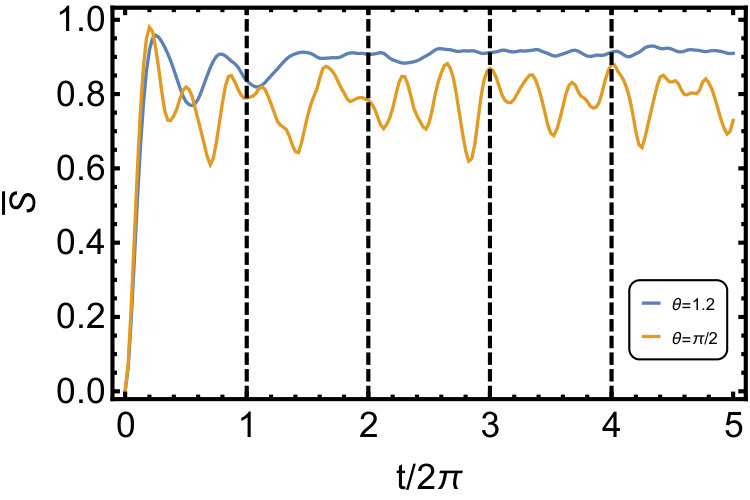 Figure 1
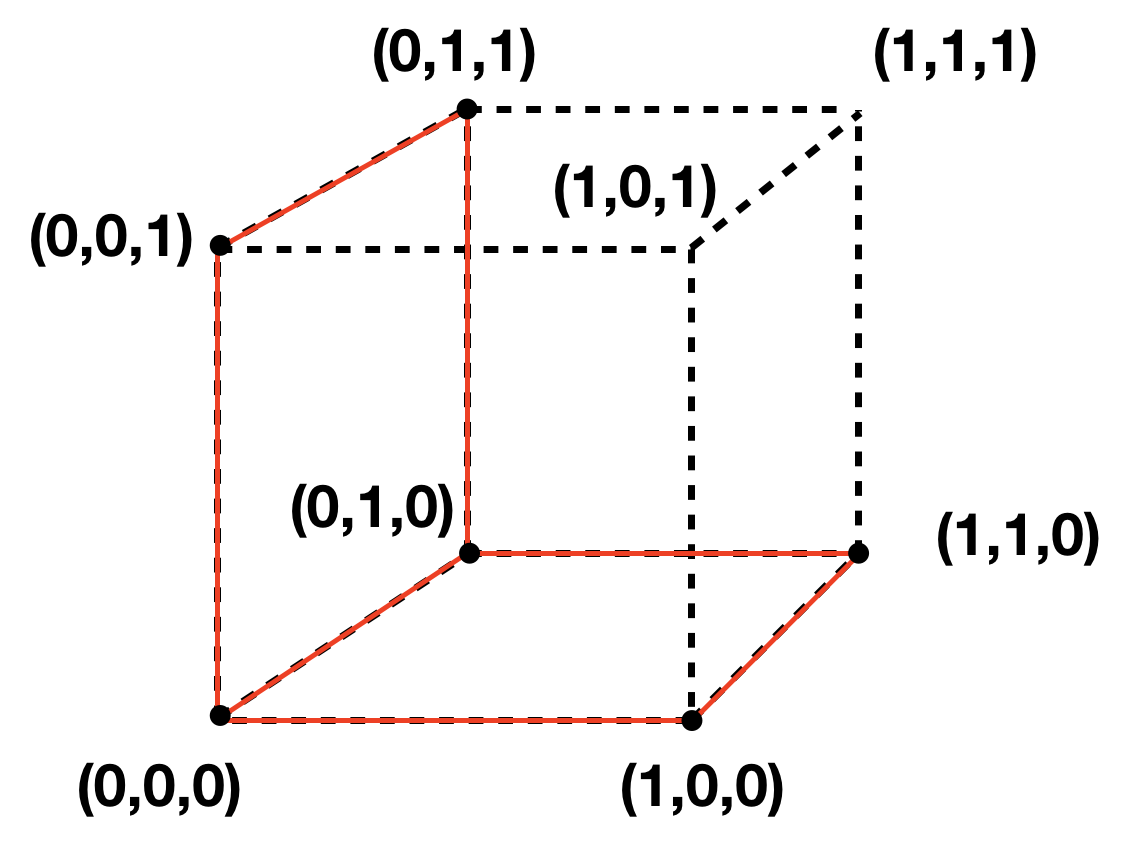 Figure 2
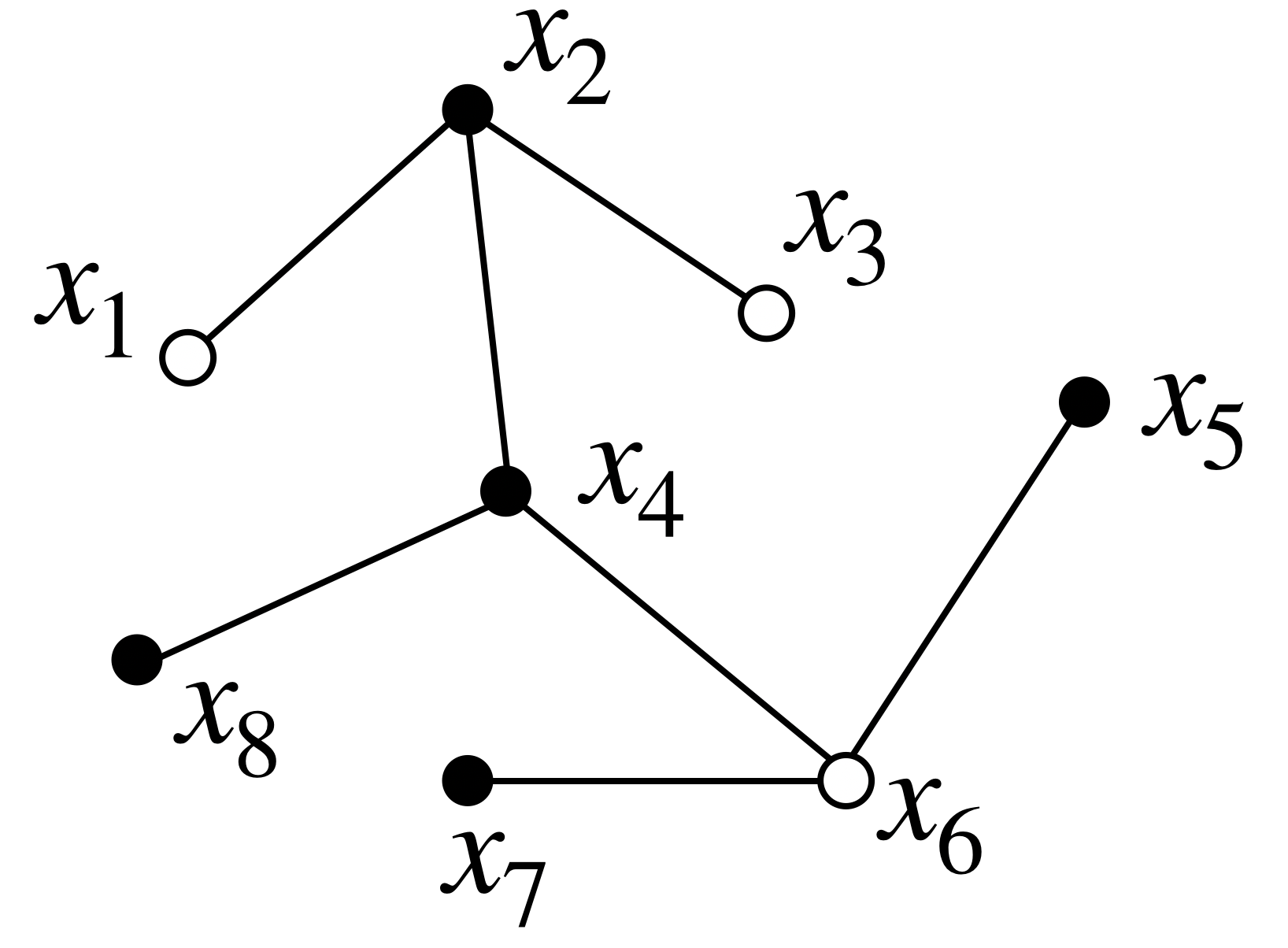 Figure 3
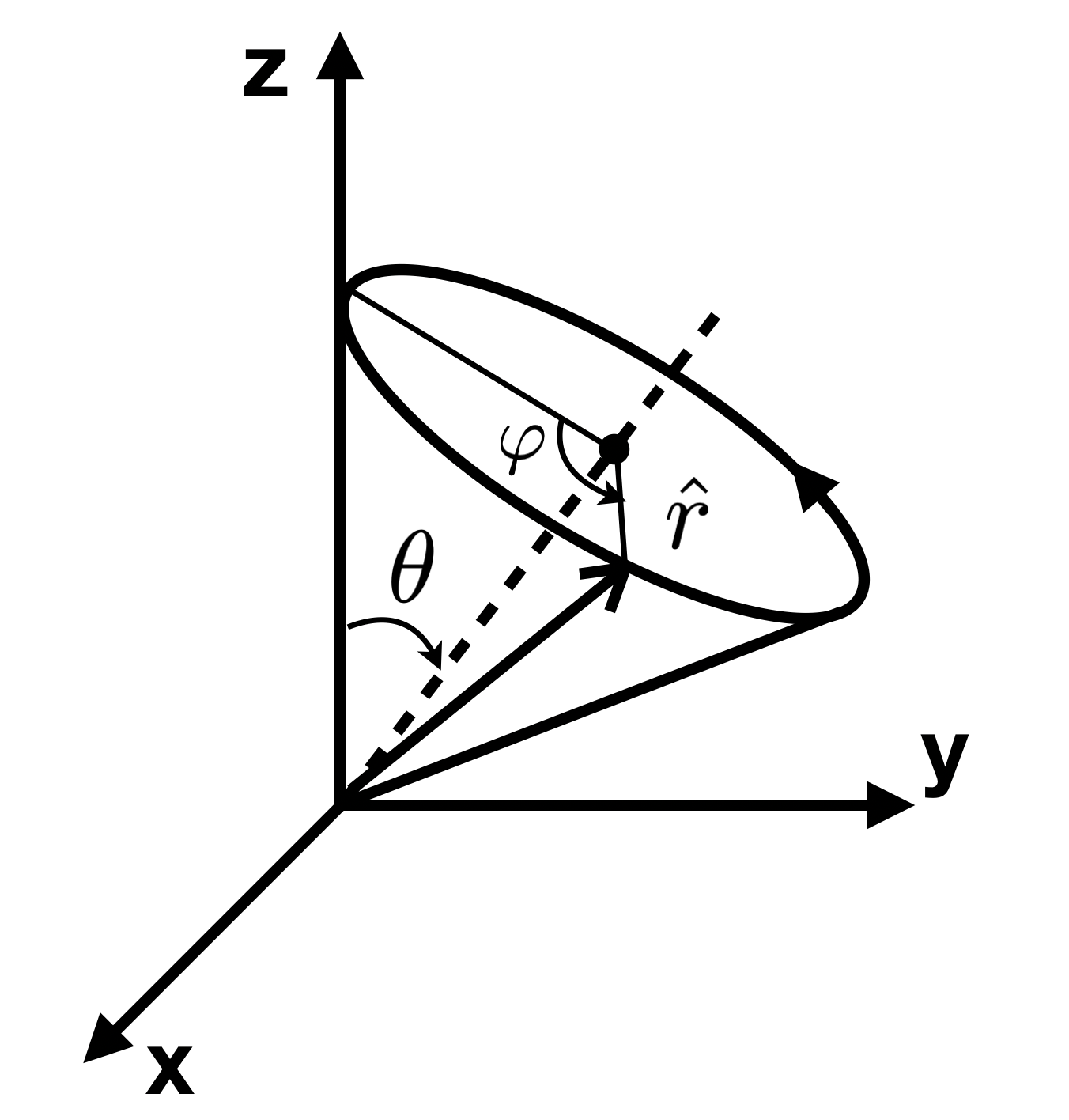 Figure 4
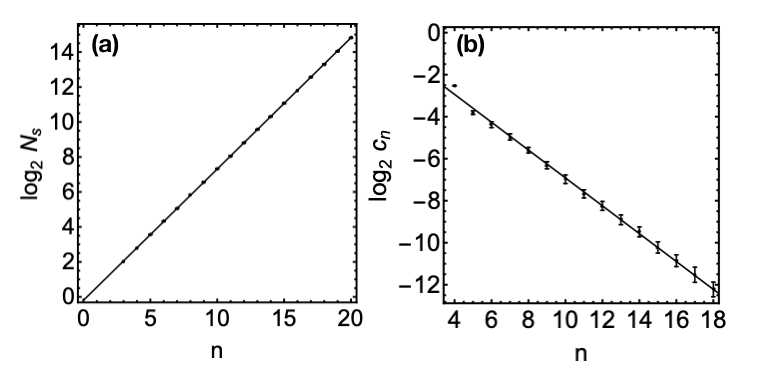 Figure 5
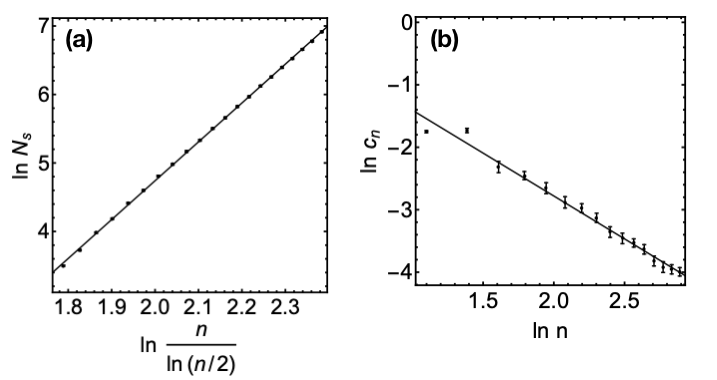 Figure 6
Peer Reviews
No public reviews on file for this paper yet. If you reviewed it on a platform where reviews are public (OpenReview, ICLR, NeurIPS, ICML), you can paste yours below so the community can read it here.
Videos
No videos yet. Explain this paper in a talk, walkthrough, or lecture? Add one.
Quantum independent set problem and non-abelian adiabatic mixing
Biao Wu(吴飙)
International Center for Quantum Materials, School of Physics, Peking University, 100871, Beijing, China
Wilczek Quantum Center, School of Physics and Astronomy, Shanghai Jiao Tong University, Shanghai 200240, China
Collaborative Innovation Center of Quantum Matter, Beijing 100871, China
Hongye Yu(余泓烨)
International Center for Quantum Materials, School of Physics, Peking University, 100871, Beijing, China
Frank Wilczek
Center for Theoretical Physics, MIT, Cambridge MA 02139 USA
T. D. Lee Institute, Shanghai Jiao Tong University, Shanghai 200240, China
Wilczek Quantum Center, School of Physics and Astronomy, Shanghai Jiao Tong University, Shanghai 200240, China
Department of Physics, Stockholm University, Stockholm SE-106 91 Sweden
Department of Physics and Origins Project, Arizona State University, Tempe AZ 25287 USA
Abstract
We present an efficient quantum algorithm for some independent set problems in graph theory, based on non-abelian adiabatic mixing. We illustrate the performance of our algorithm with analysis and numerical calculations for two different types of graphs, with the number of edges proportional to the number of vertices or its square. The theoretical advantages of our quantum algorithm over classical algorithms are discussed. Non-abelian adiabatic mixing can be a general technique to aid exploration in a landscape of near-degenerate ground states.
pacs:
03.67.Ac, 03.67.Lx, 89.70.Eg
Introduction - The supremacy of quantum computers over classical computers is illustrated by many significant algorithms, in particular, the Shor algorithm Shor (1997) for factorization and the Grover algorithm Grover (1997) for search. These algorithms are based on discrete operations orchestrating simple quantum gates. Algorithms of this kind are called quantum circuit algorithms Nielsen and Chuang (2000).
In another paradigm of quantum computing, algorithms are implemented through the design of Hamiltonians. Here one starts with an easy-to-prepare initial state, allows it evolve dynamically, and at some point makes appropriate measurements. (Of course, the Hamiltonians should correspond to potentially realizable circuits.) Hamiltonian-based quantum algorithms translate programming problems into physical problems, which allow one to exploit familiar physical processes to optimize algorithms. A Hamiltonian approach to quantum search was proposed in 1998 Farhi and Gutmann (1998), and soon extended to more general “adiabatic” algorithms Farhi et al. (2000).
It has been shown that every quantum circuit algorithm can be converted into a quantum adiabatic algorithm, whose time complexity is polynomially equivalent (and vice versa) Aharonov et al. (2007) Yu et al. (2018). But the continuum approach can suggest different methods, such as the non-abelian mixing discussed here, or resonance, as we will describe elsewhere Wilczek et al. (2018).
Here we present an efficient quantum Hamiltonian algorithm for the independent set problem (see Fig.1). Any graph has trivial independent sets: the empty set and sets with just one vertex. Our aim is to find non-trivial independent sets, with two or, ideally, many more vertices. The independent set problem is exactly equivalent to a special class of 2-SAT problem, which we call all-negated 2-SAT problem. Based on this observation, we are able to construct a Hamiltonian such that its ground states are independent sets of a given graph. We then prepare the Hamiltonian system in one of its trivial ground state, evolve it adiabatically along a closed path. This leads to non-abelian adiabatic mixing in the sub-Hilbert space of degenerate ground states Wilczek and Zee (1984) and generates a quantum state that is roughly an equal-probability superposition of all ground states. As the number of non-trivial solutions is much bigger, when we make a measurement in the end, we will likely find a non-trivial solution. Numerical results indicate that we are almost certain to find a non-trivial independent set. We analyze the performance of our algorithm for two different types of graphs: the number of edges proportional to the number of vertices or its square. While finding solutions to this particular problem is not a pressing issue, our technique brings in some physics which is interesting in itself and new in the context of quantum algorithms, and which might find more general applications.
Equivalence to 2-SAT - For a given graph, we can assign a Boolean variable to each of its vertices (see Fig.1): when the th vertex is chosen for an independent set and when it is not. When two vertices and are connected by an edge, it means that and can not be simultaneously chosen for one independent set. This is equivalent to impose the following two-variable clause
[TABLE]
Therefore, finding an independent set of a graph vertices with edges is equivalent to finding a solution to a 2-SAT problem which has variables and whose clauses are of the above form. Since the clauses involve only negated variables, we call it all-negated 2-SAT problem. An all-negated 2-SAT problem manifestly has at least solutions, namely and assignments that have exactly one variable being 1, such as and . They correspond to the trivial independent sets: the empty set and sets with only one vertex. We are interested in finding non-trivial solutions, that is, the solutions with at least two 1s. There are generic algorithms of time complexity to find solutions for 2-SAT problems Aspvall et al. (1979); Even et al. (1976). However, these algorithms may well find the trivial solutions. We need different algorithms to find non-trivial solutions.
Quantum algorithm - For a given graph (or a 2-SAT problem), noticing , we construct the following Hamiltonian Farhi et al. (2001)
[TABLE]
where the summation is over all edges (or clauses) . All the independent sets are the ground states of and vice versa. The energy gap between the ground states and the first excited states is .
We rotate spin to an arbitrary direction , and obtain new spin operator with
[TABLE]
If and are eigenstates of , that is, and , the eigenstates of are
[TABLE]
With , we can rotate all the spins to the same direction and construct a new Hamiltonian
[TABLE]
It is clear that has the same set of eigenvalues as . The eigenstates of can be obtained by rotating the ones of , and have the following form
[TABLE]
The Hamiltonian is parameterized by the direction . With this in mind we propose the following quantum algorithm for the independent set problem:
prepare the system at state , which corresponds to the empty set ; 2. 2.
set initially along the axis and slowly change by changing along a closed path shown in Fig.2; 3. 3.
make a measurement after returns to the direction.
Note that the energy gap of does not change with and is independent of the system size . Therefore, the evolution in the above algorithm can be made adiabatic by changing with a slow but constant rate. As is a ground state of , when changes slowly, the system will stay in the sub-Hilbert space spanned by the ground states of . This kind of adiabatic evolution in a sub-Hilbert space of degenerate eigenstates was studied in Ref.Wilczek and Zee (1984), where it is found that an adiabatic evolution along a closed path is given by
[TABLE]
where is the gauge matrix given by and denotes path ordering. Note that such an adiabatic evolution of degenerate eigenstates was proposed to construct quantum gates Zanardi and Rasetti (1999).
We find that is not zero only when and differ by at most one qubit state. When , we have
[TABLE]
where is the angle between the rotating axis and the axis and is the rotating angle (see Fig.2). When and has qubits in state and qubits in state , we have
[TABLE]
Let and we have
[TABLE]
where the gauge matrix is real and independent of time.
As the gauge matrix has many off-diagonal terms, it generates a mixing in the sub-Hilbert space of the ground states, producing a quantum state that is roughly an equal-probability superposition of all the ground states. When a measurement is made at the end of the algorithm, we will likely find a non-trivial ground state since the number of non-trivial solutions is much bigger than the trivial solutions. To illustrate the efficiency of our algorithm, we consider two typical cases: the number of edges is proportional to (I) the number of vertices; (II) the square of the number of vertices.
Case I - To be specific, we choose . Let be the number of all the independent sets of a given graph. Our numerical results in Fig.3(a) show that grows exponentially with . The fitting gives us . This means that the trivial sets are only a tiny part of all the independent sets when is large.
For our quantum algorithm, for simplicity we choose , where the gauge matrix has the simplest form. We numerically compute
[TABLE]
where is the initial state. Let be the probability of the trivial solutions in the final state and be the averaged probability. Our numerical results are plotted in Fig.3, where we see decreases exponentially with . Numerical fitting indicates . Therefore, we are almost certain to find a non-trivial solution at the end of the algorithm. As the gap is independent of the problem size , the time that our adiabatic evolution takes to traverse one loop in Fig.2 is independent of . Thus the time complexity of our quantum algorithm is , and for large it produces a non-trivial solution with near certainty.
Case II - We choose specifically . According to Ref. Frieze (1990), for such a graph, there exists with almost certainty a maximum independent set of the following size
[TABLE]
Since all its subsets are also independent sets, the number of independent sets is at least . The numerical results in Fig.4(a) show that
[TABLE]
For this case, we evolve the system along the loop in Fig.2 with to make all possible ground states more evenly distributed in the final quantum state (see later discussion with Fig. 6). Our numerical results in Fig.3(b) show that the averaged probability of finding trivial solutions .
We consider two different classical algorithms and compare them to our quantum algorithm. The first is the generic algorithms for 2-SAT problems Aspvall et al. (1979); Even et al. (1976). With slight modification, one can expect these algorithms to produce non-trivial solutions with certainty with the time complexity of . In the second algorithm, one simply picks up two variables and set them to 1. For the graph with , the chance of this randomly-picked solution being wrong is proportional to , which decreases polynomially with the graph size . In comparison, in our quantum algorithm, the chance of being wrong is exponentially small. For the graph with , the chance of this randomly-picked solution being wrong is about , which is independent of . In comparison, in our quantum algorithm, the chance of producing trivial solutions decreases polynomially with . If one randomly picks more than two 1s, the chance of being wrong is much greater. It is clear that our quantum algorithm holds advantages over both classical algorithms.
Quantum diffusion in median graph - Our algorithm centers on the quantum non-abelian adiabatic mixing in a sub-Hilbert space of degenerate ground states. We find that such a dynamics process can also be viewed as a quantum diffusion in a median graph which can be embedded in an -dimensional cube (see Fig.5).
As the solutions of an all-negated 2-SAT problem form a median graph Schaefer (1978); Bandelt and Chepoi (2008); wik , all the independent sets of a graph form a median graph: each independent set is represented by a point, and a pair of points are connected by a line when the two independent sets differ by only one vertex. This median graph can be embedded in an -dimensional cube, as shown in Fig.5 for . Our Hermitian gauge matrix can be regarded as a Hamiltonian defined on this median graph: the onsite energy is while off-diagonal element gives the hopping amplitude between two points and . If we start with an initial wave function localized at , this wave function will spread in the graph and the diffusion process is given by
[TABLE]
When , we recover the adiabatic mixing in Eq.(12). So, the adiabatic evolution in Fig.2 is just a special case of quantum diffusion in a median graph for ( is a positive integer).
Let us expand in terms of all the solutions
[TABLE]
where is the th solution. To characterize how widely the wave function is diffused over the median graph, we define a quantum entropy
[TABLE]
It is called generalized Wigner-von Neumann entropy in Ref. Hu et al. (2019). It is clear that the maximum of is . We define and plot as a function of in Fig.6. We again consider first the special case (orange line in Fig.6). We observe an interesting behavior of : it starts at zero, quickly rises up to a value very close to one, and eventually oscillates around an equilibrium value. At , which correspond to adiabatically evolving along the loop in Fig.2 one, two, three, rounds, we have . This means that the probability is roughly even distributed among all possible solutions. We checked numerically how probability is distributed among different sets of the solutions. For example, if the number of solutions with three 1s is , then the probability of in these solutions is approximately .
We can reduce the fluctuations of and raise its equilibrium value by choosing a different . In Fig.6, we have plotted for (blue line). We see much smaller oscillations around a larger equilibrium value. At , we have .
The behavior of in Fig.6 resembles how a similar quantum entropy behaves in quantum chaotic systems von Neumann (1929, 2010); Han and Wu (2015); Hu et al. (2019): rises up rapidly from a low initial value and quickly settles into an equilibrium value. By comparing the two lines in Fig.6, we see that when deviates from the special value , tends to be more chaotic.
Applications and perspective - The key of our algorithm, adiabatic non-abelian mixing, can be applied to other problems that have multiple solutions with one or more solutions easy to find or already found. For example, a class of quantum 2-SAT problems have multiple solutions and one of their trivial solutions is precisely Bravyi (2015); de Beaudrap and Gharibian (2016a); Arad et al. (2015); Farhi et al. (2016); de Beaudrap and Gharibian (2016b).
The maximum independent set problem for a graph is a NP-hard problem. Our analysis in the above puts this problem in a new perspective. The maximum independent set corresponds to the point which is farthest from the original point . In our algorithm, a quantum particle originally at will indeed arrive at this farthest point through quantum diffusion, but with very small probability. Our understanding of quantum diffusion may help us to find a way to increase this probability significantly.
In sum, we have presented an efficient quantum algorithm for independent set problems which exploits the non-abelian adiabatic mixing in a sub-Hilbert space of degenerate eigenstates. According to our numerical results, the time complexity of our algorithm is of , and holds advantages over classical algorithms.
B.W. and H.Y. are supported by the The National Key R&D Program of China (Grants No. 2017YFA0303302, No. 2018YFA0305602). F.W. is supported by the Swedish Research Council under Contract No. 335-2014-7424. In addition, U.S. Department of Energy under grant Contract No.de-sc0012567, and by the European Research Council under grant 742104.
The reference list from the paper itself. Each links out to its DOI / PubMed record.
- 1Shor (1997) P. W. Shor, SIAM J. Comput. 26 , 1484 (1997).
- 2Grover (1997) L. K. Grover, Phys. Rev. Lett. 79 , 325 (1997).
- 3Nielsen and Chuang (2000) M. A. Nielsen and I. L. Chuang, Quantum Computation and Quantum Information (Cambridge University Press, Cambridge, 2000).
- 4Farhi and Gutmann (1998) E. Farhi and S. Gutmann, Phys. Rev. A 57 , 2403 (1998).
- 5Farhi et al. (2000) E. Farhi, J. Goldstone, S. Gutmann, and M. Sipser, ar Xiv:quant-ph/0001106 v 1 (2000).
- 6Aharonov et al. (2007) D. Aharonov, W. van Dam, J. Kempe, Z. Landau, S. Lloyd, and O. Regev, SIAM J. Comput. 37 , 116 (2007).
- 7Yu et al. (2018) H. Yu, Y. Huang, and B. Wu, Chin. Phys. Lett. 35 , 110303 (2018).
- 8Wilczek et al. (2018) F. Wilczek, H. Hu, and B. Wu (2018), paper in preparation.