Supplement to Neuschel's paper "Asymptotics for M\'enage polynomials and certain hypergeometric polynomials of type ${}_3 F_1$"
Shotaro Nakai, Hideshi Yamane

TL;DR
This paper extends Neuschel's work on the asymptotic behavior of specific hypergeometric polynomials, focusing on a subfamily along a segment of the previously studied curve.
Contribution
It provides new asymptotic analysis for a subfamily of ${}_3 F_1$ hypergeometric polynomials on a segment of the closed curve, complementing prior results.
Findings
Asymptotic expansion for the subfamily on the curve segment
Enhanced understanding of polynomial behavior inside the curve
Extension of previous asymptotic results
Abstract
In an article that appeared in Journal of Approximation Theory, Neuschel investigated the asymptotic expansion of certain hypergeometric polynomials of type inside and outside a closed curve. We supplement this result by studying a subfamily of those polynomials on a part of the closed curve.
Click any figure to enlarge with its caption.
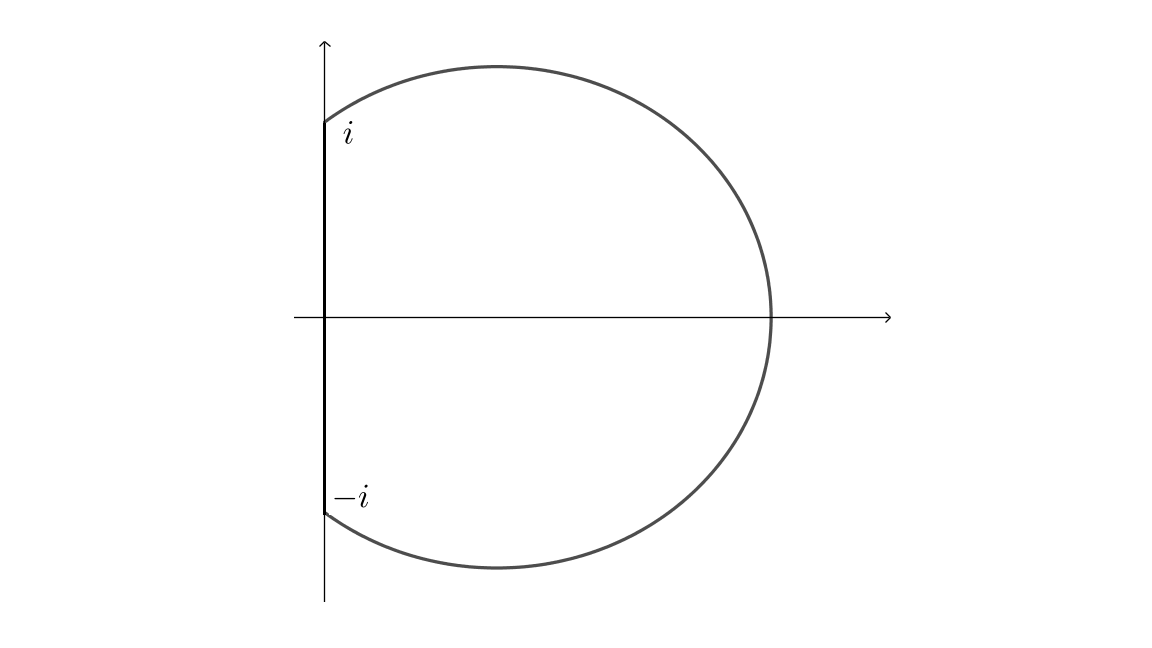 Figure 1
Peer Reviews
No public reviews on file for this paper yet. If you reviewed it on a platform where reviews are public (OpenReview, ICLR, NeurIPS, ICML), you can paste yours below so the community can read it here.
Videos
No videos yet. Explain this paper in a talk, walkthrough, or lecture? Add one.
Taxonomy
TopicsMathematical functions and polynomials · Advanced Numerical Analysis Techniques · Meromorphic and Entire Functions
Supplement to Neuschel’s paper “Asymptotics for Ménage polynomials
and certain hypergeometric polynomials of type ”
Shotaro Nakai and Hideshi Yamane Graduate School of Science and Technology, Kwansei Gakuin University
Gakuen 2-1 Sanda, Hyogo 669-1337, Japan School of Science and Technology, Kwansei Gakuin University
Gakuen 2-1 Sanda, Hyogo 669-1337
Abstract
Neuschel investigated the asymptotic expansion of certain hypergeometric polynomials of type inside and outside a closed curve. We supplement this result by studying a subfamily of those polynomials on a part of the closed curve.
AMS subject classification: Primary: 33C20, Secondary: 34E10
Keywords and phrases: hypergeometric polynomial, asymptotic expansion
1 Introduction
In [5], Neuschel studied the asymptotic expansion of the polynomials defined by
[TABLE]
where is a positive integer and
[TABLE]
The polynomials are concerned with what are called Ménage polynomials that appear in combinatorics ([5]).
Calculating the behavior of as is a part of the vast field of asymptotic analysis of hypergeometric quantities. One can find many formulas and references in [2]. Relatively little is known about and [5] is one of rare major results.
Set
[TABLE]
Let the mapping
[TABLE]
be defined as the inverse mapping of the conformal mapping (a variant of the Joukowsky transformation)
[TABLE]
The mapping
[TABLE]
is defined accordingly. We stipulate that the value of the mapping (1) for is , which is on the right half of the unit circle. The curve is defined by and it contains the line segment . Although is continuous, it is not differentiable at .
Let and be the exterior and the interior respectively. Then the main result of [5] is the following. In , one has
[TABLE]
as . Notice that in . On the other hand, in one has
[TABLE]
The behavior on remained an open problem. In the present paper, we give some information about the case of . Notice that the value at is trivial.
2 Finite Fourier transform of the Chebyshev polynomials
The Jacobi polynomials are defined by
[TABLE]
The Chebyshev polynomials are
[TABLE]
and we have
[TABLE]
According to [4], the finite Fourier transform of the Jacobi polynomials is given by
[TABLE]
Therefore by setting , we get
[TABLE]
where
[TABLE]
If is real, we have
[TABLE]
Our aim is to calculate the asymptotic behavior of by using (2). If , the values of corresponds to the polynomial studied in [5] with . Notice that the case of is trivial.
3 Asymptotic expansion on
In view of (2), it is enough to calculate
[TABLE]
when . Set . Then we have
[TABLE]
Now we apply the classical method of stationary phase ([1, 3]) as opposed to the saddle point method employed in [5]. Set
[TABLE]
then . If , never vanishes.
3.1 Behavior at the interior of the line segment
We consider the case . We have because never vanishes. This implies, by (2) and (4),
[TABLE]
On the other hand, the asymptotic behavior of can be calculated by using the method of stationary phase. The phase function has two stationary points on . We have
[TABLE]
Summing up the contribution from the two stationary points ([1, Lemma 6.3.3], [3, p.51]), we obtain
[TABLE]
Therefore we obtain, by (3) and (5), the following result.
Theorem 1**.**
If , we have
[TABLE]
as . The behavior on can be obtained by complex conjugation.
Remark 2*.*
Only either the real or the imaginary part has been calculated here. This is less than satisfactory but at least it has been proved that the asymptotic behavior is different from that in (power-times-exponential growth with oscillation) and (decay of order with no oscillation). In the next section, we will see still another type of behavior at . Nothing is known about the remaining part of .
3.2 Behavior at the end points
Assume . Since
[TABLE]
we get
[TABLE]
Therefore, we have the following.
Theorem 3**.**
The asymptotic behavior at as is
[TABLE]
The behavior at can be obtained by complex conjugation.
Acknowledgement
This work was partially supported by JSPS KAKENHI Grant Number 26400127.
The reference list from the paper itself. Each links out to its DOI / PubMed record.
- 1[1] Mark J. Ablowitz and Athanassios S. Fokas, Complex Variables: introduction and applications, Cambridge University Press, 1997.
- 2[2] NIST Digital Library of Mathematical Functions, https://dlmf.nist.gov/
- 3[3] A. Erdélyi, Asymptotic expansions, Dover, 1956.
- 4[4] Atul Dixit, Lin Jiu, Victor H. Moll and Christophe Vignat, The finite Fourier transform of classical polynomials, J. Aust. Math. Soc. 98 (2015), 145–160.
- 5[5] Thorsten Neuschel, Asymptotics for Ménage polynomials and certain hypergeometric polynomials of type F 1 3 subscript subscript 𝐹 1 3 {}_{3}F_{1} , J. Approx. Theory , 164 (2012), 981-1006.