Detecting unseen visual relations using analogies
Julia Peyre, Ivan Laptev, Cordelia Schmid, Josef Sivic

TL;DR
This paper introduces a method for detecting unseen visual relations in images by learning relation representations and transferring knowledge via analogies, significantly improving performance on multiple datasets.
Contribution
It proposes a novel approach combining individual and phrase embeddings and transferring relations through analogies, addressing the challenge of unseen triplet detection.
Findings
Significant improvement on HICO-DET for both frequent and unseen triplets.
Enhanced retrieval of unseen triplets with out-of-vocabulary predicates on COCO-a.
Effective detection of unusual triplets in the UnRel dataset.
Abstract
We seek to detect visual relations in images of the form of triplets t = (subject, predicate, object), such as "person riding dog", where training examples of the individual entities are available but their combinations are unseen at training. This is an important set-up due to the combinatorial nature of visual relations : collecting sufficient training data for all possible triplets would be very hard. The contributions of this work are three-fold. First, we learn a representation of visual relations that combines (i) individual embeddings for subject, object and predicate together with (ii) a visual phrase embedding that represents the relation triplet. Second, we learn how to transfer visual phrase embeddings from existing training triplets to unseen test triplets using analogies between relations that involve similar objects. Third, we demonstrate the benefits of our approach on…
Click any figure to enlarge with its caption.
 Figure 1
 Figure 2
 Figure 3
 Figure 4
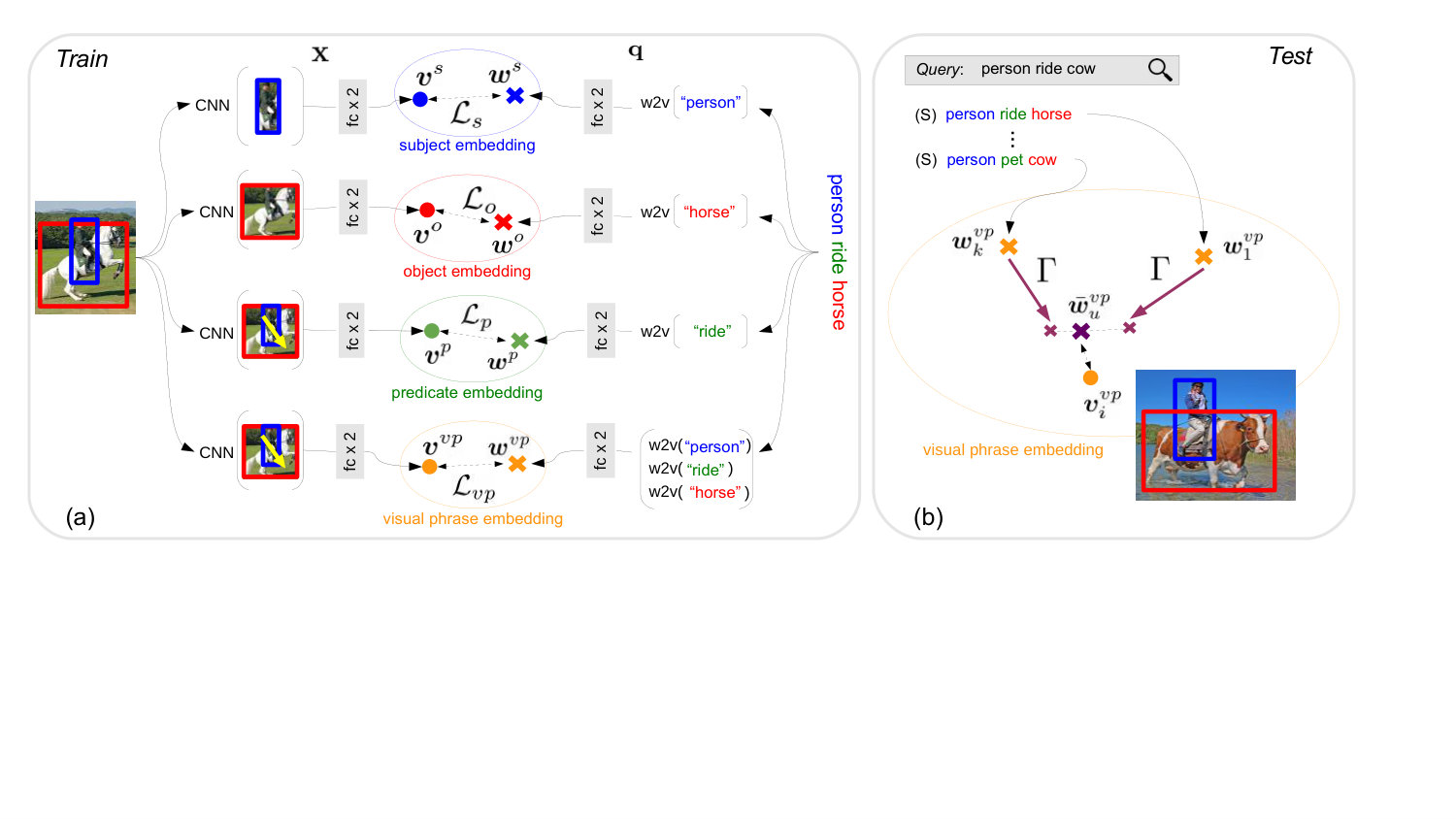 Figure 5
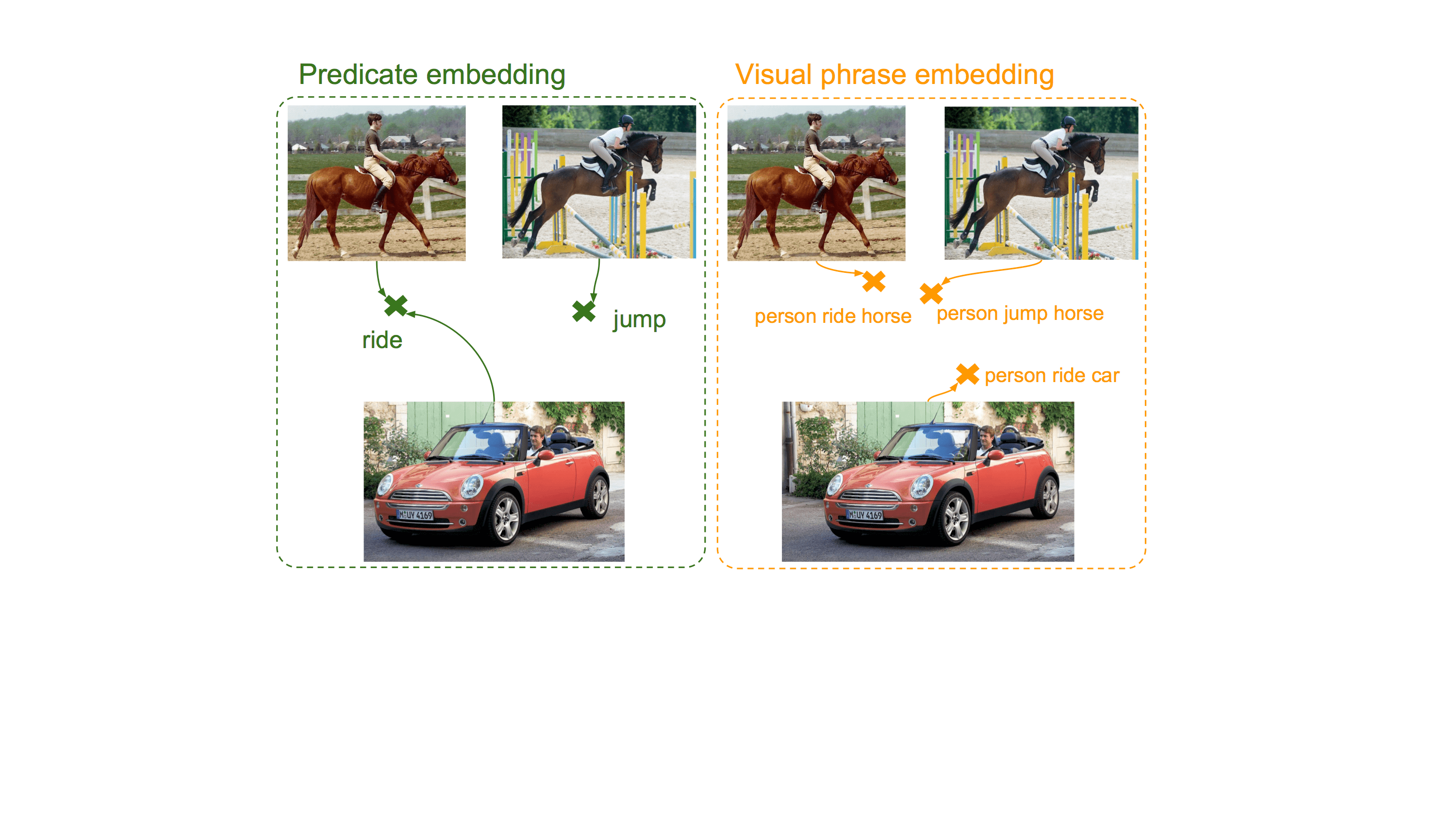 Figure 6
 Figure 7
 Figure 8
 Figure 9
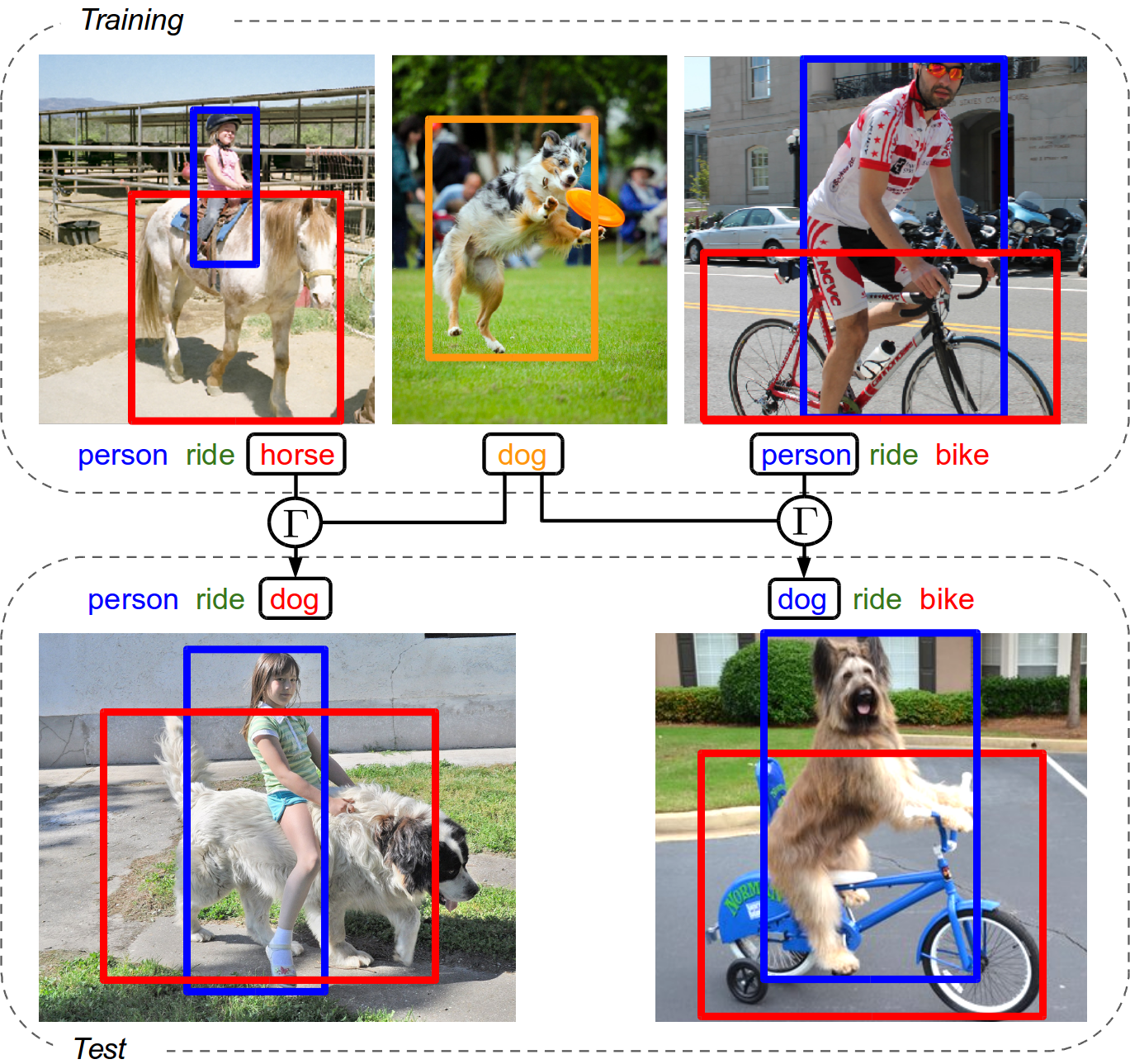 Figure 10
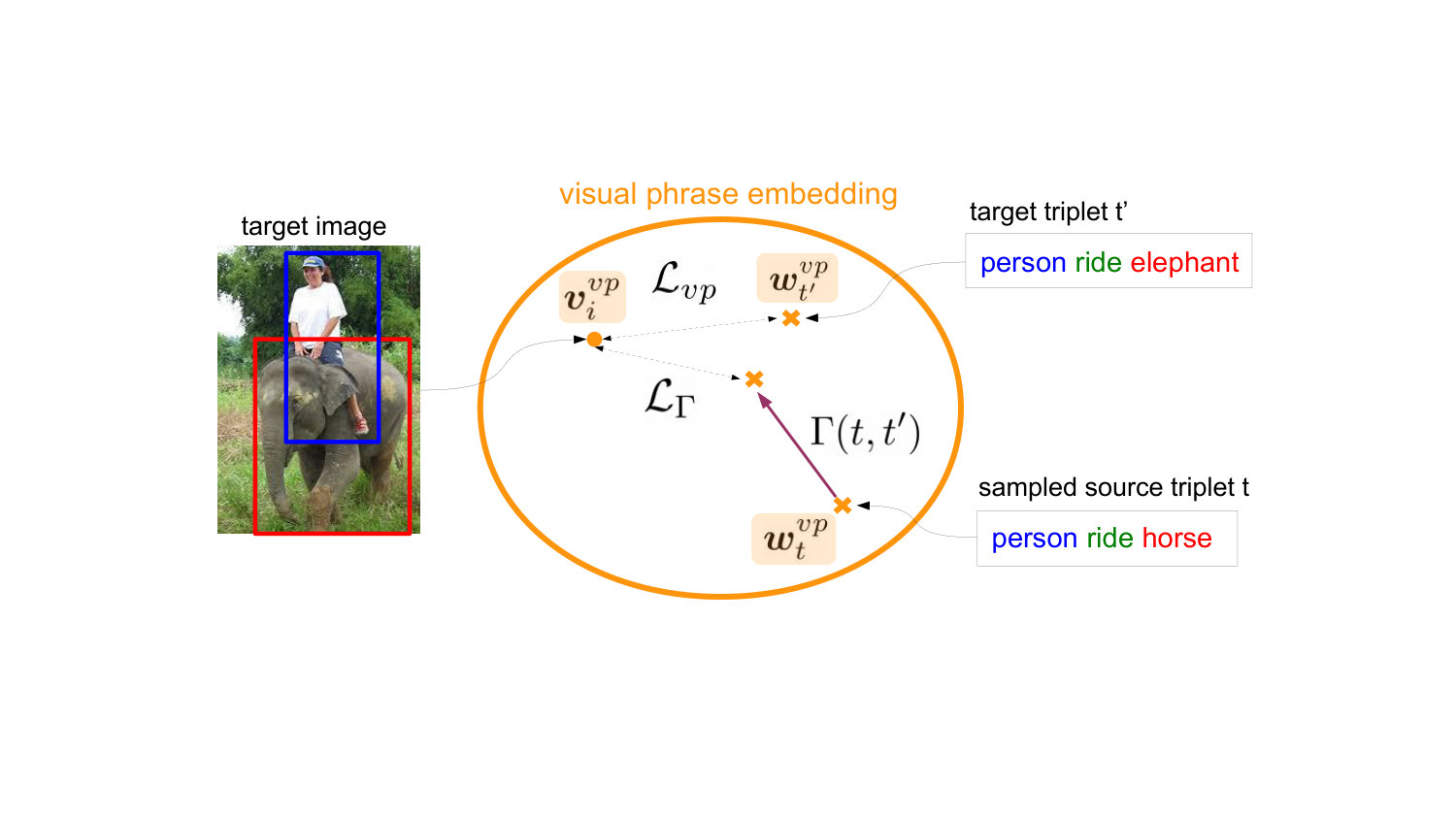 Figure 11
 Figure 12
 Figure 13
 Figure 14
 Figure 15
 Figure 16
 Figure 17
 Figure 18
 Figure 19
 Figure 20
 Figure 21
 Figure 22
 Figure 23
 Figure 24
 Figure 25
 Figure 26
 Figure 27
 Figure 28
 Figure 29
 Figure 30
 Figure 31
 Figure 32
 Figure 33
 Figure 34
 Figure 35
 Figure 36
 Figure 37
 Figure 38
 Figure 39
 Figure 40
Peer Reviews
No public reviews on file for this paper yet. If you reviewed it on a platform where reviews are public (OpenReview, ICLR, NeurIPS, ICML), you can paste yours below so the community can read it here.
Videos
No videos yet. Explain this paper in a talk, walkthrough, or lecture? Add one.
Taxonomy
TopicsNatural Language Processing Techniques · Artificial Intelligence in Games · Language and cultural evolution