A multi-dimensional, moment-accelerated deterministic particle method for time-dependent, multi-frequency thermal radiative transfer problems
Hans Hammer, HyeongKae Park, Luis Chacon

TL;DR
This paper introduces a multi-dimensional deterministic particle method for thermal radiative transfer that reduces noise and improves efficiency, especially in thick diffusion regimes, by combining particle and deterministic approaches.
Contribution
It extends the deterministic particle method to multiple dimensions and incorporates a moment-accelerated approach for multi-frequency TRT problems.
Findings
Reduces statistical noise compared to Monte Carlo methods.
Enhances accuracy in the thick diffusion limit.
Demonstrates efficiency in multi-frequency TRT simulations.
Abstract
Thermal Radiative Transfer (TRT) is the dominant energy transfer mechanism in high-energy density physics with applications in inertial confinement fusion and astrophysics. The stiff interactions between the material and radiation fields make TRT problems challenging to model. In this study, we propose a multi-dimensional extension of the deterministic particle (DP) method. The DP method combines aspects from both particle and deterministic methods. If the emission source is known \apriori, and no physical scattering is present, the intensity of a particle can be integrated analytically. This introduces no statistical noise compared to Monte-Carlo methods, while maintaining the flexibility of particle methods. The method is closely related to the popular method of long characteristics. The combination of the DP-method with a discretely-consistent, nonlinear, gray low-order system…
Click any figure to enlarge with its caption.
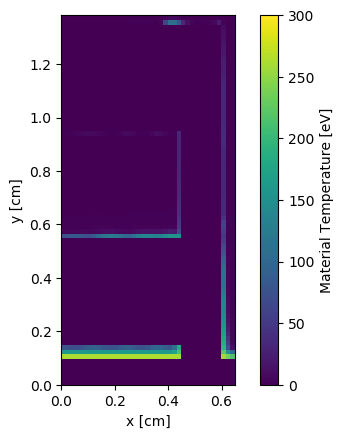 Figure 1
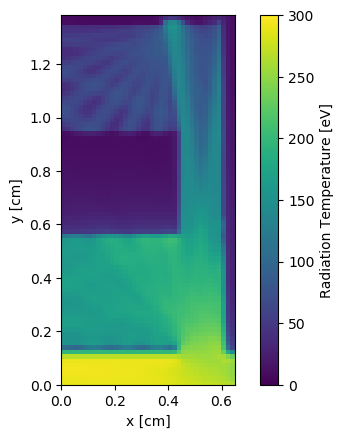 Figure 2
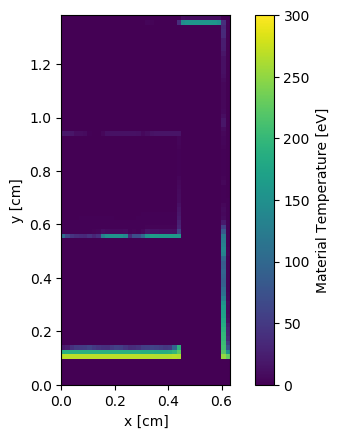 Figure 3
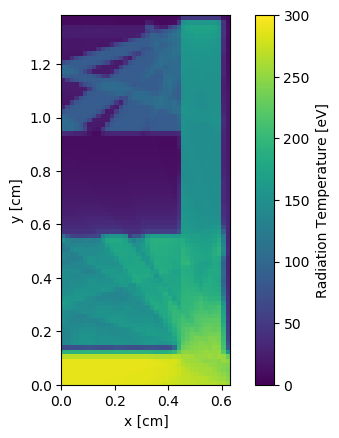 Figure 4
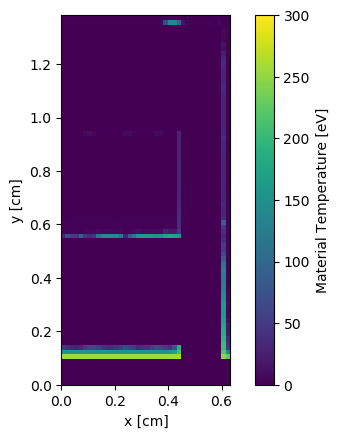 Figure 5
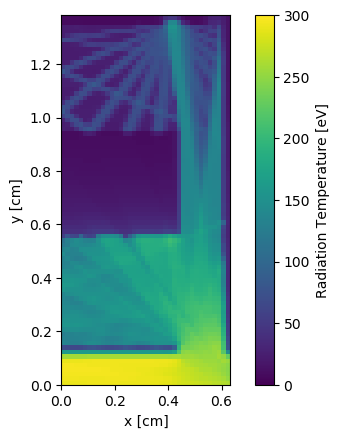 Figure 6
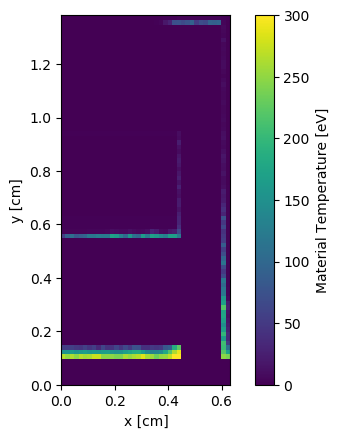 Figure 7
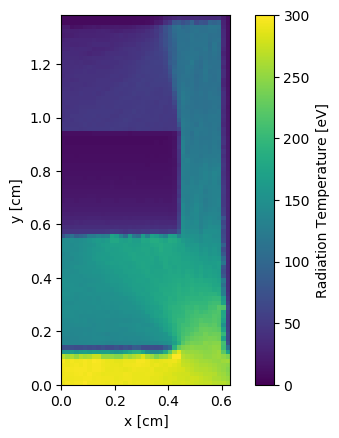 Figure 8
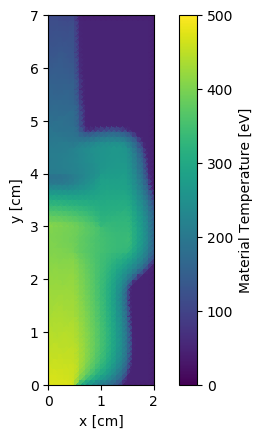 Figure 9
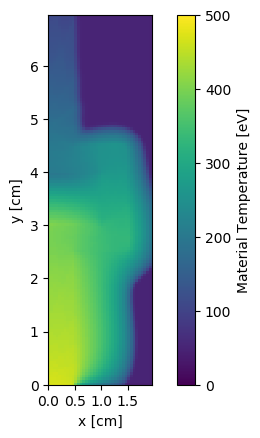 Figure 10
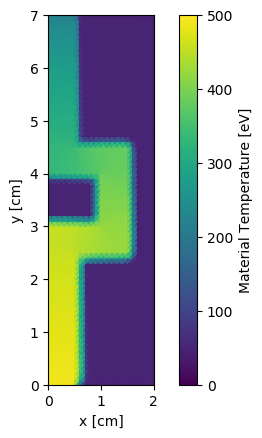 Figure 11
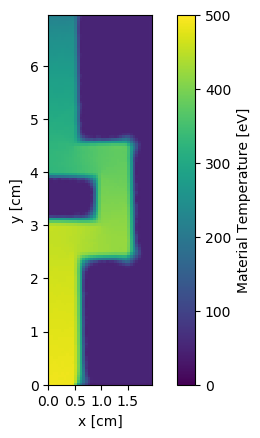 Figure 12
Peer Reviews
No public reviews on file for this paper yet. If you reviewed it on a platform where reviews are public (OpenReview, ICLR, NeurIPS, ICML), you can paste yours below so the community can read it here.
Videos
No videos yet. Explain this paper in a talk, walkthrough, or lecture? Add one.