Single-Transverse-Spin Asymmetries in Exclusive Photo-production of J/psi in Ultra-Peripheral Collisions in the Fixed-Target Mode at the LHC and in the Collider Mode at RHIC
J.P. Lansberg, L. Massacrier, L. Szymanowski, J. Wagner

TL;DR
This paper explores the potential of measuring single-transverse-spin asymmetries in exclusive J/psi photo-production during ultra-peripheral collisions at LHC and RHIC, aiming to access proton GPD E_g(x,xi,t).
Contribution
It introduces a novel approach to study proton GPDs through exclusive J/psi production in ultra-peripheral collisions at fixed-target and collider modes, with detailed expected measurement precisions.
Findings
Expected counting rates for J/psi production at LHC and RHIC.
Projected precision on single-transverse-spin asymmetries (A_N).
Feasibility of using polarized deuterium and helium targets.
Abstract
We investigate the potentialities offered by the study of J/psi exclusive photo-production in ultra-peripheral collisions at a fixed-target experiment using the proton and lead LHC beams (generically denoted as AFTER@LHC) on hydrogen targets and at RHIC in the collider mode. We compare the expected counting rates in both set-ups. Studying Single-Transverse-Spin Asymmetries (A_N) in such a process provides a direct path to the proton Generalised Parton Distribution (GPD) E_g(x,xi,t). We evaluate the expected precision on A_N for realistic conditions with the LHCb detector in pH(pol) and PbH(pol) collisions. We also discuss prospects with polarised deuterium and helium targets in the case of AFTER@LHC.
Click any figure to enlarge with its caption.
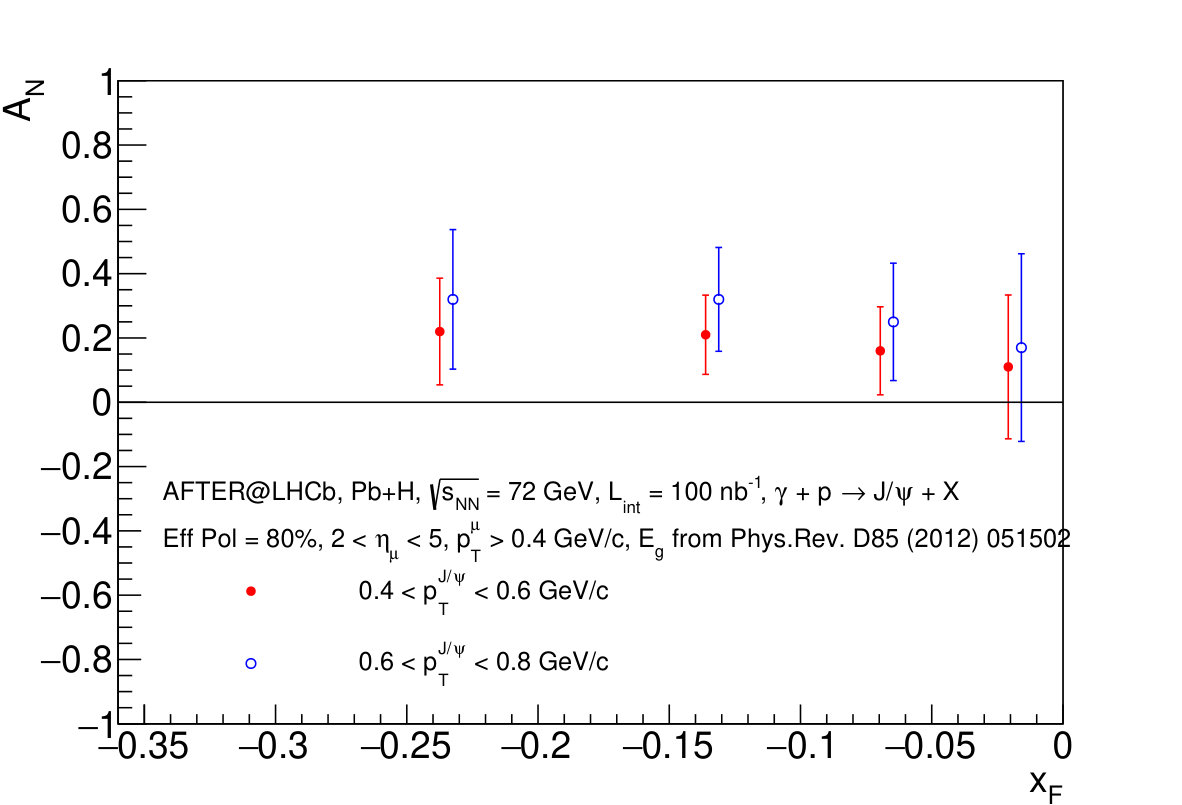 Figure 1
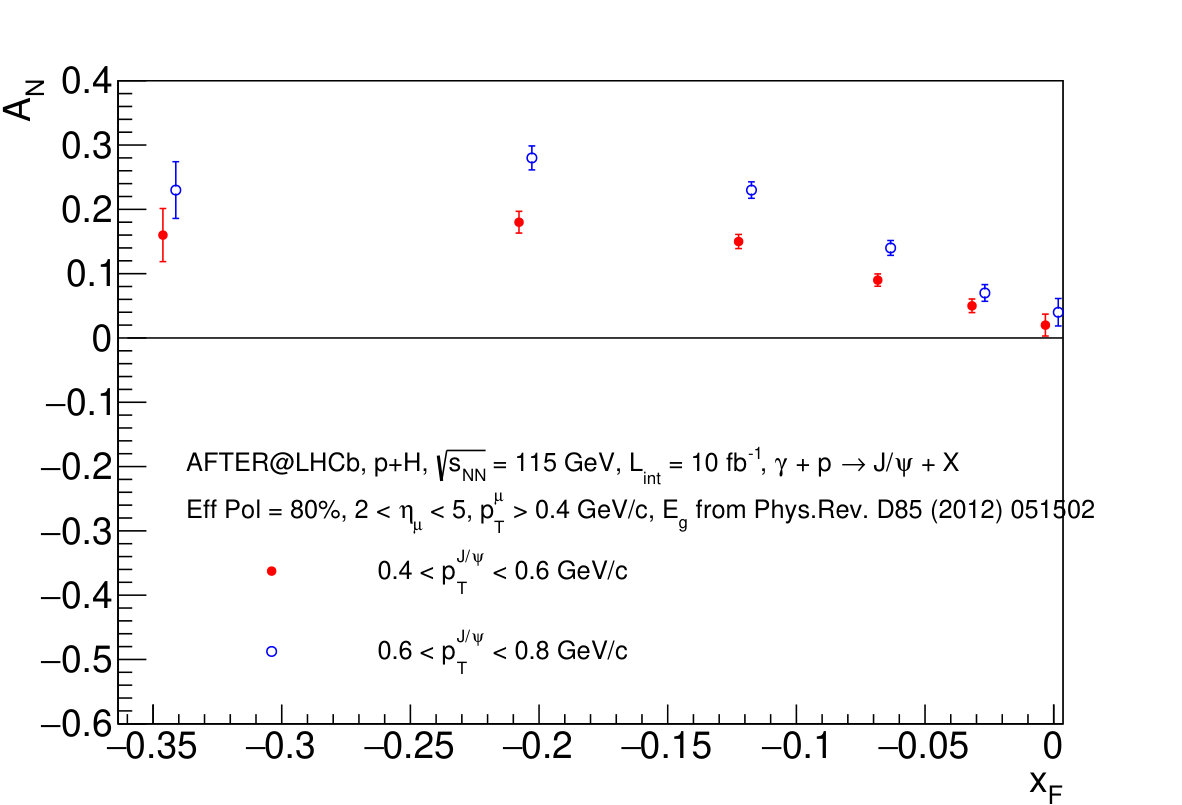 Figure 2
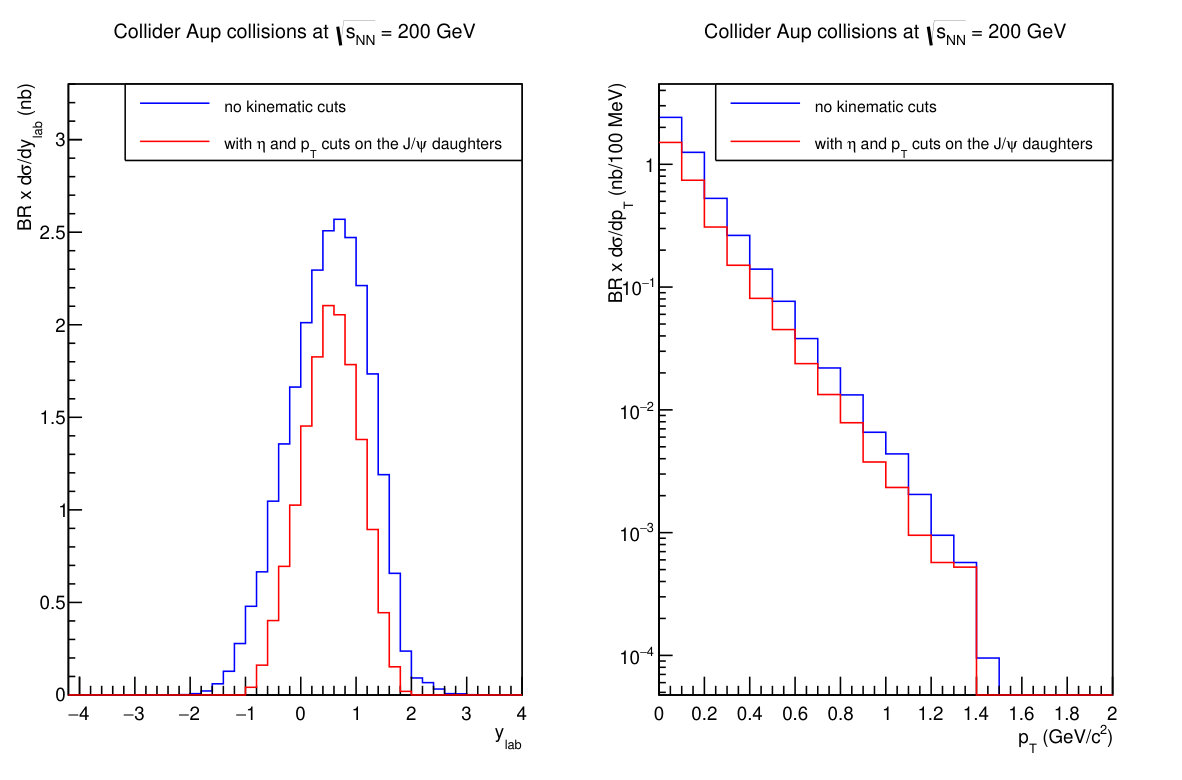 Figure 3
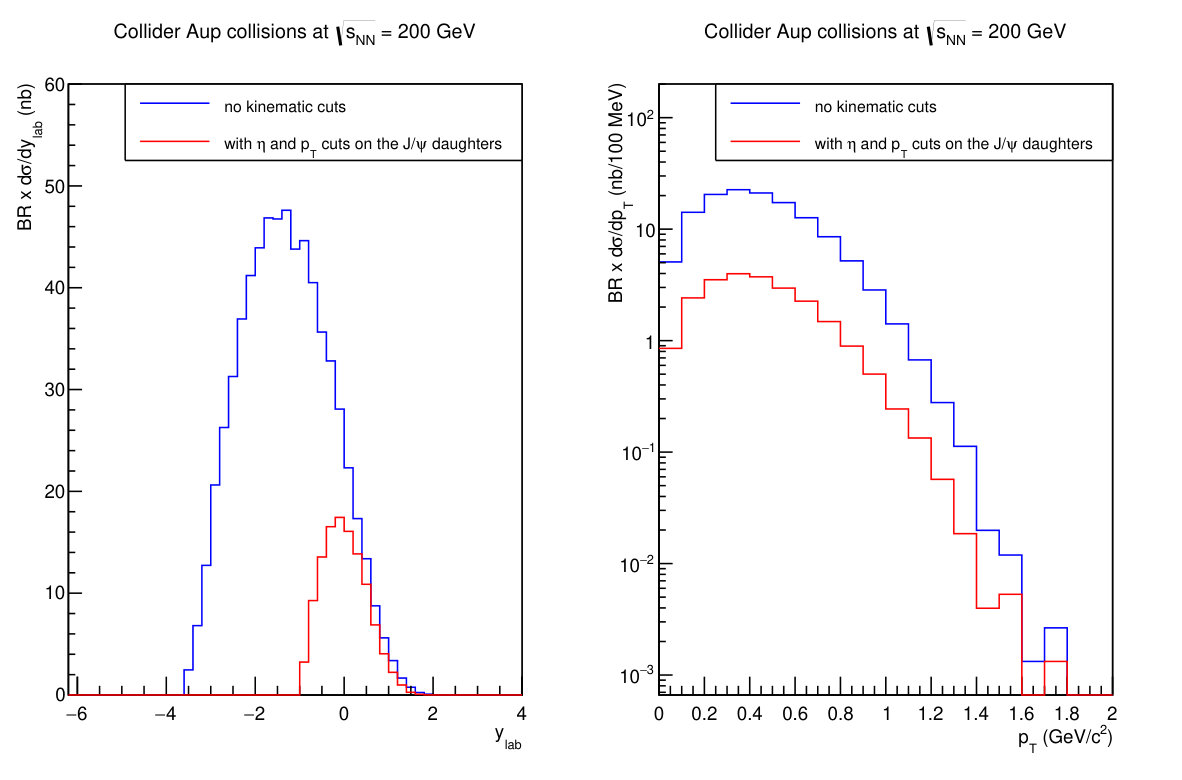 Figure 4
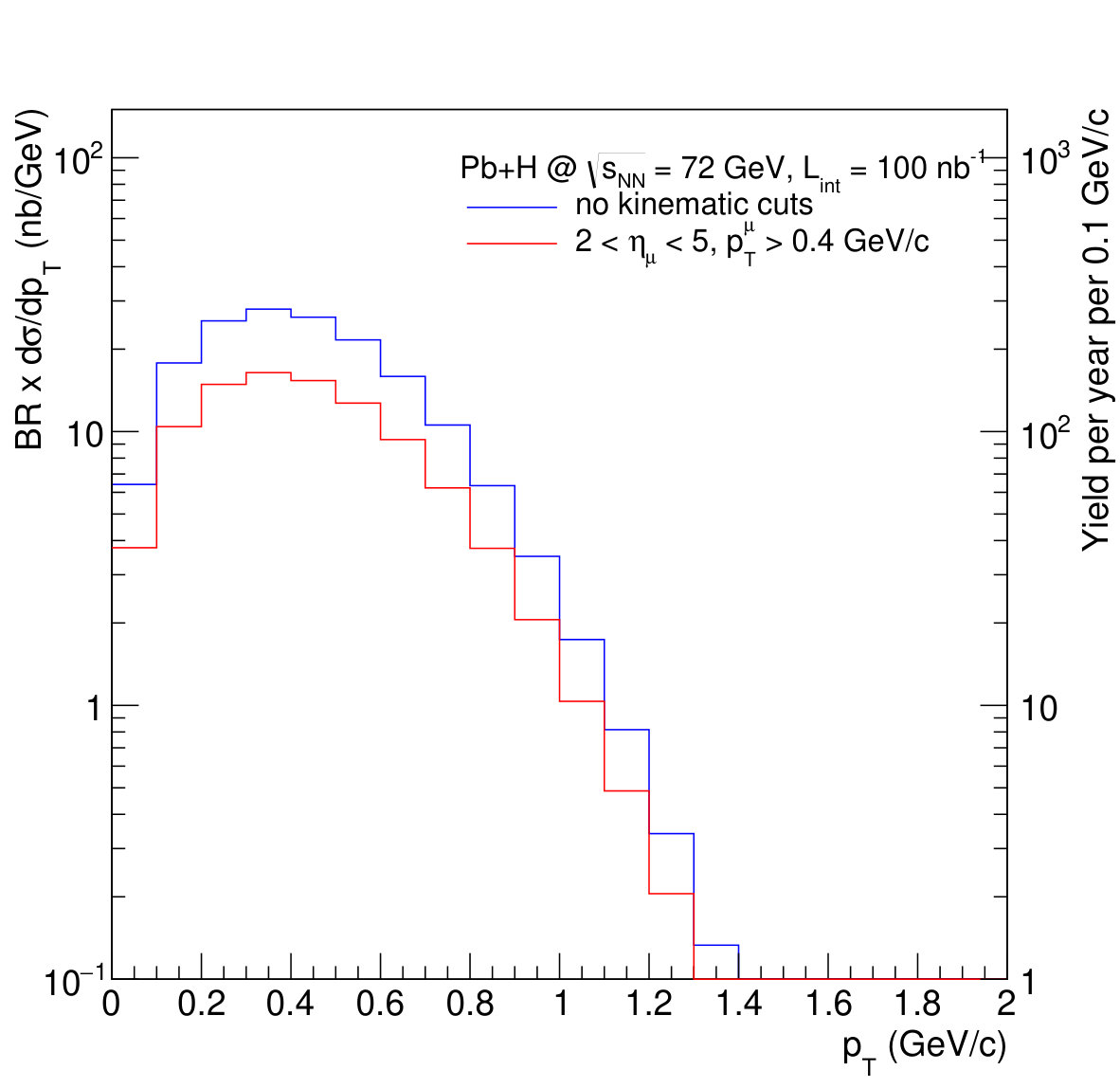 Figure 5
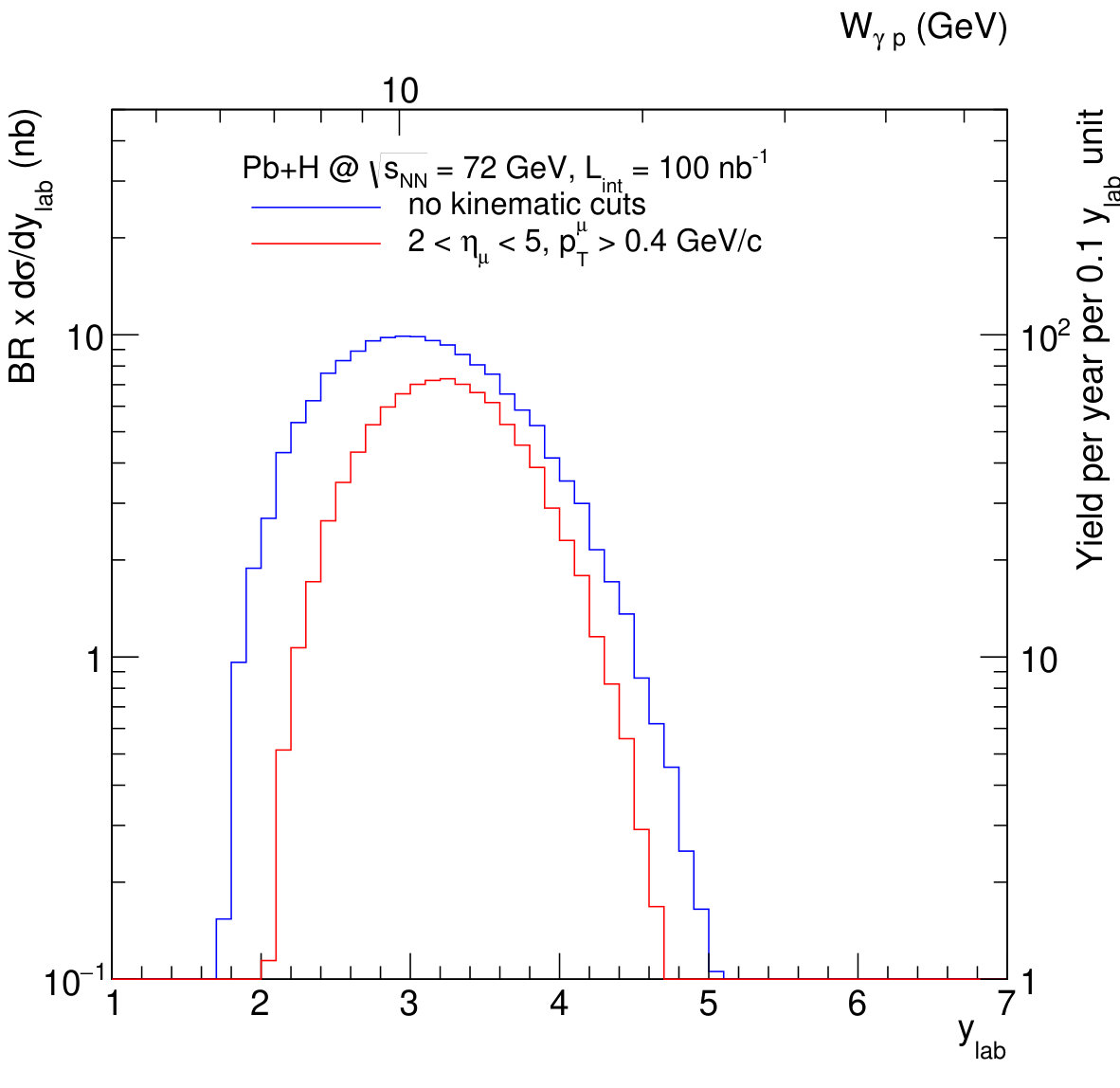 Figure 6
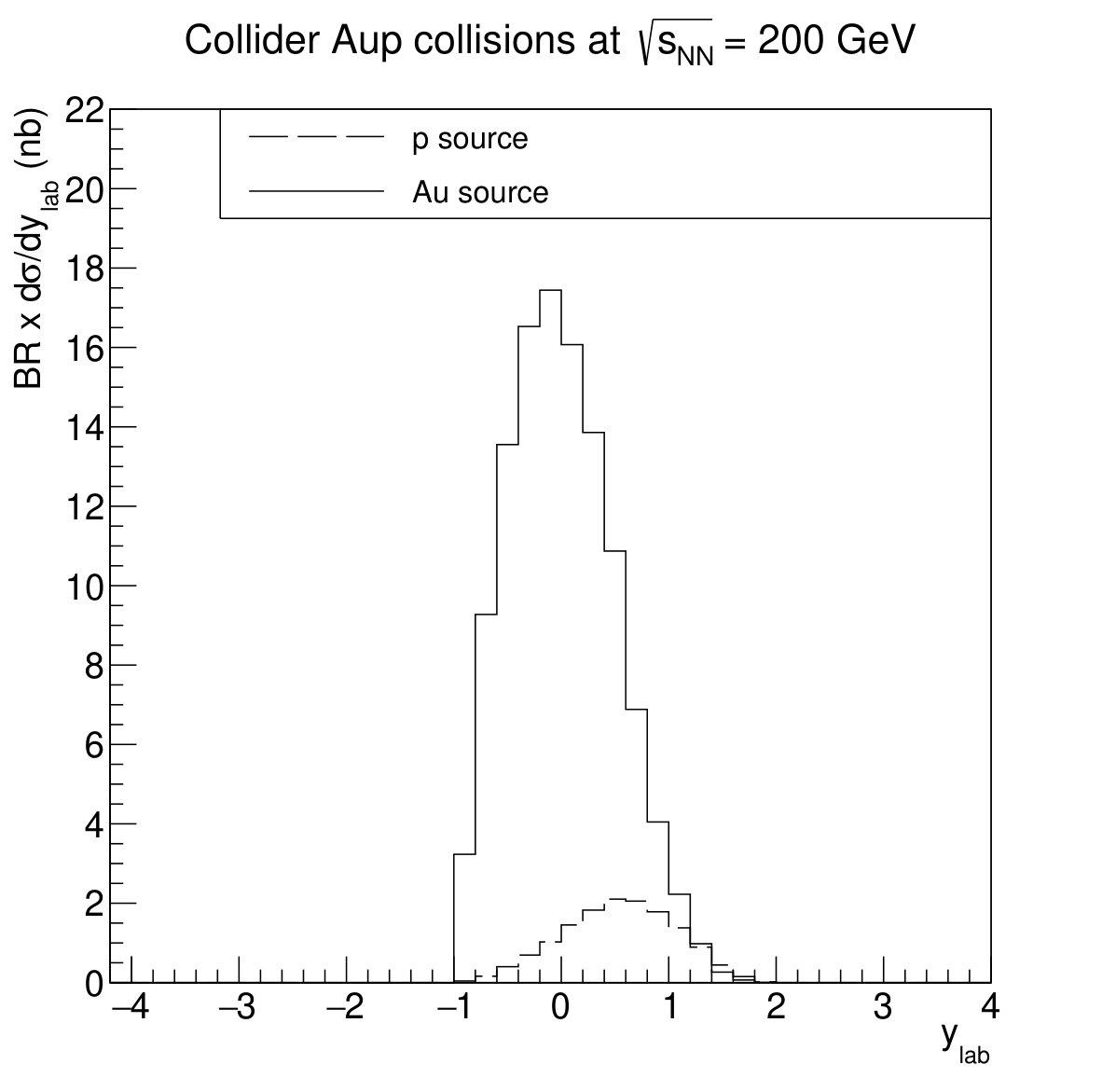 Figure 7
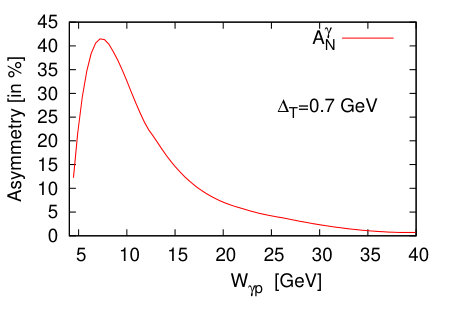 Figure 5
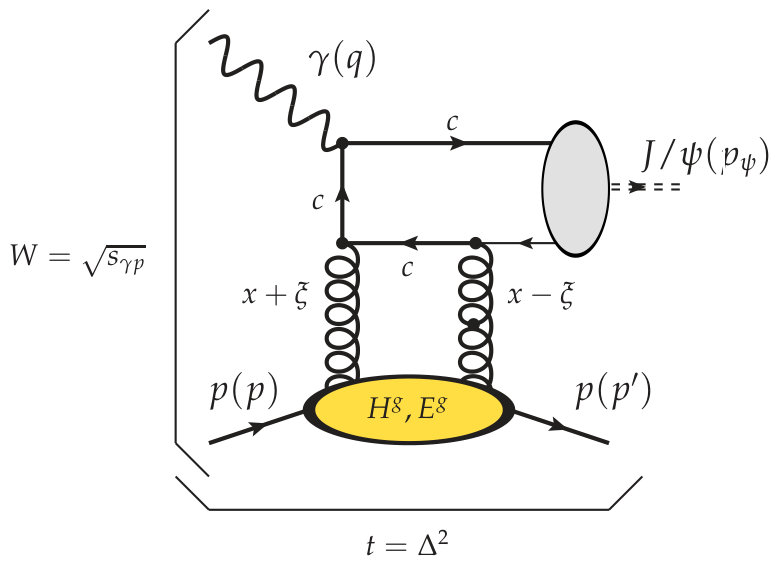 Figure 9
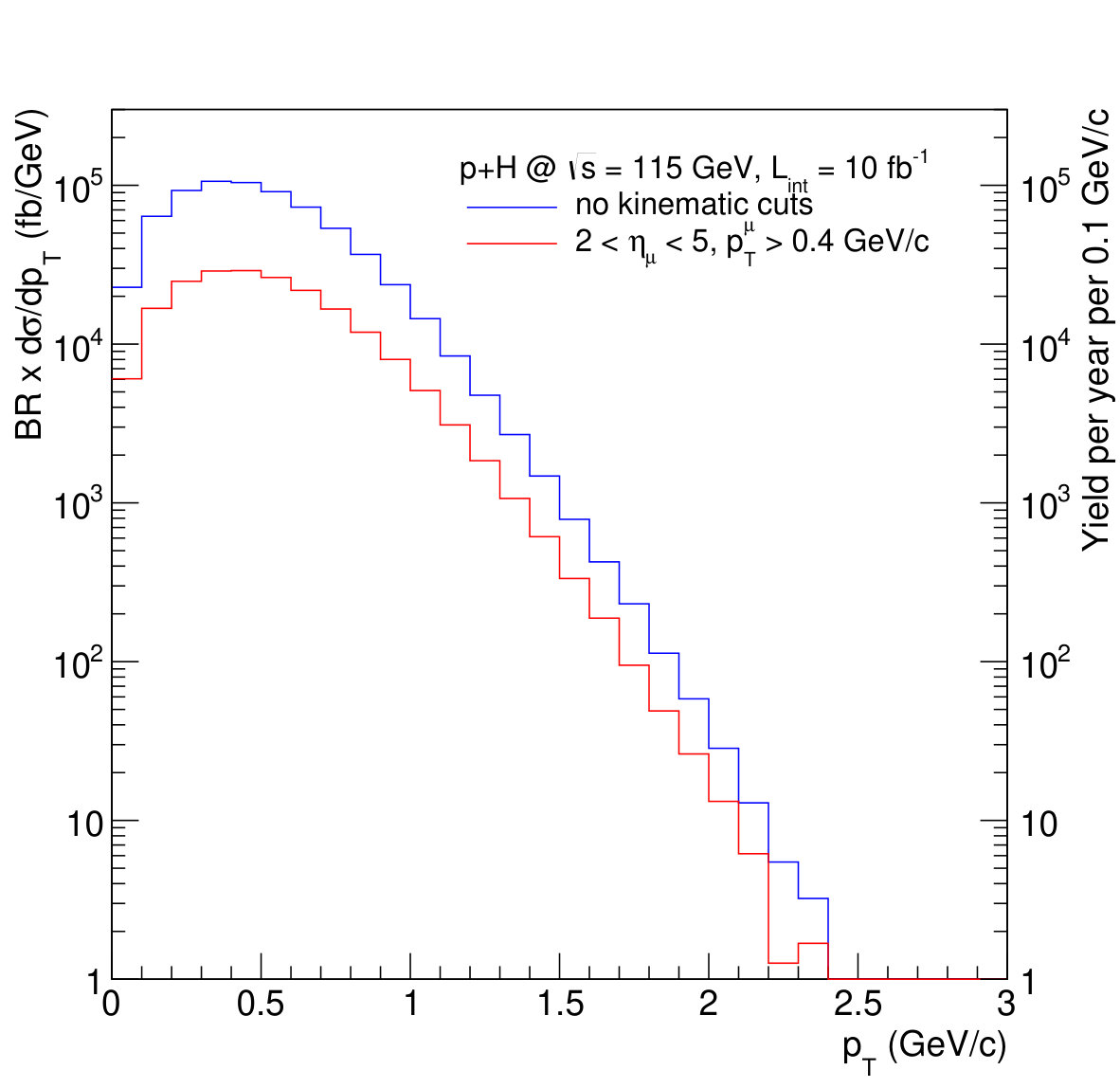 Figure 10
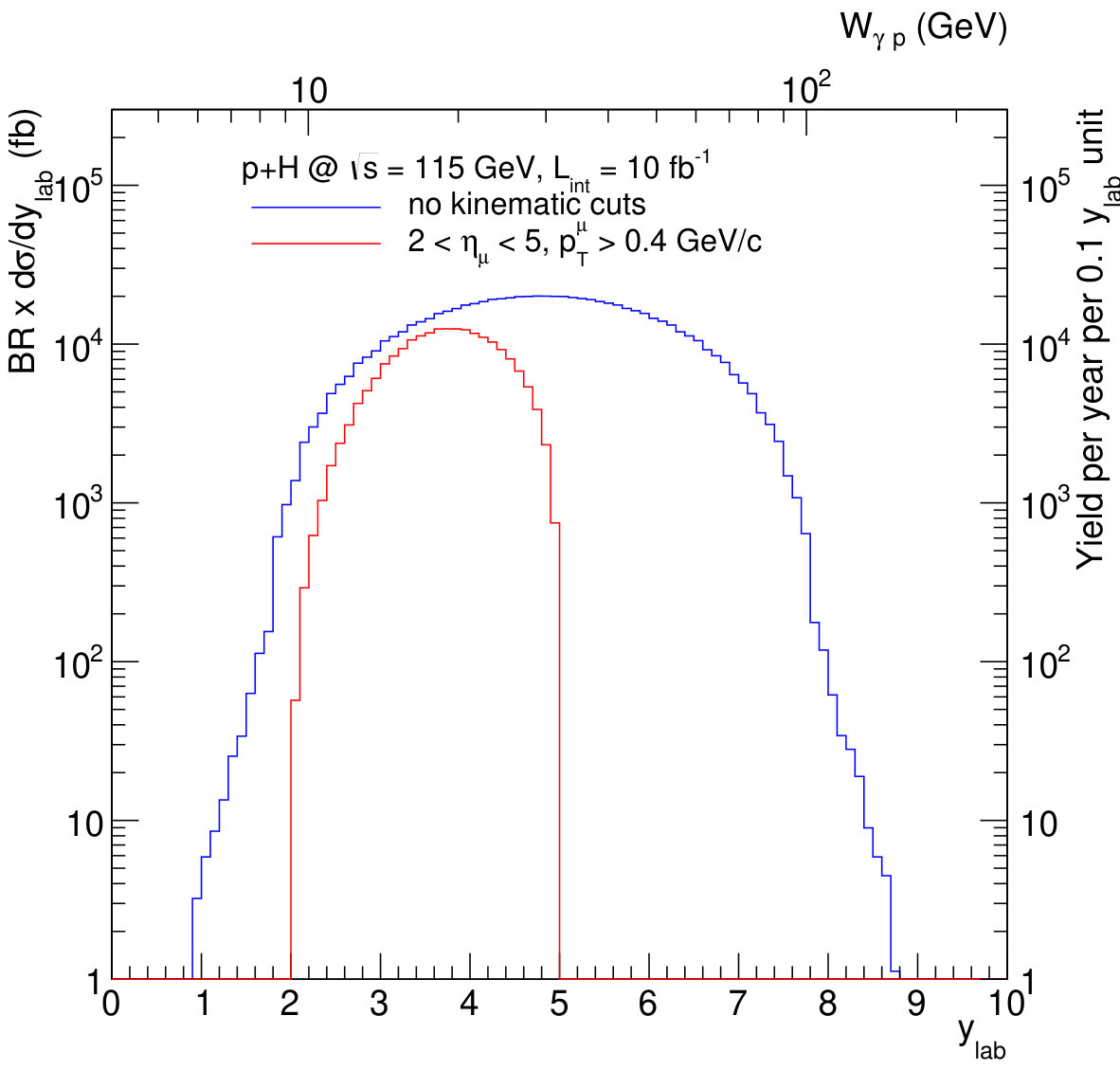 Figure 11
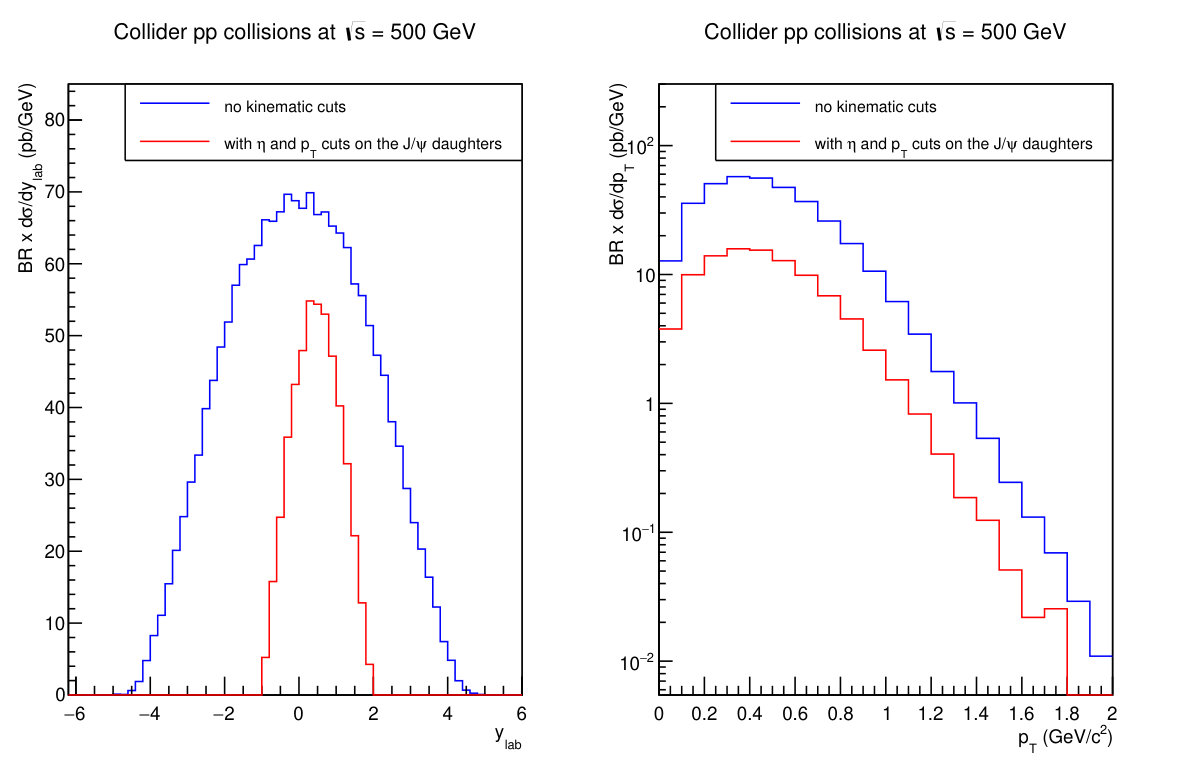 Figure 12
| System | 111For the AFTER@LHC case, the integrated luminosities given are maximum and do not account for possible data taking limitations from the detector point of view. Assuming an LHCb-like detector, the luminosities for D↑ and He↑ have to be limited to 1.0 104 pb-1yr-1 and 0.6 104 pb-1yr-1 respectively. | ||||
| (GeV) | (pb-1yr-1) | (GeV) | (GeV) | (GeV) | |
| AFTER@LHC | |||||
| H↑ | 115 | 1050 | 44 | 8.6 | |
| D↑ | 115 | 520 | 30 | 4.2 | |
| He↑ | 115 | 520 | 30 | 4.2 | |
| PbH↑ | 72 | 0.12 | 74 | 12 | 0.97 |
| PbD↑ | 72 | 62 | 11 | 0.82 | |
| Pb3He↑ | 72 | 62 | 11 | 0.82 | |
| RHIC (STAR) | |||||
| (2017) | 510 | 400 | 3190 | 77 | 15 |
| Au (2023) | 200 | 1.75 | 570 | 33 | 2.7 |
| Case 1 | Case 2 | Case 3 | Case 4 | ||
|---|---|---|---|---|---|
| Photon-emitter | proton | lead | proton | proton | gold |
| (pb) | |||||
| (with cut) (pb) | |||||
| (with cut, with cut) (pb) | |||||
Peer Reviews
No public reviews on file for this paper yet. If you reviewed it on a platform where reviews are public (OpenReview, ICLR, NeurIPS, ICML), you can paste yours below so the community can read it here.
Videos
No videos yet. Explain this paper in a talk, walkthrough, or lecture? Add one.
Single-Transverse-Spin Asymmetries in Exclusive Photo-production of in Ultra-Peripheral Collisions in the Fixed-Target Mode at the LHC and in the Collider Mode at RHIC
J.P. Lansberg
L. Massacrier
L. Szymanowski
J. Wagner
IPNO, CNRS-IN2P3, Univ. Paris-Sud, Université Paris-Saclay, 91406 Orsay Cedex, France
National Centre for Nuclear Research (NCBJ), Hoża 69, 00-681, Warsaw, Poland
Abstract
We investigate the potentialities offered by the study of exclusive photo-production in ultra-peripheral collisions at a fixed-target experiment using the proton and lead LHC beams (generically denoted as AFTER@LHC) on hydrogen targets and at RHIC in the collider mode. We compare the expected counting rates in both set-ups. Studying Single-Transverse-Spin Asymmetries () in such a process provides a direct path to the proton Generalised Parton Distribution (GPD) . We evaluate the expected precision on for realistic conditions with the LHCb detector in H↑ and PbH↑ collisions. We also discuss prospects with polarised deuterium and helium targets in the case of AFTER@LHC.
††journal: Physics Letters B
1 Introduction
The exclusive photo-/lepto-production of vector quarkonia, via , in the Bjorken limit is known to be a powerful tool to probe the tri-dimensional gluon content of the proton. If, in addition, it is studied on transversally polarised proton, it provides a direct access to the orbital angular momentum carried by the gluons, , which remains unmeasured.
The first attempt to perform this exclusive measurement was recently carried out by the COMPASS collaboration [1] in muo-production on a transversally polarised NH3 target at GeV in the limit where the takes the whole photon momentum. Studies at higher energies will only be possible at a possible future EIC [2].
Beside lepton-induced reactions, the same sub process can also be accessed in proton-proton and nucleus-proton by selecting collisions where a quasi-real photon is emitted by one proton or one nucleus. Such collisions are known as Ultra-Peripheral Collisions (UPC) and are routinely studied in nucleus-nucleus collisions at RHIC [3, 4, 5] and the LHC [6, 7, 8, 9]. At the LHC, they are also studied in proton-nucleus collisions [10]. Along the same lines, exclusive proton-proton scatterings can occur via a photon emission from one proton [11, 12, 13].
In [14], we have shown that UPCs can be studied in the fixed-target mode at the LHC beams (such a mode will generically be referred to as AFTER@LHC [15, 16] in what follows) up to GeV (see also [17, 18, 19]). In particular, pseudo-scalar quarkonium or exclusive photo-production of a dilepton can be studied to measure the quark GPDs. In this Letter, we demonstrate that can be accessed at AFTER@LHC via Single Transverse Spin Asymmetries (STSA or ) in UPCs in the same way that it can be accessed at RHIC and can be used to put constrain on the GPDs .
The structure of this Letter is as follows. In section 2, we recall the main characteristics of the UPCs and the corresponding photon fluxes in the fixed-target mode using the LHC beams. In section 3, we evaluate the expected cross sections for exclusive production and the corresponding counting rates both for AFTER@LHC and for RHIC based on Starlight [20]. In section 4, we extend the discussion in terms of GPDs and show how STSAs allow one to access the GPD and present the expected STSA magnitudes for AFTER@LHCb, namely with the LHCb detector is used. Finally, we present our conclusions and outlook for light nuclei.
2 Ultra-peripheral collisions in the fixed-target mode at the LHC and in the collider mode at RHIC
Charged hadrons moving at relativistic speed travel along electromagnetic fields which can be employed as quasi-real-photon beams. In the ultra-relativistic domain, the energy of these photons is such that they can trigger the production of hard dileptons, charmonia and even bottomonia, like at lepton-proton colliders.
The energy spectrum of these photons is usually computed in the Equivalent Photon Approximation (EPA) (see e.g. [21, 22]). It depends on the boost between the charged hadron and the observer as well as on the impact parameter . In particular, the flux as function of the photon momentum , of and (that is the Lorentz factor of the hadron – or nucleus – in the frame where is measured) reads
[TABLE]
where is the QED coupling, is the emitter charge, and are modified Bessel functions of the second kind. cannot be smaller than the hadron radius , hence the consideration of UPCs. If , the probability for hadronic interactions may be higher than the photon-induced ones and the colliding objects likely break up. In the case of nucleus emitter, one cannot consider the entire nucleus charge if .
Integrating Eq. (1) over down to , one has [22]
[TABLE]
For collisions, we choose ; for collisions, ; and for collisions for the number presented in Tab. 1. Whereas one can approximate to , we do not find appropriate to use for PbPb collisions, for instance. In addition, in collisions, it is also probably not justified to use a different when one considers the proton emission or the ion emission. In both cases, , or perhaps , are to be considered.
From the numbers of the fifth column, it is clear that such photon-nucleon collision are energetic enough to produce particles like as we discuss now.
3 Cross-section and yield estimations with Starlight
In order to assess the possibility to measure STSAs of exclusively photo-produced , we have evaluated the expected rates with the luminosities and kinematical conditions reported in the previous section using the Starlight MC generator [20] for four type of collisions:
H↑ collisions in the fixed-target mode ( = 115 GeV) for AFTER@LHC; 2. 2.
PbH↑ collisions in the fixed-target mode ( = 72 GeV) for AFTER@LHC; 3. 3.
collisions in the collider mode ( = 500 GeV) for RHIC; 4. 4.
Au collisions in the collider mode ( = 200 GeV) for RHIC.
The first particle is always defined with a positive rapidity (both in fixed-target or collider modes). For instance, this means that, in Au collisions, the gold ion travels with a positive rapidity and proton with a negative rapidity (case 4). A summary of the production cross sections obtained in the four cases is reported in Tab. 2. The second line indicates which particle is considered to be the photon emitter for the cross-section computation. The third line reports the production cross section for the dimuons (case 1 and 2) and dielectrons (case 3 and 4) resulting from the decay (assuming a coherent photo-production when the photon-receptor is a nuclei). On the fourth line, we reported the same production cross sections after the application of pseudo-rapidity cuts on the decay products (2 5 for the AFTER@LHC cases and -1 2 for the RHIC cases). The fifth line still indicates the cross section but with an additional cut on both leptons, namely 0.4 GeV/c. Let us note that the effect of the cut, after the pseudo-rapidity cut, is negligible. The kinematical selections listed above for the AFTER@LHC cases are meant to mimic an LHCb-like detector set-up [15] (alos referred to as AFTER@LHCb), while the kinematic selections for the RHIC cases are the ones described in [23] and corresponds to the STAR detector.
Fig. 1 (a) shows the rapidity222in the laboratory frame-differential cross section of the photo-produced , in the dimuon decay channel, in proton-Hydrogen fixed-target collisions at = 115 GeV (case 1), obtained with the Starlight generator. Fig. 1 (b) shows the -differential cross section of the photo-produced for case 1. The blue curves have been produced without applying kinematic cuts (similarly to third line of Tab. 2), while the red curves are produced by applying the and cuts described in the text above (similarly to last line of Tab. 2). The - (left) and -differential (right) cross section distributions of photo-produced for case 2 (assuming Pb nuclei as photon-emitter), case 3, case 4 (assuming the proton as photon-emitter), case 4 (assuming the Au nuclei as photon-emitter) are respectively shown on Fig. 1 (c & d), Fig. 2 (left & right), Fig. 3 (top left & right) and Fig. 3 (bottom left & right). Moreover, Fig. 4 shows the rapidity-differential cross sections of the photo-produced for case 4, where the contributions after kinematical cuts from the gold emitter (solid line) and proton emitter (dashed line) are overlaid for comparison. The rapidity distribution for both contributions exhibits similar trend as in Figure 2-20 of Reference [23] obtained with the SARTRE MC generator[24].
Assuming a polarised internal gas target for AFTER@LHC, with a storage cell like the HERMES system, integrated luminosities as large as 10 fb*-1* per year would be collected in proton-hydrogen collisions [25, 26, 15, 27]. This would result in a yearly yield of 200 000 photo-produced emitted in the LHCb acceptance. Concerning collisions of Pb nuclei on hydrogen target, the collection of an integrated luminosity of 0.1 pb*-1* per year is expected in AFTER@LHC with the internal gas target option. This would result in 1 000 photo-produced per year333An LHC year corresponds to about 106s of Pb beam and 107s of proton beam. emitted in the LHCb acceptance. Since a gas target without a storage cell –like the H-jet system used at RHIC [28]– corresponds to luminosities close to 2 order of magnitude lower, it seems difficult (despite a better gas polarisation) to envision such a solution for the PbH↑ case since the flux of polarised hydrogen is limited. Note however that for polarised 3He↑ or unpolarised hydrogen, the flux can be increased to compensate for the decrease of luminosity [25, 15].
These numbers can be compared to the expected photo-produced yields from simulations, applying the STAR experiment at RHIC kinematical cuts, for collisions at = 500 GeV. we assumed the Run-2017 STAR data taking conditions 444Note however the slight difference in the assumed, since the simulations were performed prior to the 2017 data taking, where the collection of an integrated luminosity of 400 pb*-1* occured. According to our Starlight simulations, one could expect the production of about 41 000 in the STAR acceptance555In [23], a similar study was performed with the SARTRE MC generator, accounting for, on top of kinematical cuts, all trigger and reconstruction efficiencies. The expected number of detected photo-produced was found to be 11000.. Our simulations suggest that the photo-production rate in H↑ collisions at AFTER@LHC is about a factor five bigger that at RHIC per year.
In 2023, STAR is expected to collect 1.75 pb*-1* of Au collisions. According to Starlight, one would expect the production of 40 000 666In [23], a similar study was performed with the SARTRE MC generator, accounting for, on top of kinematical cuts, all trigger and reconstruction efficiencies. The expected number of detected photo-produced was found to be 13000. with gold nuclei as the photon source. In PbH↑ collisions, the photo-production yield at AFTER@LHC would be smaller by at least one order of magnitude with respect to RHIC Au collisions.
4 Evaluation of the STSAs within the GPD formalism
The most common theoretical framework to describe exclusive photo-production of vector quarkonia [29] in the collinear factorisation is based on the introduction of generalised parton distributions (GPDs) [30, 31, 32, 33, 34, 35, 36, 37]. In ths section, we derive the relation between the STSA and the gluon GPDs.
4.1 Elements of kinematics
According to Fig. 5, is the photon momentum, (resp. ) is the incoming (resp. outgoing) proton momentum and the momentum. Then, we define
[TABLE]
where is the fraction of the longitudinal momentum transfer.
To parametrise the momenta of the particles in the process, it is convenient to introduce two light-cone vectors: Any vector is then decomposed in the following way:
We choose the coordinate frame in which the momenta are given by:
[TABLE]
where is the nucleon mass. We are interested in the kinematic region where the invariant transferred momentum,
[TABLE]
is much smaller (in absolute value) than . In the scaling limit the variable parametrises the plus component of the momentum transfer.
4.2 The STSA in terms of the GPDs
The factorisation formula at the leading order in , in which the quark contribution is absent, reads:
[TABLE]
where: is the electric charge of the heavy quark (, ), is the radial wave function at the origin in the configuration space, (resp. ) is the polarisation vector of the (resp. ) and the gluon hard-scattering amplitude, describing the partonic subprocesses which, at LO, reads:
[TABLE]
The hard-scattering amplitudes at NLO were calculated in [29, 38, 39].
The relevant GPDs are defined as the matrix element of renormalised light-cone gluon operators and are given by:
[TABLE]
where and are functions of , , and of the factorisation scale . In the current study, owing the lack of knowledge on the GPD , we do not consider useful to study the scale uncertainties by varying them about a default value. A reasonable value for the latter is which we use for and . This choice is implied in the following formulae. We further note that the insertion of a path-ordered gauge factor between the field operators is implied in the above definition. We do not discuss it further as it does not affect the phenomenology.
To go further we introduce the gluonic form factors
[TABLE]
which permit to write gluonic contribution to the scattering amplitude as777In what follows, we will drop dependence of the gluonic form factors.
[TABLE]
In order to calculate transverse spin asymmetry, we assume that initial proton is polarised and characterised by the polarisation vector such that and , then using the dependent part [hence the subscript ””] of the square of absolute value of spinor matrix element in Eq. (10) (in bracket) summed over the polarisation of the final nucleon reduces to
[TABLE]
where ()
[TABLE]
One sees that the spin dependence only survives when the polarisation vector has a transverse component, i.e. the initial proton is (transversely) linearly polarised. In what follows, we will assume that the proton is transversely polarised. The is the angle between and vectors.
On the other hand, the spinor matrix element in bracket in Eq. (10) summed over the polarisations both of initial and final protons equals
[TABLE]
The expresions of Eq. (11) and Eq. (13)) constitute the basis of definition of the STSAs, which in the photo-production case, can be written in the form
[TABLE]
The GPD is and will be extracted from exclusive processes with unpolarised target. Well tested models describing it exists. On the other hand, almost nothing is known about the GPD which plays crucial role in the Ji sum rule describing decomposition of the proton spin [36]. Equation 14, previously obtained in [40], proves that measuring STSAs should significantly improve that knowledge.
4.3 STSA magnitude prediction and uncertainty projections for AFTER@LHC
To estimate size of the expected asymmetry we will use the popular Goloskokov-Kroll model for the GPD [41]. As what concerns the essentially unknown GPD , we will following the modelling of [40], and choose the variant V4 resulting in the largest asymmetry. This choice should however not be seen as a potential upper limit. Indeed, since this paper appeared, relatively large gluon-Sivers based spin asymmetries were observed by COMPASS in di-hadron production [42]. As such, cannot be negligibly small as sometimes thought earlier.
On Fig. 6, we show the magnitude of the asymmetry in the photo-production as a function of , for . We observe that the used models predict a sizeable asymmetry for moderate values of and its gets close to zero for larger energies.
AFTER@LHC would create a unique possibility to study such a single transverse spin asymmetries, which is sensitive to yet unknown GPD [40], through UPCs. In the present analysis we study two modes: proton-hydrogen and lead-hydrogen collisions at AFTER@LHC. Using the Equivalent Photon Approximation (EPA) we can calculate the hadronic cross section as the convolution of the Weizsacker-Williams photon fluxes with the photo-production cross section:
[TABLE]
Assuming that the hadron is polarised, the (hadronic) STSA, can be expressed in terms of the (photonic) STSA :
[TABLE]
To get the most realistic predictions for the asymmetry in UPCs, we are using the GPD-based prediction for given by Eq. (14). However, it is well known that the normalisation of the production cross section based on GPDs is plagued by large uncertainties. Since data exist, it is therefore expedient to rather resort to a parametrisation of the unpolarised cross section like the one used in Starlight [20], namely
[TABLE]
with and . The distribution and distribution for those cases are shown on the Fig.1.
Our prediction for the STSA along with its statistical uncertainty888These are evaluated as follows. The photo-produced yields, obtained with Starlight and the evaluated magnitude of the STSA, defined as
(18)
allows one to evaluate and (), i.e. the number of photo-produced for an up (down) target polarisation orientation where is the effective polarisation of the target. From these, we have evaluated the statistical uncertainty on , , as
(19)
with () the relative uncertainties on the yields with up (down) polarisation orientation. in the kinematics relevant for the GPD extraction are presented as a function of Feynman-, ,999 is defined as: where is the rapidity in the cms frame and the cms energy. on Fig. 7 . It clearly indicate that AFTER@LHC is able to perform the first determination of .
5 Conclusions
In conclusion, we have evaluated the expected cross sections for a LHCb-like detector used in fixed-target mode (AFTER@LHCb) with the 7 TeV and 2.76 TeV Pb LHC beams and compared them to those expected at RHIC. These are similar. However, the use of the fixed-target mode allows one to probe a very different kinematics at much larger in the polarised nucleons.
Using a polarised-internal-gas target with a storage cell, we expect to be able to record a fraction of a million of photoproduced ’s with the beam and about one thousand with the Pb beam. The latter case has the great advantage that the photon emitter is necessarily the Pb nucleus. With target densities about 2 orders of magnitude smaller, it seems complicated to perform such a measurement with the Pb beam without storage cell, except for the case of polarised 3He↑ for which the injected gas flux can be increased. The latter case is particularly interesting as it allows one to probe polarised neutrons.
We have then used a model of the GPD to predict the magnitue of the STSA. When folded with the expected size of the statistical samples and the target polarisation, we have found that STSAs can be measured with a precision from 1 to 4 % for H↑ collisions and 10 to 40 % for PbH↑ collisions. In both cases, the accessible range in is from [math] down to . Overall, we consider these results as a confirmation that the first measurement of the GPD can be made in the fixed-target mode at the LHC by 2025.
Finally, let us emphasise that gaseous deuterium and helium (3 and 4) (un)polarised targets can be used with AFTER@LHCb [15]. The expected luminosities are at least as large as those discussed here. If one can ensure that the nucleus stays intact, this would provide new means to study the GPDs of these light nuclei [43, 44, 45, 46, 47, 48, 49, 50, 51, 52, 53, 54] .
Acknowledgements
We thank S. Klein, J. Nystrand for useful discussions. This work is partly supported by the COPIN-IN2P3 Agreement, by the grant 2017/26/M/ST2/01074 of the National Science Center in Poland, by French–Polish scientific agreement POLONIUM.
The reference list from the paper itself. Each links out to its DOI / PubMed record.
- 1[1] J. Matousek, “Quarkonium Studies at COMPASS Experiment,” Few Body Syst. 58 no. 3, (2017) 126 . · doi ↗
- 2[2] A. Accardi et al. , “Electron Ion Collider: The Next QCD Frontier,” Eur. Phys. J. A 52 no. 9, (2016) 268 , ar Xiv:1212.1701 [nucl-ex] . · doi ↗
- 3[3] STAR Collaboration, C. Adler et al. , “Coherent rho 0 production in ultraperipheral heavy ion collisions,” Phys. Rev. Lett. 89 (2002) 272302 , ar Xiv:nucl-ex/0206004 [nucl-ex] . · doi ↗
- 4[4] STAR Collaboration, J. Adams et al. , “Production of e+ e- pairs accompanied by nuclear dissociation in ultra-peripheral heavy ion collision,” Phys. Rev. C 70 (2004) 031902 , ar Xiv:nucl-ex/0404012 [nucl-ex] . · doi ↗
- 5[5] PHENIX Collaboration, S. Afanasiev et al. , “Photoproduction of J/psi and of high mass e+e- in ultra-peripheral Au+Au collisions at s**(1/2) = 200-Ge V,” Phys. Lett. B 679 (2009) 321–329 , ar Xiv:0903.2041 [nucl-ex] . · doi ↗
- 6[6] ALICE Collaboration, B. Abelev et al. , “Coherent J / ψ 𝐽 𝜓 J/\psi photoproduction in ultra-peripheral Pb-Pb collisions at s N N = 2.76 subscript 𝑠 𝑁 𝑁 2.76 \sqrt{s_{NN}}=2.76 Te V,” Phys. Lett. B 718 (2013) 1273–1283 , ar Xiv:1209.3715 [nucl-ex] . · doi ↗
- 7[7] ALICE Collaboration, E. Abbas et al. , “Charmonium and e + e − superscript 𝑒 superscript 𝑒 e^{+}e^{-} pair photoproduction at mid-rapidity in ultra-peripheral Pb-Pb collisions at s NN subscript 𝑠 NN \sqrt{s_{\rm NN}} =2.76 Te V,” Eur. Phys. J. C 73 no. 11, (2013) 2617 , ar Xiv:1305.1467 [nucl-ex] . · doi ↗
- 8[8] ALICE Collaboration, J. Adam et al. , “Coherent ψ 𝜓 \psi (2S) photo-production in ultra-peripheral Pb Pb collisions at s NN subscript 𝑠 NN \sqrt{s}_{\rm NN} = 2.76 Te V,” Phys. Lett. B 751 (2015) 358–370 , ar Xiv:1508.05076 [nucl-ex] . · doi ↗