TL;DR
This paper evaluates the background noise levels for the TREX-DM dark matter detector, using simulations and measurements, to improve its sensitivity in detecting low-mass WIMPs.
Contribution
It provides a comprehensive background model for TREX-DM, including simulations and measurements, and proposes a plan to reduce background levels further.
Findings
Background levels estimated at 1-10 counts keV-1 kg-1 d-1
Simulation and measurement methods validated for background assessment
A plan to reduce background to 0.1 counts keV-1 kg-1 d-1
Abstract
TREX-DM is conceived to look for low-mass Weakly Interacting Massive Particles (WIMPs) using a gas Time Projection Chamber equipped with micromegas readout planes at the Canfranc Underground Laboratory. The detector can hold in the active volume 20 l of pressurized gas up to 10 bar, corresponding to 0.30 kg of Ar or 0.16 kg of Ne. The micromegas are read with a self-triggered acquisition, allowing for thresholds below 0.4 keV (electron equivalent). A low background level in the lowest energy region is another essential requirement. To assess the expected background, all the relevant sources have been considered, including the measured fluxes of gamma radiation, muons and neutrons at the Canfranc Laboratory, together with the activity of most of the components used in the detector and ancillary systems, obtained in a complete assay program. The background contributions have been…
Click any figure to enlarge with its caption.
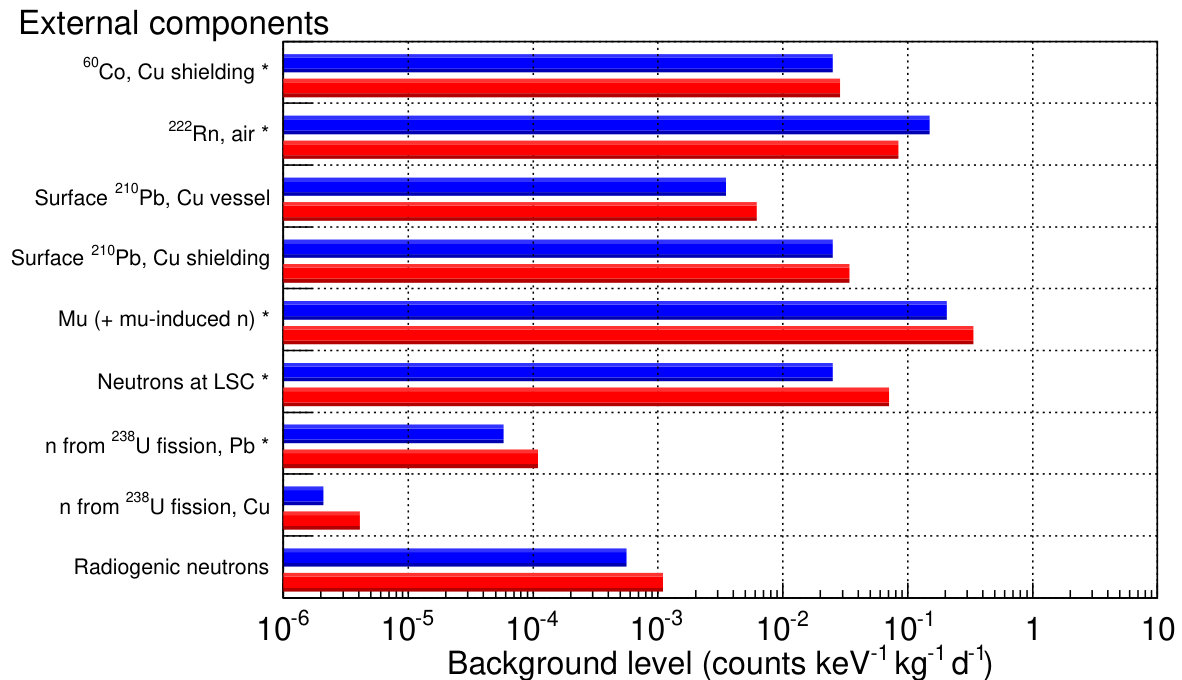 Figure 1
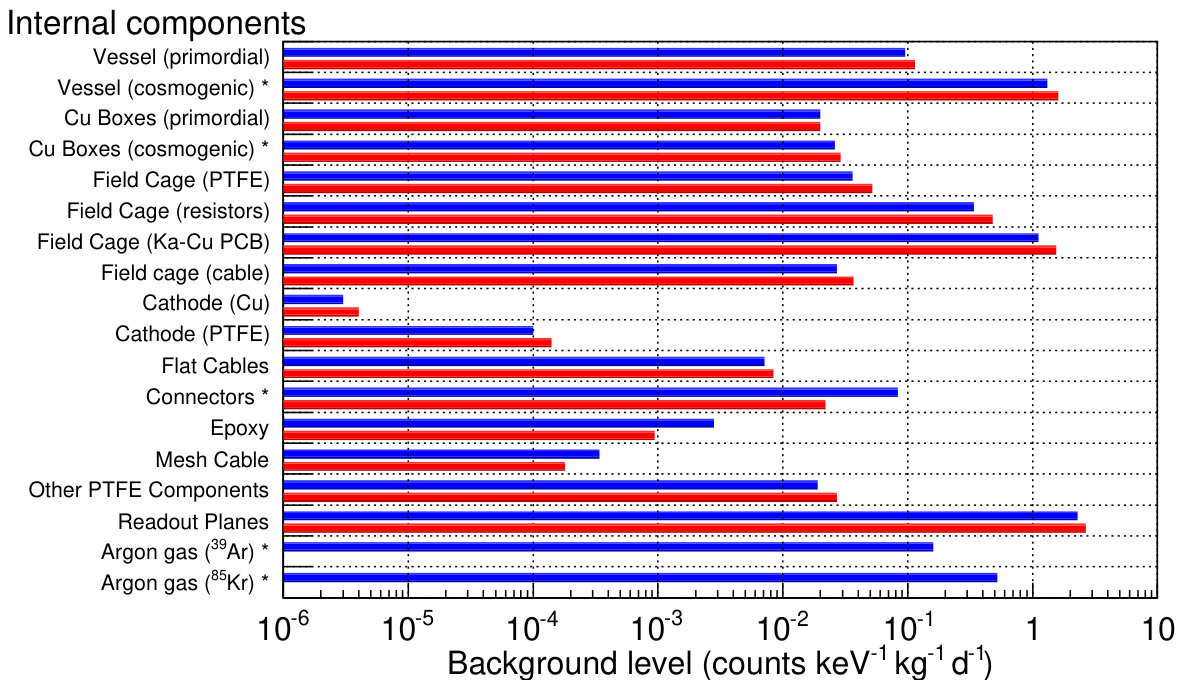 Figure 2
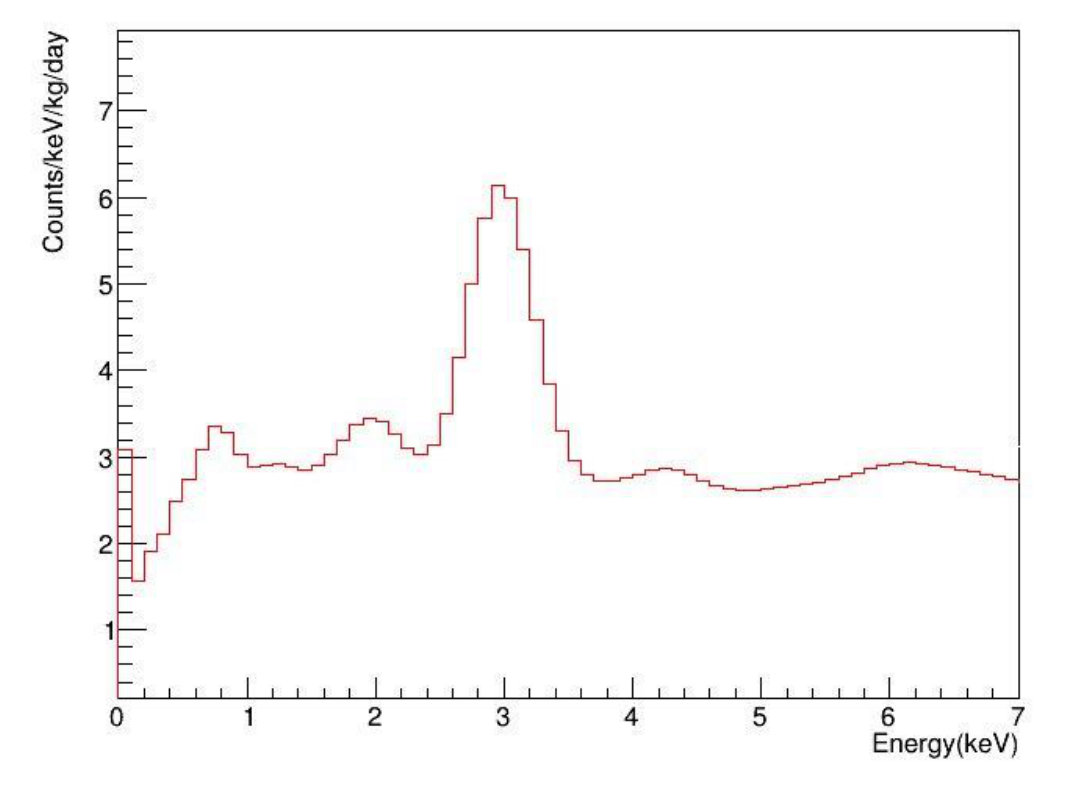 Figure 3
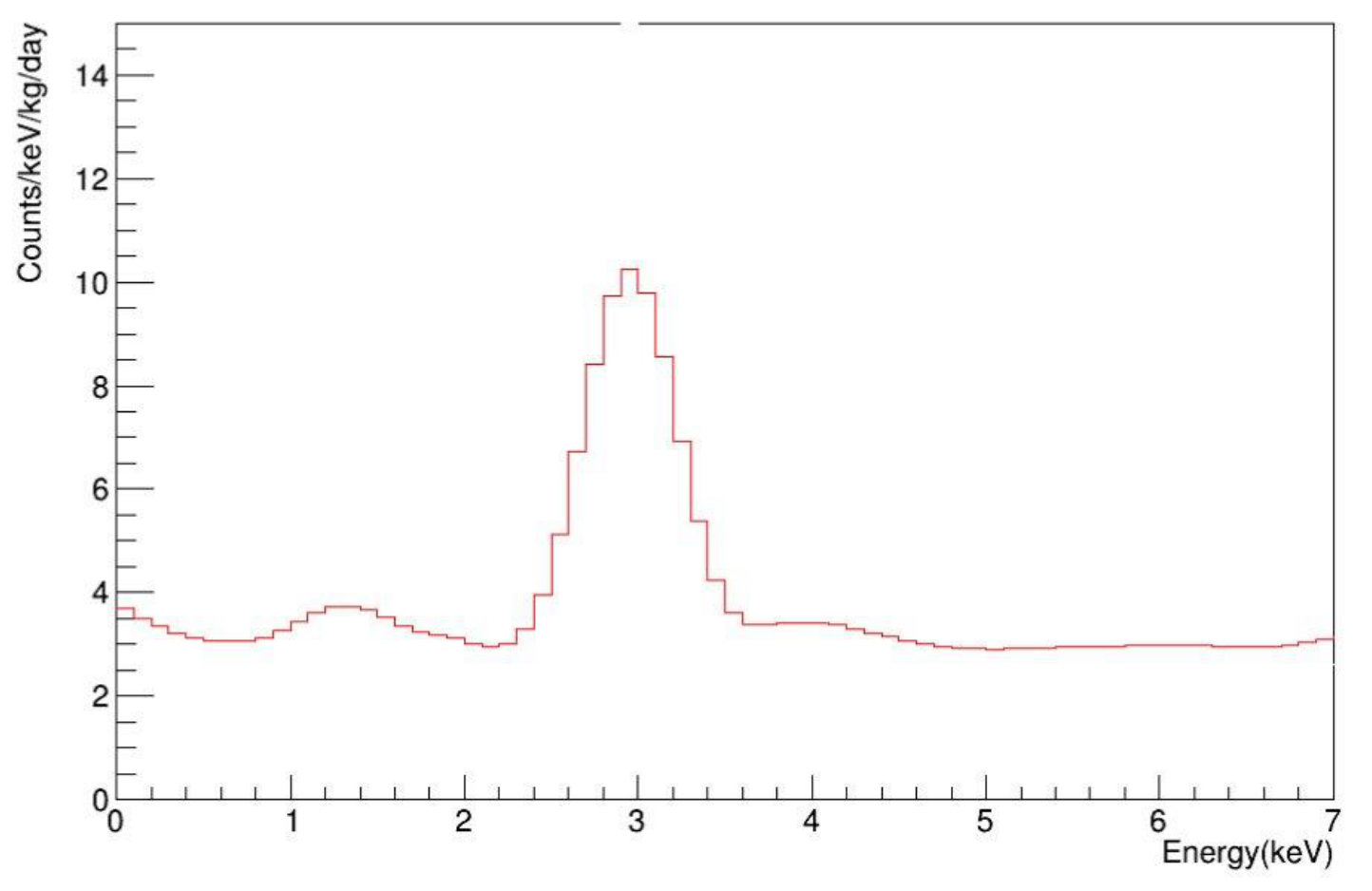 Figure 4
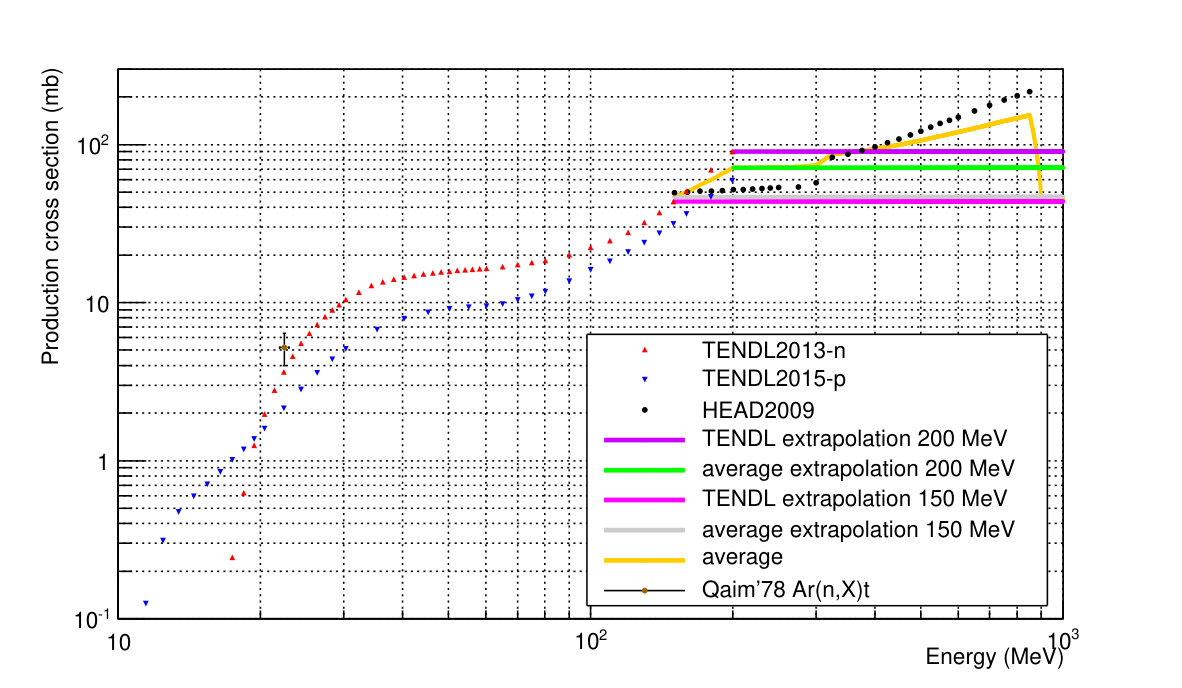 Figure 5
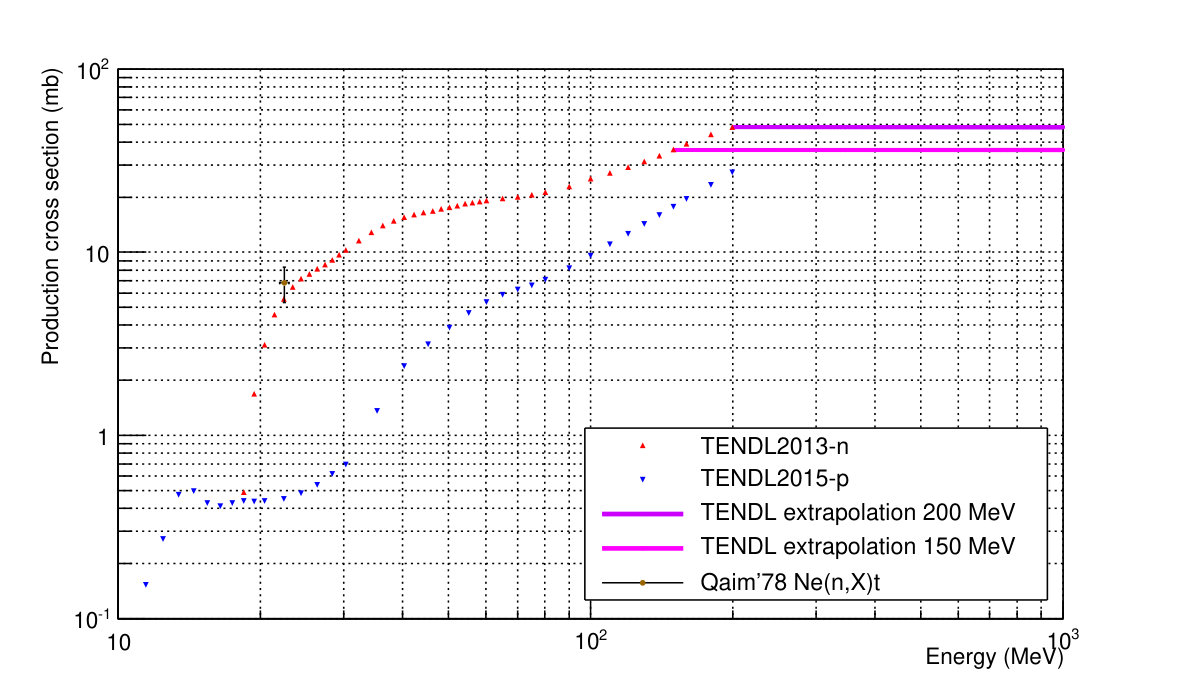 Figure 6
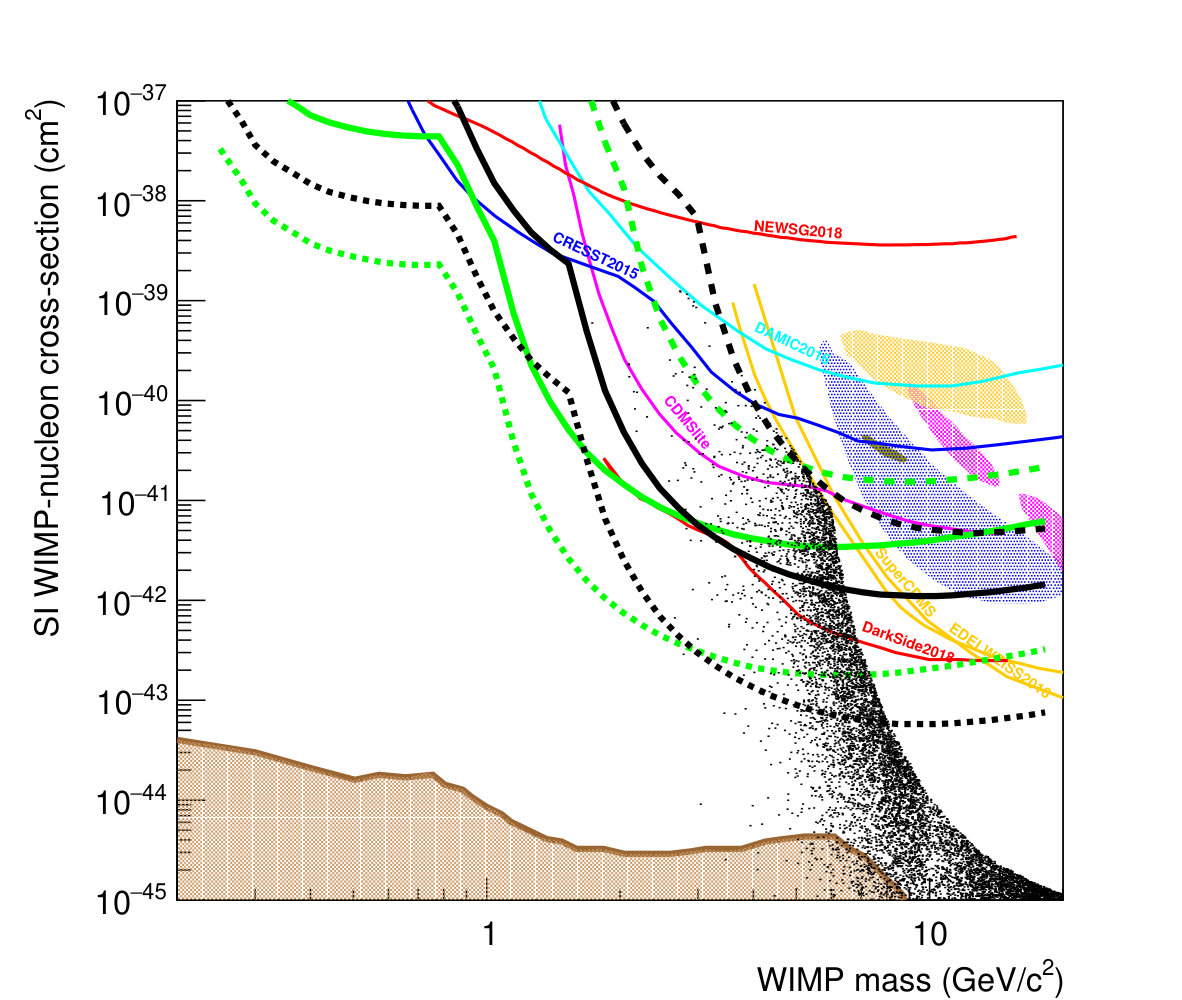 Figure 7
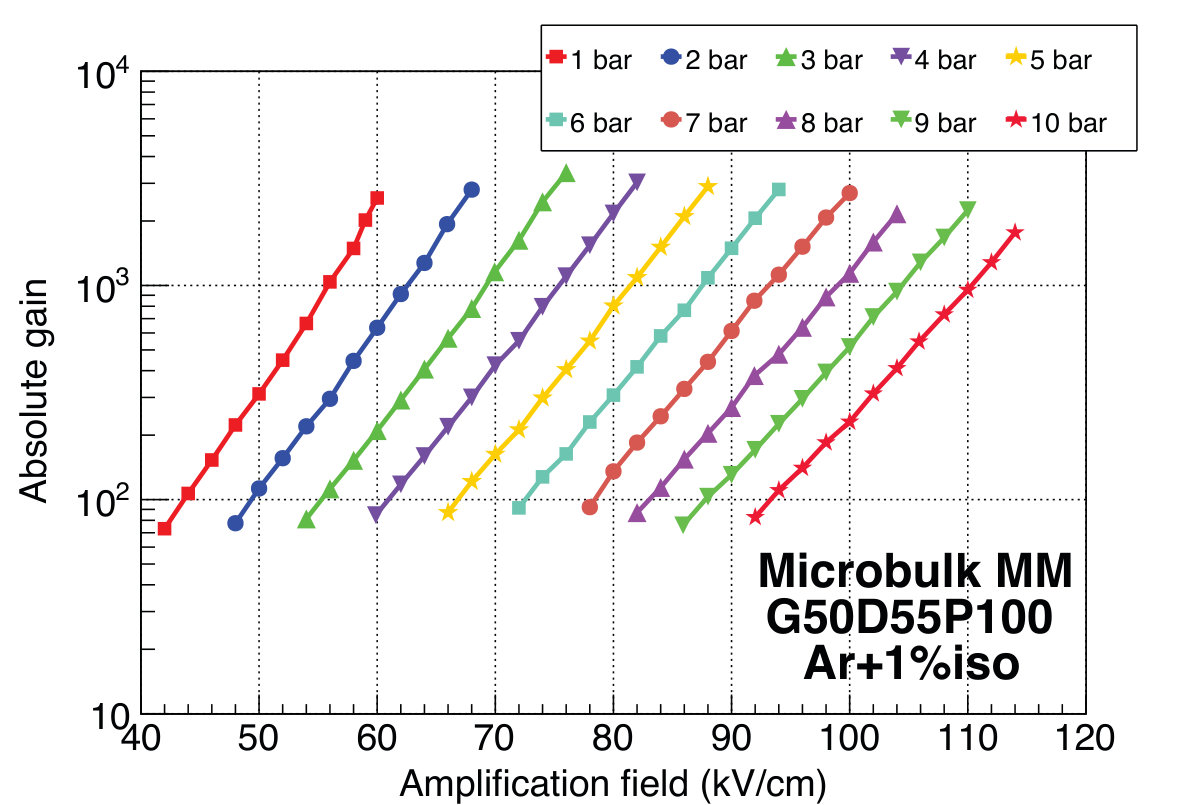 Figure 8
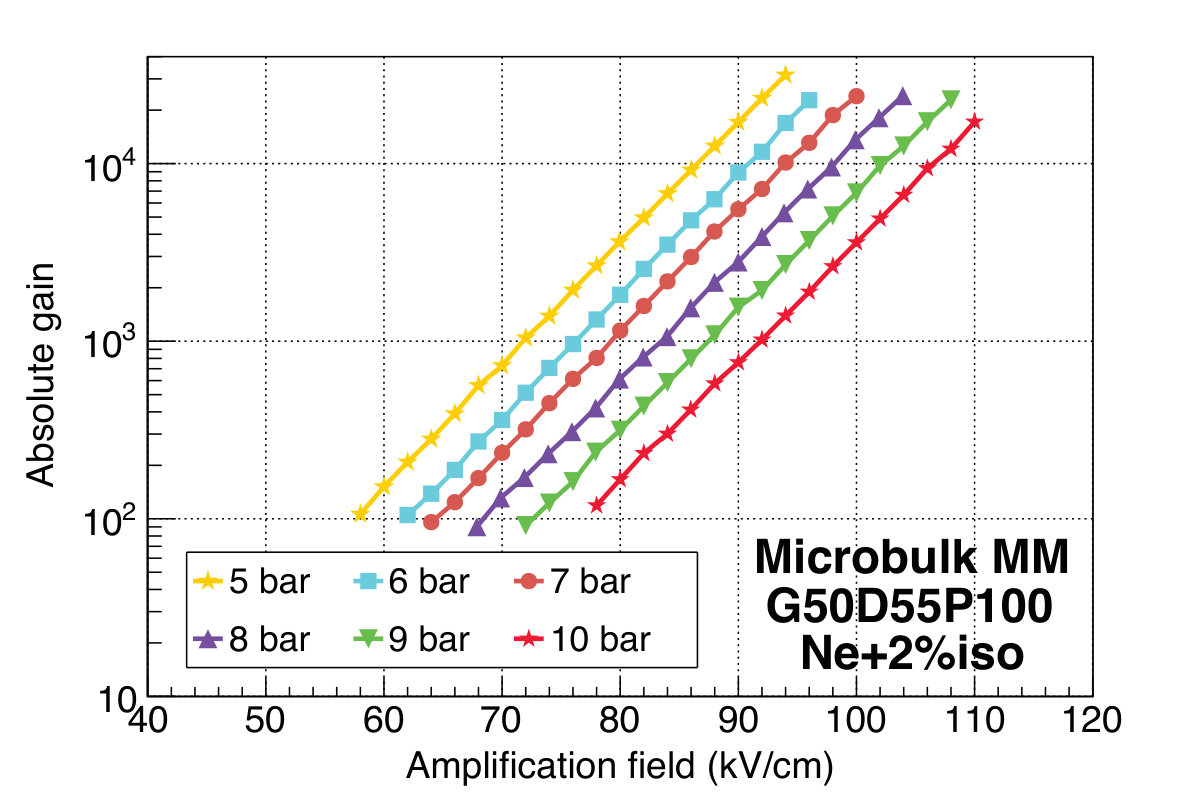 Figure 9
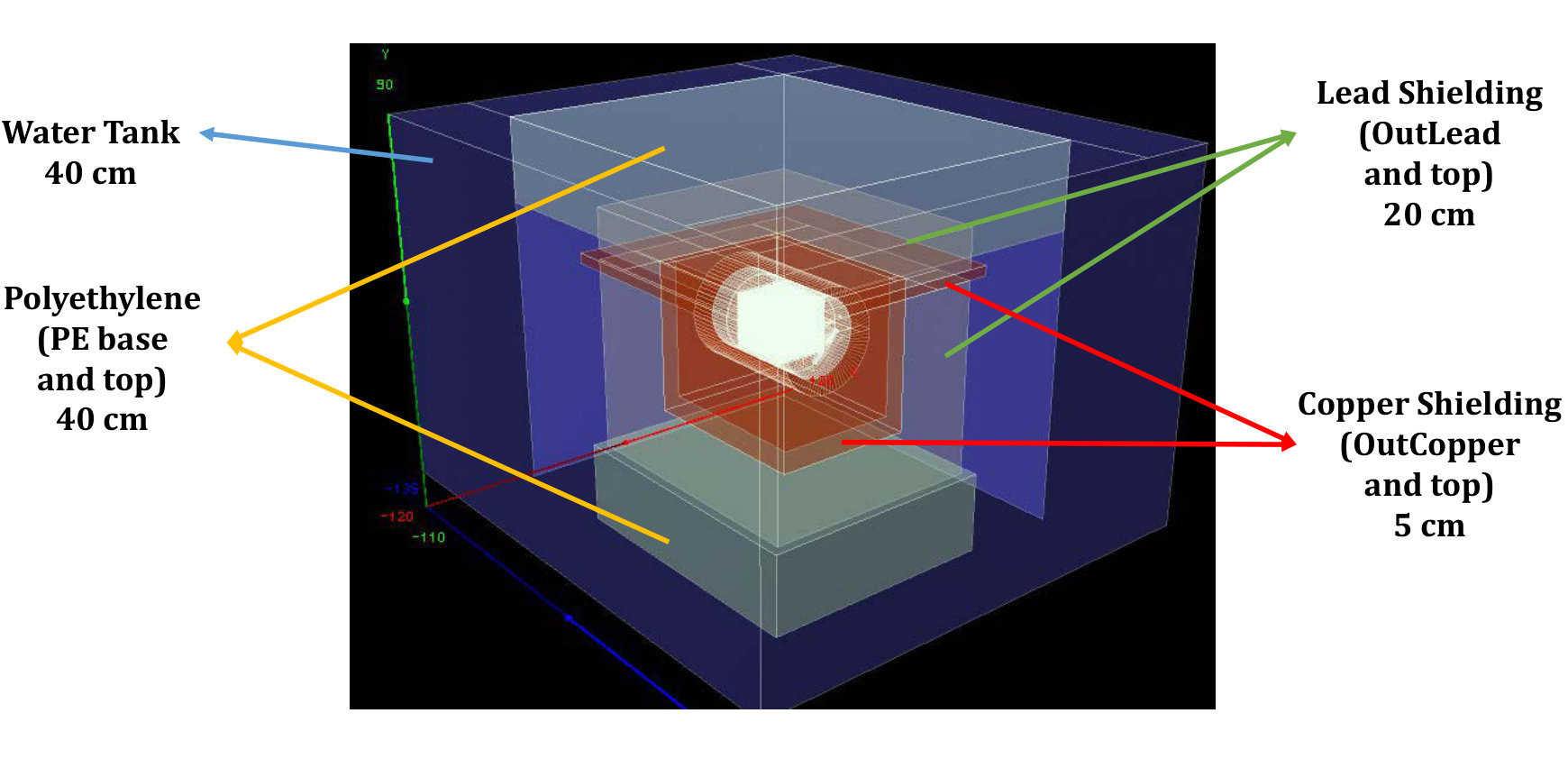 Figure 10
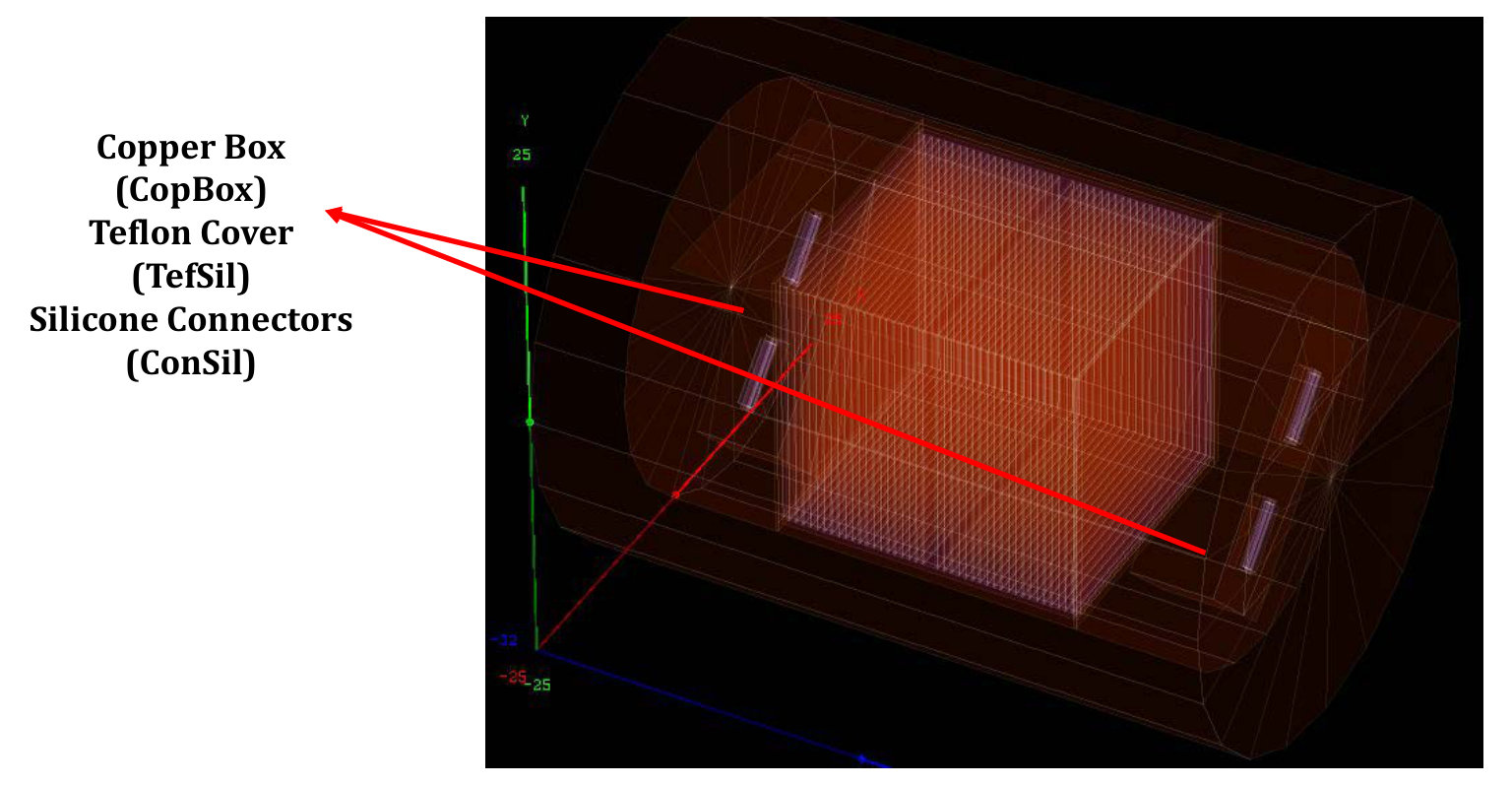 Figure 11
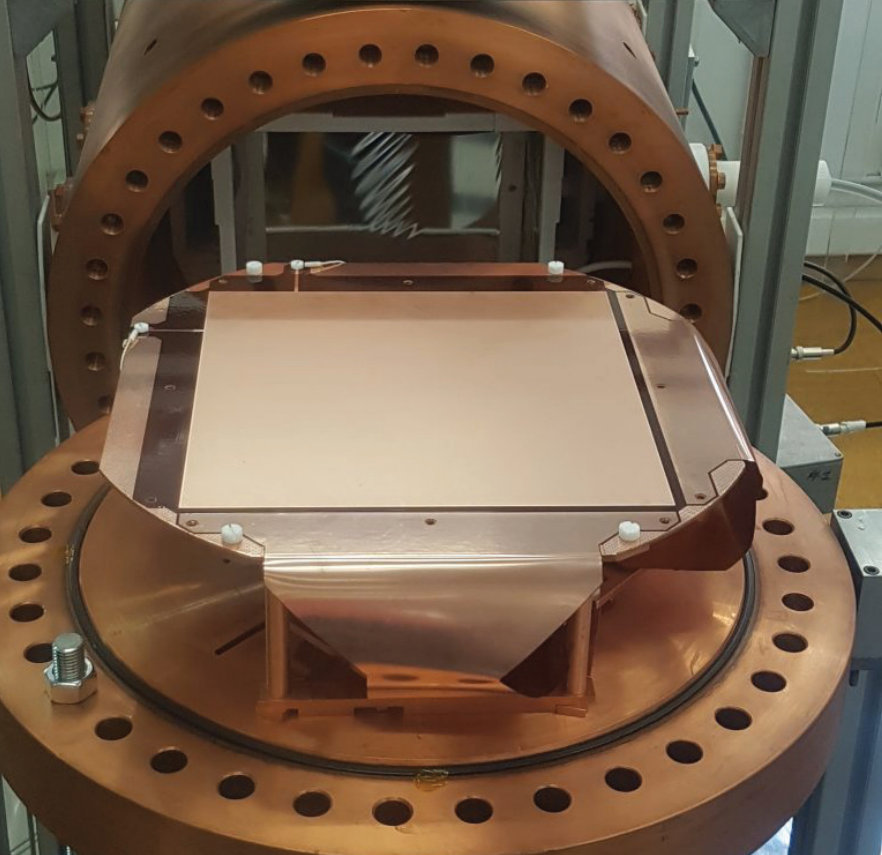 Figure 12
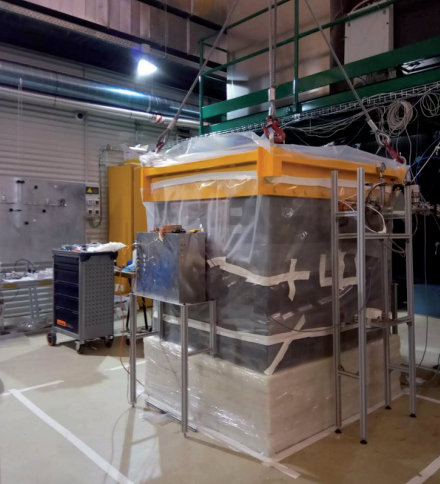 Figure 13
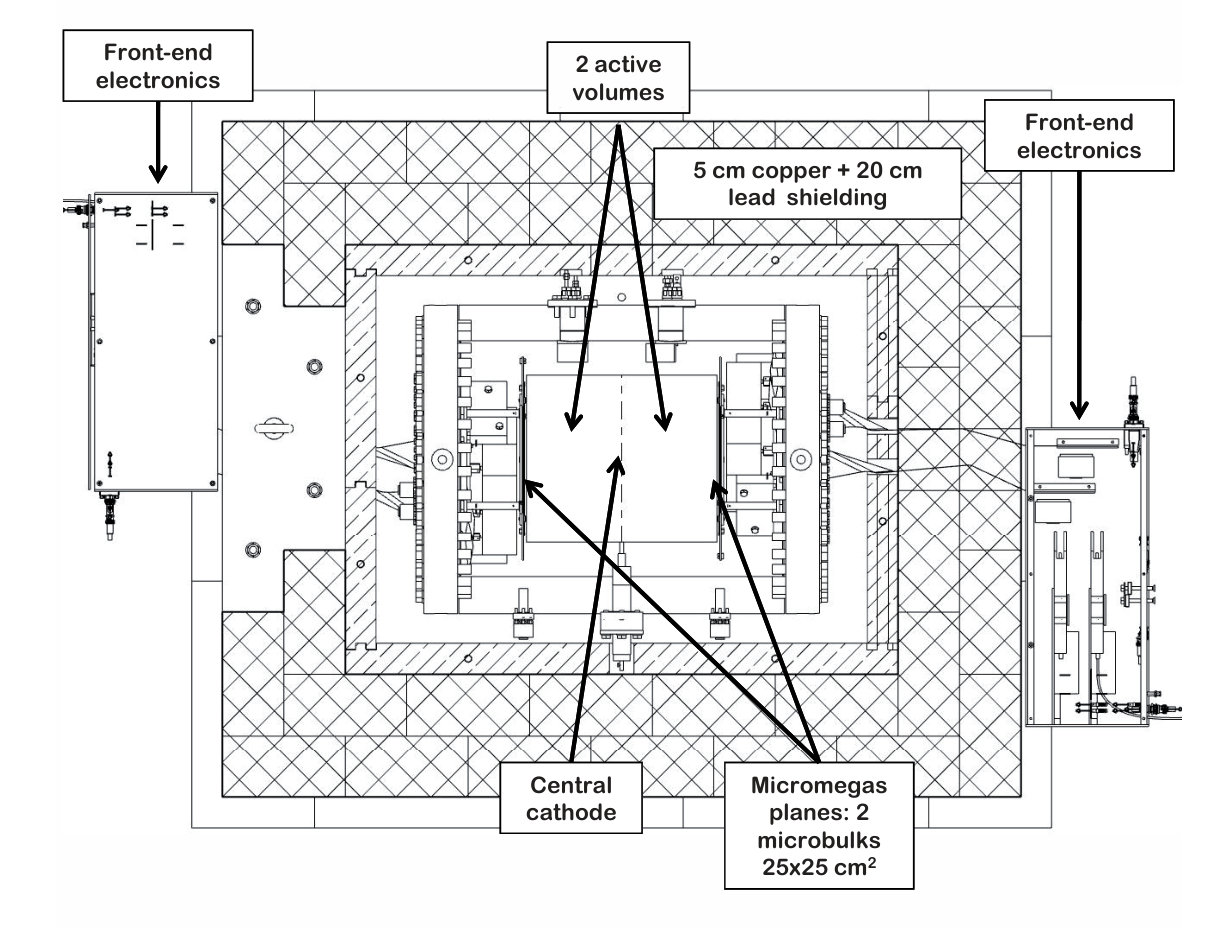 Figure 14
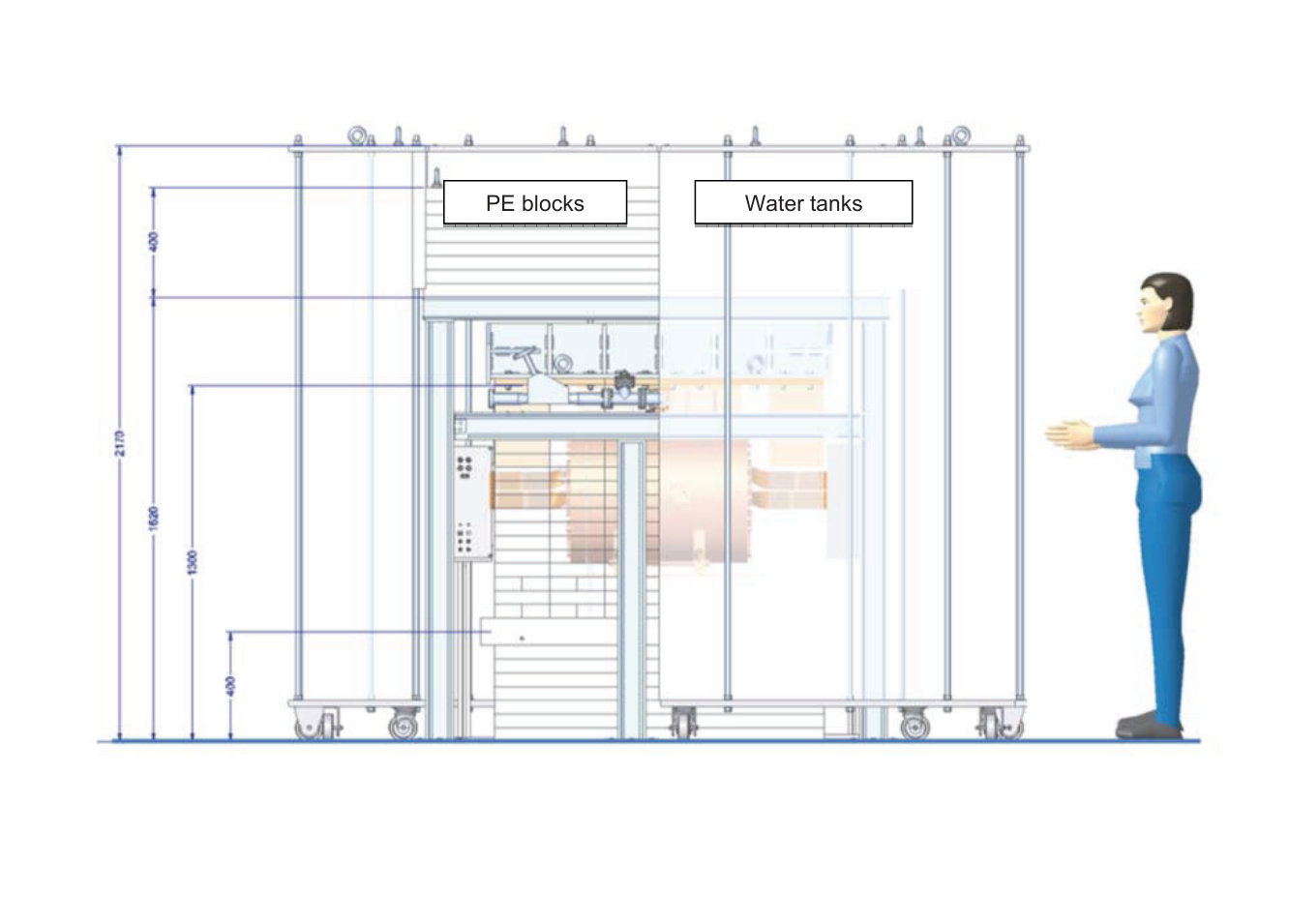 Figure 15
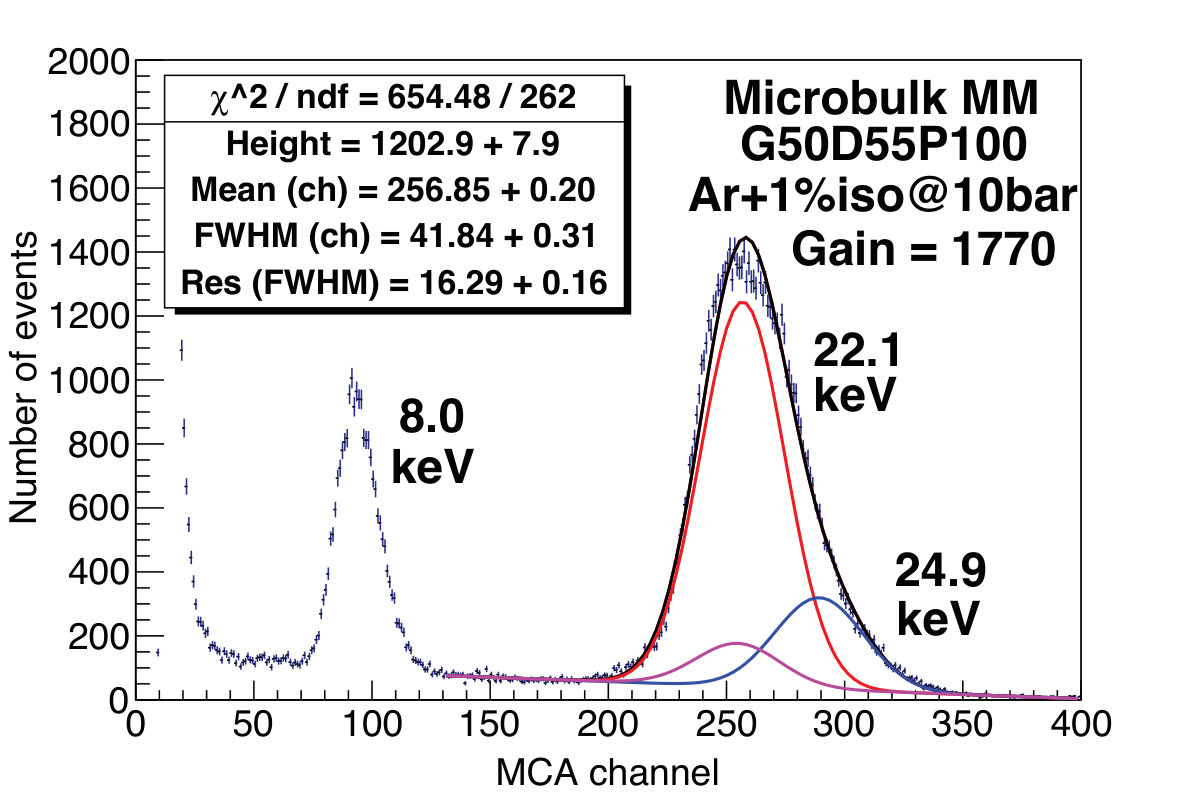 Figure 16
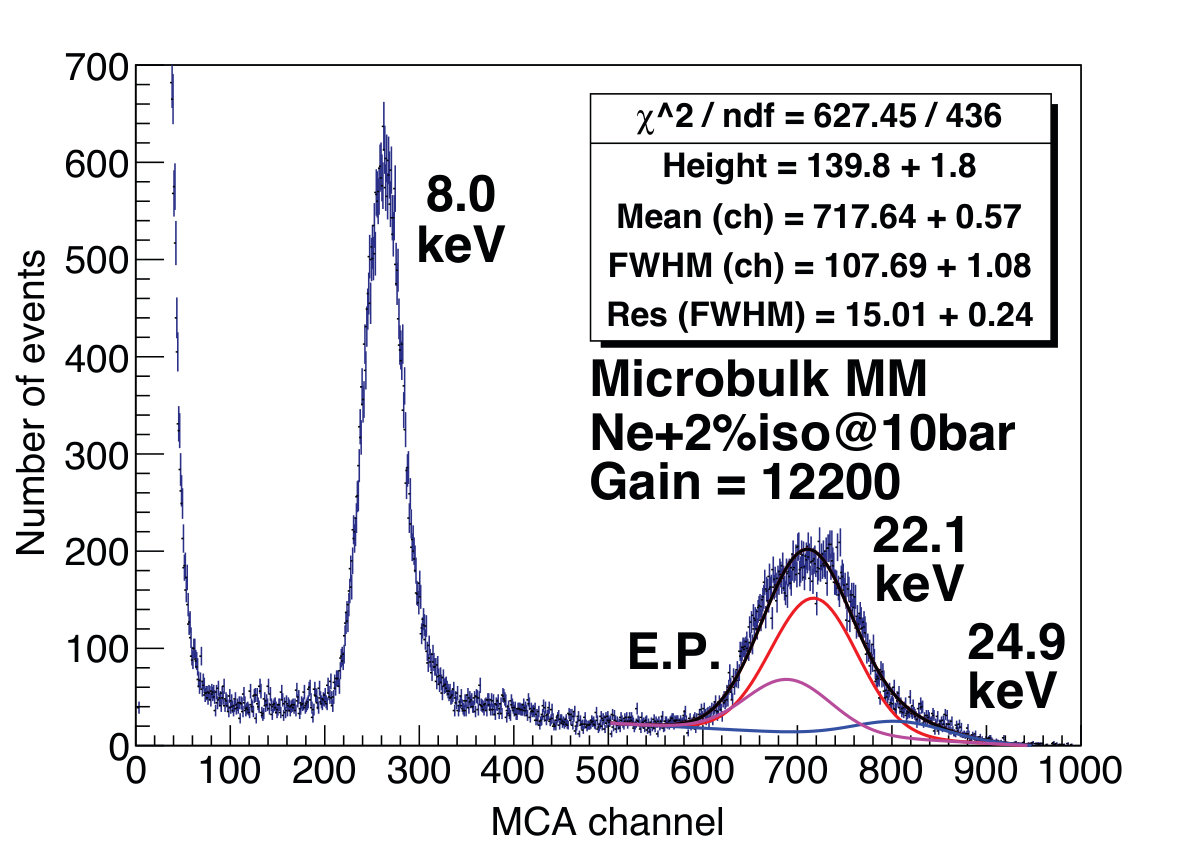 Figure 17
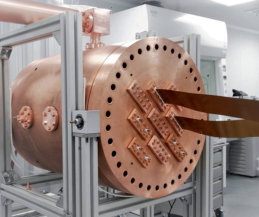 Figure 18
| # | Material,Supplier | Method | Unit | 238U | 226Ra | 232Th | 228Th | 235U | 40K | 60Co | 137Cs |
|---|---|---|---|---|---|---|---|---|---|---|---|
| 1 | Pb, Mifer | GDMS | mBq/kg | 0.33 | 0.10 | 1.2 | |||||
| 2 | OFE Cu, Luvata | GDMS | mBq/kg | 0.012 | 0.0041 | 0.061 | |||||
| 3 | ETP Cu, Sanmetal | GDMS | mBq/kg | 0.062 | 0.020 | ||||||
| 4 | ETP Cu, Sanmetal | Ge Oroel | mBq/kg | 27 | 1.0 | 1.1 | 0.76 | 0.56 | 3.1 | 0.240.05 | 0.29 |
| 5 | PFA tube, Emtecnik | Ge Paquito | mBq/m | 31 | 0.58 | 0.53 | 0.34 | 0.29 | 2.6 | 0.16 | 0.18 |
| 6 | PTFE tube, Tecnyfluor | Ge Paquito | mBq/m | 19 | 0.48 | 0.54 | 0.41 | 0.26 | 2.5 | 0.14 | 0.17 |
| 7 | Kapton-Cu PCB, LabCircuits | Ge Paquito | Bq/cm2 | 42 | 1.3 | 1.1 | 0.66 | 0.41 | 4.0 | 0.24 | 0.28 |
| 8 | Epoxy Hysol, Henkel | Ge Paquito | mBq/kg | 273 | 16 | 20 | 16 | 83 | 4.2 | 4.5 | |
| 9 | SM5D resistor, Finechem | Ge Paquito | mBq/pc | 0.40.2 | 0.0220.007 | 0.023 | 0.016 | 0.0120.005 | 0.170.07 | 0.005 | 0.005 |
| 10 | Mylar, Goodfellow | Ge Paquito | Bq/cm2 | 29 | 0.59 | 0.80 | 0.36 | 0.29 | 3.3 | 0.18 | 0.21 |
| 11 | Nylon (3D printer), CNM | Ge Latuca | mBq/kg | 436 | 9.2 | 11 | 3.4 | 2.6 | 29 | 1.0 | 1.2 |
| 12 | Nylon (3D printer), CNM | ICPMS | mBq/kg | 36 | 2.9 | ||||||
| 13 | Teflon, Sanmetal | ICPMS | mBq/kg | 0.062 | 0.041 | ||||||
| 14 | Extruded PTFE, Gore | ICPMS | mBq/kg | 0.124 | 0.041 | ||||||
| 15 | Gold connectors, Fujipoly | Ge Paquito | mBq/pc | 25 | 4.450.65 | 1.150.35 | 0.800.19 | 7.32.6 | 0.1 | 0.4 | |
| 16 | Silver connectors, Fujipoly | Ge Paquito | mBq/pc | 55 | 5.680.81 | 6.11.1 | 6.170.72 | 12.23.8 | 0.3 | 0.3 | |
| 17 | Carbon connectors, Fujipoly | Ge Paquito | mBq/pc | 14.56.0 | 2.770.38 | 1.170.23 | 1.140.14 | 7.52.3 | 0.1 | 0.1 | |
| 18 | Final Gold connectors, Fujipoly | Ge Paquito | mBq/pc | 12 | 2.800.38 | 0.490.10 | 0.580.09 | 5.31.6 | 0.08 | 0.07 | |
| 19 | Kapton connectors, Samtec | Ge Paquito | mBq/pc | 3.6 | 0.065 | 0.072 | 0.040 | 0.0430.015 | 0.32 | 0.020 | 0.021 |
| 20 | Flat cable, Somacis | Ge Paquito | mBq/pc | 14 | 0.440.12 | 0.33 | 0.19 | 0.19 | 1.80.7 | 0.09 | 0.10 |
| 21 | Teflon cable, Druflon | Ge Paquito | mBq/kg | 104 | 2.2 | 3.7 | 1.7 | 1.4 | 21.67.4 | 0.7 | 0.8 |
| 22 | Coaxial cable, Axon | Ge Paquito | mBq/kg | 650 | 24 | 15 | 9.9 | 7.9 | 16355 | 4.3 | 5.1 |
| 23 | Electronic board, CEA | Ge Paquito | Bq/kg | 9438 | 41.45.6 | 5910 | 53.67.4 | 19.56.1 | 0.67 | 1.1 | |
| 24 | AGET chips, CEA | Ge Paquito | mBq/pc | 8.7 | 0.480.07 | 0.160.06 | 0.470.09 | 0.830.29 | 0.04 | 0.04 | |
| 25 | Ceramic AGET chips, CEA | Ge Paquito | mBq/unit | (0.640.24)103 | 53994 | 11620 | 11321 | 4314 | 2.2 | ||
| 26 | Classical Micromegas, CAST | Ge Paquito | Bq/cm2 | 40 | 4.61.6 | 6.2 | 46 | 3.1 | |||
| 27 | Microbulk MM, CAST | Ge Paquito | Bq/cm2 | 2614 | 9.3 | 14 | 5725 | 3.1 | |||
| 28 | Microbulk MM, CAST | BiPo-3 | Bq/cm2 | 0.134 | 0.097 | ||||||
| 29 | Kapton-Cu foil, CERN | Ge Paquito | Bq/cm2 | 11 | 4.6 | 3.1 | 7.7 | 1.6 | |||
| 30 | Cu-kapton-Cu foil, CERN | Ge Paquito | Bq/cm2 | 11 | 4.6 | 3.1 | 7.7 | 1.6 | |||
| 31 | Cu-kapton-Cu foil, CERN | BiPo-3 | Bq/cm2 | 0.141 | 0.033 | ||||||
| 32 | Microbulk MM, CERN | Ge Latuca | Bq/cm2 | 49 | 0.70 | 1.2 | 0.35 | 0.22 | 2.3 | 0.14 | 0.13 |
| 33 | Microbulk MM, CERN | BiPo-3 | Bq/cm2 | 0.045 | 0.039 | ||||||
| 34 | Micromegas GEM, CERN | Ge Oroel | Bq/cm2 | 5.2 | 0.10 | 0.22 | 0.08 | 0.03 | 3.450.40 | 0.02 | 0.02 |
| 35 | Micromegas GEM 1st cleaning | Ge Oroel | Bq/cm2 | 7.410.81 | 0.21 | 0.190.05 | 0.11 | 0.360.04 | 0.840.16 | 0.02 | 0.03 |
| 36 | Micromegas GEM 2nd cleaning | Ge Oroel | Bq/cm2 | 7.870.89 | 0.17 | 0.140.04 | 0.070.02 | 0.360.04 | 0.810.15 | 0.03 | 0.02 |
| 37 | Pyralux, Saclay | Ge Paquito | Bq/cm2 | 19 | 0.61 | 0.63 | 0.72 | 0.19 | 4.61.9 | 0.10 | 0.14 |
| 38 | Pyralux, Saclay | BiPo-3 | Bq/cm2 | 0.032 | 0.036 | ||||||
| 39 | Isotac adhesive, 3M | Ge Paquito | Bq/cm2 | 18 | 0.45 | 0.43 | 0.22 | 0.18 | 2.3 | 0.10 | 0.14 |
| 40 | Kapton-epoxy foil, CERN | BiPo-3 | Bq/cm2 | 0.033 | 0.022 | ||||||
| 41 | Stainless steel mesh | Ge Paquito | Bq/cm2 | 53 | 1.5 | 1.7 | 0.9 | 0.6 | 8.7 | 0.3 | 0.5 |
| 42 | Micromegas, CNM | Ge Paquito | Bq/cm2 | 462 | 10 | 11 | 6.3 | 4.5 | 61 | 3.8 | 3.7 |
| Target | TENDL-2013 | TALYS | GEANT4 | ACTIVIA |
|---|---|---|---|---|
| +HEAD-2009 | ||||
| tritium | Mei:2009 | Zhang:2016 | Zhang:2016 | |
| Ar | 14631 | 44.4 | 84.9 | 82.9 |
| Ne | 22816 |
| Component | Reference | Argon | Neon |
|---|---|---|---|
| Vessel (primordial) | #2 | 0.095 | 0.114 |
| Vessel (cosmogenic) | #4 | 1.31 | 1.60 |
| Copper Boxes (primordial) | #2 | 0.020 | 0.020 |
| Copper Boxes (cosmogenic) | see Section 5.2.1 | 0.026 | 0.029 |
| Field Cage (PTFE) | #13 | 0.036 | 0.052 |
| Field Cage (resistors) | #9 | 0.34 | 0.48 |
| Field Cage (kapton-Cu PCB) | #7 | 1.12 | 1.54 |
| Field Cage (cable) | #20 | 0.027 | 0.037 |
| Cathode (copper) | #2 | 310-6 | 410-6 |
| Cathode (PTFE) | #13 | 1.010-4 | 1.410-4 |
| Flat Cables | #19 | 0.0071 | 0.0084 |
| Connectors | #18 | 0.083 | 0.022 |
| Epoxy | #8 | 0.0028 | 0.00094 |
| Mesh Cable | #21 | 3.410-4 | 1.810-4 |
| Other PTFE Components | #13 | 0.019 | 0.027 |
| Readout Planes | #30,37 | 2.30 | 2.68 |
| Argon gas (39Ar) | argon | 0.16 | |
| Argon gas (85Kr) | argon | 0.52 | |
| Total from internal components | 6.1 | 6.6 | |
| Total from quantified internal activity | 4.250.36 | 4.200.43 | |
| Cosmogenic 60Co in Cu shielding | see Section 5.2.1 | 0.02500.0018 | 0.02880.0020 |
| 222Rn in air | bandac17 | 0.14950.0024 | 0.08410.0013 |
| Surface 210Pb on Cu vessel | see Section 5.3 | 3.510-3 | 6.210-3 |
| Surface 210Pb on Cu shielding | see Section 5.3 | 0.025 | 0.034 |
| Muons (+ muon-induced neutrons) | Luzon:2006sh | 0.2050.021 | 0.3360.034 |
| Neutrons at LSC | Jordan:2013 | (2.520.22)10-2 | (7.060.61)10-2 |
| Neutrons from 238U fission in Pb | see Section 5.6 | (5.820.39)10-5 | (1.0940.074)10-4 |
| Neutrons from 238U fission in Cu | see Section 5.6 | 2.110-6 | 4.110-6 |
| Radiogenic neutrons in Cu, PTFE, steel and polyethylene | Table 5 | 5.6 10-4 | 1.1 10-3 |
| Total from external components | 0.43 | 0.56 | |
| Total from quantified sources | 0.400.02 | 0.520.03 |
| Component | Reference | 238U | 40K | Co | |
|---|---|---|---|---|---|
| Vessel | #2,4 | 0.054 | 0.034 | 0.026 | 1.60 |
| Copper Boxes | #2, see Section 5.2.1 | 0.014 | 0.0064 | 3.710-4 | 0.029 |
| Field Cage (PTFE) | #13 | 0.026 | 0.026 | 7.310-5 | |
| Field Cage (resistors) | #9 | 0.20 | 0.22 | 0.053 | |
| Field Cage (kapton-Cu PCB) | #7 | 0.82 | 0.64 | 0.087 | |
| Field Cage (cable) | #20 | 0.015 | 0.018 | 0.0050 | |
| Cathode (copper) | #2 | 2.110-6 | 1.110-6 | 6.810-7 | |
| Cathode (PTFE) | #13 | 6.710-5 | 7.110-5 | 2.310-7 | |
| Flat Cables | #19 | 0.0049 | 0.0015 | 0.0021 | |
| Connectors | #18 | 0.0071 | 0.0026 | 0.013 | |
| Epoxy | #8 | 1.310-4 | 1.910-4 | 6.210-4 | |
| Mesh Cable | #21 | 2.210-5 | 1.710-5 | 1.410-4 | |
| Other PTFE Components | #13 | 0.013 | 0.013 | 3.710-5 | |
| Readout Planes | #30,37 | 0.36 | 0.064 | 2.3 |
| Neutron yield tomasello | Mass | Concentration | Total yield | Rate in Ar | Rate in Ne | |
|---|---|---|---|---|---|---|
| (ppm-1 g-1 y-1) | (kg) | (ppm) | (neutrons d-1) | (counts keV-1 kg-1 d-1) | (counts keV-1 kg-1 d-1) | |
| U, copper | 0.436 | 997.3 | 1.0 10-6 | 1.2 10-3 | 8.9 10-7 | 1.7 10-6 |
| Th, copper | 0.030 | 997.3 | 1.0 10-6 | 8.2 10-5 | 6.2 10-8 | 1.2 10-7 |
| U, PTFE | 26.2 | 3.96 | 5.0 10-6 | 1.4 10-3 | 1.1 10-6 | 2.1 10-6 |
| Th, PTFE | 11.23 | 3.96 | 10 10-6 | 1.2 10-3 | 9.1 10-7 | 1.8 10-6 |
| U, steel | 0.587 | 920 | 2.6 10-3 | 3.8 | 4.8 10-4 | 9.1 10-4 |
| Th, steel | 0.189 | 920 | 1.1 10-3 | 5.5 10-1 | 6.9 10-5 | 1.3 10-4 |
| U, polyethylene | 0.894 | 3055 | 5.0 10-6 | 3.7 10-2 | 4.7 10-6 | 8.9 10-6 |
| Th, polyethylene | 0.193 | 3055 | 5.0 10-6 | 8.1 10-3 | 1.0 10-6 | 1.9 10-6 |
| total | 5.6 10-4 | 1.1 10-3 |
| A | B | C | |
|---|---|---|---|
| Background level (counts keV-1 kg-1 d-1) | 10 | 1 | 0.1 |
| Energy threshold (keVee) | 0.4 | 0.1 | 0.1 |
| Exposure (kg y) | 0.3 | 0.3 | 10 |
Peer Reviews
No public reviews on file for this paper yet. If you reviewed it on a platform where reviews are public (OpenReview, ICLR, NeurIPS, ICML), you can paste yours below so the community can read it here.
Code & Models
Videos
No videos yet. Explain this paper in a talk, walkthrough, or lecture? Add one.
∎
\thankstext
e1e-mail: [email protected]
11institutetext: Laboratorio de Física Nuclear y Astropartículas, Universidad de Zaragoza, Calle Pedro Cerbuna 12, 50009 Zaragoza, Spain 22institutetext: Laboratorio Subterráneo de Canfranc, Paseo de los Ayerbe s/n, 22880 Canfranc Estación, Huesca, Spain 33institutetext: Present Address: INPAC and Department of Physics and Astronomy, Shanghai Jiao Tong University, Shanghai Laboratory for Particle Physics and Cosmology, 200240 Shanghai, China 44institutetext: Present Address: Synchrotron Soleil, BP 48, Saint-Aubin, 91192 Gif-sur-Yvette, France
Background assessment for the TREX Dark Matter experiment
J. Castel\thanksrefaddr1,addr2
S. Cebrián\thanksrefe1,addr1,addr2
I. Coarasa\thanksrefaddr1,addr2
T. Dafni\thanksrefaddr1,addr2
J. Galán\thanksrefaddr1,addr2,addr3
F.J. Iguaz\thanksrefaddr1,addr2,addr4
I.G. Irastorza\thanksrefaddr1,addr2
G. Luzó n\thanksrefaddr1,addr2
H. Mirallas\thanksrefaddr1,addr2
A. Ortiz de Solórzano\thanksrefaddr1,addr2
E. Ruiz-Chóliz\thanksrefaddr1,addr2
(Received: date / Accepted: date)
Abstract
TREX-DM is conceived to look for low-mass Weakly Interacting Massive Particles (WIMPs) using a gas Time Projection Chamber equipped with Micromegas readout planes at the Canfranc Underground Laboratory. The detector can hold in the active volume 20 l of pressurized gas up to 10 bar, corresponding to 0.30 kg of Ar or 0.16 kg of Ne. The Micromegas are read with a self-triggered acquisition, being thresholds below 0.4 keV (electron equivalent) at reach. A low background level in the lowest energy region is another essential requirement. To assess the expected background, all the relevant sources have been considered, including the measured fluxes of gamma radiation, muons and neutrons at the Canfranc Laboratory, together with the activity of most of the components used in the detector and ancillary systems, obtained in a complete assay program. The background contributions have been simulated by means of a dedicated application based on Geant4 and a custom-made code for the detector response. The background model developed for the detector presently installed in Canfranc points to levels from 1 to 10 counts keV*-1* kg*-1* d*-1* in the region of interest, making TREX-DM competitive in the search for low-mass WIMPs. A roadmap to further decrease it down to 0.1 counts keV*-1* kg*-1* d*-1* is underway.
††journal: Eur. Phys. J. C
1 Introduction
Different detector technologies have been developed in the last decades with the aim to directly detect dark matter particles which could be pervading the galactic halo marrodan . Looking specifically for low mass Weakly Interacting Massive Particles (WIMPs) requires the use of light elements as target, detectors with very low energy threshold, well below 1 keVee111Electron equivalent energy., and very low radioactive background. Results from either new implementations of semiconductor detectors with extremely low readout capacitance rescogent ; resdamic ; rescdex or re-oriented experiments focused on low threshold rescdms ; rescresst ; resedelweiss ; resxenon ; darkside18 ; newsgresults have already been presented. Gas Time Projection Chambers (TPCs) equipped with Micromegas planes have excellent features to fulfill these requirements. TREX-DM (TPC for Rare Event eXperiments-Dark Matter) iguaz16 ; irastorza16 is a Micromegas-read High Pressure TPC for low mass WIMP searches using Ar or Ne mixtures, not focused on directionality. The detector was built and operated at surface in the University of Zaragoza as proof of concept. The experiment was approved by the Canfranc Underground Laboratory (LSC) in Spain and the whole detector was moved underground in 2018. The data taking is expected to start using Ne once the commissioning underground along 2019 is completely finished.
The Micromegas are consolidated readout structures; a micro-mesh is suspended over a pixelated anode plane, forming a thin gap where charge amplification takes place. Detectable signals in the anode and the mesh are generated. Different technologies have been built: bulk Micromegas have the readout plane and the mesh all in one and microbulk Micromegas are in addition more homogeneous and radiopure microbulk . They offer important advantages for rare event detection irastorza16 ; irastorza16dbd : the possibility of scaling-up, topological information to discriminate backgrounds from the expected signal (just a few microns track for dark matter particles, giving a point-like event) and low intrinsic radioactivity as they are made out of kapton and copper, potentially very clean.
Operating deep underground at ultra-low background conditions is a must in experiments looking for rare events like the direct detection of WIMPs. In this kind of experiments, the construction of reliable background models, based on an accurate assay of background sources and on a careful computation of their contribution to the experiment, is essential; they provide guidance and constraints for design and allow robust estimations of the experiment sensitivity (some recent examples can be found at xenon100 ; zeplin ; edelweiss ; gerda ; lux ; exobkg ; anais ; cuorebkg ; cosine ). The preliminary background model of TREX-DM for operation at LSC presented in iguaz16 ; Aznartaup:2017 has now been completed and updated, including as inputs the activities from a dedicated material screening program together with the measured fluxes of different backgrounds at LSC (gamma-rays, neutrons and muons).
The structure of the article is the following. The detector set-up and its performance are presented in section 2. Section 3 describes the simulations carried out. Then, the results obtained in the material radioassay campaign are detailed in section 4. The estimates of the contribution of each one of the background components considered are shown in section 5. Finally, the corresponding sensitivity for WIMP direct detection and conclusions are discussed in sections 6 and 7.
2 Experimental set-up
The TREX-DM detector, as built and operated at the University of Zaragoza, was described in detail in iguaz16 ; in the set-up at LSC some modifications have been implemented: operation is made with non-flammable gas mixtures, microbulk (instead of bulk) Micromegas are being used read by a new AGET-based DAQ system and a full detector shielding is in place.
Two active volumes (192525 cm3 each) are separated by a central cathode made of mylar inside a 6-cm-thick copper vessel, designed and certified as a pressure equipment to hold up to 11 bar(a) or 10 barg (see figure 1, middle). The field cage, made of kapton and copper using 42 Finechem resistors, is covered by teflon. Two microbulk Micromegas fabricated at CERN are used; they are the largest area single microbulk readout produced so far, with an active area of 2525 cm2 (see figure 1, top). Flat cables take out signals from strips and connect to the interface cards out of the vessel. The connections at both sides of the flat cables are now made through special silicone-based connectors (Zebra Gold 8000C from Fujipoly), checked to be more radiopure than the connectors firstly used (see section 4). Signals from 2256 strips (with 1 mm pitch) at each side are digitized for tracking in a 10.2 s window (512 samples, 50 MHz sampling rate). 3D track reconstruction is possible, using the position of hit strips to determine X and Y coordinates, and electron drift time information to get the Z coordinate. The AGET-based DAQ system consists of four front-end (FEC-AGET) cards, containing 4 AGET chips each for sampling of the pulses, four mezzanine (FEMINOS) cards, subtracting pedestals, and a trigger module (TCM), connected by Ethernet cables. It provides self-triggered data acquisition allowing to have a trigger generated individually by each single strip signal; as capacitance of strips is about a factor 30 lower than that of the mesh, the use of AGET electronics was considered in order to improve the energy threshold in comparison to the first operation using AFTER electronics with trigger taken from the mesh signal iguaz16 . Two Faraday cages, one at each end, have been installed housing the interface cards, FEC-AGET and FEMINOS cards (see figure 1, bottom).
As shown in figure 2, a complete shielding consisting of 5 cm of copper, 20 cm of low activity lead and 40 cm of neutron moderator (water tanks and polyethylene blocks) covers the detector at LSC, having in addition a Rn-free atmosphere inside shielding. The present TREX-DM set-up installed at the hall A of the Canfranc laboratory, placed at a depth of 2450 m.w.e., is shown in figure 1, bottom, including the lead shielding.
The gas system of TREX-DM has been designed for non-flammable gases, which is accomplished adding 1% of isobutane to argon and 2% in the case of neon. This simplified installation underground. It consists of a recirculation part and a purification branch and it can run in two operation modes: in open loop (for commissioning tasks) or in recirculation through a purifier branch (nominal working condition). The gas system installation has been completed and certified by an authorized body to operate at high pressure (up to 11 bar). The slow control system, based on a net of Raspberry PI cards, each of them monitoring or controlling one experimental component (like gas pressure and temperature, voltages or gas flow), is ready and in operation.
First results from the commissioning phase of TREX-DM on surface using bulk Micromegas were shown in iguaz16 for different gas mixtures and pressures. Microbulk Micromegas were characterized afterwards using the mixtures finally considered for the underground operation, Ar+1%iC4H10 and Ne+2%iC4H10, in order to check that the required performance was achieved also in these conditions iguaz18 . These tests were made at 1-10 bar using a 109Cd source in a smaller set-up at the University of Zaragoza (also used in mmxe ) without shielding. Figure 3 presents the energy spectra registered at 10 bar; energy resolution has shown some degradation with pressure, being the FWHM at 10 bar 16(15)% for Ar(Ne) at 22.1 keV. It must be noted that neither the background level nor the energy threshold in these measurements were representative of those achievable at TREX-DM in LSC. As shown in figure 4, an excellent behavior has been registered for gain, with maximum values above 103(104) in Ar(Ne) for all pressures, which is very important for achieving low energy thresholds. In principle, a very low threshold is possible thanks to the intrinsic amplification in gas but the readout area, the sensor capacitance and the electronic noise set in practice the effective threshold in this type of detectors. For TREX-DM, the strip capacitance, including the contributions of the flat cables and the interface cards, is 0.2 nF. The TREX-DM nominal (conservative) aim for effective threshold is 100 eVee (400 eVee). The very first results from the commissioning data taken in Canfranc also using microbulk Micromegas with atmospheric Ar and with Ne confirm that this expectation is at reach.
At the end of 2018, the detector was already fully equipped (as described in this section) and installed inside its copper and lead castle at LSC. For the first commissioning data, the chamber was filled with atmospheric Ar+1%iC4H10 and operated at 1-1.5 bar. Calibration measurements made with a 109Cd source indicated that the detector operates as expected in terms of gain and spectral and spatial distribution of events. Few-days long background runs with the expected performance were carried out, being the measured spectra dominated by 39Ar. In the beginning of 2019, the gas changed from the test option to the baseline mixture Ne+2%iC4H10 in recirculation and operation at higher pressures is underway. Data analysis is ongoing to produce quantitative statements on e.g. threshold level and background level. A detailed description of the performance of the detector will be presented in a dedicated technical publication.
3 Simulation
The complete simulation of the detector response to build the TREX-DM background model is based on RestG4, a package integrating Geant4 geant4 and a custom-made code called REST restsoft , also used in panda . Geant4 version 4.10 has been considered. The Geant4 Radioactive Decay Module is used for the event generation. The low energy models based on Livermore data libraries have been implemented for interactions of alpha, beta and gamma particles. These models are accurate for energies between 250 eV and 100 GeV and can be applied down to 100 eV with a reduced accuracy geant42 . The NeutronHP model has been used for neutrons. A detailed geometry of the set-up has been implemented based on the Geometry Description Markup Language (GDML) format (see figure 5), including the whole shielding (with copper, lead and neutron moderator) and details of the copper vessel, field cage, cathode, cables and connectors and Micromegas readouts. The ROOT-based code simulates also the electron generation in gas, diffusion effects, charge amplification at Micromegas and signal generation. The resulting data from the simulation chain have the same REST format as the DAQ data in order to share analysis tools, including those for discriminating point-like events from complex topologies.
Simulations to build the TREX-DM background model have been run for the two gas mixtures (Ar+1%iC4H10 and Ne+2%iC4H10) at 10 bar, corresponding to a total active mass of 0.30 kg for Ar and 0.16 kg for Ne. A successful validation of the simulation environment against experimental data from calibration measurements has been made iguaz16 ; in particular, the shape of the energy spectra and the distribution of the analysis observables measured were checked to be properly reproduced by simulation when irradiating the active volume with a 109Cd source. The event-by-event signal identification and background rejection applied is based on the analysis of the event topology. Firstly, just one-cluster events are selected. This selection criterion hardly reduces the rate a 0.1% since in the region of interest almost all the events are single-site. The second condition is to be farther than 2 cm from the lateral faces of the prism defined by the active volume; i.e., a planar fiducial cut. Simulations show an accumulation of events near the border of the readout plane due to photons produced in interactions in surrounding materials (field cage, cathode frame, …), which disappears after imposing this 2-cm-veto-area. Reduction factors in this case depend very much on the background sources, but have mean values of 40%. As our detector lies on one of its sides, this veto also eliminates muons traversing directly the detector. The active mass of the detector to obtain the counting rates per mass unit is that of the fiducial volume. So far, the analysis has been quite simple and more complex discrimination algorithms, based on the analysis of current calibration runs, could help to further decrease background levels.
4 Measurements of material radiopurity
An exhaustive material radioassay campaign for TREX-DM was undertaken a few years ago iguaz16 ; irastorza16dbd ; jinstpaquito , as made in other experiments in the context of rare event searches (see for instance recent results in xenon ; exo ; majorana ; next1 ; next2 ; next3 ; coach ). It has allowed, on one side, to design and construct the detector and shielding according to the radiopurity specifications and, on the other, to provide inputs to build the experiment background model. The material screening program is mainly based on germanium gamma-ray spectrometry carried out deep underground in Canfranc, but complemented by other techniques like GDMS and ICPMS and by measurements using the BiPo-3 detector at LSC. In this section, the techniques employed for the radiopurity measurements are summarized and the relevant results shown and discussed.
4.1 Techniques
Most of the germanium measurements have been made using a 1 kg ultra-low background detector of the University of Zaragoza (named Paquito) operated at the hall E of the LSC. This detector has been used for radiopurity measurements at Canfranc for many years (details on the features and performance of the detector can be found in jinstpaquito ; mmradiopurity ). Some of the 2 kg close-end coaxial HPGe detectors of the Radiopurity Service of LSC bandac17 have been used for some measurements too. Activities of different sub-series in the natural chains of 238U, 232Th and 235U as well as of common primordial, cosmogenic or anthropogenic radionuclides like 40K, 60Co and 137Cs are typically evaluated. The detection efficiency is determined by Monte Carlo simulations based on Geant4 for each sample, validated with a 152Eu reference source jinstpaquito ; a conservative overall uncertainty on the deduced efficiency is properly propagated to the final results.
Glow Discharge Mass Spectrometry (GDMS) has been performed by Evans Analytical Group in France, providing concentrations of U, Th and K. In addition, thanks to the collaboration of LSC, Inductively Coupled Plasma Mass Spectrometry (ICPMS) analysis carried out at the Laboratori Nazionali del Gran Sasso (LNGS) icpmsgs has been possible for some TREX-DM samples quantifying the U and Th concentrations. It must be noted that when having no information on daughter radionuclides in the chains, a possible disequilibrium cannot be detected.
Taking advantage of the “foil” geometry of some samples, very sensitive measurements have been made in the BiPo-3 detector bipo3 , in operation at LSC. This detector has been developed by the SuperNEMO collaboration and is able to measure extremely low levels, down to a few Bq/kg, of 208Tl and 214Bi radioactivity in very thin samples (below 200 m thick) by registering the delayed coincidence between electrons and alpha particles occurring in the BiPo events. These measurements can be translated into contamination of natural U and Th chains if secular equilibrium is assumed.
4.2 Results
A large amount of materials and components related to Micromegas readout planes and the whole set-up (the gas vessel, the field cage, the radiation shielding or the electronic acquisition system) has been taken into consideration in the screening program. Massive elements and those in contact with the sensitive volume of the detector are in principle the most relevant. Table LABEL:res reproduces, for the sake of completeness, the previous activity results obtained for the components finally used in the TREX-DM set-up and presents all the new ones; reported errors include both statistical and efficiency uncertainties.
4.2.1 Shielding and vessel
Many samples from different suppliers of lead, used for shielding, and copper, used for mechanical and electric components (like Micromegas plates, cathodes, HV feedthroughs or field cage rings), have been analyzed iguaz16 . Results are available for the lead bricks used in the shielding, provided by Mifer (#1 of table LABEL:res) and by LSC (from lead coming from the OPERA experiment lrt2015 ). Very stringent upper limits were also obtained by GDMS for Oxygen Free Electronic (OFE, C10100) copper from the Luvata company and the used Electrolytic Tough Pitch (ETP, C11000) copper from Sanmetal was measured too (#2-3 of table LABEL:res).
A sample of the copper provided by Sanmetal and used at the vessel of TREX-DM, having the same origin and history of exposure to cosmic rays on surface as the vessel itself, has been additionally screened using one of the germanium detectors of the LSC Radiopurity Service with the aim to evaluate the cosmogenic activation induced in the vessel and then to assess its suitability for a low background measurement at LSC. The measured 60Co activity (#4 of table LABEL:res) is in very good agreement with expectations for production rates of 50 kg*-1d-1* 0.58 mBq/kg (corresponding to the order of different direct measurements and calculations from the literature ijmpacosmogenia ) and an exposure time of 3.80 y. The activity of other isotopes with half-lives shorter than 60Co has also been evaluated: (0.350.07) mBq/kg of 58Co, 0.81 mBq/kg of 57Co and 0.29 mBq/kg of 54Mn. Thanks to the low energy threshold of the GeOroel detector, it was possible in this measurement to observe the 46.5 keV gamma line from 210Pb and to derive an upper limit on its activity (considering the efficiency for surface emissions) as 0.32 mBq/cm2.
Two samples of tube intended to be used at the calibration system of TREX-DM, traversing shielding and vessel have been screened (#5-6 of table LABEL:res). One was made of PFA (PerFluoroAlkoxy polymer) produced by Emtecnik and the other was made of PTFE supplied by Tecnyfluor. Upper limits have been set for all the common radioisotopes for both tubes and therefore any of them can be used.
4.2.2 Field cage
Material and components to be used inside the gas vessel, mainly related to the field cage, were screened to select proper teflon, resistors or adhesives.
The monolayer Printed Circuit Board (PCB) made of kapton and copper for the field cage, supplied by LabCircuits, was found to have good radiopurity iguaz16 , but since the upper limits set on the activity were too high for the required sensitivity, a new sample with larger surface was measured afterwards (#7 of table LABEL:res), providing a reduction of at least a factor 10 in the relevant isotopes.
For the epoxy resin Hysol RE2039 from Henkel no contaminant could be quantified iguaz16 ; jinstpaquito (#8 of table LABEL:res) and it is being used for gluing.
Surface Mount Device (SMD) resistors supplied by Finechem showed lower activity than other equivalent units iguaz16 ; jinstpaquito (#9 of table LABEL:res) and therefore were chosen for the field cage.
A sample of the 3.5-m-thick mylar sheet from Goodfellow used at the cathode of TREX-DM has been screened (#10 of table LABEL:res), setting upper limits for all the common radiosotopes.
The possibility of using 3D printing to produce easily some of the mechanical components of the field cage of TREX-DM, instead of fabricating them using commercial teflon, was considered and the possible impact on background evaluated. A sample made of PA2200222PolyAmide white or polyamide 12 or nylon 12. produced by a 3D printer at the Centro Nacional de Microelectronica (CNM), Barcelona, was first screened using a germanium detector (#11 of table LABEL:res) setting upper limits for all the usual radiosotopes. In an attempt to reduce the available limits on activity for several plastic samples, which would give a non-negligible contribution to the TREX-DM background model, an ICPMS analysis was carried out at LNGS for three samples. For all of them the mineralization was performed using the dry ashing technique and the uncertainty of the measurement can be estimated as 30% of the given values. For teflon from Sanmetal, the ICPMS limits set for the activity of 232Th and 238U chains (#13 of table LABEL:res) improve by about two orders of magnitude those obtained using the Paquito detector at LSC (iguaz16 ; jinstpaquito ). Another type of teflon, extruded PTFE (Gore GR gasketing), was also analyzed, pointing to a similar radiopurity (#14 of table LABEL:res). For a small piece of the nylon PA2200 from 3D printing, previously screened at a germanium detector setting upper limits for all common radioisotopes, both U and Th concentrations could be quantified. As shown in #12 of table LABEL:res, the corresponding 232Th activity is compatible with the upper limits set using germanium detectors, but being of the same order. For 238U, the activity value from ICPMS is compatible with that for the upper part of the chain from germanium (the actual comparable result between both techniques) but higher that than for the lower part. Therefore, following these radiopurity results and given the important contribution expected from a nylon PA2200 field cage in the background model, its use has been disregarded and teflon has been employed instead.
4.2.3 Electronics
Electronic connectors made of Liquid Crystal Polymer (LCP) have shown unacceptable activities of at least several mBq/pc for isotopes in 232Th and the lower part of 238U chains and for 40K iguaz16 ; jinstpaquito ; next1 ; next2 . Three different types of silicone-based connectors supplied by Fujipoly have been screened: Gold 8000 connectors type C, units from Zebra Series 5002 SZ100 made of silver, and connectors from Zebra Series 2004 CZ418 made of carbon (#15-17 of table LABEL:res); although activities of 40K, 232Th and the lower part of the 238U chain have been quantified in all cases, much lower values than in LCP connectors have been obtained. For silver connectors, activity from 208mAg (T1/2=428 y, (0.380.05) mBq/pc) and 210mAg (T1/2=249.78 d, (1.880.12) mBq/pc) has been assessed too. Due to these results, Gold Zebra 8000C connectors were selected for TREX-DM; a new screening of the units to be actually used has been made (#18 of table LABEL:res) confirming that in comparison with the Samtec LCP connectors firstly used in the set-up at the University of Zaragoza jinstpaquito , the silicone ones of the present set-up have about a factor 32 less activity of 232Th and reduction is about 3.3 for 226Ra and 2.3 for 40K. Recently, very promising results have been found in the screening of new connectors produced by Samtec (Ref. ZA8H-24-0.33-Z-07) (#19 of table LABEL:res), as only upper limits have been set for all the common radioisotopes, being more than one order of magnitude lower than the quantified activities in the Fujipoly ones. Comparing to the firstly used Samtec connectors, the reduction is around two orders of magnitude. This has been possible due to the very reduced mass of each unit (0.087 g/unit) and the use of only kapton and copper as base materials. This is an important result to take into consideration in future upgrades of the detector.
Very radiopure, flexible, flat cables made of kapton and copper have been developed in collaboration with Somacis, performing a careful selection of the materials included and avoiding glass fiber-reinforced materials at base plates. After the screening of several cable designs iguaz16 , the good results obtained for the final one (#20 of table LABEL:res) allow to envisage the use of these materials also at Micromegas production. Several kinds of high voltage or signal cables have been analyzed too iguaz16 . Screened cables from Druflon Electronics (to connect the field cage last ring to HV feedthrough) and coaxial low noise cable from Axon Cable S.A.S. (to extract the mesh signal from the vessel) are being used. Only 40K activity was quantified for the two cables (#21-22 of table LABEL:res), made basically of copper and teflon, showing much better radiopurity than typical RG58 coaxial cables.
Different materials can be taken into consideration for PCBs and samples of FR4, ceramic-filled PTFE composite and cuflon were screened iguaz16 . The first ones presented very high activities for the natural chains and 40K, precluding its use. Good radiopurity was found for cuflon from Crane Polyflon; however, its application for Micromegas has been disregarded due to the difficulty to fix the mesh and also because bonding films to prepare multilayer PCBs have been shown to have unacceptable activity next2 . Following the measurements #7 and #20 of table LABEL:res, kapton-copper boards seem to be the best option.
One of the electronic boards used at TREX-DM (with approximate surface 1425 cm2) has been directly screened (#23 of table LABEL:res). Values of specific activity obtained for 232Th and 238U chains are a factor 2-3 larger than those measured in a raw PCB made mainly of FR4 from Somacis company iguaz16 , which seems to point out to an additional relevant source of activity in the electronic components of the board. A sample of non-functional AGET chips (2.74 g/pc) provided by CEA Saclay has been screened too. Following the results in #24 of table LABEL:res, each chip has a few tenths of mBq of 40K and of the isotopes of the 232Th and 238U chains. These non-negligible quantified activities in the electronic components should not pose a problem since they are located outside the copper and lead shielding of the DAQ system. As part of the common effort to develop radiopure electronic components in collaboration with CEA Saclay, a sample of four units of AGET chips with a different ceramic cover provided by CEA was analyzed too (#25 of table LABEL:res). Specific activities of the order of tens of Bq/kg have been measured for the isotopes of the 232Th and 238U chains; the corresponding activities per unit are from two to three orders of magnitude higher in comparison to those previously obtained for AGET chips with plastic cover. Therefore, the use of this type of ceramic packaging must be avoided. A large sample of naked chips has been screened too at the Modane Laboratory confirming a very good radiopurity.
4.2.4 Micromegas
The radiopurity of Micromegas readout planes was first analyzed in depth in mmradiopurity . On the one hand, two samples (#26-27 of table LABEL:res) were part of fully functional Micromegas detectors: a full microbulk readout plane formerly used in the CAST experiment and a classical Micromegas structure without mesh. On the other hand, two other samples (#29-30 of table LABEL:res) were screened corresponding just to the raw foils used in the fabrication of microbulk readouts, consisting of kapton metalized with copper on one or both sides. The raw materials (kapton and copper, mainly) were confirmed to be very radiopure; the numbers for the treated foils show similar limits or values just at the limit of the sensitivity of the germanium measurement. Despite their importance, these bounds were still relatively modest when expressed in volumetric terms, due to the small mass of the samples. New activity measurements for the microbulk Micromegas and Cu-kapton-Cu foil samples (previously measured with Ge spectroscopy) were carried out profiting the great capabilities of the BiPo-3 detector operating at LSC (#28,31 of table LABEL:res). For both cases, only limits to the contamination in 208Tl and 214Bi can be deduced, which improve the Ge spectrometry limits by more than 2 orders of magnitude, pointing to contaminations at the level of, or below, 0.1 Bq/cm2 irastorza16dbd . A more sensitive measurement for microbulk Micromegas produced at CERN was made in 2016, using two capsules of the BiPo-3 detector (3030 cm2 each); results shown in #33 of table LABEL:res point to a very significant reduction of the upper limits of both 208Tl and 214Bi. All this confirms our expectations that microbulk readouts contain radioactivity levels well below typical components in very low background detectors.
As the BiPo-3 detector can only quantify activity from the U and Th chains, but a non-negligible K content seemed to be present in the first analysis of microbulk Micromegas mmradiopurity , a new, more sensitive analysis of the 40K activity was undertaken since its contribution in the background model was found to be important iguaz16 . A sample of the same microbulk Micromegas analyzed in the BiPo-3 detector was screened using a germanium detector (#32 of table LABEL:res) deriving upper limits for all the common radioisotopes. Limits set for 238U and 232Th chains are higher than those derived from BiPo-3 measurement as expected. The limit for 40K is 2.3 Bq/cm2, a factor 25 lower than the estimated value in mmradiopurity ; even if very promising, it was not conclusive yet as the analyzed sample had not the holes produced by the potassium compound which could be responsible of a 40K contamination. Then, a new, more massive sample of readouts from CERN with a total surface of 12372.75 cm2 was analyzed. It consisted of faulty GEMs glued on kapton, produced as microbulk Micromegas, which have gone through some chemical baths involving potassium compounds to create the kapton holes. This sample has been screened up to three times:
- •
In the first screening in a germanium detector, as shown in #34 of table LABEL:res, upper limits have been set for all the common radioisotopes except for 40K; those of 232Th and 238U activity are, as expected, higher than the ones obtained from the BiPo-3 detector (about a factor of 5.7 and 2, respectively). The signal from 40K is clear and its activity has been quantified as (3.450.40) Bq/cm2 (corresponding to a specific activity of (25830) mBq/kg). This seemed to confirm that the potassium content is related to the production of holes in the readout.
- •
In an attempt to reduce potassium, the same sample with holes was cleaned in water baths at CERN (dipped one week in tap water followed by a long rinse with deionized (DI) water) and a new screening to assess the effect of this treatment using the same detector was made. As presented in #35 of table LABEL:res, the measured 40K activity is (0.840.16) Bq/cm2, reduced by a factor 4, but an important uranium activity is unexpectedly obtained. The ratio of activities of the mothers of the 238U and 235U chains is 20.6, in very good agreement with the expectation for natural uranium. The origin of the relevant uranium contamination found, at the level of (56462) mBq/kg of 238 or (45.85.0) ppb of U, is unknown. A possibility is that it is related to the tap water used for baths333Levels of uranium in drinking water are of the order of 10 g/l or 10 ppb, being possible a large dispersion around this value.. Presence of 7Be (T1/2=53.22 days, decaying by Electron Capture to ground or excited states) has been identified too thanks to the 477.6 keV gamma emission; due to its half-life, comparable to the measuring time, no direct estimate of the activity has been attempted.
- •
A second cleaning was made in the same sample in order to assess its effect on both the uranium and the potassium content quantified. In this case the baths were performed only with DI water (for one week the sample was cleaned with DI water, changed each day and heated to 60oC). The obtained results (#36 of table LABEL:res), with no significant change in the derived activities, point to a null effect of the new procedure for both the 40K and U activities.
Following these results, alternative cleaning procedures and even the possibility of etching kapton by plasma, totally avoiding potassium compounds, are being studied. It is also worth noting that no indication of a possible 210Pb contamination has been found in any of the measurements for this sample, as there is no excess over background at the 46.5 keV peak.
A number of other samples involved in various Micromegas fabrication processes have also been measured irastorza16dbd . A sample of pyralux sheets, used in the construction of bulk Micromegas, showed good radiopurity first in germanium screening (#37 of table LABEL:res) and afterwards using the BiPo-3 detector (#38 of table LABEL:res). This result is of interest for the development of radiopure bulk Micromegas. A kapton-epoxy foil (AKAFLEX, from Krempel GmbH) used in the microbulk fabrication process (to join several kapton layers in more complex routing designs) has been measured in BiPo-3 (#40 of table LABEL:res) showing similar values to the previous samples. In addition, a sample of adhesive Isotac 3M VHB used in Micromegas readouts has been screened with a germanium detector (#39 of table LABEL:res) setting upper limits for all the common radioisotopes. A sample of the stainless steel mesh used in the bulk Micromegas firstly used in TREX-DM (produced by Somacis) has been screened (#41 of table LABEL:res) deriving only upper limits for all the analyzed radioisotopes.
Alternative production procedures for Micromegas are being explored. Two units of Micromegas (diameter 10 cm, thickness 500 m, made of Si covered by silicon oxide SU8 and aluminum) produced at the Centro Nacional de Microelectronica, Barcelona, have been screened (#42 of table LABEL:res). Upper limits have been set for all the common radioisotopes, pointing to a radiopure production process at CNM in this first approach.
5 Background contributions
The main background sources have been simulated to evaluate their contribution to the counting rate in the region of interest for dark matter searches: radioactive isotopes in the elements of the set-up, either primordial or cosmogenically produced; radon-induced activity; and backgrounds at the LSC including gamma-rays, muons and neutrons. Concerning the measured activities, whenever different values were obtained for the upper and lower parts of the 238U and 232Th chains (see table LABEL:res), they were properly considered in the corresponding simulations. The background levels quoted in the following are referred to a Region of Interest (RoI) of 0.2-7 keVee; the upper value is fixed to avoid the interference from the copper fluorescence peak at 8.0 keV while the low energy threshold assumed is equivalent to 1 keV for Ar and Ne nuclear recoils. As made in iguaz16 , since the quenching factor of neither gaseous argon nor neon has been measured yet, its parametrization in terms of the atom number and mass number from smithlewin has been considered here. Results for all the components included in the model and the different backgrounds at the laboratory are discussed in the rest of this section; the rates are summarized in table 3 and figure 6 and the energy spectra in the low energy region obtained for the dominant quantified internal activities are shown in figure 7.
5.1 Intrinsic radioactivity
The simulation of the common radioactive isotopes, 40K and those in the 238U and 232Th chains, from all the main internal components (inside or close to the vessel) has been scaled by the measured activities. Table 4 presents the individual contribution of each of the isotopes in the case of the considered Ne mixture (analogous results have been obtained for the Ar mixture), to identify the most relevant contributor for each simulated component of the set-up. As shown in table 3, most of the screened components finally used in the set-up have been considered; it is worth noting that many of the reported values are indeed upper limits to the estimated background rate as only upper limits have been derived for the activity of the corresponding element. The thorough selection process of components and materials (described in section 4) has allowed to reduce to non-relevant levels the contributions of, for instance, PTFE components, field cage resistors or silicone connectors.
For the Micromegas readout planes, the measured value for 40K activity before any special cleaning (as in #31 of table LABEL:res) has been taken into account. It gives a significant rate and therefore the studies underway to reduce this activity, probably related to the process of creating holes, are very important.
5.2 Cosmogenic activity
Cosmogenic activation of the set-up materials must be taken into account too. Especially, that of the copper vessel, due to its large mass, and the activation of the gas medium itself.
5.2.1 Copper
Production rates of cosmogenic isotopes in copper have been measured Heusser:2006 ; Baudis:2015 and evaluated using different codes Mei:2009 ; Cebrian:2010 ; activia ; Zhang:2016 ; although there is a non-negligible dispersion in results, yields of tens of nuclei per kg and day are expected for cobalt isotopes having long half-lives (like 271.8 d for 57Co, 70.85 d for 58Co and 5.271 y for 60Co). A simulation of the long-lived 60Co emissions from the vessel and copper shields has been carried out. As discussed in section 4.2.1, the cosmogenic activation of the TREX-DM vessel (having a mass of 0.6 tons) has been quantified thanks to the screening of a copper sample having the same exposure history; this measured 60Co activity has been considered to evaluate its contribution in the model, which is very relevant (see table 3). The construction of a new vessel will allow to significantly suppress this contribution. For the inner copper shielding (with a mass of 2 tons) and the copper boxes shielding the connectors (42 kg), the activity corresponding to 3 months of exposure to cosmic rays at sea level and the saturation activity of (1.0000.090) mBq/kg deduced in Heusser:2006 has been considered; this contribution is not relevant, as shown in table 3, thanks not only to the reduced cosmogenic activity but also to the shielding effect provided by the copper vessel for these emissions.
5.2.2 Gas
For the specific case of argon-based mixtures, the effect of 39Ar, which decays by beta-emission (Q565 keV) and has a long half-life (239 y), has been evaluated. It is produced at surface level by cosmogenic activation and the best way to avoid it is extracting argon for underground sources. The lowest activities have been obtained by the DarkSide collaboration using this technique argon ; assuming the measured activity from the DarkSide-50 data of 0.73 mBq/kg, the contribution to TREX-DM background has been quantified (see table 3). This value of 39Ar activity means a reduction factor of about 1400 in comparison to the activity in atmospheric argon, which is at the level of 1 Bq/kg. Therefore, following the estimated contribution in table 3 for 39Ar, it is straightforward to conclude that for operation with atmospheric argon the background level of TREX-DM would be totally dominated by this isotope, giving a rate of 219 counts keV*-1* kg*-1* d*-1* in the RoI. The contribution of 85Kr, decaying also by beta-emission (Q687 keV) with a half-life of 10.76 y, has been estimated too, considering the measured activity by DarkSide argon , even if cryogenic distillation is expected to help to remove effectively 85Kr from argon.
Among the different radioactive isotopes that can be induced, tritium in the detector medium could be a very relevant background source for a dark matter experiment due to its decay properties: it is a pure beta emitter with Q18.591 keV and a long half-life of 12.312 y. Following the shape of the beta spectrum for the super-allowed transition of 3H, 57% of the emitted electrons are in the range from 1 to 7 keV; these electrons are fully absorbed in most of the, typically large, dark matter detectors. Some recent studies on tritium production in materials of interest for dark matter experiments can be found in Mei:2009 ; edelweisscos ; Zhang:2016 ; there are some estimates in argon but no information for neon, and therefore a calculation of production rates in these two targets (assuming their natural isotopic abundances) has been attempted, as presented in tritium .
The available information on the excitation function by nucleons has been firstly collected, as shown in figure 8: only one experimental result was found in the EXFOR database exfor from qaim and cross sections were taken from the TENDL-2013/2015 (TALYS-based Evaluated Nuclear Data Library) library tendl up to 150/ 200 MeV and from the HEAD-2009 (High Energy Activation Data) library head for higher energies up to 1000 MeV. Above 1 GeV, a constant production cross-section from the last available energy has been assumed. For Ar, the excitation functions from the two different libraries used at low and high energies match reasonably well. Since the HEAD-2009 library does not provide results for Ne, the last available cross-section value from TENDL-2013 has been assumed for all the higher energies. Then, the production rate was computed convoluting a selected excitation function with the energy spectrum of cosmic neutrons at sea level, using the parametrization from gordon , following the different approaches plotted in figure 8 tritium . The maximum and minimum rates obtained in these approaches define an interval, whose central value and half width have been considered as the final results and their uncertainties for the evaluation of the production rates of tritium in each target. Table 2 summarizes the production rates obtained for Ar and Ne and presents other results from the literature: the estimates in Mei:2009 using TALYS 1.0 code and those in Zhang:2016 based on GEANT4 simulation and ACTIVIA activia . The rate in Ar only from TENDL-2013 library below 150 MeV is 47.7 kg*-1* d*-1*, which is in very good agreement with the value obtained in Mei:2009 , since the library is also based on TALYS code. It is worth noting that the applied procedure to estimate tritium production rates in Ar and Ne gives a very good agreement with the measured rates by EDELWEISS and CDMSlite experiments when applied to natural Ge tritium .
Tritium emissions are fully absorbed in the gas producing a signal indistinguishable from that of a dark matter interaction. If saturation activity was reached for tritium, according to production rates in table 2, it would dominate the expected background model with a contribution of 15 and 22 counts keV*-1* kg*-1* day*-1* for Ar and Ne, respectively, in the RoI. However, tritium is expected to be suppressed by purification of gas and minimizing exposure to cosmic rays of the purified gas should avoid any problematic tritium activation. The first experimental data in TREX-DM will be extremely useful to confirm that tritium production is not a relevant background source for the experiment.
On the other hand, in TREX-DM, mixtures of Ar or Ne with 1-2%iC4H10 at 10 b are foreseen; tritium could be not only cosmogenically induced in the noble gas but also be present in the isobutane. No specific information about tritium content in isobutane has been found. Assuming concentration as in water444For natural surface waters there are about one tritium atom per 1018 atoms of hydrogen, following Ref. sourcesoftritium . The measured tritium activity is some waters and the limits for drinking water give indeed higher concentrations., this would also give a very relevant contribution in the RoI of TREX-DM of 22 and 84 counts keV*-1* kg*-1* day*-1* for the considered Ar and Ne mixtures, respectively. In any case, the obtention of isobutane from underground gas sources, shielded from cosmic rays, avoids a dangerous tritium content.
5.3 Radon-induced activity
A simulation of the 222Rn in the air surrounding the vessel inside the copper shielding has been performed. The measured activity at hall A of LSC of (631) Bq/m3 bandac17 has been considered; the implementation of a N2 gas flux system inside the shielding to avoid radon intrusion providing a factor 100 reduction in the air 222Rn activity allows to reduce this contribution to a non-relevant level (see table 3). Even if radon inside the shielding has not been directly quantified, the reduction factor assumed here and in other experiments operated in Canfranc with similar shielding and nitrogen flux is supported by the good agreement between models and measured data for peaks due to 222Rn emissions anais . In any case, this assumption is not very relevant because if TREX-DM operates using the radon-free air facility available at the LSC a bigger radon suppression factor at the level of about 1000 would be at reach.
An estimate of the contribution to the TREX-DM background of a long exposure to air-borne radon of components of the set-up has been attempted, evaluating the effect of the creation of a long-lived 210Pb contamination and its progeny. This study has been carried out for the copper vessel, having a large surface (1.4 m2) exposed to a normal atmosphere for a long time, and for the inner part of the copper shielding (2.9 m2). For the induced 210Pb activity on the copper surface, the upper limit set from the screening of a sample of the vessel material described in section 4.2.1 has been considered. It is worth noting that the considered limit on 210Pb is 19 times larger than the measured 210Po surface activity on an ETP copper exposed to radon for years Zuzel2017 and 10-30 times larger than the calculated activity assuming 2 y of exposure to an activity of 15 Bq/m3 of 222Rn following the results in Stein2017 ,Clemenza:2011 ; therefore, it is considered a very conservative value. Emissions of 210Pb from the copper surfaces have been simulated and, following results in table 3, the contribution is not worrisome.
5.4 Gamma background
The environmental gamma flux contribution from 238U, 232Th and 40K emissions has been evaluated by simulating the corresponding photons through the whole TREX-DM set-up and scaling by the measured flux in hall A of LSC, as reported in nextsensitivity . Due to lack of statistics, modest upper limits for the counting rate in the RoI (0.2-7 keVee) at the level of 10-20 counts keV*-1* kg*-1* d*-1*) have been set from this simulation. But the 20-cm-thick lead shielding together with the additional 11 cm copper layer from vessel and inner shielding allows for a reduction of several orders of magnitude of the environmental gamma flux and this contribution can be safely neglected.
5.5 Muons
The muon contribution has been simulated assuming the measured muon flux at LSC of s*-1* m*-2*, as in Luzon:2006sh . The muon energy spectrum evaluated for the Canfranc depth (with mean energy of 216 GeV) and the corresponding angular distribution have been considered following grieder . Muons are launched from a virtual wall through the whole TREX-DM set-up. The counting rate derived in the RoI without applying any discrimination method is high, but following the previous results derived for TREX-DM by analyzing the signal topology in iguaz16 , only 5.4 (3.4)% of events survive the cuts for Argon (Neon); this makes the muon contribution non-dominant (see table 3), even without the implementation of a muon veto. It must be noted that the production of neutrons by muons is implemented in the simulation and therefore the contribution of these high energy neutrons produced in the lead shielding is included in the background level reported for muons.
5.6 Neutrons
The effect of neutrons from other origins has been analyzed for TREX-DM too. First, environmental neutrons at LSC have been simulated from a virtual sphere containing the set-up with the 40-cm-thick moderator and the results have been normalized to the neutron flux measured at LSC in Jordan:2013 (similar to that presented in Carmona:2004qk ); the evaporation spectrum has been considered for the neutron energy sampling. A preliminary analysis of the tracks left in the chamber points to a rejection factor of 10% of the events in the RoI. The obtained rates are shown in table 3; the neutron moderator makes the contribution from these neutrons irrelevant. Concerning muon-induced neutrons in the rock surrounding the laboratory, the expected flux is 3 orders of magnitude lower than that of the environmental neutrons Carmona:2004qk .
Radiogenic neutrons produced by (,n) reactions due to 238U and 232Th primordial impurities (or spontaneous fission of the former) in the set-up materials are other of the neutron sources of background in WIMP direct detection experiments. In particular, neutrons having also an evaporation spectrum have been simulated from the lead shielding and the copper vessel to evaluate the contribution from the fission of their 238U contaminations. The information on this isotope activity for copper and lead presented in table LABEL:res has been considered together with the values of (2.40.2) neutrons per fission and (5.450.04)10*-7* fissions per decay nfis . The deduced counting rates, shown in table 3, are negligible.
Additionally, an estimate of the contribution of these radiogenic neutrons in other materials of the TREX-DM set-up has been attempted using a simulation of neutrons having a fission energy spectrum and calculating the expected neutron rate from neutron yields estimated in previous works for the materials. In particular, neutron yields for copper, steel, teflon and polyethylene from tomasello have been used; yields for Ar and Ne are available in mei . Results in tomasello were obtained using the SOURCES4A code with (,n) reaction cross-sections calculated using EMPIRE2.19, while calculations in mei are based on cross-sections obtained with the TALYS code. Secular equilibrium in the natural chains is assumed in both references. Yields in tomasello include also spontaneous fission of 238U. In mei it is reported that there is no (,n) neutron yield in lead due to a very high Coulomb barrier. A code (NeuCBOT) for computation of neutron yields and the corresponding estimates for different materials have been presented too in westerdale ; it is based on TALYS for cross sections and uses ENSDF for alpha decay data and SRIM code for considering the stopping power of alpha particles. It is reported that NeuCBOT tends to predict yields systematically higher by 30% than other calculations based on SOURCES4A or available measured yields. Table 5 summarizes the considered neutron yields and the corresponding estimated counting rates in TREX-DM. The whole mass of each material in the set-up has been considered: copper in vessel, small components and shielding structure, teflon from field cage and other components, steel in the shielding structure and polyethylene used as neutron moderator. The following activities for 238U and 232Th (using the highest value of those corresponding to the different isotopes in the chain, if available) have been assumed: the deduced values for TREX-DM for copper and teflon (#2 and #13 in table LABEL:res), measured values for S275 steel (as used in TREX-DM shielding structure) by NEXT lrt2015 and upper limits derived by ICPMS for both U and Th in polyethylene (from a different supplier) by NEXT next4 . As shown in table 5, neutrons from steel are the most relevant; the upper limit to the total estimated contribution to the background rate is of the order of 10*-3* counts keV*-1* kg*-1* d*-1*, and therefore, it can be concluded that radiogenic neutrons are not a dominant background source for TREX-DM. This contribution is also shown in table 3. No reference of U and Th content in the gases (Ar or Ne) is available; but it has been checked, using the yields in mei , that concentrations of U and Th about 1 ppm would be required to produce rates at the level of 10*-3* counts keV*-1* kg*-1* d*-1* comparable to those from the other materials.
The contribution from muons and environmental neutrons is under control in the simulated conditions, following the rates in table 3. Although the precise estimates of some external background sources are still underway, it seems that the designed shielding is enough to reduce to non-relevant levels the corresponding contribution.
6 Sensitivity prospects
For completeness, a first estimate of the achievable sensitivity in the search for low mass WIMPs is presented in this section in order to assess the effect of the background conditions evaluated and the expected detector performance. Figure 9 presents the attainable exclusion plots (90% C.L.) in the direct detection of WIMPs, for both Ar and Ne-based gas mixtures at 10 bar, obtained assuming spin independent (SI) interaction and standard values of the WIMP halo model with Maxwell-Boltzmann velocity distribution and astrophysical parameters (local dark matter density 0.3 GeV/c2, local velocity 220 km/s, laboratory velocity 232 km/s and galactic escape velocity 544 km/s). The projected exclusion curves have been derived as in iguaz16 , assuming the background is properly accounted for by the background model and statistically subtracted. Three different scenarios (labeled as A, B and C) for flat-shaped background, energy threshold and exposure have been considered (see table 6). Despite the peak at 3 keV appearing in the RoI due to the 40K activity in the readout planes (see figure 7), the flat background assumption is reasonable as the exclusion plot is mainly determined by the lowest energy bins just above the energy threshold; in addition, works are underway to suppress this background contribution. A data-taking campaign of approximately three years is foreseen, starting with Ne with the option to change to depleted Ar. It can be seen that even in the first stage of TREX-DM with a small-scale set-up there is an option to explore regions of WIMPs uncovered by other experiments.
Following the rates summarized in table 3, the background assumed in scenario A gives the worst expectation. To achieve the level considered in scenario B, a reduction of the two main contributions from the quantified present activities should be enough. On one hand, as discussed in section 4.2.4, work is underway to reduce the 40K content of the microbulk Micromegas readout and from the available results a reduction factor of 4 has been already achieved (see table LABEL:res). On the other hand, a new copper vessel produced using fresh copper and limiting exposure to cosmic rays at sea level to one month would have a 60Co activity of 0.01 mBq/kg (from the saturation activity deduced in Heusser:2006 ), giving a rate of 0.06(0.07) counts keV*-1* kg*-1* d*-1* for Ar(Ne), which would mean a reduction by a factor 22 respect to the present copper vessel. The scenario B is interesting for Ne as for WIMP masses below 2 GeV/c2 the sensitivity is beyond current bounds.
The background level considered in scenario C, predicting the stringent exclusion plots, appears as a plausible future goal. Several individual contributions are at the level of 0.1 counts keV*-1* kg*-1* d*-1*: those of connectors, radon in air, muons and 39Ar for Ar. New connectors already screened (see results at #19 of table LABEL:res) would guarantee more than one order of magnitude of reduction for this contribution. Moreover, this background contribution could be totally suppressed if the new connection approach being tested is successful; multi-channel connectors can be replaced by a new custom-made “face-to-face” contact technique offering in addition a substantial improvement in the level of connectivity. This system has been designed, manufactured, installed and it is presently being checked. The use of a muon veto system or a specific, more efficient, muon discrimination analysis together with the use of air from the radon-free air factory in operation in Canfranc offering an overall reduction factor of 1000 in the radon activity would also help to reduce these external contributions.
7 Conclusions
The TREX-DM experiment intends to look for low mass WIMPs using a Micromegas-read High Pressure TPC filled with Ar or Ne mixtures in the Canfranc Underground Laboratory. At the beginning of 2019, it is at the commissioning phase and the data taking is expected to start soon using Ne+2%iC4H10. Together with a sub-keVee energy threshold, an ultra-low background level at the lowest energy region is mandatory; an assessment of the expected background has been performed to help in the selection of radiopure components during the design phase and to support a reliable estimate of the experiment sensitivity. The background contributions, taking into consideration all the known sources, have been simulated by means of a dedicated Geant4 application and a custom-made code implementing the detector response.
A material radioassay campaign has been carried out, based on germanium spectrometry at LSC and complementary measurements, to quantify the activity of all the relevant elements in the experiment set-up (see table LABEL:res). The total expected background level from the internal activity should be below 6.1(6.6) counts keV*-1* kg*-1* d*-1* for Ar(Ne), as shown in table 3; from that, 70(64)% come from activities actually quantified. One of the largest contributions is due to the copper vessel, cosmogenically activated after being a few years at sea level, as shown in a dedicated germanium measurement. This important contribution could be suppressed by constructing a new vessel. The measured 40K activity in the Micromegas readout gives also a significant rate and for this reason new treatments are being analyzed in an attempt to reduce this activity. It must be noted that the use of underground argon has been assumed, considering the 39Ar activity measured by DarkSide argon . It has been verified that a saturation activity of tritium in the gas media could be very relevant, but the gas purification and obtention from underground sources will avoid in principle this contribution. The effect of radon and radon-induced activity on copper surfaces has been assessed, finding it non-dominant at the present phase. The contribution from muons and environmental neutrons is under control in the simulated conditions, thanks to the background rejection capabilities and the shielding. All in all, in the presently assumed conditions, the TREX-DM expected background can be considered between 1 and 10 counts keV*-1* kg*-1* d*-1*; a few improvements have been identified and are being tested in an attempt to further decrease it down to 0.1 counts keV*-1* kg*-1* d*-1*, which would provide a competitive sensitivity in the direct detection of low mass WIMPs.
Acknowledgements.
This work has been financially supported by the European Commission under the European Research Council T-REX Starting Grant ref. ERC-2009-StG-240054 of the IDEAS program of the 7th EU Framework Program and by the Spanish Ministry of Economy and Competitiveness (MINECO) under Grants FPA2013-41085-P and FPA2016-76978-C3-1-P. We thank Rui de Oliveira from the EP-DT-DD Micro-Pattern Technologies (MPT) service at CERN for the preparation and cleaning of the Micromegas samples and the CEA/Saclay collaborators for their assistance. We also acknowledge LSC and GIFNA staff for their support.
The reference list from the paper itself. Each links out to its DOI / PubMed record.
- 1(1) T. Marrodan-Undagoitia and L. Rauch, Dark matter direct-detection experiments, J. Phys. G 43 , 013001 (2016)
- 2(2) C.E. Aalseth et al., Co Ge NT: A Search for Low-Mass Dark Matter using p-type Point Contact Germanium Detectors, Phys. Rev. D 88 , 012002 (2013)
- 3(3) A. Aguilar-Arevalo et al., Search for low-mass WIM Ps in a 0.6 kg day exposure of the DAMIC experiment at SNOLAB, Phys. Rev. D 94 , 082006 (2016)
- 4(4) L.T. Yang et al., Limits on light WIM Ps with a 1 kg-scale germanium detector at 160 e Vee physics threshold at the China Jinping Underground Laboratory, Chin. Phys. C 42 , 23002 (2018)
- 5(5) R. Agnese et al., New Results from the Search for Low-Mass Weakly Interacting Massive Particles with the CDMS Low Ionization Threshold Experiment, Phys. Rev. Lett. 116 , 071301 (2016). R. Agnese et al., Low-Mass Dark Matter Search with CDM Slite, Phys. Rev. D 97 , 022002 (2018)
- 6(6) G. Angloher et al., Results on light dark matter particles with a low-threshold CRESST-II detector, Eur. Phys. J. C 76 , 25 (2016). A.H. Abdelhameed et al., First results from the CRESST-III low-mass dark matter program, ar Xiv:1904.00498 [astro-ph.CO]
- 7(7) L. Hehn et al., Improved EDELWEISS-III sensitivity for low-mass WIM Ps using a profile likelihood approach, Eur. Phys. J C 76 , 548 (2016). Q. Arnaud et al., Optimizing EDELWEISS detectors for low-mass WIMP searches, Phys. Rev. D 97 , 022003 (2018)
- 8(8) E. Aprile et al. (XENON 100 Collaboration), Low-mass dark matter search using ionization signals in XENON 100, Phys. Rev. D 94 092001 (2016). Erratum: Phys. Rev. D 95 059901 (2017)
