Chiral and $U(1)_A$ restoration: Ward Identities and effective theories
A. G\'omez Nicola, J. Ruiz de Elvira, A. Vioque-Rodr\'iguez, S., Ferreres-Sol\'e

TL;DR
This paper investigates chiral and $U(1)_A$ symmetry restoration in QCD using Ward Identities and $U(3)$ Chiral Perturbation Theory, providing insights into susceptibilities, screening masses, and the role of the $f_0(500)$ state at finite temperature.
Contribution
It offers a combined formal and effective theory analysis of symmetry restoration, clarifying the behavior of chiral partners and the impact of the $f_0(500)$ state.
Findings
Chiral partners' susceptibilities approach degeneracy at restoration.
Lattice screening masses can be explained by quark condensate combinations.
The $f_0(500)$ state significantly influences scalar susceptibility near restoration.
Abstract
We discuss our recent results regarding chiral and restoration, both from the formal point of view of QCD Ward Identities (WI) and from an Effective Theory analysis provided by Chiral Perturbation Theory (ChPT) at finite temperature. Our results lead to relevant conclusions regarding the behavior of chiral partners (in terms of susceptibilities) in the limit of exact restoration and provide useful results for lattice analysis. In addition, it helps to understand the temperature dependence of lattice screening masses in terms of quark condensate combinations. The U(3) ChPT calculation supports the conclusions obtained within the WI analysis. Finally, the role of the thermal state in chiral symmetry restoration, regarding the scalar susceptibility, is also discussed.
Click any figure to enlarge with its caption.
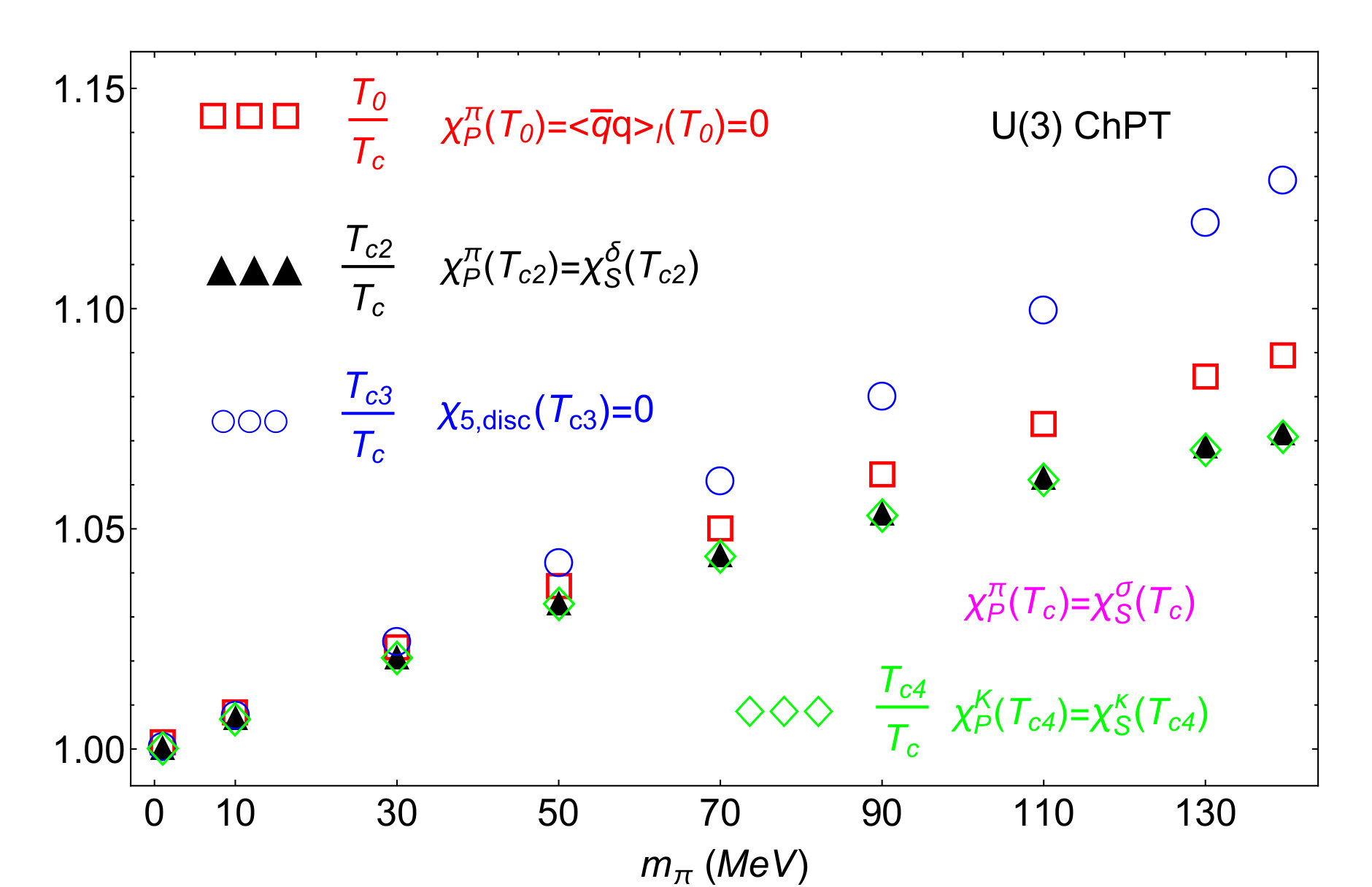 Figure 1
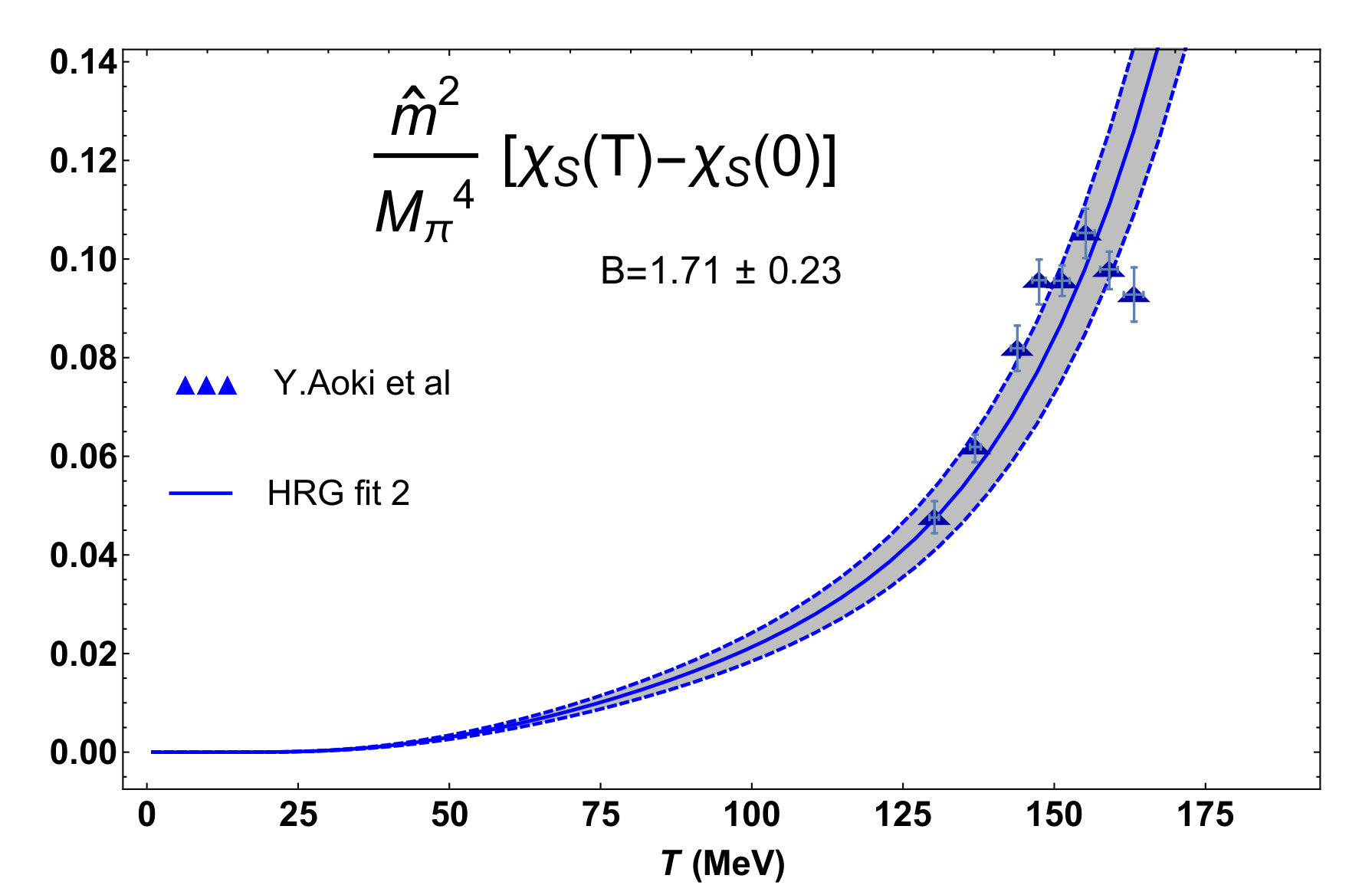 Figure 2
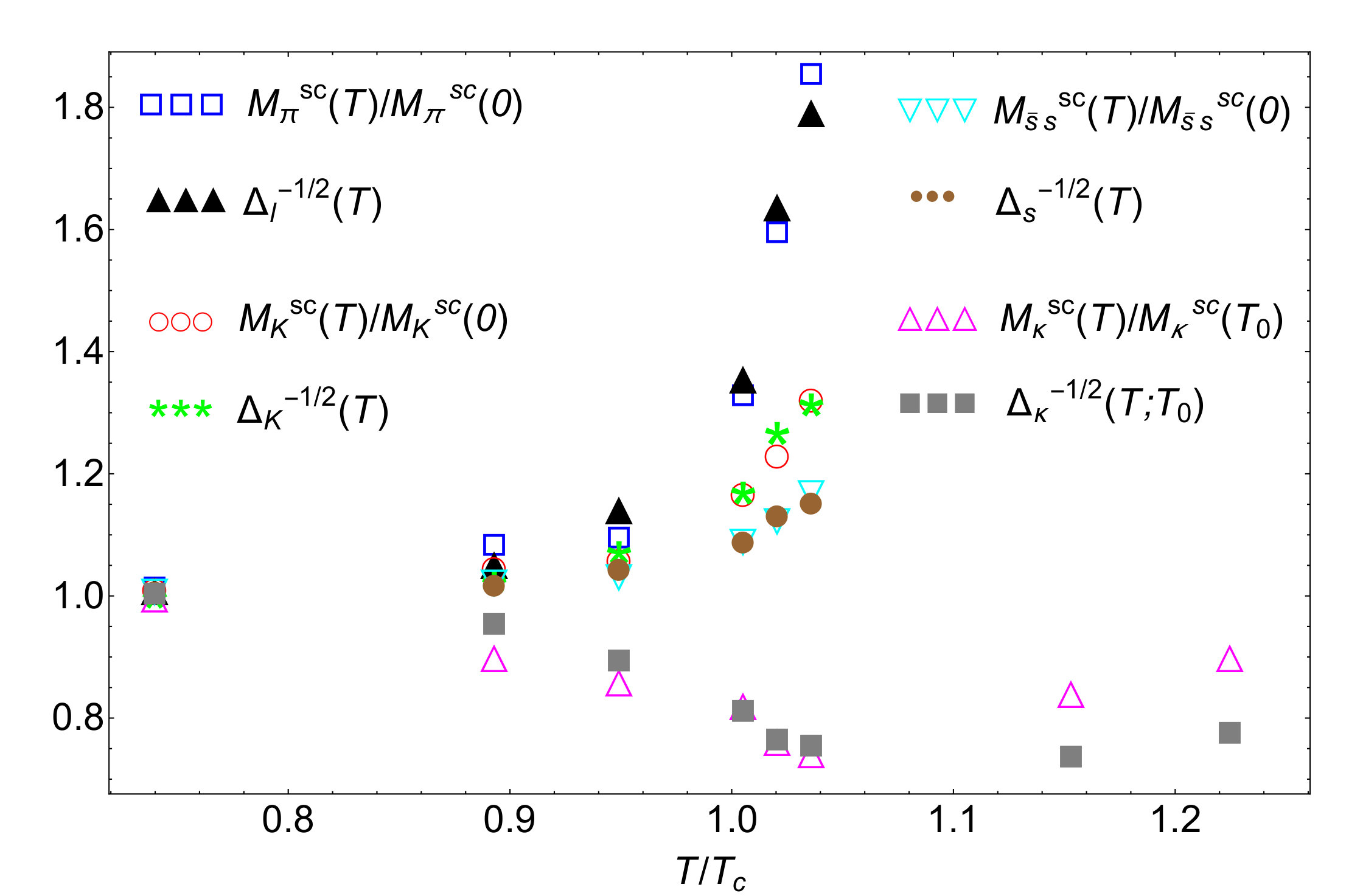 Figure 3
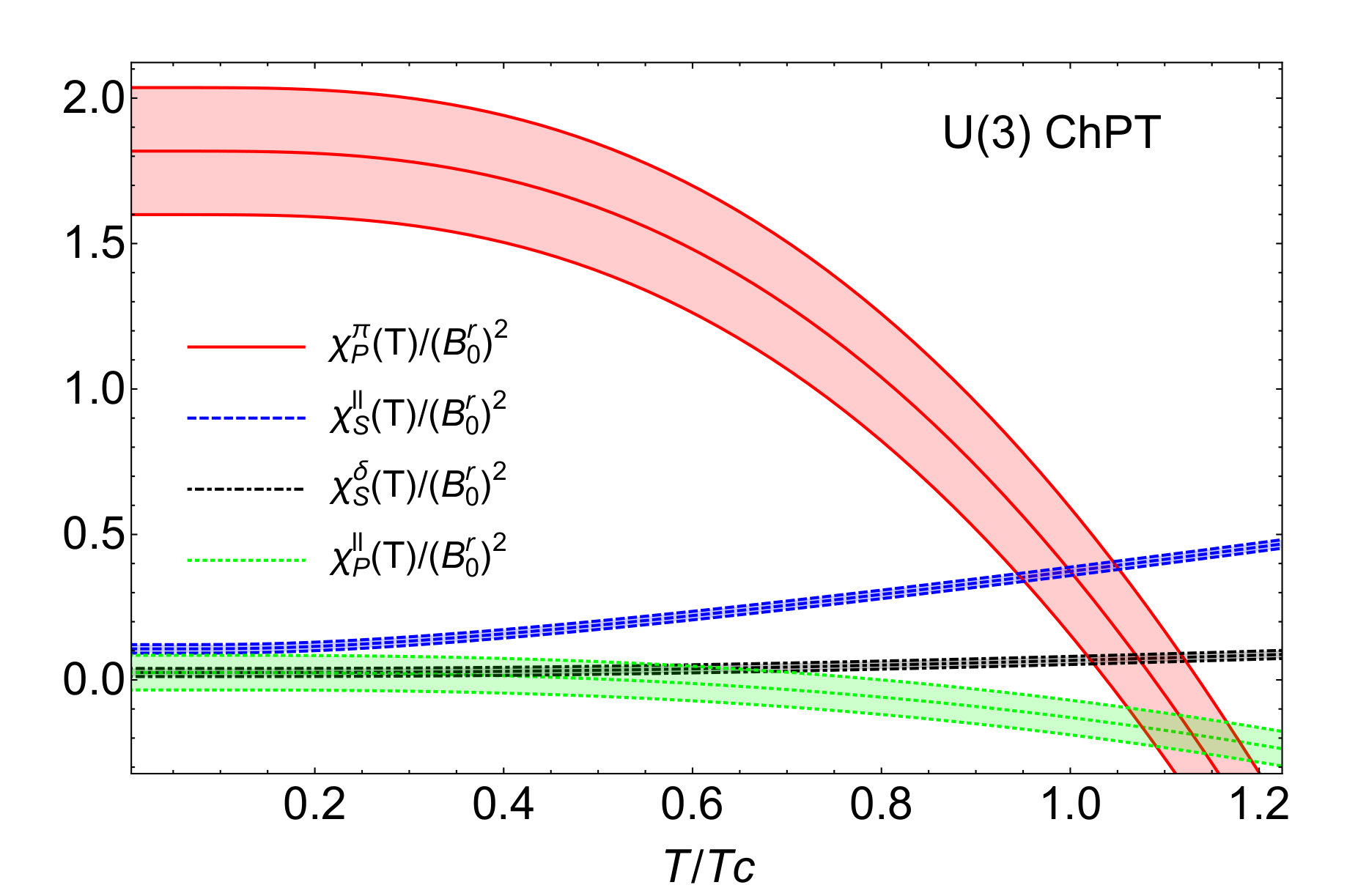 Figure 4
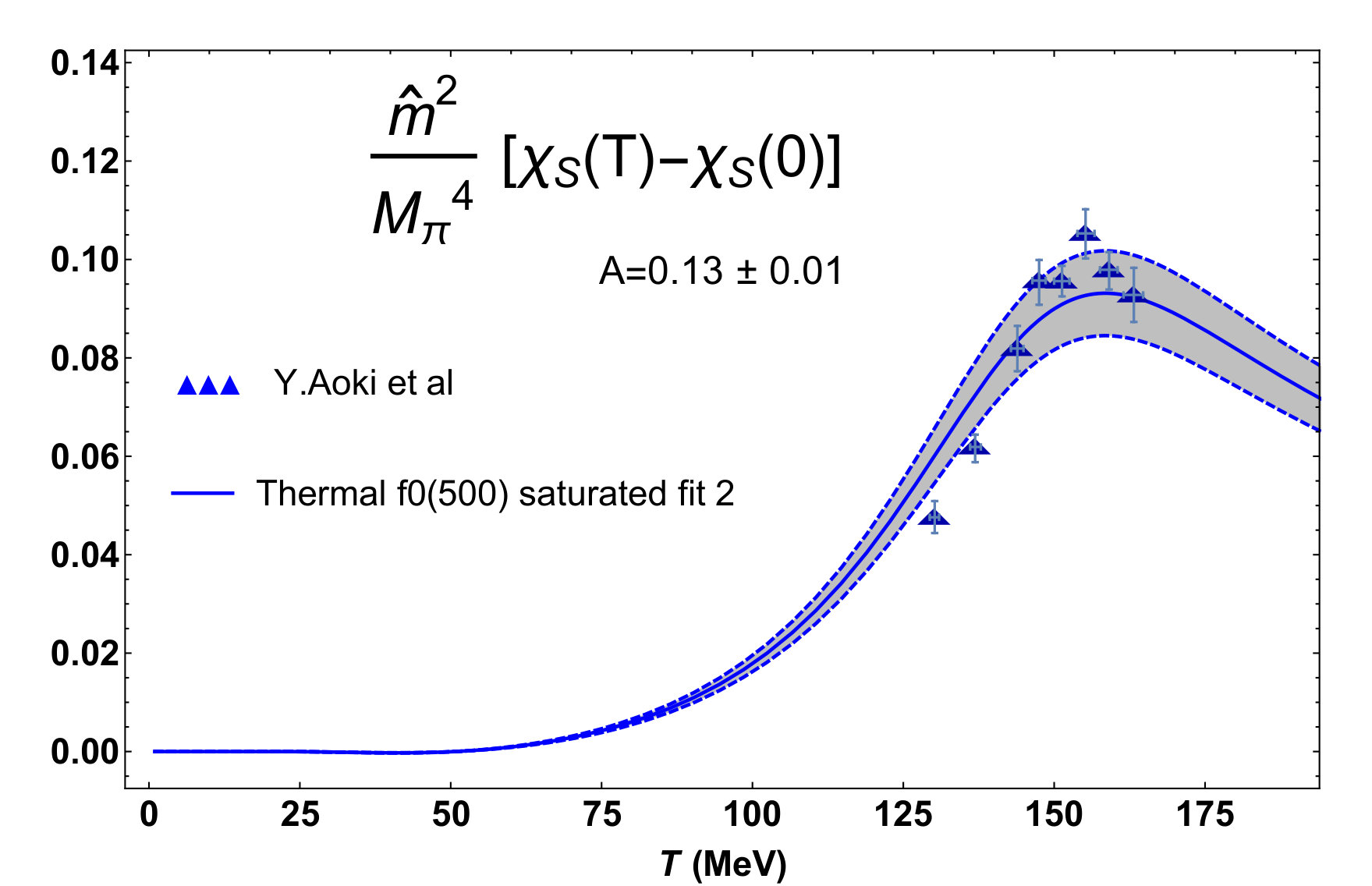 Figure 5
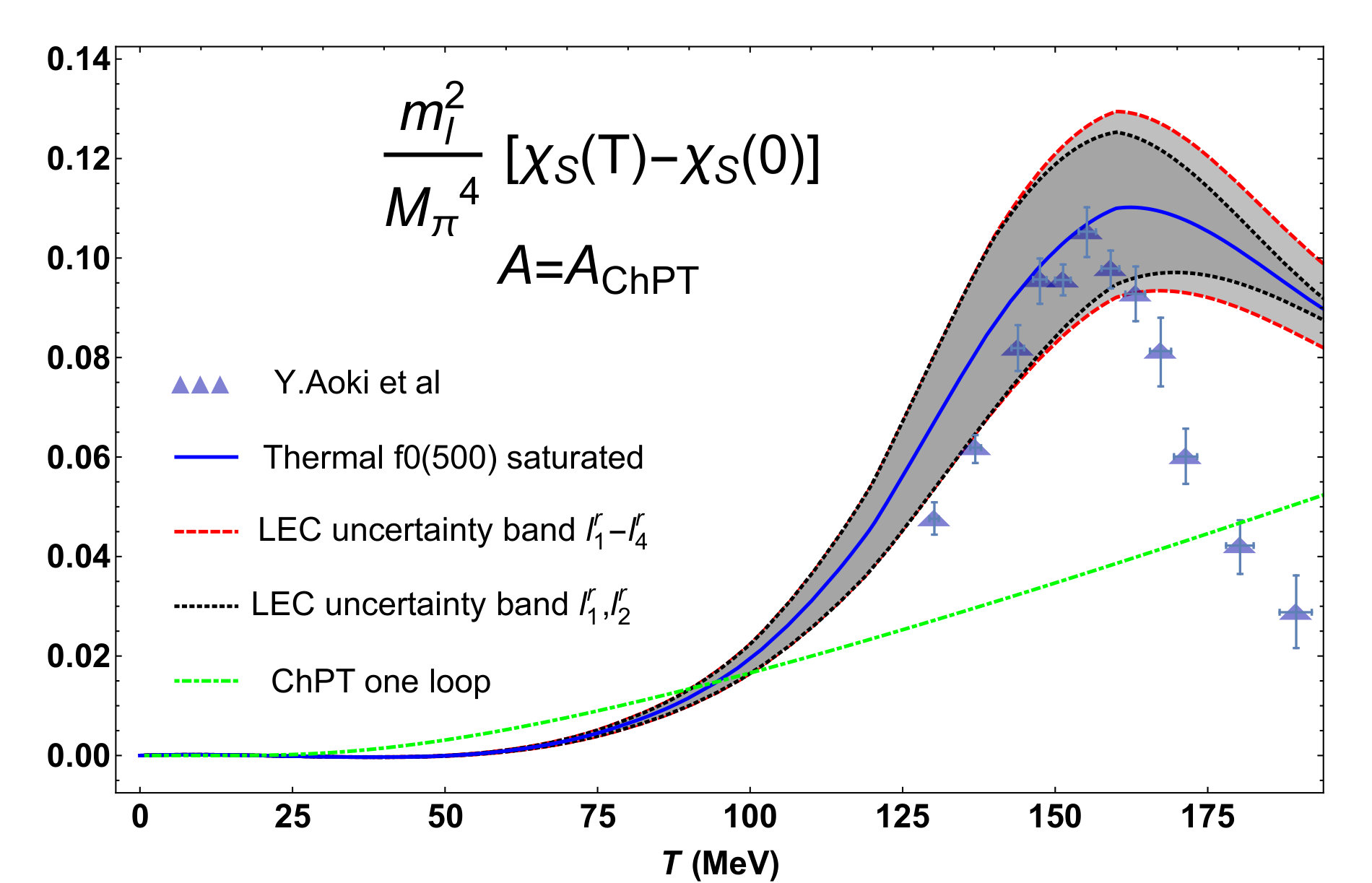 Figure 6
Peer Reviews
No public reviews on file for this paper yet. If you reviewed it on a platform where reviews are public (OpenReview, ICLR, NeurIPS, ICML), you can paste yours below so the community can read it here.
Videos
No videos yet. Explain this paper in a talk, walkthrough, or lecture? Add one.
Chiral and restoration: Ward Identities and effective theories
Departamento de Física Teórica and IPARCOS. Univ. Complutense. 28040 Madrid. Spain
Jacobo Ruiz de Elvira
Albert Einstein Center for Fundamental Physics, Institute for Theoretical Physics, University of Bern, Sidlerstrasse 5, CH–3012 Bern, Switzerland
Andrea Vioque-Rodríguez
Departamento de Física Teórica and IPARCOS. Univ. Complutense. 28040 Madrid. Spain
Silvia Ferreres-Solé
NIKHEF
Science Park 105, NL-1098 XG, Amsterdam Netherlands
Abstract:
We discuss our recent results regarding chiral and restoration, both from the formal point of view of QCD Ward Identities (WI) and from an Effective Theory analysis provided by Chiral Perturbation Theory (ChPT) at finite temperature. Our results lead to relevant conclusions regarding the behavior of chiral partners (in terms of susceptibilities) in the limit of exact restoration and provide useful results for lattice analysis. In addition, it helps to understand the temperature dependence of lattice screening masses in terms of quark condensate combinations. The U(3) ChPT calculation supports the conclusions obtained within the WI analysis. Finally, the role of the thermal state in chiral symmetry restoration, regarding the scalar susceptibility, is also discussed.
1 Introduction
Chiral and symmetries, their nature and their possible restoration, are key elements of the QCD phase diagram. Chiral restoration is rather well understood from lattice simulations, which in the physical case, i.e., for flavors of masses , and for a vanishing baryon density support a crossover-like transition at a critical temperature of about MeV [1, 2, 3, 5, 6]. The chiral transition is customarily characterized by the inflection point of the light quark condensate and the maximum of the scalar susceptibility [4]
[TABLE]
where at finite temperature , denote Euclidean finite- correlators and is the free energy density with the QCD partition function. As the system approaches the light chiral limit , decreases, the light quark condensate reduces, and the scalar susceptibility peak increases at [7], approaching a second order phase transition expected for two massless flavors [8, 9].
The symmetry can also be restored, although the nature of such restoration is not related to any spontaneous symmetry breaking, but to the presence of the chiral anomaly. Hence, restoration takes place only asymptotically as the temperature increases, driven by the vanishing of the instanton density [10]. The possibility that can be restored at a temperature close to the chiral transition has profound implications regarding its universality class, the oder of the transition [8, 11] and the behavior near the critical end point at finite temperature and baryon chemical potential [12]. This would also directly affect the way in which different hadron states degenerate near the transition (chiral partners). Considering in particular the and pseudoscalar meson nonets; if the chiral group is restored, the pion is expected to degenerate with the , the light component of the [13, 14, 15] and so would do the with the , the light component of the pair. If is restored, the degeneration pattern would be and , i.e., octet members with same quantum numbers but opposite parity. In terms of quark bilinears,
[TABLE]
where correspond to the . The rest of the octet members will satisfy also similar degeneration patterns. Namely, the (or ) versus the kaon for , and the pair versus the for the octet and singlet members. Actually, the restoration of the symmetry also affects the temperature dependence of the mixing, which is expected to approach the so called ideal mixing as the temperature increases [16, 17, 18], i.e., the and become states with pure light and strange quark content, respectively.
Nevertheless, there is still not full agreement among lattice collaborations on whether the symmetry is restored close enough to the chiral one. On the one hand, for flavors and physical quark masses, the analysis of [5, 6] shows degeneracy of partners well above the ones. On the other hand, analyses in the chiral limit [19, 20, 21] and in the massive case [22], indicate restoration very close above the chiral one.
Our theoretical approach is based on the use of Ward Identities (WI) connecting the bilinears defined in (3), both formally in QCD and within the low-energy hadronic description provided by Chiral Perturbation Theory, including the anomalous sector in the formalism [23, 24, 25, 26]. Such analysis has been completed for the full scalar and pseudoscalar nonets and allows one to relate susceptibilities with combinations of quark condensates and differences of partner susceptibilities with physical vertices. In particular, as we will show in section 2, the symmetry transformation properties of such identities lead to interesting consequences regarding the relation between chiral and restoration. In addition, they allow one to explain quite accurately the scaling with temperature of lattice screening masses.
A closely related analysis, which we also review here, is the study of the role of the state in chiral symmetry restoration [23, 27]. In particular, we show that the scalar susceptibility saturated by the pole of the at finite temperature describes remarkably well the expected crossover behavior around the transition, in agreement with lattice data. We will give more details of this approach in section 4.
2 Ward Identities: chiral vs restoration and screening masses
As stated above, the use of certain WI sheds light on the relation between chiral and restoration. The following identities are particularly useful in that respect [24, 25, 26]:
[TABLE]
where and are respectively the pseudoscalar susceptibilities (zero momentum correlators) associated to the and bilinears in (3), while
[TABLE]
with , is the topological susceptibility.
The combination of (4) and (5) plus an additional identity for the crossed pseudoscalar susceptibility between and , allows one to write:
[TABLE]
where
[TABLE]
is the order parameter used in lattice simulations to study restoration, according to our previous discussion on partner degeneration.
The importance of (7) is the following: under an axial transformation we have
[TABLE]
with . Thus, for the particular choice
[TABLE]
we have
[TABLE]
where is the coorrelator and we have used that is invariant under transformations and the last correlator vanishes by parity. Therefore, if is completely restored so that the correlators related by transformations degenerate, should vanish. Consequently, the relation (7) together with the previous argument leads to the conclusion that in the phase where degenerate () should vanish and degenerate as well (). The same identity implies also the vanishing of . This argument favors then a pattern, at least from the formal viewpoint, along the lattice results in [19, 20, 21, 22]. In the physical case one finds larger uncertainties for degeneration [5, 6], which together with the strangeness contribution might lead to a larger gap between those transitions [25, 26].
Another implication of the WI discussed above is that they allow one to understand the temperature dependence of lattice meson screening masses [24, 26]; since the susceptibilities correspond to zero momentum correlators, one can assume for meson states a scaling of the form and use for the WI relating them to quark condensate combinations. The latter have to be properly subtracted to avoid lattice divergences. In Fig.1 we show such comparison of scalings predicted by the WI for lattice data of the same collaboration with the same lattice action and resolution. The correspond to subtracted condensates defined in terms of two fit parameters (see [24, 26] for details). Data above are not fitted. The agreement is remarkably good and the WI also explain the strength of the temperature growth of the different channels. For instance, the pion channel would grow like according to (4), while in the and channels there is a condensate contribution softening the temperature behavior.
3 Chiral Perturbation Theory analysis of chiral and restoration
The discussion in section 2 has dealt with formal WI derived from QCD. A particular hadronic low-energy realization of those results is provided by Chiral Perturbation Theory (ChPT), which is the most general framework describing the , , and states. In order to incorporate properly the large mass of the singlet due to the axial anomaly, the ChPT framework relies on the large- regime [30, 31, 32, 33], so that the chiral counting is extended to include in a general parameter such that and , where are typical meson masses, energies and temperatures.
Within that framework, we have analyzed in [26] the different susceptibilities involved in the chiral and degeneration of the scalar and pseudoscalar nonets at finite temperature. Apart from checking the WI in this effective theory realization, we confirm the restoration pattern discussed in section 2. In Fig.2 we show our results for the susceptibilities corresponding to the four bilinears in (3). They confirm that the chiral and symmetries remain close in terms of partner degeneration in the physical massive case, with the degeneration of taking place at a temperature around with , the temperature where (corresponding to the state) and match. The bands in that figure correspond to the numerical uncertainties of the Low Energy Constants (LEC) involved.
Furthermore, in the same figure we also show the trend towards the chiral limit of the different degeneration temperatures for the nonet members. It can be clearly seen that all tend to the same value as the chiral limit is approached. Since in the chiral limit restoration is meant to be exact, these results confirm the conclusions obtained in section 2. In addition, we have obtained in [26] that the temperature dependence of in ChPT is the same as that of near the chiral limit, and they become close in the massive case. Once again, this confirms that these two order parameters and their corresponding restoration transitions are linked, consistently with our analysis in terms of WI. Finally, within the framework, we have also obtained that the mixing angle approaches the ideal limit around the critical region [26].
4 Describing the scalar susceptibility by the thermal pole
Another recent important line of research concerning chiral restoration has been the analysis of the role of the thermal to describe the scalar susceptibility [23, 27]. One can show that under certain assumptions, the scalar susceptibility (2) can be related to the zero momentum propagator of the state. On the other hand, Unitarized ChPT provides a reliable framework to describe the as a resonance in the second Riemann sheet (2RS) of the scattering amplitude [34], including finite temperature effects, for instance through the so called Inverse Amplitude Method (IAM) [35]. In that framework, the partial wave reads
[TABLE]
where correspond to the standard ChPT series and satisfies
[TABLE]
with and the Bose-Einstein distribution function. The amplitude defined through (12) develops a pole in the 2RS which corresponds to the at finite temperature. Around the pole,
[TABLE]
with and the effective effective coupling. Regarding (13) as the exchange of the state with self-energy , taking into account that and assuming that the result is not affected much by the variation of from to , one has for the unitarized scalar susceptibility saturated by the thermal ,
[TABLE]
with
[TABLE]
and a proper normalization constant which accounts partially for the uncertainties in this approach. Choosing to match the perturbative ChPT one-loop result for at , (14) provides a very good description of lattice data, as we show in Fig. 3, taken from [27]. The bands correspond to the uncertainty provided by the LEC involved, which in this case are those related to ChPT pion scattering, namely the renormalized in [36]. The results are mostly sensitive to and , as the figure shows, and coming only from the renormalization of and . Their central values and uncertainties are taken from [37], where the LEC are fitted to experimental data and give a good agreement with the PDG for the and poles.
The previous result shows that the unitarized susceptibility (14) can describe lattice data within the uncertainties. A more quantitative evaluation of the predictive power of this approach can be obtained by comparing it with the well established method of the Hadron Resonance Gas (HRG), as carried out in [27]. In particular, to derive the scalar susceptibility, a HRG approach has been used where the mass dependence of the different hadrons is obtained through a constituent NJL-like approach as described in [38, 39]. In order to compare both approaches, in (14) has been left as a fit parameter, setting also a normalization parameter for the HRG free energy, and fitting both to lattice data. In Fig.4 we show the results for such a fit as given in [27], including temperature values up to 163 MeV. The HRG tends to give a better description, as expected, for data below the maximum, but the saturated approach can account better for the data around the transition peak. For the fit shown in the figure, the dof equals 4.9 for the fit and 10.3 for the HRG one. For comparison, taking out the lattice points above the peak reduces the HRG dof to 1.3, increasing the saturated one to 6.2.
5 Conclusions
We have shown that the use of formal QCD Ward Identities allows one to extract powerful conclusions regarding chiral and restoration. In particular, formal restoration in terms of the and ( meson) partners points to a pattern in terms of and degeneration and the vanishing of the topological susceptibility. The WI analysis also allows one to determine the temperature scaling of lattice meson screening masses in terms of quark condensates, which fits well with lattice data and helps to understand their qualitative behavior. We have also shown the results of a calculation at finite temperature for the susceptibilities of the scalar and pseudoscalar nonets, which confirms the findings of the WI analysis. In particular, in the chiral limit we find that the and partner degeneration temperatures become identical and the order parameter scales like the light quark condensate.
The result of a recent analysis of the role of the thermal to describe the scalar susceptibility has also been reviewed here. Assuming that the scalar susceptibility is saturated by the resonance at finite temperature, whose pole is calculated from a unitarized ChPT approach, provides a very accurate description of lattice data, which improves over the standard Hadron Resonance Gas near the transition peak.
Acknowledgments
Work partially supported by research contract FPA2016-75654-C2-2-P (spanish “Ministerio de Economía y Competitividad”) and by the Swiss National Science Foundation.
The reference list from the paper itself. Each links out to its DOI / PubMed record.
- 1[1] Y. Aoki, S. Borsanyi, S. Durr, Z. Fodor, S. D. Katz, S. Krieg and K. K. Szabo, JHEP 0906 , 088 (2009).
- 2[2] S. Borsanyi et al. [Wuppertal-Budapest Collaboration], JHEP 1009 , 073 (2010).
- 3[3] A. Bazavov, T. Bhattacharya, M. Cheng, C. De Tar, H. T. Ding, S. Gottlieb, R. Gupta and P. Hegde et al. , Phys. Rev. D 85 , 054503 (2012).
- 4[4] A. Gomez Nicola, J. R. Pelaez and J. Ruiz de Elvira, Phys. Rev. D 82 , 074012 (2010); Phys. Rev. D 87 , 016001 (2013).
- 5[5] M. I. Buchoff, M. Cheng, N. H. Christ, H.-T. Ding, C. Jung, F. Karsch, Z. Lin and R. D. Mawhinney et al. , Phys. Rev. D 89 , 054514 (2014).
- 6[6] T. Bhattacharya, M. I. Buchoff, N. H. Christ, H.-T. Ding, R. Gupta, C. Jung, F. Karsch and Z. Lin et al. , Phys. Rev. Lett. 113 , 082001 (2014).
- 7[7] S. Ejiri et al , Phys. Rev. D 80 , 094505 (2009).
- 8[8] R. D. Pisarski and F. Wilczek, Phys. Rev. D 29 , 338 (1984).