Steady-state fracture toughness of elastic-plastic solids: Isotropic versus kinematic hardening
Kristian J. Juul, Emilio Mart\'inez-Pa\~neda, Kim L. Nielsen,, Christian F. Niordson

TL;DR
This study compares the steady-state fracture toughness of elastic-plastic solids under isotropic and kinematic hardening, revealing that kinematic hardening results in higher toughness due to nonproportional loading effects.
Contribution
It introduces a steady-state framework to compare isotropic and kinematic hardening models in fracture toughness predictions, highlighting the impact of hardening law on crack propagation.
Findings
Kinematic hardening yields higher fracture toughness than isotropic hardening.
Differences are linked to nonproportional loading and reverse plasticity effects.
Mode II crack propagation shows minimal difference due to less nonproportional loading.
Abstract
The fracture toughness for a mode I/II crack propagating in a ductile material has been subject to numerous investigations. However, the influence of the material hardening law has received very limited attention, with isotropic hardening being the default choice if cyclic loads are absent. The present work extends the existing studies of monotonic mode I/II steady-state crack propagation with the goal to compare the predictions from an isotropic hardening model with that of a kinematic hardening model. The work is conducted through a purpose-built steady-state framework that directly delivers the steady-state solution. In order to provide a fracture criterion, a cohesive zone model is adopted and embedded at the crack tip in the steady-state framework, while a control algorithm for the far-field, that significantly reduces the number of equilibrium iterations is employed to couple the…
Click any figure to enlarge with its caption.
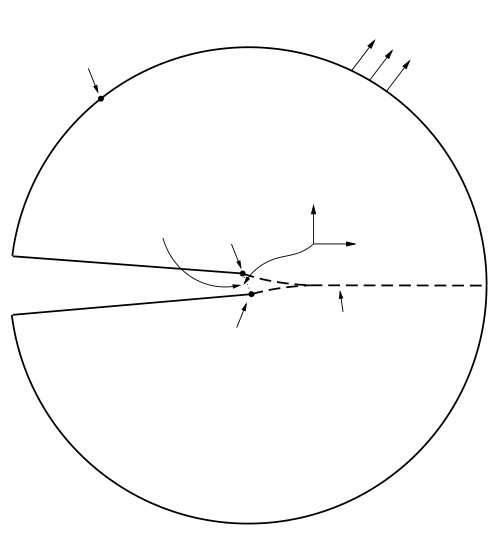 Figure 1
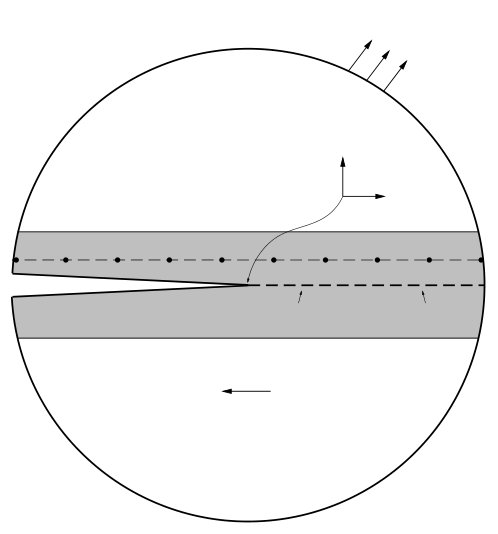 Figure 2
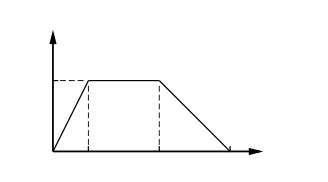 Figure 3
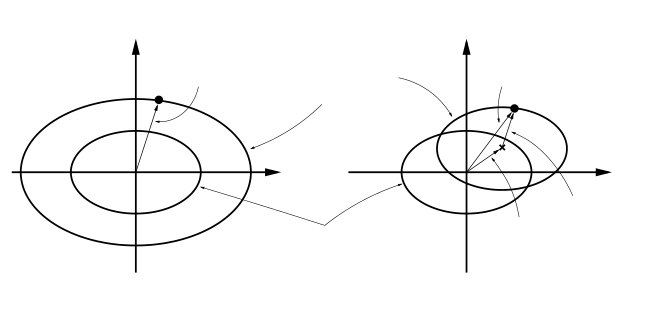 Figure 4
Peer Reviews
No public reviews on file for this paper yet. If you reviewed it on a platform where reviews are public (OpenReview, ICLR, NeurIPS, ICML), you can paste yours below so the community can read it here.
Videos
No videos yet. Explain this paper in a talk, walkthrough, or lecture? Add one.