A New Method of Modelling Tuneable Lasers with Functional Composition
Brady Metherall, C. Sean Bohun

TL;DR
This paper introduces a novel nonlinear modeling approach for tuneable lasers using functional composition of transformations based on the generalized nonlinear Schrödinger equation, capturing the effects of key cavity components.
Contribution
It presents a new method that models the entire laser cavity as a composition of component transformations, enhancing understanding of pulse dynamics in tuneable lasers.
Findings
Provides explicit expressions for component transformations
Enables comprehensive modeling of laser pulse evolution
Facilitates analysis of tuneable laser behavior
Abstract
A new nonlinear model is proposed for tuneable lasers. Using the generalized nonlinear Schr\"odinger equation as a starting point, expressions for the transformations undergone by the pulse are derived for each of the five components (gain, loss, dispersion, modulation, and nonlinearity) within the laser cavity. These transformations are then composed to give the overall effect of one trip around the cavity.
Click any figure to enlarge with its caption.
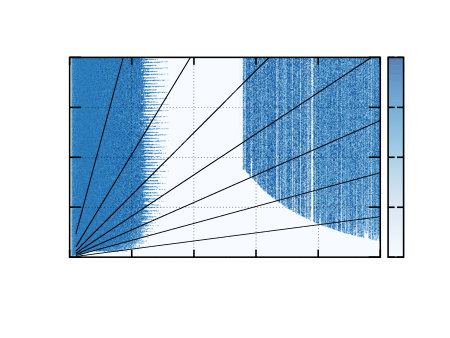 Figure 1
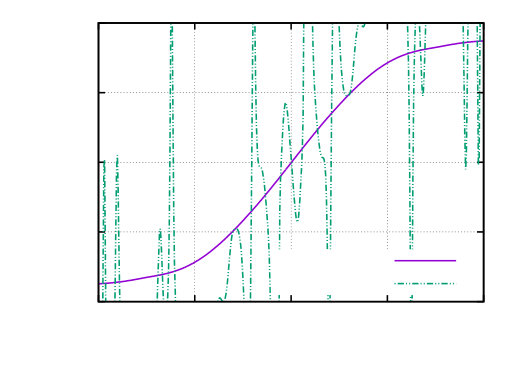 Figure 2
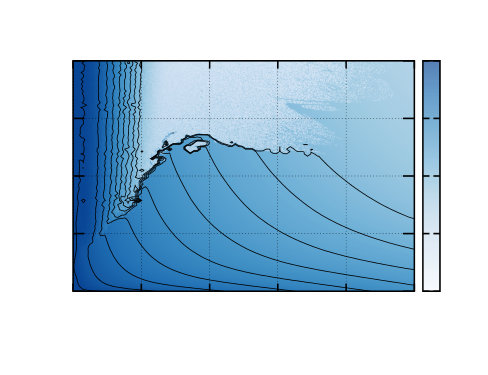 Figure 3
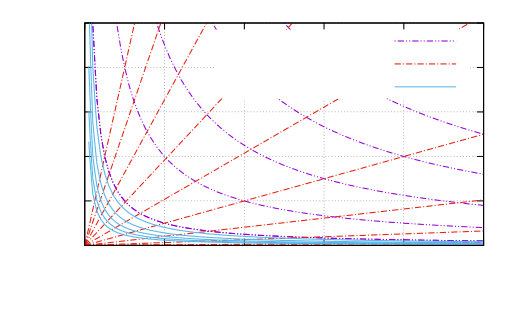 Figure 4
 Figure 5
 Figure 6
 Figure 7
 Figure 8
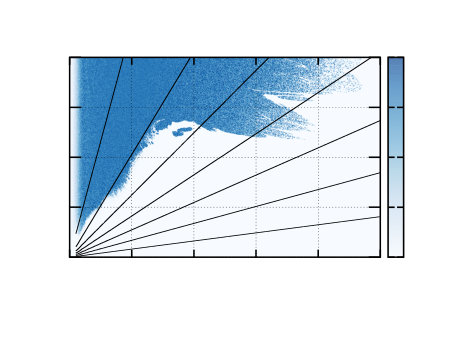 Figure 9
| Parameter | Symbol | Value | Sources |
|---|---|---|---|
| Absorption of Fibrea | – | burgoyneemail ; shtyrina ; tomlinson ; usechak ; yarutkina | |
| Fibre Dispersion | – | agrawal2002 ; agrawal2013 ; burgoyne2014 ; litchinitser ; peng ; yarutkina | |
| Fibre Nonlinearity | – | agrawal2013 ; finot ; usechak ; yarutkina | |
| Grating Dispersion | – | agrawal2002 ; agrawal2013 ; burgoyne2014 ; li | |
| Length of Cavity | – | burgoyneemail ; peng ; tamura1996 | |
| Length of Fibre | – | burgoyneemail | |
| Length of Gain Fibre | – | burgoyne2014 ; peng ; shtyrina ; tamura1993 ; yarutkina | |
| Modulation Time | – | bohun ; burgoyneemail ; burgoyne2014 | |
| Reflectivity of Optical Coupler | – | burgoyneemail ; li ; peng ; tamura1993 ; tamura1996 ; yamashita | |
| Saturation Energy | – | burgoyneemail ; usechak ; yarutkina | |
| Small Signal Gain | – | burgoyneemail ; yarutkina |
Peer Reviews
No public reviews on file for this paper yet. If you reviewed it on a platform where reviews are public (OpenReview, ICLR, NeurIPS, ICML), you can paste yours below so the community can read it here.
Videos
No videos yet. Explain this paper in a talk, walkthrough, or lecture? Add one.
11institutetext: B. Metherall 22institutetext: University of Oxford, Oxford, UK, 22email: [email protected] 33institutetext: C. S. Bohun 44institutetext: Ontario Tech University, 2000 Simcoe St N, Oshawa, ON, 44email: [email protected]
A New Method of Modelling Tuneable Lasers with Functional Composition
B. Metherall
C. S. Bohun
Abstract
A new nonlinear model is proposed for tuneable lasers. Using the generalized nonlinear Schrödinger equation as a starting point, expressions for the transformations undergone by the pulse are derived for each of the five components (gain, loss, dispersion, modulation, and nonlinearity) within the laser cavity. These transformations are then composed to give the overall effect of one trip around the cavity.
1 Introduction
A tuneable laser has the ability to vary the frequency of its output by up to about 100 nanometres bohun ; burgoyne2010 ; yamashita . Tuneable lasers simultaneously lase at all frequencies within this bandwidth. This tuneability is quite useful and has applications in spectroscopy and high resolution imaging such as coherent anti-Stokes Raman spectroscopy and optical coherence tomography bohun ; burgoyne2014 ; yamashita , as well as communications and diagnostics of ultra fast processes silfvast . A typical tuneable laser cavity is shown in Figure 1. In contrast to a standard laser, a tuneable laser contains two additional components, namely, a chirped fibre Bragg grating (CFBG), and a modulator.
A CFBG is a length of optical fibre where the refractive index oscillates along its length ferreira , and therefore, can act as a reflective filter agrawal2002 ; alazzawi ; ferreira ; starodoumov . Due to the oscillatory nature, light with the corresponding wavelength will be reflected when the Bragg condition is satisfied agrawal2002 ; alazzawi ; becker ; ferreira ; silfvast ; starodoumov . The spacial variation of the refractive index effectively creates a spacial dependence on the Bragg condition, causing most wavelengths to be reflected by a CFBG, but with each wavelength satisfying the Bragg condition at a different spacial location111Note that a monotonic chirping ensures that the spacial dependence of the Bragg condition is continuous with respect to the frequency.. A consequence of this is that a time delay is created between wavelengths—this causes the pulse to disperse and broaden.
The modulator serves the purpose of reshaping the pulse. Without it, the pulse will repeatedly widen due to the CFBG—the modulator ensures the pulse is band limited by altering the envelope.
2 Modelling Efforts
The standard equation for studying nonlinear optics is the nonlinear Schrödinger equation (NLSE)222The NLSE can be derived from the nonlinear wave equation for electric fields; this derivation is presented in detail in agrawal2013 ; ferreira .,
[TABLE]
Here is the complex pulse amplitude, is the second order dispersion, and is the coefficient of nonlinearity. In practice, (1) lacks a few key terms, thus, it is often generalized by adding amplification, loss, and occasionally higher order terms. This gives the generalized nonlinear Schrödinger equation (GNLSE) agrawal2013 ; bohun ; finot ; peng ; shtyrina ; yarutkina ,
[TABLE]
where is an amplifying term due to the gain, and is the loss due to scattering and absorption.
The GNLSE has many applications in nonlinear optics and fibre optic communications, however, in the context of lasers we typically also add a modulation term. This yields the master equation of mode-locking haus1975 ; hausbook ; haus1986 ; haus1992 ; haus2000 ; kartner ; tamura1996 ; usechak ,
[TABLE]
where is the modulation function. The solutions of three simplifications of (3) have been investigated:
- •
Omitting both modulation and nonlinearity haus1975 ; haus1986 ; haus1992 .
- •
Omitting only modulation haus1991 ; usechak .
- •
Omitting only nonlinearity burgoyne2014 ; haus1975 ; hausbook ; haus1996 ; haus2000 ; kartner ; tamura1996 ; usechak .
For a more comprehensive history see haus2000 .
2.1 Discrete Models
While the derivation of (3) is correct mathematically, it is not representative of what happens within the laser cavity. The issue with (3) is that it has been assumed each process affects the pulse continuously within the cavity. As highlighted by Figure 1, this is a rather poor assumption. Within the cavity each effect is localized to its corresponding component: almost all of the dispersion happens within the CFBG agrawal2002 , the pulse is only amplified within the Erbium-doped fibre, etc. Thus, perhaps a better model is one where (3) is broken down into the individual components giving the effect of each ‘block’ of the cavity. Each of the blocks can then be functionally composed together to give an iterative map for the effect of one circuit around the cavity. This transforms the differential equation into an algebraic equation.
Such a method was first proposed in 1955 by Cutler cutler while analyzing a microwave regenerative pulse generator. This method was adapted for mode-locked lasers in 1969 by Siegman and Kuizenga kuizenga1970a ; siegman . Kuizenga and Siegman also had success experimentally validating their model kuizenga1970b ; kuizenga1970 . The effects of the nonlinearity would not be considered until Martinez, Fork, and Gordon martinez1984 ; martinez1985 tried modelling passively mode-locked lasers. This issue has recently been readdressed by Burgoyne burgoyne2014 in the literature for tuneable lasers. In these models the effect of each block is described by a transfer function.
Despite the development of these block style models, several short-comings exist. The clearest is that none of these models have contained every block—either the nonlinearity or the modulation have been omitted. In the framework of tuneable lasers, each component plays a crucial role and the tuneable laser will not function correctly without the inclusion of all of the components. Another key drawback is that the functional operations of some of the components used in their models are phenomenological. While these functions are chosen based on the observed output, they are not necessarily consistent with the underlying physics. Finally, none of these previous models have been able to exhibit a phenomena called wave-breaking in which the self-phase modulation of the pulse becomes too strong, distorting and damaging the wave until it ultimately becomes unstable and unsustainable.
3 A New Model
Using the ideas presented in the previous section of the prior functional models burgoyne2014 ; cutler ; kuizenga1970a ; kuizenga1970b ; kuizenga1970 ; martinez1984 ; martinez1985 ; siegman we shall derive a new model from (2)—with the exception of the modulation in which we consider the exact functional form to be determined by the laser operator.
3.1 Components
We shall determine the effect each component has on the pulse by solving (2) while only considering the dominant term within each section of the cavity.
Gain
Within the Er-doped gain fibre, the gain term is dominant, and equation (2) reduces to
[TABLE]
where takes the form bohun ; burgoyne2014 ; haus1975 ; hausbook ; haus1992 ; haus2000 ; haus1991 ; kartner ; peng ; shtyrina ; silfvast ; usechak ; yarutkina
[TABLE]
where is a small signal gain, is the energy of the pulse, and is the energy at which the gain begins to saturate. Without much difficulty this differential equation can be solved, and the effect on an incident pulse is
[TABLE]
where is the length of the gain fibre.
Nonlinearity
The nonlinearity of the fibre arises from the parameter ; in regions where this effect is dominant expression (2) becomes
[TABLE]
Using a similar method as with the gain, the effect of the nonlinearity can be shown to be
[TABLE]
where is the length of fibre.
Loss
Expression (2) leads to exponential decay due to the scattering and absorption of the fibre. However, a majority of the signal is removed from the cavity by the optical coupler. Combining these two effects yields
[TABLE]
where is the reflectivity of the output coupler, and is the total length of the laser circuit as the effect of the losses333Depending on the layout of the laser cavity the loss may take the form instead..
Dispersion
Considering only the dispersive terms of (2), one obtains
[TABLE]
The effect of dispersion is then given by the map
[TABLE]
where is the length of the dispersive medium, and denotes the Fourier transform.
Modulation
In this model, the modulation is considered to be applied externally in which ever way the operator sees fit. For simplicity the representation is taken as the Gaussian
[TABLE]
where is the characteristic width of the modulation.
3.2 Non-Dimensionalization
The structure of each process of the laser can be better understood by re-scaling the time, energy, and amplitude. Nominal values for tuneable lasers are shown in Table 1. Knowing experimental durations and energies, the table suggests the convenient scalings:
[TABLE]
Revisiting each process map shows each process has a characteristic non-dimensional parameter. The new mappings—after dropping the tildes—are
[TABLE]
with the four dimensionless parameters, as defined by the values in Table 1,
[TABLE]
which characterize the behaviour of the laser. Notice that the modulation is only characterized by , and each other process has its own independent non-dimensional parameter.
3.3 Combining the Effects of Each Block of the Model
In this model the pulse is iteratively passed through each process, the order of which must now be considered. We are most interested in the output of the laser cavity, and so we shall start with the loss component. Next the pulse is passed though the CFBG, as well as the modulator. Finally, the pulse travels through the gain fibre to be amplified, and then we consider the effect of the nonlinearity since this is the region where the power is maximal. Note that in general the functional operators of the components do not commute, and therefore the order of the components is indeed important—in contrast to the previous models. This is especially the case of dispersion as realized through the Fourier transform. Functionally this can be denoted as
[TABLE]
where denotes one loop of the laser. The pulse after one complete circuit of the laser cavity is then passed back in to restart the process. A steady solution to this model is one in which the envelope and chirp are unchanged after traversing every component in the cavity—we are uninterested in the phase. That is, such that —for some .
4 Conclusion
Within this paper we developed a new nonlinear model for tuneable lasers. In order to better represent the underlying physics within the laser cavity the nonlinear Schrödinger equation was reduced to simpler differential equations for each component of the laser. This led to a functional map that defines the effect of each component on a particular input pulse. These processes were then composed together to give an iterative mapping of the whole laser cavity. In a future publication we shall show the results obtained by this iterative mapping as well as discuss the dynamics exhibited by this model—including wave-breaking—to predict the conditions under which the pulse is stable and sustainable.
The reference list from the paper itself. Each links out to its DOI / PubMed record.
- 1(1) Agrawal, G.: Fiber-Optic Communication Systems, 3 edn. John Wiley & Sons, Inc. (2002)
- 2(2) Agrawal, G.: Nonlinear Fiber Optics, 5 edn. Academic Press (2013)
- 3(3) Al-Azzawi, A.: Fiber Optics: Principles and Advanced Practices, 2 edn. CRC Press (2017)
- 4(4) Becker, P.C., Olsson, N.A., Simpson, J.R.: Erbium-Doped Fiber Amplifiers Fundamentals and Technology, 1 edn. Academic Press (1999)
- 5(5) Bohun, C.S., Cher, Y., Cummings, L.J., Howell, P., Mitre, T., Monasse, L., Mueller, J., Rouillon, S.: Modelling and Specifying Dispersive Laser Cavities. In: Sixth Montréal Industrial Problem Solving Workshop, pp. 11–25 (2015)
- 6(6) Burgoyne, B.: Private Communication (2018)
- 7(7) Burgoyne, B., Dupuis, A., Villeneuve, A.: An Experimentally Validated Discrete Model for Dispersion-Tuned Actively Mode-Locked Lasers. IEEE Journal of Selected Topics in Quantum Electronics 20 (5), 390–398 (2014). DOI 10.1109/JSTQE.2014.2303794
- 8(8) Burgoyne, B., Villeneuve, A.: Programmable Lasers: Design and Applications. In: Proc.SPIE, vol. 7580 (2010). DOI 10.1117/12.841277