On the replica structure of Sachdev-Ye-Kitaev model
Hanteng Wang, D. Bagrets, A. L. Chudnovskiy, A. Kamenev

TL;DR
This paper examines the structure of the Sachdev-Ye-Kitaev model, focusing on whether replica off-diagonal solutions exist, and finds numerical evidence supporting the dominance of replica-diagonal solutions over off-diagonal ones.
Contribution
It provides a detailed analysis comparing replica-diagonal and off-diagonal solutions, concluding that the former accurately describes the model's long-time behavior.
Findings
Numerical results agree with replica-diagonal saddle point predictions.
Replica-off-diagonal solutions are unlikely to contribute significantly at short time scales.
The structure of the Schwarzian action differs qualitatively between the two scenarios.
Abstract
We investigate existence of replica off-diagonal solutions in the field-theoretical description of Sachdev-Ye-Kitaev model. To this end we evaluate a set of local and non-local dynamic correlation functions in the long time limit. We argue that the structure of the soft-mode Schwarzian action is qualitatively different in replica-diagonal vs. replica-off-diagonal scenarios, leading to distinct long-time predictions for the correlation functions. We then evaluate the corresponding correlation functions numerically and compare the simulations with analytical predictions of replica-diagonal and replica-off-diagonal calculations. We conclude that all our numerical results are in a quantitative agreement with the theory based on the replica-diagonal saddle point plus Schwarzian and massive Gaussian fluctuations (the latter do contain replica off-diagonal components). This seems to exclude…
Click any figure to enlarge with its caption.
 Figure 1
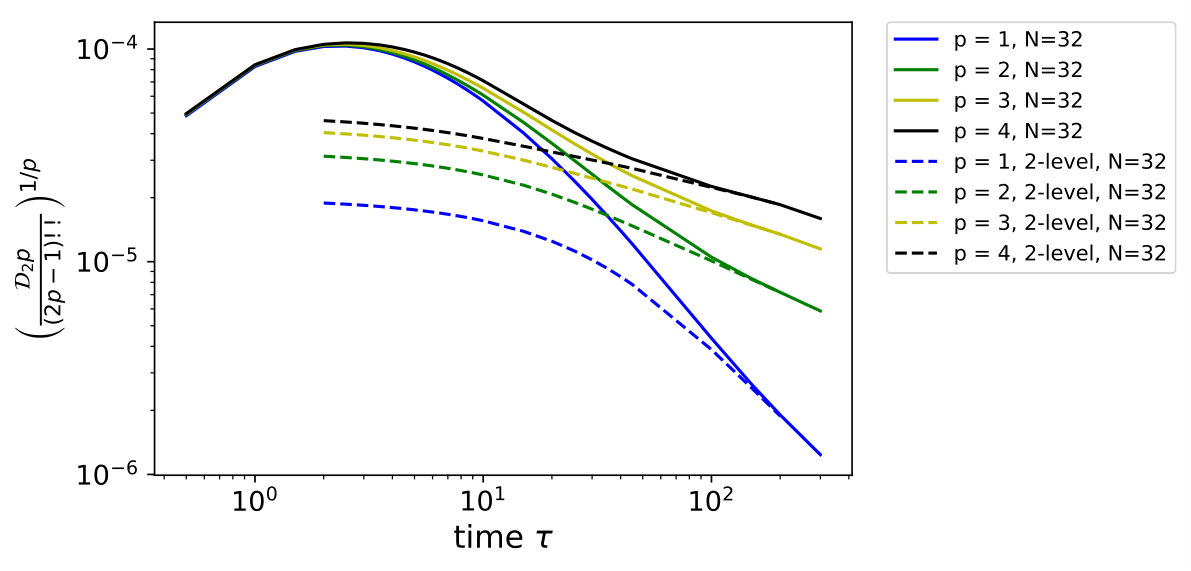 Figure 2
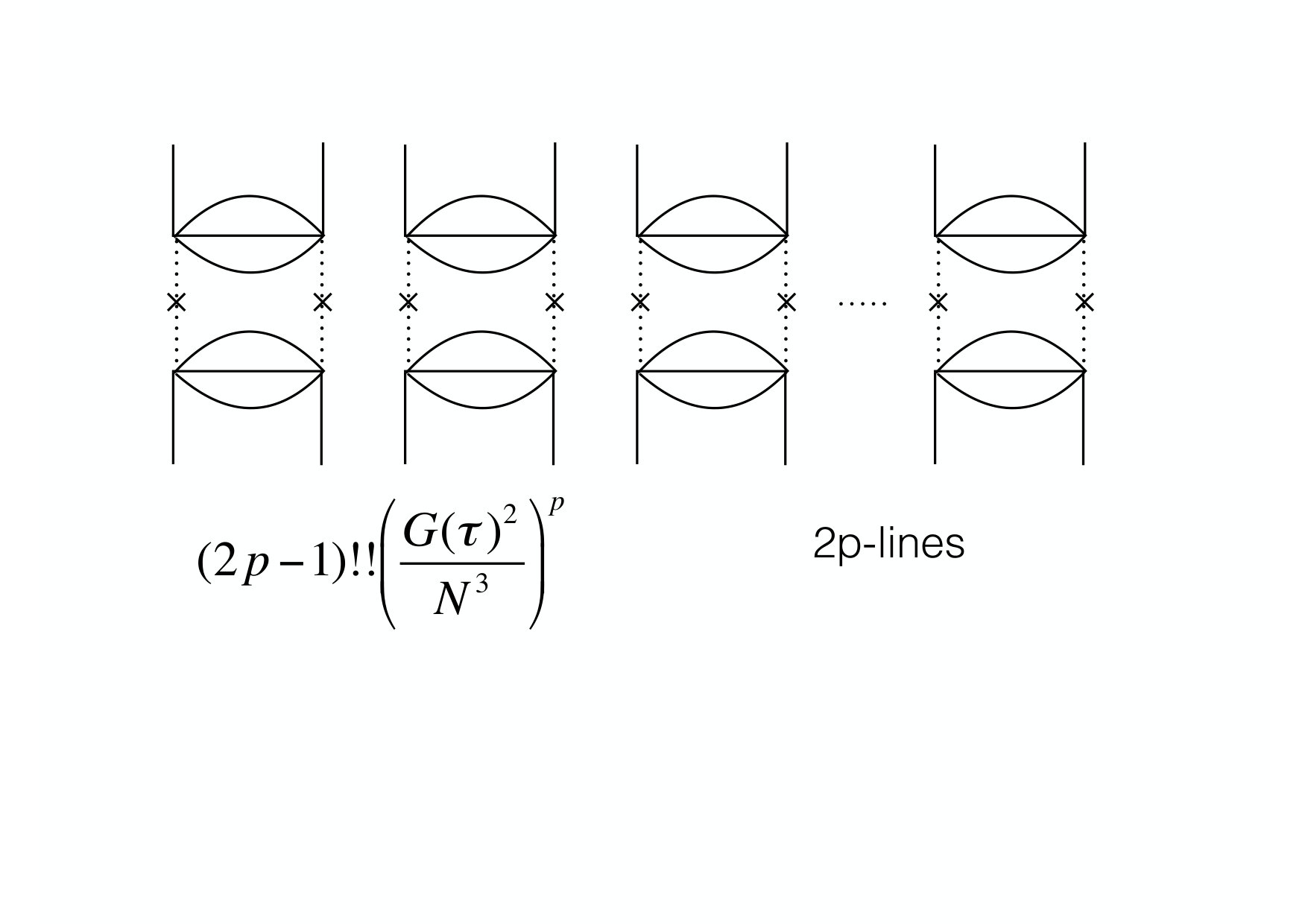 Figure 3
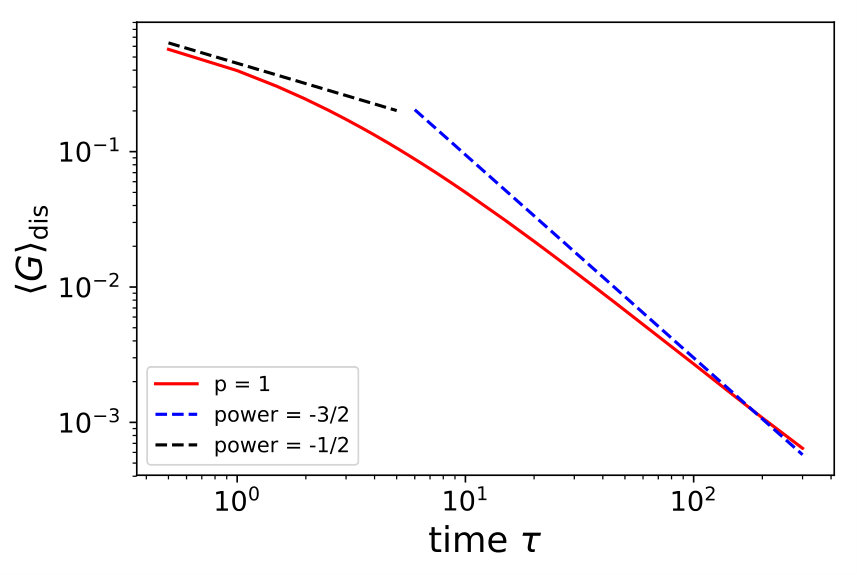 Figure 4
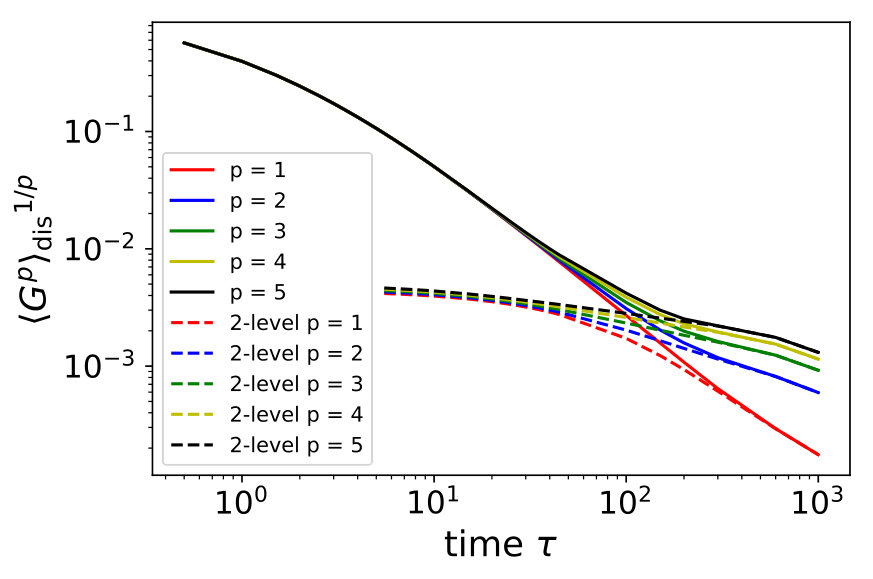 Figure 5
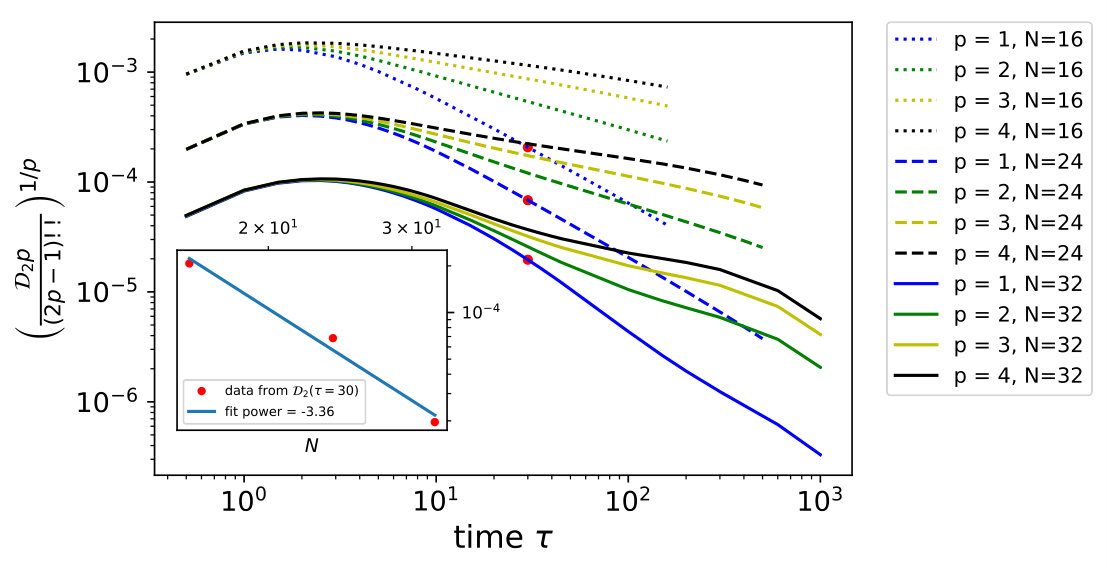 Figure 6
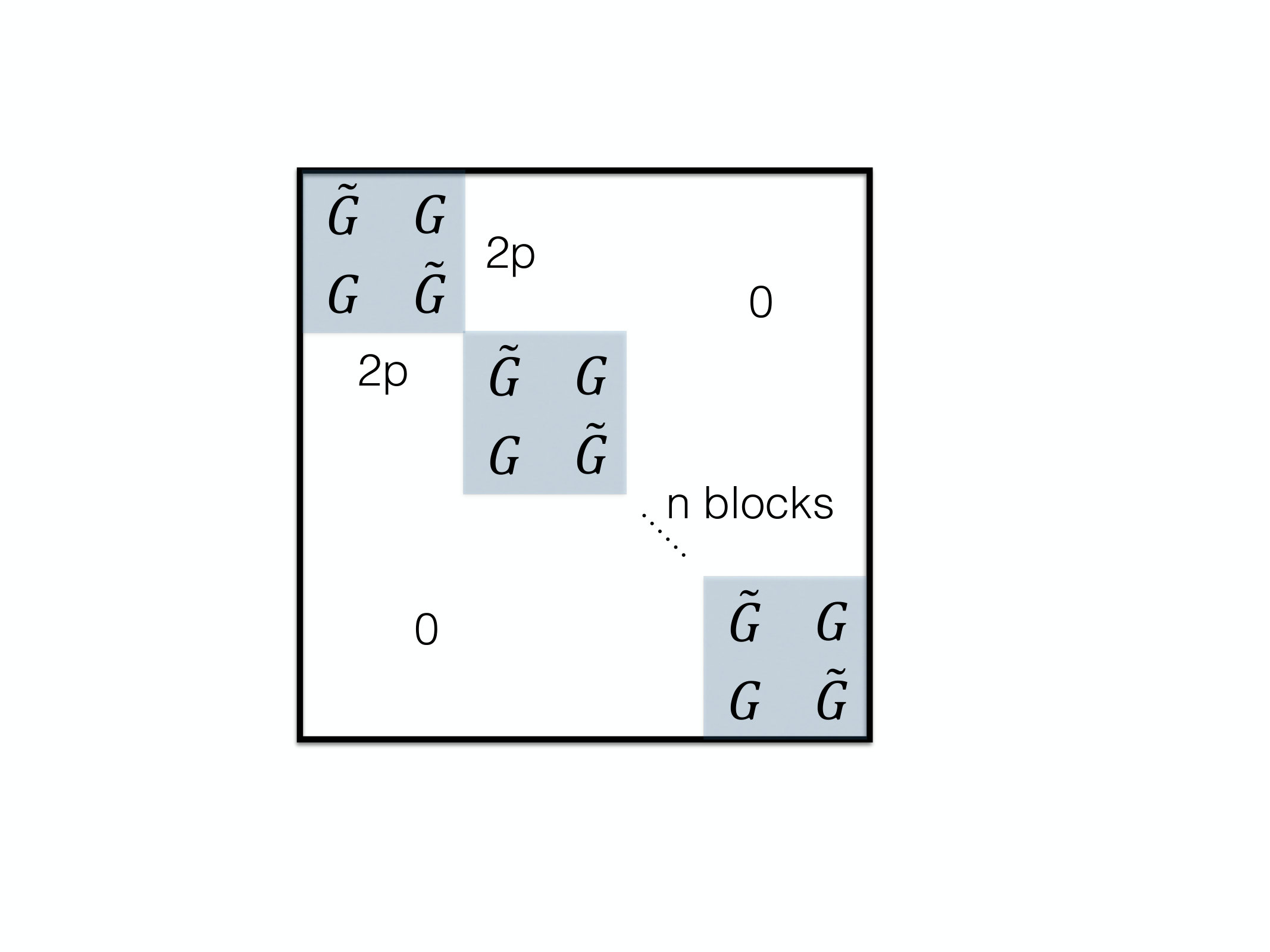 Figure 7
Peer Reviews
No public reviews on file for this paper yet. If you reviewed it on a platform where reviews are public (OpenReview, ICLR, NeurIPS, ICML), you can paste yours below so the community can read it here.
Videos
No videos yet. Explain this paper in a talk, walkthrough, or lecture? Add one.