Systematic construction of basis invariants in the 2HDM
Andreas Trautner

TL;DR
This paper introduces a systematic method for constructing basis invariants in the 2HDM scalar sector, enabling complete characterization of invariants and simplifying conditions for CP conservation.
Contribution
A new method using hermitian projection operators and Young tableaux to explicitly construct the full ring of basis invariants in the 2HDM.
Findings
Constructed the complete set of basis invariants for 2HDM.
Provided a simple proof of CP conservation conditions.
Demonstrated the method's potential for generalization to other models.
Abstract
A new systematic method for the explicit construction of (basis-)invariants is introduced and employed to construct the full ring of basis invariants of the Two-Higgs-Doublet-Model (2HDM) scalar sector. Co- and invariant quantities are obtained by the use of hermitian projection operators. These projection operators are constructed from Young tableaux via birdtrack diagrams and they are used in two steps. First, to extract basis-covariant quantities, and second, to combine the covariants in order to obtain the actual basis invariants. The Hilbert series and Plethystic logarithm are used to find the number and structure of the complete set of generating invariants as well as their interrelations (syzygies). Having full control over the complete ring of (CP-even and CP-odd) basis invariants, we give a new and simple proof of the necessary and sufficient conditions for explicit CP…
Click any figure to enlarge with its caption.
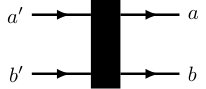 Figure 1
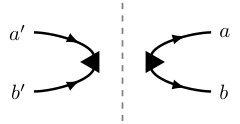 Figure 2
 Figure 3
 Figure 4
 Figure 5
 Figure 6
 Figure 7
 Figure 8
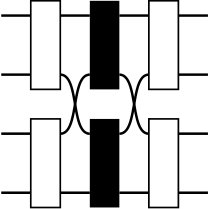 Figure 9
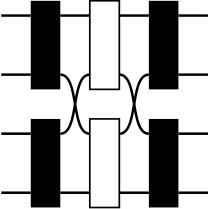 Figure 10
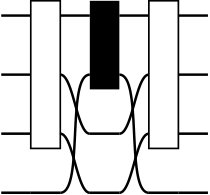 Figure 11
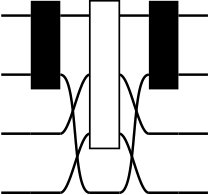 Figure 12
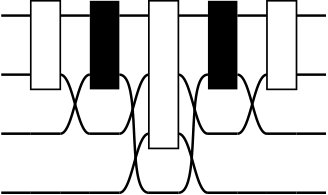 Figure 13
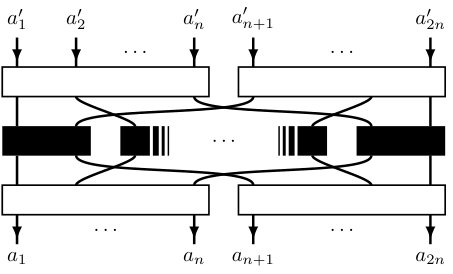 Figure 14
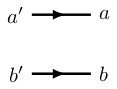 Figure 15
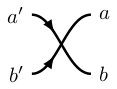 Figure 16
 Figure 17
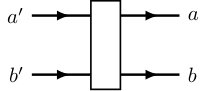 Figure 18
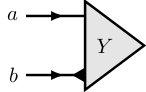 Figure 19
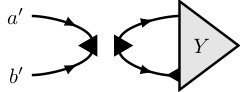 Figure 20
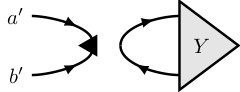 Figure 21
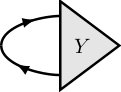 Figure 22
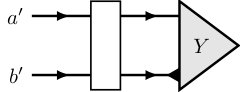 Figure 23
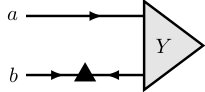 Figure 24
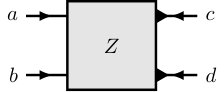 Figure 25
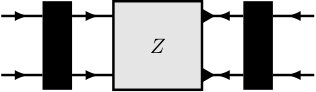 Figure 26
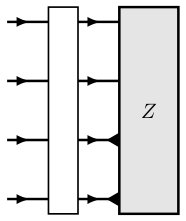 Figure 27
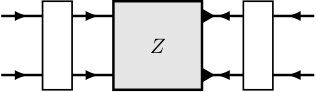 Figure 28
 Figure 29
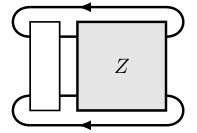 Figure 30
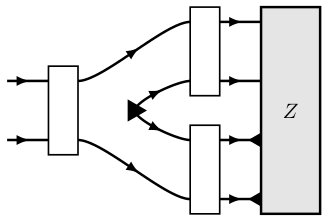 Figure 31
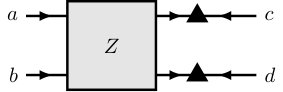 Figure 32
Peer Reviews
No public reviews on file for this paper yet. If you reviewed it on a platform where reviews are public (OpenReview, ICLR, NeurIPS, ICML), you can paste yours below so the community can read it here.
Videos
No videos yet. Explain this paper in a talk, walkthrough, or lecture? Add one.