Computation of sum of squares polynomials from data points
Bruno Despr\'es (LJLL (UMR\_7598)), Maxime Herda (RAPSODI, LPP)

TL;DR
This paper introduces an iterative algorithm to compute sum of squares polynomial approximations from data points, analyzing the convex functional involved and demonstrating its effectiveness for univariate and bivariate cases.
Contribution
It presents a novel convex functional-based iterative method for sum of squares polynomial approximation from data, with theoretical analysis and practical algorithms.
Findings
The functional $G$ is coercive and strictly convex for positive univariate polynomials, ensuring a unique sum of squares decomposition.
For multivariate polynomials with small perturbations, the modified functional $G^ ext{epsilon}$ is coercive, enabling approximate decompositions.
Numerical experiments confirm the effectiveness of the proposed algorithms for univariate and bivariate polynomial data.
Abstract
We propose an iterative algorithm for the numerical computation of sums of squares of polynomials approximating given data at prescribed interpolation points. The method is based on the definition of a convex functional arising from the dualization of a quadratic regression over the Cholesky factors of the sum of squares decomposition. In order to justify the construction, the domain of , the boundary of the domain and the behavior at infinity are analyzed in details. When the data interpolate a positive univariate polynomial, we show that in the context of the Lukacs sum of squares representation, is coercive and strictly convex which yields a unique critical point and a corresponding decomposition in sum of squares. For multivariate polynomials which admit a decomposition in sum of squares and up to a small perturbation of size , is always…
Click any figure to enlarge with its caption.
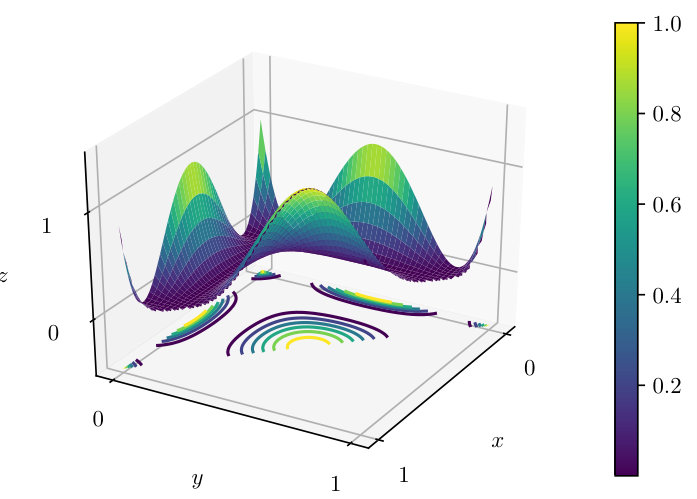 Figure 1
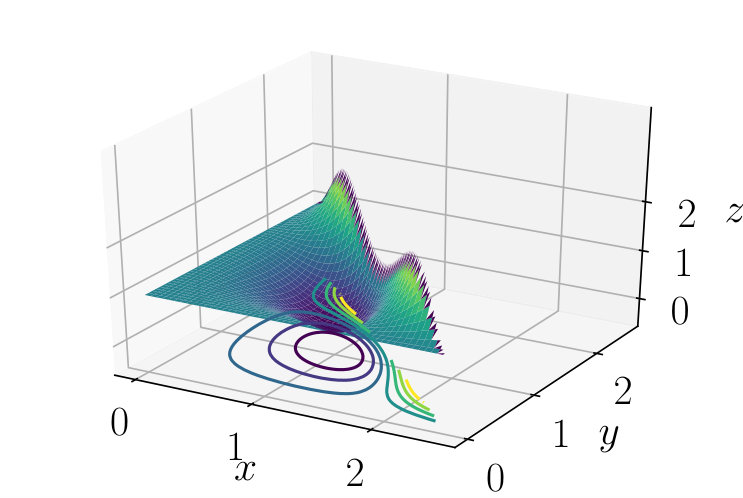 Figure 2
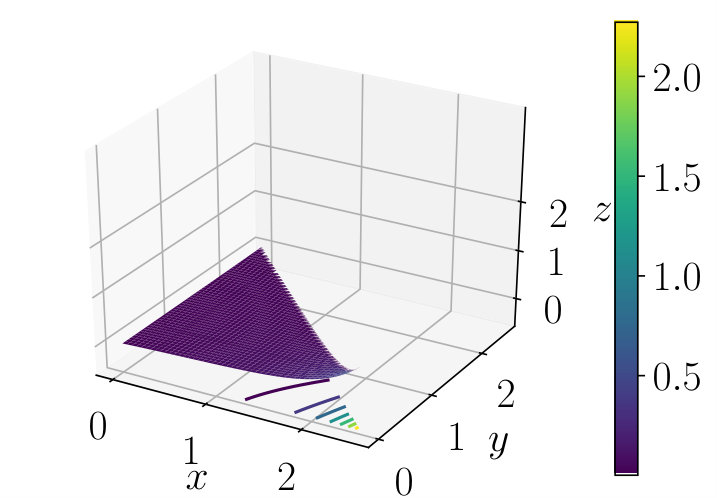 Figure 3
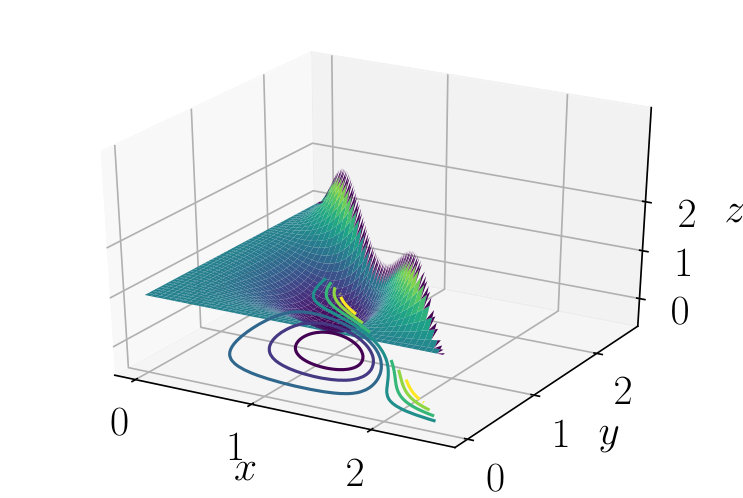 Figure 4
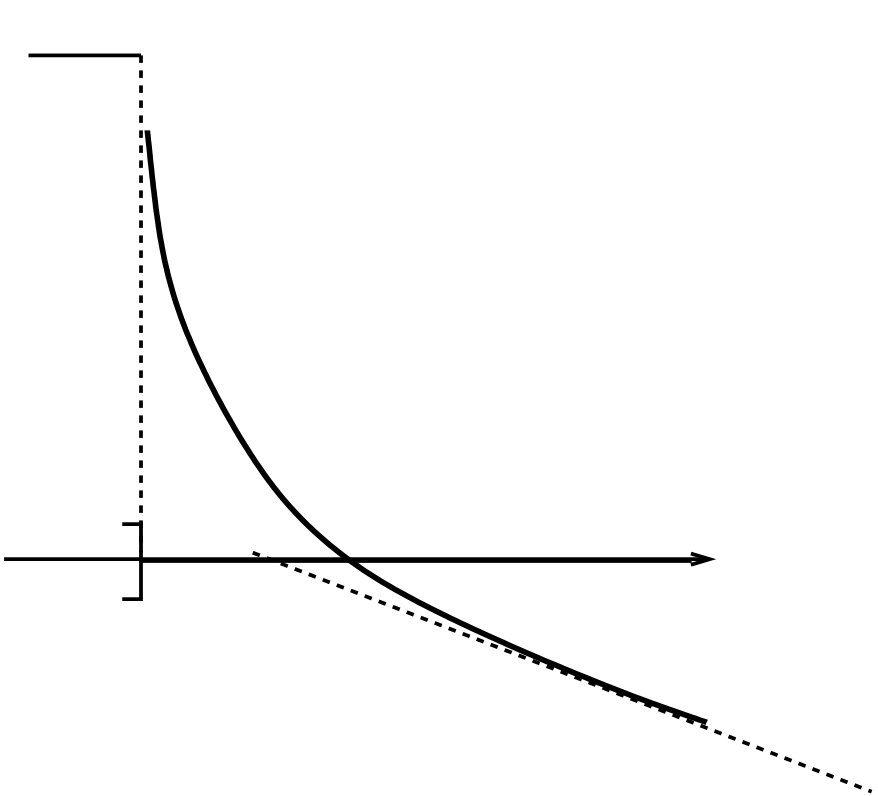 Figure 5
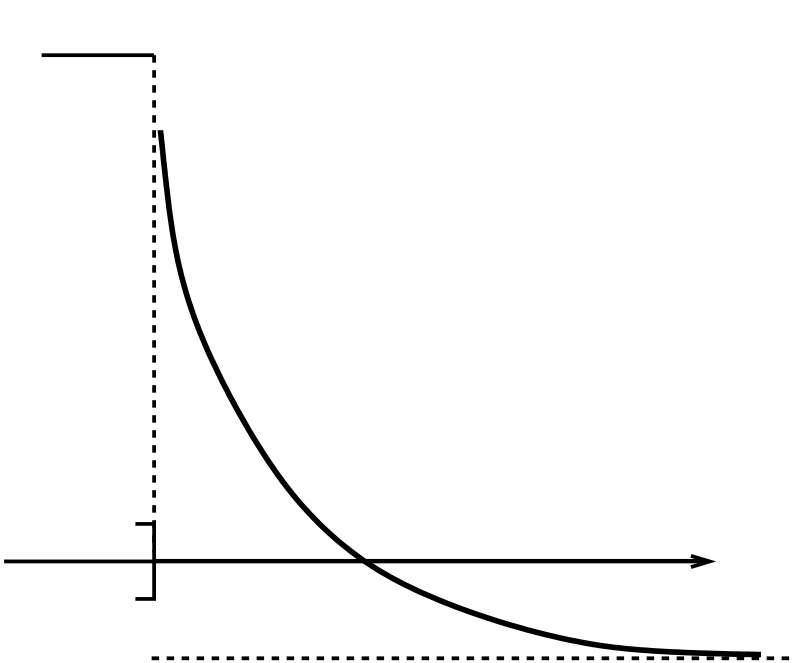 Figure 6
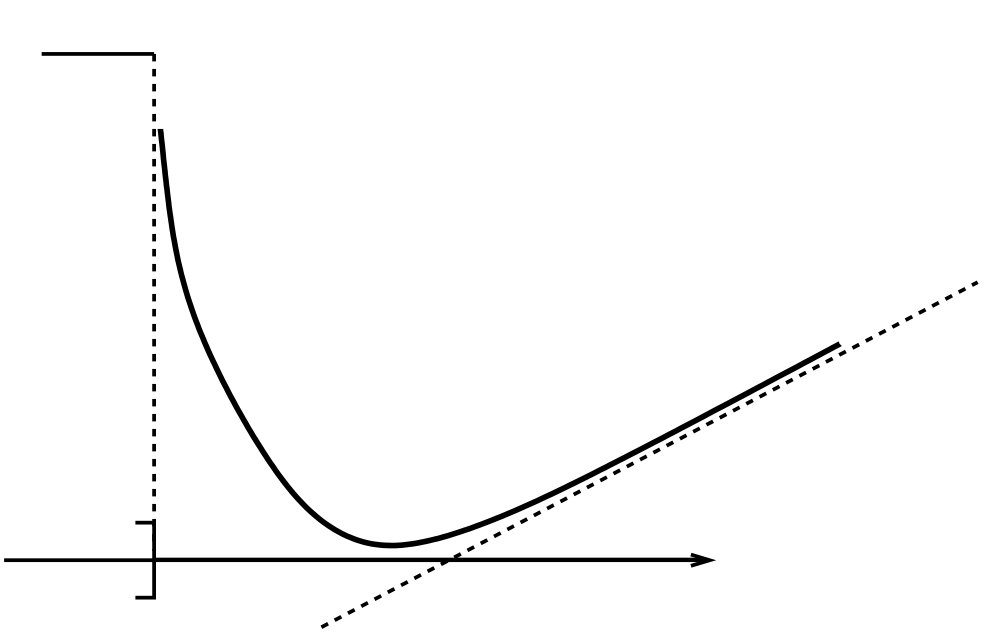 Figure 7
Peer Reviews
No public reviews on file for this paper yet. If you reviewed it on a platform where reviews are public (OpenReview, ICLR, NeurIPS, ICML), you can paste yours below so the community can read it here.
Videos
No videos yet. Explain this paper in a talk, walkthrough, or lecture? Add one.
Taxonomy
TopicsPolynomial and algebraic computation · Advanced Numerical Analysis Techniques · Mathematical functions and polynomials