
TL;DR
This paper reports recent precise measurements of solar neutrinos from Borexino and SuperK experiments, covering the entire solar neutrino spectrum and providing insights into solar composition and neutrino flux stability.
Contribution
It presents the first comprehensive measurement of all solar neutrinos in a single detector and offers refined data on neutrino fluxes, including CNO neutrinos, with implications for solar metallicity.
Findings
SuperK achieved <2% precision in 8B neutrino rate
Borexino measured all neutrino fluxes from the pp chain
Data weakly favor a high-metallicity Sun
Abstract
We present the most recent results from the two currently running solar neutrino experiments, Borexino at the Gran Sasso laboratory in Italy and SuperK at Kamioka mine in Japan. SuperK has released the most precise yet measurement of the 8B solar neutrino interaction rate, with a precision better than 2\%, consistent with a constant solar neutrino emission over more than a decade. Borexino has released refined measurements of all neutrinos produced in the pp fusion chain. For the first time, one single detector has measured the entire range of solar neutrinos at once. These new data weakly favor a high-metallicity Sun. Prospects for measuring CNO solar neutrinos with Borexino are discussed, and a brief outlook on the field provided.
Click any figure to enlarge with its caption.
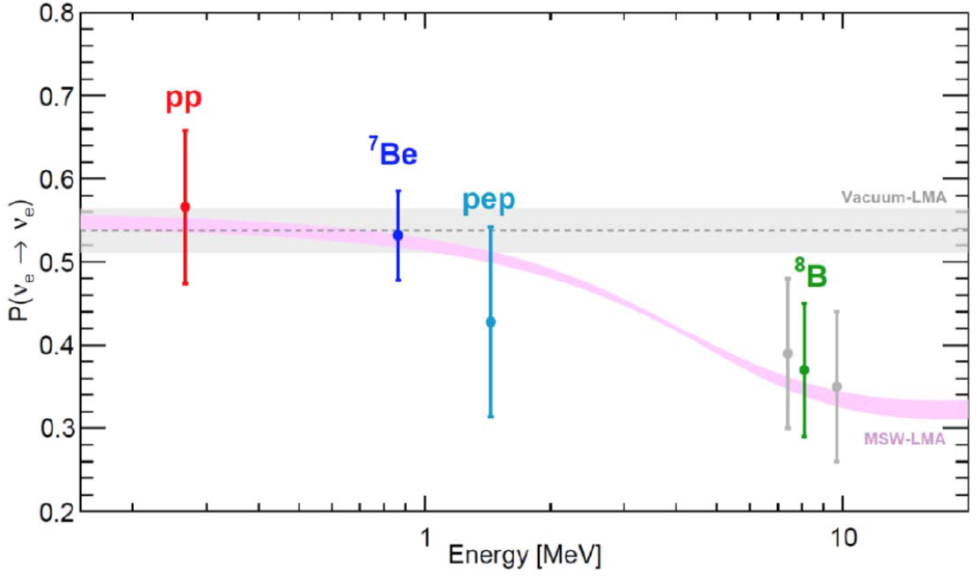 Figure 1
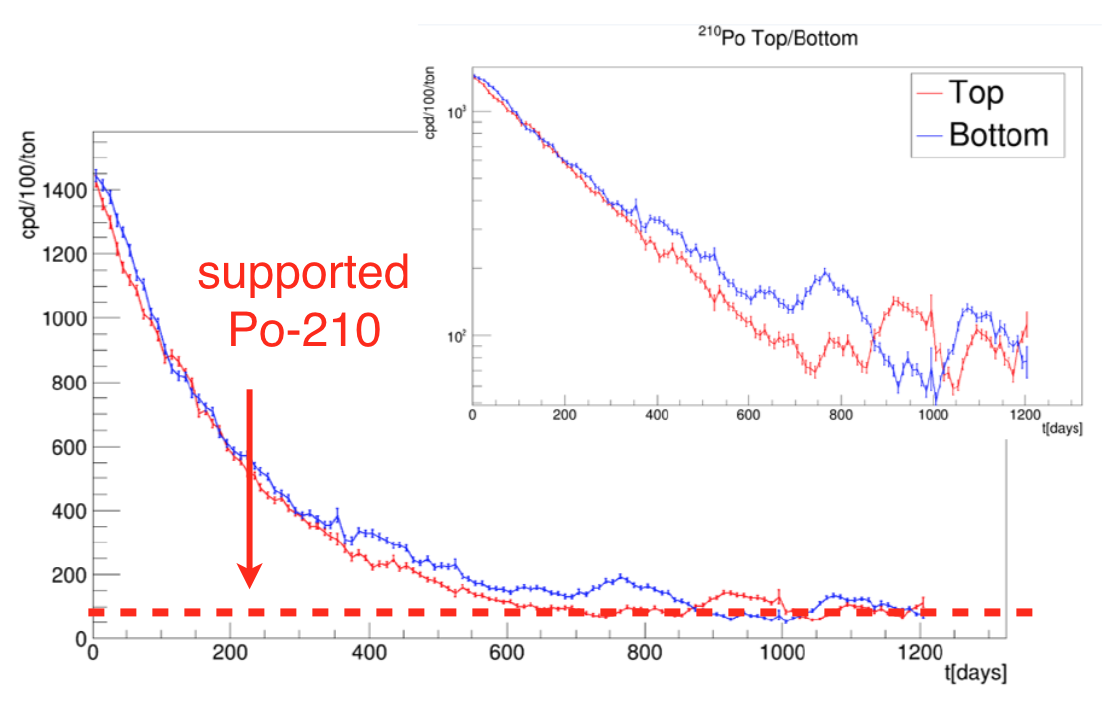 Figure 2
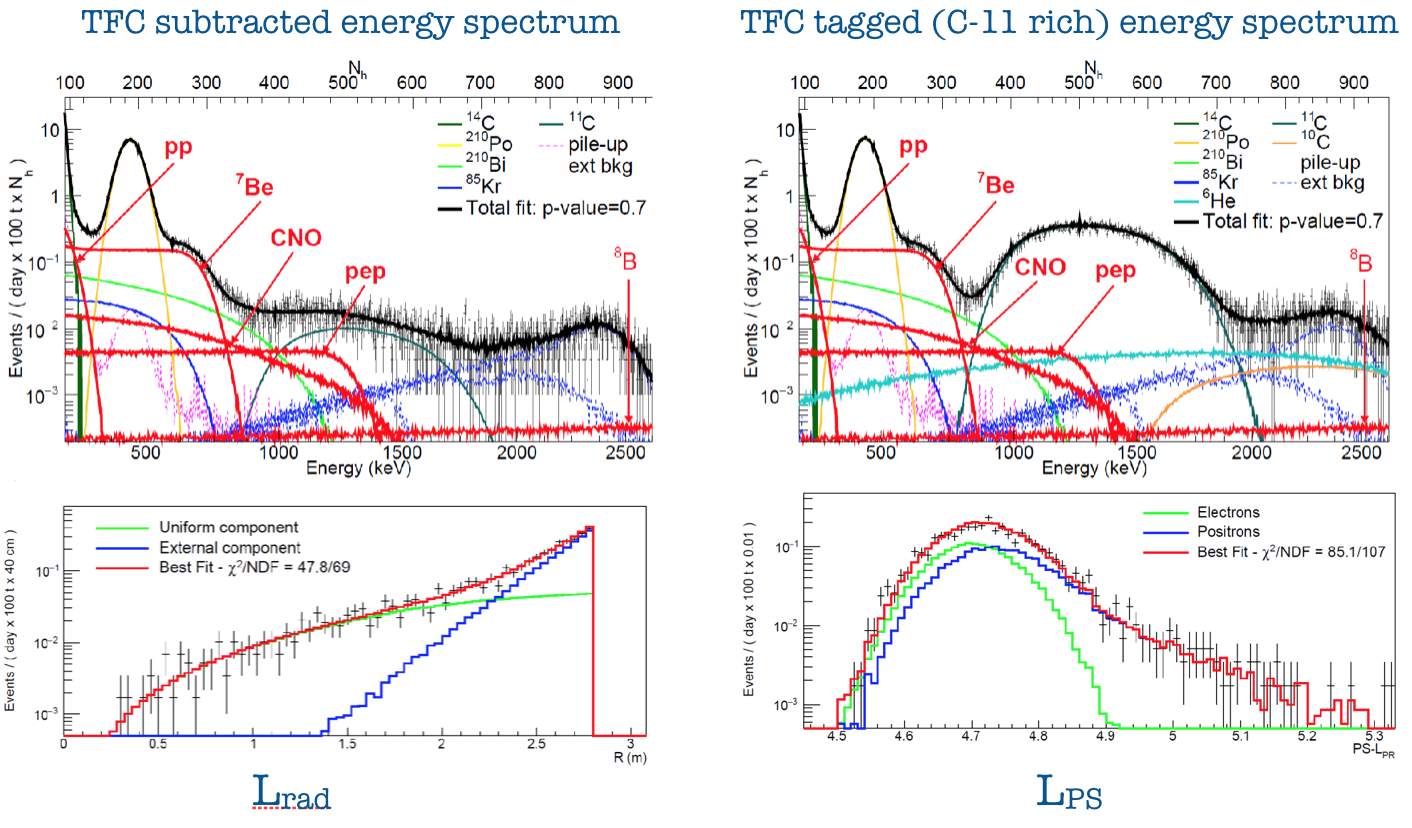 Figure 3
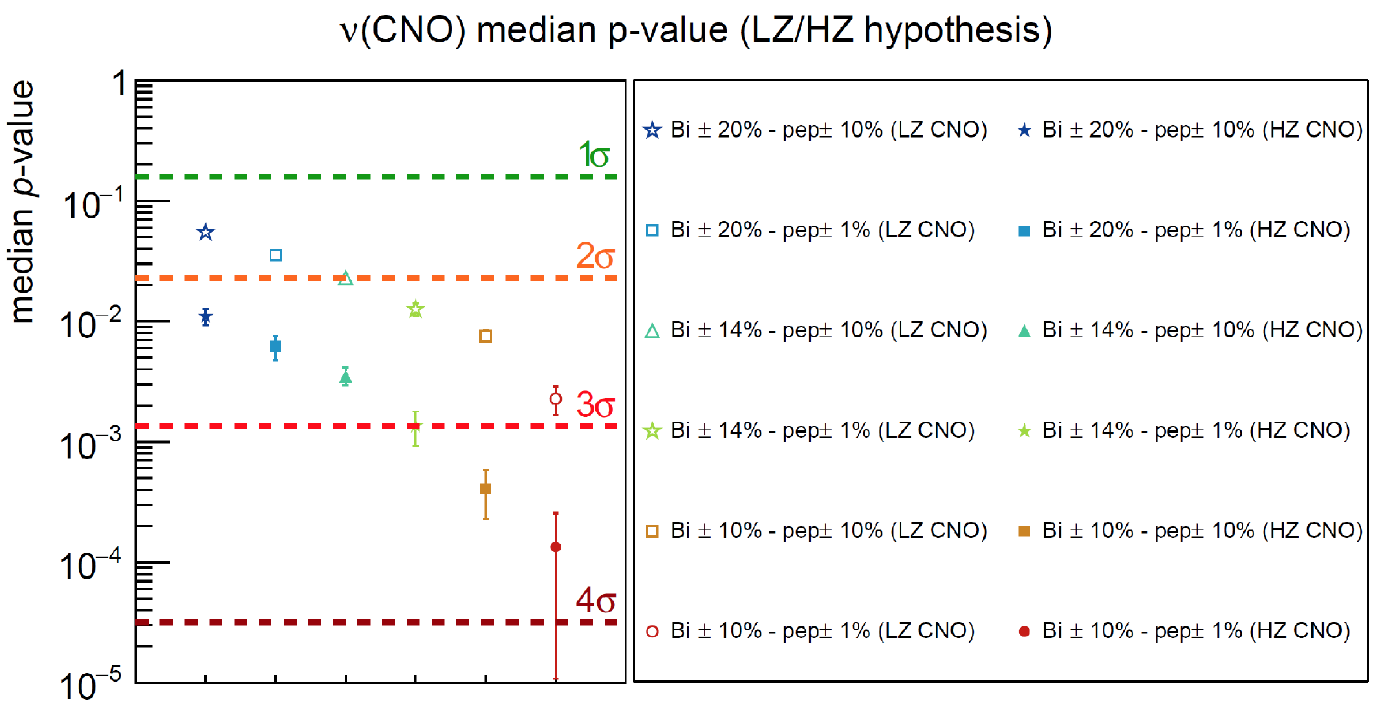 Figure 4
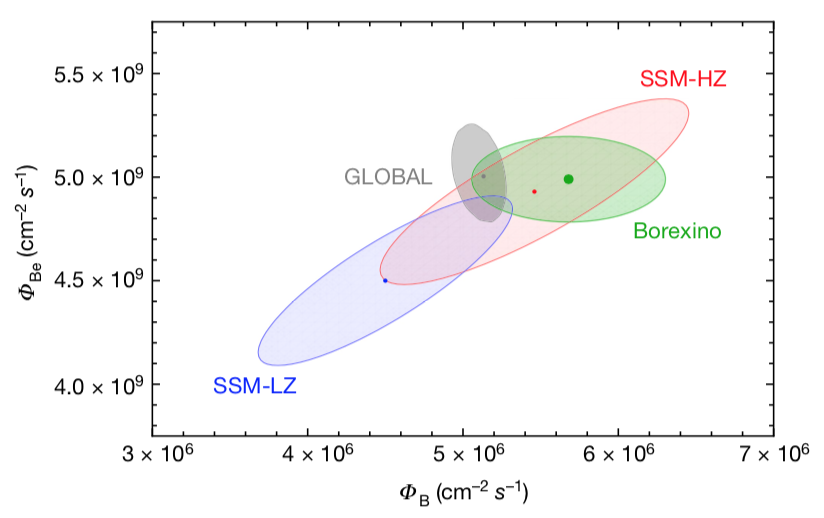 Figure 5
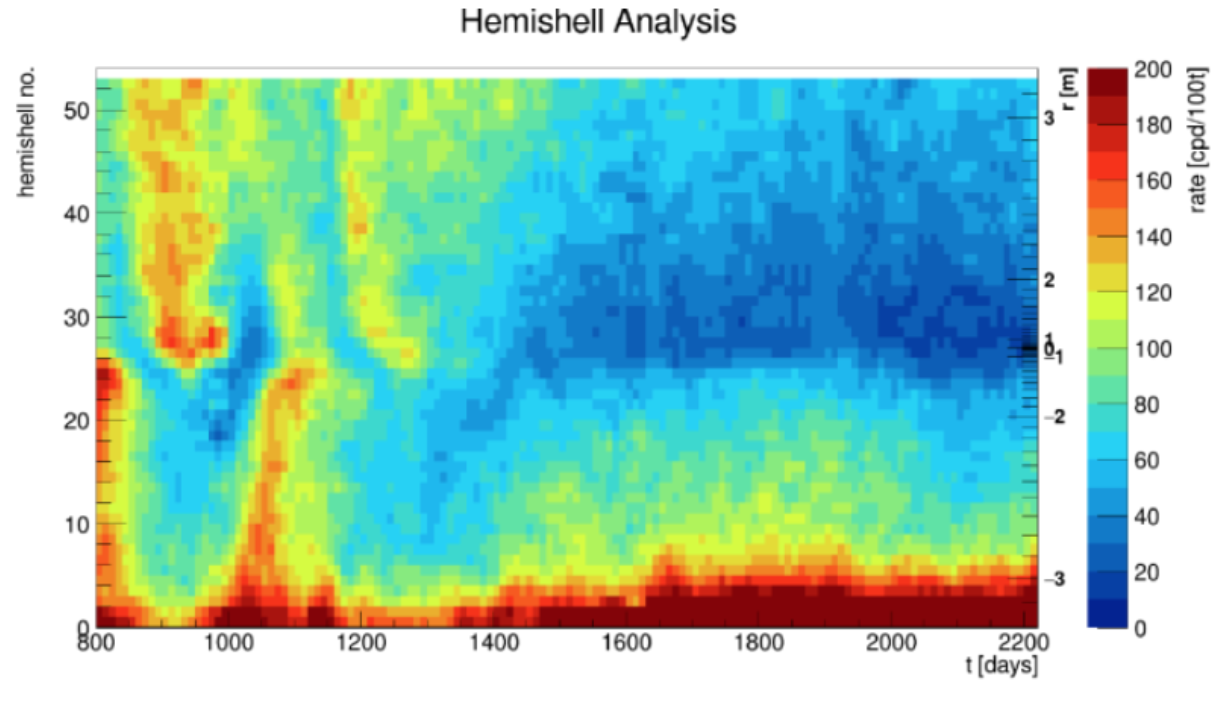 Figure 6
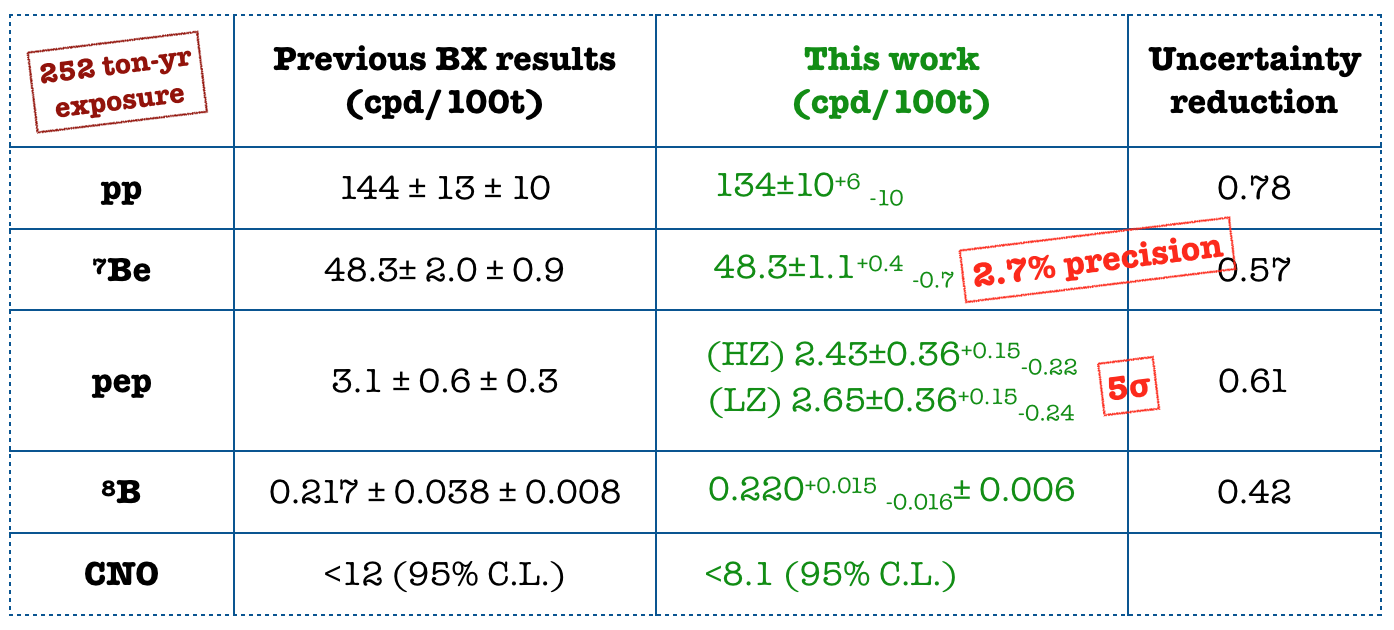 Figure 7
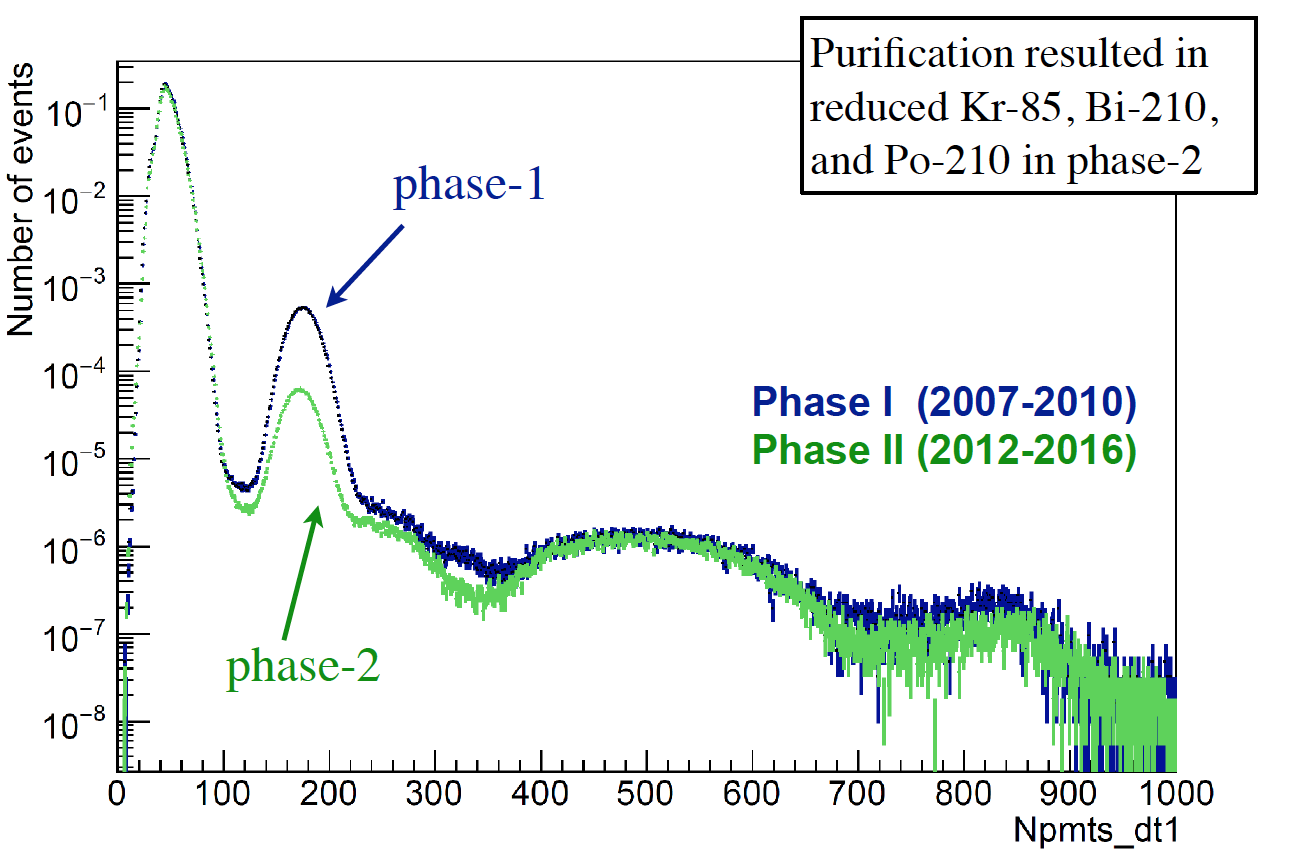 Figure 8
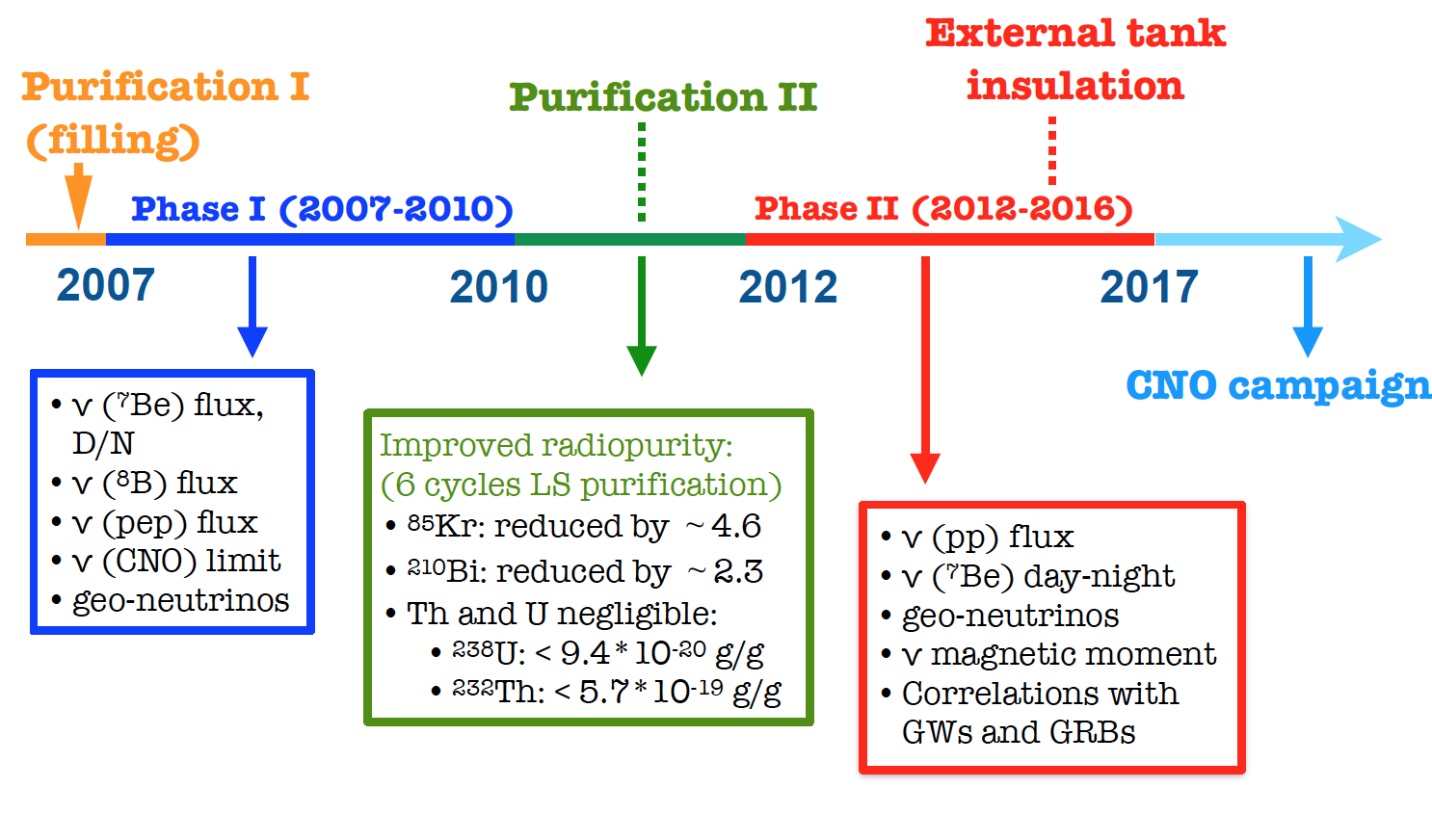 Figure 9
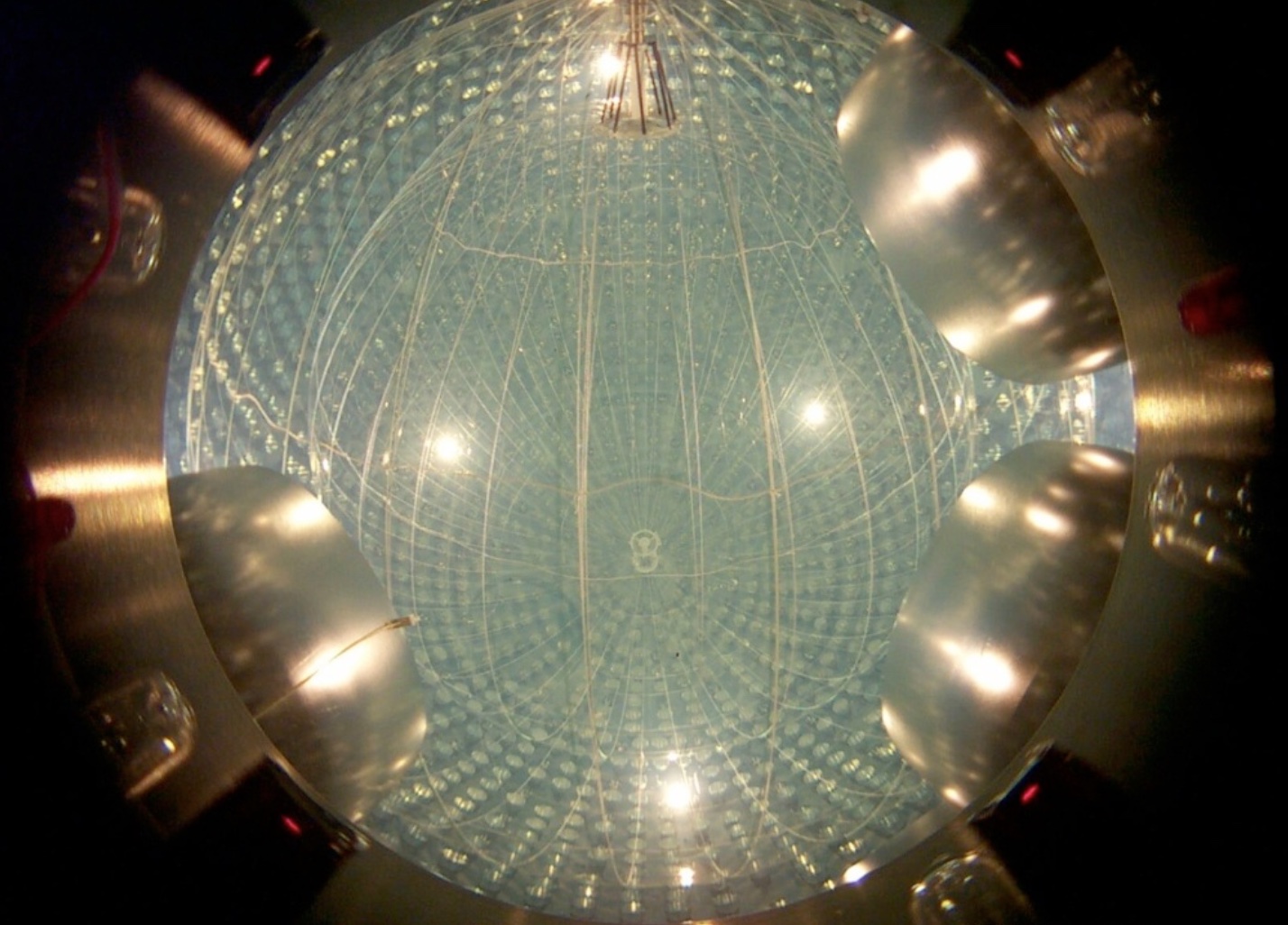 Figure 10
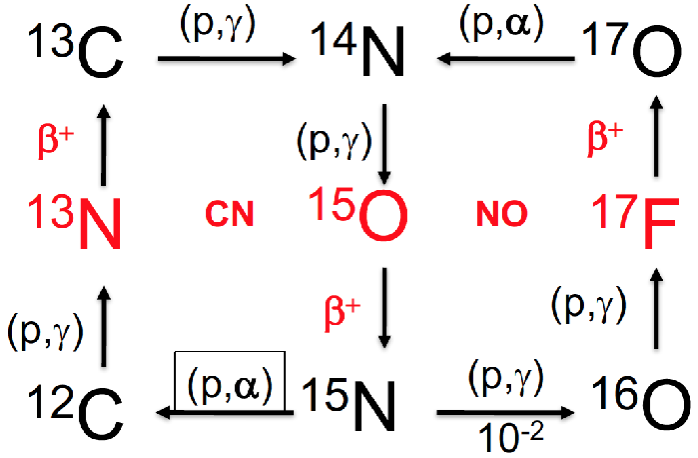 Figure 11
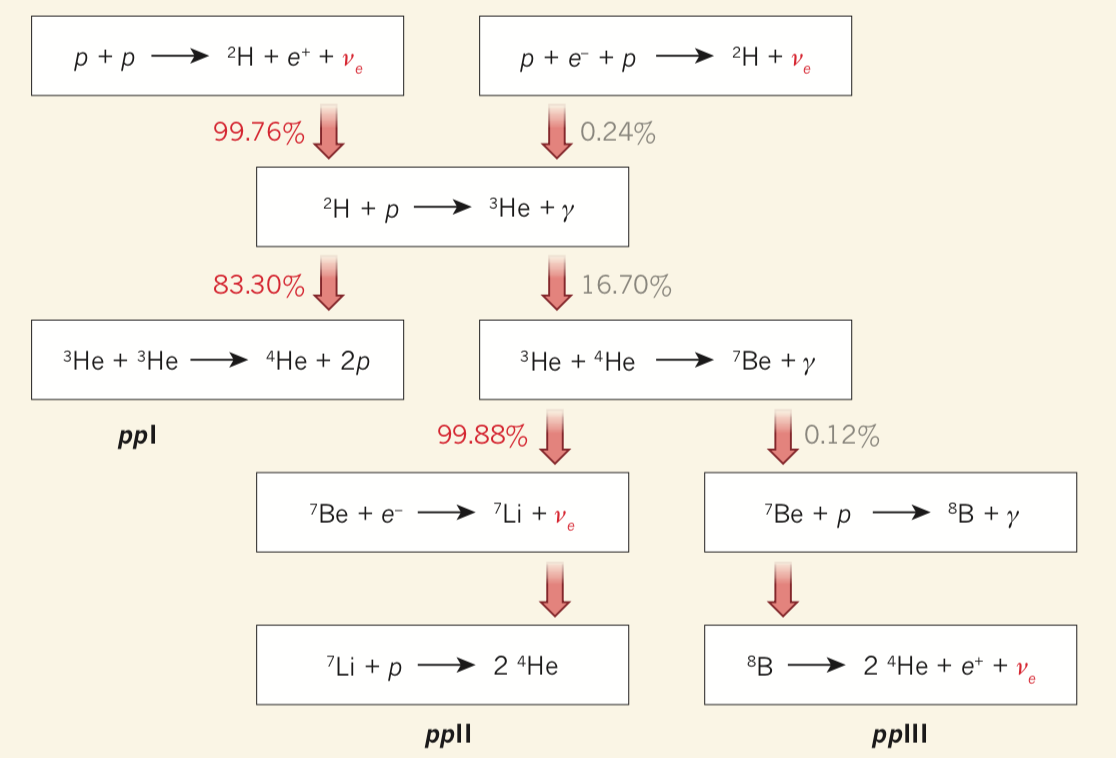 Figure 12
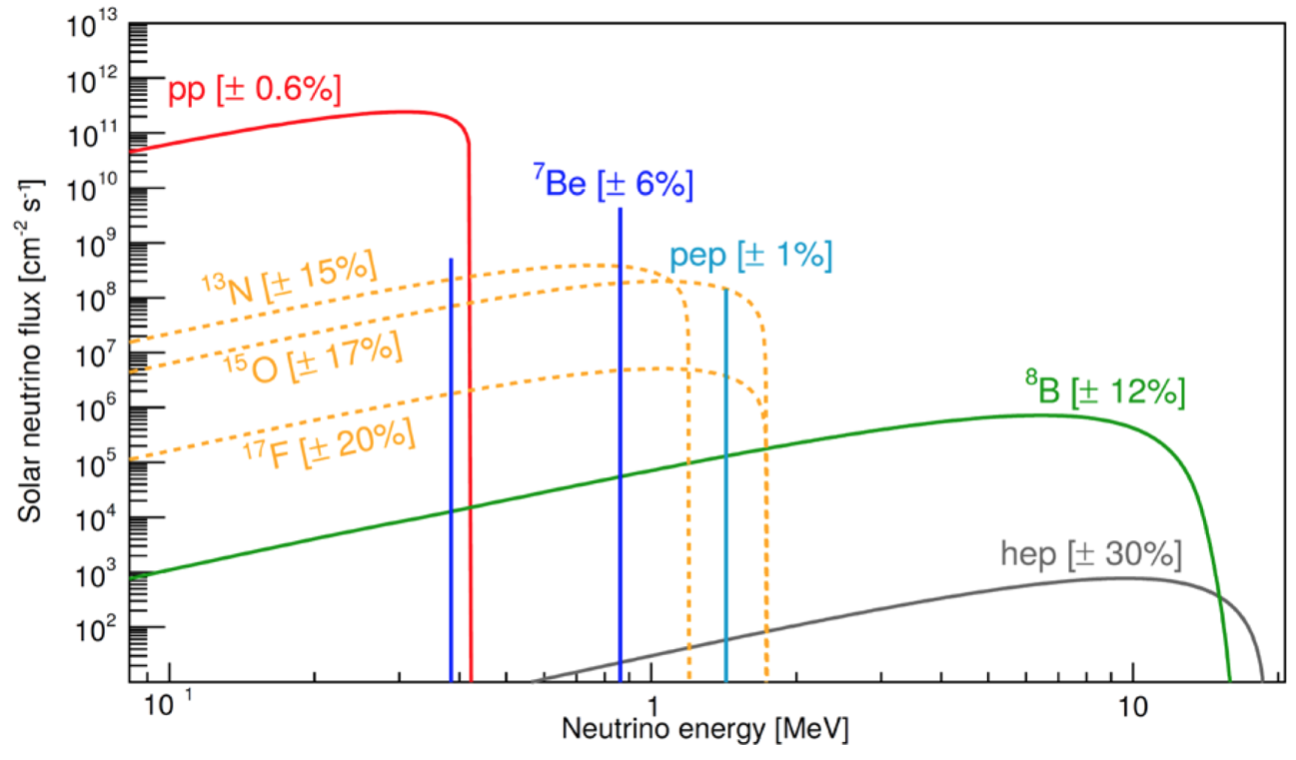 Figure 13
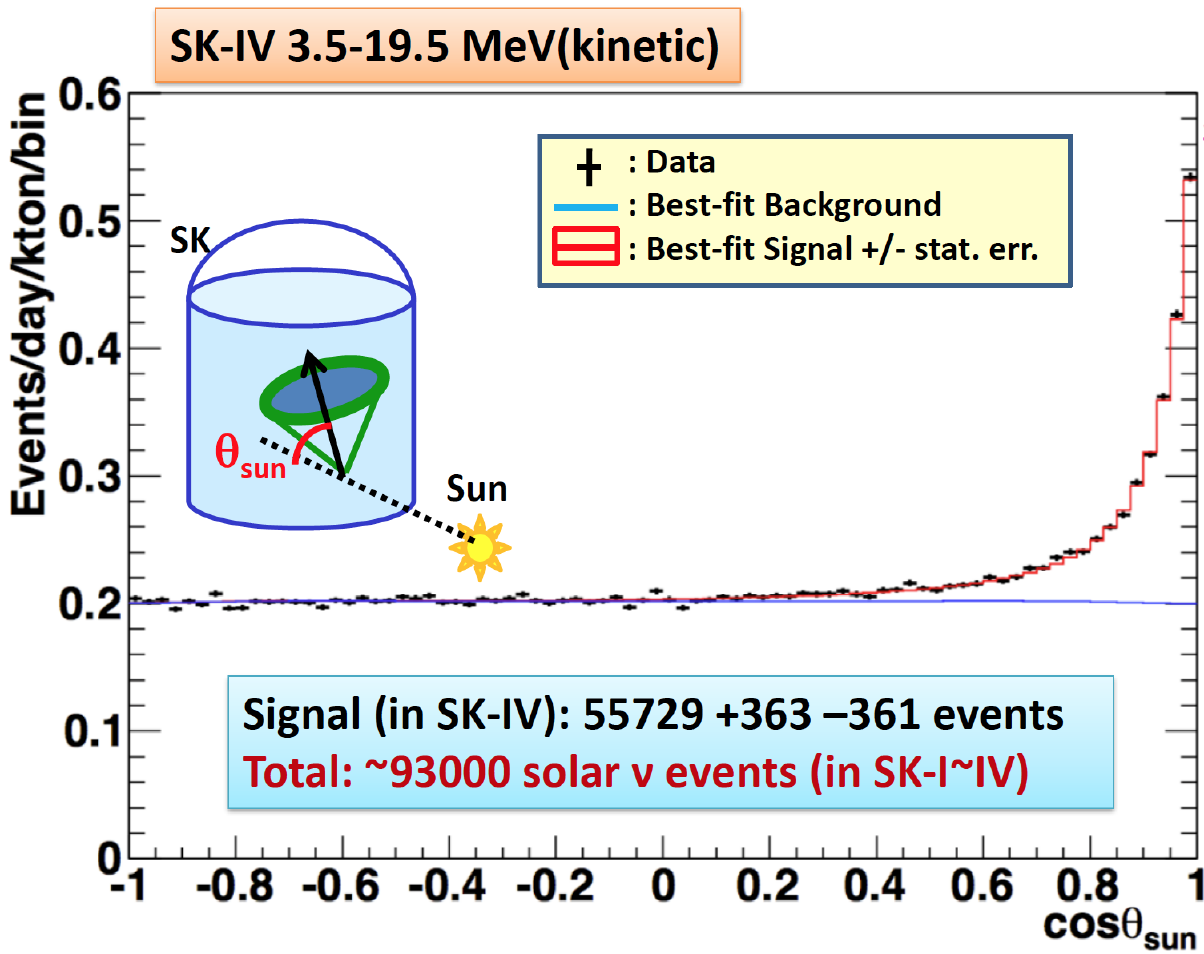 Figure 14
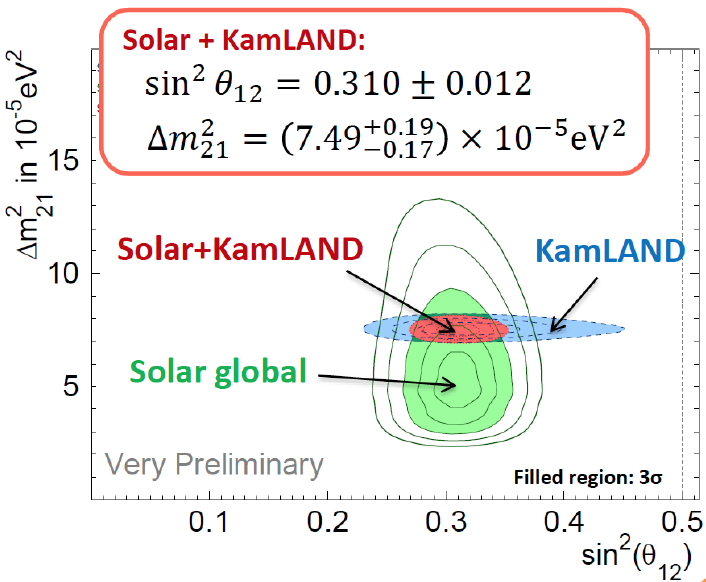 Figure 15
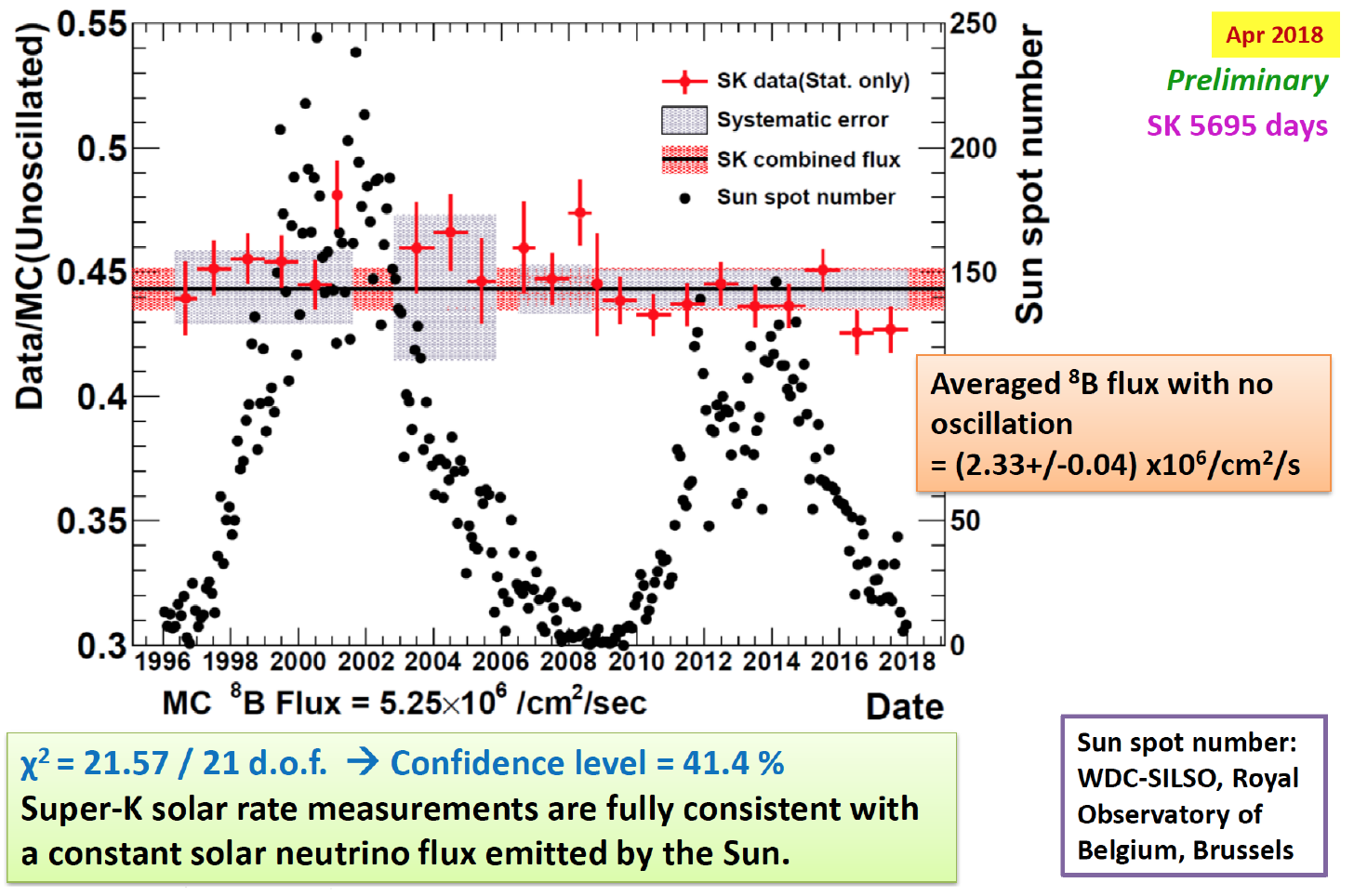 Figure 16
Peer Reviews
No public reviews on file for this paper yet. If you reviewed it on a platform where reviews are public (OpenReview, ICLR, NeurIPS, ICML), you can paste yours below so the community can read it here.
Videos
No videos yet. Explain this paper in a talk, walkthrough, or lecture? Add one.
Taxonomy
TopicsNeutrino Physics Research · Dark Matter and Cosmic Phenomena · Atomic and Subatomic Physics Research
Solar Neutrino Measurements
A. Pocar [email protected] Amherst Center for Fundamental Interactions and Physics Department, University of Massachusetts, Amherst, MA 01003, USA
M. Agostini
Physik-Department and Excellence Cluster Universe, Technische Universität München, 85748 Garching, Germany
K. Altenmüller
Physik-Department and Excellence Cluster Universe, Technische Universität München, 85748 Garching, Germany
S. Appel
Physik-Department and Excellence Cluster Universe, Technische Universität München, 85748 Garching, Germany
V. Atroshchenko
National Research Centre Kurchatov Institute, 123182 Moscow, Russia
Z. Bagdasarian
Institut für Kernphysik, Forschungszentrum Jülich, 52425 Jülich, Germany
D. Basilico
Dipartimento di Fisica, Università degli Studi e INFN, 20133 Milano, Italy
G. Bellini
Dipartimento di Fisica, Università degli Studi e INFN, 20133 Milano, Italy
J. Benziger
Chemical Engineering Department, Princeton University, Princeton, NJ 08544, USA
G. Bonfini
INFN Laboratori Nazionali del Gran Sasso, 67010 Assergi (AQ), Italy
D. Bravo111Present address: Universidad Autonoma de Madrid, Ciudad Universitaria de Cantoblanco, 28049 Madrid, Spain
Dipartimento di Fisica, Università degli Studi e INFN, 20133 Milano, Italy
B. Caccianiga
Dipartimento di Fisica, Università degli Studi e INFN, 20133 Milano, Italy
F. Calaprice
Physics Department, Princeton University, Princeton, NJ 08544, USA
A. Caminata
Dipartimento di Fisica, Università degli Studi e INFN, 16146 Genova, Italy
L. Cappelli
INFN Laboratori Nazionali del Gran Sasso, 67010 Assergi (AQ), Italy
S. Caprioli
Dipartimento di Fisica, Università degli Studi e INFN, 20133 Milano, Italy
M. Carlini
INFN Laboratori Nazionali del Gran Sasso, 67010 Assergi (AQ), Italy
P. Cavalcante
INFN Laboratori Nazionali del Gran Sasso, 67010 Assergi (AQ), Italy
Physics Department, Virginia Polytechnic Institute and State University, Blacksburg, VA 24061, USA
F. Cavanna
Dipartimento di Fisica, Università degli Studi e INFN, 16146 Genova, Italy
A. Chepurnov
Lomonosov Moscow State University Skobeltsyn Institute of Nuclear Physics, 119234 Moscow, Russia
K. Choi
Department of Physics and Astronomy, University of Hawaii, Honolulu, HI 96822, USA
L. Collica
Dipartimento di Fisica, Università degli Studi e INFN, 20133 Milano, Italy
D. D’Angelo
Dipartimento di Fisica, Università degli Studi e INFN, 20133 Milano, Italy
S. Davini
Dipartimento di Fisica, Università degli Studi e INFN, 16146 Genova, Italy
A. Derbin
St. Petersburg Nuclear Physics Institute NRC Kurchatov Institute, 188350 Gatchina, Russia
X.F. Ding
Gran Sasso Science Institute, 67100 L’Aquila, Italy
INFN Laboratori Nazionali del Gran Sasso, 67010 Assergi (AQ), Italy
A. Di Ludovico
Physics Department, Princeton University, Princeton, NJ 08544, USA
L. Di Noto
Dipartimento di Fisica, Università degli Studi e INFN, 16146 Genova, Italy
I. Drachnev
St. Petersburg Nuclear Physics Institute NRC Kurchatov Institute, 188350 Gatchina, Russia
K. Fomenko
Joint Institute for Nuclear Research, 141980 Dubna, Russia
A. Formozov
Joint Institute for Nuclear Research, 141980 Dubna, Russia
Dipartimento di Fisica, Università degli Studi e INFN, 20133 Milano, Italy
Lomonosov Moscow State University Skobeltsyn Institute of Nuclear Physics, 119234 Moscow, Russia
D. Franco
AstroParticule et Cosmologie, Université Paris Diderot, CNRS/IN2P3, CEA/IRFU, Observatoire de Paris, Sorbonne Paris Cité, 75205 Paris Cedex 13, France
F. Gabriele
INFN Laboratori Nazionali del Gran Sasso, 67010 Assergi (AQ), Italy
C. Galbiati
Physics Department, Princeton University, Princeton, NJ 08544, USA
M. Gschwender
Kepler Center for Astro and Particle Physics, Universität Tübingen, 72076 Tübingen, Germany
C. Ghiano
INFN Laboratori Nazionali del Gran Sasso, 67010 Assergi (AQ), Italy
M. Giammarchi
Dipartimento di Fisica, Università degli Studi e INFN, 20133 Milano, Italy
A. Goretti222Present address: INFN Laboratori Nazionali del Gran Sasso, 67010 Assergi (AQ), Italy
Physics Department, Princeton University, Princeton, NJ 08544, USA
M. Gromov
Lomonosov Moscow State University Skobeltsyn Institute of Nuclear Physics, 119234 Moscow, Russia
D. Guffanti
Gran Sasso Science Institute, 67100 L’Aquila, Italy
INFN Laboratori Nazionali del Gran Sasso, 67010 Assergi (AQ), Italy
T. Houdy
AstroParticule et Cosmologie, Université Paris Diderot, CNRS/IN2P3, CEA/IRFU, Observatoire de Paris, Sorbonne Paris Cité, 75205 Paris Cedex 13, France
E. Hungerford
Department of Physics, University of Houston, Houston, TX 77204, USA
Aldo Ianni
INFN Laboratori Nazionali del Gran Sasso, 67010 Assergi (AQ), Italy
Andrea Ianni
Physics Department, Princeton University, Princeton, NJ 08544, USA
A. Jany
M. Smoluchowski Institute of Physics, Jagiellonian University, 30348 Krakow, Poland
D. Jeschke
Physik-Department and Excellence Cluster Universe, Technische Universität München, 85748 Garching, Germany
S. Kumaran
Institut für Kernphysik, Forschungszentrum Jülich, 52425 Jülich, Germany
RWTH Aachen University, 52062 Aachen, Germany
V. Kobychev
Kiev Institute for Nuclear Research, 03680 Kiev, Ukraine
G. Korga
Department of Physics, University of Houston, Houston, TX 77204, USA
T. Lachenmaier
Kepler Center for Astro and Particle Physics, Universität Tübingen, 72076 Tübingen, Germany
M. Laubenstein
INFN Laboratori Nazionali del Gran Sasso, 67010 Assergi (AQ), Italy
E. Litvinovich
National Research Centre Kurchatov Institute, 123182 Moscow, Russia
National Research Nuclear University MEPhI (Moscow Engineering Physics Institute), 115409 Moscow, Russia
P. Lombardi
Dipartimento di Fisica, Università degli Studi e INFN, 20133 Milano, Italy
L. Ludhova
Institut für Kernphysik, Forschungszentrum Jülich, 52425 Jülich, Germany
RWTH Aachen University, 52062 Aachen, Germany
G. Lukyanchenko
National Research Centre Kurchatov Institute, 123182 Moscow, Russia
L. Lukyanchenko
National Research Centre Kurchatov Institute, 123182 Moscow, Russia
I. Machulin
National Research Centre Kurchatov Institute, 123182 Moscow, Russia
National Research Nuclear University MEPhI (Moscow Engineering Physics Institute), 115409 Moscow, Russia
G. Manuzio
Dipartimento di Fisica, Università degli Studi e INFN, 16146 Genova, Italy
S. Marcocci333Present address: Fermilab National Accelerato Laboratory (FNAL), Batavia, IL 60510, USA
Gran Sasso Science Institute, 67100 L’Aquila, Italy
J. Maricic
Department of Physics and Astronomy, University of Hawaii, Honolulu, HI 96822, USA
J. Martyn
Institute of Physics and Excellence Cluster PRISMA, Johannes Gutenberg-Universität Mainz, 55099 Mainz, Germany
E. Meroni
Dipartimento di Fisica, Università degli Studi e INFN, 20133 Milano, Italy
M. Meyer
Department of Physics, Technische Universität Dresden, 01062 Dresden, Germany
L. Miramonti
Dipartimento di Fisica, Università degli Studi e INFN, 20133 Milano, Italy
M. Misiaszek
M. Smoluchowski Institute of Physics, Jagiellonian University, 30348 Krakow, Poland
V. Muratova
St. Petersburg Nuclear Physics Institute NRC Kurchatov Institute, 188350 Gatchina, Russia
B. Neumair
Physik-Department and Excellence Cluster Universe, Technische Universität München, 85748 Garching, Germany
M. Nieslony
Institute of Physics and Excellence Cluster PRISMA, Johannes Gutenberg-Universität Mainz, 55099 Mainz, Germany
L. Oberauer
Physik-Department and Excellence Cluster Universe, Technische Universität München, 85748 Garching, Germany
V. Orekhov
National Research Centre Kurchatov Institute, 123182 Moscow, Russia
F. Ortica
Dipartimento di Chimica, Biologia e Biotecnologie, Università degli Studi e INFN, 06123 Perugia, Italy
M. Pallavicini
Dipartimento di Fisica, Università degli Studi e INFN, 16146 Genova, Italy
L. Papp
Physik-Department and Excellence Cluster Universe, Technische Universität München, 85748 Garching, Germany
Ö. Penek
Institut für Kernphysik, Forschungszentrum Jülich, 52425 Jülich, Germany
RWTH Aachen University, 52062 Aachen, Germany
L. Pietrofaccia
Physics Department, Princeton University, Princeton, NJ 08544, USA
N. Pilipenko
St. Petersburg Nuclear Physics Institute NRC Kurchatov Institute, 188350 Gatchina, Russia
A. Porcelli
Institute of Physics and Excellence Cluster PRISMA, Johannes Gutenberg-Universität Mainz, 55099 Mainz, Germany
G. Raikov
National Research Centre Kurchatov Institute, 123182 Moscow, Russia
G. Ranucci
Dipartimento di Fisica, Università degli Studi e INFN, 20133 Milano, Italy
A. Razeto
INFN Laboratori Nazionali del Gran Sasso, 67010 Assergi (AQ), Italy
A. Re
Dipartimento di Fisica, Università degli Studi e INFN, 20133 Milano, Italy
M. Redchuk
Institut für Kernphysik, Forschungszentrum Jülich, 52425 Jülich, Germany
RWTH Aachen University, 52062 Aachen, Germany
A. Romani
Dipartimento di Chimica, Biologia e Biotecnologie, Università degli Studi e INFN, 06123 Perugia, Italy
N. Rossi444Present address: Dipartimento di Fisica, Sapienza Università di Roma e INFN, 00185 Roma, Italy
INFN Laboratori Nazionali del Gran Sasso, 67010 Assergi (AQ), Italy
S. Rottenanger
Kepler Center for Astro and Particle Physics, Universität Tübingen, 72076 Tübingen, Germany
S. Schönert
Physik-Department and Excellence Cluster Universe, Technische Universität München, 85748 Garching, Germany
D. Semenov
St. Petersburg Nuclear Physics Institute NRC Kurchatov Institute, 188350 Gatchina, Russia
M. Skorokhvatov
National Research Centre Kurchatov Institute, 123182 Moscow, Russia
National Research Nuclear University MEPhI (Moscow Engineering Physics Institute), 115409 Moscow, Russia
O. Smirnov
Joint Institute for Nuclear Research, 141980 Dubna, Russia
A. Sotnikov
Joint Institute for Nuclear Research, 141980 Dubna, Russia
L.F.F. Stokes
INFN Laboratori Nazionali del Gran Sasso, 67010 Assergi (AQ), Italy
Y. Suvorov555Present address: Dipartimento di Fisica, Università degli Studi Federico II e INFN, 80126 Napoli, Italy
INFN Laboratori Nazionali del Gran Sasso, 67010 Assergi (AQ), Italy
National Research Centre Kurchatov Institute, 123182 Moscow, Russia
R. Tartaglia
INFN Laboratori Nazionali del Gran Sasso, 67010 Assergi (AQ), Italy
G. Testera
Dipartimento di Fisica, Università degli Studi e INFN, 16146 Genova, Italy
J. Thurn
Department of Physics, Technische Universität Dresden, 01062 Dresden, Germany
E. Unzhakov
St. Petersburg Nuclear Physics Institute NRC Kurchatov Institute, 188350 Gatchina, Russia
A. Vishneva
Joint Institute for Nuclear Research, 141980 Dubna, Russia
R.B. Vogelaar
Physics Department, Virginia Polytechnic Institute and State University, Blacksburg, VA 24061, USA
F. von Feilitzsch
Physik-Department and Excellence Cluster Universe, Technische Universität München, 85748 Garching, Germany
S. Weinz
Institute of Physics and Excellence Cluster PRISMA, Johannes Gutenberg-Universität Mainz, 55099 Mainz, Germany
M. Wojcik
M. Smoluchowski Institute of Physics, Jagiellonian University, 30348 Krakow, Poland
M. Wurm
Institute of Physics and Excellence Cluster PRISMA, Johannes Gutenberg-Universität Mainz, 55099 Mainz, Germany
O. Zaimidoroga
Joint Institute for Nuclear Research, 141980 Dubna, Russia
S. Zavatarelli
Dipartimento di Fisica, Università degli Studi e INFN, 16146 Genova, Italy
K. Zuber
Department of Physics, Technische Universität Dresden, 01062 Dresden, Germany
G. Zuzel
M. Smoluchowski Institute of Physics, Jagiellonian University, 30348 Krakow, Poland
(December 2, 2018)
Abstract
We present the most recent results from the two currently running solar neutrino experiments, Borexino at the Gran Sasso laboratory in Italy and SuperK at Kamioka mine in Japan. SuperK has released the most precise yet measurement of the 8B solar neutrino interaction rate, with a precision better than 2%, consistent with a constant solar neutrino emission over more than a decade. Borexino has released refined measurements of all neutrinos produced in the pp fusion chain. For the first time, one single detector has measured the entire range of solar neutrinos at once. These new data weakly favor a high-metallicity Sun. Prospects for measuring CNO solar neutrinos with Borexino are discussed, and a brief outlook on the field provided.
1 Solar neutrinos: the SuperK and Borexino experiments
The Sun is fueled by nuclear reactions fusing protons (hydrogen) into helium via a set of reactions summarized as:
[TABLE]
In the Sun, 99% of the times this process is carried out through a set of reactions known as the pp-chain, initiated by the fusion of two protons as illustrated in Fig. 1. Fig. 2 shows the reactions believed to contribute the remaining 1%, in which proton fusion is catalyzed by heavier elements, enhanced by higher metallicity (in astrophysics, all elements heavier than helium are call metals). Also shown is the spectrum of solar neutrinos predicted by the Standard Solar Model (SSM). A comprehensive review of solar neutrino physics, with connections to their experimental investigation, their role in the discovery of neutrino oscillations, and the definition of neutrino flavor conversion parameters is found in [1].
SuperK is a massive detector using 50 ktons of ultra-pure water as target for solar neutrinos. Only 8B neutrinos can transfer enough energy to the electrons they scatter off to produce Čerenkov light, read out by 10,000 photomultiplier tubes. The Čerenkov technique retains some directional information of incoming neutrinos, at a price of a relatively high energy threshold. SuperK has just concluded its period SK-IV period of data taking and has been running since 1996.
Borexino measures solar (and other low energy) neutrinos interacting with a spherical target of 300 tonnes of organic liquid scintillator, separated by surrounding buffer fluid by a thin, transparent nylon vessel. Scintillation pulses from neutrino interactions, as well as other (mostly background) ionizing events are detected by 2,000 8-inch photomultiplier tubes (PMTs). Borexino displays the lowest energy threshold for solar neutrino detection to date. It, however, lacks to ability to retain directional information of neutrino interactions. Borexino has been running since 2007 and is completing its Phase-2 data taking period.
Here we present an update on the results from SuperK Phase IV (Sec. 2, last reported on in 2016 [2]. We also report on recent measurements from Borexino Phase-2 that cover the entire pp chain (Sec. 3). These results improve on earlier measurements, mostly made with Phase-1 data [3, 4]. We provide a status update on the prospects of measuring CNO solar neutrinos with Borexino (Sec. 4), and offer a brief outlook on the solar neutrino sub-field (Sec. 5).
2 Results from SuperK SK-IV
SuperK has run in its SK-IV period since 2008, for 2,860 days of live time. Improvements from the preceding SK-III period focused on an upgrade of the electronics, which allowed the energy threshold for solar neutrino physics to be reduced from 4.5 MeV to 3.5 MeV of electron recoil energy, taking full advantage of the large optical coverage offered by the 11,129 PMTs. The ability of SuperK to determine the solar origin by directional information is illustrated in Fig. 3. The detection of solar neutrinos with strong statistical power is enabled by the massive size of the SuperK detector.
Due to its relatively high energy threshold (although it is a challengingly low threshold for the Čerenkov technique), SuperK is only sensitive to 8B (and, if there, ) solar neutrinos. It, however, able to measure them with exquisite precision. The newly-released averaged 8B solar neutrino flux from SK-IV assuming no neutrino oscillations is , a precision of 1.7%. In addition, no time-varying interaction rate of these neutrinos on- (or off-) phase with solar spot activity is observed (see Fig. 4, right panel). Using the entire data set (periods I-IV) SuperK presents a very preliminary SuperK-only measurement of the solar neutrino mass splitting , finding a value which is 2 from that measured with higher precision by KamLAND (see Fig. 4, right panel).
The next phase for SuperK is SK-Gd. For this phase, the water target is being doped with gadolinium to greatly enhance neutron detection, with the aim to measure diffused supernovæ neutrinos (SK-Gd would also have enhanced sensitivity to neutrinos from individual galactic supernovæ, should one explode in the near future).
3 Results from Borexino Phase-2
Borexino has been running its Phase-2 science run since 2012 (see Fig. 5, left panel). This phase followed an extended purification period in which the scintillator underwent six cycles of water extraction with partial-vacuum nitrogen stripping. Purification achieved a 5-fold reduction of 85Kr and a two-fold reduction of 210Bi (see Fig. 5, right panel). In addition, it further reduced 232Th and 238U equivalent background to unprecedented low levels, with limits set for both isotopes of g/g and g/g, respectively.
Phase-2 Borexino data provided the opportunity to improve the precision measurements of all solar neutrino fluxes [5]. The improved radio-purity of the scintillator was one key ingredient for a measurement of 7Be neutrinos with a better than 3% precision. This is twice as small than the theoretical uncertainty from the SSM, and can be used, in combination with assumptions on the solar neutrino oscillation parameters, to better our understanding of the sun. Another ingredient is a greatly-improved Monte Carlo simulation package was developed [6] that allowed a more accurate determination of the energy response over a wide energy range, and background-suppressing analysis tools were refined, adding to the intrinsic improvement provided by an extended data set. A multi-variate approach was used to identify and suppress the cosmogenic 11C background (30 minute half life)), a emitter covering the energy range relevant for pep and CNO neutrino detection. Positron emission with the production (50% of the times) of 3 ns-lived ortho-positronium and the production of annihilation gamma rays (extended and with a slightly different ionization density profile in the scintillator) produces a statistically distinguishable time profile of the scintillation pulse from that of electron events. A likelihood was built using such a pulse shape parameter, the radial distribution of events, and the simultaneous fit of 11C-rich and 11C-subtracted energy spectra. This procedure for determining neutrino fluxes is illustrated in Fig.6, and allowed us to simultaneously fit the Borexino data between 200 keV and 2.5 MeV, including the interaction rate of pp, 7Be, pep, and CNO solar neutrinos and the overlapping backgrounds (previous measurements were carried out focusing on narrower energy regions).
The Phase II results are collected in the table in Fig. 7. The uncertainty on the pp neutrino rate is reduced to 10% compared to the first measurement [4]. This is no small feat, given that its very measurement went beyond what Borexino had proposed to do in the beginning and that several experiments have been proposed over time whose only or main goal was the study of pp neutrinos. The pep neutrinos are definitively discovered with 5 significance, and a tight limit of counts per day (cpd)/100t (95% C.L.) is set for the CNO neutrino rate.
The 8B solar neutrino rate was measured separately using the same data set. The entire scintillator volume was used (i.e. no fiducial cut), a choice dictated by the need to boost the statistics for this dimmer solar neutrino component. A lower energy cut of 3.2 MeV was placed, above much of the natural radioactivity but retaining a large fraction of the 8B solar neutrino signal. The 8B rate is not as precise as that measured by SuperK, but it is compatible with it and it is measured with the lowest energy threshold of all experiments for this component.
The Borexino Phase II neutrino fluxes allow us to attempt at addressing the open issue of solar metallicity, i.e the abundance of elements heavier than helium. High- and low-metallicity solar models (referred to as HZ and LZ, respectively) result from contrasting measurements. Helio-seismological data prefer HZ solar photospheric abundances. Solar metallicity affects solar neutrino fluxes, most prominently that of CNO neutrinos with a 30% higher flux predicted by the HZ model compared to the LZ one. However, both the 7Be and 8B fluxes are 10% higher in the HZ SSM, while the pp and pep fluxes are higher for the LZ SSM [1]. Thus the solar metallicity question could be addressed with high-precision measurements of these fluxes.
The 7Be and pp neutrino fluxes can be used to compare the relative weight of the two helium-helium fusion reactions by computing
[TABLE]
which is predicted to be () and () for HZ and LZ SSM, respectively. This ratio measured by Borexino is .
Similarly, the measured 7Be and 8B can be used together and compared with SSM HZ and LZ cases, as shown in Fig. 8. Borexino data alone mildly prefer the HZ SSM. This hint is weakened by including all solar neutrino data, which notably provides a more precise value for the 8B neutrinos as measured by the SuperK experiment, in the analysis. In addition, theoretical uncertainties barely differentiate the two scenarios in this case.
4 Measuring CNO neutrinos
Of great astrophysical interest is the measurement of CNO neutrinos, as they are arguably the most direct probe of solar metallicity. In order to assess how far Borexino is from measuring CNO neutrinos, the current Borexino limit cpd/100t (95% C.L.) should be compared with SSM HZ and LZ predictions of cpd/100t and cpd/100t, respectively. On one hand, this extra factor of two seems at arm’s reach of the experiment. On the other, one background exists that poses a serious challenge, the emitter 210Bi.
210Bi is a decay product of 222Rn, and because of this is found in air and on virtually all surfaces. It is sustained by its long-lived 210Pb, and is followed by a relatively long-lived emitter, 210Po. The 210Bi spectrum is quasi-degenerate with that of electrons recoiling off CNO neutrinos, as shown in Fig. 6. Detection of CNO neutrinos thus hinges on having very low and well measured 210Bi background. One could determine the 210Bi activity by measuring the supported 210Po component after the fraction which is out of equilibrium has decayed away, as proposed in Ref. [7]. Fig. 9 (left panel) shows the 210Po activity in the Borexino fiducial volume versus time for approximately the past three years. A precise determination of the steady-state component is made difficult by background fluctuations caused by scintillator mixing due to convective motions with timescales of several months. In 2015, the entire Borexino detector was thermally insulated from the air of the experimental hall, the effect of which can be appreciated in Fig. 9 (right panel). The collaboration is looking hard into whether, with this stabler detector, 210Bi is low and constrained enough to allow for a measurement of CNO neutrinos in the near future. Fig. 8 (right panel) shows a detection sensitivity study for CNO solar neutrinos, which shows that 210Bi background needs to be be both low and precisely measured for a detection claim to be possible.
5 Outlook
SuperK has been running for more than two decades, measuring solar 8B neutrinos with great precision and contributing to the definition of neutrino oscillations in the solar sector. Borexino has been running for more than ten years, measuring the entire solar neutrino energy spectrum with increasing precision. Noteworthy is the measurement of 7Be neutrinos with better that 2.7% precision, a prominent piece of the "solar neutrino puzzle" and directly contributing to the refinement of solar models.
In the next few years, Borexino will attempt to measure the CNO solar neutrino interaction rate, which could resolve the solar metallicity puzzle, an important open question about the sun.
Looking ahead, solar neutrino physics does not have many projects lined up to continue it. The SNO+ experiment in Canada could measure CNO neutrinos better than Borexino if they are able to achieve similar levels of radio-purity, since it is 3 times larger and much deeper (with much lower 11C background). However, their priority is a program to measure neutrinoless double beta decay of 130Te, which looks incompatible with a concurrent solar neutrino program. The JUNO experiment in China would display a much larger target than Borexino, but it is shallower and has to prove scintillator radio-purity can match that of Borexino [8]. A letter of intent has been submitted for a liquid scintillator experiment at Jinping laboratory in China. This would be a deep, very large (2 kton fiducial mass) experiment with Borexino-like radio-purity, which could measure most solar neutrino components with percent precision [9]. A 300 tonne liquid argon detector, such as that imagined by the DarkSide collaboration, could perform high precision spectroscopy of , 7Be, and CNO neutrinos [10]. The much larger, yet higher energy threshold liquid argon DUNE experiment has shown competitive sensitivity for 8B solar neutrinos, including day/night modulations, and could be sensitive enough to observe neutrinos [11].
Acknowledgments
The Borexino Collaboration acknowledges the generous hospitality and support of the Laboratori Nazionali del Gran Sasso (Italy). The Borexino program is made possible by funding from INFN (Italy), NSF (USA), BMBF, DFG (OB168/2-1, WU742/4-1, ZU123/18-1), HGF, and MPG (Germany), RFBR (Grants 16-02-01026 A, 15-02-02117 A, 16-29-13014 ofim, 17-02-00305 A), RSF (Grant 17-02-01009) (Russia), and NCN (Grant UMO 2013/10/E/ST2/00180) (Poland).
The reference list from the paper itself. Each links out to its DOI / PubMed record.
- 1[1] W. C. Haxton, R. G. Hamish Robertson and A. M. Serenelli, Solar Neutrinos: Status and Prospects , Annu. Rev. Astron. Astrophys. 51 (1), 21 (2013).
- 2[2] K. Abe, Y. Haga, Y. Hayato, M. Ikeda, K. Iyogi, J. Kameda, Y. Kishimoto, L. Marti, M. Miura, S. Moriyama, M. Nakahata, T. Nakajima et al. , Solar neutrino measurements in Super-Kamiokande-IV , Phys. Rev. D 94 (5), 913 (2016).
- 3[3] Borexino Collaboration, G. Bellini, J. Benziger, D. Bick, G. Bonfini, D. Bravo, M. Avanzini, B. Caccianiga, L. Cadonati, F. Calaprice and P. Cavalcante, Final results of Borexino Phase-I on low-energy solar neutrino spectroscopy , Phys. Rev. D 89 (11), 112007 (2014).
- 4[4] Borexino Collaboration, Neutrinos from the primary proton-proton fusion process in the Sun , Nature 512 , 383 (2014).
- 5[5] Borexino Collaboration, M. Agostini, K. Altenmueller, S. Appel, V. Atroshchenko, Z. Bagdasarian, D. Basilico, G. Bellini, J. Benziger, D. Bick, G. Bonfini, D. Bravo et al. , Comprehensive measurement of pp-chain solar neutrinos , Nature pp. 1–14 (2018).
- 6[6] Borexino Collaboration, M. Agostini, K. Altenmüller, S. Appel, V. Atroshchenko, Z. Bagdasarian, D. Basilico, G. Bellini, J. Benziger, D. Bick, G. Bonfini, L. Borodikhina et al. , The Monte Carlo simulation of the Borexino detector , Astroparticle Physics 97 , 136 (2018).
- 7[7] F. Villante, A. Ianni, F. Lombardi, G. Pagliaroli and F. Vissani, A step toward CNO solar neutrinos detection in liquid scintillators , Physics Letters B (2011).
- 8[8] G. Salamanna, Solar neutrinos with the JUNO experiment , ar Xiv (2018), 1809.03821 v 1 .