Detection of Helium in the Atmosphere of the Exo-Neptune HAT-P-11b
Megan Mansfield, Jacob L. Bean, Antonija Oklop\v{c}i\'c, Laura, Kreidberg, Jean-Michel D\'esert, Eliza M.-R. Kempton, Michael R. Line,, Jonathan J. Fortney, Gregory W. Henry, Matthias Mallonn, Kevin B. Stevenson,, Diana Dragomir, Romain Allart, Vincent Bourrier

TL;DR
This study detects helium in the atmosphere of exo-Neptune HAT-P-11b using HST observations, indicating hydrodynamic escape with a low mass loss rate, and confirms the first joint ground- and space-based helium detection in an exoplanet.
Contribution
First detection of helium in HAT-P-11b's atmosphere using HST, and confirmation with ground-based CARMENES data, demonstrating multi-platform validation of exoplanet atmospheric escape.
Findings
Helium detected at 4σ confidence level.
HAT-P-11b is undergoing hydrodynamic atmospheric escape.
Mass loss rate estimated between 10^9 and 10^11 g s^-1.
Abstract
The helium absorption triplet at a wavelength of 10,833 \AA\ has been proposed as a way to probe the escaping atmospheres of exoplanets. Recently this feature was detected for the first time using Hubble Space Telescope (HST) WFC3 observations of the hot Jupiter WASP-107b. We use similar HST/WFC3 observations to detect helium in the atmosphere of the hot Neptune HAT-P-11b at the confidence level. We compare our observations to a grid of 1D models of hydrodynamic escape to constrain the thermospheric temperatures and mass loss rate. We find that our data are best fit by models with high mass loss rates of - g s. Although we do not detect the planetary wind directly, our data are consistent with the prediction that HAT-P-11b is experiencing hydrodynamic atmospheric escape. Nevertheless, the mass loss rate is low enough that the planet…
Click any figure to enlarge with its caption.
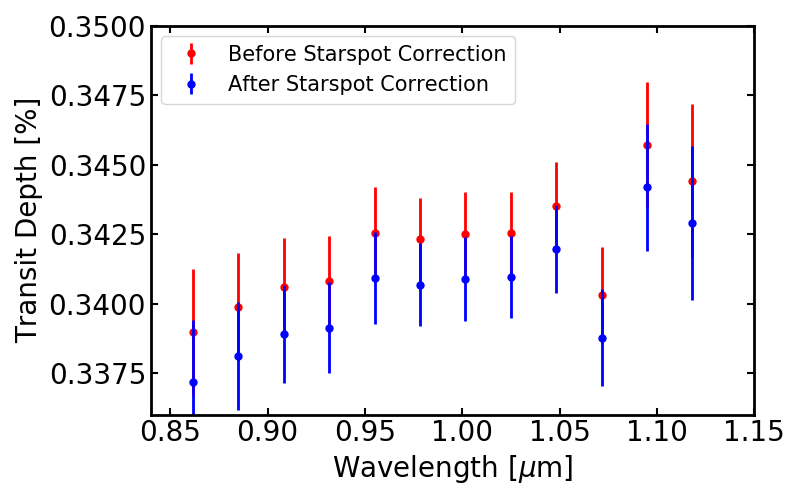 Figure 1
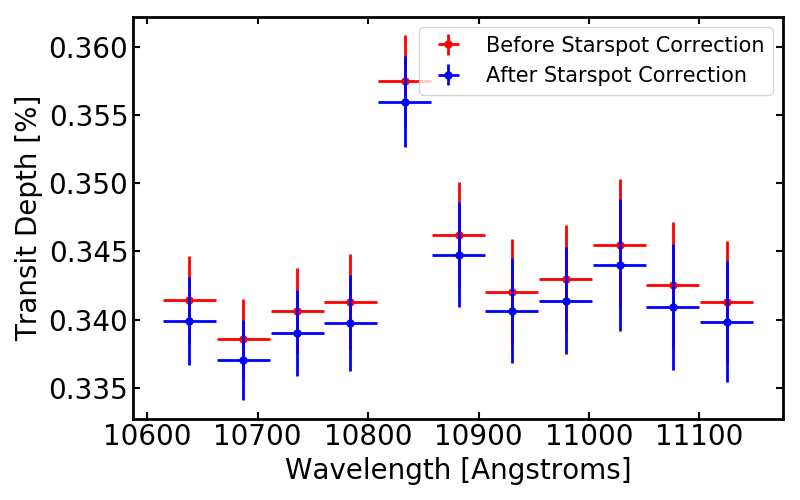 Figure 2
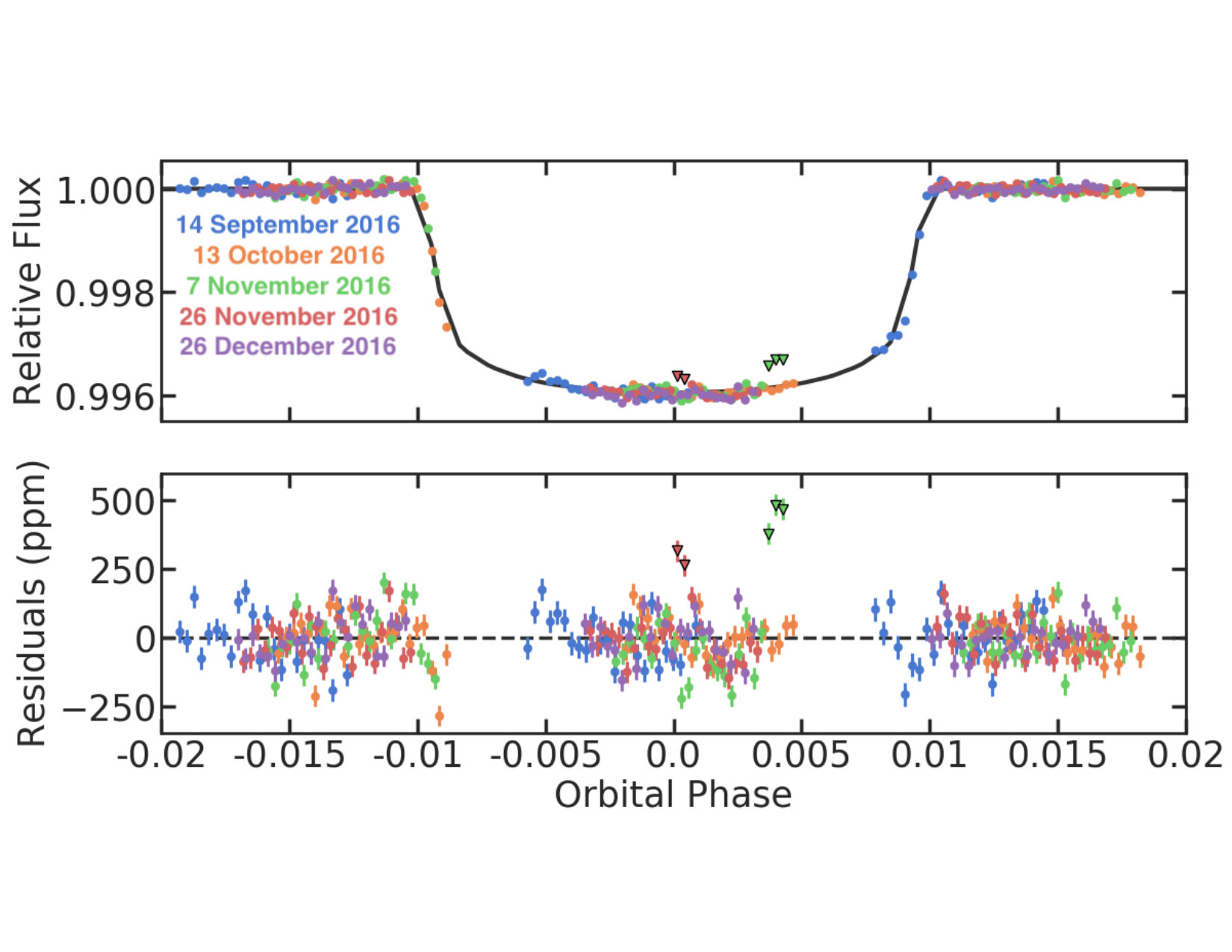 Figure 3
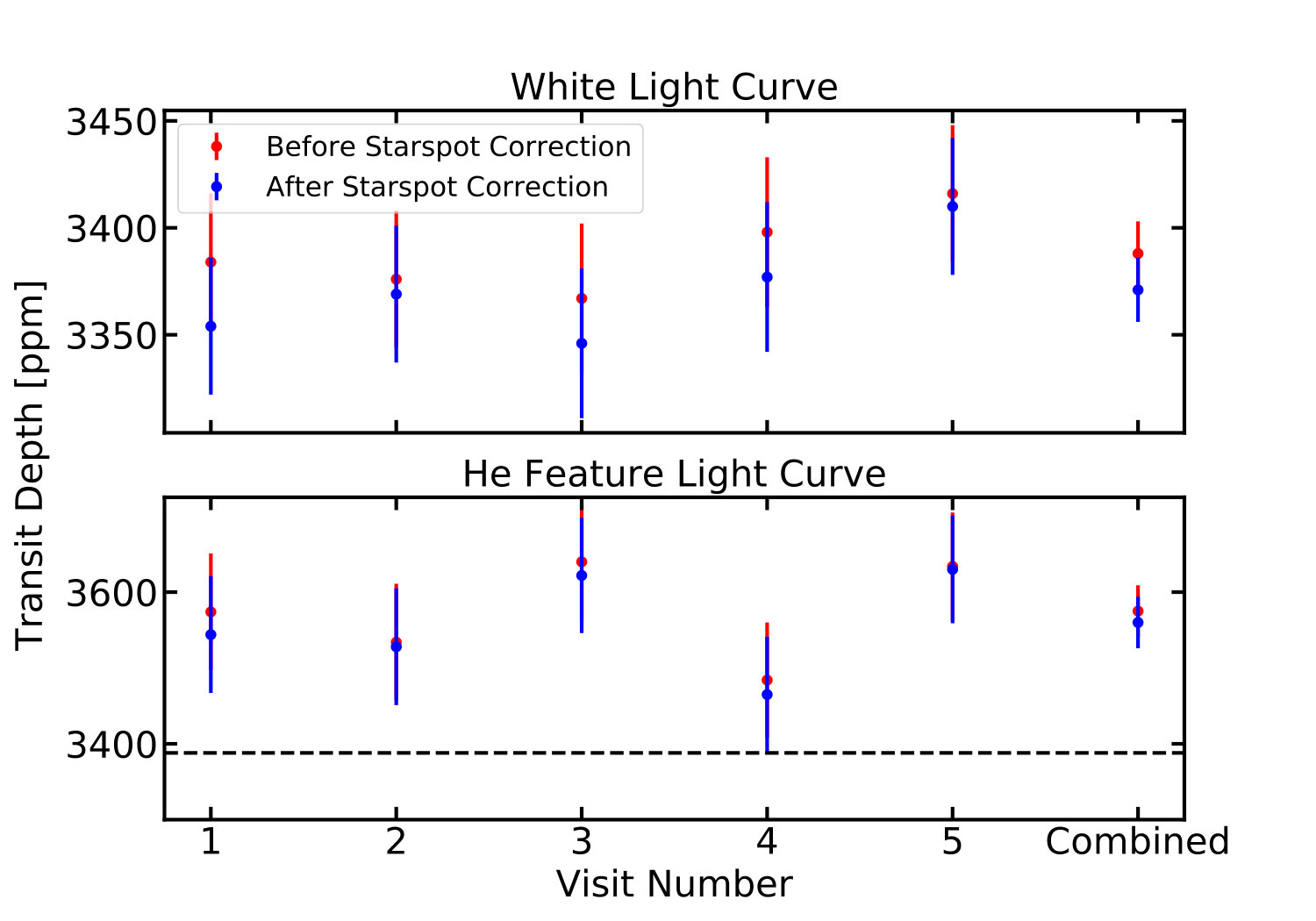 Figure 4
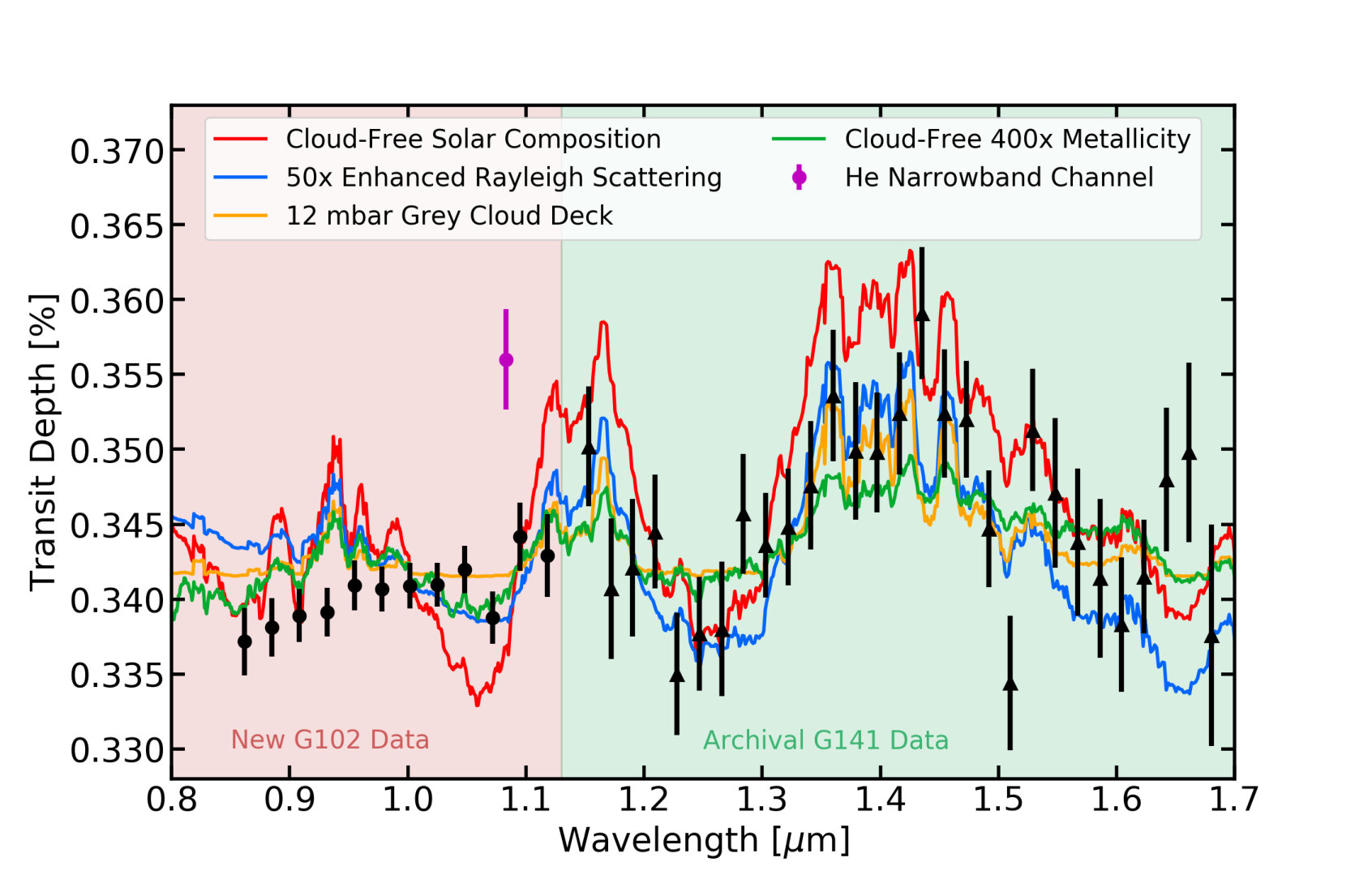 Figure 1
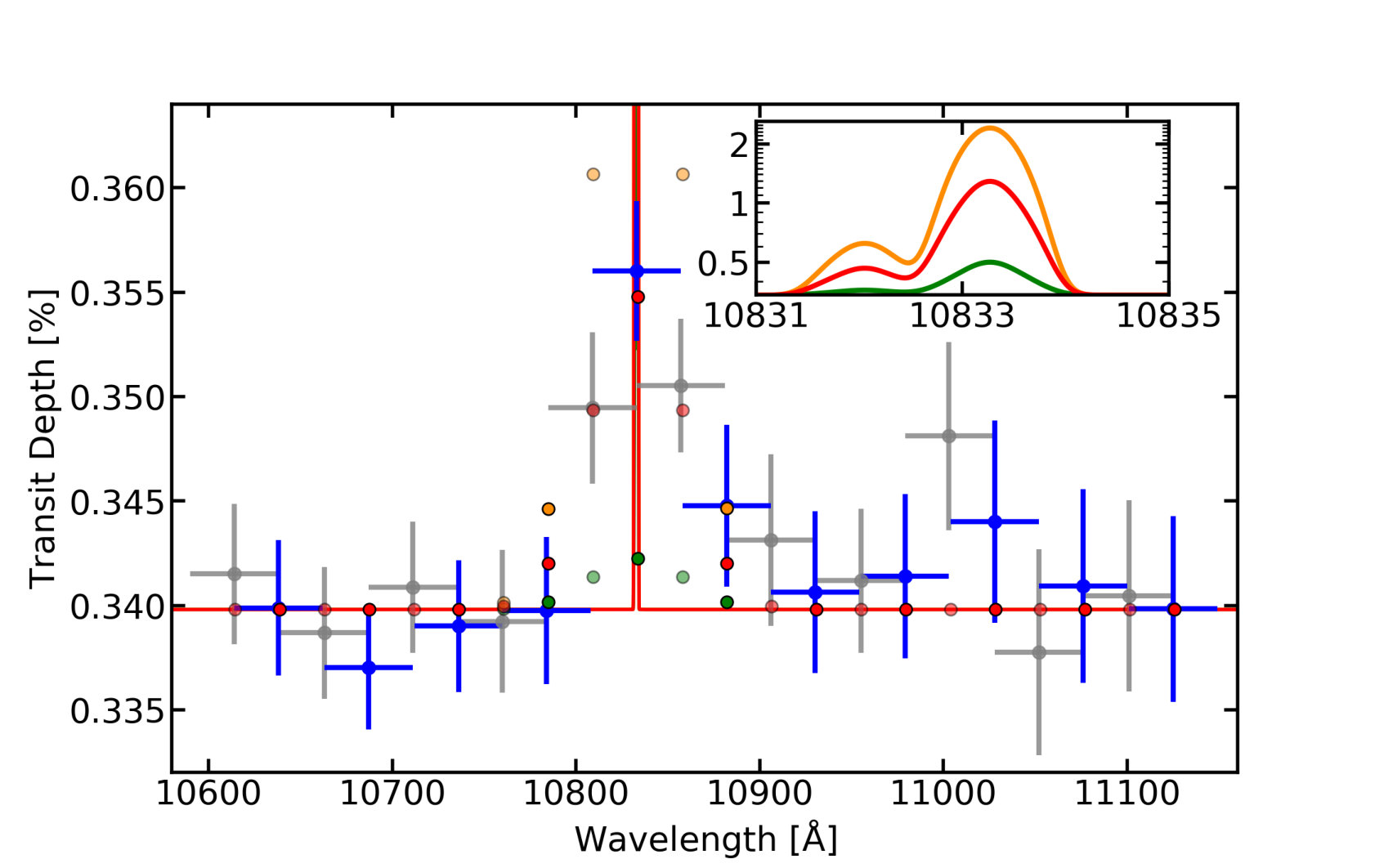 Figure 2
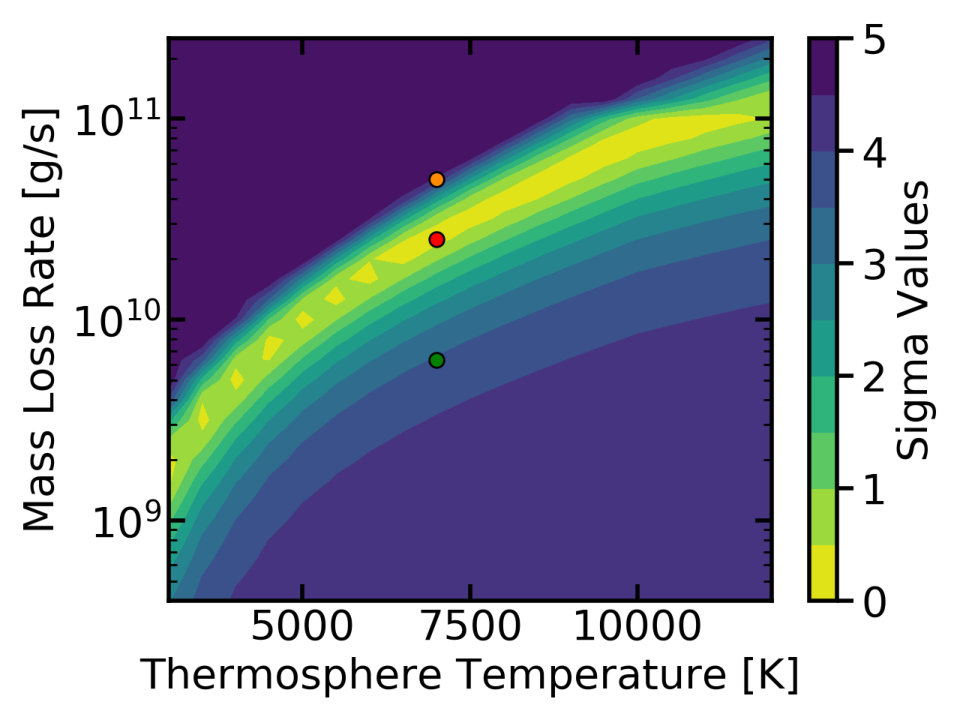 Figure 3
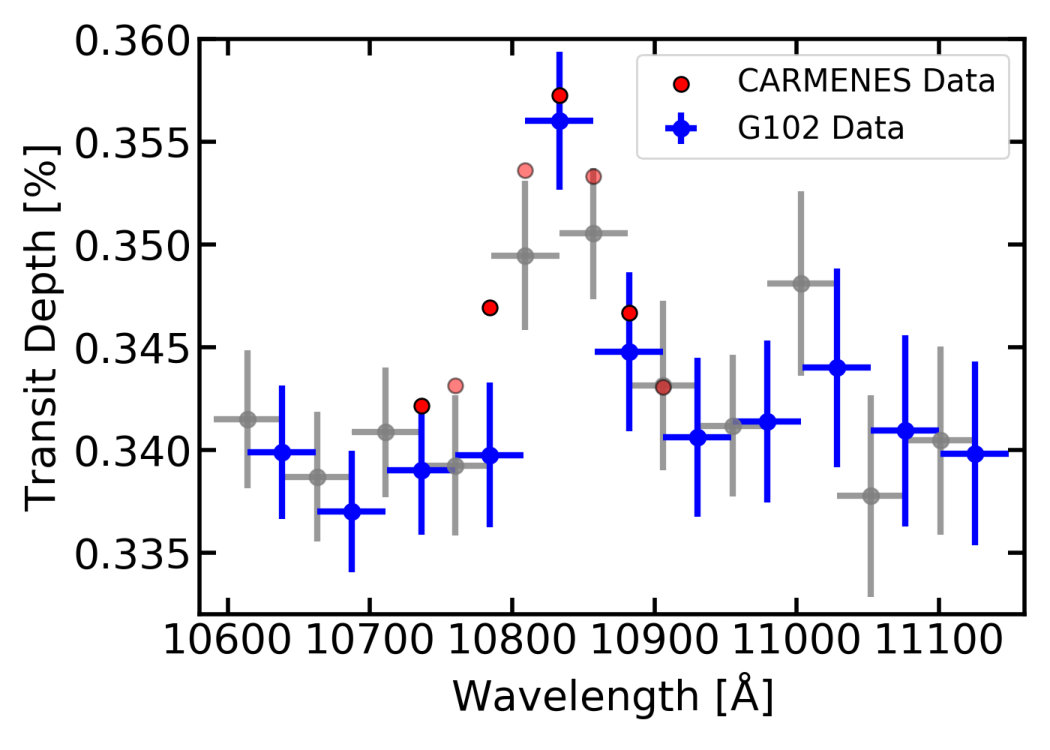 Figure 4
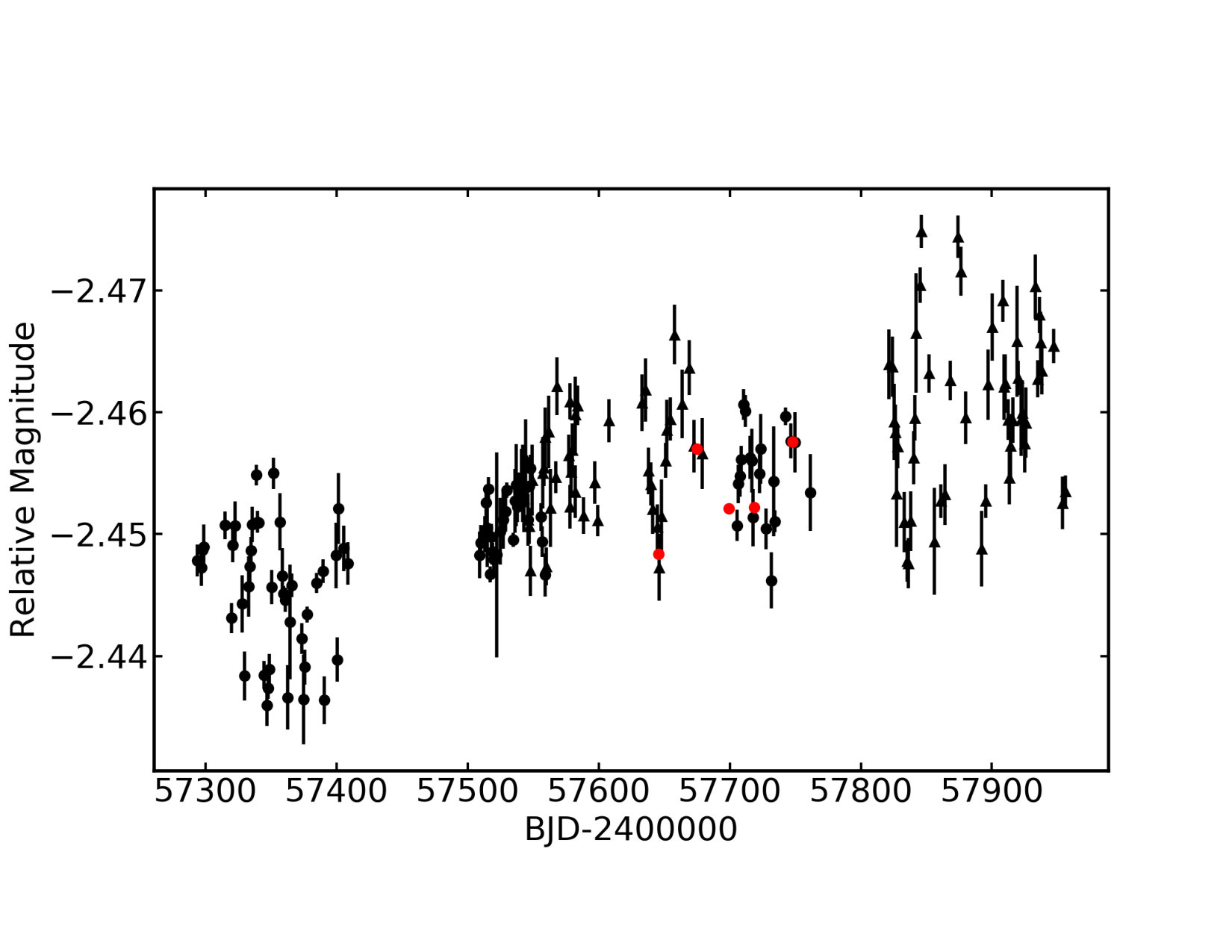 Figure 6
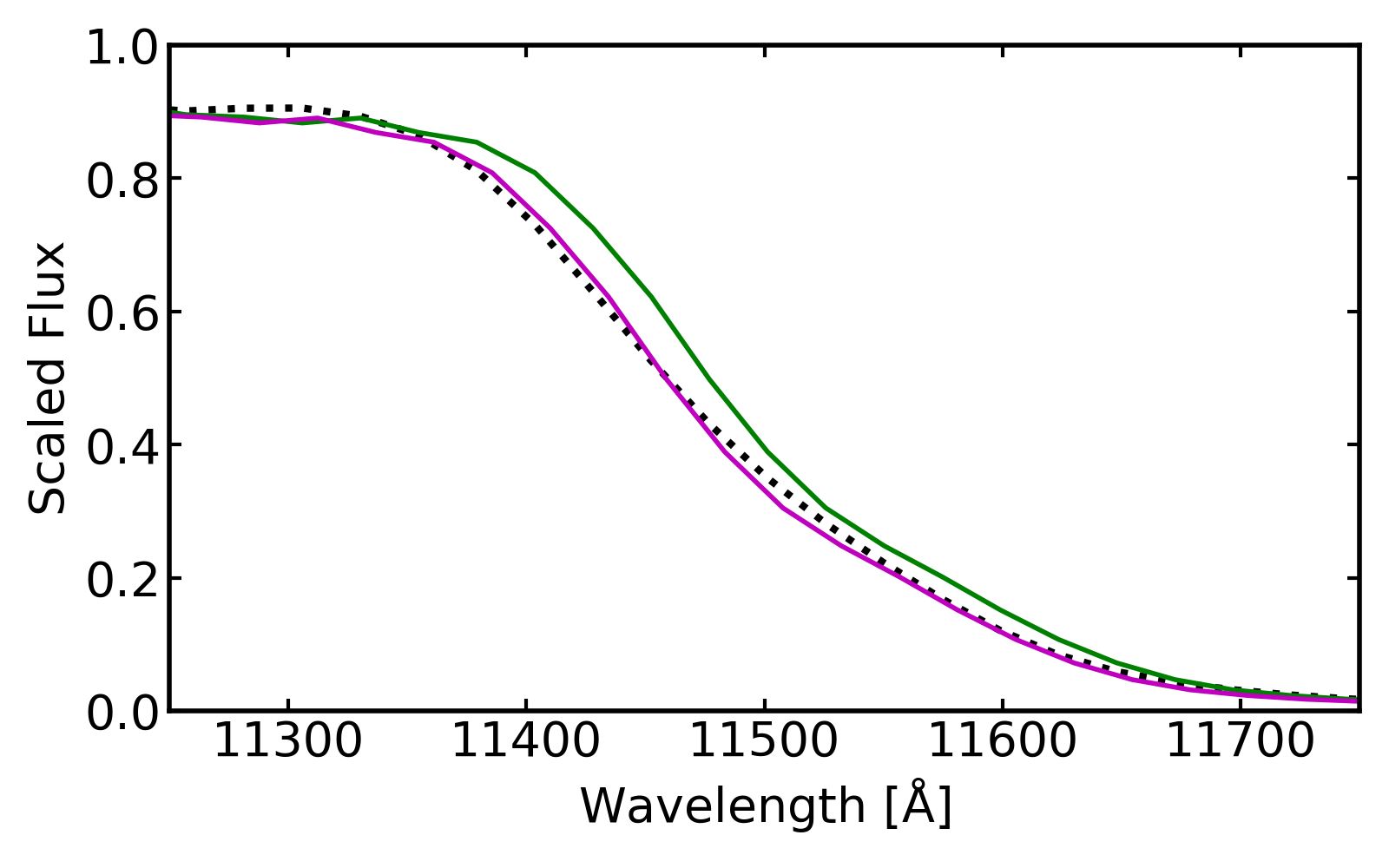 Figure 8
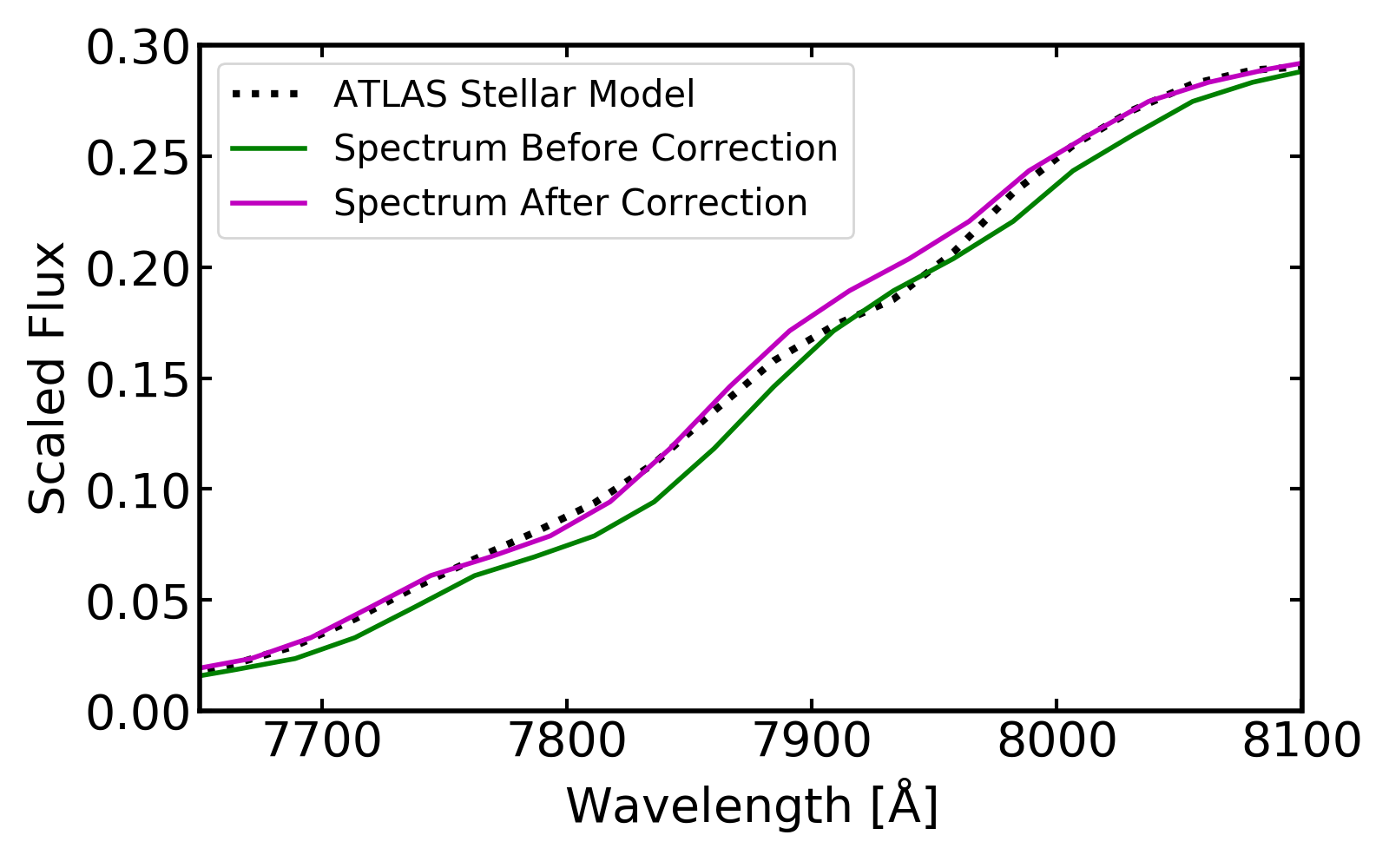 Figure 8
| Wavelength (Å) | Transit Depth (ppm) | Wavelength (Å) | Transit Depth (ppm) |
| 8500 – 8733 | 10614 – 10663 | ||
| 8733 – 8967 | 10663 – 10712 | ||
| 8967 – 9200 | 10712 – 10760 | ||
| 9200 – 9433 | 10760 – 10809 | ||
| 9433 – 9667 | 10809 – 10858 | ||
| 9667 – 9900 | 10858 – 10907 | ||
| 9900 – 10133 | 10907 – 10955 | ||
| 10133 – 10367 | 10955 – 11004 | ||
| 10367 – 10600 | 11004 – 11053 | ||
| 10600 – 10833 | 11053 – 11101 | ||
| 10833 – 11067 | 11101 – 11150 | ||
| 11067 – 11300 |
Peer Reviews
No public reviews on file for this paper yet. If you reviewed it on a platform where reviews are public (OpenReview, ICLR, NeurIPS, ICML), you can paste yours below so the community can read it here.
Videos
No videos yet. Explain this paper in a talk, walkthrough, or lecture? Add one.
Detection of Helium in the Atmosphere of the Exo-Neptune HAT-P-11b
Megan Mansfield
Department of Geophysical Sciences, University of Chicago, 5734 S. Ellis Avenue, Chicago, IL 60637, USA
Jacob L. Bean
Department of Astronomy & Astrophysics, University of Chicago, 5640 S. Ellis Avenue, Chicago, IL 60637, USA
Antonija Oklopčić
Harvard-Smithsonian Center for Astrophysics, Harvard University, Cambridge, MA 02138, USA
Laura Kreidberg
Harvard-Smithsonian Center for Astrophysics, Harvard University, Cambridge, MA 02138, USA
Jean-Michel Désert
Anton Pannekoek Institute for Astronomy, University of Amsterdam, 1090 GE Amsterdam, Netherlands
Eliza M.-R. Kempton
Department of Astronomy, University of Maryland, College Park, MD 20742, USA
Department of Physics, Grinnell College, Grinnell, IA, 50112, USA
Michael R. Line
School of Earth and Space Exploration, Arizona State University, Tempe, AZ 85281, USA
Jonathan J. Fortney
Department of Astronomy and Astrophysics, University of California, Santa Cruz, CA 95064, USA
Gregory W. Henry
Center of Excellence in Information Systems, Tennessee State University, Nashville, TN 37209, USA
Matthias Mallonn
Leibniz-Institut für Astrophysik Potsdam, 14482 Potsdam, Germany
Kevin B. Stevenson
Space Telescope Science Institute, Baltimore, MD 21218, USA
Diana Dragomir
Kavli Institute for Astrophysics and Space Research, Massachusetts Institute of Technology, Cambridge, MA 02139, USA
Hubble Fellow
Romain Allart
Observatoire Astronomique de l’Université de Genève, Université de Genève, 1290 Versoix, Switzerland
Vincent Bourrier
Observatoire Astronomique de l’Université de Genève, Université de Genève, 1290 Versoix, Switzerland
Abstract
The helium absorption triplet at a wavelength of 10,833 Å has been proposed as a way to probe the escaping atmospheres of exoplanets. Recently this feature was detected for the first time using Hubble Space Telescope (HST) WFC3 observations of the hot Jupiter WASP-107b. We use similar HST/WFC3 observations to detect helium in the atmosphere of the hot Neptune HAT-P-11b at the confidence level. We compare our observations to a grid of 1D models of hydrodynamic escape to constrain the thermospheric temperatures and mass loss rate. We find that our data are best fit by models with high mass loss rates of – g s*-1*. Although we do not detect the planetary wind directly, our data are consistent with the prediction that HAT-P-11b is experiencing hydrodynamic atmospheric escape. Nevertheless, the mass loss rate is low enough that the planet has only lost up to a few percent of its mass over its history, leaving its bulk composition largely unaffected. This matches the expectation from population statistics, which indicate that close-in planets with radii greater than 2 R*⊕* form and retain H/He-dominated atmospheres. We also confirm the independent detection of helium in HAT-P-11b obtained with the CARMENES instrument, making this the first exoplanet with the detection of the same signature of photoevaporation from both ground- and space-based facilities.
planets and satellites: atmospheres — planets and satellites: individual (HAT-P-11b)
††journal: ApJ Letters
1 Introduction
Close-in exoplanets are expected to experience atmospheric escape that is driven by the absorption of the copious high energy radiation they receive from their host stars (Lammer et al., 2003; Lecavelier des Etangs et al., 2004). Such photoevaporation likely sculpts the observed population of close-in exoplanets, dividing small planets into two categories - those with radii smaller than , which are likely rocky cores stripped of any primordial light-element atmospheres, and those with radii larger than , which retain some hydrogen and helium in their atmospheres (Lopez & Fortney, 2013; Owen & Wu, 2013, 2017; Fulton et al., 2017; Van Eylen et al., 2018).
The theories describing the recently discovered planet radius gap can be refined through observations of escaping atmospheres, which will lead to a better understanding of the physics of photoevaporation. Atmospheric escape has been detected through observations of hydrogen absorption in the Lyman line for two hot Jupiters (HD 209458b and HD 189733b; Vidal-Madjar et al., 2003, 2004; Lecavelier Des Etangs et al., 2010) and two hot Neptunes (GJ 436b and GJ 3470b; Ehrenreich et al., 2015; Bourrier, 2018). However, interstellar absorption limits these observations to nearby planets with gas escaping at high velocities.
Another possible signature of an escaping atmosphere that is less affected by interstellar absorption is the helium triplet at 10,833 Å (note this is the wavelength of the feature in vacuum; Seager & Sasselov, 2000; Oklopčić & Hirata, 2018). This feature was recently detected for the first time by Spake et al. (2018) using HST observations of WASP-107b. In this paper we present similar HST observations for the hot Neptune HAT-P-11b (Bakos et al., 2010). The original motivation for our program was to precisely determine the atmospheric water abundance of the planet and further constrain the exoplanet mass-metallicity relation (e.g., Kreidberg et al., 2014). However, as was true for the Spake et al. (2018) observations, these data also presented the serendipitous opportunity to search for the previously-theorized but unexploited-until-recently He triplet. Our analysis of these data was further inspired by the presentation of R. Allart at the Exoplanets II conference in July 2018 showing a detection of the He feature in HAT-P-11b using ground-based data from CARMENES (Allart et al., 2018).
Our observations of HAT-P-11b have yielded the second detection of helium escaping from a planet using HST, and a new detection of photoevaporation from a Neptune-sized exoplanet, and so help to constrain the nature of photoevaporation for planets smaller than Jupiter. Furthermore, HAT-P-11b now becomes the first exoplanet with the detection of the same signature of photoevaporation from both ground- and space-based facilities. In §2 we describe our observations and data reduction process. In §3 we compare our observations to models of photoevaporation, and we summarize our findings in §4.
2 Observations and Data Reduction
2.1 HST Data
We observed five transits of HAT-P-11b between 14 September and 26 December 2016 using the HST WFC3 IR detector as part of program GO-14793. We used the G102 grism to measure the transmission spectrum of HAT-P-11b between 0.8 – 1.15 m. Each visit consisted of four consecutive HST orbits in which HAT-P-11 was visible for approximately 56 minutes per orbit. At the beginning of each orbit, we took a direct image of the target with the F126N narrow-band filter for wavelength calibration.
The observations were taken in the spatial scan mode with the 256 x 256 subarray using the SPARS10, NSAMP=12 readout pattern, resulting in an exposure time of 81.089 s. We used a scan rate of 0.25 arcsec/s, which produced spectra extending approximately 180 pixels in the spatial direction and with peak pixel counts of about 45,000 electrons per pixel. We used bi-directional scans, which yielded 25 exposures per orbit and a duty cycle of 74%.
We reduced the HST data using the data reduction pipeline described in Kreidberg et al. (2014), with the addition of an extra step to subtract light from a background star that overlapped with the spectrum of HAT-P-11. The spectrum of the background star was measured in one visit in which it was separated from HAT-P-11, and then subtracted out of each image, accounting for the fact that its position along both the dispersion and spatial axes changed between visits. This subtraction did not substantially change the final shape of the spectrum.
Following standard procedure for HST transit observations, we discard the first orbit of each visit. We also discard the first exposure from each orbit to improve the quality of the fit. Additionally, three points in the third visit and four points in the fourth visit were removed because they showed higher relative fluxes consistent with starspot crossings, as can be seen in Figure 1.
We used the WFC3 G102 wavelength calibration outlined in Kuntschner et al. (2009) to determine the wavelength of each pixel in our spectra from the direct image positions. However, we found that the calibrated data appeared to be shifted in wavelength space compared to the expected grism throughput. Both the red and blue edges of the spectrum were shifted by the same amount, but the shift was different for each visit, varying between 6 and 18 Å. This is likely due to the fact that HST must move slightly after taking the direct image in order to correctly position the spatial scan so it fits on the detector. The positioning of the spectral images relative to the direct image has an uncertainty of roughly 12 Å (Dressel, 2018). We shifted the wavelengths to the correct values using a least-squares fit to the drop-offs at both the red and blue edges of the throughput.
We made a broadband spectrum by binning the observations into 16-pixel channels, resulting in 12 light curves with resolution . To search for the narrow helium feature, we summed the region of the spectrum between 10,590 Å and 11,150 Å into 22 overlapping bins that were 2 pixels wide ( Å, for comparison a resolution element is Å). Each bin was shifted by one pixel from the previous bin. We also summed over the entire 0.85 – 1.13 m wavelength range to make a white light curve.
We fit the white light curve with the model described in Kreidberg et al. (2014), which includes a transit model (Kreidberg, 2015) and a systematics model based on Berta et al. (2012). The orbital period and eccentricity were fixed to days and , respectively (Huber et al., 2017). We placed Gaussian priors on and with mean and standard deviations of and , respectively (Fraine et al., 2014). We fixed limb darkening coefficients to theoretical quadratic limb darkening models predicted from ATLAS models (Espinoza & Jordan, 2015; Castelli & Kurucz, 2004). Including the instrument systematics, the fit to the white light curve contained a total of 24 free parameters (a normalization constant, visit-long linear slope, scaling factor to correct for an offset between scan directions, and the planet-to-star radius ratio varied between visits).
We estimated the parameters with a Markov Chain Monte Carlo (MCMC) fit using the emcee package for Python (Foreman-Mackey et al., 2013). Figure 1 shows the best-fit broadband white light curve. The best-fit broadband white light curve had and residuals of 75 ppm, which is typical for WFC3 observations of transiting planets orbiting bright host stars. The white light transit depth was ppm.
We fit the spectroscopic light curves using the divide-white technique of Stevenson et al. (2014) and Kreidberg et al. (2014). For the narrowband spectroscopic light curves surrounding the helium feature, we used a region spanning 10,590 – 11,150 Å to determine the white light curve systematics. The narrowband white light curve had and residuals of 138 ppm. We fixed and to the prior mean values and the mid-transit times were fixed to the best-fit values from the white light curve fit. Before fitting each spectroscopic light curve, we rescaled the uncertainties by a constant factor such that each light curve had to give more conservative error estimates.
Figure 2 shows the individual transit depths for each visit for both the broadband white light curve and the narrow band containing the helium feature. In both cases, the individual transit depths are all within of each other. Figure 3 shows the broadband spectrum, Figure 4 shows the narrowband spectrum, and Table 1 lists the transit depth in each channel. The derived transmission spectrum is largely featureless with the exception of a deeper transit in the narrowband spectroscopic channel corresponding to the unresolved infrared He triplet, which deviates from the surrounding continuum at the 4 confidence level.
2.2 Ground-based Photometry
We obtained ground-based photometric monitoring from two sources to correct the transmission spectrum for changes in stellar activity. We obtained multi-color photometric monitoring with the 1.2 m robotic STELLA telescope using its wide-field imager WiFSIP (Strassmeier et al., 2004). Data were taken from June – October 2016 and March – July 2017 in Johnson B and V in nightly blocks of four exposures per filter, which were averaged during data reduction. The data reduction followed the procedure of Mallonn et al. (2018). We also monitored the photometric variability using the Tennessee State University Celestron 14 inch (C14) automated imaging telescope (AIT), which is located at Fairborn Observatory (Henry, 1999). These observations consisted of 89 nights between 27 September 2015 and 7 January 2017.
We interpolated between these photometric observations to estimate the starspot covering fraction at the time of each HST observation. We used the relative amplitude of two occulted starspots in the white light curve to determine the temperature difference between the starspots and the star, which we found to be approximately 150 K. We assumed that the starspots were circular and that the entire starspot was occulted by the planet each time. We applied a wavelength-dependent correction to the values measured from the WFC3 data to account for variations in starspot coverage between visits, assuming that both the spotted and unspotted parts of the star emitted as blackbodies and assuming that the mean photometric magnitude occurred when the spot covering fraction was 3%, which is the mean spot coverage for HAT-P-11b (Morris et al., 2017a).
We followed the method of Spake et al. (2018) to check whether the He absorption feature we observed could be caused by stellar activity. They found that the He triplet equivalent width for a K4-type star like HAT-P-11 should be no larger than Å, according to both theoretical calculations and observations of K-dwarf stars. For our 49 Å-wide bins, this corresponds to a change in the transit depth of 30 ppm. The helium feature we observe has a depth of ppm, which is more than larger than the expected depth due to stellar activity. Our argument that the He feature can not be due to stellar activity alone is strengthened by the fact that our observations occurred near a minimum in HAT-P-11’s activity cycle (Morris et al., 2017b).
3 Analysis
3.1 Broadband Spectrum
We computed transmission spectra models to compare with the WFC3+G141 data from Fraine et al. (2014) and our new broadband G102 data using the Exo-Transmit code (Kempton et al., 2017). We tested models with a cloud-free, solar composition; enhanced metallicity; a grey cloud deck; and enhanced Rayleigh scattering. Figure 3 shows these different cloud parameterizations compared to the spectrum of HAT-P-11b. The best-fitting model had grey clouds at 12 mbar and . The models with a cloud-free solar composition, 50 enhanced Rayleigh scattering, and 400 enhanced metallicity had , , and , respectively. However, none of the models we tested produced a particularly good fit to both the archival G141 data and our new G102 data, as none of them produced the upward slope seen between m while simultaneously matching the water feature seen around 1.4 m. One possible explanation for the upward slope we observe is the influence of unocculted, bright regions on the star (Rackham et al., 2018). We leave a more detailed study of the broadband transmission spectrum for future work (Chachan et al. in prep) and turn our attention below to a detailed study of the narrowband spectrum around the He triplet feature.
3.2 Narrowband Helium Spectrum
We compared the helium absorption feature detected in our HST data to a grid of models of hydrodynamic escape computed using the methods of Oklopčić & Hirata (2018). Spherically-symmetric model atmospheres were constructed from 1D density and velocity profiles based on the isothermal Parker wind model (Parker, 1958; Lamers & Cassinelli, 1999). The atmospheres were assumed to be composed of hydrogen and helium atoms in 9:1 number ratio. Hydrogen and helium atomic level populations were computed taking into account photoionization, recombination, and collisional transitions. To calculate the photoionization rates, we constructed a spectrum appropriate for HAT-P-11 (a K4 star) by averaging the observed spectra of K2 and K6 stars, obtained from the MUSCLES survey (France et al., 2016). With the planet mass, radius, and atmospheric composition fixed, and the mean molecular weight of the atmosphere evaluated iteratively (taking into account the free electrons produced by hydrogen photoionization), the remaining free parameters in the model are temperature and mass loss rate.
We model the atmosphere of HAT-P-11b as being in the hydrodynamic escape regime because the planet has a low gravitational potential (Salz et al., 2016b) and the Jeans parameter at the exobase (; Salz et al., 2016a) is . Salz et al. (2016a) also predict that the exobase should be above both the sonic point and the Roche radius for HAT-P-11b. Additionally, the Jeans escape rate is generally expected to be substantially lower than the hydrodynamic escape rate for a planet like HAT-P-11b with an unstable thermosphere (Tian et al., 2005).
We computed models for a range of thermospheric temperatures between = 3,000 – 12,000 K and total mass loss rates between = – g s*-1*. We convolved each high-resolution model with a Gaussian function with the resolution of WFC3+G102, which is at 10,400 Å (Kuntschner et al., 2009), before binning the models to the sampling of our observations. We then determined the of each model compared to the data using the three non-overlapping bins surrounding the helium feature that show a deviation from the baseline absorption level.
Figure 5 shows a contour plot of the fit quality for comparing the grid models to the data cast in terms of the statistical significance of the deviation from a good fit. The banana-shaped contour of good fit quality indicates that the thermospheric temperature and the mass loss rate can be traded against each other to give an acceptable fit to the data for a wide range of values in each parameter. According to the mass continuity equation , the gas density required to produce the observed absorption signal can be achieved for different combinations of the mass loss rate and the gas radial velocity. For an isothermal Parker wind, the velocity is directly related to the gas temperature, thus giving rise to the mass loss rate - temperature degeneracy. This degeneracy can be reduced somewhat by resolving the shape of the absorption line. Even with the degeneracy between the temperature and the mass loss rate, a large portion of the parameter space can be excluded at high confidence despite the low-resolution of the HST data due to the sensitivity of the He triplet to the gas density. Figure 4 compares two example models from the excluded region of parameter space to the data, demonstrating the poor fit quality of such models.
The excess absorption in the He triplet that we detect suggests that HAT-P-11b’s thermosphere extends to altitudes of at least 2 Rp. Salz et al. (2016a) performed simulations of hydrodynamic escape from hot gas planets using a coupled photoionization and plasma simulation code with a general hydrodynamics code. For HAT-P-11b, Salz et al. (2016a) predict a temperature of K at 2 Rp and an overall escape rate of g s*-1*. Despite the caveats given by Salz et al. (2016a) for their model (uncertainty in the stellar wind strength, magnetic effects, the effect of metals in the atmosphere, and the correction factor to account for dayside-only heating), Figure 4 shows how their prediction falls within their estimated error of the region of good fit quality mapped in Figure 5.
We also compared our result to the data underlying the recent detection of the helium infrared triplet in HAT-P-11b using the CARMENES spectrograph (Allart et al., 2018). Figure 6 shows the CARMENES spectrally resolved data convolved to the much lower resolution of our HST data. Our data sets agree well on the size of the helium absorption feature. The confirmation of the ground-based data with our space-based observations, which are free from the influence of telluric lines and transparency variations, adds significant confidence to the detection of this subtle feature.
4 Discussion
We find an overall mass loss rate of % of the total mass of HAT-P-11b per billion years. Additionally, Salz et al. (2016a) predict a mass loss of % over the first 100 Myr after planet formation, when the young star would have caused a much higher escape rate. A total mass loss of 1% would change the radius of HAT-P-11b by 0.4%, or 108 km (Seager et al., 2007). As is expected for a Neptune-sized gas giant, this amount of photoevaporation will have a negligible effect on the composition of HAT-P-11b over its lifetime.
Although the mass loss from HAT-P-11b is negligible, smaller sub-Neptunes can be significantly impacted by photoevaporation over their lifetimes. Close-in planets smaller than may even have their entire primary atmospheres stripped away (Lopez & Fortney, 2013; Owen & Wu, 2013, 2017; Fulton et al., 2017; Van Eylen et al., 2018). Observations of the helium triplet at 10,833 Å provides us with a new way to characterize atmospheric loss from a wider range of planets, which will help to refine models of photoevaporation. Future observations of smaller planets at this wavelength will also help us better constrain the exact nature of super-Earth/sub-Neptune planets and how their atmospheres have evolved over time.
We thank David Ehrenreich and Christophe Lovis for discussion of the CARMENES data. Support for program GO-14793 was provided by NASA through a grant from the Space Telescope Science Institute, which is operated by the Association of Universities for Research in Astronomy, Inc., under NASA contract NAS 5-26555. J.L.B. acknowledges support from the David and Lucile Packard Foundation. D.D. acknowledges support provided by NASA through Hubble Fellowship grant HSTHF2-51372.001-A awarded by the Space Telescope Science Institute, which is operated by the Association of Universities for Research in Astronomy, Inc., for NASA, under contract NAS5-26555. The work of R.A. and V.B. has been carried out in the framework of the National Centre for Competence in Research “PlanetS” supported by the Swiss National Science Foundation (SNSF). R.A. and V.B. acknowledge the financial support of the SNSF. This project has received funding from the European Research Council (ERC) under the European Union’s Horizon 2020 research and innovation programme (project FOUR ACES; grant agreement No. 724427). Based partly on data obtained with the STELLA robotic telescopes in Tenerife, an AIP facility jointly operated by AIP and IAC.
The reference list from the paper itself. Each links out to its DOI / PubMed record.
- 1Allart et al. (2018) Allart, R., Bourrier, V., Lovis, C., et al. 2018, Science, in press
- 2Bakos et al. (2010) Bakos, G. Á., Torres, G., Pál, A., et al. 2010, Ap J, 710, 1724
- 3Berta et al. (2012) Berta, Z. K., Charbonneau, D., Désert, J.-M., et al. 2012, The Astrophysical Journal, 747, 35
- 4Bourrier (2018) Bourrier, V. 2018, A&A, in press
- 5Castelli & Kurucz (2004) Castelli, F., & Kurucz, R. L. 2004, Ar Xiv Astrophysics e-prints, astro-ph/0405087
- 6Dressel (2018) Dressel, L. 2018, Wide Field Camera 3 Instrument Handbook, Version 10.0 (Baltimore: ST Sc I)
- 7Ehrenreich et al. (2015) Ehrenreich, D., Bourrier, V., Wheatley, P. J., et al. 2015, Nature, 522, 459
- 8Espinoza & Jordan (2015) Espinoza, N., & Jordan, A. 2015, Monthly Notices of the Royal Astronomical Society, 450, 1879