On some problems of Harju concerning squarefree arithmetic progressions in infinite words
James Currie, Narad Rampersad

TL;DR
This paper addresses open problems posed by Harju about the existence and properties of square-free arithmetic progressions in infinite words, providing solutions to two of these problems.
Contribution
It solves two of Harju's open problems related to square-free arithmetic progressions in infinite words.
Findings
Solved two of Harju's open problems.
Established new results on square-free arithmetic progressions.
Contributed to the theoretical understanding of infinite words.
Abstract
In a recent paper, Harju posed three open problems concerning square-free arithmetic progressions in infinite words. In this note we solve two of them.
Click any figure to enlarge with its caption.
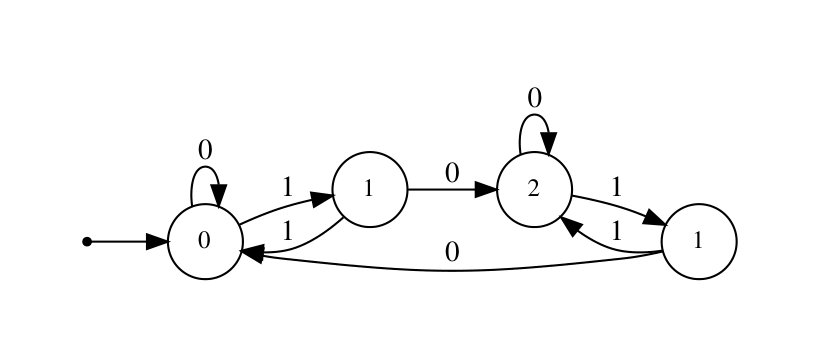 Figure 1
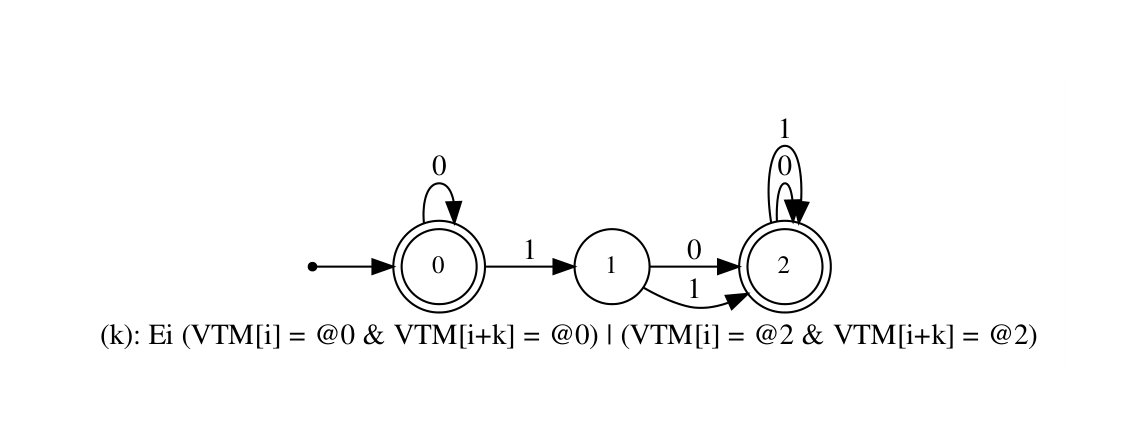 Figure 2
Peer Reviews
No public reviews on file for this paper yet. If you reviewed it on a platform where reviews are public (OpenReview, ICLR, NeurIPS, ICML), you can paste yours below so the community can read it here.
Videos
No videos yet. Explain this paper in a talk, walkthrough, or lecture? Add one.
Taxonomy
TopicsAlgebraic Geometry and Number Theory · semigroups and automata theory · History and Theory of Mathematics
On some problems of Harju concerning squarefree arithmetic
progressions in infinite words
James Currie and Narad Rampersad
Department of Mathematics and Statistics
University of Winnipeg
{j.currie,n.rampersad}@uwinnipeg.ca The authors are supported by NSERC Discovery Grants 03901-2017 (Currie) and 418646-2012 (Rampersad).
Abstract
In a recent paper, Harju posed three open problems concerning square-free arithmetic progressions in infinite words. In this note we solve two of them.
1 Introduction
The study of infinite words avoiding squares is a classical problem in combinatorics on words. A square is a word of the form , such as tartar. One of the most well-studied squarefree words [10, 6] is the word obtained by iterating the map , , .
Harju [7] studied the following question and showed that it has a positive solution for all :
Given , does there exist an infinite squarefree sequence over a ternary alphabet such that the subsequence is squarefree?
Carpi [3], Currie and Simpson [5], and Kao et al. [8] also studied similar problems. Harju ended his paper with three open problems:
Does there exist a squarefree sequence over a ternary alphabet such that for every , the subsequence contains a square? 2. 2.
Do there exist pairs of relatively prime integers such that there exists a squarefree sequence over a ternary alphabet for which both and are squarefree? 3. 3.
It is true that for all squarefree words over a ternary alphabet, there exists a word and an integer such that ?
In this note we show that the word vtm gives a positive answer to the first problem. We also show that there a positive answer to the third problem for every .
2 The main results
We recall that is the fixed point (starting with [math]) of the morphism that maps , , .
Theorem 1**.**
For each the sequence contains either the square or the square .
Proof.
The first part of the proof relies on the fact that vtm is a -automatic sequence. Berstel [1] studied several different ways to generate the sequence vtm; in particular, he showed that vtm is generated by the -DFAO (deterministic finite automaton with output) in Figure 1. The automaton takes the binary representation of as input, and if the computation ends in a state labeled , the automaton outputs , indicating that .
Since vtm is an automatic sequence, we can use Walnut [9] to verify that it has certain combinatorial properties. We verify with Walnut that for every , the sequence vtm contains a length factor of the form or . The Walnut command to do this is:
eval same_first_last ‘‘Ei (VTM[i]=@0 & VTM[i+k]=@0)|(VTM[i]=@2 & VTM[i+k]=@2)’’;
The Walnut output for this command is the automaton in Figure 2, which shows that the given predicate holds for all .
To complete the proof, it suffices to show that vtm contains an occurrence of the length factor or at a position congruent to [math] modulo . Blanchet-Sadri et al. [2, Theorem 3] showed that for each odd and each factor of vtm, the set of positions at which occurs in vtm contains all congruence classes modulo , including, in particular, [math] modulo . This establishes the claim for all odd .
If is even, write , where is odd. Suppose that . We have already seen that vtm contains an occurrence of a length factor or at a position . From the automaton generating vtm, we see that if (resp. ), then (resp. ), which establishes the claim for .
Finally, suppose that is a power of . Then the binary representations of and have the form and respectively, for some . From the automaton generating vtm, we see that , as required. This completes the proof. ∎
This resolves Harju’s first problem in the affirmative. For the third, we use the result of Currie [4] (also referenced in [7]), who showed that for there exists a cyclic squarefree -uniform morphism on the ternary alphabet. Let denote such a morphism. By cyclic we mean that if denotes the morphism defined by the cyclic permutation of the alphabet , then for we have . By -uniform we mean that for the images all have length . Finally, we say that the morphism is squarefree if it maps squarefree words to squarefree words. Without loss of generality, suppose that begins with the letter . Now if is a squarefree word, then is also squarefree and moreover , as required. This resolves Harju’s third problem, and furthermore, shows that solutions exist for every .
The reference list from the paper itself. Each links out to its DOI / PubMed record.
- 1[1] J. Berstel, “Sur la construction de mots sans carré”, Séminaire de Théorie des Nombres 1978–1979, Exp. No. 18, 15 pp., CNRS, Talence, 1979.
- 2[2] F. Blanchet-Sadri, J. Currie, N. Fox, N. Rampersad, “Abelian complexity of fixed point of morphism 0 ↦ 012 maps-to 0 012 0\mapsto 012 , 1 ↦ 02 maps-to 1 02 1\mapsto 02 , 2 ↦ 1 maps-to 2 1 2\mapsto 1 ”, INTEGERS 14 (2014), A 11.
- 3[3] A. Carpi, “Multidimensional unrepetitive configurations”, Theoret. Comput. Sci. 56 (1988), 233–241.
- 4[4] J. Currie, “Infinite ternary square-free words concatenated from permutations of a single word”, Theoret. Comput. Sci. 482 (2013), 1–8.
- 5[5] J. Currie, J. Simpson, “Non-repetitive tilings”, Electron. J. Combinatorics 9 (2002) #R 28.
- 6[6] M. Hall, Jr., “Generators and relations in groups–The Burnside problem”. In Lectures on Modern Mathematics, Vol. 2 , Wiley, New York, pp. 42–92.
- 7[7] T. Harju, “On square-free arithmetic progressions in infinite words”. To appear in Theoret. Comput. Sci. Currently online at https://doi.org/10.1016/j.tcs.2018.09.032 .
- 8[8] J.-Y. Kao, N. Rampersad, J. Shallit, M. Silva, “Words avoiding repetitions in arithmetic progressions”, Theoret. Comput. Sci. 391 (2008), 126–137.