Evaluating Resilience of Electricity Distribution Networks via A Modification of Generalized Benders Decomposition Method
Devendra Shelar, Saurabh Amin, Ian Hiskens

TL;DR
This paper introduces a modified Generalized Benders Decomposition method to computationally evaluate the resilience of electricity distribution networks against cyber-physical attacks, considering different operator responses and cascading failures.
Contribution
It proposes a novel modification to the Benders Decomposition approach tailored for power flow problems in radial distribution networks, enabling efficient resilience assessment.
Findings
Modified Benders method improves computational efficiency
Resilience gains are quantifiable under different operator responses
Cascading failures significantly impact network resilience
Abstract
This paper presents a computational approach to evaluate the resilience of electricity Distribution Networks (DNs) to cyber-physical failures. In our model, we consider an attacker who targets multiple DN components to maximize the loss of the DN operator. We consider two types of operator response: (i) Coordinated emergency response; (ii) Uncoordinated autonomous disconnects, which may lead to cascading failures. To evaluate resilience under response (i), we solve a Bilevel Mixed-Integer Second-Order Cone Program which is computationally challenging due to mixed-integer variables in the inner problem and non-convex constraints. Our solution approach is based on the Generalized Benders Decomposition method, which achieves a reasonable tradeoff between computational time and solution accuracy. Our approach involves modifying the Benders cut based on structural insights on power flow over…
Click any figure to enlarge with its caption.
 Figure 1
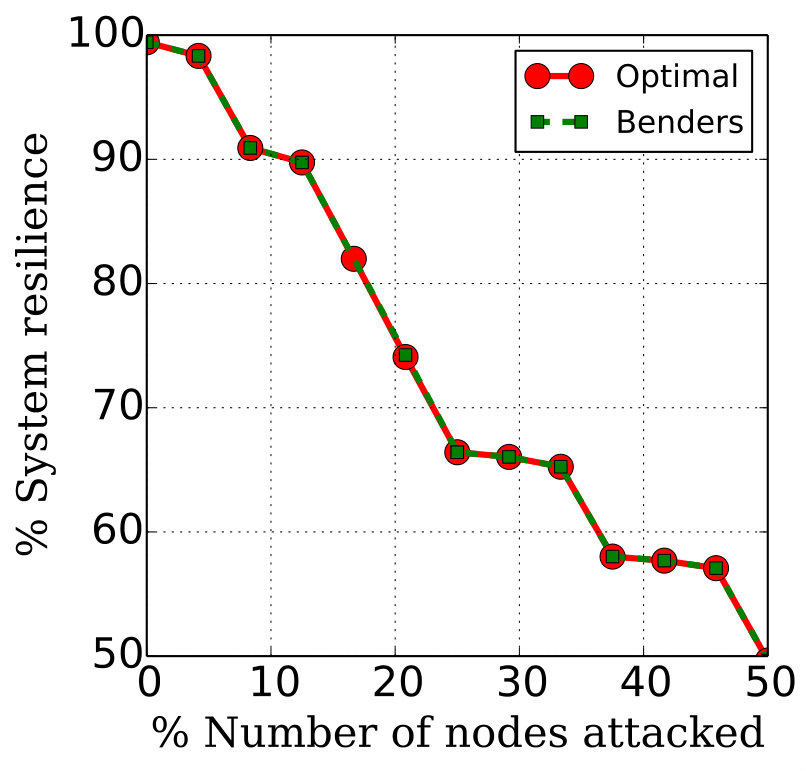 Figure 2
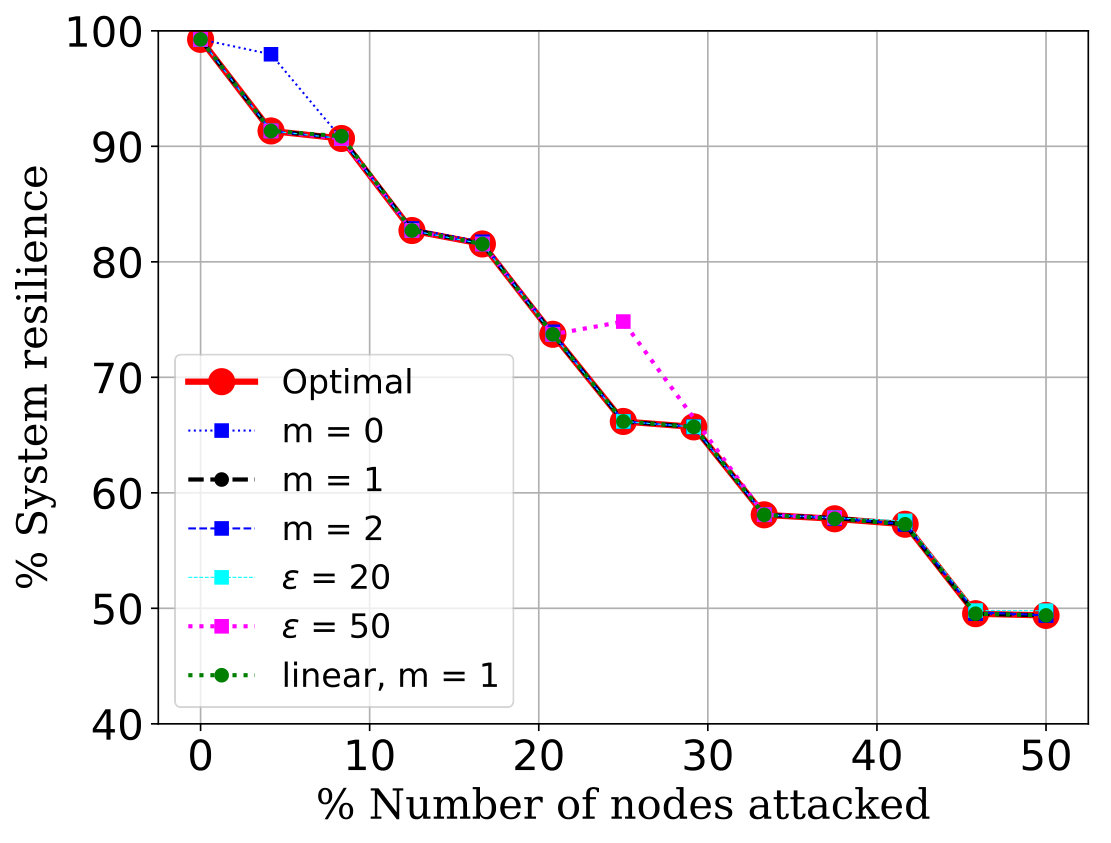 Figure 3
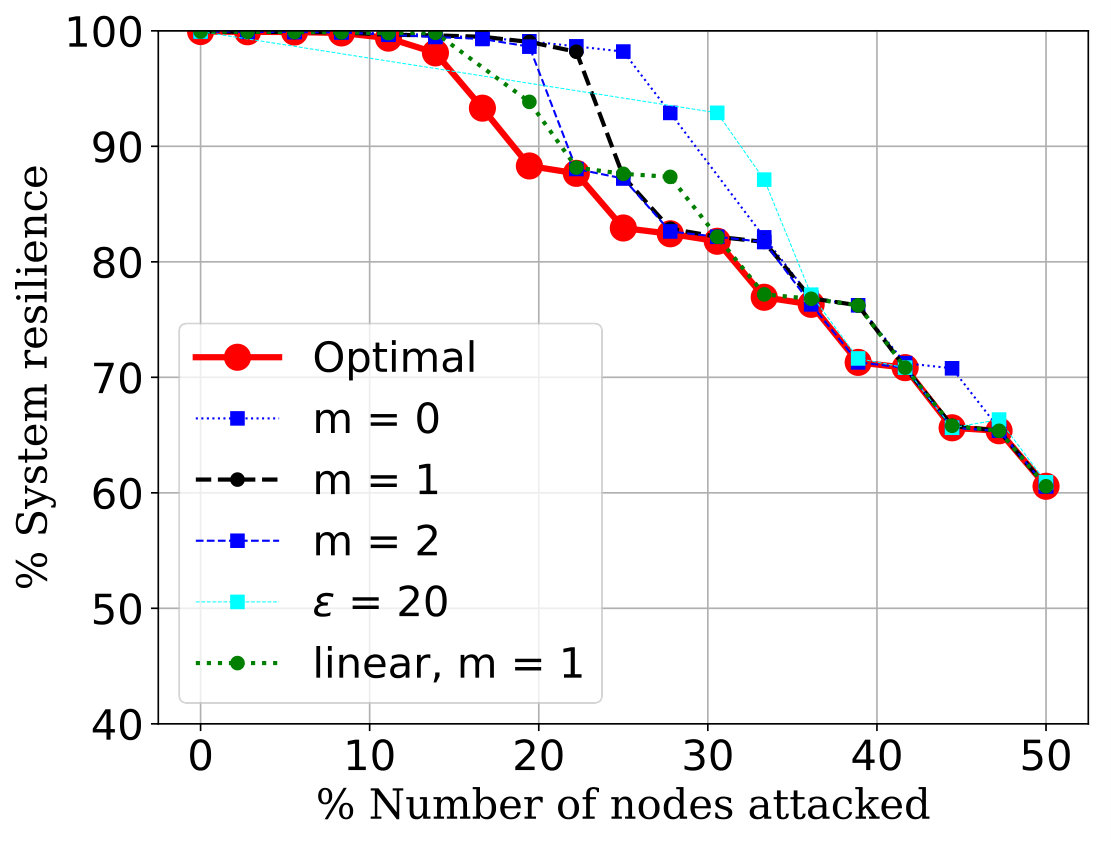 Figure 4
 Figure 5
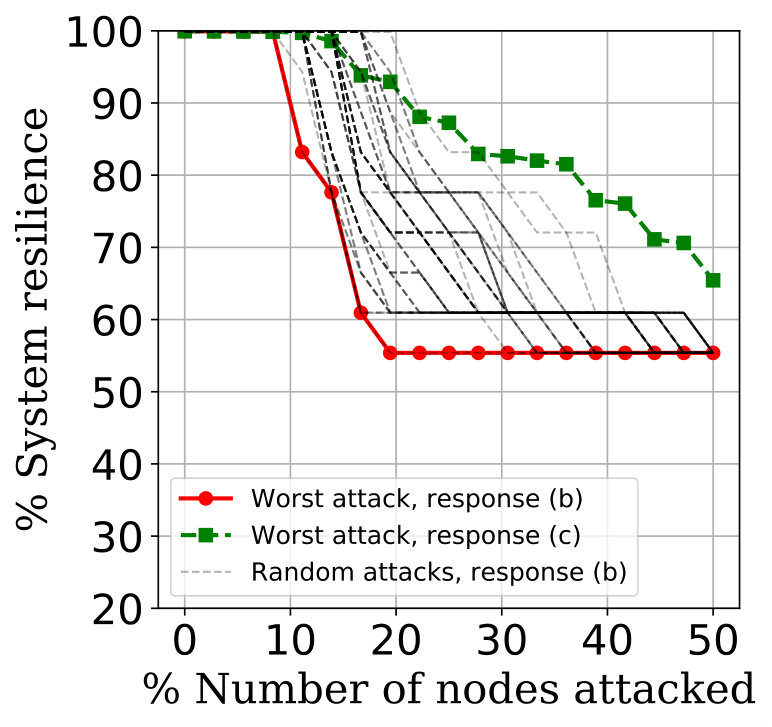 Figure 6
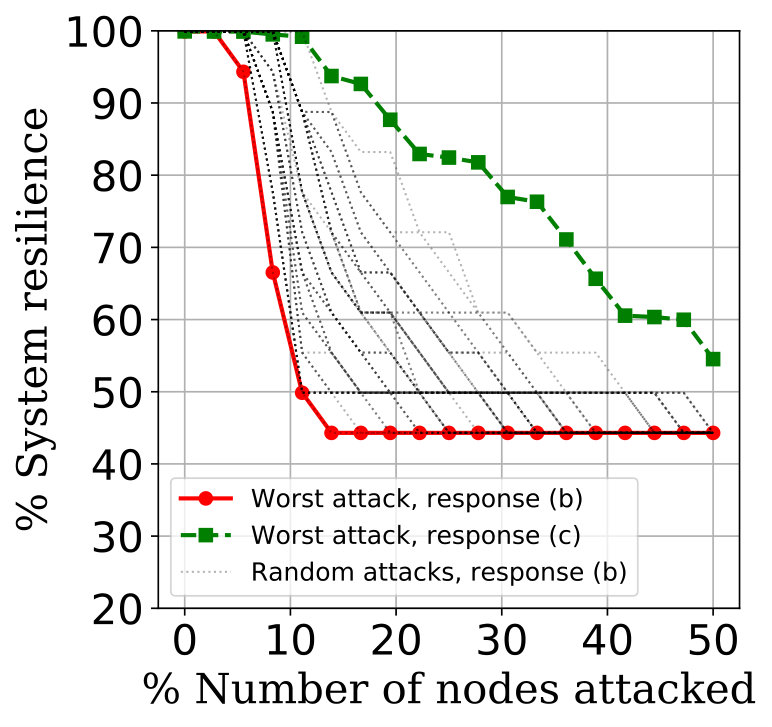 Figure 7
 Figure 8
Peer Reviews
No public reviews on file for this paper yet. If you reviewed it on a platform where reviews are public (OpenReview, ICLR, NeurIPS, ICML), you can paste yours below so the community can read it here.
Videos
No videos yet. Explain this paper in a talk, walkthrough, or lecture? Add one.