Astronomy summer camp "Beli Brezi", Bulgaria - building the astronomical community of the future
Valentin D. Ivanov, Agop Bohosian

TL;DR
The paper discusses the long-term impact of the 'Beli Brezi' astronomy camp in Bulgaria, emphasizing its role in fostering critical thinking and community building among high school students over nearly fifty years.
Contribution
It provides a historical overview and insights into how the camp has evolved to promote critical thinking and community engagement in astronomy education.
Findings
The camp has successfully cultivated critical thinking among students.
It has contributed to building a future astronomical community.
The camp's approach extends beyond knowledge dissemination to community and skill development.
Abstract
Why study astronomy, why teach astronomy? We give answers to these fundamental questions based on our experience with the Astronomical Camp "Beli Brezi" (White Aspens; Kardzhali, Bulgaria). It has been a place for teaching astronomy to high schools kids for nearly half a century. We describe shortly the history of the camp and draw some conclusions based on nearly five decades of experience. Major among them is that the camp has gone further than just distributing astronomical knowledge - while this is an important and worthy task, the main achievement has been the cultivation of critical thinking among the pupils and we think that that is the main motivation to give positively reassuring answers the questions we asked at the beginning.
Click any figure to enlarge with its caption.
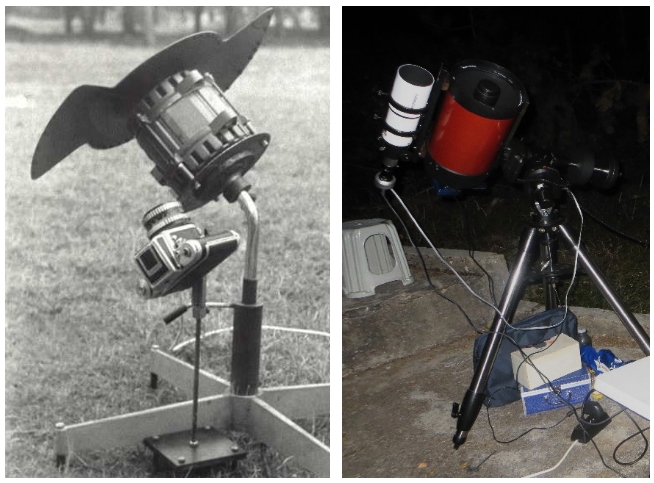 Figure 1
Peer Reviews
No public reviews on file for this paper yet. If you reviewed it on a platform where reviews are public (OpenReview, ICLR, NeurIPS, ICML), you can paste yours below so the community can read it here.
Videos
No videos yet. Explain this paper in a talk, walkthrough, or lecture? Add one.
Taxonomy
TopicsAttention Economy in Education and Business
Astronomy summer camp “Beli Brezi”, Bulgaria – building
the astronomical community of the future
Valentin D. Ivanov
European Southern Observatory, Karl-Schwarzschild-Str. 2, 85748 Garching bei München, Germany; [email protected]
Agop Bohosian
Astronomical Club “Vega”, Kardzhali, Bulgaria; [email protected]
Abstract
Why study astronomy, why teach astronomy? We give answers to these fundamental questions based on our experience with the Astronomical Camp “Beli Brezi” (White Aspens; Kardzhali, Bulgaria). It has been a place for teaching astronomy to high schools kids for nearly half a century. We describe shortly the history of the camp and draw some conclusions based on nearly five decades of experience. Major among them is that the camp has gone further than just distributing astronomical knowledge – while this is an important and worthy task, the main achievement has been the cultivation of critical thinking among the pupils and we think that that is the main motivation to give positively reassuring answers the questions we asked at the beginning.
1 Camp “Bel Brezi” – an overview
The longest-going astronomical summer camps in the Balkan peninsula “Beli Brezi”111http://www.astro-brezi.org/ (White Aspens) started in the distant 1970. It is organized by the Astronomical Club “Vega”222https://aovega.wordpress.com/, the Astronomy Department333http://astro.phys.uni-sofia.bg/ of the Physics Faculty at the University of Sofia and by the Astronomical Observatory “Slavey Zlatev”, Kardzhali444http://obskar.com/. The main goals of the camp are to train students in basic astronomy and various observing techniques, to give them an opportunity to collect observing data that will be processed and analyzed throughout the year, and to facilitate the interaction between the youth amateur-astronomer organizations across the country and in case of international participation – from abroad.
The two-week long events usually take place in mid-Aug. Moon-phase permitting, they are timed to coincide with the peak of the Perseid meteor shower. The camp is opened to high school students with interest in astronomy, and with some background, typically from extra-curricular activities in their home high schools. Usually, the camp is attended by 40–60 pupils.
The instructors come from a number of backgrounds: a strong core is supplied by the Physics Department of the University of Sofia. Others are high school teachers and some work at the dozen or so public observatories scattered across the country. The last decade saw a remarkable new trend: former pupils, now Ph.D. students, postdocs or even professors/staff at various astronomical institutions abroad, return to teach.
The camps in the 1970-1990s were financed by the state’s Department of Education. The main sponsor in the recent years has been the foundation America for Bulgaria555https://www.us4bg.org/.
2 Observing projects and equipment
The type of observations carried out at the camp are typical for the amateur astronomers: the students were split into three teams: meteors, variables and photography.
Perhaps, the meteor observers are the most numerous. They measure the hourly numbers and determine the radiants of the meteor showers following closely the best practices adopted by the International Meteor Organization666https://www.imo.net/ (IMO).
Other students observe variable stars, both with naked eye and with binoculars or small telescopes (6-8 cm refractors are the most common). Observers estimate the apparent brightness of the stars with respect to reference stars following the classical methods of Argelander and Pickering and create light curves. Eclipsing binaries with sharp deep minima and some high-amplitude Cepheids are the most common targets.
Finally, a third group carries out imaging of variable stars – at first by means of photographic film and plates, more recently with digital detectors. A decade ago these used to be long-term projects – the students collected photographic material during the camp and process it on site, because equipment like densitometers and blink-comparators were available only at the public observatories, for example at the one in Kardzhali. These could only be used after the camp. The derived light curves and classifications of variables were typically reported at the annual national youth conferences that took place in early April the next year in the town of Varna.
The extended duration of these projects forced the pupils to cultivate persistence and to built planning skills. The digital era sped up this process and this has its advantages – now the data analysis can be carried on site, and the pupils are introduced to and use professional-level software like IRAF777IRAF (Image Reduction and Analysis Facility) is distributed by the National Optical Astronomy Observatories, which are operated by the Association of Universities for Research in Astronomy, Inc., under cooperative agreement with the National Science Foundation. to extract the photometry. Naturally, the higher sensitivity of the electronic detectors allowed to image much deeper sky – fainter galaxies, globular clusters. Attempts were made to expand the stellar variability work to transiting extrasolar planets. An amateur-level low-resolution optical spectrograph with a digital detector also became available to the pupils.
Figure 1 shows example of the improvement in the equipment used at the camp over the last three decades.
3 Discussion – lessons learned from half-century of camp
“Beli Brezi”
Why teach astronomy? While we are at this, we may as well ask a more fundamental question – who do astronomy at all?
Indeed, astronomy was once an applied science: it produced calendars relevant for agriculture in the ancient times and in the age of the Great Geographic Discoveries finding your location and determining the time by astronomical means was a matter of survival at sea. These times are long gone. Perhaps, the last astronomical discovery that had direct practical implications was that of helium in the solar spectrum. It happened in 1868, exactly a century and a half ago.
The knowledge that we have gained about the Universe since then is enormous, but it has no direct applications in everyday life, unlike that yielded by other sciences like biology and chemistry. Of course, we can not exclude for sure that some day the astronomical research of today – and may be even yesterday – won’t bring up some tangible improvements in humans’ lives. Alas, that day has not arrived yet.
Surely, the astronomical research has had some indirect spin offs, e.g. development of advanced mathematical methods, optics and electronics, but in the research and development budgets for fundamental sciences like astronomy are far smaller than those for commercial and defence related companies and institutions. As a result astronomy is a recipient rather than a source of technological development.
Yet, the humanity keeps doing astronomical research – albeit with a tiny fraction of the defence budgets: for example the annual budget of the largest astronomical organization in Europe – the European Southern Observatory888https://www.eso.org/ (ESO) is comparable with the cost of a single modern fighter jet aircraft. There is only a handful of astronomical research institutions on the scale of ESO across the world; at the time of writing the combined fighter jet fleet all countries in the worlds numbers over 10,000 aircrafts of that type999https://www.globalfirepower.com/aircraft-total-fighters.asp. Assuming an average peace-time aircraft life of 20 years means that 500 new machines are bought every year – we give this example to add some hard numbers to our comparison.
It is not just the big astronomical organizations like ESO and the likes – a handful of enthusiasts make sure the camp “Beli Brezi” – and many other camps, summer or winter schools and other events – keeps happening year after year. What motivates people to volunteer their time and energy?
Let’s look at the verifiable scientific output of the camp. As of 2018 ADS101010http://esoads.eso.org/abstract_service.html points at only a couple of Proceedings of the International Meteor Conferences [2, 1] that explicitly mention Beli Brezi in their abstracts. Furthermore, there is even a recent refereed publication by [3]. Perhaps, a more thorough search can identify some additional publications – write ups for many more contributions from other meetings and conferences were never published as proceedings. These three (and hopefully other) publications are definitely a great achievement that can make the organizers of the camp proud.
Another source of pride is the fact that many of the former pupils of the camp carry astronomical research now at places like the Center for Astrophysics at the Harvard University, the Flagstaff observatory, ESO, and at many leading universities – Heidelberg, etc. These are exceptions at the level of a few percent from all pupils that have attended the camp, but great achievements nevertheless.
For the vast majority of the students, the encounter with the astronomical research early in their lives had stronger formative rather then educational impact. Self-discipline, organizational skills, sense of responsibility, teamwork, respect to others – these are all qualities that the camp environment stimulates.
Finally, and perhaps most importantly, the camp helped to propagate at the very basic level the habit of critical thinking among the pupils. For two weeks every year the students live in an environment where the scientific method is applicable by default and questions like:
Why do you think this way?
How do you know?
What is this statement based on?
are constantly asked back and forth. Our intention and hope is that the habit of asking such questions will transfer into the everyday life of the pupils and that they would even “infect” with it other people around them and they will all apply it in everything – from education at first to every time they have to vote or in their future jobs later on. Not surprising, many of the ex-students take up careers in STEM (science, technology, engineering and mathematics).
4 Summary and conclusions
The many years of camp “Beli Brezi” has though us that:
- •
the accessibility of science and the hands-on experience is critical for attracting young people;
- •
camps like this help to propagate the critical scientific thinking throughout the society, this is our way to return the investment of public money into our science;
- •
the modern incarnations of the camp rely heavily on the former alumni and many of them, who have become professional astronomers, are happy to come back as instructors;
- •
international participation and connections help the students to experience the forefront of the modern astronomical science;
- •
only a few alumni become professional astronomers, but a large fraction of them later build solid careers in STEM.
Acknowledgements
This is an extended write up of a poster presented at the European Week of Astronomy and Space Science (EWASS) held in Liverpool, Apr 3-6, 2018, Special Session 8: Engaging the public with astronomy and space science research. We thank the organizers for giving us the opportunity to present the Astronomy camp “Beli Brezi”.
The reference list from the paper itself. Each links out to its DOI / PubMed record.
- 1[1] Alexandrova, P. & Stoilov, B., Observations of the Perseids 2007 meteor shower from Bulgaria during the National astronomy summer school in Belite Brezi. In Proceedings of the International Meteor Conference, 27th IMC, Sachticka, Slovakia, 2008, pages 10–15, August 2010.
- 2[2] Gavrailov, A. & Chakarov, R., Perseids 1994 - Observations from Beli Brezi. In A. Knoefel and P. Roggemans, editors, Proceedings of the International Meteor Conference, 13th IMC, Belogradchik, Bulgaria, 1994, 1995.
- 3[3] Kurtenkov, A., Dimitrova, N., Atanasov, A. & Aleksiev, T. D. 2016, RAA, 16, 105