Impact of radiation backgrounds on the formation of massive black holes
V.B. D\'iaz, D.R.G. Schleicher, S. Bovino, P. Fibla, R. Riaz, S., Vanaverbeke, C. Olave

TL;DR
This study investigates how UV radiation backgrounds influence primordial gas cloud collapse, concluding that high radiation levels are necessary to suppress molecular hydrogen formation, making direct collapse black holes an unlikely origin of early supermassive black holes.
Contribution
The paper uses the GRADSPH-KROME code to analyze the impact of UV radiation on gas cloud fragmentation, providing new insights into SMBH formation scenarios.
Findings
High UV radiation levels are required to suppress H2 formation.
Direct collapse black holes are unlikely to explain early SMBHs.
UV background influences primordial gas cloud collapse dynamics.
Abstract
The presence of supermassive black holes (SMBHs) of a few billion solar masses at very high redshift has motivated us to study how these massive objects formed during the first billion years after the Big Bang. The most promising model that has been proposed to explain this is the direct collapse of protogalactic gas clouds. In this scenario, very high accretion rates are needed to form massive objects early on and the suppression of cooling is important in regulating the fragmentation. Recent studies have shown that if we use a strong radiation background, the hydrogen molecules are destroyed, favoring the high accretion rates and therefore producing objects of very high mass. In this work we study the impact of UV radiation fields in a primordial gas cloud using the recently coupled code GRADSPH-KROME for the modeling of gravitational collapse including primordial…
Click any figure to enlarge with its caption.
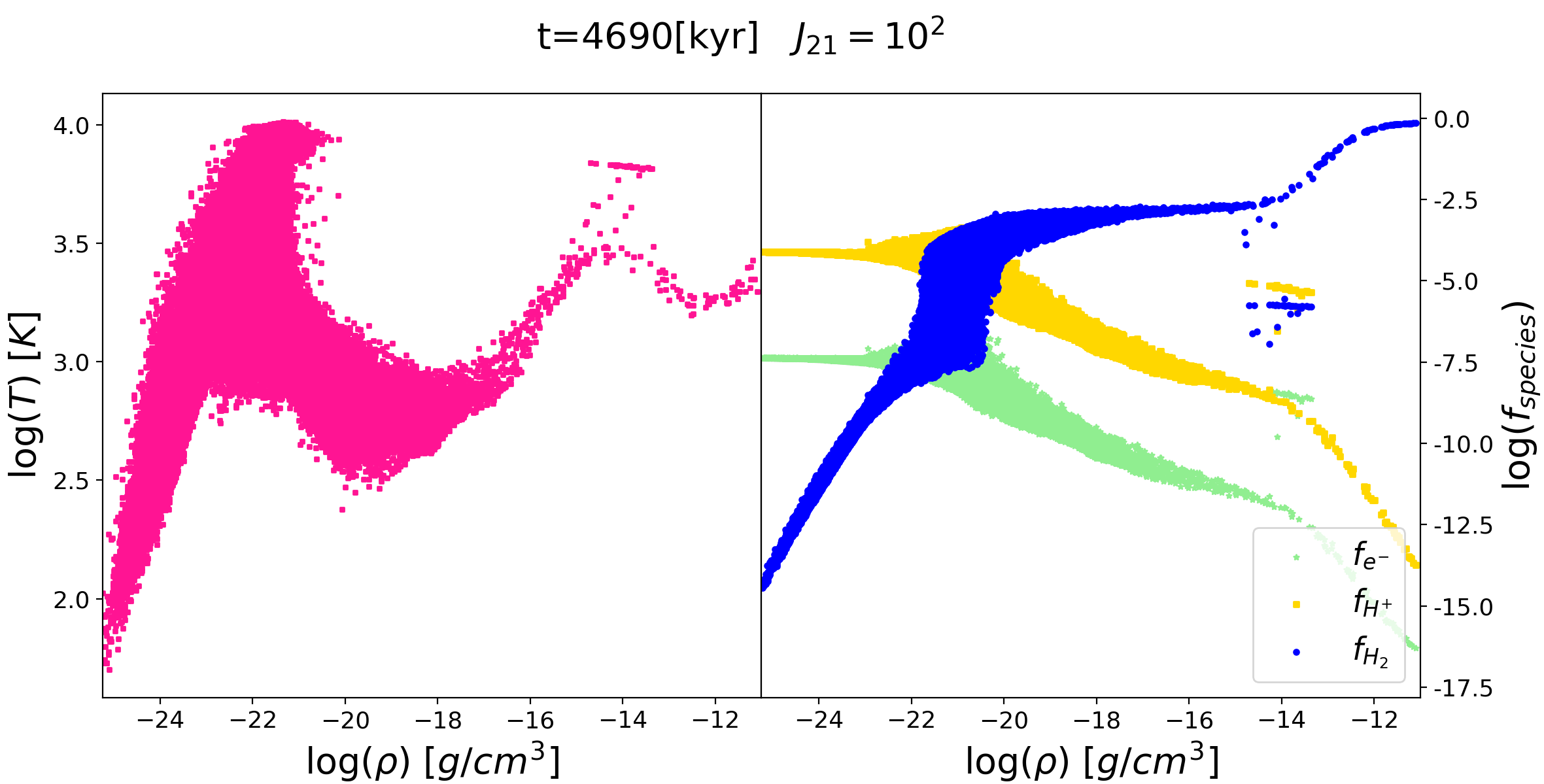 Figure 1
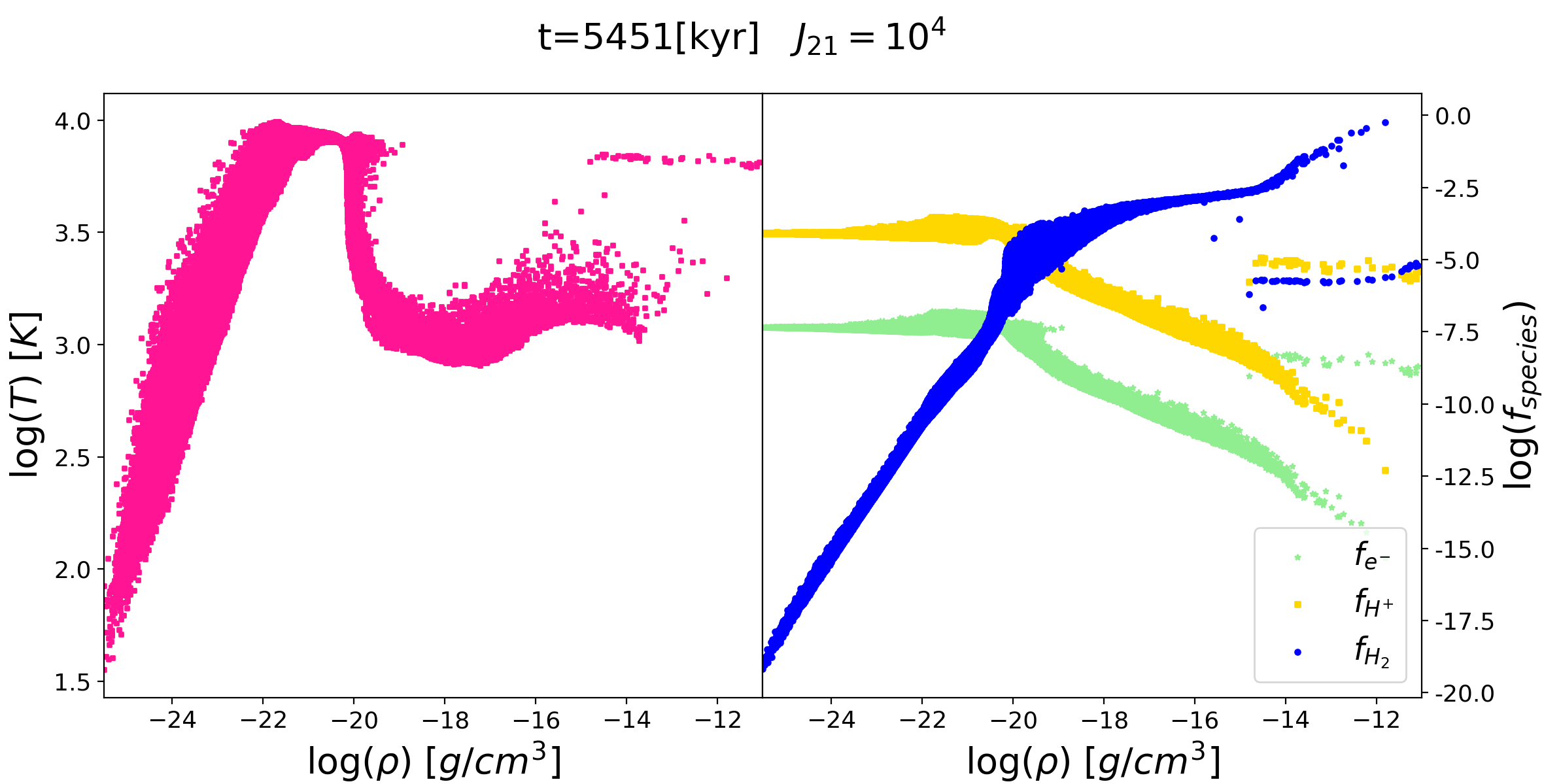 Figure 2
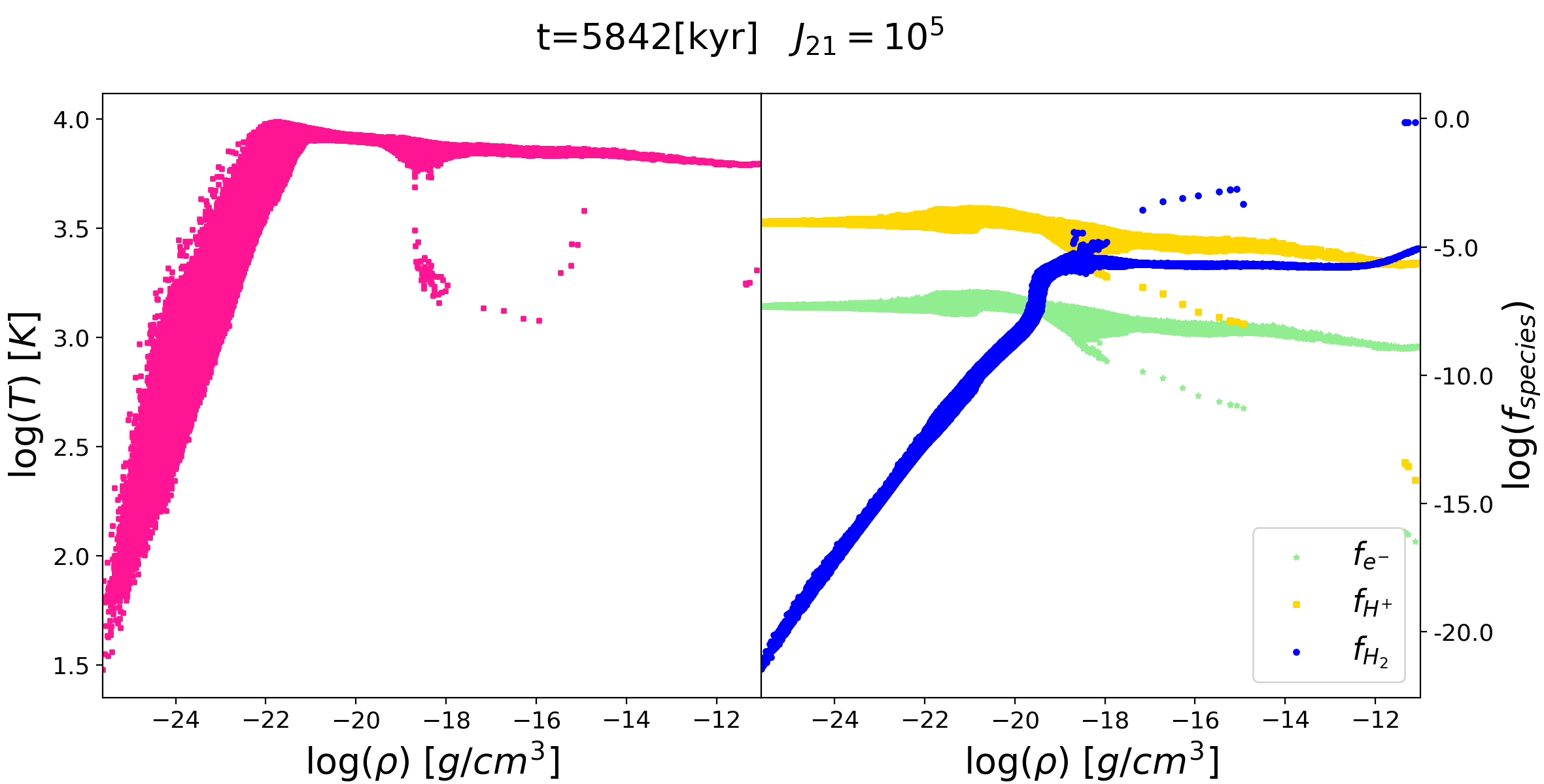 Figure 3
 Figure 1
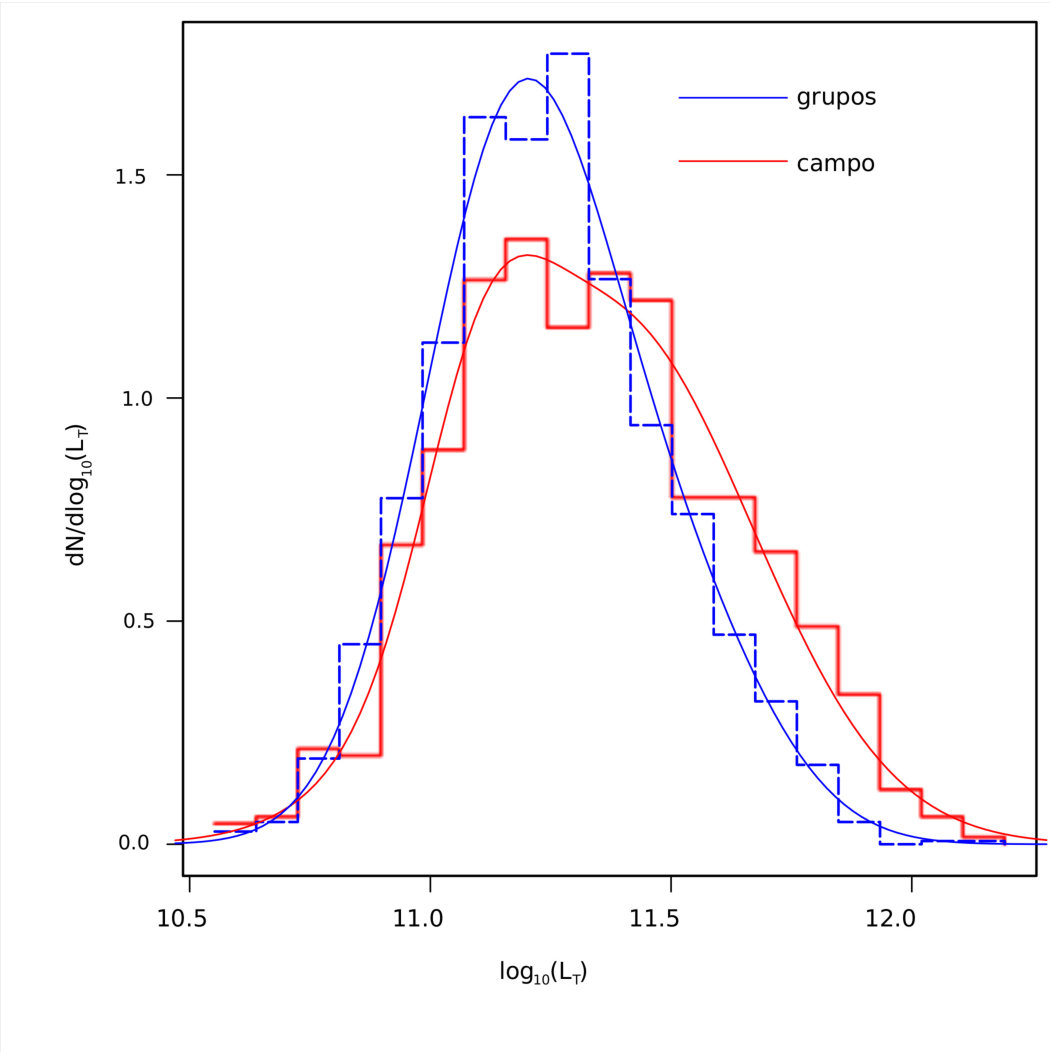 Figure 2
 Figure 6
Peer Reviews
No public reviews on file for this paper yet. If you reviewed it on a platform where reviews are public (OpenReview, ICLR, NeurIPS, ICML), you can paste yours below so the community can read it here.
Videos
No videos yet. Explain this paper in a talk, walkthrough, or lecture? Add one.
Taxonomy
TopicsAstrophysical Phenomena and Observations · Cosmology and Gravitation Theories · Galaxies: Formation, Evolution, Phenomena
\journalvol
61A \journalyear2019 \journaleditorsR. Gamen, N. Padilla, C. Parisi, F. Iglesias & M. Sgró
\contriblanguage
1
\contribtype
2
\thematicarea
1
\contact
11institutetext: Departamento de Astronomía, Facultad de Ciencias Físicas y Matemáticas, Universidad de Concepción, Av.Esteban Iturra s/n Barrio Universitario, Casilla 160-C, Concepción, Chile 22institutetext: Centre for mathematical Plasma-Astrophysics, Department of Mathematics, KU Leuven, Celestijnenlaan 200B, 3001 Heverlee, Belgium
Impact of radiation backgrounds on the formation of massive black holes
V.B. Díaz 11
D.R.G. Schleicher 11
S. Bovino 11
FFibla 11
R. Riaz 11
S. Vanaverbeke & C. Olave 2211
La existencia de agujeros negros supermasivos de mil millones de masas solares a muy alto corrimiento al rojo nos ha motivado a estudiar como estos objetos tan masivos se forman durante los primeros miles de millones de años después del Big Bang. El modelo mas prometedor que se ha propuesto es el colapso directo de nubes de gas protogalácticas. Este escenario requiere altas tasas de acreción para crear rápidamente objetos masivos y la inhibición del enfriamiento que causa , el cuál es importante en el proceso de fragmentación. Estudios recientes mostraron que, si usamos un fondo radiativo fuerte, el hidrógeno molecular se destruye, favoreciendo las altas tasas de acreción y por lo tanto formando objetos de muy alta masa. En este trabajo estudiamos el impacto de campos de radiación UV en una nube de gas primordial usando el código GRADSPH-KROME para investigar el proceso de fragmentación en escalas de unidades astronómicas y por lo tanto la formación de los primeros agujeros negros supermasivos. Encontramos que para suprimir la formación de es necesario un valor de muy alto, por lo que los agujeros negros de colapso directo no podrían explicar la formación de los primeros agujeros negros supermasivos.
Abstract
The presence of supermassive black holes (SMBHs) of a few billion solar masses at very high redshift has motivated us to study how these massive objects formed during the first billion years after the Big Bang. The most promising model that has been proposed to explain this is the direct collapse of protogalactic gas clouds. In this scenario, very high accretion rates are needed to form massive objects early on and the suppression of cooling is important in regulating the fragmentation. Recent studies have shown that if we use a strong radiation background, the hydrogen molecules are destroyed, favoring the high accretion rates and therefore producing objects of very high mass. In this work we study the impact of UV radiation fields in a primordial gas cloud using the recently coupled code GRADSPH-KROME for the modeling of gravitational collapse including primordial chemistry to explore the fragmentation in AU scales and hence the formation of first SMBHs. We found that to suppress the formation of a very high value of is required, because of that we conclude that the direct collapse black holes (DCBHs) are very unlikely to be an explanation for the formation of the first SMBHs.
keywords:
cosmology: theory, early universe — stars: formation — galaxies: formation — hydrodynamics
1 Introduction
More than supermassive black holes (SMBHs) with masses of about M⊙ at very high redshift () have been discovered in the last years through several surveys (Gallerani et al., 2017; Schleicher, 2018). The highest-redshift quasar observed is at with a mass of M⊙ (Bañados et al., 2018) and another one at with a mass of M⊙ (Mortlock et al., 2011). The formation of the first structures is not yet understood, and the formation of the first supermassive black holes is still an open question in cosmology. Among the models that have been proposed to explain the formation of SMBHs in the early universe, the direct collapse of protogalactic gas clouds (Loeb & Rasio, 1994; Bromm & Loeb, 2003; Shlosman et al., 2016) is the most promising scenario as it provides the most massive black holes seeds ( M⊙) which can then grow at relatively moderate accretion rates to form SMBHs.
The formation of direct collapse black holes (DCBHs) requires an efficient accretion rate of gas to the central object ( Myr*-1*) and the suppression of fragmentation of the cloud. These conditions can be achieved if the gas collapses isothermally at a temperature of K (Omukai et al., 2008). Such a collapse is possible if the gas has zero metallicity and the main cooling mechanism in the early universe ( cooling) is suppressed due to an intense radiation background (Bromm & Loeb, 2003; Visbal et al., 2014).
In order to study the cooling process of the gas cloud, we need to include the chemical reactions involving the formation (via gas-phase reactions) of :
[TABLE]
Once the first generation of stars (Pop III) are formed, they will irradiate the intergalactic medium (IGM) with a UV flux and pollute it with metals through supernova explosions leading to the formation of the second generation of stars (Pop II). The UV flux produced by these stellar populations can destroy through the Solomon process (Eq. 3) and photo-detach electrons from (Eq. 4).
[TABLE]
Thus, massive primordial haloes of M*⊙* which formed in the early universe and irradiated by nearby star-forming regions of Pop II and Pop III at are the most plausible cradles for DCBH formation. The available flux from star-forming regions in measured in units of , which corresponding to a flux of erg cm*-2* s*-1* Hz*-1* sr*-1* at the Lyman limit. We assume for simplicity that the shape of the spectrum corresponds to a blackbody.
In a recent study, Latif et al. (2015) performed 3D cosmological simulations to determine the critical UV flux above which cooling is suppressed in protogalactic gas clouds of M*⊙* including the impact of X-ray ionization and realistic Pop II spectra. They found that for realistic Pop II spectra is a few times and weakly depends on the adopted radiation spectra in the range between K and the impact of X-ray ionization is negligible. These results suggest that DCBHs could be rarer than previously thought.
2 Computational Methods
In this work we performed our simulations with the coupling of the Smoothed Particle Hydrodynamics (SPH) code GRADSPH111http://www.swmath.org/software/1046 (Vanaverbeke et al., 2009) with the chemistry package KROME222http://www.kromepackage.org (Grassi et al., 2014). This combined code called GRADSPH-KROME allows us to include the chemistry and cooling in hydrodynamical simulations of the star forming gas. The code was previously employed by Riaz et al. (2018c) to explore the fragmentation process for the formation of binary systems. Here we explore the chemical conditions in the presence of different UV fluxes, to determine the flux that is required for an atomic collapse.
2.1 GRADSPH
SPH is a mesh-free Lagrangian method used for simulating the dynamics of continuous media such us fluid flows. It works by dividing the fluid into a set of discrete and spherically symmetric particles. Each particle has associated with it a mass , a velocity vector , and values of thermodynamic variables which describe the state of a fluid, such as the pressure , the density , and the specific internal energy . Also, these particles are associated with a spatial scale known as the smoothing length , over which their properties are smoothed by a kernel or weighing function . So, any property can be obtained by summing the relevant properties of all the particles which lie within the range of the kernel. Hence, the density at the position of each particle with mass is determined by
[TABLE]
GRADSPH uses the standard M4-kernel or cubic spline kernel with a compact support that contains particles within a smoothing sphere of size (Price & Monaghan, 2007). This smoothing length is determined by where is a dimensionless parameter which determines the size of the smoothing length of the SPH particle given its mass and density and is determined by the following equation:
[TABLE]
where is the number of neighbors inside the smoothing sphere, which can be between 50 to 100. In this work we use for the 3D-simulations. Also, it is important to know that the mass contained within the smoothing sphere of each particle should be held constant.
Also, GRADSPH implemented a second-order PEC (predict-evaluate-correct) scheme combined with an individual particle time stepping method to solve the system of ordinary differential equations that updates the positions and velocities of the particles. The work presented in Riaz et al. (2018a) and Riaz et al. (2018b) are examples of simulations with GRADSPH.
2.2 Chemistry, cooling and UV background
The KROME package allows us to model chemical network in numerical simulations. In this work, we prepare a chemical network based on the network react_xrays provided by KROME with the chemical reactions presented in Glover (2015a) and Glover (2015b), giving a total of 35 chemical reactions with 9 different chemical species (, , H, , He, , , , ). The initial mass fraction of these chemical species are: , , , , , the other species are set zero. To solve the rate equations, KROME has a main module that calls the high-order solver DLSODES. To include the presence of a UV background in GRADSPH-KROME we add new files generated by KROME to the network that includes the chemical reactions for photodissociation and photodetachment of due to a UV background and also we set the function krome_set_user_J21(J21) for the values of .
2.3 Setup
Our spherical primordial gas cloud is modeled as a distribution of SPH particles with an initial temperature of K. This cloud has a total mass of M*⊙, a radius of pc and therefore an initial density of g cm-3* also, the gas is in solid body rotation with an angular velocity of rad s*-1* and is turbulent with a Mach number .
3 Results
Fig. 1 shows the thermal and species profiles for different strengths of the UV flux. We can see that for the weaker value of , the cooling due to becomes effective, in which the gas is initialized with a temperature of K and then cools down to about K. For we can see that the formation remains suppressed until a density of g cm*-3* which illustrates the presence of two gas phases at the same density similar to Fig. 3 from Latif et al. (2014). For the stronger value of we see that the gas is in an atomic state in which remains suppressed due to the high radiation and it remains in a hot phase, according to theoretical expectations. Nevertheless, the value of that we found is in the range of which is very high. Also, the right panel of Fig.1 shows the evolution of , and . As they act as catalysts we see that for the weaker values of , the amount of and is the same after the reaction and recombination have happened and their number densities are depleted due to the formation of . For the and number densities increase and become constant because the formation of remains inhibited.
4 Conclusions and Outlook
We found that the required value of to keep the gas atomic is between , because of that we conclude that black hole formation via direct collapse is efficiently suppressed, and cannot explain the observed quasars at high redshift. This conclusion is also found in Dijkstra et al. (2014), in which they found that the value of the comoving number density of putative DCBHs formation sites increases with the cosmic time but to obtain the necessary high values of for these sites we have to consider very nearby star-forming galaxies including galactic winds that will produced metal enrichment, which will suppress the predicted putative DCBHs formation sites and they do not expect this formation channel to be sufficient enough, however, an alternative pathway to form SMBHs is the collision in primordial star clusters (Reinoso et al., 2018; Boekholt et al., 2018).
{acknowledgement}
This research was partially supported by the supercomputing infrastructure of the NLHPC (ECM-02), also the authors acknowledge the Kultrun Astronomy Hybrid Cluster (projects Conicyt Programa de Astronomia FondoQuimal QUIMAL170001, Conicyt PIA ACT172033, and Fondecyt Iniciacion 11170268) for providing HPC resources that have contributed to the research results reported in this paper. VBD thanks to Conicyt for financial support on her master studies (CONICYT-PFCHA/MagísterNacional/2017-22171293). DRGS, SB, FF, CO, RR and VBD thank for funding via CONICYT PIA ACT172033. FF and VBD thank for funding through Fondecyt regular (project code 1161247). RR, CO, FF and DRGS thank for funding through the ’Concurso Proyectos Internacionales de Investigación, Convocatoria 2015’ (project code PII20150171). DRGS and SB acknowledge funding through CONICYT project Basal AFB-170002.
The reference list from the paper itself. Each links out to its DOI / PubMed record.
- 1Bañados et al. (2018) Bañados E., et al., 2018, Nature, 553, 473
- 2Boekholt et al. (2018) Boekholt T. C. N., et al., 2018, MNRAS, 476, 366
- 3Bromm & Loeb (2003) Bromm V., Loeb A., 2003, The Astrophysical Journal, 596, 34
- 4Dijkstra et al. (2014) Dijkstra M., Ferrara A., Mesinger A., 2014, MNRAS, 442, 2036
- 5Gallerani et al. (2017) Gallerani S., et al., 2017, Publications of the Astronomical Society of Australia, 34, e 022
- 6Glover (2015 a) Glover S. C. O., 2015 a, MNRAS, 451, 2082
- 7Glover (2015 b) Glover S. C. O., 2015 b, MNRAS, 453, 2901
- 8Grassi et al. (2014) Grassi T., et al., 2014, MNRAS, 439, 2386